
In This Article
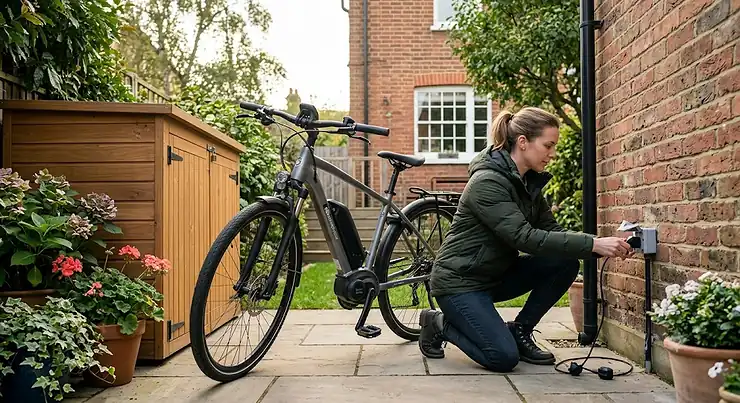
Here’s an uncomfortable truth most ebike sellers won’t put in their brochure: the battery that came with your shiny new electric bicycle is already ageing. Right now. Every ride, every charge, every night it sits fully topped-up in your damp garden shed — all of it nudges the capacity a tiny fraction lower. That’s not pessimism; that’s chemistry.
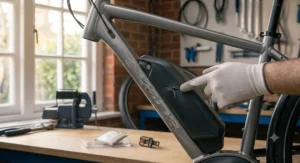
But here’s the genuinely reassuring part. Understanding li-ion ebike battery lifespan transforms you from a passive bystander watching your range shrink into someone who can actively double — yes, double — the useful life of their battery. This guide is for UK riders specifically, because British conditions (which is to say: persistent drizzle, narrow terraced garages, temperature swings between a bleak November morning and a brief but glorious July afternoon) demand genuinely specific advice.
So, what is li-ion ebike battery lifespan, actually? In plain terms, a lithium-ion ebike battery is rated for a certain number of full charge cycles before its capacity drops to around 70–80% of its original figure. At that point, you’ll notice the range feeling noticeably shorter — not catastrophically short, just shorter. A typical lithium-ion ebike battery lasts 500–1,000 full charge cycles, or roughly 3–5 years with average use. Premium batteries with higher-quality cells and advanced battery management systems can maintain usable capacity longer, often reaching 5–7 years with proper care. That gap — between “average” and “with proper care” — is worth understanding, and worth the ten minutes you’ll spend reading this.
Quick Comparison: Top 7 Li-Ion Ebike Batteries on Amazon.co.uk (2026)
| # | Battery | Voltage / Capacity | Approx. Cycle Life | Expected Lifespan | BMS Rating | UK Warehouse | Approx. Price (GBP) | Best For |
|---|---|---|---|---|---|---|---|---|
| 1 | Bosch PowerTube 500 (Vertical) | 36V / 500Wh | 1,000–1,500 cycles | 5–8 years | Proprietary Smart BMS | ✅ Via Amazon.co.uk | £300–£500 | Bosch-powered bikes, serious commuters |
| 2 | YOSE POWER 36V 13Ah Hailong | 36V / 481Wh | 600–800 cycles | 3–5 years | 25A BMS | ✅ UK stock | £150–£220 | Older European pedelecs (Raleigh, Viking, Avocet) |
| 3 | ZHIKAN 36V/48V 15.6Ah–21Ah (EEL PRO) | 36V or 48V / 561–756Wh | 600–800 cycles | 3–5 years | 25–30A BMS | ✅ UK stock | £120–£200 | MiFa, Rex, Prophete, Batribike, Aldi bikes |
| 4 | UK Warehouse 36V 20Ah (LG Cells) | 36V / 720Wh | 800–1,000 cycles | 4–6 years | 30A BMS | ✅ UK stock | £180–£260 | Long-range commuters, hilly terrain |
| 5 | EIFDUHP 36V/48V 10Ah–20Ah | 36V or 48V / 360–720Wh | 400–600 cycles | 2–4 years | 25A BMS | ✅ UK stock | £80–£150 | Budget riders, occasional use |
| 6 | X-go 36V 10Ah | 36V / 360Wh | 500–800 cycles | 3–4 years | 25A BMS | ✅ UK stock | £80–£120 | Light commuters, students, short urban hops |
| 7 | Universal 36V/48V/52V 13Ah–24Ah (Bafang) | 36V–52V / 468–1,248Wh | 700–1,000 cycles | 4–6 years | 25–30A BMS | ✅ Via Amazon.co.uk | £130–£250 | Conversion kit riders (Bafang BBS01/02/HD) |
The numbers tell an interesting story. The price jump from budget to premium buys you roughly double the cycle life — which means, over a five-year period, the “expensive” battery often works out cheaper per kilometre. A £100 battery replaced every two years costs £250 over five years. A £280 battery lasting six? That’s a rather elegant argument for spending a bit more upfront.
💬 Just one click — help others make better buying decisions too! 😊
✨ Don’t Miss These Exclusive Deals!
🔍 Explore the best-value ebike batteries on Amazon.co.uk. Click any highlighted product below to check current pricing and availability. These picks are selected for UK riders, UK warehouse stock, and genuine long-term value.
Top 7 Li-Ion Ebike Replacement Batteries: Expert Analysis 🇬🇧⚡
1. Bosch PowerTube 500 (Vertical) — Frame-Integrated Replacement
The gold standard. Full stop. If you own a Bosch-powered bike — a Raleigh Motus, Trek Allant, or any number of quality UK-market models — this is the only replacement battery worth serious consideration.
The 500Wh (36V) frame-integrated design slots invisibly into your downtube, keeping weight low and central, which genuinely matters on the hills you’ll find between Bristol and Edinburgh. At 2.8kg, it’s not featherweight, but it’s properly engineered aluminium housing that laughs at British mud. Compatibility covers Bosch Active Line and Performance Line motors — check your existing battery’s part number to confirm vertical vs. horizontal orientation before ordering. Charging with Bosch’s Fast Charger brings it back to full in around 2.5–3 hours. Bosch’s battery architecture is rated for over 1,000 cycles with minimal degradation, which in practice means five to eight years of credible range for most UK commuters.
Who is this for? Anyone whose bike came with Bosch electrics and who doesn’t want to compromise on quality. The engineering is simply in a different league to generic alternatives, and the BMS (battery management system) is among the most sophisticated available on the consumer market. UK reviewers consistently praise the seamless integration and long-term reliability. Not cheap, but buy once, buy right.
✅ OEM Bosch quality — the cells are the same as original fitment
✅ Sophisticated BMS with proper cell balancing
✅ UK-appropriate sealed design, excellent moisture resistance
❌ Significantly more expensive than generic alternatives
❌ Must match your bike’s specific connector orientation
Price range: £300–£500 | Available on Amazon.co.uk; check for Prime next-day delivery eligibility.
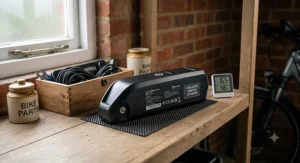
2. YOSE POWER 36V 13Ah Hailong Battery — Best for Older European Pedelecs
YOSE POWER has built a solid reputation among the UK ebike community for good reason. This 36V 13Ah Hailong-style battery fits a surprisingly broad range of older European pedelecs — including popular UK brands like Raleigh, Viking, Byocycles, and Avocet — that use the Hailong-style downtube mount with a 5-pin gold-plated connector.
The 481Wh capacity is genuinely useful: on a 250W motor running in eco mode, most UK riders can expect 50–70km of range per charge under normal conditions. Factor in a British winter morning and wet roads, and subtract perhaps 10–15%; you’re still comfortably covering the average UK commute, which sits around 15km each way. The BMS handles over-charge, over-discharge, and short-circuit protection competently. YOSE POWER uses reasonably decent cells — not Samsung or LG, but consistent quality that typically delivers 600–800 cycles with sensible charging habits.
This is the pragmatic choice for UK riders with mid-market bikes who want a proper replacement rather than a gamble. YOSE POWER sells directly in the UK and through Amazon.co.uk, and their customer support is genuinely responsive — a rarity in this space.
✅ Wide compatibility with European pedelecs common in UK market
✅ Established brand with real UK customer support
✅ Solid BMS protection for daily commuter use
❌ Cells not premium-grade (LG/Samsung)
❌ Verify connector pin configuration carefully before purchasing
Price range: £150–£220 | Available on Amazon.co.uk with UK warehouse stock.
3. ZHIKAN 36V/48V 15.6Ah–21Ah Battery (EEL PRO / XH370-10J) — Best for MiFa, Rex, Prophete Owners
If you bought your ebike from Aldi, Lidl, Halfords, or a similar high-street retailer over the past five years, there’s a fair chance it uses a Phylion-style XH370-10J or EEL PRO connector. ZHIKAN’s replacement battery fits this configuration precisely, and it’s one of the better-reviewed options in this bracket on Amazon.co.uk.
The range of capacities — from 15.6Ah to 21Ah at 36V — gives you genuine flexibility. Stepping up from your original 10Ah battery to a 15.6Ah unit is a bit like discovering your car’s boot is twice the size you thought. Practically, it means 50% more range per charge, which transforms a “gets me to work just about” battery into one that handles return journeys without anxiety. The 25A BMS is reasonable, and the XLR charging port is the correct type for these bikes. UK reviewers on Amazon.co.uk have noted successful fitment on Batribike, MiFa, and Prophete models.
Worth noting: the 48V variant delivers noticeably more pep from the motor — helpful if your commute involves any meaningful gradient, which in Sheffield, Brighton, or the Edinburgh outskirts is basically a certainty.
✅ Correct connector for many popular UK budget ebike brands
✅ High-capacity options available (up to 21Ah at 36V)
✅ Competitive pricing with charger included
❌ BMS quality variable compared to premium brands
❌ Capacity options can be confusing — read product description carefully
Price range: £120–£200 | Available on Amazon.co.uk, free UK delivery on eligible orders (Prime-eligible).
4. UK Warehouse 36V 20Ah with LG Cells — Best High-Capacity Budget Pick
Right, so here’s the interesting one. This battery won’t win any design awards — it’s a fairly utilitarian black box with a 36V, 20Ah specification — but those LG 4800 cells inside are the genuine article. LG cells are industry-standard in quality ebike packs, and getting them at this price point is legitimately good value for the money.
The 720Wh capacity is substantial. In practical terms for a UK rider, you’re looking at 70–100km of genuine range in mild conditions, dropping to around 55–70km on a cold January morning. For anyone commuting 20+ miles each way, running cargo errands, or just tired of range anxiety on longer weekend rides through the countryside, this specification provides meaningful headroom. A 30A BMS handles motor loads up to 700W comfortably.
UK-based stock means delivery typically arrives within three to five days without crossing customs — which matters post-Brexit, since some EU-shipped batteries can attract delays at the border. UK reviewers consistently mention the quality of the LG cells and the noticeable improvement over stock batteries.
✅ Genuine LG cells — verified by UK buyers
✅ High capacity for long-range use
✅ UK warehouse stock; 1–5 day delivery
❌ Heavier than lower-capacity alternatives
❌ Verify compatibility with your specific motor and controller carefully
Price range: £180–£260 | Available on Amazon.co.uk.
5. EIFDUHP 36V 48V 10AH–20AH Battery — Best Budget Starter Replacement
Sometimes you just need a working battery that doesn’t cost the earth. Your original pack has expired, you’ve got a perfectly functional motor and controller, and you want to keep riding without spending £300. EIFDUHP’s entry sits in that bracket, with UK warehouse stock, a one-year warranty, and a BMS that covers the basics: over-charge, over-discharge, over-current, and short-circuit protection.
The 25A BMS is appropriate for 250W–750W UK-legal motors, and the 36V 13Ah version hits the sweet spot of capacity versus cost. Four LED battery indicators are a genuinely practical touch — you can see at a glance whether to head home or nip into the café. The inclusion of both XT60 and Anderson discharge connectors is useful for riders whose bikes use either standard.
Be clear-eyed about the trade-offs, though. “Top-A-Grade cells” on a budget battery is marketing language with loose definitions. Expect 400–600 cycles with reasonable care rather than 800+. One UK buyer noted their unit stopped charging after six months — not every unit will experience this, but it’s a reminder that warranty support matters. Confirm the seller’s returns process before purchasing, and keep your receipt. Under the Consumer Rights Act 2015, you have strong protections for up to six years if a product proves faulty.
✅ Affordable entry point for budget-conscious UK riders
✅ UK warehouse stock — quick delivery, easier returns
✅ Multiple voltage and capacity options in one listing
❌ Cell quality less consistent than premium options
❌ Shorter expected cycle life than mid-range alternatives
Price range: £80–£150 | Available on Amazon.co.uk; check for Prime-eligible stock.
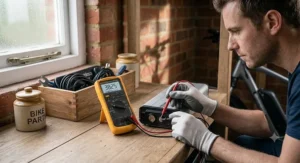
6. X-go 36V 10Ah Ebike Battery — Best for Light Commuters, 18-Month Warranty
The X-go packs something unexpectedly reassuring for a budget battery: an 18-month warranty. In this price bracket, most sellers offer three months and hope you forget. That extra warranty coverage signals a degree of confidence in the product that’s worth something real.
The 36V 10Ah specification (360Wh) covers lighter usage — think urban hops of 20–30km per charge, a student’s daily campus run, or a retiree’s errands around the village. It’s not a touring battery, but it was never meant to be. The 25A BMS is appropriate for the load, the 4-pin base plate fits a wide variety of frame-mount configurations, and the safe-lock system prevents the sort of casual theft that plagues UK urban cyclists who leave their bikes in shared buildings or communal bike stores.
Rated for ≥80% capacity after 800 cycles — take manufacturer cycle claims with a healthy pinch of scepticism, but even if it achieves 600 in practice, that’s three to four years of regular use at this usage level. For a rider who only needs modest range and wants genuine peace of mind on warranty, this represents sensible value.
✅ 18-month warranty — best in class at this price
✅ Safe-lock anti-theft feature, useful for UK urban riders
✅ Compact and lighter weight than high-capacity alternatives
❌ 10Ah capacity limits range — not suitable for longer commutes
❌ Top-end cell quality unverified
Price range: £80–£120 | Available on Amazon.co.uk; dispatched from UK warehouse.
7. Universal 36V/48V/52V 13Ah–24Ah Battery (Bafang-Compatible) — Best for Conversion Kit Riders
There’s a growing UK contingent of riders who’ve converted conventional bikes to electric using Bafang mid-drive kits — sensible, cost-effective, and increasingly popular now that quality conversion parts are readily available on Amazon.co.uk. This universal battery is purpose-designed for that market.
The range of voltage options (36V, 48V, 52V) and capacities (13Ah through 24Ah) makes it flexible enough to suit a wide variety of Bafang BBS01, BBS02, and BBSHD motor setups. The 48V 17.5Ah version is the sweet spot for most UK riders: enough voltage for proper motor performance on inclines, enough capacity for 50–80km of real-world range. The Bafang ecosystem is well-supported on Amazon.co.uk, with genuine UK buyers reporting successful fitment across multiple motor generations.
For anyone who converted a classic steel road bike or a Brompton-style commuter to electric, this battery provides a cost-effective and well-specified option that doesn’t require hunting down specialist suppliers.
✅ Multi-voltage compatibility — works with broad Bafang motor range
✅ High-capacity options available (up to 24Ah)
✅ Well-supported by UK Bafang community
❌ Universal fit means occasional connector compatibility issues — check before ordering
❌ Heavier than original-style Silverfish batteries
Price range: £130–£250 | Available on Amazon.co.uk.
How to Extend Your Li-Ion Ebike Battery Lifespan: The Practical UK Guide 🔋
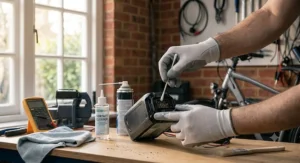
The 20–80% rule is not internet folklore. It’s chemistry. For optimal lithium-ion health, it’s generally recommended to maintain the charge level between 20% and 80% for daily use. Avoid leaving the battery at 100% charge for extended periods, particularly in elevated temperatures. Charging to 80% and plugging in again when you hit 20% keeps the cells in their most stable voltage range, where degradation happens slowest. In practice, most UK riders will get far more daily range than they actually need, so riding in the 30–80% window is entirely realistic.
Winter and wet weather storage matters more in Britain than anywhere. Leaving your battery in an unheated shed between November and March is one of the fastest ways to age it prematurely. Temperature is the number one killer — cold below 0°C slows reactions and cuts capacity, while heat is the primary cause of permanent degradation. The ideal storage range is 10°C–20°C, which in most UK homes means a kitchen corner, hallway, or airing cupboard. Yes, your family might object. Explain the chemistry.
The calibration charge. If you follow the 20–80% rule consistently, do a full 0–100% charge cycle roughly once a month. The BMS trickles a small current to the lower-charged cells to bring them up to the same level during the final phase of charging — if you only ever charge to 80%, your cells may never get a chance to balance, leading to gradual range loss not because the cells are dead, but because the BMS gets an inaccurate reading.
Never charge a freezing battery. Bring it indoors after a cold ride, let it reach room temperature for an hour, then plug in. Charging a battery below 0°C can cause irreversible lithium plating inside the cells — permanent capacity loss from a single hasty decision.
Always use the original or a compatible charger. Third-party fast chargers push higher current than the BMS expects, generating excess heat and accelerating cell wear. For most UK riders on 250W legal motors, the standard 2A–3A charger is perfectly adequate. Patience is a virtue that pays dividends here.
Real-World Scenarios: Which Battery Suits Your UK Lifestyle? 🚴♂️
The London Commuter (Zone 2–4): You’re covering around 15km each way, locking up in a communal bike storage, and carrying your battery inside to charge. A 36V 13Ah mid-range pack (like the YOSE POWER Hailong) is genuinely ideal — sufficient range with room to spare, compact enough to carry up three flights of stairs without regretting your choices. The X-go’s anti-theft lock is worth considering if your storage is shared.
The Sheffield or Edinburgh Hills Rider: Gradient is your enemy, and the motor works significantly harder on steep climbs — eating capacity faster than flat-road estimates suggest. Go bigger: the 48V 15.6Ah or 20Ah options provide the voltage headroom that keeps the motor performing properly rather than laboring up Ecclesall Road in protest. The LG cell battery warrants serious consideration here.
The Rural Cotswolds Weekend Rider: You’re covering 30–50km round trips on mixed terrain, returning to a warm house with a dry garage. Range and longevity matter more than urban anti-theft features. The Bosch PowerTube 500 — if you have a compatible bike — is the obvious choice; alternatively, the 36V 24Ah LG4800 battery delivers the capacity for truly relaxed long-distance riding without range anxiety.
The Bafang Converter: You built something brilliant from scratch. The universal 36V/48V/52V battery in the 48V 17.5Ah spec gives you the voltage punch your mid-drive deserves, with enough capacity to justify the conversion investment. Just confirm your connector type before clicking buy.
UK Regulations, Battery Safety, and What Actually Matters Legally ⚖️
It’s worth being clear about the legal framework, because some battery specifications sold online in the UK raise questions worth understanding. Under UK law, you can ride an electric bike if it is an ‘electrically assisted pedal cycle’ (EAPC) — you do not need a licence and it does not need to be registered, taxed, or insured. However, the classification depends on the whole system, not just the battery.
The key rules: the motor must be no bigger than 250 watts continuous, assistance must stop at 15.5mph (25km/h), and you must be pedalling for the motor to provide power. A replacement battery with a higher voltage can sometimes push a motor beyond its legal operating parameters — particularly if your bike’s controller doesn’t have a hard cut-off. When upgrading from 36V to 48V, verify that your motor and controller support the higher voltage before fitting.
The gov.uk guidance on EAPCs is the definitive reference, and worth bookmarking. The short version: ride within the legal spec, keep your battery’s output within what your motor and controller are rated for, and you’ll have no legal concerns whatsoever.
On fire safety: lithium-ion battery fires, while statistically rare, have been a genuine concern in UK cities, particularly related to lower-quality cells and damaged batteries. The London Fire Brigade has published guidance recommending riders never charge batteries unattended overnight or leave them charging on escape routes — sensible advice for a flat-dweller in any British city. Always charge in ventilated areas and unplug when full.
The BMS: Your Battery’s Most Important and Most Ignored Feature
Most riders give the battery management system about as much thought as the ABS module in their car — which is to say, none at all. This is a mistake. The BMS uses precision sensors to measure the voltage of each individual cell or cell group in the battery pack, with advanced units monitoring voltages with accuracy of ±1.6mV — this continuous monitoring allows the system to detect imbalances before they become problematic.
What does this mean in practice? A well-designed BMS is the reason your battery doesn’t catch fire when you accidentally overcharge it (protection cuts in automatically), why it doesn’t permanently die if you forget it on 5% for a fortnight (over-discharge protection kicks in), and why performance stays consistent across the pack rather than being dragged down by one rogue cell.
When comparing batteries on Amazon.co.uk, look specifically for: active cell balancing (rather than just passive), multi-point temperature monitoring, and the ampere rating of the BMS protection board. A 25A BMS is appropriate for a 250W UK-legal motor. If a £50 battery advertises an “intelligent BMS” with no further specification, treat that claim with appropriate British scepticism.
Premium options like the Bosch PowerTube run proprietary smart BMS systems that communicate with the display unit and motor controller in real time — providing diagnostics, charge level accuracy, and protection that generic packs simply cannot replicate.
✨ Check Out These Top Picks!
🔍 Ready to upgrade or replace? Browse the full range of ebike batteries on Amazon.co.uk by clicking any product name above. All picks include UK-compatible 230V charging and ship from UK warehouses where noted.
Common Mistakes UK Riders Make with Ebike Batteries (And How to Avoid Them)
Mistake 1: Charging in the shed over winter. An uninsulated British garden shed in January can hit -5°C. Charging a lithium battery below 0°C causes permanent, irreversible damage. Bring it inside. Every time.
Mistake 2: Buying the wrong connector type. There are at least a dozen common connector standards in the UK ebike market — XLR, 2-pin, 4-pin, Anderson, XT60, Hailong 5-pin, and more. Buying the wrong one is a frustrating and entirely avoidable mistake. Check your existing battery’s connector and match it precisely.
Mistake 3: Ignoring post-Brexit voltage and plug compliance. Some batteries sold on Amazon.co.uk ship from EU warehouses and include EU charging plugs. Confirm the charger is supplied with a UK Type G plug, or that a UK adapter is included, before ordering. The charger input should accept 100–240V/50–60Hz for universal compatibility with UK mains.
Mistake 4: Assuming “1,000 cycle” claims are universal. A 1,000-cycle rating achieved in a laboratory at 25°C, charging to 80% each time, is very different from 1,000 cycles in a British winter with variable charging habits. Treat manufacturer cycle figures as theoretical maximums, not real-world guarantees.
Mistake 5: Ignoring the Consumer Rights Act 2015. UK buyers have significantly stronger protections than their US or Australian counterparts. If a product proves faulty within six months, the burden of proof is on the seller to show it wasn’t defective at point of sale. Keep receipts, document issues promptly, and don’t accept a flat refusal if a battery fails prematurely.
Long-Term Cost of Ownership: Making the Numbers Work in GBP 💷
Here’s the comparison most reviews skip. Over five years, with a daily commute of 20km:
- Budget 36V 10Ah battery (around £100): Likely needs replacement every 2–3 years. Total cost over 5 years: £200–£300, plus the time cost of sourcing and fitting two replacements.
- Mid-range 36V 13Ah with quality cells (around £180): Realistic 4–5 year lifespan with proper care. Total cost over 5 years: £180–£220.
- Bosch PowerTube 500 (around £380): Genuine 6–8 year lifespan. Amortised over 5 years: around £250, but with a battery that still has meaningful capacity remaining.
The maths isn’t a perfect linear equation — it depends on riding frequency, terrain, and care habits. But the pattern is clear: spending more per battery, and spending it on quality cells and a proper BMS, generally delivers better lifetime value. Capacity loss is tied to usage (cycles) and conditions, not just time; under typical use with good charging habits, you might expect to lose around 3–5% of the original capacity per year. At that rate, a 500Wh battery still has around 375–400Wh of effective capacity after five years — entirely usable for most UK commuters.
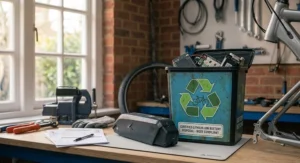
For recycling: lithium-ion batteries should never go in household bins. UK councils provide WEEE (Waste Electrical and Electronic Equipment) collection points, and most ebike retailers will accept old batteries for responsible recycling.
Frequently Asked Questions ❓
❓ How many charge cycles does a li-ion ebike battery last in the UK?
❓ Does cold British weather permanently damage my ebike battery?
❓ What does the BMS do in my ebike battery, and why does it matter?
❓ Are replacement ebike batteries legal to use in the UK?
❓ How do I safely store my ebike battery over the British winter?
Conclusion: Get More Miles, Spend Less, Ride Smarter 🚴♂️🇬🇧
The li-ion ebike battery lifespan question doesn’t have a single answer — it has a range, and where your battery lands on that range depends almost entirely on how you treat it. The 20–80% charging rule, sensible winter storage, a quality BMS, and occasional calibration cycles aren’t complicated; they’re just consistent habits. Built up over a few weeks, they become automatic.
For replacement batteries, the UK market on Amazon.co.uk offers more choice than ever, from the premium precision of the Bosch PowerTube 500 down to capable budget options with UK warehouse stock and genuine warranty coverage. The right pick depends on your bike, your connector type, your terrain, and how long you want the investment to last.
The Electrically Assisted Pedal Cycles guidance on gov.uk remains essential reading for any UK ebike owner considering a battery upgrade. And for deeper dives into battery chemistry, Imperial College London’s battery research group publishes ongoing work on lithium-ion degradation that’s genuinely fascinating if you find yourself going down that particular rabbit hole.
Ride well. Charge smart. And maybe, just this once, bring the battery inside for winter.
✨ Ready to Shop?
🔍 Check current prices and availability on Amazon.co.uk for any of the batteries featured above. Prime members enjoy next-day delivery on eligible items — check the product listing for your postcode.
Recommended for You 📖
- 7 Best 250w Motor Ebike UK 2026: Road-Legal Picks Tested
- Best 250w EAPC Compliant Electric Bike UK 2026: 7 Expert Picks
- Rear Wheel Motor vs Mid Drive: 7 Best UK E-Bikes 2026
Disclaimer: This article contains affiliate links. As an Amazon Associate, I earn from qualifying purchases. If you purchase products through these links, we may earn a small commission at no additional cost to you.
✨ Found this helpful? Share it with your mates! 💬🤗
