
In This Article
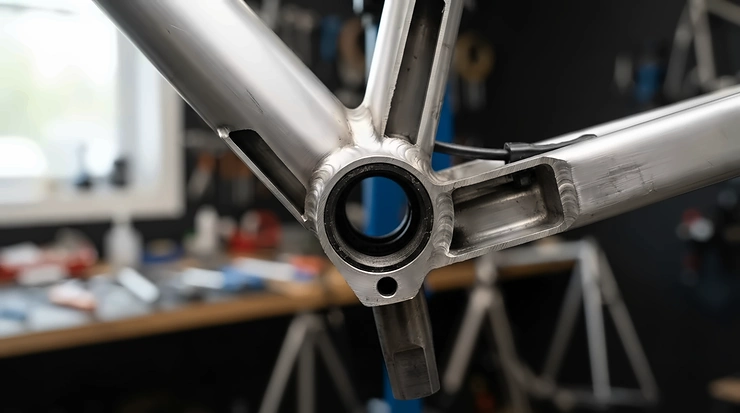
Electric bike drainage frame design is the set of choices that decide how water and condensation get into an ebike’s frame and how they get out again. Those choices include weep holes, sealed joints, cable entry points, vents and tube layout. Get them right and moisture never reaches your wiring, bearings or battery contacts. Get them wrong and you’ve bought a very expensive rain barrel.
Most shoppers check one number: the IP rating. Fair enough. The IP Code is a genuine international yardstick for how well an enclosure resists dust and water. But it describes sealed components such as the battery, motor and controller. It says nothing about the frame wrapped around them, and the frame is where British drizzle does its slow, patient work.
Think of it like a house. A waterproof fuse box is great, but it won’t save you if the roof lets in water and the gutters are blocked.
There’s an honest limitation to flag up front. Manufacturers almost never publish weep-hole positions or tubing seal details. So this guide gives you the principles, a pre-purchase checklist and seven UK-available ebikes analysed on what can be verified: published specs, third-party owner feedback and design choices that affect moisture. Nothing here claims hands-on testing. Prices are ranges only, so check current price before buying.
Quick Comparison: 7 Ebikes Through a Moisture-Management Lens
| Model | Battery | Drive | Weight | Price range | Best For |
|---|---|---|---|---|---|
| ADO Air | 36V 9.6Ah integrated | Rear hub, carbon belt | ~19kg | Around £1,000 | Clean, low-fuss commuting |
| Raleigh Motus | Bosch 500Wh | Bosch mid-drive | ~26kg | From around £2,500 | Year-round premium riding |
| Carrera Vengeance E | 317Wh integrated | Rear hub, chain | ~23kg | Around £1,000 | High-street servicing |
| Eskute Polluno | 36V 10Ah removable | Rear hub, chain | ~27kg | Around £900 | Comfortable step-through use |
| Pendleton Somerby | 36V removable | Front hub, chain | ~22kg | Around £1,000 | Gentle town trips with a basket |
| Fiido D11 | 36V 11.6Ah in seatpost | Rear hub | ~17kg | Around £900 | Train-and-flat folding life |
| Engwe P20 | 36V 9.6Ah (345Wh) removable | Rear hub, carbon belt | ~18.5kg | £1,000–£1,200 range | Light folding commutes |
Looking at the table, the ADO Air and Engwe P20 both skip the chain, which means less road grime climbing into the rear triangle. The Fiido D11 is the odd one out, because its battery lives in the seatpost, which puts the most common water entry point right next to the electrics. If budget is no object, the Raleigh Motus buys the most established brand backing, though not a published drainage spec.
💬 Just one click — help others make better buying decisions too!😊
Top 7 Rain-Ready Ebikes: Expert Analysis
These seven were chosen to span budget, mid-range and premium, and to include folders, step-throughs and hybrids. The spec details come from manufacturer figures and third-party UK reviews. Review sentiment is aggregated from published sources, because a verified Amazon review sample wasn’t available at the time of research. Where a drainage detail isn’t published, the entry says so.
1. ADO Air — belt drive keeps the rear end grease-free
The standout is the carbon belt drive, which replaces the oily chain with a clean loop that needs very little attention. The ADO Air pairs a 250W rear hub motor with an integrated 36V 9.6Ah battery using Samsung cells, plus a torque sensor. It weighs about 19kg.
In practice, that integrated battery means no exposed rail to collect road spray. The torque sensor makes assistance feel like your own legs rather than an on-off switch. Belt drives generally need a frame that opens somewhere in the rear triangle so the belt can be fitted. That’s a joint, and joints are where water finds a way, so ask about the seal.
Weep-hole positions aren’t published. Treat that as a question for the seller, not a dealbreaker.
Independent UK reviewers consistently praise the torque sensor and low upkeep. The usual complaint is that single-speed gearing struggles on steep hills.
Pros:
- ✅ Belt drive means no chain grime in the rear triangle
- ✅ Torque sensor gives natural, smooth assistance
- ✅ Light enough to tip out and drain easily
Cons:
- ❌ Single speed struggles on very steep hills
- ❌ Drainage details not published by the maker
Price sits around £1,000. That’s strong value for a belt drive plus torque sensor, but check current price.
2. Raleigh Motus — Bosch mid-drive with a high-street name behind it
If your budget stretches, the Raleigh Motus is the refined all-rounder. It uses a Bosch Performance Line mid-drive motor and a 500Wh Bosch PowerPack, and it comes as a step-through or crossbar. It also has integrated lights and a frame lock, at about 26kg.
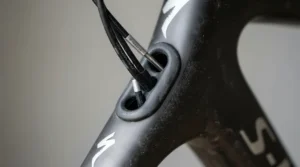
Here’s the frame-design angle. A mid-drive motor sits at the bottom bracket, the very spot where a traditional frame collects water. That sealed unit works as a barrier against water pooling there. Integrated lights also mean wiring runs through the frame, so ask your dealer where the cables enter.
A big 500Wh pack typically gives believable mixed-riding range in the mid-40s to 60 miles, according to published reviews. Reviewers praise smoothness and call out weight and price. Dealer support is a real advantage if a moisture problem appears.
Pros:
- ✅ Smooth Bosch mid-drive with natural hill-climbing
- ✅ Large 500Wh battery for longer rides
- ✅ Established brand with dealer backing
Cons:
- ❌ Heavy at around 26kg
- ❌ Premium price puts it out of reach for many
Expect to pay from around £2,500. It’s a bike you keep for years, so the cost per ride falls over time.
3. Carrera Vengeance E — a Halfords workshop on your doorstep
Convenience is the hook. The Carrera Vengeance E has a 250W Suntour rear hub, a 317Wh integrated battery, 100mm front suspension and 8-speed Shimano gearing. Mechanical disc brakes and a weight of about 23kg round it out.
Suspension forks add seals and stanchions, which means more places for trail mud and spray to collect. This is a rougher-use bike, so it sees more splash than a tidy commuter. The practical upside is that Halfords builds and services it. That makes a post-winter frame check a short trip rather than a project.
Realistic range is around 20 to 30 miles from the smaller battery, per published reviews. Owners value the convenience and aftercare. Complaints centre on range and the mechanical brakes.
Pros:
- ✅ Built and serviced at Halfords nationwide
- ✅ Front suspension tames rough tracks
- ✅ Eight-speed gearing copes with hills
Cons:
- ❌ Shorter real-world range than rivals
- ❌ Mechanical brakes are weaker in the wet
At around £1,000 it’s fair value, especially if local servicing matters to you.
4. Eskute Polluno — a removable battery that charges indoors
The big plus is that you carry the battery inside to charge. The Eskute Polluno has a 36V 10Ah removable battery with Samsung cells and 7-speed Shimano gearing. It’s a comfortable step-through, heavy at about 27kg, with a cadence sensor.
A removable pack is a double-edged sword for moisture. Taking it out lets you inspect the bay and dry things off. But that bay has contacts and a latch, which must be kept clean and dry. After a wet ride, wipe the bay and leave the battery out for a while rather than sealing damp air in.
Reviewers describe a believable 35 to 45 miles in real use. They like the comfort and the indoor charging, but note that it’s heavy and the cadence sensor feels less natural than a torque sensor.
Pros:
- ✅ Removable battery charges safely indoors
- ✅ Upright, easy-to-mount step-through frame
- ✅ Seven-speed gears for hills
Cons:
- ❌ Heavy at around 27kg
- ❌ Cadence sensor feels less natural
Priced around £900, it’s good value for a practical everyday bike.
5. Pendleton Somerby — classic style with a basket and rack
This one trades outright performance for charm. The Pendleton Somerby pairs a 250W front hub motor with a 36V removable battery, a basket and a rear rack. It weighs about 22kg and has a claimed range of around 35 miles.
A front hub motor sends its cable up the fork, so check that routing and its entry point. Racks and baskets are also extra bolts and holes. Every bolted accessory is a potential water path, so grease the fixings and re-check them periodically.
Reviewers like the easy step-through and the Halfords support. They note the front hub feels less planted than rear drive, and the range is short.
Pros:
- ✅ Low step-through frame is easy to mount
- ✅ Basket and rear rack included
- ✅ Removable battery for indoor charging
Cons:
- ❌ Front hub feels less planted than rear drive
- ❌ Short claimed range of around 35 miles
At around £1,000 it’s a stylish town bike. Value depends on how much you’d use that basket.
6. Fiido D11 — the battery hides in the seatpost
The clever touch is a battery tucked inside the seatpost. The Fiido D11 weighs only about 17kg, with a 36V 11.6Ah removable battery and a 250W rear hub motor. It folds for trains and hallways, though it runs narrow tyres and a single-speed setup.
Frame-design wise, this is the one to think hardest about. The seat tube interface is a classic water entry point on any bike, and here it also houses the electrics. Keep the seatpost clamp area clean, check that the seal is intact, and dry the area after wet rides. Folding hinges add joints worth checking too.
Reviewers love the lightness and the folding convenience. The narrow tyres suit smooth tarmac only.
Pros:
- ✅ Very light at around 17kg
- ✅ Battery hidden for clean lines
- ✅ Folds small for trains and flats
Cons:
- ❌ Narrow tyres suit smooth roads only
- ❌ Seatpost battery makes seat-tube sealing critical
Expect around £900. It’s strong value for a genuinely light folder, if you keep an eye on that seatpost.
7. Engwe P20 — lighting wired through the chainstays
The party trick is integrated indicators in the rear of the chainstays. The Engwe P20 is a 6061 aluminium folder with a 250W hub motor, a torque sensor and a carbon belt drive. It has hydraulic discs and a 36V 9.6Ah (345Wh) battery, at about 18.5kg.
Chainstays are the tubes where water would naturally sit, and here they also carry wiring. That makes sealing quality important. Sources conflict on water protection. One reviewer rode it through a torrential downpour and reports an IPX6 battery rating. Another source lists IPX4 for the frame and battery area. Until confirmed, treat it as splash-resistant. One UK review also noted assistance cutting out nearer 21km/h than the 25km/h limit.
Reviewers praise the weight, belt drive and battery. The motor characteristics drew some criticism.
Pros:
- ✅ Torque sensor and belt drive at this price
- ✅ Hydraulic discs for wet-weather braking
- ✅ Light at around 18.5kg
Cons:
- ❌ Conflicting water-protection claims across sources
- ❌ Assistance reported to cut early in one review
Priced in the £1,000–£1,200 range, it’s good value if you confirm the water-protection specifics.
What Is Electric Bike Drainage Frame Design?
Strip away the jargon and it’s about three questions. Where can water get in? Where can it collect? Where can it leave?
Every ebike frame is a network of hollow tubes that meet at the bottom bracket shell, a natural low point. Water that enters anywhere runs downhill to that point. Good electric bike drainage frame design gives that water an exit, usually a small weep hole, and limits the number of entrances in the first place.
Ebikes raise the stakes for a few reasons:
- More holes: rack mounts, mudguard eyelets and cable ports multiply entry points.
- Wiring inside: moisture reaching connectors causes the sort of gremlin faults that are hard to diagnose.
- Heavier use: commuters ride in all weathers, so frames see more spray.
A good frame won’t be bone dry, and that’s not the goal. The goal is a frame that sheds water quickly and never lets it sit.
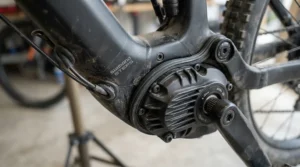
Frame Moisture Drainage Electric Bicycle: Where the Water Gets In
Frame moisture drainage on an electric bicycle starts with understanding the entry routes. As a frame builder’s guide to water inside steel frames explains, water can enter a frame from many points, and condensation is another route.
The usual suspects
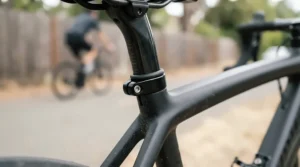
- Seatpost interface: widely cited as the most common entry point, since water runs down the seat tube.
- Headset and stem: a well-done headset lets in little, but it isn’t impossible.
- Bolt-on fittings: racks, mudguards and bottle cages each need a hole.
- Cable ports: open ports can let water in, though they can also let moisture escape.
Capillary action and splash
Water doesn’t need an obvious hole. It creeps into tight gaps through capillary action, particularly around seatposts and stems. Ebike-specific entry points include battery-bay seams and charging-port covers.
The takeaway: you can’t build a frame with no entrances, so a good frame gets water out as efficiently as it lets it in.
Drainage Hole Placement: Where Weep Holes Belong
Drainage hole placement is simple in principle. Holes belong at the lowest points. On most frames that means the bottom of the bottom bracket shell, which joins the seat tube, down tube and chainstays, so water from all three drains there. Builders also add holes at the bottom of fork tubes and near the rear dropouts on the seat stays.
Size matters
Experienced mechanics argue a weep hole must be big enough that water drains rather than being held by capillary action. Roughly 6mm is often suggested over 3mm. Placement matters too: a hole higher than the true low point leaves a puddle behind.
Check your own bike
- Look for holes at the bottom bracket, chainstay ends and fork lower tubes.
- Check that plastic plugs or cable-guide screws aren’t blocking them.
- Confirm drainage hole placement with the seller if the frame has a hidden battery bay.
A word of caution: don’t drill your own frame without the manufacturer’s approval. On an ebike you risk wiring, warranty and structural integrity.
Internal Condensation Prevention Ebike: Keeping Dew Out of the Tubes
Internal condensation prevention on an ebike is about temperature swings. When warm air inside a frame cools overnight, it contracts and pulls damp air in past the seatpost and other gaps. If there’s dew on the outside, there may be dew inside too.
Habits that help
- Store indoors or somewhere dry where temperature swings are smaller.
- Remove the battery and seatpost (where the design allows) after wet rides so air can circulate.
- Grease the seatpost to limit water running in.
- Cover cautiously. A breathable cover beats a plastic sheet that traps damp.
For steel frames
Steel frames can benefit from an annual internal wax or oil treatment, such as Frame Saver, according to builders. Most ebike frames are aluminium, which corrodes differently, but the principle of not letting water sit applies.
Never use heat guns near batteries or cables. If you dry a frame, use gentle airflow and keep the battery out of the room.
Internal Cable Routing Damp: The Hidden Entry Point
Internal cable routing damp problems arise because cables must enter and exit the frame somewhere. One mountain-bike writer notes that tubes-in-tubes routing is better at preventing water ingress than port-based routing, though it won’t stop everything. No exit seal is perfectly airtight, so even a clamped housing is a potential entry point.
Ebikes add an extra wrinkle. Because cables are hidden, wear or water ingress can go unnoticed unless you check regularly. Many e-bike cables use waterproof connectors and double insulation, and rubber grommets at frame entry points help.
| Aspect | Internal routing | External routing | Best For |
|---|---|---|---|
| Water exposure | Fewer exposed cables, but ports let moisture in | Cables in the open, easier to dry | Wet-climate commuters |
| Inspection | Harder; hidden faults | Easy visual checks | DIY maintainers |
| Appearance | Clean lines | More visible | Style-conscious riders |
| Servicing | Often needs special tools | Quick | Owners without a workshop |
External routing wins on inspectability, while internal routing wins on looks and protection from knocks. For UK weather, a bike with guide tubes or good grommets can be the better compromise. If you can’t tell what’s under the paint, ask the seller how the cables enter.
Frame Tubing Sealing: Closed Tubes, Open Tubes and the Middle Path
Frame tubing sealing splits builders into two camps. One group fabricates frames to be sealed, leaving only the seat tube open. The other deliberately leaves tubes open, reasoning that water will enter somewhere anyway and is better off draining through. Not having discs also makes inspecting the inside possible.
Which suits an ebike?
Sealed tubing protects against internal corrosion but can trap water that does get in. Open-tube designs drain better but let in more. Neither wins outright. What matters is that the designer chose deliberately.
Practical sealing tips
- Grease mounting bolts and seatposts.
- Cover or plug unused vent (“blow”) holes where the manufacturer allows.
- Inspect battery-bay gaskets regularly for cracks or flattening.
A cheap frame with unplanned holes is far riskier than a thoughtfully sealed one. Frame tubing sealing is also worth asking about at purchase, because it’s cheap to build in and expensive to fix later.
How to Choose Electric Bike Drainage Frame Design (6 Steps)
Short answer: pick an ebike with a sealed electrical system, a clear way for water to leave the frame, few unnecessary holes and a seller who’ll answer drainage questions.
- Check the IP rating of the battery, motor and display. For wet UK roads, IPX4 is a floor, and higher is better.
- Ask where the weep holes are. If the seller can’t say, that’s information in itself.
- Look at cable entry points. Guide tubes and grommets beat bare holes.
- Count accessory mounts. Every rack and mudguard bolt is another path for water.
- Inspect the battery bay and seals. Gaskets should be intact and the bay easy to dry.
- Prefer local servicing. A nearby workshop makes regular checks realistic.
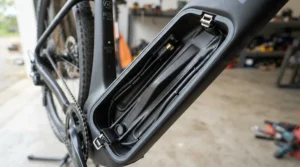
Practical Guide: A Five-Minute Post-Ride Drainage Routine
Amazon listings won’t tell you how to look after a frame. This routine will.
After every wet ride
- Wipe the frame, especially around the bottom bracket and seatpost clamp.
- Take out the battery (if removable) and dry the bay.
- Tilt the bike gently so water can leave through any weep holes.
- Check the chainstay ends and fork bottoms are clear.
Monthly
- Inspect gaskets and charging-port covers.
- Check cable entry points for cracked grommets.
- Re-grease the seatpost.
Common mistakes in the first 30 days
- Pressure washing near bearings, ports or the battery bay.
- Storing the bike under an unventilated plastic sheet.
- Ignoring a rattle that turns out to be water in the frame.
✨ Don’t Miss These Rain-Ready Picks!
🔍 Take your wet-weather commuting to the next level with these carefully selected ebikes. Click on any highlighted bike to check current pricing and availability. A well-chosen frame will help you ride through British winters with confidence!
Real-World Scenarios: Matching Frame Design to Your Ride
The all-weather commuter
Say you ride 8 miles each way, five days a week, through the wet months, with a budget around £1,000. A belt-drive bike like the ADO Air reduces drivetrain grime, while the Carrera Vengeance E gives you a local workshop. Prioritise guard coverage and a dry storage spot.
The train-and-flat dweller
You ride shorter hops, fold the bike daily and keep it indoors. The Fiido D11 or Engwe P20 suit you, but the weak spots are folding joints and the seat tube. A quick wipe-down and seat-tube check weekly will do the job.
The relaxed town rider
You make short errands with a basket, mostly in dry spells, and want easy mounting. The Pendleton Somerby or Eskute Polluno are comfortable, and indoor charging makes life easy. Grease accessory bolts and dry the battery bay after rain.
Problem → Solution: Damp Frame Troubleshooting
Water pours out when you lift the bike. This is usually normal drainage after rain. Tilt the bike to let it all out, then check the weep holes aren’t blocked.
A gurgling or rattling sound. Water is moving inside a tube. Remove the seatpost if your design allows, and drain from the seat tube.
Display flickers after wet rides. Suspect connector or cable-entry moisture. Dry the area, and ask a workshop to inspect the connectors. The Raleigh Motus, Carrera Vengeance E and Pendleton Somerby are all easy to get serviced through dealers or Halfords.
Rust-coloured water. This points to corrosion inside a steel part or fitting. Get the frame inspected promptly.
Safety and Regulations: What UK Law and IP Ratings Do (and Don’t) Cover
UK law defines what makes an ebike legal to ride, not how well its frame drains. Under the GOV.UK electric bike rules, an electrically assisted pedal cycle must have pedals, a motor of no more than 250W continuous rated power, and assistance cutting off at 15.5mph. Riders must be 14 or over.
None of that covers frame moisture. For battery and charger safety, look for recognised UKCA or CE markings, and use the charger supplied with the bike. If you spot damage, swelling or water inside a battery pack, stop using it and seek professional advice.
IP ratings help with sealed components, but they’re a starting point rather than a guarantee. A bike can have an IP65-rated battery and still suffer from a poorly protected cable run.
Long-Term Cost & Maintenance: Why Drainage Pays Back
Moisture damage creeps. Corroded connectors, seized fittings and noisy bearings tend to show up after the warranty clock has run down. A few minutes of care after wet rides costs nothing, and a mid-winter repair bill costs a lot.
| Budget band | Models | What you get | Best For |
|---|---|---|---|
| Around £900 | Eskute Polluno, Fiido D11 | Practical comfort or light folding | Value-minded riders |
| Around £1,000 | ADO Air, Carrera Vengeance E, Pendleton Somerby | Belt drive, servicing network or classic style | Everyday commuters |
| £1,000–£1,200 range | Engwe P20 | Light folder with belt drive | Mixed-mode commuters |
| From around £2,500 | Raleigh Motus | Bosch mid-drive and dealer backing | Long-term owners |
The cheapest bikes aren’t always cheapest to own, and the Raleigh Motus shows how a higher purchase price can spread across many years. At the lower end, the Eskute Polluno and Fiido D11 deliver good value if you stay on top of basic upkeep. Cost per ride falls fastest for riders who use the bike daily and maintain it.
FAQ
❓ Do electric bike frames need drain holes?
❓ Is it normal for water to come out of my ebike frame after rain?
❓ Can I drill a drain hole in my ebike frame?
❓ How often should I check inside my ebike frame for moisture?
❓ Should I store my ebike outside under a cover?
Conclusion
Electric bike drainage frame design is the unglamorous detail that separates an ebike that lasts from one that sulks. The principles are simple. Keep entrances few, give water an exit at the lowest point, treat cable ports with suspicion and dry the bike after wet rides.
Among the seven bikes here, the ADO Air and Engwe P20 appeal for their belt drives, while the Fiido D11 needs extra care around its seatpost battery. The Carrera Vengeance E and Pendleton Somerby come with Halfords servicing, the Eskute Polluno is a comfortable indoor-charging all-rounder, and the Raleigh Motus is the premium choice for years of use. None publish full drainage specs, so ask before you buy.
Recommended for You
- Electric Bike Weatherproof Saddle Cover: 7 Essential Picks (2026)
- Electric Bike For Coastal Salty Air: 7 Best Picks Tested (2026)
- Electric Bike Anti-Rust Frame Coating: 7 Top UK Picks (2026)
Disclaimer: This article contains affiliate links. As an Amazon Associate, I earn from qualifying purchases. If you purchase products through these links, we may earn a small commission at no additional cost to you.
✨ Found this helpful? Share it with your friends! 💬🤗
