In This Article
An electric bike for gritted winter roads is an ebike specified to survive salt, wet grit and road spray: sealed or belt-driven transmissions, full-length mudguards, hydraulic disc brakes, corrosion-resistant aluminium frames and electronics with solid ingress protection. It’s less about peak power and more about keeping moving parts clean, covered and easy to wash down. Everything else is a nice-to-have.

Here’s the problem in one line: the stuff that keeps a car safe on a frosty A-road is quietly eating your bike. Road salt lowers the freezing point of water, which is why gritters love it, but it also speeds up corrosion in the metal it touches. Swedish road-research trials on bare car steel in the early 1980s found corrosion running somewhere between double and four times the unsalted rate. Cars aren’t bikes. The chemistry doesn’t care.
An ebike raises the stakes. Alongside the chain, cassette and brake rotors, you’ve also got a motor, a battery, connectors and a display, all in the splash zone and all pricey to replace. A truly salt and grit resistant ebike doesn’t exist as a magic sealed unit. What exists is a sensible bundle of design choices plus one or two habits.
That’s the lens for the seven bikes below. I haven’t ridden them. This guide is built from manufacturer specifications, UK retailer listings and published reviews, and I flag the gaps where independent evidence is thin. Skim the table next, then read the winter-specific sections that explain why the specs matter when the clocks go back later this month.
Quick Comparison: Electric Bike for Gritted Winter Roads at a Glance
Here are the seven contenders side by side. Prices are ranges at the time of research and will move, so check current listings.
| Model | Drivetrain | Motor / Battery | Winter Kit | Price Range | Best For |
|---|---|---|---|---|---|
| ENGWE L20 3.0 Boost | Chain | 250W, 75Nm, 648Wh | Hydraulic discs, 3.0″ tyres | £1,000–£1,300 | Budget commuters who need fast charging |
| ENGWE Engine Pro 3.0 Boost | Chain | 250W, 90Nm, 720Wh | IPX5–IPX7 ratings, GPS | Above £1,300 (check) | Rough, hilly routes with outdoor parking |
| Tenways CGO600 Pro | Gates belt, single speed | 250W, 40Nm, 360Wh | Hydraulic discs; add mudguards | £1,500–£1,700 | Light, flat city commutes |
| Fiido C700 | Carbon belt, single speed | 250W, 40Nm, 313Wh | Mudguards, lights, indicators | Check current price | Flat urban riders |
| ADO Air 30 Ultra | Carbon belt, auto 3-speed hub | 250W, 40Nm, 370Wh | Mudguards, rack, lights | £1,500–£1,800 | Hybrid hills with zero chain care |
| Estarli e28.x | Carbon belt, auto 2/3-speed | 250W, 50Nm, 360Wh | Metal mudguards, lights | £1,850–£2,000 | British-assembled all-rounder |
| Cube Kathmandu Hybrid One 800 | Chain, mid-drive | Bosch CX, 800Wh | Mudguards, lights, carrier | Around £3,000 | Long, hilly commutes |
The belt-driven trio of Tenways CGO600 Pro, ADO Air 30 Ultra and Estarli e28.x make the strongest case for low-fuss grit tolerance. The latter two add automatic gearing for hills. The two ENGWE models trade drivetrain cleanliness for bigger batteries and lower prices, while the Cube Kathmandu Hybrid One 800 is the only mid-drive here, at a price to match. Budget buyers should note that the Tenways CGO600 Pro and Fiido C700 are single-speed, so a hilly route will tax your legs.
💬 Just one click — help others make better buying decisions too!😊
Top 7 Electric Bike for Gritted Winter Roads: Expert Analysis
The list runs roughly from budget to premium. Every verdict rests on specifications and published reviews, not hands-on testing. Availability on amazon.co.uk varies by seller, so check the live listing for your chosen model.
1. ENGWE L20 3.0 Boost — fast charging for short winter evenings
Winter gives you few daylight hours and no patience, so the ENGWE L20 3.0 Boost leads with a quoted two-hour charge from its 8A charger.
Underneath sits a 250W hub motor, a torque sensor, a quoted 75Nm and a 648Wh pack. Torque sensing matters on greasy tarmac because assistance rises with pedal effort instead of arriving as a sudden shove that can break traction. The 20″ x 3.0″ mid-fat tyres add contact patch without the lumbering feel of full fat tyres, and dual-piston hydraulic discs on 180mm rotors keep braking consistent in slush. ENGWE’s own FAQ lists lights, mudguards and a rear rack.
Here’s the honest catch. This is a conventional chain-driven bike, so every gritted commute feeds abrasive paste to the drivetrain. Based on the spec comparison, it suits the rider who’ll accept a weekly wipe-and-lube in exchange for a low entry price and a big battery. It’s also heavy, with TechRadar’s review of the earlier L20 weighing it at about 34kg.
Most detailed write-ups I found for this version are manufacturer-published, so treat the numbers as claims. TechRadar’s review of the earlier L20 praised its nippy feel and smooth Shimano shifting but noted a heavy battery. I couldn’t verify a deep pool of independent reviews for the 3.0 Boost itself.
Pros:
- ✅ Quoted two-hour fast charging
- ✅ Hydraulic discs with 180mm rotors
- ✅ Mid-fat tyres add grip without bulk
Cons:
- ❌ Chain drive exposes drivetrain to grit
- ❌ Heavy for carrying upstairs
Around £1,000–£1,300 at the time of research, which is strong value on paper. Check current price.
2. ENGWE Engine Pro 3.0 Boost — published ingress ratings and dual suspension
Where most brands simply say “weatherproof”, the ENGWE Engine Pro 3.0 Boost publishes numbers: IPX7 for wiring, IPX6 for display and lighting, and IPX5 for motor and controller.
Those ratings are encouraging but easy to over-read. IPX5 covers water jets, not salt-laden slurry or a pressure washer, and ingress tests use fresh water, not brine. The rest of the spec is muscular: 90Nm of quoted torque, a 720Wh pack, an 8A charger and a claimed 130km at the lightest assist. A 50mm fork and 62mm rear shock soak up frost-heaved tarmac, although the rear suspension adds pivots and a shock shaft that collect grime.
On the spec comparison, this suits a longer or rougher hilly commute where the bike sits outside all day. An integrated GPS and 4G module adds some reassurance there. It remains chain-driven, so it needs the same wash-down discipline as any derailleur bike.
Again, the detail is mostly manufacturer-sourced. I couldn’t find a body of independent UK reviews to summarise, so read the figures as the maker’s claims.
Pros:
- ✅ Published IPX5–IPX7 ingress ratings
- ✅ 90Nm torque suits steep gritted hills
- ✅ GPS tracking helps with outdoor parking
Cons:
- ❌ Rear suspension pivots trap winter grime
- ❌ Chain drive needs regular cleaning
Expect to pay more than for the ENGWE L20 3.0 Boost, so check current price. It’s worth it only if you’ll use the suspension and torque.
3. Tenways CGO600 Pro — lightest belt drive here
At roughly 16kg, the Tenways CGO600 Pro is the featherweight of this group, and its Gates carbon belt is the headline for anyone tired of degreasing chains.
UK retailer listings show a 250W rear hub motor with a torque sensor and around 40Nm, plus a removable 360Wh LG-cell battery and hydraulic discs. Forty newton-metres is modest, so treat this as a flat-to-rolling commuter. The belt is single-speed, which keeps the drivetrain simple and sealed from a lubrication standpoint, and manufacturers claim it lasts many thousands of miles. That’s a claim, not a guarantee. Weight also helps in winter: a 16kg bike is easy to lift into a hallway, and bikes kept indoors suffer far less.
Reviewers praise the quiet, natural assistance and the clean belt. Cycling Electric’s round-up also notes it doesn’t ship with a rack or mudguards as standard, which matters a lot here. For gritted roads, budget for full-length mudguards immediately.
Pros:
- ✅ Around 16kg, easy to carry indoors
- ✅ Belt drive needs no lubrication
- ✅ Torque sensor gives smooth assistance
Cons:
- ❌ No mudguards as standard
- ❌ Single speed struggles on steep hills
Around £1,500–£1,700 at the time of research. Good value if you add mudguards and your route is flat.
4. Fiido C700 — carbon belt with built-in indicators
The Fiido C700 pairs a carbon belt drive with integrated indicators, a combination you rarely see below premium money.
European retailer listings show a 250W motor, around 40Nm, a torque sensor and a 313Wh battery with a claimed range up to 83km. The weight is about 20kg. Those indicators earn their keep in December gloom, when a hand signal inside a bulky glove is easy for drivers to miss. Mudguards, lights and a kickstand are listed in the box, though one retailer notes the buyer fits the mudguards after delivery.
It’s single-speed, like the Tenways CGO600 Pro, so the same hill caveat applies. The battery is the smallest in this group, which matters because cold weather trims range. Based on the spec comparison, it suits a short, flat, well-lit commute where cleanliness and visibility count for more than climbing ability.
I couldn’t find independent UK review sentiment for this model, so the picture here is the manufacturer’s and retailers’ claims only.
Pros:
- ✅ Integrated indicators improve winter visibility
- ✅ Carbon belt keeps grit off the chain
- ✅ Mudguards and lights listed in the box
Cons:
- ❌ Smallest battery in this group
- ❌ Single speed limits hilly use
UK pricing varies by seller, so check current price. It looks competitive for a belt-driven, fully equipped bike.
5. ADO Air 30 Ultra — automatic three-speed hub plus belt
The ADO Air 30 Ultra solves the belt drive’s biggest weakness, hills, with a Bafang H730 motor that contains an automatic three-speed internal hub.
That setup keeps gearing sealed inside the hub, so a carbon belt can sit on top of it. The 40Nm torque-sensor motor, roughly 370Wh battery, hydraulic discs and 700c x 40c tyres are a sensible winter spec. ADO also lists aluminium mudguards, a rack and lights, and rates the electrics at IPX5 with an IPX7 display. At about 20.5kg it’s manageable indoors.
Reviewers broadly like the package. Cycling News praised the belt drive, solid mudguards and robust rack but called the battery indicator poor, with no percentage reading. Electroheads managed around 30 miles in a loaded winter test against 38 in summer, well short of the maker’s 100km claim. That’s a useful real-world reminder to budget range conservatively.
Pros:
- ✅ Automatic hub handles hills with no gear fuss
- ✅ Mudguards, rack and lights included
- ✅ Belt drive removes chain cleaning
Cons:
- ❌ Poor battery level indicator
- ❌ Real-world winter range well below claims
Around £1,500–£1,800 at the time of research. It’s good value for a fully equipped, low-maintenance commuter. Check current price.
6. Estarli e28.x — British-assembled belt-drive all-rounder
Built in Berkhamsted, the Estarli e28.x is the belt-driven option for riders who want UK assembly and a two-year warranty.
The spec sheet reads like a winter checklist: a Bafang automatic 2-speed hub motor (a 3-speed is optional), 250W and 50Nm, a removable Samsung 360Wh battery, Tektro hydraulic discs, metal mudguards and wired-in lights. Cycling Electric lists Continental Terra Trail 45mm tyres, a sensible width for wet grit. At roughly 19kg with the battery it’s easy to carry up steps, and indoor storage is the single best thing you can do for any bike in winter.
Reviewers like the package. Road.cc called it a well-designed urban commuter, ready to ride with mudguards fitted. Another review noted the automatic gearbox feels odd at first. Some listings show mudguards as optional, so confirm the version you buy.
Pros:
- ✅ Metal mudguards and lights on the spec
- ✅ Wider 45mm tyres suit wet grit
- ✅ Light enough to carry indoors
Cons:
- ❌ Automatic gearbox needs getting used to
- ❌ Higher price than other belt options
Around £1,850–£2,000 at the time of research. It’s good value if you prize UK support and a clean drivetrain. Check current price.
7. Cube Kathmandu Hybrid One 800 — 800Wh mid-drive power for long, hilly commutes
The Cube Kathmandu Hybrid One 800 is the heavyweight option, built around Bosch’s Performance Line CX motor and an 800Wh PowerTube battery.
Retailers quote the motor’s torque ceiling anywhere from 85Nm to 120Nm depending on setup, so check that. The practical point is that mid-drive power plus a huge battery means a long, steep commute barely dents you. UK retailers list Acid mudguards, Acid lights, a kickstand and an integrated carrier, which is exactly the kit gritted roads demand. The suspension seatpost adds comfort on cracked surfaces.
The catch is the chain. A strong mid-drive pushes a lot of torque through it, so grit-related chain wear arrives faster than on a gentle hub-drive bike. That’s reasoning, not a measured result. Cube’s pricier Comfort SLX variant uses a belt-driven Enviolo hub if that matters. I couldn’t find a verified pool of independent reviews for the 2026 model.
Pros:
- ✅ Large 800Wh battery for long commutes
- ✅ Mudguards, lights and carrier fitted
- ✅ Strong mid-drive for steep hills
Cons:
- ❌ Chain drive faces heavy grit loads
- ❌ Highest price in this guide
Around £3,000 at the time of research. Worth it only for demanding routes. Check current price.
Wash-Down Maintenance Routine: A 10-Minute Post-Ride Reset
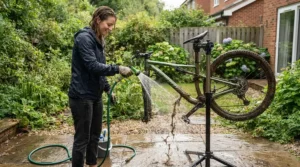
A wash-down maintenance routine is the cheapest winter upgrade you can make. Cycling UK’s guidance says gritted roads speed up corrosion, and that you don’t need a full drenching each time, just a damp rag and bike-specific cleaner on the frame and undercarriage. Here’s a routine that works across all seven bikes.
- Bring it inside first. Keeping the bike indoors, even in a shed, is the biggest single protection against rust and aluminium corrosion.
- Check your manual, then remove the battery. Many manufacturers advise this before washing. Keep water away from charging ports and contacts.
- Rinse gently. Use a hose, watering can or low-pressure setup. A high-pressure jet can blast grease out of bearings, as Cycling UK’s mechanic advice explains.
- Wipe, don’t scrub. Work from top to bottom with a soft cloth and bike cleaner, finishing with the brake rotors and mudguard undersides.
- Dry it off. A towel and a spell indoors beats leaving the salt damp overnight.
- Chain bikes only: lube sparingly. Use a dripper lube, not a spray, near disc brakes. Wipe the excess off, because surplus oil attracts grit. That applies to the ENGWE L20 3.0 Boost, ENGWE Engine Pro 3.0 Boost and Cube Kathmandu Hybrid One 800.
- Belt bikes: rinse and inspect. The Tenways CGO600 Pro, Fiido C700, ADO Air 30 Ultra and Estarli e28.x skip the lube but still benefit from a clean and a visual check.
- Charge the battery at room temperature. Most makers advise against charging a frozen pack, so check your manual.
The most common first-30-days mistake is waiting until the bike looks filthy. Salt does its damage invisibly, so a quick wipe after salty rides beats a heroic clean once a month.
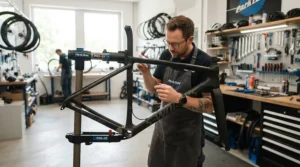
Real-World Scenarios: Matching the Bike to Your Commute
Specs only mean something against a real route. Here are four rider profiles, with budget, environment and frequency of use.
The flat city commuter. Six miles each way, five days a week, bike locked outdoors, budget up to £1,700. The Tenways CGO600 Pro or Fiido C700 fit: single-speed belts are perfect on flat ground, and low weight helps. Add mudguards if they’re not included, and take the battery indoors each day.
The hilly lane rider. Twelve unlit miles over rolling hills, three days a week. The Cube Kathmandu Hybrid One 800 has the torque and battery for it, while the ADO Air 30 Ultra is the cheaper, cleaner alternative if the gradients are moderate.
The flat-dweller with stairs. Indoor storage up two flights is non-negotiable. At roughly 19kg, the Estarli e28.x is the easiest to carry, and indoor storage protects it from salt.
The budget rider needing fast turnarounds. Short, frequent trips with irregular charging windows. The ENGWE L20 3.0 Boost has the quick-charge advantage, and you accept chain upkeep as the price.
For rough, hilly commutes where the bike parks outdoors, the ENGWE Engine Pro 3.0 Boost is the one to weigh. Match the bike to your route before you match it to your wallet.
How to Choose an Electric Bike for Gritted Winter Roads
Choosing well means working through the problem in order. Here are six steps.
- Pick the drivetrain first. A belt drive removes lubrication and rust from the equation, while a chain demands weekly care. Decide which trade-off you’ll honestly accept.
- Insist on full-length mudguards. They protect you and the components. Check whether they’re included, as with the Tenways CGO600 Pro, which isn’t.
- Choose hydraulic disc brakes. Cable systems lose bite once cold and wet, and consistency is your friend on slick roads.
- Check tyre width and puncture protection. For gritted tarmac, 35–50mm of grippy, puncture-resistant rubber is plenty. Save fat tyres for snow.
- Read the ingress ratings and battery design. IPX numbers are useful but not salt-proof. A removable battery lets you charge indoors.
- Plan for less range. Cold cuts battery output, so choose a pack with headroom over your daily distance.
If you only act on one step, make it the first. It decides how much of your winter you’ll spend with a rag in your hand.
Salt and Grit Resistant Ebike: What Actually Survives a Gritted Winter
No bike is immune, but some are far better prepared. A salt and grit resistant ebike starts with materials. Aluminium frames don’t rust like steel, but they do corrode, and Cycling UK’s winter-readiness guide is blunt that keeping a bike indoors prevents both rust and aluminium corrosion.
The weak points are usually the small, unglamorous parts: steel bolts, spokes, cable ends, brake rotors, and the contacts in connectors and battery cradles. A bike with stainless fasteners and sealed cable routing earns its premium here. It’s worth looking at the photos of a model’s underside, because that’s where the salt lives.
Ingress protection is the other pillar. Bikes like the ENGWE Engine Pro 3.0 Boost and ADO Air 30 Ultra publish IPX ratings. They’re meaningful, but they describe freshwater tests, not months of brine mist, and none of them cover pressure washing.
So the practical definition of a salt and grit resistant ebike is a bundle: corrosion-tolerant materials, mudguards, sealed or belt-driven transmissions and an owner who wipes it down. The bike does half the work. You do the other half.
Winter Road Grime Electric Bicycle: Where the Muck Goes and What It Hits
Winter road grime isn’t just dirt. It’s a paste of salt, water, fine grit and traffic oil, and an electric bicycle gives it more targets than a normal bike.
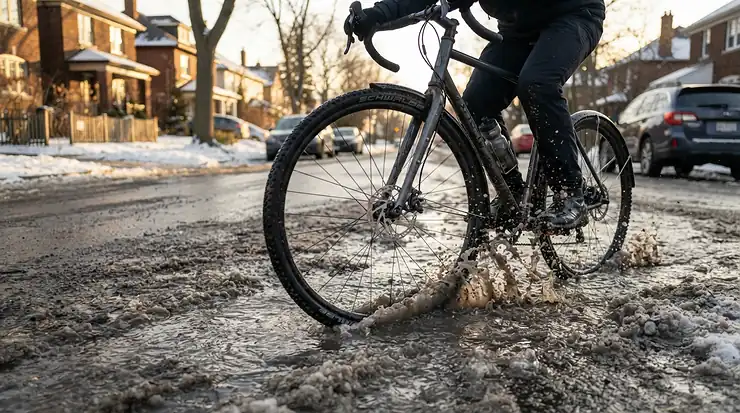
The rear tyre throws spray upwards and forwards, so the chain, rear hub motor, brake calipers and the gap between mudguard and tyre all get coated. Brakes suffer first: Cycling UK notes that pads wear faster when covered in dirt and salt. Rotors can polish themselves clean, but contaminated pads lose life quickly.
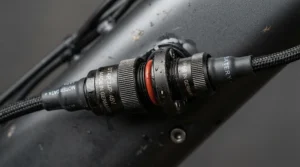
Next come the electrics. Connectors, display ports and battery contacts can pick up salt film that causes poor contacts. Many mechanics suggest a smear of dielectric grease on exposed contacts, though you should follow your manufacturer’s advice.
Mudguards are the real defence. A full-length guard with a mudflap cuts the amount of muck reaching the drivetrain and your shoes. That’s why bikes like the Estarli e28.x and Cube Kathmandu Hybrid One 800, which list mudguards in their equipment, have a built-in advantage over a bare frame.
Mid-drive bikes carry the motor low, where road spray lands. Rear hub bikes keep the motor in the spray cone behind the wheel. Neither is immune, which is why the winter road grime electric bicycle needs a dependable post-ride wipe.
Grit-Related Chain Wear: Why Belt Drives Earn Their Premium
Grit-related chain wear is simple physics. Fine grit works into the pins and rollers like sandpaper, stretching the chain and chewing the cassette. Cycling UK warns that over-oiling makes it worse, because surplus oil attracts road dirt and turns into an abrasive paste.
An ebike amplifies this. A motor adds torque through the drivetrain, and wet-lube chains collect more dirt. Belts sidestep much of it: no lubrication, no rust, nothing to collect a gritty film. Manufacturers claim long lifespans, such as ADO’s 30,000 km figure, but those are claims, not guarantees. Belts still need a rinse and an occasional visual check.
| Drivetrain | Grit Tolerance | Winter Upkeep | Replacement Cost | Best For |
|---|---|---|---|---|
| Exposed chain, derailleur | Low | Weekly clean and lube | Frequent, modest | ENGWE L20 3.0 Boost, ENGWE Engine Pro 3.0 Boost, Cube Kathmandu Hybrid One 800 |
| Belt, single speed | High | Rinse and inspect | Rare, higher | Tenways CGO600 Pro, Fiido C700 |
| Belt, automatic hub | High | Rinse and inspect | Rare, higher | ADO Air 30 Ultra, Estarli e28.x |
The table shows why belts suit anyone who wants to minimise grit-related chain wear: they trade a higher purchase price for far less winter labour. The catch is gearing flexibility, which is why the automatic-hub bikes are the most balanced option. If you’re happy with a regular wipe-and-lube, a chain is perfectly workable, and the Cube Kathmandu Hybrid One 800 shows what you get for the money.

Winter Component Protection: Mudguards, Seals, Bearings and Batteries
Winter component protection is about stopping the damage before it starts. Think in layers.
Layer one: stop the spray. Full-length mudguards with flaps do more than any spray or wax. The Tenways CGO600 Pro shows why you must verify what’s included.
Layer two: protect the metal. After washing, many riders apply a thin protective coat to the frame and exposed bolts. Pedalcover’s guidance suggests protecting the frame after each wash, though always avoid getting products on rotors and pads.
Layer three: look after the bearings. Cycling UK’s mechanic warns against jet washing because it can drive grit into bearings and strip grease. A low-pressure rinse and regular checks are far kinder.
Layer four: respect the battery. Cold temperatures cut output, and many manufacturers advise against charging a frozen pack. Bring it indoors and let it reach room temperature before plugging in. A removable battery, like those on the ADO Air 30 Ultra and Estarli e28.x, makes that easy.
Layer five: store smartly. Indoors if you can, covered outdoors if you can’t. The gap between those two outcomes is bigger than the gap between most bikes on this list.
Features That Actually Matter (And Those That Don’t)
Marketing loves big numbers. Gritted roads reward boring competence.
What matters: belt or sealed drivetrains, full mudguards, hydraulic discs, grippy mid-width tyres, good lights, a removable battery and decent weather sealing. Those are the features that cut maintenance and keep you safe.
What doesn’t matter much:
- Headline torque. Past a certain level, extra newton-metres don’t help on a flat commute. A smooth torque sensor matters more than a bigger number.
- Giant batteries on short commutes. A big pack adds weight you’ll carry up steps. The Cube Kathmandu Hybrid One 800‘s 800Wh is brilliant for long routes and overkill for short ones.
- Fat tyres. Great for snow, unnecessary on gritted tarmac, and heavier.
- Claimed range. Real-world winter figures run well below brochure numbers, as the ADO Air 30 Ultra‘s test shows.
The best filter is to write down your route, storage and hills, then ignore any spec that doesn’t solve a problem on that list.
Long-Term Cost & Maintenance: What a Gritted Winter Really Costs
Purchase price is only one line. Over three winters, the real bill includes consumables.
A chain-driven bike needs chains, cassettes and chainrings replacing as grit wears them, and those parts can add up to a three-figure sum. Belt-driven bikes cost more upfront but spend less on consumables, though a replacement belt is a pricier single purchase.
Cost-per-use helps. A bike in the £1,500–£1,700 bracket used for roughly 660 commutes over three winters works out at about £2.30–£2.60 per commute before running costs, which compares favourably with many daily transport costs.
| Model | Price Range | Winter-Ready Out of the Box? | Value Verdict | Best For |
|---|---|---|---|---|
| ENGWE L20 3.0 Boost | £1,000–£1,300 | Mostly | Strong on paper | Budget commuters |
| Tenways CGO600 Pro | £1,500–£1,700 | Needs mudguards | Good if flat | Light, flat routes |
| ADO Air 30 Ultra | £1,500–£1,800 | Yes | Excellent all-rounder | Hybrid hills |
| Estarli e28.x | £1,850–£2,000 | Yes | Premium, UK-built | Indoor-stored daily rides |
| Cube Kathmandu Hybrid One 800 | Around £3,000 | Yes | Costly but capable | Long, hilly routes |
The numbers suggest the ADO Air 30 Ultra is the value sweet spot, while the Estarli e28.x earns its premium through UK build and support. The ENGWE L20 3.0 Boost wins on upfront cost but asks for more of your time. Don’t forget the hidden cost of ignoring maintenance: a neglected drivetrain is the quickest way to turn a good deal into an expensive one.
Safety and Regulations: Keeping Your Winter Ebike Legal
Even the best electric bike for gritted winter roads is only useful if it’s legal. Under government rules for electric bikes, an EAPC must have pedals that can propel it and a motor with continuous rated power of no more than 250W. The motor must also stop assisting above 15.5mph. If it meets those rules, you can ride from age 14 without a licence, registration, tax or insurance, and you can use cycle paths but not pavements.
Those rules cover Great Britain, so check the position if you live in Northern Ireland. Bikes that exceed the limits are treated as mopeds or motorcycles, and police have warned that some online sellers wrongly describe non-compliant bikes as road legal. Look for clear EAPC statements, 250W and 25km/h assistance, and CE or UKCA marking where applicable.
Winter adds its own safety layer. Lights are essential in the dark, and the lighting on bikes like the Fiido C700 and Estarli e28.x is a real advantage. Use the manufacturer’s charger, charge in a sensible place, and don’t leave a battery charging unattended.
FAQ
❓ What is the best electric bike for gritted winter roads under £2,000?
❓ How much range does an ebike lose in winter?
❓ Are belt drive ebikes worth the extra money for salty roads?
❓ Can I leave my ebike outside all winter?
❓ Do I need mudguards on an ebike for winter commuting?
Conclusion
Choosing an electric bike for gritted winter roads is less about horsepower and more about discipline, both the bike’s and yours. Belt drives, full mudguards, hydraulic discs and a removable battery do most of the heavy lifting, and a quick wash-down maintenance routine does the rest.
If you want the cleanest, simplest winter, the belt-driven ADO Air 30 Ultra and Estarli e28.x are the most balanced picks, with automatic hubs that handle hills. The Tenways CGO600 Pro and Fiido C700 suit flat commutes where light weight and low upkeep matter, and the ENGWE L20 3.0 Boost wins on price if you’ll accept chain care. For long, steep or rough routes, the ENGWE Engine Pro 3.0 Boost and Cube Kathmandu Hybrid One 800 bring the muscle and battery.
Whatever you choose, remember that the best salt and grit resistant ebike is one you actually keep clean. Check current prices and availability, confirm what’s included, and let your route make the decision.
✨ Ready to ride through winter without the grime?
🚴♂️ Check current pricing on your favourite pick today, and keep your commute clean, safe and low-maintenance all season long!
Recommended for You
- Electric Bike Drainage Frame Design: 7 Best Rain-Ready Picks (2026)
- Electric Bike Weatherproof Saddle Cover: 7 Essential Picks (2026)
- Electric Bike For Coastal Salty Air: 7 Best Picks Tested (2026)
Disclaimer: This article contains affiliate links. As an Amazon Associate, I earn from qualifying purchases. If you purchase products through these links, we may earn a small commission at no additional cost to you.
✨ Found this helpful? Share it with your friends! 💬🤗
