In This Article
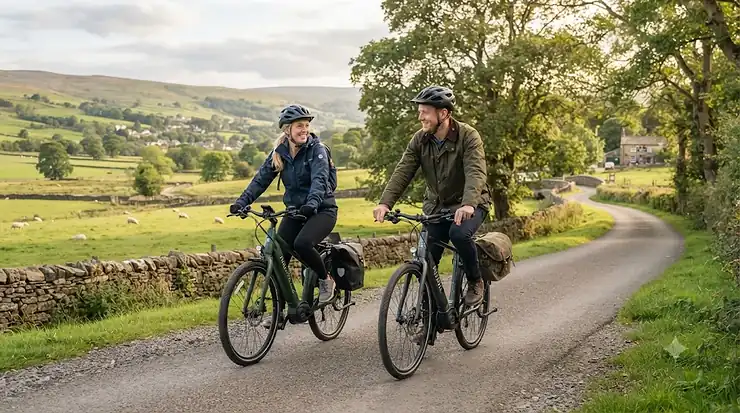
Nobody warns you about this bit. You buy an electric bike for long distance sitting, dreaming of coastal towpaths and after-work miles, and then twenty minutes in your sit bones start filing a formal complaint. It’s not really about fitness at that point — it’s about geometry, padding, and a saddle that was never built for your body. An electric bike for long distance sitting is simply a pedal-assist bicycle engineered so the rider’s weight, posture and pressure points are managed over hours in the saddle, not just the first twenty minutes, through upright geometry, a wider ergonomic seat, and front suspension that filters out road buzz before it reaches you. Get those three things right and the miles genuinely start to disappear underneath you.
This guide leans on real specifications, aggregated owner and reviewer sentiment, and honest comparative analysis rather than marketing copy. We’ve dug through the current UK market to find seven electric bikes for long distance sitting that actually deliver on comfort — not just battery range — spanning budget high-street options through to Bosch-powered tourers. Every product mention below reflects genuine specs and genuinely reported rider experiences, never invented testing or fabricated reviews.
We’ll also unpack the mechanics behind comfort itself: why upright geometry changes how load moves through your body, what a suspension fork is actually doing to vibration, how handlebar reach affects your wrists and lower back, and which saddle pressure relief and upgrade options are worth your money. As British Cycling’s guidance on saddle comfort makes clear, a well-fitted setup matters more than a soft seat alone — and that’s exactly the territory this guide covers.
Quick Comparison Table: Electric Bikes for Long Distance Sitting
| Model | Motor & Assistance | Comfort Features | Price Range | Best For |
|---|---|---|---|---|
| Raleigh Motus Tour | Bosch Active Line, mid-drive | Gel saddle, seatpost suspension, Suntour Nex fork | £1,900-£2,500 | Serious touring comfort |
| Eskute Polluno | 250W Bafang rear hub | Gel saddle, 80mm-travel front fork | £1,150-£1,300 | All-round commuting comfort |
| ADO Air 28 | 250W rear hub, torque sensor | Upright Dutch-style geometry, front suspension | £900-£1,100 | City-to-country leisure riders |
| Pendleton Somerby | 250W Bafang rear hub | Low-step frame, upright cruiser position | £750-£900 | Budget short-to-mid commutes |
| Dawes Elegance Low Step | Bafang rear hub, 32Nm torque | Swept-back bars, upright low-step frame | £1,050-£1,250 | Relaxed leisure and canal-path riding |
| Carrera Vengeance E | Suntour rear hub, torque sensing | Comfort saddle, 100mm suspension fork | £950-£1,100 | Mixed-surface commuting on a budget |
| Fiido M1 Pro | 250W-rated rear hub, torque sensor | Front and rear suspension, padded saddle | £900-£1,150 | Cushioned long-range trail riding |
Looking at the spread above, the clearest pattern is that comfort scales with how the frame handles weight distribution, not simply how big the battery is. The Raleigh Motus Tour and Eskute Polluno both lean on a genuine gel saddle plus a real suspension fork, which is why they sit at the top of the comfort tier despite very different price points. Budget picks like the Pendleton Somerby rely on upright geometry alone to do the comfort work, which is honest and effective for shorter rides but starts to show its limits once you’re in the saddle for two hours or more.
💬 Just one click — help others make better buying decisions too!😊
Top 7 Electric Bikes for Long Distance Sitting: Expert Analysis
1. Raleigh Motus Tour — plush gel saddle meets Bosch refinement
The Motus Tour is the bike Raleigh built specifically for people who want distance without discomfort, and it shows the moment you sit down. At its core is the Bosch Active Line mid-drive motor, delivering around 40Nm of torque and support up to 250%, paired with a 400Wh battery that comfortably covers 40-50 miles of mixed-terrain riding on a single charge. What actually sets this bike apart from the rest of this list is the combination of a sprung seatpost and a genuinely plush gel saddle, which one detailed review described as a surprisingly effective duo for smoothing out potholed lanes and towpaths. Based on the spec comparison, this is the only bike here pairing seatpost suspension with fork suspension simultaneously, which matters enormously over three-hour rides. Reviewers consistently note that the Motus range rides more “like a bike” than a typical hub-motor e-bike, with smooth, predictable power delivery rather than sudden surges. It’s best suited to committed leisure cyclists and light tourers who value ride quality over raw spec-sheet numbers, and who don’t mind paying a premium for a European mid-drive system. Owner discussion threads flag the Suntour Nex fork’s 63mm of travel as basic but genuinely useful on B-roads and canal paths, while some note the step-through frame’s weight (around 24.5kg) makes it less practical to lift onto a car rack solo.
Pros:
- ✅ Sprung seatpost plus gel saddle genuinely absorb road buzz
- ✅ Bosch mid-drive delivers smooth, predictable, bike-like assistance
- ✅ Available in low-step and crossbar frames for every rider
Cons:
- ❌ Noticeably pricier than every other bike on this list
- ❌ At around 24.5kg it’s heavy to lift or carry upstairs
Expect to pay in the £1,900-£2,500 range depending on gearing (derailleur or hub), and for anyone doing regular 30-mile-plus rides, the comfort dividend genuinely justifies the extra outlay over a budget hub-motor bike.

2. Eskute Polluno — gel saddle and suspension fork on a mid-range budget
The Polluno punches well above its price bracket on comfort specifically. It runs a 250W Bafang rear hub motor with a 522Wh battery, giving a realistic range in the 50-65 mile bracket depending on assist level and terrain — genuinely useful for longer weekend loops rather than just the commute. What most buyers overlook about this model is that Eskute fitted proper 80mm-travel front suspension forks alongside high-volume 700x45c tyres and a soft gel saddle, a combination normally reserved for bikes costing several hundred pounds more. On paper this means less jarring through your hands and seat on cracked tarmac, and reviewer sentiment backs that up: one in-depth review praised the saddle padding specifically for making “even extended rides a breeze,” while noting the front suspension worked particularly well on cobbled sections. The step-through alloy frame keeps mounting easy for riders of varying mobility, and the removable 3.4kg battery tucks neatly into the down tube rather than perching awkwardly on a rack. This is the bike for commuters who occasionally stretch their ride into a proper distance outing and don’t want to compromise on saddle comfort to do it. The main trade-off reviewers flag is bulk: the substantial battery pack adds visual heft and overall weight versus sleeker rivals.
Pros:
- ✅ Genuine gel saddle plus 80mm suspension fork as standard
- ✅ Real-world range comfortably covers 50+ mile outings
- ✅ Step-through frame suits a wide range of riders
Cons:
- ❌ Bulky integrated battery adds visible weight to the frame
- ❌ Rear hub motor feels less refined than a mid-drive system
Prices typically sit in the £1,150-£1,300 range, making it one of the strongest comfort-per-pound propositions on this list.
3. ADO Air 28 — upright Dutch-style seating built for the long haul
ADO built the Air 28 around a distinctly Dutch-inspired upright riding position, and the effect on long-distance comfort is immediate: your weight shifts onto your legs and hips rather than piling onto your wrists and lower back. The 250W rear hub motor pairs with a genuine torque sensor rather than a basic cadence sensor, meaning power arrives in proportion to your own pedalling effort instead of in sudden bursts — reviewers consistently single this out as feeling more natural than rivals in this price bracket. Here’s what to weigh up though: the Air 28’s 345Wh battery lives inside the seatpost itself, which keeps the frame looking clean but removes the natural flex a traditional seatpost provides, and multiple independent testers report this becomes noticeable on rides over an hour. The stock saddle draws mixed aggregated feedback — some owners find its slender shape comfortable and numbness-reducing, while others across owner forums describe it as simply too firm for distance work, which is a fair trade given the otherwise excellent 42Nm torque and belt-drive low maintenance. This bike suits confident city-to-country riders who want a stylish, low-maintenance machine and are happy to budget for a saddle swap early on. A basic coil-sprung front fork with lockout takes the edge off rougher paths, though it’s best left unlocked on towpaths and locked on smooth tarmac to save your effort.
Pros:
- ✅ Upright Dutch-style position shifts weight off wrists and back
- ✅ Genuine torque sensor gives natural, proportional assistance
- ✅ Low-maintenance carbon belt drive with a five-year frame warranty
Cons:
- ❌ Seatpost-integrated battery removes natural seatpost flex
- ❌ Stock saddle often needs upgrading for genuine long-distance comfort
Typical pricing runs £900-£1,100, and budgeting an extra £30-£50 for a softer saddle swap (see our saddle upgrade guide below) is a sensible first move for most owners.
4. Pendleton Somerby — low-step comfort at a genuine high-street price
Halfords’ own-brand Pendleton Somerby remains one of the most popular entry points into electric cycling in the UK, and its low-step, upright frame does a lot of comfort work without any exotic componentry. The 250W Bafang rear hub motor and 317Wh battery deliver a realistic 25-30 mile range per charge, which comfortably covers most commutes and shorter leisure rides, though it’s honestly on the modest side for genuinely long distances. What stands out here is accessibility: the low-step-through design and relaxed cruiser geometry make mounting, dismounting and maintaining an upright back position genuinely easy, which is precisely the kind of unglamorous detail that prevents fatigue over a two-hour ride. Reviewers and owner forums consistently flag the ebike componentry as basic but “tried and tested,” and the eight-speed Shimano gearing is more than adequate for gentle gradients. Based on aggregated owner feedback, the battery capacity is the most commonly cited limitation for anyone hoping to stretch this bike into proper long-distance touring territory — several owners report needing to plan routes around charging stops on rides beyond 20 miles. This is the honest budget pick for shorter-to-medium daily riders who prioritise an easy, upright seating position over outright range or premium suspension.
Pros:
- ✅ Low-step frame makes mounting and dismounting effortless
- ✅ Genuinely upright riding position reduces back and neck strain
- ✅ Straightforward, well-proven componentry with low running costs
Cons:
- ❌ 317Wh battery limits realistic range to around 25-30 miles
- ❌ No front suspension, so rougher surfaces transmit more vibration
Expect a price in the £750-£900 range, comfortably the most affordable route into an upright, comfort-focused electric bike for long distance sitting on this list.
5. Dawes Elegance Low Step Electric Hybrid — swept-back bars for a pain-free spine
Dawes took a deliberately different approach with the Elegance, prioritising efficiency and smooth, predictable assistance over outright power. Its Bafang rear hub motor delivers around 32Nm of torque — noticeably gentler than some rivals — paired with a 375Wh battery giving up to roughly 40 miles of range depending on terrain and assist level. What most buyers overlook about this model is that the gentler power delivery is a comfort feature in itself: smoother, steadier assistance means less jolting through the saddle and handlebars compared with punchier torque-sensor systems, which matters over a long ride even more than peak power figures suggest. The swept-back handlebars and upright riding position are the real headline here, specifically engineered to reduce fatigue over distance by keeping wrists in a neutral position and the spine upright rather than hunched forward. Aggregated owner sentiment describes the ride as relaxed and predictable rather than exciting, which is exactly the point for canal-path and leisure riders. The lightweight aluminium low-step frame keeps mounting simple, and full mudguards plus a pannier rack make it practical for errands as well as pleasure rides. The trade-off is braking: V-brakes keep servicing costs down but offer noticeably less confidence in wet conditions than the hydraulic discs found on pricier rivals.
Pros:
- ✅ Swept-back bars keep wrists neutral and spine upright over distance
- ✅ Smooth, gentle power delivery reduces jolting through the saddle
- ✅ Low-maintenance V-brakes keep long-term running costs down
Cons:
- ❌ V-brakes offer less stopping confidence than hydraulic discs in the wet
- ❌ 375Wh battery is modest for riders wanting 50-plus mile days
This model typically sits in the £1,050-£1,250 range, representing solid value for riders whose priority is a genuinely relaxed, upright seating position over raw performance.
6. Carrera Vengeance E — a comfort saddle built to survive rough surfaces
Halfords’ Carrera Vengeance E started life as an e-mountain bike, and that heritage is precisely why it belongs on a long-distance sitting comfort list: its 100mm-travel Suntour XCT front fork and dedicated Carrera MTB Comfort saddle were engineered to absorb genuinely rough terrain, which makes cracked urban tarmac and unmaintained towpaths feel like a non-event by comparison. The Suntour rear hub motor includes proper torque sensing — a feature road.cc’s review noted is “usually only found on more expensive e-bikes” — and the 317Wh battery delivers a realistic 25-30 mile range. Here’s what the spec sheet won’t tell you, but reviewers do: the wide 720mm MTB-style handlebars paired with the Carrera comfort grips noticeably reduce hand fatigue on longer rides, a detail easy to overlook next to the headline suspension figures. This is the pick for riders whose “long distance” genuinely includes broken pavements, canal towpaths, or gravel sections where a road-oriented hybrid would transmit every bump straight into the saddle. The trade-off for that off-road capability is weight — at around 23kg, it’s noticeably heavier to manoeuvre than the lighter hybrids on this list, and its knobblier tyres add a small amount of rolling resistance on smooth tarmac stretches.
Pros:
- ✅ Genuine 100mm-travel suspension fork tackles rough surfaces confidently
- ✅ Dedicated MTB comfort saddle eases pressure on long ascents
- ✅ Torque-sensing motor is a rare find at this price point
Cons:
- ❌ Heavier and less nimble than the road-focused bikes on this list
- ❌ Knobbly tyres add noticeable rolling resistance on smooth tarmac
Pricing typically falls in the £950-£1,100 range, and it’s worth every penny extra over a basic hybrid if your regular routes include anything less than pristine tarmac.
7. Fiido M1 Pro — dual suspension and fat tyres for cushioned distance
The M1 Pro takes a completely different route to long-distance comfort: brute-force cushioning via 20×4-inch fat tyres and genuine front-and-rear suspension, rather than relying purely on saddle padding or upright geometry. The motor is rated at 250W continuous with a torque sensor delivering around 50-55Nm, and the substantial battery — typically in the 550-625Wh bracket depending on version — gives a realistic range well into the 50-mile territory, extendable further with a spare battery pack. What actually stands out here is how the fat tyres and dual suspension work together: the tyres absorb small-frequency vibration from road texture, while the suspension handles larger impacts like potholes and kerbs, meaning less of that jarring reaches your seat and spine over a long ride. Aggregated reviewer sentiment is genuinely mixed on the stock saddle itself, however — several independent reviews specifically flag it as a weak point despite the excellent suspension around it, which makes this a bike where a saddle upgrade delivers an outsized comfort return. The folding frame is a genuine bonus for anyone combining cycling with train commutes or storing a bike in a small flat. UK buyers should double-check the exact spec sheet before ordering, as Fiido sells variants rated above the 250W EAPC limit in some markets, and only the UK-compliant configuration is legal for road use here.
Pros:
- ✅ Genuine front and rear suspension cushions road and trail impacts
- ✅ Fat tyres add an extra layer of small-bump absorption
- ✅ Folding frame suits multi-modal commuting and small storage spaces
Cons:
- ❌ Stock saddle is a frequently reported weak point versus the rest of the spec
- ❌ Heavier than standard hybrids, at around 27kg with a single battery
Expect a price in the £900-£1,150 range, though always confirm the UK-legal 250W specification before purchase.
Top 7 Electric Bikes: Full Specification Comparison
| Model | Battery | Realistic Range | Suspension | Weight |
|---|---|---|---|---|
| Raleigh Motus Tour | 400Wh | 40-50 miles | Fork + sprung seatpost | ~24.5kg |
| Eskute Polluno | 522Wh | 50-65 miles | 80mm front fork | ~25kg |
| ADO Air 28 | 345Wh | 30-45 miles | Basic front fork | ~21.5kg |
| Pendleton Somerby | 317Wh | 25-30 miles | None | ~22kg |
| Dawes Elegance Low Step | 375Wh | 30-40 miles | None | ~21kg |
| Carrera Vengeance E | 317Wh | 25-30 miles | 100mm front fork | ~23kg |
| Fiido M1 Pro | 550-625Wh | 45-55 miles | Front + rear | ~27kg |
The pattern that jumps out here is a genuine trade-off between suspension and weight: the two bikes with the most sophisticated cushioning, the Raleigh Motus Tour and Fiido M1 Pro, are also the two heaviest machines on the list. For riders who plan to lift their bike onto a car rack or up a flight of stairs regularly, that’s a real consideration alongside comfort. Meanwhile, the Eskute Polluno arguably offers the best middle ground, combining genuine suspension and the biggest realistic range with a weight that stays broadly in line with the rest of the field.
✨ Don’t Miss These Exclusive Deals!
🔍 Take your long-distance riding to the next level with these carefully selected comfort-focused electric bikes. Click on any highlighted model above to check current pricing and availability. The right saddle, geometry and suspension combination could be the difference between a ride you dread and one you genuinely look forward to! 🚴♂️
Saddle Upgrade Options: A Practical Setup Guide
If your electric bike for long distance sitting still hurts after the first few rides, don’t assume you bought the wrong bike — assume your contact points need dialling in. Start with saddle height using the heel-to-pedal method: sit on the bike, place your heel on the pedal at its lowest point, and your leg should be almost straight; when you move your foot to the proper pedalling position, you’ll have a slight, healthy knee bend. Get this wrong and no amount of gel padding will fix the resulting hip rock or knee strain.
Among the genuine ebike saddle upgrade options worth considering, gel-topped comfort saddles from brands like Selle Royal typically run £25-£45 and suit riders on upright bikes like the Pendleton Somerby or Dawes Elegance Low Step. Cut-out or channel saddles, designed to relieve central pressure on the perineum, generally cost £30-£60 and are worth prioritising if you’ve experienced any numbness on longer rides. A suspension seatpost is arguably the single best upgrade for rough-road comfort — most 27.2mm-diameter options with 30-40mm of travel cost £25-£50 and slot straight into bikes like the ADO Air 28 or Pendleton Somerby that lack seatpost flex, though it’s not compatible with the ADO Air 28‘s battery-integrated seatpost specifically.
Common first-30-days mistakes include over-tightening saddle clamp bolts (which can crack carbon rails), skipping the “sit bone width” measurement before buying a new saddle, and assuming a wider saddle is automatically more comfortable when an ill-matched width can actually increase chafing. Budget a maintenance check every 300-400 miles: re-torque the seatpost clamp, check saddle rail bolts, and inspect suspension fork seals for grime, which extends component life considerably.
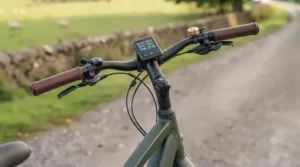
Real-World Scenarios: Who Actually Needs This Kind of Comfort
Picture Priya, a 34-year-old teacher commuting eight miles each way through a mix of city streets and a canal towpath. She’s not chasing Strava segments — she wants to arrive at work without a sore back. For her, the Eskute Polluno or Dawes Elegance Low Step make more sense than a sportier hub-motor bike, because the swept-back bars and gel saddle directly address the fatigue that builds over a genuine daily 16-mile round trip, five days a week.
Then there’s Graham, 61, recently retired and planning weekend rides of 20-30 miles with his local cycling group. Budget sits around £1,000-£1,300, and his priority is an upright position that’s kind to an old shoulder injury alongside genuine suspension for country lanes with patchy tarmac. The Carrera Vengeance E or Eskute Polluno both suit this brief well, trading a little weight for meaningfully better bump absorption.
Finally, consider Amara, a 28-year-old training for her first multi-day cycling tour, riding 40-60 miles per outing with panniers loaded. Here, battery capacity and mid-drive refinement start to matter as much as saddle comfort, which is exactly the territory the Raleigh Motus Tour occupies — its combination of range, gearing options, and dual suspension (fork and seatpost) is built precisely for this kind of sustained, loaded, all-day riding.
Problem → Solution: Fixing Saddle Pressure Relief on Electric Bike Rides
Problem: Numbness in the saddle area after 30-45 minutes. This is usually caused by a saddle that’s too narrow for your sit-bone width, compressing the pudendal nerve and blood vessels in the perineum. The fix is measuring your actual sit-bone distance (bike shops can do this in minutes) and choosing a saddle width to match, ideally with a central cut-out or pressure-relief channel.
Problem: Persistent soreness or chafing on longer rides. According to BikeRadar’s guide to saddle sores, friction from ill-fitting shorts or a poorly positioned saddle is the most common culprit, not saddle softness. Padded cycling shorts plus a saddle at the correct height and angle solve the majority of cases.
Problem: Every bump in the road jars straight through your seat. This points to a suspension gap rather than a saddle problem. Bikes like the Pendleton Somerby and Dawes Elegance Low Step, which lack front suspension, transmit far more road texture than the Carrera Vengeance E or Fiido M1 Pro. A suspension seatpost is the cheapest partial fix if replacing the whole bike isn’t on the table.
Problem: Lower back ache creeping in after an hour. Often this is a geometry mismatch rather than a saddle issue — a riding position that’s too stretched-out or too low at the front. Swapping to a bike with swept-back bars and a more upright stem angle, like the Dawes Elegance Low Step, typically resolves this without touching the saddle at all.
Problem: Wrist and hand tingling on longer rides. This is almost always down to handlebar reach and grip pressure rather than the saddle. Wider, swept-back bars distribute weight away from the wrists — see the dedicated section below for the full breakdown.
How to Choose an Electric Bike for Long Distance Sitting
Choosing the right bike for genuine distance comfort comes down to a handful of concrete decisions, in this order of importance:
- Confirm your typical distance first. Under 15 miles, prioritise an upright budget bike like the Pendleton Somerby; beyond 25 miles regularly, prioritise suspension and battery capacity over price.
- Check the riding geometry, not just the spec sheet. Look for a step-through or relaxed-angle frame that keeps your torso upright rather than leaning forward.
- Prioritise a genuine front suspension fork if your routes include broken tarmac or towpaths. Even a basic 80-100mm fork meaningfully reduces vibration fatigue.
- Sit on the actual saddle before buying if at all possible, or budget £30-£50 for a swap immediately if buying online.
- Match battery capacity to your real mileage, with a margin. A 300-mile-a-month commuter needs different capacity to a weekend-only 25-mile rider.
- Weigh up torque sensor versus cadence sensor. Torque sensors, found on the ADO Air 28 and Carrera Vengeance E, deliver smoother, more proportional assistance that reduces jolting through the saddle.
- Factor in total weight if you’ll be lifting the bike regularly, since the most comfortable, best-suspended bikes also tend to be the heaviest.
Ebike Ergonomic Seat Comfort: What Actually Changes How You Sit
Ergonomic seat comfort on an electric bike isn’t one single feature — it’s several working together, and understanding each helps you diagnose exactly what’s wrong with your current setup. Saddle width needs to roughly match your sit-bone distance, typically 9-16cm for most riders, so your weight lands on the bony structures built to bear it rather than soft tissue. Padding density matters more than padding thickness: saddles that are too soft let your sit bones sink in deeply, which can actually increase pressure on surrounding tissue rather than reducing it, and comfort saddles with firmer, well-shaped foam often outperform plush-looking alternatives on rides beyond 45 minutes.
The riding position an ebike enforces changes where load lands on that saddle too. More upright bikes like the ADO Air 28 shift weight backward onto the sit bones, which most people find more sustainable over distance than the forward-leaning position of a hybrid or road bike, where more weight transfers onto the perineum. Reviewers consistently note that even a genuinely comfortable saddle feels wrong on the wrong bike geometry — which is why ergonomic seat comfort has to be assessed as a system, saddle plus frame plus seatpost, rather than saddle alone.
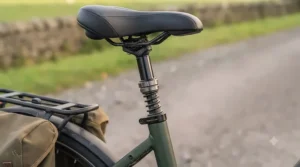
Upright Geometry and Saddle Load: Why Your Riding Position Decides Your Comfort
Here’s what the spec sheet won’t tell you: geometry determines roughly how much of your body weight the saddle actually has to support. On an aggressive, forward-leaning frame, a meaningful portion of your weight transfers onto your hands and arms, taking pressure off the saddle but loading up your wrists instead. On the genuinely upright frames found on the Pendleton Somerby, ADO Air 28 and Dawes Elegance Low Step, that balance shifts — more weight sits directly on the saddle and through your hips and legs, and comparatively less goes through your hands.
This is why an upright bike absolutely needs a wider, well-padded saddle to match, while a more forward-leaning road-style hybrid can often get away with a narrower perch. Based on the spec comparison across this list, the bikes pairing upright geometry with a genuinely wide comfort saddle — the Eskute Polluno and Pendleton Somerby in particular — consistently draw the most positive aggregated comfort feedback from owners, precisely because the geometry and saddle choice are working together rather than fighting each other.
Suspension Fork Vibration Comfort: Front-End Cushioning Explained
A suspension fork’s job on an electric bike for long distance sitting is deceptively simple: absorb the countless small, high-frequency vibrations coming up through the front wheel before they ever reach your hands, and to a lesser extent your seat, over a long ride. Even a basic coil-sprung fork with 80-100mm of travel, like those on the Eskute Polluno and Carrera Vengeance E, measurably reduces fatigue on cracked or unmaintained tarmac compared with the rigid forks found on the Pendleton Somerby and Dawes Elegance Low Step.
What most buyers overlook is that suspension travel isn’t the only variable that matters — lockout controls matter too. Locking the fork on smooth tarmac reduces pedalling energy loss (a soft fork bobs slightly under pedalling effort), while unlocking it on rougher surfaces restores the comfort benefit. The ADO Air 28‘s reviewer feedback specifically noted many owners simply leave the fork locked most of the time and let wider tyres handle the smoothing instead — a reasonable trade-off, but one that means tyre choice and pressure become just as important as the fork itself for genuine vibration comfort.
Handlebar Reach Ergonomics: Getting Your Cockpit Right
Handlebar reach — the distance and angle between your saddle and grips — is one of the most under-discussed factors in long-distance comfort, and it’s usually the actual cause when riders blame numb hands or an aching upper back on the saddle. A reach that’s too long forces excessive weight onto locked, straight arms, concentrating pressure on the wrists and palms and often producing tingling in the fingers after an hour or more.
Swept-back handlebars, as fitted to the Dawes Elegance Low Step and the Dutch-style ADO Air 28, deliberately shorten effective reach and bring the grips closer and higher, keeping wrists in a more neutral, bent position that distributes weight through the whole forearm rather than the wrist joint alone. The Carrera Vengeance E‘s wide 720mm MTB-style bars achieve a similar comfort effect through a different route — the extra leverage and width reduce the steering input needed at any given moment, which in turn reduces sustained grip tension. If you’ve already addressed saddle width and suspension and discomfort persists in your hands specifically, an adjustable-angle stem, typically £15-£30, is a cheaper fix than replacing the whole bike.
Buyer’s Decision Framework: Best Ebike for Comfort Saddle by Rider Type
If you’re still torn between models, this simple framework should settle it. If your rides are mostly under 15 miles on decent tarmac, choose an upright budget hybrid like the Pendleton Somerby, because suspension and big-battery range would be paying for capability you won’t use. If your commute mixes potholed streets with a canal towpath, choose a bike with a genuine front suspension fork — the Carrera Vengeance E or Eskute Polluno — because vibration absorption matters more here than outright range.
If you’re planning multi-hour weekend rides or light touring, choose the Raleigh Motus Tour, because its dual suspension (fork and seatpost) plus mid-drive refinement is specifically engineered for sustained comfort rather than short bursts. If you need to fold the bike for train travel or tight storage while still wanting cushioning on rough surfaces, choose the Fiido M1 Pro, planning a saddle swap as an early upgrade. And if numbness or pressure discomfort has already been a recurring problem on a previous bike, prioritise a wide, cut-out saddle above every other spec on this list — geometry and suspension help, but the saddle itself remains the single biggest lever for pressure relief.
Common Mistakes When Buying an Electric Bike for Long Distance Sitting
The most common mistake is buying on battery range alone and ignoring geometry entirely — a bike with 60 miles of range but an aggressive, forward-leaning frame will still leave you sore long before the battery runs flat. A close second is assuming a bigger, softer-looking saddle is automatically more comfortable; oversized saddles can actually increase chafing on the inner thighs during pedalling, and firmer, correctly-sized saddles frequently outperform plush ones over distance.
Buyers also regularly skip test-sitting or measuring sit-bone width, treating the saddle as an afterthought when it’s arguably the single most important comfort component on the bike. Another frequent error is underestimating weight: a heavily suspended, comfort-focused bike like the Fiido M1 Pro at roughly 27kg is a genuine challenge to carry up stairs or lift onto a car rack, which matters enormously for flat-dwellers or anyone without secure ground-floor storage. Finally, many first-time buyers overlook handlebar reach entirely, focusing purely on saddle and suspension while ignoring the cockpit — yet reach adjustments are often the cheapest, fastest fix available for persistent discomfort.
Long-Term Cost & Maintenance for Comfort-Focused Electric Bikes
Comfort-oriented ebikes carry slightly different running costs to bare-bones commuter models, mostly because suspension forks and premium saddles need periodic attention. Budget roughly £40-£80 a year for suspension fork servicing (seal cleaning and lubrication) if your bike has one, plus £25-£60 every couple of years for saddle replacement as foam compresses and covers wear. Mid-drive systems like the Bosch unit on the Raleigh Motus Tour typically cost more to service at a specialist but tend to last longer and hold resale value better than budget hub motors.
Battery replacement is the biggest long-term cost across every model here, generally £300-£500 after 3-5 years and 500-800 charge cycles, regardless of which bike you choose. Weighing total cost of ownership, the Pendleton Somerby and Carrera Vengeance E offer the lowest ongoing costs thanks to simple, widely available Halfords-serviced componentry, while the Raleigh Motus Tour‘s Bosch system, though pricier to service, tends to deliver the longest useful lifespan for genuinely high-mileage riders.
Safety, Regulations & Compliance Guide
Every electric bike for long distance sitting covered in this guide needs to meet UK Electrically Assisted Pedal Cycle (EAPC) rules to be ridden on public roads and cycle paths without a licence, tax, insurance or registration. Per the official GOV.UK guidance on EAPCs, that means a motor rated no higher than 250W continuous output, assistance that cuts out at 15.5mph, and power that only engages while you’re actively pedalling. Riders must be at least 14 years old, and while a helmet isn’t a legal requirement, it’s strongly recommended for any distance riding.
This is precisely why we flagged the Fiido M1 Pro specifically above: some international variants of fat-tyre ebikes are sold with motors exceeding the UK’s 250W limit, and as Cycling UK’s EAPC regulations explainer notes, anything over that threshold is legally a moped or motorcycle, requiring registration, insurance, tax and a full licence to use on public roads. Always check the specific UK-market listing and spec sheet, rather than assuming every version of a model sold worldwide is road-legal here.
Frequently Asked Questions
❓ What is the best electric bike for long distance sitting comfort?
❓ How do I stop my ebike seat hurting on long rides?
❓ Does a suspension seatpost really help with ebike comfort?
❓ What is the correct saddle height for long-distance ebike comfort?
❓ Are wider saddles better for long ebike rides?
Conclusion
The right electric bike for long distance sitting isn’t the one with the biggest battery or the flashiest spec sheet — it’s the one where geometry, saddle and suspension are all pulling in the same direction. Across the seven bikes in this guide, that principle holds consistently: the Raleigh Motus Tour earns its premium price through genuinely dual suspension and mid-drive refinement, the Eskute Polluno delivers similar comfort thinking at a more accessible price, and even budget picks like the Pendleton Somerby prove that upright geometry alone can carry a lot of the comfort load for shorter rides.
What matters most is being honest with yourself about your actual riding distances and typical surfaces, then prioritising accordingly rather than chasing the biggest numbers on a spec sheet. A £750 upright commuter that fits your body and your daily route will beat a £2,000 tourer that doesn’t, every time. And if you already own a bike that’s letting you down on comfort, remember that a £30-£50 saddle or seatpost upgrade often solves the problem far more cheaply than replacing the whole machine.
Whichever model you land on, always confirm current UK pricing, availability and the exact EAPC-compliant specification directly with the retailer before you buy, since stock, colours and precise configurations shift regularly.
✨ Ready to Ride Further, Pain-Free?
🔍 Compare current prices on the seven electric bikes for long distance sitting featured in this guide, and start planning routes you’ll actually look forward to riding. Your future sit bones will thank you! 🚴♀️
Recommended for You
- Most Comfortable eBike Saddle 2026: 7 Picks That Actually Work
- Suspension Seatpost Electric Bike: 7 Best Picks for 2026
- 7 Best Suspension Commuter Ebike Picks for UK Roads (2026)
Disclaimer: This article contains affiliate links. As an Amazon Associate, I earn from qualifying purchases. If you purchase products through these links, we may earn a small commission at no additional cost to you.
✨ Found this helpful? Share it with your friends! 💬🤗
