In This Article
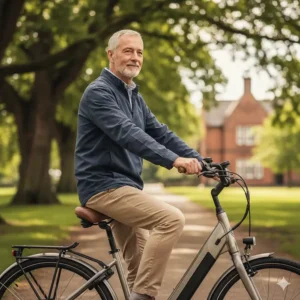
Picture this: it’s a crisp Saturday morning, and you’re cycling through your local park, wind in your hair, without breaking a sweat. That hill you’ve avoided for years? It’s now as easy as riding downhill. This isn’t a fantasy—it’s the reality that an electric bike for pensioners can deliver.
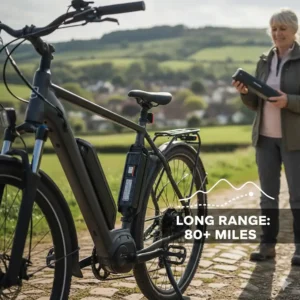
As we age, maintaining independence and staying active becomes increasingly vital for our physical and mental wellbeing. Traditional cycling can feel daunting when arthritis makes gripping the handlebars uncomfortable, or when that steep incline leaves you breathless. But electric bikes have revolutionised mobility for older adults across the UK, offering the perfect blend of exercise and assistance.
Research from the University of Reading and Oxford Brookes University found that pensioners aged 50-83 who cycled on e-bikes experienced significant improvements in cognitive function and mental wellbeing—in some cases, even more than those on traditional bikes. The secret? E-bikes provided the confidence to explore further, knowing motor assistance was there when needed.
Whether you’re looking to pop to the shops, meet friends for coffee, or simply enjoy the British countryside, there’s an electric bike designed with your needs in mind. In this comprehensive guide, we’ll explore the best models available on Amazon.co.uk, UK regulations you need to know, and everything else to help you make an informed decision. Let’s get you back on two wheels.
Quick Comparison Table
| Model | Price Range | Motor Power | Range | Weight | Best For |
|---|---|---|---|---|---|
| ESKUTE Polluno Plus | £899-£999 | 250W Bafang | 74 miles | 28kg | Long-distance comfort |
| Eleglide T1 Step-Thru | £749-£835 | 250W Rear Hub | 62 miles | 25kg | Value & versatility |
| Fafrees F20 PRO | £699-£799 | 250W Rear Hub | 90 miles | 26kg | Portability & range |
| ESKUTE Polluno Pro | £1,049-£1,149 | 250W Mid-Drive | 65 miles | 27kg | Premium performance |
| Fafrees F20 Mate Trike | £1,299-£1,449 | 250W Differential | 68 miles | 45kg | Maximum stability |
| SAMEBIKE 20″ Folding | £599-£699 | 250W Rear Hub | 60 miles | 24kg | Budget-conscious riders |
| DYU D3F Compact | £449-£549 | 250W Rear Hub | 40 miles | 18kg | Short urban trips |
💬 Just one click – help others make better buying decisions too!😊
Top 7 Electric Bike for Pensioners: Expert Analysis
1. ESKUTE Polluno Plus – The Long-Distance Champion
The ESKUTE Polluno Plus stands out as our top recommendation for pensioners seeking a reliable, comfortable electric bike for extended journeys. This 28-inch step-through e-bike combines thoughtful engineering with practical features that address the specific needs of older riders.
Key Specifications:
- 250W Bafang rear hub motor with torque sensor
- 36V 20Ah Samsung/LG battery (720Wh capacity)
- Up to 74 miles range in pedal-assist mode
- Shimano 7-speed derailleur
- Hydraulic disc brakes front and rear
UK buyers have consistently praised the ESKUTE Polluno Plus for its natural pedalling feel, thanks to the torque sensor that adjusts assistance based on how hard you’re pedalling. One 68-year-old reviewer from Bristol noted: “The bike doesn’t feel like it’s pushing me—it feels like I’ve suddenly become 20 years younger.”
The step-through frame design eliminates the need to swing your leg over a high crossbar, making mounting and dismounting effortless—particularly important if you struggle with hip flexibility or balance. The upright riding position reduces strain on your back and neck, whilst the front suspension fork absorbs bumps from uneven pavements.
✅ Pros:
- Exceptional 74-mile range reduces charging frequency
- Torque sensor provides natural, intuitive assistance
- Removable battery for convenient indoor charging
❌ Cons:
- 28kg weight may be challenging for some to lift
- Premium price point
UK Availability: Available on Amazon.co.uk with free delivery. Price typically £899-£999.
2. Eleglide T1 Step-Thru – Best Value for Money
For pensioners seeking quality without breaking the bank, the Eleglide T1 Step-Thru delivers remarkable value. This 27.5-inch trekking e-bike has earned a loyal following among UK seniors for its reliability and well-rounded feature set.
Key Specifications:
- 250W brushless rear motor (50Nm torque)
- 36V 13Ah removable battery (468Wh capacity)
- Up to 62 miles range in pedal-assist mode
- Shimano 7-speed transmission
- CST 27.5″ pneumatic tyres
The Eleglide T1 Step-Thru excels at versatility—equally comfortable on urban streets as it is on canal towpaths or country lanes. The larger wheel size rolls smoothly over obstacles, whilst the modest 25kg weight makes it more manageable than heavier alternatives. A 70-year-old customer from Manchester shared: “Assembled it myself in about an hour. The bike has been brilliant for my recovery from knee surgery—I can adjust the assistance level as my strength improves.”
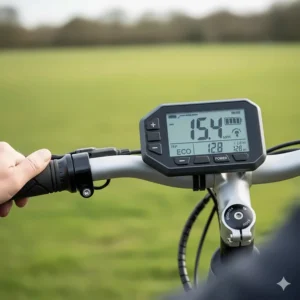
Pre-installed mudguards, integrated lights, and a rear rack make this e-bike genuinely practical for everyday use. The LCD display is refreshingly simple, showing speed, battery level, and distance without overwhelming you with unnecessary information.
✅ Pros:
- Excellent value with comprehensive features included
- Lighter weight (25kg) easier to handle
- Suitable for varied terrain
❌ Cons:
- Battery capacity lower than premium models
- Some users report brakes need bedding-in period
UK Availability: Available on Amazon.co.uk. Price typically £749-£835.
3. Fafrees F20 PRO – The Compact Cruiser
The Fafrees F20 PRO reimagines what a folding electric bike can be. This 20-inch model proves that compact doesn’t mean compromising on range or comfort, making it ideal for pensioners with limited storage space or those who enjoy taking their bike on holiday.
Key Specifications:
- 250W rear hub motor
- 36V 18Ah lithium-ion battery (648Wh capacity)
- Up to 90 miles range in assisted mode
- 7-speed Shimano derailleur
- 20″ x 3.0″ fat tyres
Don’t let the smaller wheels fool you—the Fafrees F20 PRO boasts an impressive 90-mile range that surpasses many full-size e-bikes. The fat tyres provide excellent stability and cushioning, particularly valuable if you’re concerned about balance or ride over cobbled streets. UK customers frequently highlight how the folding mechanism allows them to store the bike in a flat’s hallway or car boot for weekend getaways.
The rear rack supports up to 25kg, perfect for shopping bags or a picnic basket. One reviewer from Edinburgh noted: “At 72, I was nervous about getting back into cycling. The low step-through and supportive saddle made it completely stress-free. I’ve rediscovered parts of the city I’d forgotten existed.”
✅ Pros:
- Outstanding 90-mile range reduces range anxiety
- Folds for easy storage and transport
- Fat tyres enhance stability and comfort
❌ Cons:
- Smaller wheels require slightly more effort on very steep hills
- 26kg weight when folded
UK Availability: Available from the Official Fafrees Store on Amazon.co.uk. Price typically £699-£799.
4. ESKUTE Polluno Pro – Premium Mid-Drive Performance
For pensioners who want the very best in e-bike technology, the ESKUTE Polluno Pro represents a significant upgrade. This mid-drive system delivers more natural handling and efficiency, particularly appreciated by those tackling hilly terrain regularly.
Key Specifications:
- 250W Bafang mid-drive motor
- 36V 14.5Ah removable battery (522Wh capacity)
- Up to 65 miles range
- Shimano 9-speed transmission
- Hydraulic disc brakes
The ESKUTE Polluno Pro positions its motor at the bike’s centre of gravity, creating balanced handling that feels remarkably similar to riding a traditional bicycle—just with superpowers. Mid-drive systems are more efficient on hills because they work through the gears, and UK riders in areas like the Peak District or Lake District particularly value this advantage.
Hydraulic disc brakes provide exceptional stopping power with minimal finger pressure—crucial if you have arthritis or reduced hand strength. The bike also features a high-contrast LCD display that’s easy to read in bright sunlight, a thoughtful detail often overlooked by manufacturers.
✅ Pros:
- Mid-drive motor offers superior hill-climbing efficiency
- Hydraulic brakes require less hand strength
- Premium components throughout
❌ Cons:
- Higher price point
- Mid-drive systems can require more maintenance
UK Availability: Available on Amazon.co.uk. Price typically £1,049-£1,149.
5. Fafrees F20 Mate Electric Trike – Ultimate Stability
If balance concerns have kept you off two wheels, the Fafrees F20 Mate electric tricycle could be your perfect solution. This three-wheeled design eliminates balance worries entirely whilst delivering the freedom and health benefits of e-biking.
Key Specifications:
- 250W differential drive motor
- 48V 18.2Ah battery (873Wh capacity)
- Up to 68 miles range
- 20″ x 3.0″ fat tyres
- Large rear cargo basket
The Fafrees F20 Mate features a sophisticated differential system that allows the rear wheels to rotate at different speeds during turns, ensuring smooth handling without the awkward feeling some trikes can have. The step-through frame is exceptionally low, and the wide, comfortable seat provides excellent support for extended rides.
UK pensioners have embraced this trike for its practical cargo capacity—the large rear basket easily accommodates weekly shopping or gardening supplies. One 76-year-old from Cornwall shared: “After a minor stroke affected my balance, I thought cycling was finished for me. This trike has given me back my independence and confidence.”
✅ Pros:
- Zero balance required—completely stable
- Massive cargo capacity for shopping or luggage
- Comfortable, supportive seating position
❌ Cons:
- 45kg weight makes it unsuitable for lifting
- Requires more storage space than two-wheelers
UK Availability: Available from Fafrees official retailers and selected Amazon.co.uk sellers. Price typically £1,299-£1,449.
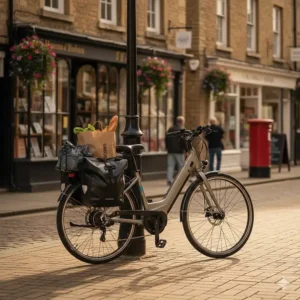
6. SAMEBIKE 20″ Folding – Budget-Friendly Reliability
Proving that quality e-bikes needn’t cost a fortune, the SAMEBIKE 20″ Folding offers pensioners on a fixed income an affordable entry into electric cycling without significant compromises.
Key Specifications:
- 250W rear hub motor
- 36V 12.5Ah battery (450Wh capacity)
- Up to 60 miles range in eco mode
- 7-speed Shimano gears
- Mechanical disc brakes
The SAMEBIKE delivers honest, dependable performance at a price point that won’t strain your pension. Whilst it lacks some premium features like hydraulic brakes or torque sensors, it covers the essentials admirably well. UK buyers appreciate its straightforward operation—there’s no complicated menu system to navigate, just a simple LCD display and three assistance levels.
The folding frame makes it practical for those living in flats or wanting to take it on trains or in caravans. At 24kg, it’s among the lighter options, though still requires reasonable strength to lift when folded.
✅ Pros:
- Excellent value for money
- Simple, intuitive operation
- Lightweight for a folding e-bike
❌ Cons:
- Basic components compared to premium models
- Shorter range than higher-capacity batteries
UK Availability: Available from SAMEBIKE UK store on Amazon.co.uk. Price typically £599-£699.
7. DYU D3F Compact – The Urban Zapper
The DYU D3F takes minimalism to its logical conclusion. This ultra-compact 14-inch e-bike is designed specifically for short urban trips, making it ideal for pensioners who primarily need something for local errands rather than long-distance touring.
Key Specifications:
- 250W rear motor
- 36V 7.8Ah built-in battery (280Wh capacity)
- Up to 40 miles range
- Single-speed transmission
- Compact 14″ wheels
Don’t expect the DYU D3F to replace a full-size e-bike for countryside excursions. But if you need to pop to the post office, visit your local GP surgery, or meet friends at the nearby café, this little marvel excels. It’s remarkably light at just 18kg and folds to a size that fits in most car boots or under a staircase.
The simplicity extends to operation—there’s essentially nothing to learn. UK buyers often purchase it as a supplementary bike to a larger model, keeping it specifically for quick local trips where its compactness shines.
✅ Pros:
- Lightest option at 18kg
- Ultra-compact when folded
- Perfect for short urban trips
❌ Cons:
- Limited 40-mile range
- Smaller wheels less comfortable on rough surfaces
UK Availability: Available on Amazon.co.uk. Price typically £449-£549.
Understanding UK Electric Bike Regulations for Pensioners
Before purchasing an electric bike for pensioners, understanding UK law ensures you’re riding legally and safely. The good news? The regulations are straightforward, and you won’t need a licence, tax, or insurance for standard e-bikes.
What Makes an E-Bike Legal in the UK?
According to GOV.UK guidance, your electric bike must meet these requirements to qualify as an Electrically Assisted Pedal Cycle (EAPC):
Motor Power: Maximum continuous rated power of 250 watts. This means the motor can’t exceed 250W when running continuously, though it may briefly deliver more during acceleration.
Speed Limit: Motor assistance must cut out at 15.5 mph (25 km/h). You can pedal faster than this, but the motor won’t help beyond that speed.
Pedal Requirement: The motor should only provide assistance when you’re pedalling. Walk-assist functions up to 6 km/h (3.7 mph) without pedalling are permitted.
Minimum Age: You must be at least 14 years old to ride an EAPC on public roads. As a pensioner, this obviously isn’t a concern!
What This Means for You
If your e-bike meets these standards (and all models recommended in this guide do), you can:
- Ride on cycle paths and anywhere traditional bikes are allowed
- Use it without a driving licence, even if you’ve never held one or it’s been revoked
- Avoid registration, tax, and insurance requirements
- Wear whatever protective gear you choose (though helmets are strongly recommended)
You cannot ride on pavements—this remains illegal for all cyclists, whether on e-bikes or traditional bikes. The only exception is designated shared-use paths.
Throttle Regulations
Some confusion exists around throttles on e-bikes. Under current UK law:
- Throttles that work without pedalling are limited to 6 km/h (3.7 mph)
- Full-speed throttles (up to 15.5 mph) are only legal on bikes with “type approval”
- Most consumer e-bikes sold in the UK comply with pedal-assist-only requirements
The majority of e-bikes for pensioners use pedal-assist systems, which feel more natural and provide better exercise benefits anyway.
Special Considerations for Pensioners
Medical Conditions: There’s no legal requirement to inform the DVLA about medical conditions when riding an EAPC, unlike when driving a car. However, consult your GP if you have concerns about your fitness to cycle, particularly after a stroke, heart condition, or if you’re taking medication that affects balance.
Three-Wheeled E-Bikes: Electric tricycles follow the same regulations as two-wheeled e-bikes, provided they meet the power and speed requirements. They don’t require any special licensing.
Research from Cycling UK confirms that these regulations align with broader European standards, though post-Brexit, the UK government can modify them independently. No changes are currently proposed that would affect pensioners’ ability to use standard e-bikes.
Health Benefits of Electric Bikes for Pensioners
The most compelling reason to choose an electric bike for pensioners isn’t convenience—it’s the remarkable impact on physical and mental health. Let’s explore the science-backed benefits that make e-biking such a powerful tool for healthy ageing.
Cognitive Function and Brain Health
Perhaps the most surprising finding comes from a University of Reading study published in the journal PLOS One. Researchers followed 100 adults aged 50-83 who cycled for just 90 minutes per week over eight weeks. The results were striking:
E-bike riders showed improvements in executive function—the ability to plan, organise, and complete tasks. They also demonstrated enhanced processing speed compared to non-cycling controls. Remarkably, e-bike users matched or slightly exceeded the cognitive benefits seen in traditional cyclists, despite exerting less physical effort.
Dr. Carien van Reekum, the study’s lead author, explained: “We had thought that those who used traditional, pedal-only powered bikes would have the greatest brain and mental health boost, as they would be giving their cardiovascular systems the biggest workout. Instead, people who used e-bikes told us that they felt more confident in completing the activity, compared to pedal bikers.”
The confidence factor proved crucial. E-bike riders explored more diverse routes, engaged more with their environment, and maintained consistency—all factors that contribute to cognitive stimulation.
Cardiovascular Health Without Overexertion
Traditional cycling can feel too strenuous for many pensioners, particularly those managing heart conditions, arthritis, or simply decades of accumulated wear and tear. E-bikes solve this problem elegantly by allowing you to control exertion levels precisely.
Harvard Health Publishing notes that e-bikes enable riders to maintain target heart rate zones for cardiovascular benefit without crossing into dangerous territory. You’re getting your heart pumping—typically reaching 64-75% of maximum heart rate according to research—but can dial back assistance if you feel breathless or fatigued.
For pensioners recovering from surgery or managing chronic conditions, this adjustability is transformative. You can start with maximum assistance and gradually reduce it as strength and stamina return, something impossible with traditional bikes.
Joint-Friendly Exercise
Cycling is inherently low-impact compared to running or even walking for extended periods. The circular pedalling motion doesn’t jar your knees, hips, or ankles the way ground-impact activities do. For pensioners with osteoarthritis—affecting roughly 8.75 million people in the UK according to Versus Arthritis—this matters enormously.
E-bike assistance further reduces joint stress by minimising the force required to pedal, particularly when starting from a standstill or climbing hills. Many UK pensioners report being able to cycle pain-free on e-bikes despite not tolerating traditional cycling anymore.
Mental Wellbeing and Social Connection
The same University of Reading study found significant improvements in mental wellbeing among e-bike riders, particularly in the mental health component of the SF-36 quality-of-life assessment.
Why? E-bikes facilitate social cycling. If your partner or friends are fitter than you, e-bikes level the playing field, allowing mixed-ability groups to ride together comfortably. One participant in the study noted: “I can now cycle with my grandchildren without holding them back or exhausting myself.”
Outdoor exercise also combats seasonal affective disorder and general low mood—both more common in older adults. The British weather needn’t be a deterrent; proper clothing makes cycling in light rain perfectly manageable, and the extra confidence from motor assistance helps you venture out more regularly.
Practical Independence
Beyond measurable health metrics lies something equally valuable: autonomy. An electric bike for pensioners represents freedom from dependence on others for local transport, particularly if you’ve stopped driving or find buses inconvenient.
This independence correlates strongly with life satisfaction and reduced risk of depression in older adults. Simply knowing you can hop on your e-bike to visit friends, run errands, or explore your local area at will provides psychological benefits that extend far beyond the rides themselves.
The NHS Active Travel guidance recommends at least 150 minutes of moderate activity weekly for older adults. An e-bike makes achieving this target realistic and enjoyable rather than a burden.
Choosing the Right Electric Bike for Your Needs
With dozens of electric bike models available, how do you select the perfect one for your circumstances? Let’s examine the key factors that should guide your decision.
Step-Through vs Step-Over Frames
For most pensioners, step-through frames (also called low-step or Dutch-style frames) prove superior. These designs eliminate the high top tube found on traditional bikes, allowing you to mount by simply stepping through the frame rather than swinging your leg over.
Benefits of step-through frames:
- Reduces risk of losing balance while mounting/dismounting
- Accommodates limited hip flexibility or knee issues
- Makes emergency stops safer—you can quickly put both feet down
- More elegant when wearing skirts, dresses, or formal clothing
Step-over frames do offer slightly better frame stiffness and may appeal to former racing cyclists, but for most pensioners prioritising safety and accessibility, step-through designs are the sensible choice. All our recommended models feature step-through or low-step configurations.
Battery Capacity and Real-World Range
Manufacturers often advertise optimistic range figures based on ideal conditions: lightweight rider, flat terrain, maximum pedal assistance, mild weather. Real-world range typically runs 40-60% of stated maximums.
Consider your typical riding:
- Short local trips (under 10 miles): 350-450Wh battery sufficient
- Mixed urban/leisure riding (10-20 miles): 450-550Wh recommended
- Longer excursions (20+ miles): 550Wh+ provides comfortable margin
Battery capacity matters less if you can easily remove and charge it indoors. Many pensioners prefer removable batteries because carrying the entire bike upstairs or into a shed for charging becomes unnecessary. Look for models where the battery releases with a key and isn’t excessively heavy.
Cold weather significantly reduces battery performance—expect 20-30% range reduction in winter. If you plan year-round riding, factor this into your battery size decision.
Motor Placement: Hub vs Mid-Drive
Rear hub motors (most common on affordable e-bikes):
- Simple, reliable, low maintenance
- Smooth, consistent assistance
- Slightly less efficient on steep hills
- Lower cost
Mid-drive motors (found on premium models):
- Work through the bike’s gears for superior hill climbing
- More natural bike handling
- Typically more expensive
- May require more frequent drivetrain maintenance
For most UK pensioners riding in relatively flat areas or gentle hills, rear hub motors provide excellent value and simplicity. If you live somewhere genuinely hilly (think Devon, Yorkshire Dales, or Scottish Highlands), the extra investment in mid-drive systems pays dividends in easier climbing.
Torque vs Cadence Sensors
This technical distinction has real-world implications for riding feel:
Cadence sensors: Detect that you’re pedalling and provide fixed assistance based on the selected power level. They feel slightly “on/off” but work reliably and cost less.
Torque sensors: Measure how hard you’re pushing the pedals and adjust assistance proportionally. They feel more natural, like having bionic legs, but add to the bike’s cost.
For pensioners concerned about precise control—perhaps due to balance issues or wanting the most bicycle-like experience—torque sensors justify their premium. However, many riders find cadence sensors perfectly adequate once accustomed to them.
Comfort Features That Matter
Saddle comfort: The default saddle on most e-bikes proves adequate for short rides but may cause discomfort on longer journeys. Consider upgrading to a wider, more cushioned saddle designed for upright riding positions. Brooks B67 and Selle Royal Lookin models are popular UK choices for pensioners.
Handlebar position: Swept-back handlebars position your hands naturally and reduce wrist strain. They’re nearly universal on step-through e-bikes but worth checking before purchase.
Suspension: Front suspension forks absorb bumps from potholes and rough surfaces, improving comfort significantly. They’re particularly valuable if you ride on poorly maintained roads or towpaths. Full suspension (front and rear) is overkill for most urban riding but appreciated on very rough terrain.
Tyres: Wider tyres (2.0″ or broader) provide more cushioning and stability than narrow racing-style tyres. Fat tyres (3.0″+) offer maximum comfort and security but add weight and slightly reduce efficiency on smooth surfaces.
Practical Storage and Transport
Where will you store it? Standard e-bikes measure roughly 180cm long and 110cm high. Folding models collapse to approximately 80cm x 70cm x 40cm but remain heavy (18-26kg). If storage space is limited, folding e-bikes offer an elegant solution, though they cost slightly more for equivalent specifications.
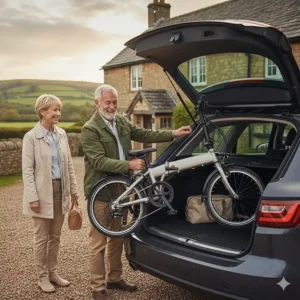
Will you transport it by car? Fitting an e-bike inside most cars requires removing the front wheel—fiddly but manageable. Roof racks strain shoulders when lifting 25kg+ bikes overhead. Tow-bar mounted carriers work brilliantly but require the tow bar installation first (£300-600 typically). Consider your transport plans before purchase.
Security concerns: E-bikes attract thieves. Budget £50-100 for a sold secure gold-rated lock (such as Abus Granit or Kryptonite New York). If storing outdoors, invest in a robust anchor point and comprehensive insurance. Many home insurance policies extend to cover e-bikes, but check limits and conditions.
Test Riding Before Buying
Whilst Amazon.co.uk offers convenience and competitive pricing, test riding before committing remains invaluable. Many UK bike shops rent e-bikes for £30-50 daily—money well spent to confirm comfort, handling, and suitability.
Try these assessments during test rides:
- Can you easily mount/dismount without wobbling?
- Does the saddle feel comfortable after 15-20 minutes?
- Can you reach all controls without stretching?
- Does the bike feel stable at low speeds?
- Can you brake comfortably with full finger pressure?
If test riding proves impractical, Amazon’s return policy provides a safety net, though returning large items like e-bikes involves some inconvenience.
Essential Safety Tips for Pensioners Riding E-Bikes
Returning to cycling after years away, or even cycling for the first time in old age, requires sensible precautions. These safety guidelines help ensure your e-bike experience remains positive.
Protective Equipment
Helmets: Not legally required in the UK for any age, but strongly recommended. Modern cycle helmets are lightweight and well-ventilated. Look for MIPS (Multi-directional Impact Protection System) technology for enhanced protection. Brands like Giro, Bell, and Abus offer models designed for upright city riding that don’t look overly sporty.
High-visibility clothing: A fluorescent vest or jacket dramatically increases your visibility to motorists, particularly crucial during Britain’s frequently grey weather and short winter days. Reflective strips and LED accessories enhance night-time visibility further.
Glasses or eyewear: Protect your eyes from wind, insects, and road debris. Even non-prescription sunglasses or clear safety glasses improve comfort significantly.
Gloves: Cycling gloves with padded palms reduce numbness and provide better grip, particularly valuable if you have arthritis or reduced hand strength. They also offer protection in falls.
Building Confidence Gradually
Start with short, familiar routes in quiet areas. Many UK councils offer free or low-cost cycling confidence courses specifically designed for older adults. Organisations like Cycling UK provide local group rides where experienced cyclists support beginners.
Progressive skill development:
- Week 1-2: Practice in a car park or quiet street—stopping, starting, turning
- Week 3-4: Short routes on quiet residential streets
- Week 5-6: Introduce busier roads with confidence
- Ongoing: Gradually extend distance and tackle new terrain
E-bikes feel different from traditional bikes due to their weight (25-30kg typical) and motor assistance. The extra momentum requires more anticipation when stopping, whilst the power assistance can feel surprisingly strong initially. Using the lowest assistance setting whilst learning helps develop natural bike-handling skills before progressing to higher power levels.
Road Positioning and Awareness
Primary position: On narrow roads without cycle lanes, ride about a metre from the kerb—far enough to avoid drain covers and debris whilst encouraging cars to pass properly rather than squeezing through dangerously.
Junctions: Slow down and make eye contact with drivers. Never assume they’ve seen you, even if you have right of way.
Roundabouts: For nervous riders, there’s no shame in dismounting and using pedestrian crossings. With practice, you can tackle roundabouts confidently by taking the lane and signalling clearly.
Anticipation: Constantly scan ahead for potential hazards—opening car doors, pedestrians stepping into the road, potholes. The high riding position on step-through e-bikes aids visibility.
Weather Considerations
Britain’s changeable weather needn’t stop your cycling, but adaptation helps:
Rain: Waterproof jacket and overtrousers keep you dry. Reduce speed on corners and when braking—wet rims or discs require longer stopping distances. Avoid puddles; they may conceal potholes.
Wind: Strong headwinds drain batteries faster. Plan routes to have tailwinds on the return journey when you’re potentially more tired.
Ice and snow: If roads are icy, don’t ride. E-bikes are heavy, and falls carry higher injury risk for older adults. A few days off the bike beats weeks recovering from a fracture.
Heat: Stay hydrated and wear sunscreen. Some medications increase photosensitivity, so check with your GP if you’re on long-term prescriptions.
Maintenance and Checks
Before each ride, perform these 30-second safety checks:
- Tyres: Firm to touch, no obvious damage
- Brakes: Levers firm, pads gripping when squeezed
- Battery: Charged and securely mounted
- Lights: Front and rear working (required after dark)
- Chain: Not rusty or excessively dirty
Every 3-6 months (or 500 miles), take your e-bike to a qualified bike mechanic for servicing. Many UK councils offer subsidised cycle maintenance through their active travel programmes—enquire at your local council website.
Emergency Situations
Mechanical breakdown: Carry a charged mobile phone. If the motor fails, you can still pedal home, though the bike will feel heavier. Many e-bikes offer a “walk mode” that provides gentle forward assistance at walking pace.
Medical emergency: If you feel unwell while riding, stop immediately in a safe location. E-bikes are heavy, so don’t attempt to continue if you’re dizzy or experiencing chest pain. Don’t hesitate to call 999 if needed.
Theft prevention: Never leave your e-bike unlocked, even briefly. Use both the bike’s built-in lock and a gold-standard D-lock or chain. Photograph your bike and record its frame number for insurance and police reports.
Cost Considerations and Value for Money
Purchasing an electric bike for pensioners represents a significant investment, but understanding the full financial picture—including long-term savings—helps justify the expense.
Initial Purchase Price Breakdown
Budget e-bikes (£400-700) offer basic functionality with simpler components. They’re fine for occasional short trips but may lack refinement and durability for frequent use.
Mid-range e-bikes (£700-1,200) deliver the best value for most pensioners. They incorporate quality motors, decent battery capacity, and reliable components that require less frequent replacement.
Premium e-bikes (£1,200-2,500+) feature advanced technology like mid-drive motors, hydraulic brakes, and extended-range batteries. They’re excellent if you plan extensive use or have specific requirements, but many pensioners find mid-range models perfectly adequate.
Running Costs
Electricity: Charging an e-bike battery costs approximately 5-15p per full charge (depending on capacity and electricity rates). Even riding 50 miles weekly costs under £5 annually in electricity—remarkably economical compared to any motor vehicle.
Maintenance: Budget £100-200 annually for servicing, replacement brake pads, chain, and tyres. Components wear faster on e-bikes due to their extra weight, but costs remain modest.
Insurance: Optional but recommended, particularly for expensive models. Specialist e-bike insurance costs £80-150 annually for bikes valued at £1,000-1,500. Some home insurance policies cover bikes; check your policy.
Long-Term Savings
Transport costs: If your e-bike replaces even 25% of car journeys, you’ll save substantially:
- Fuel: £30-50 monthly (modest estimate)
- Parking fees: £10-30 monthly in urban areas
- Wear and tear: £20-40 monthly (servicing, tyres, etc.)
- Insurance/tax: Proportional savings
Total potential savings: £60-120 monthly, or £720-1,440 annually. Your e-bike could pay for itself within 1-2 years if replacing significant car use.
Health savings: Harder to quantify but real. Regular cycling reduces GP visits, medication costs, and risk of expensive health interventions. The NHS estimates every pound invested in active travel saves the health service £2.50 in treatment costs.
Government Schemes and Discounts
Cycle to Work Scheme: If you’re still employed, this scheme lets you purchase e-bikes through salary sacrifice, saving 25-40% on the total cost. Unfortunately, it’s not available to pensioners who’ve retired, though some flexible arrangements exist for part-time workers.
Local authority grants: Some UK councils offer grants or vouchers for e-bike purchases as part of active travel initiatives. Availability varies significantly by region—check your local council’s transport or environmental department.
Age UK and similar organisations: Occasionally negotiate group-buy discounts with e-bike manufacturers. Membership typically costs £15-30 annually and can save £50-100 on bike purchases.
Financing Options
Most e-bike retailers, including Amazon, offer interest-free credit over 6-12 months. This makes higher-quality bikes more accessible without straining fixed incomes. Ensure you understand the terms completely before committing—missed payments can incur substantial charges.
Alternatively, consider credit unions, which often provide personal loans at lower rates than commercial lenders, particularly for members demonstrating regular saving patterns.
Accessories and Upgrades Worth Considering
Whilst e-bikes come equipped for basic riding, several accessories significantly enhance convenience, comfort, and safety for pensioners.
Essential Safety Accessories
Quality lighting: Whilst most e-bikes include basic lights, upgrading to brighter LED systems improves visibility dramatically. Exposure lights and Lezyne models offer excellent UK-designed systems with multiple flash patterns and impressive battery life.
Wing mirrors: Bar-end mirrors let you monitor traffic behind without turning your head—particularly helpful if you have limited neck mobility. Cat Eye and Zefal produce reliable, affordable options.
Bell or horn: Legally required, though most e-bikes include them. Consider electronic horns for better audibility in traffic.
Comfort Enhancements
Premium saddle: As mentioned earlier, the stock saddle often represents a compromise. Investing £40-80 in a quality replacement dramatically improves comfort on rides exceeding 30 minutes.
Handlebar grips: Ergonomic grips with palm support reduce numbness and hand fatigue. Ergon GP series grips are particularly popular among UK cyclists with arthritis.
Suspension seatpost: If your e-bike lacks rear suspension, a suspension seatpost provides valuable cushioning for rough roads. Brands like Cane Creek and BodyFloat offer effective designs.
Practical Add-Ons
Rear rack and panniers: Carrying shopping bags on your handlebars affects steering. Rear panniers (saddle bags) provide stable, waterproof storage. Ortlieb and Altura make excellent weatherproof models.
Front basket: Ideal for handbags, light shopping, or even small dogs. Basil and Wald produce sturdy, attractive options.
Phone mount: Useful for navigation apps, though ensure it doesn’t obstruct your view or distract from riding. Quadlock and SP Connect offer secure, shock-absorbing mounts.
Kickstand: Most e-bikes include them, but upgrading to a centre-stand provides better stability when loaded with shopping.
Security Investments
GPS tracker: Discrete trackers hidden in the bike frame or seat post allow police to recover stolen bikes. BikeTrac and Apple AirTags (in weatherproof cases) offer affordable solutions.
Security marking: PostcodeBikes and BikeRegister offer permanent marking systems that deter thieves and aid recovery. Many police forces provide free marking at community events.
Ground anchor: For home security, install a sold secure gold ground anchor in your garage or shed. This, combined with a quality lock, protects your investment.
Maintenance Tools
Basic toolkit: Includes Allen keys, screwdrivers, tyre levers, and a spare inner tube. Even if you don’t perform repairs yourself, roadside assistance may need your tools to help.
Portable pump: Mini-pumps fit in panniers and can reinflate tyres to get you home. Topeak and Lezyne make reliable compact pumps.
Chain cleaner and lubricant: Keeping your chain clean and lubricated extends its life dramatically. Muc-Off and Finish Line products work well in UK’s wet conditions.
Weather Protection
Mudguards: Full-coverage mudguards keep spray off you and the bike. They’re essential for UK riding and often come pre-installed on step-through models.
Bike cover: If storing outdoors, a breathable, waterproof cover protects from rain and UV damage. Oxford and Silverline make durable options.
Overshoes: Keep your feet dry and warm in winter. Sealskinz and Endura offer excellent waterproof cycling overshoes.
FAQ
❓ Can I ride an electric bike for pensioners if I've never cycled before?
✅ Absolutely! Many pensioners take up cycling for the first time on e-bikes. The motor assistance makes learning easier by helping maintain balance at low speeds and reducing the physical challenge. Consider starting with adult cycling lessons—many UK councils offer free confidence-building courses specifically designed for older beginners. Choose a lightweight model with a very low step-through frame, and practice in quiet car parks before venturing onto roads. The beauty of e-bikes is that you can set assistance to maximum whilst learning, then gradually reduce it as your skills develop...❓ How long do electric bike batteries last before needing replacement?
✅ Quality lithium-ion batteries typically last 500-1,000 full charge cycles, equivalent to 3-5 years of regular use for most pensioners. You'll notice gradual capacity reduction—perhaps holding 80% of original charge after three years. Replacement batteries cost £200-400 depending on capacity, though some retailers offer refurbishment services at lower prices. To maximise battery life, store your e-bike in moderate temperatures (ideally 10-20°C), charge when battery level drops to 20-30% rather than completely draining it, and avoid leaving it fully charged for months without use...❓ Are electric bikes safe for pensioners with arthritis or joint problems?
✅ E-bikes are often ideal for arthritis sufferers because motor assistance significantly reduces joint stress. The pedalling motion is naturally low-impact, and you can adjust assistance levels to match your comfort on any given day. Look for models with ergonomic grips, wide cushioned saddles, and hydraulic disc brakes (which require less hand strength to operate). Many UK rheumatologists now recommend e-bikes as part of arthritis management because they maintain joint mobility without excessive strain. Always consult your GP first, particularly if you have severe limitations or take medications affecting balance...❓ What happens if the battery runs out whilst I'm riding?
✅ Your e-bike becomes a heavy but functional traditional bicycle. You can pedal home under your own power, though it will require more effort due to the bike's weight (typically 25-30kg vs 12-15kg for non-electric bikes). Most e-bikes provide low-battery warnings with plenty of time to plan your route home. To avoid range anxiety, choose a bike with battery capacity exceeding your typical rides by 50%, and keep chargers both at home and any regular destinations. Some riders carry lightweight portable chargers for genuine emergencies, though these add extra weight...❓ Do I need insurance for my electric bike in the UK?
✅ Insurance isn't legally required for standard electric bikes (EAPCs) in the UK, unlike motor vehicles. However, it's highly recommended given e-bikes' value (£500-2,000 typically). Some home insurance policies automatically cover bikes up to certain limits (often £500-1,000), though you should verify coverage and consider increasing limits if necessary. Specialist e-bike insurance costs £80-200 annually and typically covers theft, accidental damage, and third-party liability. If you're in an accident and cause injury or property damage, personal liability cover becomes crucial—another reason proper insurance makes sense for pensioners...
Conclusion: Your Journey Starts Here
Choosing an electric bike for pensioners isn’t just about purchasing a vehicle—it’s about reclaiming independence, boosting health, and rediscovering the simple joy of exploration. Whether you’re 65 or 85, whether you cycled decades ago or never at all, there’s an e-bike perfectly suited to your needs and circumstances.
The seven models we’ve reviewed represent the best options currently available on Amazon.co.uk, each excelling in different areas. The ESKUTE Polluno Plus offers unbeatable range for those planning longer journeys. The Eleglide T1 Step-Thru delivers remarkable value without compromising quality. The Fafrees F20 PRO proves folding bikes needn’t sacrifice performance. For ultimate stability, the Fafrees F20 Mate trike eliminates balance concerns entirely.
Remember the research from the University of Reading: pensioners using e-bikes experienced enhanced cognitive function, improved wellbeing, and greater confidence exploring their local areas. These aren’t just bikes—they’re tools for healthy ageing, independence, and connection with your community and environment.
The UK’s supportive regulatory framework makes e-bike ownership straightforward. No licence, no tax, no insurance requirements—just you, your bike, and the open road (or cycle path). With proper safety precautions, appropriate training, and sensible route planning, e-bikes offer pensioners a safe, enjoyable form of transport and exercise.
Yes, £600-1,500 represents a significant investment on a fixed income. But consider the broader picture: reduced transport costs, improved health potentially decreasing medical expenses, and the priceless value of maintained independence and mobility. Many pensioners find their e-bike among their best-ever purchases.
If you’re still uncertain, start small. Rent an e-bike for a day or weekend. Join a local cycling group’s introductory session. Test ride models at your local bike shop. You’ll likely discover that your concerns about balance, fitness, or capability were overstated. E-bikes meet you where you are and help you go further than you imagined possible.
The British countryside, your local park, even the high street take on new life when explored by bike. Friends and family become more accessible. Your world quite literally expands. This isn’t hyperbole—it’s the consistent experience of thousands of UK pensioners who’ve embraced e-bike ownership.
So why wait? That hill you’ve been avoiding, that friend you haven’t visited in months, that coastal path you’ve always wanted to explore—they’re all within reach now. Choose your bike, don your helmet, and discover what you’ve been missing. Your next adventure is just a pedal stroke away.
✨ Ready to Start Your E-Bike Journey?
🔍 Transform your daily life with these carefully selected electric bikes for pensioners. Click on any highlighted model above to check current pricing and availability on Amazon.co.uk. These bikes will help you maintain independence, boost health, and rediscover the freedom of two wheels!
Recommended for You
- Best Electric Bike for Women UK 2026 – Expert Guide
- 7 Best Lightweight Electric Bikes Under 20kg UK 2026
- 7 Best 20 Inch Folding Electric Bikes UK 2026
Disclaimer
Disclaimer: This article contains affiliate links. If you purchase products through these links, we may earn a small commission at no additional cost to you. Prices shown are approximate and may vary. Always consult your GP before starting any new exercise programme, particularly if you have pre-existing health conditions. The information provided is for general guidance only and should not replace professional medical or legal advice.
✨ Found this helpful? Share it with your mates! 💬🤗
