In This Article
Picture this: you’re halfway up a steep railway bridge with your 25-kilogramme electric bike, sweat trickling down your back, wondering why you ever thought cycling was a good idea. Now imagine pressing a simple button and watching your bike gently propel itself forward at walking pace, requiring barely any effort from you. That’s the magic of walk assist electric bike technology.
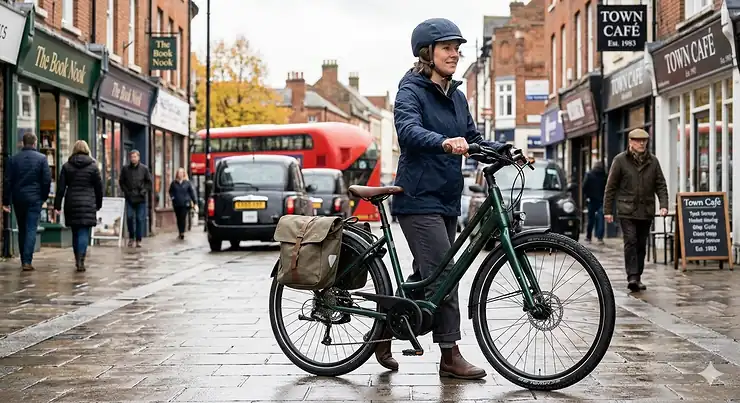
Walk assist mode provides a specific amount of support power to help you manoeuvre the bike, especially useful when you need to pass obstacles on trails or push your bike to a particular point. This feature, legally capped at 6 kilometres per hour in the UK according to gov.uk EAPC regulations, transforms awkward moments—navigating crowded station platforms, manoeuvring through tight garage spaces, or conquering steep ramps—into effortless glides.
In 2026, walk assist isn’t just a luxury feature reserved for premium models. It’s becoming standard equipment on mid-range electric bikes across the UK market. Whether you’re a commuter tackling multi-storey car parks, a senior cyclist managing mobility challenges, or simply someone who values convenience, this unassuming function might be the feature you never knew you desperately needed.
Quick Comparison Table
| Model | Price (£) | Battery | Walk Assist | Best For |
|---|---|---|---|---|
| Fafrees F20 PRO | 700-800 | 36V 18Ah | 6 km/h | Budget folding |
| HITWAY BK6S | 600-700 | 36V 10.4Ah | 6 km/h | City commuting |
| Eleglide M1 Plus | 650-750 | 36V 12.5Ah | 4-6 km/h | Mountain biking |
| ENGWE L20 SE | 700-850 | 36V 15.6Ah | 6 km/h | Fat-tyre stability |
| Fafrees F20 Mate | 2,200-2,500 | 48V 21Ah | 6 km/h | Cargo tricycle |
| Eleglide M2 | 750-900 | 36V 15Ah | 4-6 km/h | Hydraulic brakes |
| SAMEBIKE XD26 II | 700-850 | 48V 13Ah | 6 km/h | Hybrid terrain |
💬 Just one click – help others make better buying decisions too! 😊
✨ Don’t Miss These Exclusive Deals!
🔍 Take your cycling experience to the next level with these carefully selected products. Click on any highlighted item to check current pricing and availability on Amazon.co.uk. These bikes will help you create authentic commuting solutions your family will love!
Top 7 Walk Assist Electric Bike Models: Expert Analysis
1. Fafrees F20 PRO – Best Budget Folding Option
The Fafrees F20 PRO has carved out a loyal following among UK commuters who value practicality without breaking the bank. Priced between £700-800 on Amazon.co.uk, this 20-inch folding model packs serious functionality into its compact frame.
Key Specifications: 36V 18Ah removable battery (648Wh), 250W brushless motor, walk assist at 6 km/h, Shimano 7-speed derailleur, maximum range 70-90 kilometres (pure electric) or 110-130 kilometres (pedal assist).
The large-screen LCD shows speed, battery, mileage, and gear with walk assistance mode and cruise control function. UK buyers particularly appreciate the waterproof display that remains readable during inevitable British drizzles.
Customer Feedback (UK Buyers): Verified Amazon.co.uk purchasers commend the walk assist for navigating crowded Underground stations. Some mentioned battery drain concerns, though conditioning cycles improved performance.
✅ Pros: Genuine walk assist at legal UK speed, removable battery, folding design ideal for mixed-mode commuting
❌ Cons: Battery longevity concerns reported, heavier than non-electric folders at 25.5 kg
Price: £700-800 | Availability: Amazon.co.uk Prime delivery
2. HITWAY BK6S – Compact City Commuter
The HITWAY BK6S has become a cult favourite amongst UK budget e-bike enthusiasts. Its walk assist function proves invaluable for urban cyclists navigating tight spaces and steep station access ramps.
Key Specifications: 36V 10.4Ah battery, 250W motor (UK-legal), 20-inch wheels with integrated mudguards, walk assist mode, range 35-40 kilometres (medium assist).
The bike delivers consistent performance on gradients around 15 per cent, maintaining 16-19 km/h with motor assistance. Walk assist activates by holding the minus button, propelling the bike at a gentle crawl perfect for railway station bike parks.
Customer Feedback (UK Buyers): British buyers praise integrated lights and substantial mudguards—essentials for unpredictable weather. The folding mechanism receives high marks for simplicity.
✅ Pros: Excellent value at £649, walk assist perfect for stations, fully weather-ready
❌ Cons: Modest battery capacity limits longer journeys, no throttle (UK-legal configuration)
Price: £600-700 | Availability: Amazon.co.uk
3. Eleglide M1 Plus – Value Mountain Bike
For riders seeking proper mountain bike geometry with walk assist functionality, the Eleglide M1 Plus delivers impressive specifications at its £650-750 price bracket. This 27.5-inch model suits taller riders who find 20-inch folders cramped.
Key Specifications: 36V 12.5Ah battery (450Wh), 250W motor with 45Nm torque, aluminium alloy frame, walk mode, five pedal assist levels, Shimano 21-speed transmission.
One verified UK buyer in his late 70s reported clocking 1,500 miles over 18 months, praising the walk assist for managing steep inclines despite mobility challenges. The 45Nm torque proved sufficient for even 30-degree slopes.
Customer Feedback (UK Buyers): UK purchasers note the aluminium construction proves more corrosion-resistant for British weather. Battery delivers approximately 50-75 kilometres on varied terrain.
✅ Pros: Proper mountain bike feel with walk assist, excellent torque for UK hills, corrosion-resistant frame
❌ Cons: Heavier than compact folders at 27 kg, some assembly required
Price: £650-750 | Availability: Amazon.co.uk
4. ENGWE L20 SE – Fat-Tyre Stability
The ENGWE L20 SE combines fat-tyre stability with comprehensive walk assist, making it ideal for riders prioritising confidence over speed. Its 20-inch × 4.0-inch tyres provide exceptional grip on wet British roads.
Key Specifications: 36V 15.6Ah battery, 250W motor (40Nm torque), walk assist mode, seven-speed Shimano transmission, maximum range 66 km (pure electric) or 140 km (pedal assist), front mechanical suspension.
The LCD metre provides real-time information on speed, battery level, and distance. LED headlight and 48V tail-light ensure maximum visibility during dark winter commutes.
Customer Feedback (UK Buyers): One retired UK buyer praised three-day delivery and straightforward assembly. Walk assist proved particularly useful for managing apartment stairs.
✅ Pros: Exceptional tyre grip for wet conditions, walk assist eases stair navigation, suitable for varied rider heights (155-210 cm)
❌ Cons: Fat tyres create more rolling resistance, limited Northern Ireland shipping
Price: £700-850 | Availability: Amazon.co.uk
5. Fafrees F20 Mate – Premium Cargo Tricycle
For those requiring serious hauling capacity with walk assist, the Fafrees F20 Mate represents the premium end. This L2e-P certified electric tricycle combines stability with impressive cargo capability.
Key Specifications: 48V 21Ah battery (1,008Wh), 6 km/h walk assist, cruise control, hydraulic disc brakes (triple braking), maximum range 85 km (pure electric) or 115 km (pedal assist), advanced differential system.
The differential system provides smooth, stable turning with a lifespan exceeding 50,000 kilometres.
Customer Feedback (UK Buyers): UK purchasers value the tricycle’s stability for shopping trips and walk assist for navigating supermarket car parks with full cargo baskets. Hydraulic brakes deliver 30% shorter braking distances under load.
✅ Pros: Exceptional stability for cargo, walk assist invaluable when loaded, premium hydraulic brakes
❌ Cons: Significant investment at £2,200-2,500, requires dedicated storage space
Price: £2,200-2,500 | Availability: Amazon.co.uk
6. Eleglide M2 – Hydraulic Brake Upgrade
The Eleglide M2 elevates the M1 formula with hydraulic disc brakes and extended battery capacity whilst retaining walk mode functionality. Available in both 27.5-inch and 29-inch wheel options, it suits taller British riders seeking premium stopping power.
Key Specifications: 36V 15Ah battery (540Wh), walk mode at 4-6 km/h, dual hydraulic disc brakes, Shimano 21-speed, maximum range 125 km (pedal assist), APP connectivity.
Hydraulic disc brakes offer better control and greater braking effort and tend to last longer than traditional mechanical brakes. The motor delivers 55Nm torque.
Customer Feedback (UK Buyers): UK buyers mentioned improved brake performance in wet conditions compared to mechanical alternatives. Extended battery range alleviates range anxiety on countryside rides.
✅ Pros: Premium hydraulic brakes excel in British weather, extended range, APP integration
❌ Cons: Higher price point, APP features not essential for basic operation
Price: £750-900 | Availability: Amazon.co.uk
7. SAMEBIKE XD26 II – Hybrid Terrain Versatility
The SAMEBIKE XD26 II occupies the sweet spot between pure road bike and mountain bike, offering walk assist across varied British terrain. The 26-inch wheels provide steady feel on broken roads, whilst hybrid geometry offers visibility without excessive wind resistance.
Key Specifications: 48V 13Ah battery, 250W motor with progressive power delivery, walk assist at 6 km/h, Shimano gearing, integrated lighting, hybrid tyre configuration.
Power delivery proves progressive rather than sudden, creating natural riding feel. The assist eases riders up to speed without awkward surge-then-tail-off characteristic of cheaper controllers.
Customer Feedback (UK Buyers): British commuters praise balanced geometry for mixed urban and light off-road use. Walk assist receives particular commendation for managing canal towpath access ramps.
✅ Pros: Versatile hybrid design suits varied routes, progressive power delivery, integrated lights
❌ Cons: 26-inch wheels less common for spare tyres, limited UK dealer network
Price: £700-850 | Availability: Various UK retailers and Amazon.co.uk
Understanding Walk Assist Technology
What Is Walk Assist Mode?
Walk assist represents a legally distinct function from pedal assist or throttle control. According to gov.uk EAPC regulations, walk assist functionality ensures the speed doesn’t exceed 6 km/h, positioning it firmly within pedestrian-controlled vehicle regulations.
The walk assist mode feature allows the motor to help engage and move your ebike when you are walking your ebike with your hands on the handlebars and walking next to the bike. This design ensures the bike only moves whilst you’re actively controlling it—release the button or let go of the handlebars, and movement stops immediately.
How Walk Assist Works
Most walk assist systems employ press-and-hold activation methods. The most common UK implementation requires pressing and holding the minus (-) button on your display. Engagement requires continuing to hold the button for 2 seconds, upon which the display switches to indicate Walk Assist Mode is active.
Power output during walk assist typically ranges from 50-100 watts—far below the 250-watt maximum for pedal assist—ensuring the bike moves at a controlled, safe pace regardless of gradient.
UK Legal Framework
You do not need a licence to ride an EAPC and it does not need to be registered, taxed or insured. Walk assist must not exceed 6 km/h (3.7 mph) according to official UK regulations. This positions walk assist within pedestrian-controlled vehicle legislation rather than motor vehicle regulations.
Walk-assist throttles are allowed on EAPC bikes but only for speeds up to 6 km/h. Bikes equipped with walk assist don’t require vehicle registration, road tax, insurance, driving licence, or MOT testing, provided they meet standard EAPC criteria.
Choosing the Right Walk Assist E-bike
Essential Features Beyond Walk Assist
Battery Capacity and Range: For UK commuting, consider your journey length. Short urban commutes (under 16 km) need 300-400Wh batteries. Medium journeys (16-32 km) require 400-550Wh. Long-distance touring (32+ km) needs 550Wh+. Cold British weather reduces battery performance by 10-20%.
Frame Type: Step-through frames excel for frequent stopping/starting where walk assist sees regular use. High-step frames provide greater structural rigidity for aggressive riding. Folding designs perfect for mixed-mode transport where walk assist helps navigate stations.
Brake Systems for UK Conditions: British weather demands reliable wet-weather braking. Hydraulic disc brakes offer superior wet-weather performance and less maintenance. Mechanical disc brakes provide adequate performance with easier home maintenance. Avoid rim brakes for year-round use.
Price-to-Performance Sweet Spots
Budget Tier (£600-800): Expect functional walk assist, adequate battery capacity (300-450Wh), mechanical disc brakes, basic displays. Ideal for short commutes and occasional use.
Mid-Range (£800-1,200): Improved battery capacity (450-600Wh), hydraulic brakes, better displays, refined walk assist activation. Suitable for regular commuting and weekend rides.
Premium (£1,200-2,500+): Top-tier components, extensive range (600Wh+), advanced features (cruise control, APP integration), premium braking, superior build quality.
UK-Specific Considerations
British Weather Adaptations
Look for IPX4 minimum rating for display and electrical components. Component protection should include: battery IPX4 or higher, waterproof display with anti-glare coating, sealed bearing motors, weatherproof connector housings.
Eleglide electric bikes feature aluminium alloy frames that are more corrosion-resistant, suitable for use in the UK where there are many rainy days. Avoid carbon steel frames for regular outdoor storage.
UK Legal Compliance Checklist
Before purchasing, verify: maximum motor power 250 watts continuous, pedal-assist cutoff 15.5 mph (25 km/h), walk assist speed maximum 6 km/h, rider must be 14+ years, manufacturer plate displays motor power and voltage, functional pedals capable of propelling bike.
Where You Can Ride
Permitted: Public roads (except motorways), designated cycle paths and lanes, shared-use pavements (where signposted), canal towpaths (with permission), bridleways (where cycling allowed).
Prohibited: Pavements (unless designated shared-use), pedestrian-only footpaths, private land without owner permission, some controlled parks (check local bylaws).
When using walk assist in pedestrian areas, ensure you’re walking alongside the bike with hands on handlebars—not riding with assistance.
Maintenance Tips
Display and Control Care
Walk assist buttons endure frequent pressing, making them vulnerable to wear. Wipe displays weekly with microfibre cloth, avoid pressure-washing directly onto control units, check button responsiveness monthly, replace display units showing moisture ingress immediately.
Motor and Drive-train
Walk assist activates the motor at low speeds under high torque. Proper maintenance ensures longevity: monthly chain lubrication (especially after wet rides), motor mounting bolt tightness checks, listen for unusual noises. Annual professional motor inspection, controller firmware updates, comprehensive brake system check.
Battery Care for UK Climate
Cold British winters affect battery performance. Optimise longevity: store batteries indoors during freezing conditions (below 0°C), charge at room temperature (15-25°C ideal), avoid full discharge before winter storage, maintain 60% charge for extended storage periods.
Common Problems and Solutions
Walk Assist Not Activating
Causes & Solutions:
- Pedal assist level set to zero: Many systems require PAS level 1+ for walk assist. Increase assist level before activating.
- Low battery voltage: Some controllers disable walk assist below 20% battery. Charge battery above critical threshold.
- Faulty PAS sensor: Check PAS sensor magnet alignment and clean sensor face.
- Controller programming: Consult manual for P-setting adjustments or seek professional reconfiguration.
Walk Assist Speed Issues
Causes & Solutions:
- Controller parameter mismatch: Access advanced settings and modify walk assist speed parameter.
- Wheel size misconfiguration: Verify wheel size setting matches actual tyre diameter.
- Motor phase wire reversal: Perform controller auto-learn procedure or swap phase wire positions.
FAQ
❓ How fast can a walk assist electric bike go in the UK?
❓ Do I need insurance for a walk assist electric bike?
❓ Can I use walk assist mode on pavements in the UK?
❓ What's the difference between walk assist and throttle control?
❓ How long do batteries last on walk assist electric bikes?
Conclusion
Walk assist electric bike technology has evolved from premium luxury to mainstream necessity across the UK market in 2026. Whether you’re navigating crowded Manchester Metrolink stations, manoeuvring through Edinburgh’s hilly streets, or tackling London Underground bicycle restrictions, walk assist transforms those awkward bike-pushing moments into effortless glides.
The seven models we’ve examined represent genuine value across varied budgets and use cases. The Fafrees F20 PRO delivers exceptional functionality for budget-conscious commuters, whilst the Fafrees F20 Mate tricycle serves those requiring serious cargo capacity. Between these extremes, options like the Eleglide M1 Plus and ENGWE L20 SE provide solid middle-ground choices for everyday British cycling.
Remember, EAPC bikes don’t require licence, registration, tax or insurance—making walk assist electric bikes an accessible, economical transport solution. With ownership costs measured in pennies per charge rather than pounds per tank, the financial case strengthens alongside practical benefits.
When selecting your walk assist electric bike, prioritise UK legal compliance, weather-appropriate components, and genuine manufacturer support. The £600-900 price bracket offers the strongest value-to-performance ratio for most riders, though specific needs may justify premium investment.
The walk assist function might seem minor during showroom browsing, but three months into real-world use, you’ll wonder how you ever managed without it.
Recommended for You
- 7 Best Torque Sensor eBikes UK 2026
- Cadence vs Torque Sensor: 7 Best E-Bikes UK 2026 Guide
- 7 Best Pedal Assist Ebikes UK 2026
Disclaimer: This article contains affiliate links. If you purchase products through these links, we may earn a small commission at no additional cost to you. Prices shown are approximate and may vary.
✨ Found this helpful? Share it with your mates! 💬🤗
