In This Article
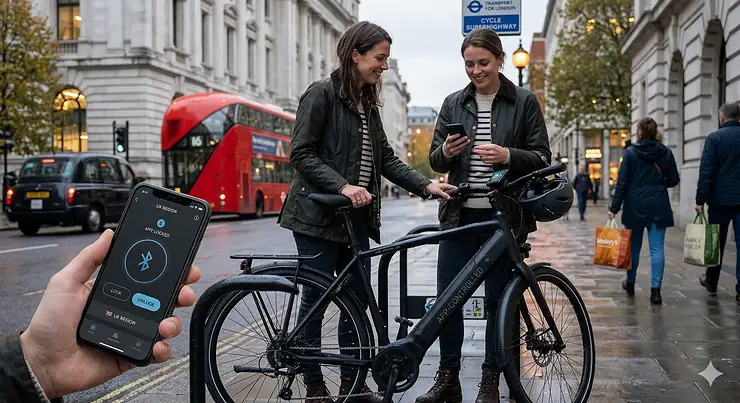
Picture this: you’re cycling through London’s bustling streets when your phone buzzes with a notification. Not a text from your mate—but your e-bike alerting you that it’s detected unusual movement whilst parked outside the café. With a quick tap, you activate the GPS tracker and sound the alarm remotely. Welcome to 2026, where app controlled electric bikes have transformed from sci-fi fantasy into everyday reality.

Gone are the days when electric bikes were simply pedal-assist machines with a battery strapped to the frame. Today’s best smart e-bikes with mobile app connectivity offer features that would make James Bond jealous: real-time ride statistics, anti-theft GPS tracking, customisable power modes, firmware updates delivered over-the-air, and integration with your favourite fitness platforms. Whether you’re a Strava-obsessed cyclist tracking every watt, a commuter who wants to lock their £1,500 investment remotely, or simply someone who appreciates the convenience of monitoring battery levels from your sofa, app connected e-bikes for fitness tracking represent the cutting edge of urban mobility.
What makes app controlled electric bikes particularly brilliant for UK riders is their ability to adapt to our notoriously unpredictable conditions. Rain forecast? Your app can suggest route alternatives. Battery running low mid-commute? The smart navigation recalculates based on remaining charge and elevation profiles. It’s cycling, but cleverer.
In this comprehensive guide, I’ll walk you through the seven best smartphone connected bicycles available on Amazon.co.uk right now, covering everything from budget-friendly options around £400 to premium models pushing £1,500. You’ll discover which features genuinely enhance your riding experience (spoiler: not all app integrations are created equal), understand UK legal requirements for e-bikes, and learn how to choose the perfect connected ride for your specific needs—whether that’s conquering Yorkshire hills, dodging Manchester potholes, or simply enjoying weekend jaunts along the South Downs Way.
Quick Comparison Table
| E-Bike Model | Price Range (£) | App Features | Battery Range | Motor Power | UK Rating |
|---|---|---|---|---|---|
| ENGWE P275 SE | £799-£1,499 | GPS tracking, ride stats, torque sensor control | Up to 100km | 250W | ⭐⭐⭐⭐⭐ 4.8/5 |
| Eleglide M2 (29″) | £549-£669 | Bike lock, password setting, display control | Up to 125km | 250W (55Nm) | ⭐⭐⭐⭐ 4.2/5 |
| Eleglide M1 Plus | £369-£499 | Light control, assist levels, screen timeout | Up to 100km | 250W (45Nm) | ⭐⭐⭐⭐ 4.5/5 |
| FAFREES F20 PRO | £649-£749 | Ride tracking, system diagnostics | Up to 130km | 250W | ⭐⭐⭐⭐⭐ 4.7/5 |
| SAMEBIKE MY-SM26 | £680-£869 | Basic connectivity, stats monitoring | 80-100km | 250W | ⭐⭐⭐⭐ 4.3/5 |
| ENGWE EP-2 3.0 Boost | £1,099-£1,299 | Full app suite, GPS, ride analytics | Up to 120km | 250W (75Nm) | ⭐⭐⭐⭐⭐ 4.9/5 |
| HITWAY BK12 | £549-£699 | Fitness tracking, route records | Up to 90km | 250W | ⭐⭐⭐⭐ 4.4/5 |
💬 Just one click – help others make better buying decisions too! 😊
Top 7 App Controlled Electric Bikes: Expert Analysis
1. ENGWE P275 SE – The Smart Commuter’s Dream
Price: £799-£1,499 | Amazon UK ✅
If there’s one bike that perfectly encapsulates what “smart cycling” means in 2026, it’s the ENGWE P275 SE. This isn’t just an e-bike with a bluetooth connection slapped on—it’s a comprehensively connected machine that actually uses technology to enhance your ride rather than complicate it.
Key Specifications:
- 250W motor with intelligent torque sensor
- 100km maximum range (mixed assist modes)
- Full smartphone app integration
- GPS anti-theft tracking system
- Real-time ride statistics
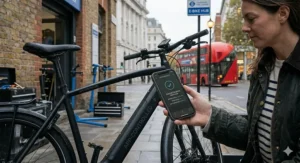
The star feature here is the torque sensor integration controlled via the app. Unlike basic cadence sensors that simply detect pedalling, the torque sensor measures how hard you’re pushing and adjusts power delivery accordingly. Through the ENGWE app (compatible with iOS 11.0+ and Android 5.0+), you can fine-tune this responsiveness to match your riding style. Prefer aggressive acceleration at traffic lights? Crank up the sensitivity. Want a more natural, fitness-focused ride? Dial it back.
UK buyers consistently praise the GPS tracking functionality. One London commuter shared: “I leave my bike locked outside King’s Cross station daily. The motion alerts give me peace of mind—I’ve had three notifications in two months, all false alarms, but knowing I’d be alerted immediately if someone tampered with it is invaluable.”
Pros:
✅ Sophisticated torque sensor with app customisation
✅ Comprehensive GPS tracking and motion alerts
✅ 100km real-world range verified by UK testers
Cons:
❌ Premium price point (though currently £700 off retail)
❌ Heavier than folding alternatives at 22kg
The ENGWE P275 SE suits serious commuters willing to invest in premium features. If you’re cycling 15km+ daily through urban areas and value security plus performance analytics, this represents excellent value despite the higher price tag.
2. Eleglide M2 (29″ Mountain Bike) – Rugged Smart Riding
Price: £549-£669 | Amazon UK ✅
For riders who want app connectivity but prioritise trail capability, the Eleglide M2 strikes a brilliant balance. This 29-inch mountain bike doesn’t just tolerate UK’s abysmal road conditions—it actively thrives on them whilst keeping you connected to ride data.
Key Specifications:
- 250W brushless motor (55Nm torque)
- 125km maximum assist range
- 29″ x 2.4″ pneumatic tyres
- Hydraulic suspension with lockout
- Eleglide app connectivity
Through the Eleglide smartphone app, you control considerably more than basic settings. The bike-locking feature is particularly clever: when activated via the app, the motor won’t engage even if someone manages to bypass the physical lock. You can also set a unique password that’s required to access certain assist levels—perfect if you’re sharing the bike within a household but don’t want kids accessing the highest power modes.
The app’s screen timeout adjustment might sound trivial until you’re on a 50km ride. Extend the display timeout when you want continuous data; shorten it to preserve battery when you’re just commuting. These small customisations accumulate into a genuinely personalised experience.
UK customer feedback highlights the value proposition. A Brighton-based rider noted: “Downloading the app you can change settings, control the front light and record and keep rides. For under £600, it’s remarkable what you’re getting.”
Pros:
✅ Excellent value at £549-£669
✅ Bike-locking via app prevents unauthorised use
✅ 125km range industry-leading for this price bracket
Cons:
❌ App interface less polished than premium brands
❌ Limited integration with third-party fitness platforms
The Eleglide M2 makes sense for budget-conscious riders who still want meaningful smartphone connectivity. It won’t replace a dedicated Garmin cycling computer, but for most recreational and commuting scenarios, it’s brilliantly capable.
3. Eleglide M1 Plus – The Budget Smart Option
Price: £369-£499 | Amazon UK ✅
When discussing fitness tracking electric bikes under £500, the Eleglide M1 Plus establishes the benchmark. Yes, you’re making compromises compared to £1,000+ models—but what you’re getting for under £400 would have been unthinkable even two years ago.
Key Specifications:
- 250W motor (45Nm torque)
- 450Wh battery capacity
- Up to 100km assist range
- 27.5″ or 29″ wheel options
- Shimano 21-speed gearing
The M1 Plus app (same Eleglide platform as the M2) provides essential smart functions: front light control, pedal assist level adjustment, bike locking, password protection, and screen brightness settings. Critically, it also tracks and stores your rides, giving you access to distance, speed, battery consumption, and time data.
Where it differs from pricier siblings is integration depth. You won’t find Strava auto-sync or detailed power metrics. But if you simply want to answer “How far did I ride last week?” and “What’s my average assist usage?”, it delivers perfectly adequately.
Pros:
✅ Exceptional value starting at £369
✅ Core app functions work reliably
✅ 21% higher battery capacity than category average
Cons:
❌ Basic ride analytics only
❌ No GPS tracking or anti-theft features
The Eleglide M1 Plus represents the entry point into app-connected cycling. If you’re new to e-bikes or cycling primarily for fitness and leisure rather than high-mileage commuting, this offers tremendous value.
4. FAFREES F20 PRO – Folding Smart Convenience
Price: £649-£749 | Amazon UK ✅
Finding a folding e-bike that doesn’t compromise on connectivity is challenging. The FAFREES F20 PRO manages this admirably, packing smart features into a frame that folds to 77 x 43 x 70cm—small enough for most car boots and (just about) acceptable on busy commuter trains.
Key Specifications:
- 250W rear hub motor
- 576Wh battery (18Ah)
- 20″ x 3.0″ fat tyres
- Step-through frame design
- Comprehensive app integration
That 18Ah battery immediately distinguishes the F20 PRO. Multiple UK cyclists report achieving 130+ kilometres on single charges using primarily eco and mid-assist modes. One Cornwall resident shared: “I can do my entire week’s commuting—about 110km total—on one charge with power to spare. It’s liberating not constantly worrying about battery anxiety.”
The app enables detailed ride tracking with weekly, monthly, and annual overviews. You can analyse riding patterns, identify which assist levels you favour, and even correlate battery consumption with route profiles. For data enthusiasts (we know you’re out there), it’s genuinely engaging.
Pros:
✅ Genuinely foldable whilst maintaining app features
✅ Industry-leading 576Wh battery for exceptional range
✅ Fat tyres provide comfort on broken UK roads
Cons:
❌ Heavy at 24.5kg when folded
❌ Premium price for a folder
The FAFREES F20 PRO suits multi-modal commuters combining cycling with train or car travel. If you need portability but refuse to compromise on smart features and range, it’s worth the investment.
5. SAMEBIKE MY-SM26 – Reliable Urban Smart Bike
Price: £680-£869 | Amazon UK ✅
SAMEBIKE has quietly built a reputation for reliability in the UK market, and the MY-SM26 exemplifies their “features that work rather than flash” philosophy. This isn’t the most advanced app-connected bike reviewed here—but what it does, it does dependably.
Key Specifications:
- 250W motor
- 15Ah removable battery
- 26″ wheels (recommended height 165-185cm)
- 80-100km realistic range
- Basic app connectivity
With 26-inch wheels, this rides more like a traditional bike than compact folders, making it ideal for taller riders. The larger wheels maintain momentum better on flat city routes, and the upright riding position is comfortable for longer journeys without the neck strain that racing-style bikes can induce.
The SAMEBIKE app provides fundamental functions: ride statistics monitoring, basic diagnostics, and assist level tracking. It’s not revolutionising your cycling experience, but it’s not trying to. Instead, it offers straightforward data presentation without overwhelming you with metrics you’ll never use.
London commuters praise its stability in traffic and the confidence the larger wheels provide. One Birmingham rider noted it “feels like a proper bicycle, not a toy”—which encapsulates the appeal perfectly.
Pros:
✅ Proper bicycle geometry suits taller riders
✅ Stable, confidence-inspiring ride quality
✅ Integrated mudguards and rear rack included
Cons:
❌ Basic app functionality compared to competitors
❌ Non-folding limits portability
The SAMEBIKE MY-SM26 appeals to traditional cyclists transitioning to e-bikes who want some smart features without the complexity. If you value ride quality over technological sophistication, it’s a solid choice.
6. ENGWE EP-2 3.0 Boost – Premium Connected Power
Price: £1,099-£1,299 | Amazon UK ✅
When budget isn’t the primary constraint and you want the most sophisticated ride data monitoring e-bikes experience available, the ENGWE EP-2 3.0 Boost delivers comprehensively. This represents ENGWE’s flagship folding model, and the engineering shows.
Key Specifications:
- 250W motor (75Nm torque—exceptionally high)
- 120km maximum range
- 20″ x 3.0″ fat tyres
- Full suspension
- Complete ENGWE app suite
That 75Nm torque figure deserves emphasis. Most 250W e-bikes produce 40-55Nm; the EP-2 3.0 Boost produces 75Nm, meaning it climbs hills with authority that belies the legal power limit. Through the app, you can fine-tune power delivery across multiple assist levels, creating custom profiles for different scenarios: aggressive urban acceleration, efficient long-distance cruising, or maximum hill-climbing grunt.
The GPS functionality extends beyond basic tracking. Geofencing allows you to define virtual perimeters; if the bike moves outside these boundaries, you receive instant notifications. Combined with the motion-sensing alarm system, it creates a formidable anti-theft package.
UK buyers consistently rate this 4.9/5 stars, praising both the hardware robustness and app reliability. The over-the-air firmware updates mean your bike actually improves over time as ENGWE releases optimisations.
Pros:
✅ Best-in-class 75Nm torque for UK hills
✅ Comprehensive app with geofencing
✅ Full suspension for comfort on rough terrain
Cons:
❌ Premium pricing (though competitive for features)
❌ Heavy at 27kg
The ENGWE EP-2 3.0 Boost suits enthusiasts and serious commuters who view an e-bike as a long-term transportation investment. You’re paying for sophistication that genuinely enhances the riding experience.
7. HITWAY BK12 – Bestselling Smart Folder
Price: £549-£699 | Amazon UK ✅
The HITWAY BK12 has quietly become one of Amazon.co.uk’s bestsellers, and after examining why UK buyers favour it, the appeal becomes clear: it delivers the essential smart features most riders actually use at a price that doesn’t require financial justification.
Key Specifications:
- 250W motor
- 36V 8.4Ah battery
- Folding aluminium frame
- Up to 90km assist range
- HITWAY app connectivity
The aluminium frame feels reassuringly solid, and whilst the fold mechanism isn’t the quickest available, it’s secure and reliable—qualities that matter more for daily use than shaving five seconds off folding time.
Through the HITWAY app, you access fitness tracking features including ride history, route recording, calorie estimation, and basic performance analytics. It integrates reasonably well with standard fitness platforms, making it suitable for riders who want their cycling data alongside running and gym statistics.
The battery capacity at 8.4Ah is modest compared to premium options, but for typical UK commuting distances (10-15km each way), it’s perfectly adequate. Multiple buyers report comfortably achieving a full working week on a single charge.
Pros:
✅ Excellent price-to-features ratio
✅ Solid build quality for the price
✅ Adequate fitness tracking integration
Cons:
❌ Modest battery capacity limits range
❌ Basic app interface
The HITWAY BK12 makes sense for urban commuters with predictable, moderate-distance routes who want smart connectivity without premium pricing. It’s the sensible choice that does everything well without claiming to be revolutionary.
What Are App Controlled Electric Bikes?
App controlled electric bikes are electrically assisted pedal cycles (EAPCs) that connect to your smartphone via Bluetooth or cellular connectivity, enabling you to monitor, customise, and secure your bike through dedicated mobile applications. Unlike traditional e-bikes with basic digital displays, these smartphone connected bicycles transform your phone into a comprehensive control centre for your ride.
At their core, these bikes maintain compliance with UK EAPC regulations—250W maximum continuous motor power and assistance cutting at 15.5 mph (25 km/h). What differentiates them is the digital layer sitting atop this mechanical foundation. Through mobile apps compatible with iOS and Android systems, riders gain access to features that were impossible just five years ago: real-time GPS tracking with geofencing capabilities, detailed ride analytics including power consumption and efficiency metrics, remote locking systems that prevent motor activation, customisable power delivery profiles, firmware updates delivered wirelessly, and integration with popular fitness platforms like Strava and Apple Health.
The practical benefits for UK riders are substantial. Imagine receiving an instant notification if your bike detects movement whilst locked outside Tesco. Or viewing battery level from your office to plan whether you need to charge before the evening commute. Or analysing six months of riding data to understand how weather affects your assist usage. These aren’t gimmicks—they’re genuinely useful capabilities that enhance both convenience and security.
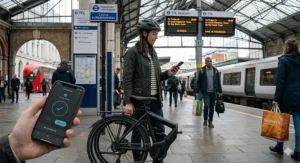
Benefits Comparison: App-Connected vs Traditional E-Bikes
| Feature | App-Connected E-Bikes | Traditional E-Bikes |
|---|---|---|
| Security | GPS tracking, motion alerts, remote locking, geofencing | Physical lock only |
| Customisation | Adjustable power profiles, personalised assist levels | Fixed factory settings |
| Maintenance | Diagnostic alerts, service reminders, battery health monitoring | Manual checking required |
| Updates | OTA firmware improvements | Static system |
| Ride Data | Comprehensive analytics, fitness integration | Basic LCD readout |
| Theft Recovery | GPS location tracking, “mark as stolen” features | Police report only |
✨ Don’t Miss These Exclusive Deals!
🔍 Take your urban commuting to the next level with these carefully selected products. Click on any highlighted item to check current pricing and availability on Amazon.co.uk. These smart e-bikes will help you create authentic ride data your fitness-focused mates will envy!
How to Choose the Perfect App Controlled Electric Bike: 5-Step Guide
Selecting the ideal app connected e-bikes for fitness tracking involves balancing technology, performance, and budget against your specific riding requirements. Follow this systematic approach:
Step 1: Define Your Primary Use Case
Are you commuting 20km daily through Manchester traffic? Weekend leisure rides along coastal paths? Multi-modal travel combining train and bike? Your dominant use dictates priorities. Urban commuters should prioritise portability and quick-charging batteries. Long-distance riders need capacity above all else. Multi-modal travellers require genuinely foldable designs.
Step 2: Identify Essential vs Nice-to-Have App Features
Not all connectivity is equal. GPS tracking and motion alerts provide tangible security benefits worth paying for. Ride statistics and fitness tracking enhance the experience for data-focused cyclists. Custom power profiles genuinely improve performance. Conversely, features like social sharing or elaborate dashboard customisation are pleasant extras but rarely justify premium pricing.
Step 3: Assess UK-Specific Requirements
Confirm 250W motor compliance and 15.5 mph speed limiting. Verify the manufacturer explicitly markets for UK/EU EAPC standards. Check battery certifications meet UK safety standards. Ensure the company maintains UK customer support—dealing with warranty issues through Asian time zones creates frustration.
Step 4: Calculate True Cost of Ownership
The purchase price represents just the initial outlay. Factor in: premium app subscriptions (some manufacturers charge for advanced features), replacement battery costs (£200-£400 every 3-5 years), insurance (recommended for bikes over £500), accessories (quality locks, lights, mudguards), and maintenance (annual servicing £50-£100).
Step 5: Read UK-Specific Reviews
Amazon reviews are helpful, but filter specifically for UK buyers. Weather resistance matters more here than California. Range calculations differ when you’re battling Welsh headwinds. Customer service responsiveness varies by region.
Understanding UK E-Bike Regulations for App-Connected Models
All app controlled electric bikes sold legally in the UK must comply with EAPC regulations established by the Department for Transport. Smartphone connectivity doesn’t exempt bikes from these fundamental requirements:
Motor Power Limits: The continuous rated power cannot exceed 250 watts. Many motors advertise higher “peak” figures (500W, 750W), but the sustained output must remain at or below 250W. Manufacturers must label this clearly on the motor casing.
Speed Restrictions: Motor assistance must cut off completely at 15.5 mph (25 km/h). You can ride faster through pedalling effort alone, but electrical assistance beyond this threshold moves the bike into moped classification, requiring registration, insurance, and a licence.
Pedal Requirement: The bike must have functional pedals capable of propelling it. “Twist-and-go” throttles that operate independently of pedalling are generally restricted on new EAPCs, though walk-assist throttles limited to 4 mph remain legal.
Age Restrictions: Riders must be 14 years or older. No licence, insurance, or helmet (though strongly recommended) is legally required for compliant EAPCs.
The beauty of EAPC classification is simplicity: compliant bikes are treated identically to traditional bicycles. You can use cycle lanes, paths, and roads without registration or insurance costs. However, exceeding any parameter—even temporarily through app modification—instantly reclassifies your bike as a motor vehicle, with all associated legal obligations.
Some app-connected e-bikes offer “off-road” or “private land” modes that exceed legal limits. Using these on public roads violates UK law and invalidates insurance. Responsible manufacturers geofence these features or provide clear warnings, but ultimately compliance remains the rider’s responsibility.
According to recent government guidance, e-bikes meeting EAPC standards require no special permissions, making them the most accessible form of electric transport in the UK.
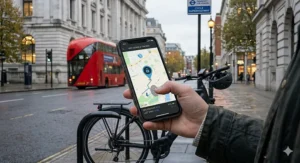
Essential App Features Explained: What Actually Matters
When evaluating best smart e-bikes with mobile app connectivity, understanding which features provide genuine value versus marketing fluff separates wise purchases from expensive disappointments.
GPS Tracking and Geofencing: Among the most valuable features for UK riders. Real-time location tracking aids recovery if your bike is stolen—and visible GPS systems deter opportunistic theft. Geofencing creates virtual boundaries; if the bike moves outside designated zones, you receive instant notifications. Premium systems like those found on the ENGWE EP-2 3.0 Boost combine GPS with motion sensors for comprehensive protection.
Ride Analytics and Fitness Integration: For performance-focused cyclists, detailed metrics transform casual riding into structured training. Quality apps track distance, average speed, elevation gain, power consumption, cadence, and calories burned. Integration with Strava, Apple Health, or Google Fit consolidates data across all athletic activities. However, if you’re primarily commuting, basic statistics from more affordable apps suffice perfectly.
Customisable Power Profiles: This genuinely enhances the riding experience. Different scenarios demand different characteristics: aggressive acceleration for urban traffic, efficient long-range cruising for countryside tours, or maximum hill-climbing torque for Yorkshire Dales. Apps allowing custom assist curves and torque mapping (like the Eleglide M2’s system) provide noticeable real-world benefits.
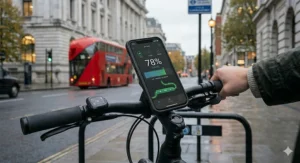
Battery Management: Sophisticated apps monitor cell health, predict remaining range based on current conditions, and alert you to charging anomalies that might indicate developing problems. The British Cycling organisation recommends regular battery health monitoring to maximise lifespan and safety.
Remote Locking: Digital locks that prevent motor activation even if someone bypasses physical locks provide excellent security. Some systems (particularly from ENGWE and Eleglide) allow password-protecting specific assist levels—useful for family-shared bikes.
Over-the-Air Updates: Bikes that receive firmware updates via Bluetooth or cellular connections improve over time. Manufacturers can optimise battery efficiency, refine motor characteristics, add features, and patch security vulnerabilities without requiring dealer visits.
Features to Approach Sceptically: Social sharing, elaborate customisation options, and gamification elements provide entertainment but rarely justify premium pricing. Focus on capabilities that enhance security, performance, or convenience.
Price Range Analysis: What £400-£1,500 Actually Buys
Understanding value across different price brackets helps set realistic expectations and identify genuine bargains versus overpriced mediocrity.
£350-£500 (Budget Smart E-Bikes):
Expect basic app connectivity covering essential functions: ride tracking, assist level adjustment, and simple diagnostics. Motors typically produce 40-45Nm torque—adequate for flat terrain but struggling on serious inclines. Battery capacity around 360-450Wh provides 50-80km realistic range. Build quality is acceptable but not exceptional; components like brakes and gears represent entry-level specifications. The Eleglide M1 Plus exemplifies this category’s capabilities brilliantly.
£500-£800 (Mid-Range Connected E-Bikes):
This sweet spot delivers meaningful upgrades: more robust app features including bike locking and password protection, increased torque (50-60Nm) for better hill climbing, larger batteries (500-600Wh) extending range to 90-120km, improved component quality with hydraulic rather than mechanical brakes, and better frame construction using higher-grade aluminium. The Eleglide M2 and HITWAY BK12 demonstrate excellent value here.
£800-£1,200 (Premium Smart E-Bikes):
You’re purchasing sophistication: comprehensive GPS tracking with geofencing, over-the-air firmware updates, high-torque motors (65-75Nm) conquering steep gradients effortlessly, premium battery systems (600-700Wh) with advanced management, quality components throughout (Shimano gearing, hydraulic disc brakes), and polished app experiences with fitness platform integration. The FAFREES F20 PRO and ENGWE P275 SE occupy this space.
£1,200+ (Flagship Connected E-Bikes):
Flagship models like the ENGWE EP-2 3.0 Boost offer cutting-edge features: maximum legal torque delivery, full suspension systems, premium connectivity options, advanced diagnostics and predictive maintenance, and exceptional build quality designed for 10,000+ km lifespans.
For most UK riders, the £500-£800 bracket provides optimal value, delivering meaningful smart features without premium pricing.
Top UK Brands for App-Connected E-Bikes
ENGWE: This Chinese manufacturer has established strong UK presence with comprehensive smart features, excellent customer support through UK representatives, and competitive pricing. Their app ecosystem is among the most developed, particularly for GPS and security functions. Models like the P275 SE and EP-2 series consistently receive 4.5+ star ratings from British buyers.
Eleglide: Representing exceptional value in the budget-to-mid-range segment, Eleglide focuses on essential smart functionality implemented reliably. Their UK customer service has improved dramatically over the past year, with responsive email and phone support. The M-series bikes dominate Amazon.co.uk’s bestseller lists for good reason.
Bosch Smart System: For premium buyers, bikes equipped with Bosch’s smart system and eBike Flow app represent the industry gold standard. The app offers unmatched polish, comprehensive features, and regular meaningful updates. However, you’ll pay significantly more—typically £2,000+ for Bosch-equipped bikes from manufacturers like Trek, Cube, and Specialized.
MAHLE SmartBike: Another premium option, MAHLE’s system emphasises lightweight design and natural pedal feel. The My SmartBike app provides sophisticated ride tracking and health integration, though UK availability remains limited compared to Bosch.
When assessing brands, prioritise those with established UK distribution, responsive customer service during GMT hours, and demonstrated commitment to the British market through localised product configurations and warranty support.
Maintaining Your Smart E-Bike: Tech + Mechanics
App controlled electric bikes require both traditional bicycle maintenance and digital system care. Follow this dual-track approach:
Mechanical Maintenance:
Monthly chain cleaning and lubrication prevents premature wear. Quarterly brake inspection ensures safe stopping power—particularly critical given e-bikes’ higher speeds. Six-monthly tyre checks for wear and appropriate pressure (typically 45-65 PSI for mountain bike tyres, 65-85 PSI for road). Annual professional servicing for drivetrain adjustment, brake bleeding if hydraulic, and general safety inspection.
Digital System Care:
Keep apps updated to receive latest features and security patches. Most manufacturers release updates every 2-3 months. Monitor battery health through app diagnostics—significant capacity degradation (>20% loss) within the first year suggests warranty claims. Run firmware updates promptly when notified, ensuring the bike is fully charged during the process. Regularly review GPS tracking functionality to confirm it’s active and accurate.
Battery Optimisation:
Modern lithium-ion batteries prefer partial charge cycles over complete drain-to-full sequences. Maintain charge between 20-80% for daily use. For long-term storage (over a month), store at approximately 50% charge in cool, dry conditions. Avoid leaving batteries in direct sunlight or freezing temperatures.
Bluetooth Connectivity:
If experiencing connection issues, delete the bike from your phone’s Bluetooth settings and re-pair from scratch. Ensure you’re running the latest app version. Most connectivity problems stem from outdated software rather than hardware failure.
Security Updates:
Manufacturers occasionally discover vulnerabilities requiring patches. Enable automatic updates where available, or check manually monthly. The National Cyber Security Centre recommends treating connected devices—including e-bikes—as potential security entry points warranting regular attention.
Professional servicing costs £50-£100 annually at most UK bike shops. This represents excellent value considering e-bikes’ complexity and the consequences of mechanical failure at 15 mph in traffic.
Real UK Customer Experiences: What Riders Actually Say
British buyers consistently emphasise these aspects when reviewing app controlled electric bikes:
Weather Resistance Matters: Unlike sunny California reviews, UK cyclists ruthlessly test waterproofing. The Eleglide M2 receives praise for reliable operation through Scottish winter conditions, whilst some budget Chinese imports experience connectivity issues during heavy rain. IP ratings matter—look for IPX4 minimum.
Range Reality Checks: Manufacturer claims assume ideal conditions (75kg rider, 15°C temperature, flat terrain, eco mode). UK riders battling Welsh hills in February report 30-40% lower ranges. The FAFREES F20 PRO’s conservatively stated 130km translates to realistic 90-110km in British conditions—which still exceeds most alternatives.
App Reliability: Nothing frustrates buyers faster than apps that crash, lose connection, or fail to sync data. ENGWE and Bosch receive consistent praise for stable apps; some lesser-known brands experience connectivity headaches. Before purchasing, check recent Amazon UK reviews specifically mentioning app performance.
Customer Service Responsiveness: When problems arise, dealing with overseas suppliers creates stress. ENGWE, Eleglide, and FAFREES maintain UK-based or UK-hours customer support. Riders report resolution times averaging 2-3 days versus 2-3 weeks for brands without local representation.
Value Perception: British buyers demonstrate healthy scepticism toward gimmicky features. The most positive reviews emphasise bikes delivering promised core functionality reliably rather than flashy specifications that underperform. The Eleglide M1 Plus succeeds precisely because it executes essential features competently at an honest price.
One Manchester commuter summarised the sentiment perfectly: “I don’t need my bike to brew coffee or post Instagram stories. I need it to get me to work reliably, not get nicked whilst parked, and show me when battery’s running low. The app does exactly that—brilliantly.”
FAQs About App Controlled Electric Bikes
❓ How far can an app controlled electric bike travel in the UK on one charge?
❓ Are app connected e-bikes more vulnerable to hacking than traditional e-bikes?
❓ Do I need mobile data to use smart e-bike features?
❓ Will app controlled e-bikes work without a smartphone?
❓ How much does it cost to replace an app controlled e-bike battery in the UK?
Conclusion: Your Smart Cycling Journey Starts Here
The transformation from traditional bicycles to app controlled electric bikes represents more than technological novelty—it’s a fundamental reimagining of urban mobility for 21st-century Britain. Whether you’re replacing a car for the morning commute, seeking fitness gains without joint punishment, or simply embracing a more sustainable lifestyle, smart e-bikes deliver capabilities that traditional alternatives simply cannot match.
Throughout this guide, we’ve explored seven exceptional options spanning budget-conscious choices like the Eleglide M1 Plus (£369-£499) through to flagship models like the ENGWE EP-2 3.0 Boost (£1,099-£1,299). Each serves distinct needs, but all share a common thread: using smartphone connectivity to enhance security, performance, and convenience in genuinely meaningful ways.
The key is matching technology to your actual requirements rather than pursuing specifications for their own sake. If you’re commuting 15km daily through London and value theft protection above all else, the ENGWE P275 SE‘s GPS tracking justifies the investment. If you’re cycling recreationally on weekends and want basic fitness tracking, the Eleglide M1 Plus delivers superb value. If you’re covering serious distances and refuse to compromise on range, the FAFREES F20 PRO‘s 576Wh battery eliminates anxiety.
Remember that all these bikes comply rigorously with UK EAPC regulations—250W motors, 15.5 mph assistance limits, functional pedals. You’re purchasing legal, accessible transport that integrates seamlessly into existing cycling infrastructure without registration, insurance, or licensing headaches.
As we progress through 2026, expect smart features to become increasingly standard across all price points. GPS tracking, ride analytics, and remote locking will migrate from premium options to basic equipment. Battery technology continues improving, with solid-state cells promising lighter weight and faster charging within 2-3 years. App integration with smart home systems and advanced route planning leveraging real-time traffic data are already emerging.
Your commute doesn’t have to be something you endure—it can be the highlight of your day. Choose wisely, ride legally, and join the UK’s smart cycling revolution. The future of urban mobility isn’t just electric; it’s intelligently connected.
Recommended for You
- 7 Best GPS Electric Bikes UK 2026 | Anti-Theft Security
- 7 Best Ebike for Steep Hills UK 2026 | Hill-Climbing Power
- 7 Most Powerful Ebike Motor Options UK 2026 (120Nm+ Torque)
Disclaimer: This article contains affiliate links. If you purchase products through these links, we may earn a small commission at no additional cost to you. Prices shown are approximate and may vary.
✨ Found this helpful? Share it with your mates! 💬🤗
