In This Article
Here’s a slightly uncomfortable statistic to open with: most cyclists who go down alone don’t get help because someone saw them fall. They get help because a phone, a helmet, or a bike decided to tattle on them. That’s the whole premise behind an electric bike with crash detection SOS — a system that notices you’ve stopped moving in a way that isn’t normal, waits a few seconds to see if you’re joking, and then quietly rings an alarm bell on your behalf.
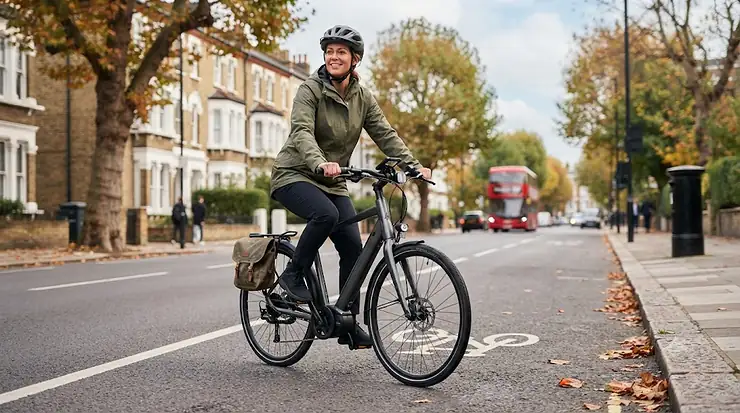
It sounds like something out of a spy film, but the technology is now sitting in ordinary commuter bikes, clip-on sensors, and helmets you can buy on a Tuesday afternoon. The accelerometer inside these systems is the same basic sensor that flips your phone screen from portrait to landscape — it’s just been trained to recognise the very specific, very violent signature of a body leaving a bike at speed.
This guide walks through seven real, currently available products that bring crash detection and SOS alerting to e-bike riders in the UK — from bikes with the tech built into the frame to lightweight helmet sensors you can move between rides. Along the way we’ll get into how an ebike automatic accident alert actually decides something bad has happened, why fall detection electric bicycle systems occasionally cry wolf, what a decent emergency contact app should ask of you, and how accelerometer crash sensing is genuinely different from a burglar alarm bolted to your handlebars.
Quick Comparison Table
| Product | Type | Price Range | Best For |
|---|---|---|---|
| Cowboy Cruiser ST | Complete e-bike, built-in detection | £2,000-£2,500 | All-in-one commuters who don’t want extra gadgets |
| Specialized Turbo Vado 4.0 + ANGi | Premium e-bike + sensor bundle | £3,000-£3,500 | Fitness-minded riders wanting Strava-linked safety |
| Trek Allant+ 7 | Mid-premium e-bike, Bosch ecosystem | £3,000-£3,300 | Long-distance commuters wanting a proven drive system |
| UNIT 1 FARO | Smart helmet | £150-£240 | Riders who want lights, indicators and crash alert in one |
| UNIT 1 AURA | Smart helmet, e-bike certified | £150-£220 | Faster e-bike riders wanting NTA-8776 certification |
| Specialized ANGi Crash Sensor | Standalone clip-on sensor | £40-£50 | Budget riders with an ANGi-ready helmet already |
| Tocsen Crash Sensor | Standalone universal sensor | £70-£90 | Anyone wanting sensor freedom across any helmet |
Looking at the spread above, there’s a genuine fork in the road for buyers: pay once for a bike where the safety net is baked in, or spend far less on a sensor that rides along on whatever helmet you already own. The Cowboy Cruiser ST wins on convenience because there’s nothing extra to charge or forget, while the Tocsen Crash Sensor wins on flexibility because it doesn’t care which bike, or even which sport, you’re using it for. Riders chasing performance data as well as safety should lean toward the Specialized Turbo Vado 4.0 and its ANGi pairing, since the ecosystem doubles as a full activity tracker.
💬 Just one click — help others make better buying decisions too!😊
Top 7 Electric Bikes With Crash Detection SOS: Expert Analysis
1. Cowboy Cruiser ST — built-in crash sensors with an independent SIM
The standout here is that Cowboy Cruiser ST doesn’t ask you to buy, charge, or remember a separate gadget — the crash detection lives inside the bike itself. Cowboy fitted its second and third-generation platform, which the Cruiser ST is built on, with motion sensors that work alongside GPS tracking, and crucially, a SIM card that’s entirely independent of your phone. That distinction matters more than it sounds: plenty of crash-detection systems die the moment your handset is smashed or its battery drains, but Cowboy’s approach keeps working because the bike itself has its own connection to the network.
In terms of what’s under you while riding, the Cruiser ST runs a 250W belt-driven hub motor with roughly 45Nm of torque and a removable battery good for somewhere in the 40-80km range depending on assist level — comfortably enough for a week of typical UK commuting between charges. Based on the spec comparison with the rest of this list, what most buyers overlook is that this bike was engineered by a company whose co-founder built the crash-detection feature after his own accident on an icy road, which explains why the feature reads less like a marketing bullet point and more like a genuinely considered safety layer.
Reviewers consistently note that the step-through Cruiser ST frame and swept-back bars make it one of the more comfortable connected e-bikes for shorter riders and those wanting an upright commuting position, though some owners have flagged that the companion app occasionally lags behind firmware updates on Android. If a fall is detected and you don’t respond within 60 seconds, Cowboy alerts up to two emergency contacts with your live position, which is about as close to “set it and forget it” as this category currently gets.
Pros:
- ✅ Crash detection works even without your phone nearby
- ✅ Comfortable step-through frame suits commuting and errands
- ✅ Removable battery makes charging away from the bike easy
Cons:
- ❌ Android app updates have occasionally lagged behind iOS
- ❌ Premium positioning means it isn’t the cheapest way into this category
At around £2,000-£2,500, the Cruiser ST sits at the accessible end of connected e-bikes with this safety tier — check current price, as Cowboy runs seasonal promotions that can shift where it lands.
2. Specialized Turbo Vado 4.0 + ANGi Crash Sensor — fitness tracking meets crash alerting
The Specialized Turbo Vado 4.0 earns its spot through the way it pairs with Specialized’s Mission Control ecosystem, and specifically the ANGi Crash Sensor, to turn every ride into both a fitness log and a safety net. The standout feature is that ANGi isn’t bolted onto the bike itself; it clips onto compatible helmets and talks to the Specialized Ride app, which means the crash-detection layer travels with you even if you swap between bikes.
Underneath the tech, the Vado 4.0 runs Specialized’s own 250W Turbo Full Power motor delivering up to 70Nm of torque, paired with a 710Wh battery that’s genuinely capable of 50+ miles on eco assist. What this means in practice is that hillier UK commutes — the kind that would leave a 350W hub-motor bike wheezing — barely register. The honest trade-off is weight: at over 24kg, this isn’t a bike you’re casually carrying up three flights of stairs.
Aggregated review sentiment from cycling retailers and owner forums consistently praises the smoothness of the torque delivery and the accuracy of the on-board range estimate, while a recurring complaint is that the ANGi sensor’s six-month coin-cell battery life needs proactively managing, since a flat sensor simply stops protecting you without necessarily telling you loudly enough. Riders should also know the ANGi countdown only fires when the paired app is actively running, so leaving your phone at home defeats the system entirely — worth flagging honestly rather than glossing over.
Pros:
- ✅ Strong motor and battery combination for hilly UK routes
- ✅ ANGi sensor works across any ANGi-ready helmet, not just this bike
- ✅ Deep Strava and Mission Control integration for training data
Cons:
- ❌ ANGi requires the Specialized Ride app open to function
- ❌ Heavier build than most rivals in this list
Specialized positions this in the mid-£3,000s range, with the ANGi Crash Sensor itself typically £40-£50 as an add-on — check current price for the latest bundle offers.
3. Trek Allant+ 7 — Bosch Smart System with Help Connect built in
Trek Allant+ 7 makes this list because it runs on the Bosch Smart System, which means it can tap into Bosch’s Help Connect accident-detection service through the eBike Flow and COBI.Bike apps rather than relying on a proprietary Trek-only solution. The standout advantage of this approach is ecosystem maturity — Bosch’s motors power more than 50 European e-bike brands, so the safety layer here has been refined across a genuinely enormous rider base.
Spec-wise, the Allant+ 7 pairs a Bosch Performance Line CX-family motor with a 625Wh PowerTube battery fully integrated into the downtube, plus a Purion 200 display for at-a-glance stats. On paper this translates to a bike that can comfortably handle a 20-30 mile round-trip commute with hills, while the suspension fork takes the edge off potholed British B-roads. Based on the spec comparison, the standout here isn’t raw power — it’s that Bosch’s crash-detection layer uses data gathered from analysing eighteen simulated motorcycle crashes to build its detection algorithm, which is a more rigorous foundation than many rivals disclose.
User reports on retailer sites consistently rate the ride quality and component spec highly for the price bracket, with the most common gripe being that Help Connect itself is a paid premium feature after an initial trial period rather than something bundled free for life — a cost worth factoring into your total spend. The Kiox or Purion display also needs to be paired correctly for full functionality, and a handful of owners note the setup process isn’t always intuitive on first use.
Pros:
- ✅ Bosch’s Help Connect draws on a mature, widely-used crash algorithm
- ✅ 625Wh battery gives genuine long-distance commuting range
- ✅ Removable Integrated Battery system simplifies charging
Cons:
- ❌ Help Connect accident detection is a paid subscription after the trial
- ❌ App pairing setup isn’t always straightforward for first-time users
Trek prices the Allant+ 7 around £3,000-£3,300 depending on the model year and colourway — check current price before ordering, as spec sometimes shifts between production runs.
4. UNIT 1 FARO Smart Helmet — indicators, brake lights and crash alert in one shell
The UNIT 1 FARO takes a different angle on this category entirely: rather than building safety into the bike, it builds an entire safety suite into the helmet, and crash detection is just one part of a much bigger picture that includes built-in lights, automatic brake lights, and remote-controlled turn signals. The standout feature is how the accelerometer that powers those automatic brake lights doubles as the crash sensor, so you’re not paying for two separate systems.
FARO meets CPSC and EN1078 certification, weighs a reasonable 580g, and includes MIPS as standard on current models — a low-friction liner that reduces rotational forces during an angled impact, which is the kind of collision most real-world cycling accidents actually involve rather than a straight-on hit. What most buyers overlook is that the crash alert only fires on a genuinely hard, sudden stop; UNIT 1 has tuned the sensitivity so that mild bumps and normal riding vibration don’t trigger false countdowns, which is a deliberate design choice rather than an oversight.
Reviewers who’ve tested the FARO consistently highlight the automatic brake light and turn-signal combination as genuinely useful for visibility in traffic, separate from the crash-detection function entirely, while some owners have noted the price is steep once you add the optional turn-signal remote. The app needs to be running with crash detection actively toggled on for the SOS function to work, mirroring a limitation seen across most phone-paired systems in this category.
Pros:
- ✅ Combines lights, indicators and crash alert in a single device
- ✅ MIPS liner included as standard for rotational-impact protection
- ✅ Sensitivity tuned to avoid triggering on normal riding bumps
Cons:
- ❌ Full functionality requires the optional turn-signal remote at extra cost
- ❌ App must be actively open for crash detection to work
Expect to pay in the £150-£240 range depending on whether you add MIPS and the remote as bundled extras — check current price for the latest configuration options.
5. UNIT 1 AURA Smart Helmet — built for e-bike speeds and NTA-8776 certified
UNIT 1 AURA sits alongside the FARO in UNIT 1’s lineup but earns its own place on this list because it’s specifically certified to NTA-8776, the European standard written for helmets used on faster e-bikes rather than the older EN1078 standard alone. The standout advantage is that this certification accounts for the higher impact speeds e-bike riders actually experience compared with unassisted cyclists — a distinction that matters more than most buyers realise when shopping by price alone.
Feature-for-feature, AURA carries the same crash-detection accelerometer as its siblings, front and rear integrated lighting, and compatibility with the UNIT 1 Remote for turn signals, wrapped in a shell designed with e-bike commuting specifically in mind. Here’s what the spec sheet won’t spell out clearly: NTA-8776 testing simulates impacts at higher velocities than EN1078 alone, so if you’re riding a 15.5mph pedelec regularly in traffic, this certification is doing genuinely more protective work than a standard road helmet rated for lower-speed cycling.
Aggregated sentiment from UNIT 1’s own product pages and third-party retailers frames AURA as the pick for riders who’ve upgraded from a regular bike to an e-bike and want their headgear to catch up with their new average speed, though as with FARO, the crash alert depends entirely on the paired smartphone app running in the background. Because AURA is a newer addition to the range than FARO, verified long-term owner reviews are currently thinner on the ground — worth noting honestly rather than inventing a review history that doesn’t yet exist at scale.
Pros:
- ✅ NTA-8776 certification specifically covers e-bike impact speeds
- ✅ Shares FARO’s crash detection and lighting feature set
- ✅ Designed with e-bike-specific riding profiles in mind
Cons:
- ❌ Fewer long-term owner reviews available than the older FARO model
- ❌ Same phone-dependency limitation as other UNIT 1 helmets
UNIT 1 prices AURA similarly to FARO, typically in the £150-£220 range — check current price, as UNIT 1 periodically bundles the remote and MIPS liner differently across models.
6. Specialized ANGi Crash Sensor (standalone) — the budget way into helmet-based detection
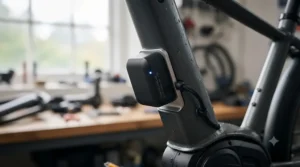
If you already own an ANGi-compatible Specialized helmet, or you’re happy to buy one, the standalone Specialized ANGi Crash Sensor is the cheapest genuine entry point into this category on the whole list. The standout feature is its simplicity: it’s a small, light, patented sensor that clips onto the back of the helmet and talks to the free Specialized Ride app, with no bike purchase required at all.
Once paired, ANGi commences a countdown the moment it registers a potential crash; if you’re fine, you cancel it, and if you don’t respond, it sends your last known GPS coordinates to your chosen emergency contacts. What most buyers overlook is the ride-time feature — if you’re heading somewhere with no signal, you can set an expected return time before you leave, and ANGi will alert your contacts if you haven’t checked back in by then, extending protection to genuinely remote rides where live GPS tracking isn’t possible.
Reviewers and retailers consistently note the roughly six-month coin-cell battery life as a strong point compared with rechargeable rivals, since there’s no charging routine to forget, though the trade-off is that it only functions with ANGi-ready helmets rather than any helmet you own. A one-time activation code is included with purchase and isn’t transferable, so buying second-hand can be a false economy if the code’s already been used.
Pros:
- ✅ Cheapest genuine crash-detection entry point on this list
- ✅ Six-month coin-cell battery removes charging admin entirely
- ✅ Return-time alerts extend protection to signal-free areas
Cons:
- ❌ Only works with ANGi-ready Specialized helmets
- ❌ Activation code is single-use and non-transferable
At around £40-£50, this is comfortably the most affordable route into genuine crash-detection technology — check current price, as retailer promotions fluctuate throughout the year.
7. Tocsen Crash Sensor — universal, subscription-free helmet protection
Tocsen Crash Sensor rounds out this list as the most flexible option here because, unlike the Specialized ANGi, it sticks onto literally any helmet using its supplied adhesive pad — cycling, skiing, or equestrian — rather than locking you into one brand’s headgear. The standout feature is the Tocsen Rescue Community: beyond your personal emergency contacts, other nearby Tocsen users can optionally be alerted to help find you faster, a crowdsourced safety net that’s genuinely unusual in this space.
Under the hood, Tocsen uses a high-precision sensor rated to measure forces up to 200G, engineered in Germany, with a rechargeable battery good for roughly three months of typical use on Bluetooth Low Energy. Here’s what most buyers overlook: there’s no subscription fee at any point — the app is entirely free to download and use once you’ve bought the hardware, which stands in contrast to systems like Bosch’s Help Connect that charge after an initial trial period.
Aggregated customer sentiment across UK cycling retailers consistently praises the ease of transferring the sensor between different helmets for different sports, and reviewers particularly single out the simulation mode, which lets you test the sensor’s sensitivity with a gentle tap rather than requiring an actual crash to confirm it’s working. The main recurring theme in feedback is that, like all Bluetooth-dependent systems, reliability depends on the app staying connected and running, so riders who habitually force-close background apps to save battery should build a habit of checking it’s live before setting off.
Pros:
- ✅ Fits any helmet across cycling, skiing or riding
- ✅ No subscription cost after the initial hardware purchase
- ✅ Simulation mode lets you test sensitivity without crashing
Cons:
- ❌ Relies on a stable Bluetooth connection to your phone throughout
- ❌ Three-month battery life needs proactive recharging discipline
Tocsen typically retails around £70-£90 in the UK — check current price, as it’s sold through a wide range of independent bike and outdoor shops with differing margins.
Practical Usage Guide: Setting Up Crash Detection Properly
Buying the hardware is genuinely the easy part; configuring it properly is where most of the real-world protection actually comes from. In your first 30 minutes with any of these systems, the priority is adding at least two emergency contacts rather than one — if your first choice doesn’t answer their phone, a second contact receiving the same alert dramatically improves the odds someone acts on it quickly. Most systems, including UNIT 1’s app and the Specialized Ride app, let you customise the safety-check countdown window, and it’s worth nudging this slightly longer than the default if you’re a naturally clumsy rider prone to minor tumbles that don’t need a 999 call.
A common mistake in the first month of ownership is forgetting that phone-paired sensors need the relevant app open and running in the background continuously, not just installed. Android’s aggressive battery-optimisation settings in particular have a habit of quietly killing background apps to save power, which silently disables crash detection without any obvious warning. Go into your phone’s battery settings and explicitly exempt the crash-detection app from optimisation — it’s a two-minute job that closes the single biggest real-world gap in this technology. Finally, build a habit of checking sensor battery levels weekly rather than reactively; a Tocsen or ANGi sensor that’s run flat offers precisely zero protection, and there’s rarely an obvious in-ride warning that it’s happened.
Real-World Scenarios: Which Option Actually Fits You
Picture three different riders. First, a 34-year-old solo commuter cycling an 8-mile route through town every weekday, mostly on quiet backstreets with patchy phone signal in a couple of underpasses — for this rider, the Cowboy Cruiser ST makes the most sense specifically because its independent SIM keeps working even where their phone signal drops out, which matters more on a route with known dead spots than raw motor power ever would.
Second, a keen weekend rider in their 50s who tackles hilly, semi-rural routes alone on a Saturday morning specifically to get away from people — for them, the return-time feature on the Specialized ANGi Crash Sensor or the Tocsen Crash Sensor is arguably more valuable than anything built into a bike, because it’s the only mechanism on this list that protects you when you’re genuinely out of signal range for hours at a time. Third, a family buying their first e-bike for a parent who’s nervous about riding alone after a recent minor fall — here, a complete package like the Trek Allant+ 7 with Bosch’s mature Help Connect ecosystem removes the burden of researching separate hardware, even with the added subscription cost, because everything arrives already integrated and tested together.
How to Choose an Electric Bike With Crash Detection SOS
- Decide whether you want the tech in the bike or in your headgear. A built-in system like Cowboy’s means one less thing to buy separately, but a helmet-based sensor like Tocsen travels with you across multiple bikes and even multiple sports.
- Check whether it needs your phone to work, or has its own connection. Systems reliant purely on Bluetooth and an app lose all functionality the moment your phone dies or is damaged in the fall itself — Cowboy’s independent SIM is a genuine exception here.
- Factor in ongoing subscription costs, not just the sticker price. Bosch’s Help Connect and some premium tiers of other systems charge monthly after a trial, which can add £40-£60 a year on top of the upfront hardware cost.
- Look at certification standards relevant to your riding speed. NTA-8776, like UNIT 1’s AURA carries, is specifically calibrated for e-bike impact speeds rather than the lower speeds assumed by older cycling-helmet standards.
- Consider battery type and charging discipline honestly. Coin-cell sensors like ANGi need less frequent attention but aren’t rechargeable in the field; Bluetooth sensors like Tocsen need regular top-ups but last for years.
- Think about who actually needs to be alerted. Some systems only message pre-set contacts, while Tocsen’s community feature can alert nearby strangers too — useful if you often ride somewhere your contacts couldn’t reach quickly anyway.
- Read the fine print on cancellation windows. A 30-second countdown suits confident riders; if you tend to take gentle tumbles that don’t need help, a slightly longer window reduces unnecessary alerts to worried family members.
Common Mistakes When Buying Crash Detection Technology
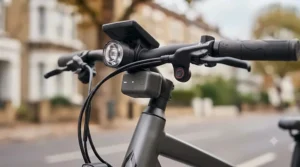
The single most common mistake is assuming that “crash detection” and “GPS tracking” are the same feature — plenty of budget bike-tracking gadgets on Amazon will show you where your bike is if it’s stolen, but they have no accelerometer logic to distinguish a fall from a bump in the road, and therefore no SOS capability whatsoever. A second frequent error is buying a helmet-mounted sensor without first checking your existing helmet is compatible; the ANGi sensor, specifically, only clips onto Specialized’s own ANGi-ready helmet range, whereas Tocsen’s adhesive-mount design works on essentially anything with a hard shell.
Buyers also regularly underestimate how much the crash-detection feature depends on their phone’s settings rather than the hardware itself — a perfectly good sensor paired with a phone that’s been set to aggressively kill background apps will simply fail silently. Finally, some shoppers assume built-in bike systems like Cowboy’s or Bosch’s Help Connect are free forever, when in reality several of these services shift to a paid subscription after an initial trial period, which is worth budgeting for rather than discovering after the free months run out.
Accelerometer Crash Sensing: What’s Actually Happening Under the Hood
Every system on this list, regardless of price, works on broadly the same principle: a three-axis accelerometer — the same category of chip that senses when you tilt your phone — measures sudden changes in acceleration across multiple planes simultaneously. What separates a genuine crash from a pothole or a kerb hop is the specific signature: a sharp spike in deceleration, often followed by a rotational tumbling motion, and then, critically, a period of no further movement at all. It’s that final “no movement” stage that most algorithms weight heavily, because a rider who crashes and immediately gets back up rarely needs an ambulance dispatched on their behalf.
Premium systems, including Bosch’s Help Connect, have refined this further by training their detection algorithm on data from dozens of simulated crashes rather than relying purely on theoretical thresholds, which is why Bosch-powered bikes can distinguish a violent stop at a red light from an actual fall with more confidence than a simple G-force trigger alone. The trade-off across the whole category is unavoidable: tune the sensitivity too low and you risk missing a real crash; tune it too high and you get nuisance alerts every time the bike goes over a speed bump too fast.
Features That Actually Matter (And Those That Don’t)
Marketing copy across this category loves to boast about raw G-force sensitivity numbers, but in practice, the countdown window and cancellation process matter far more to real-world usability than whether a sensor can theoretically detect 150G or 200G — genuine crashes involving cyclists are almost always well within range of any competently engineered sensor. What does matter enormously, and gets far less marketing attention, is how the alert actually reaches your emergency contact: a text message with GPS coordinates is instantly useful, whereas a vague in-app notification that a friend might not see for hours defeats the entire purpose.
Battery life claims are another area worth scrutinising rather than skimming past — “up to three months” or “up to six months” figures are typically based on optimistic usage patterns, and real-world battery life drops noticeably with frequent Bluetooth reconnections in patchy signal areas. Conversely, features like community alerting (Tocsen) or Strava integration (Specialized’s ecosystem) are genuinely nice-to-haves that add real value without inflating the core safety proposition, so they’re worth weighing as tie-breakers between otherwise similar products rather than headline decision factors.
Long-Term Cost and Maintenance
Looking at total cost of ownership rather than sticker price alone changes the picture considerably. A standalone sensor like the Tocsen Crash Sensor or Specialized ANGi Crash Sensor involves a single upfront cost with no ongoing fees, meaning a three-year ownership period costs exactly what you paid on day one. By contrast, systems tied to premium subscription tiers — Bosch’s Help Connect being the clearest example on this list — can add roughly £40-£70 a year after the initial trial, which stacks up to £120-£210 across three years on top of the bike’s purchase price.
Physical maintenance is minimal across the board: rechargeable sensors like Tocsen need a top-up roughly every three months of regular use, while coin-cell units like ANGi need a battery swap around every six months, a job that typically costs a few pounds in parts and takes under five minutes. The genuinely hidden cost, rarely mentioned in marketing material, is the emotional cost of false alarms — a system that fires unnecessarily during a rough gravel descent can, over months of ownership, quietly train worried family members to ignore alerts altogether, which somewhat defeats the purpose of having the technology in the first place.
What to Expect: Real-World Performance and the False-Alarm Rate
Translating spec-sheet promises into everyday riding reality, independent testing and cycling-safety commentary suggest the strongest sensor-fusion systems on the market — those cross-referencing multiple data streams rather than relying on a simple G-force threshold — can exceed roughly 90% accuracy in controlled testing conditions, though real-world performance dips somewhat at higher speeds and on rougher terrain where background vibration noise increases. The false-alarm rate is the metric most product listings conveniently omit, but it’s arguably more important day-to-day than raw detection accuracy, because a sensor that fires falsely on every set of cobblestones will get switched off in frustration long before it ever gets the chance to detect a genuine crash.
Terrain and riding style both meaningfully affect this: gravel, cobbles, and aggressive off-road descents all generate the kind of background jolts that simple threshold-based sensors can misread, while smoother tarmac commuting sees far fewer nuisance alerts across every product in this guide. What most buyers overlook until they’ve owned one of these systems for a few months is that the cancellation window — typically 30 seconds — genuinely does most of the heavy lifting in preventing a false alarm from actually reaching your emergency contacts, since it gives you a brief chance to tap “I’m OK” before anything gets sent.
Safety, Regulations and Compliance Guide
In the UK, an electric bike only qualifies as an EAPC — Electrically Assisted Pedal Cycle — if the motor caps out at 250W continuous power, assistance cuts off at 15.5mph, and the motor only engages while you’re actively pedalling. All seven products in this guide are compatible with EAPC-classified bikes, and none of them affect that legal classification, since crash-detection hardware plays no role in how the motor itself is regulated. You can find the full official criteria on the government’s electric bike rules page, which is worth a read before buying any e-bike, connected or otherwise, since exceeding those limits reclassifies the machine as a moped requiring registration and insurance.
Helmets remain legally optional for EAPC riders in Great Britain, unlike for the faster S-pedelecs that fall into moped territory, but cycling safety organisations continue to strongly recommend wearing one regardless, a position echoed by Cycling UK’s guidance on e-bike regulations. If a crash does happen and you take a blow to the head, even a seemingly minor one, resting for the following 24 hours and watching for symptoms like persistent headache, confusion or vomiting is standard medical advice, detailed further in NHS inform’s guidance on minor head injuries — genuinely useful reading whether or not you’re carrying any crash-detection hardware at all.
Buyer’s Decision Framework
If your priority is simplicity above all else, choose a complete e-bike with built-in detection like the Cowboy Cruiser ST, because there’s nothing extra to buy, charge separately, or forget at home. If you’re working with a tighter budget or already own a decent e-bike and just want to add protection, choose a standalone sensor like Tocsen or ANGi, because both deliver genuine crash-detection capability for a fraction of a full bike’s price. If you ride regularly in remote areas with patchy phone signal, prioritise systems with an independent connection or a return-time fallback feature over anything relying purely on live GPS through your phone. And if long-term cost matters more than upfront price, favour subscription-free hardware over systems that shift to a paid tier after an initial trial period, since those fees compound meaningfully over several years of ownership.
✨ Don’t Miss These Exclusive Deals!
🔍 Take your ride safety to the next level with these carefully selected products. Click on any highlighted item to check current pricing and availability. These tools will help you build genuine peace of mind on every commute!
Frequently Asked Questions
❓ Does an electric bike need crash detection to be legal in the UK?
❓ How does an ebike automatic accident alert know I've actually crashed?
❓ Can fall detection electric bicycle systems work without a phone?
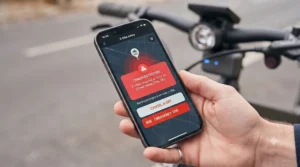
❓ What should a good emergency contact app actually do?
❓ Is the false-alarm rate on these systems a real problem?
Conclusion
An electric bike with crash detection SOS isn’t a gimmick bolted on to justify a higher price tag — it’s a genuinely useful layer of protection for anyone who rides alone, commutes through patchy-signal areas, or simply wants family to know quickly if something’s gone wrong. Whether that protection lives inside the bike itself, as with the Cowboy Cruiser ST and Trek Allant+ 7, or clips onto a helmet you already own, as with the Tocsen Crash Sensor and Specialized ANGi Crash Sensor, the underlying technology is more mature and more affordable than most riders realise.
The honest takeaway from comparing all seven products is that there’s no single best answer — it genuinely depends on your riding pattern, your budget, and how much you value not having a second gadget to charge. What matters most is picking a system you’ll actually keep switched on, since even the most sophisticated accelerometer crash sensing in the world does nothing if the app’s been force-closed to save battery. Start with the option that best matches how and where you actually ride, set it up properly on day one, and you’ll have built genuine peace of mind into every journey.
Recommended for You
- Electric Bike Geofencing for Fleet Riders: 7 Best Trackers 2026
- Electric Bike with Apple Find My Tracking: 7 Smart Picks (2026)
- Keyless Entry Electric Bike Locks 2026: 7 Fob-Free Picks
Disclaimer: This article contains affiliate links. As an Amazon Associate, I earn from qualifying purchases. If you purchase products through these links, we may earn a small commission at no additional cost to you.
✨ Found this helpful? Share it with your friends! 💬🤗
