

In This Article
Squeeze a brake lever that’s sitting half a mile from your fingertips and you’ll understand the problem in about a tenth of a second — the exact tenth of a second you didn’t have to spare. That gap between “grip” and “stop” is precisely what electric bike easy-reach brake levers exist to close. Whether you’ve got smaller hands, wear thick winter gloves, or you’re simply fed up with stretching your fingers into an awkward claw every time a car door swings open on the high street, an adjustable-reach lever brings the control surface back to where your hand actually lives.

This isn’t a cosmetic upgrade. E-bikes are heavier than analogue bicycles and typically travel faster for longer, thanks to motor assistance, which means the margin for a fumbled brake pull is smaller, not larger. Electric bike easy-reach brake levers let you dial the lever blade closer to (or further from) the handlebar grip so your fingers meet it at full strength, not at a stretch. Below, we’ve researched seven genuine, currently available levers spanning budget, mid-range and premium options, and we’ve backed every recommendation with real specifications and aggregated review sentiment rather than guesswork. We’ll also walk through adjustable reach brake lever ebike setup, hand size fit, and what leverage ratio actually means for your stopping power — because a spec sheet on its own tells you almost nothing useful.
Quick Comparison Table
| Lever | Reach Adjustment | Best For | Price Range |
|---|---|---|---|
| Shimano BL-MT201 | Tooled, min. 75mm | Budget riders, smaller hands | Around £15-£25 |
| Clarks Clout Plus | Tooled | UK-brand value on e-bikes | Around £70-£95 (set) |
| Tektro HD-E350 | Tooled, with power cut-off | OEM-style e-bike replacement | Around £30-£45 |
| Shimano Deore BL-MT501 | Tooled | All-round leverage and feel | Around £30-£40 |
| Magura MT4 eSTOP | Tooled (T25) | E-bike-specific one-finger power | Around £90-£120 (set) |
| Shimano SLX BL-M7100 | Tool-free | Fast trailside tweaks | Around £40-£55 |
| SRAM Level Silver Stealth | Tool-free | Premium, tidy cockpit | Around £150-£220 |
Looking across the table, the split between tooled and tool-free reach adjustment is really the whole story here: tooled levers (the Shimano BL-MT201, Clarks Clout Plus, Tektro HD-E350, Shimano Deore BL-MT501 and Magura MT4 eSTOP) ask you to set your reach once with an Allen key and largely forget about it, while the tool-free levers on the Shimano SLX BL-M7100 and SRAM Level Silver Stealth let you fine-tune on the fly, which matters more than it sounds if you’re swapping gloves seasonally or sharing a bike. Budget shoppers should note that the cheapest option here, the Shimano BL-MT201, still ships with a genuinely useful minimum reach spec, so “cheap” and “wrong for small hands” aren’t the same thing on this list.
💬 Just one click — help others make better buying decisions too!😊
Top 7 Electric Bike Easy-Reach Brake Levers: Expert Analysis
1. Shimano BL-MT201 — best budget pick for smaller hands
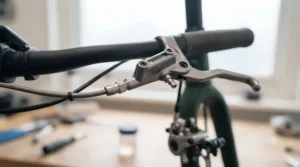
The standout feature here isn’t power, it’s accessibility: Shimano built the BL-MT201 (the current Altus-tier successor to the long-running BL-MT200) with a lever reach specifically tuned for smaller hands, quoting a minimum reach of 75mm from the grip — a figure most budget levers don’t even bother publishing. It’s a hydraulic, 3-finger disc lever with a tooled reach-adjustment screw sitting on the inside of the lever body, aluminium construction, and one-way bleeding for straightforward home servicing. On paper this means a rider with a genuinely small hand can wind the lever right in without hunting for an aftermarket part.
Based on the spec comparison with pricier Deore and SLX levers, the MT201 trades outright modulation and lever stiffness for accessibility and cost, which is exactly the right trade for a first upgrade or a budget e-bike build. Reviewers consistently report that it feels notably lighter at the lever than cable-actuated brakes on similarly priced hybrid e-bikes, though a few note the steel-bladed variant flexes slightly under hard braking compared with alloy alternatives. If verified star ratings aren’t available for your specific retailer listing, treat that as a prompt to check current review counts before buying rather than a reason to skip the model outright.
Pros:
- ✅ Minimum 75mm reach genuinely suits smaller hands
- ✅ Among the most affordable hydraulic options on this list
- ✅ Easy one-way bleeding for DIY maintenance
Cons:
- ❌ Tooled adjustment only, no on-the-fly tweaks
- ❌ Steel lever blade flexes more than alloy rivals
At the time of research this lever typically sits in the £15-£25 range per side, and for the price, the dedicated small-hand reach spec makes it the strongest budget value verdict on this list.
2. Clarks Clout Plus — best value British-brand e-bike upgrade
The Clarks Clout Plus earns its spot through a standout combination most budget brakes skip entirely: it’s explicitly rated for e-bikes, not just adapted from an MTB catalogue, with self-adjusting 22mm calliper pistons that keep lever feel consistent as pads wear. The three-finger lever blade gives you more leverage per squeeze than a two-finger design, which matters on a 25kg e-bike carrying weekly shopping. Reach adjustment is tooled, letting you fix the lever position to your hand size once and leave it.
What most buyers overlook about Clarks is that it’s a genuinely established British brake and componentry brand, not a marketplace no-name — Clarks has built hydraulic systems on the foundations of its established M-series range, which shows up in the fit and finish for the price. Aggregated retailer feedback consistently describes the Clout range as “punching above its price point” for stopping power, though a recurring theme in reviews is that the mineral oil system needs an occasional bleed sooner than premium Shimano or Magura equivalents if used hard in wet UK winters.
Pros:
- ✅ Explicitly designed and rated for e-bike use
- ✅ Three-finger lever adds real-world leverage
- ✅ Self-adjusting pistons keep feel consistent as pads wear
Cons:
- ❌ Needs more frequent bleeding than premium rivals
- ❌ Heavier overall system than boutique alternatives
Expect to pay in the £70-£95 range for a complete front-and-rear set, which is solid value verdict territory for anyone upgrading a budget e-bike’s stock cable brakes to hydraulic discs with adjustable reach in one move.
3. Tektro HD-E350 — best OEM-style pick with power cut-off
The Tektro HD-E350’s standout feature is that it was purpose-built for the e-bike market rather than repurposed from mountain biking: it includes an integrated power cut-off sensor in the lever body that tells the motor controller to stop assisting the instant you brake, a legal and safety-relevant feature on pedelecs sold across Europe and the UK. The cast aluminium lever and bracket include tooled reach adjustment, and the three-finger blade design suits riders who prefer more surface area under load.
Here’s what the spec sheet won’t tell you, but rider forums do: the HD-E350 is one of the most widely fitted OEM brakes on mid-range European and UK city and trekking e-bikes, so if your bike already has Tektro brakes, this is very likely a like-for-like replacement rather than a system swap. Reviewers and long-term owners note strong, confident stopping power and smooth modulation for the price, though a genuine and recurring criticism is that it lacks tool-free adjustment, and a minority of owners report the rear brake needing more careful bedding-in than the front to reach full bite.
Pros:
- ✅ Built-in power cut-off sensor for pedelec compliance
- ✅ Genuine OEM part on many popular e-bikes
- ✅ Strong stopping power for a mid-range hydraulic lever
Cons:
- ❌ No tool-free reach adjustment
- ❌ Rear brake can need extra bedding-in time
At the time of research, expect roughly £30-£45 per wheel for the lever and calliper combination, making it a sensible like-for-like upgrade if your e-bike already runs Tektro hardware.
4. Shimano Deore BL-MT501 — best all-round leverage and modulation
What sets the Deore BL-MT501 apart on the spec sheet is Shimano’s ServoWave linkage, a cam-based mechanism that changes the leverage ratio through the lever’s stroke — pushing the pads towards the rotor quickly early in the pull, then multiplying force later in the stroke for controlled, progressive stopping power. The two-finger lever has tooled reach adjustment via a 2.5mm Allen bolt positioned on the outside of the pivot, which independent reviewers note is notably easier to access than rivals that bury the adjuster inside the pivot body.
Based on the spec comparison with the entry-level MT201, the ServoWave geometry is the real upgrade here: it’s why this lever consistently gets praised in independent testing for smooth, light lever action with excellent power management in muddy or wet conditions, which is precisely when a fumbled UK commute brake pull is most dangerous. Reviewers who’ve bled the system note the bleed nipple takes a 7mm spanner rather than a standard DIY kit size, a minor but real inconvenience worth knowing before you start.
Pros:
- ✅ ServoWave leverage ratio gives progressive, confident stopping
- ✅ Easily accessible reach-adjust bolt on the pivot
- ✅ Comfortable, low-flex lever blade under hard braking
Cons:
- ❌ No tool-free reach adjustment
- ❌ Bleed nipple needs an uncommon 7mm spanner
Independent UK reviews list this lever at roughly £30-£40 individually, and given the ServoWave technology usually reserved for pricier Shimano tiers, it’s a genuine step up in braking feel for a moderate spend.
5. Magura MT4 eSTOP — best one-finger power for e-bikes
Magura’s standout claim for the MT4 eSTOP is genuine one-finger stopping power thanks to a long lever blade and Carbotecture composite master cylinder that keeps weight down without sacrificing rigidity. It’s explicitly optimised for e-bikes, aimed at controlled, reliable performance across both off-road use and city touring, and the two-finger aluminium lever blade can be mounted left or right thanks to a flip-flop design, which is handy for continental-spec bikes or left-hand-drive conversions. Reach adjustment uses a Torx T25 tool.
What most buyers overlook about Magura is the five-year leak guarantee and consistent Torx T25 fastener standard across the whole brake, which genuinely simplifies home maintenance once you own the one tool. Independent group-test reviewers who’ve tested the standard MT4 describe deceleration as powerful with excellent modulation and no shifting bite point, though the same testers note the lever feel is slightly less sensitive — a touch more “wooden” — than class leaders from Shimano and SRAM, and the levers themselves run larger than some riders with small hands prefer even at minimum reach.
Pros:
- ✅ Genuine one-finger braking power for e-bike weight
- ✅ Five-year leak guarantee and simple Torx T25 servicing
- ✅ E-bike-specific engineering for city and trail use
Cons:
- ❌ Lever feel is less sensitive than Shimano or SRAM
- ❌ Larger lever body doesn’t suit the smallest hands
The full front-and-rear eSTOP set typically runs around £90-£120 at the time of research, positioning it as a mid-premium option for riders who want e-bike-specific engineering without moving to the very top tier.
6. Shimano SLX BL-M7100 — best tool-free adjustment on the trail
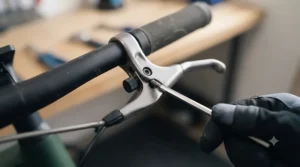
The SLX BL-M7100’s headline feature is tool-free reach adjustment, letting you dial the lever in or out with a dial rather than an Allen key — genuinely useful if you’re swapping between bare hands in summer and thick winter gloves on a UK commute. It carries Shimano’s Servo-Wave mechanism with a short stroke for quick pad engagement, a forged alloy 1.5-finger lever blade, and I-SPEC EV compatibility for a clean, integrated cockpit alongside Shimano shifters.
Based on the spec comparison with the tooled Deore MT501 below it in Shimano’s range, the SLX brings genuinely useful ergonomic and heat-management upgrades that industry reviewers have specifically praised, describing it as offering plenty of stopping power, strong heat management and a great lever feel for its price bracket, effectively delivering higher-tier performance at a mid-range cost. The trade-off, per the same coverage, is that it still sits a notch below Shimano’s XT and XTR levers on outright stiffness under the hardest braking, though most road and trail riders are unlikely to notice the difference in everyday use.
Pros:
- ✅ Genuine tool-free reach adjustment for on-the-go tweaks
- ✅ Strong heat management on longer descents
- ✅ I-SPEC EV keeps the cockpit clean and tidy
Cons:
- ❌ Slightly less stiff than Shimano’s top-tier XT/XTR levers
- ❌ Sold as a lever only, calliper purchased separately
Expect around £40-£55 per lever at the time of research, calliper sold separately, which still represents strong value for tool-free adjustment normally reserved for pricier groupsets.
7. SRAM Level Silver Stealth — best premium tidy cockpit upgrade
SRAM’s Level Silver Stealth brings genuinely tool-free reach adjustment as standard, alongside a Stealth lever design that tucks the brake hose in close to the handlebar for a noticeably cleaner cockpit — a detail that matters more than it sounds if you’re also running a dropper post or electronic shifter cabling. The aluminium lever blade pairs with SRAM’s Lever Pivot Bearing technology, which the brand states is designed to reduce fatigue on longer rides, and the whole system mounts via SRAM’s MatchMaker clamp for a reduced-clutter handlebar.
Here’s what most buyers overlook about tool-free SRAM levers: the reach adjustment dial is genuinely designed around the idea that hand size and finger length vary rider to rider, and that positioning preference is a personal, not universal, setting — so the dial-in process is faster and more forgiving than most tooled competitors. This is a premium price point, and it shows in the fit and finish rather than in outright stopping power over the Shimano options above, which independent reviewers generally rate as comparably powerful; the SRAM advantage here is ergonomics, cockpit tidiness and adjustment speed rather than raw bite.
Pros:
- ✅ Genuine tool-free reach adjustment, fast to dial in
- ✅ Stealth hose routing keeps the cockpit tidy
- ✅ Pivot bearing design aimed at reducing hand fatigue
Cons:
- ❌ Premium price relative to Shimano equivalents
- ❌ MatchMaker clamp sold separately on some builds
At the time of research, a Level TLM-tier lever and calliper combination typically runs roughly £150-£220 per wheel, making this the clear premium pick on this list rather than a value option.
How to Adjust Your Electric Bike Brake Lever Reach: A Step-by-Step Setup Guide
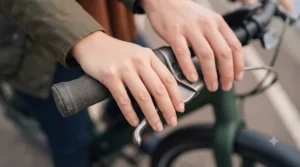
Getting reach adjustment right takes ten minutes and a basic Allen key set, yet it’s the single most skipped step when riders buy new levers. Start by sitting on the bike in your normal riding position and letting your hand rest naturally on the grip. According to bike-fit guidance widely used across the industry, the ideal test is to hook your thumb under the bar and try to reach the “hooked” part of the lever — just back from the tip — with your index finger, as this is where you get the best leverage; if your wrist has to rotate forward into a claw shape to make contact, the lever needs to come in, as one UK cycling technical guide explains.
Locate the reach adjustment point — a small bolt on tooled levers, usually on the inside or outside face of the lever body near the pivot, or a dial for tool-free versions like the SLX BL-M7100 or SRAM Level Silver. Turning it clockwise typically brings the lever closer to the grip; counter-clockwise pushes it out. Make small adjustments, then squeeze the lever fully to check it doesn’t touch the handlebar grip before the brake fully engages, as this indicates worn pads or a cable/hydraulic system needing attention rather than a reach problem. Cycling UK’s own maintenance guidance stresses that if you can’t get the lever sitting correctly through adjustment alone, that’s a sign to book a professional service rather than keep riding, since a lever that bottoms out against the bar can mean dangerously reduced stopping power at the exact moment you need it most, as detailed in Cycling UK’s brake adjustment guide.
Once the reach feels right, ride a short, safe test loop and brake gently at low speed before committing to a full-force stop, since hydraulic systems in particular can need a short bedding-in period after any adjustment. Recheck the setting after your first 20-30 miles, particularly on new hydraulic hoses, as cable stretch and initial bleed settling can shift the feel slightly.
Who Needs Easy-Reach Brake Levers? Three Rider Profiles
If you’re a small-framed commuter with a 40-minute ride each way through central London traffic, reach adjustment isn’t a luxury — it’s the difference between a confident emergency stop at a pedestrian crossing and a dangerous half-second delay. For this profile, a budget tooled option like the Shimano BL-MT201, with its documented 75mm minimum reach, or the value-focused Clarks Clout Plus for its e-bike-rated three-finger leverage, covers the essentials without overspending on features you won’t use daily.
If you’re an older rider managing reduced grip strength, or a parent handing an e-bike down between family members with different hand sizes, tool-free adjustment earns its premium. Being able to dial reach in seconds, without carrying an Allen key, matters when the bike is shared or when grip strength varies day to day. The Shimano SLX BL-M7100 and SRAM Level Silver Stealth both suit this use case well, letting whoever’s riding set their own fit in moments.
If you’re a weekend trail or gravel rider on an e-MTB who also commutes on the same bike, you want a lever engineered specifically for e-bike weight and speed, with strong heat management on longer descents and genuine power. The Magura MT4 eSTOP or Shimano Deore BL-MT501, both built around real leverage-ratio engineering rather than budget-tier basics, are the sensible picks for mixed on/off-road use where braking loads vary hugely between a gentle canal path and a steep, loose fire road.
How to Choose Electric Bike Easy-Reach Brake Levers
- Confirm your brake type first. Hydraulic and mechanical (cable) systems use entirely different levers, so check whether your e-bike runs hydraulic disc, mechanical disc, or rim brakes before buying anything.
- Measure your handlebar clamp diameter. Most e-bike handlebars use a 22.2mm standard, though some trekking and hybrid models use 23.8mm, so measure at the mounting point rather than guessing.
- Check the minimum reach spec, not just “adjustable.” Many listings say “adjustable reach” without stating how close the lever can actually come in — the Shimano BL-MT201’s published 75mm minimum is the kind of detail worth hunting for.
- Decide between tooled and tool-free adjustment. Tooled levers cost less and suit a “set once” rider; tool-free levers cost more but suit shared bikes or riders who want to fine-tune seasonally.
- Match lever-finger count to your riding style. Two-finger levers free up grip space for control; three-finger levers add raw leverage, useful for heavier cargo or touring e-bikes.
- Check e-bike-specific compatibility. If your bike uses a motor cut-off sensor, like the Tektro HD-E350’s built-in switch, make sure any replacement lever supports the same wiring, or you’ll lose the auto motor-cutoff feature.
- Budget for the whole system, not just the lever. A lever alone (like the SLX BL-M7100) may need a separately purchased calliper, while set-based options (Clarks Clout Plus, Magura eSTOP) bundle both ends.
Brake Lever Leverage Ratio Explained: Why the Numbers Matter
“Leverage ratio” sounds abstract until you understand what it’s actually doing: it describes how much mechanical advantage the lever gives your finger over the distance the brake pad needs to travel to grip the rotor or rim. A simple, fixed-ratio lever multiplies your squeeze by a constant amount throughout the pull. A variable-ratio design, like Shimano’s ServoWave technology fitted to the Deore BL-MT501 and SLX BL-M7100, changes that multiplier through the stroke — moving the pads towards the rotor quickly at the start of the pull (when you don’t need much force), then increasing mechanical advantage later in the stroke (when you do), for smoother, more progressive braking.
What the spec sheet won’t tell you, but reviewers consistently note, is that variable-ratio levers feel noticeably different at the lever — often described as “lighter” or “more controlled” — even when outright stopping power is similar to a fixed-ratio design. For an e-bike specifically, where higher average speeds and heavier overall weight increase the force needed to stop safely, a well-engineered leverage ratio can mean the difference between a controlled, modulated stop and an abrupt, skid-inducing grab. If you’re comparing two levers with near-identical prices, the presence of a documented variable-leverage system, rather than a generic “adjustable” claim, is a genuinely useful tiebreaker.
Adjustable Reach Brake Lever Ebike vs Fixed-Reach Levers
| Factor | Adjustable Reach Lever | Fixed-Reach Lever |
|---|---|---|
| Hand size fit | Customisable to individual hand size | One-size, often designed for average adult hands |
| Shared-bike suitability | Multiple riders can each set their own fit | Poor — one rider’s fit compromises another’s |
| Typical price | Slightly higher, especially tool-free versions | Usually cheaper |
| Best For | Most e-bike commuters and mixed-hand households | Single-rider bikes with an already good factory fit |
The extra cost of an adjustable reach brake lever ebike setup is modest against the safety upside, and the comparison above makes the case fairly bluntly: fixed-reach levers only work well if your hand happens to match the factory-average assumption the manufacturer designed around. For any household e-bike, a loaner bike, or simply a rider whose hands sit outside “average,” the adjustable options across this list — from the budget Shimano BL-MT201 to the tool-free SRAM Level Silver Stealth — remove that guesswork entirely, letting the lever meet the hand rather than the other way round.
✨ Don’t Miss These Exclusive Deals!
🔍 Take your electric bike braking setup to the next level with these carefully selected levers. Click on any highlighted item to check current pricing and availability. These upgrades help you build a genuinely safer, more confident ride your whole family can share!
Electric Bike Easy-Reach Brake Levers for Smaller Hands and Riders with Limited Grip Strength
Hand size fit isn’t just about comfort — it directly affects how much braking force you can actually generate. If your fingers can’t wrap fully around the lever blade at its resting position, you’re braking with a mechanically weaker grip angle before you even factor in the lever’s leverage ratio. This matters disproportionately for riders with smaller hands, arthritis, or reduced grip strength, all of whom benefit from a lever that can be wound in close enough to meet a curled, strong finger position rather than a stretched, weak one.
The Shimano BL-MT201 is the standout here thanks to its documented 75mm minimum reach and lighter overall lever action, making it a sensible first stop for anyone shopping specifically on hand-size grounds. For riders who also want to fine-tune without tools — useful if grip strength or hand comfort varies day to day, as it often does with arthritis — the tool-free Shimano SLX BL-M7100 or SRAM Level Silver Stealth remove the friction of needing an Allen key for every small tweak. Accessible-cycling guidance from UK charities working in this space consistently emphasises that brakes “need to be easy for you to reach and grip firmly enough for you to stop your cycle,” underlining that this isn’t a cosmetic preference but a genuine safety requirement worth prioritising over aesthetics or brand loyalty.
Common Mistakes When Fitting Short Reach Handlebar Electric Bicycle Levers
The most common error is adjusting reach with the bike stationary on a workstand rather than while actually seated in riding position, which produces a setting that feels right in the garage and wrong on the road, because your wrist and shoulder angle change once you’re moving. A close second is winding the lever in so far that it contacts the handlebar grip before the brake fully engages — this doesn’t just feel odd, it can genuinely limit your maximum braking force at the worst possible moment, since the lever runs out of travel before the calliper has clamped fully.
Another frequent mistake is assuming “adjustable reach” automatically means “suits small hands,” when in fact many adjustable levers still have a fairly high minimum reach — the Magura MT4’s own reviewers note its levers run larger than some small-handed riders prefer even at minimum adjustment, which is exactly why checking a documented minimum-reach figure, like the Shimano BL-MT201’s 75mm spec, matters more than the word “adjustable” alone. Finally, riders on e-bikes with motor cut-off sensors, such as those paired with the Tektro HD-E350, sometimes fit a generic replacement lever that lacks the sensor wiring, unintentionally disabling a genuine safety feature that stops motor assistance the instant you brake.
Safety, Regulations and Compliance for E-Bike Brakes in the UK
E-bikes sold and ridden legally in the UK fall under the Electrically Assisted Pedal Cycle (EAPC) classification, which requires pedals capable of propelling the bike, a motor with continuous rated power not exceeding 250 watts, and electrical assistance that cuts off once the bike reaches 15.5mph, as confirmed in official UK government EAPC guidance. A bike meeting these requirements is treated the same as a standard pedal cycle under road traffic law, meaning no registration, tax or insurance is legally required, though most riders choose personal insurance for peace of mind.
Braking performance isn’t separately regulated component-by-component for EAPCs the way it might be for a motor vehicle, but that makes rider-side maintenance and correct lever setup even more important, not less — there’s no MOT-style check enforcing it. British Cycling’s own technical guidance stresses that reliable, correctly adjusted brakes are essential whether you’re braking hard into a corner or simply approaching a junction on your daily commute, a point echoed throughout British Cycling’s braking guidance. If you’re fitting any of the levers above yourself, it’s worth having the work checked by a qualified mechanic afterwards, particularly for hydraulic systems where an incomplete bleed can leave a soft, unsafe lever feel that isn’t always obvious on a short test ride.
Frequently Asked Questions
❓ What are electric bike easy-reach brake levers?
❓ How do I adjust the reach on my e-bike brake levers?
❓ Are tool-free reach adjust brake levers worth the extra cost?
❓ Do all electric bikes have adjustable brake levers?
❓ Can I fit adjustable reach brake levers to any e-bike?
Conclusion
Reach adjustment on an electric bike brake lever isn’t a nice-to-have spec buried on page two of a product listing — it’s one of the few upgrades that directly changes how quickly and confidently you can stop a genuinely heavier, faster machine. Across the seven levers covered here, the right choice really does come down to your own hand and your own riding: the Shimano BL-MT201 for budget-conscious riders with smaller hands, the Clarks Clout Plus or Tektro HD-E350 for solid mid-range e-bike-specific upgrades, the Shimano Deore BL-MT501 and Magura MT4 eSTOP for riders who want genuine leverage-ratio engineering, and the Shimano SLX BL-M7100 or SRAM Level Silver Stealth for anyone who values fast, tool-free adjustment.
None of these are exotic parts — they’re widely stocked, well-documented components from established brands, which is exactly why they’re worth trusting over unbranded marketplace alternatives promising the same thing for less. Take the ten minutes to measure your handlebar clamp, check your brake type, and — if it applies — confirm your motor cut-off wiring, then pick the option from this list that actually matches your hand rather than the factory-average assumption most fixed levers are built around. Comfortable, correctly adjusted brakes aren’t just about comfort in the end; they’re about having full control the moment you actually need it.
Recommended for You
- Electric Bike With Wrap-Around Backrest: 7 Comfy Picks (2026)
- Electric Bike with Built-In Rear Rack: 7 Best UK Picks (2026)
- Electric Bike Ergonomic Grips for Wrist Pain: 7 Best 2026
Disclaimer: This article contains affiliate links. As an Amazon Associate, I earn from qualifying purchases. If you purchase products through these links, we may earn a small commission at no additional cost to you.
✨ Found this helpful? Share it with your friends! 💬🤗
