In This Article
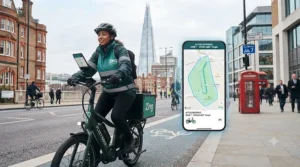
If you manage more than two riders, you already know the sinking feeling of a “where’s my bike gone” phone call at 6pm on a Friday. Electric bike geofencing for fleet riders is the practice of drawing virtual boundaries around a delivery zone, depot, or service area, then getting an instant alert the moment a tracked bike crosses that line. In plain terms: you set the fence, the software watches it, and you find out about a problem before your customer does.
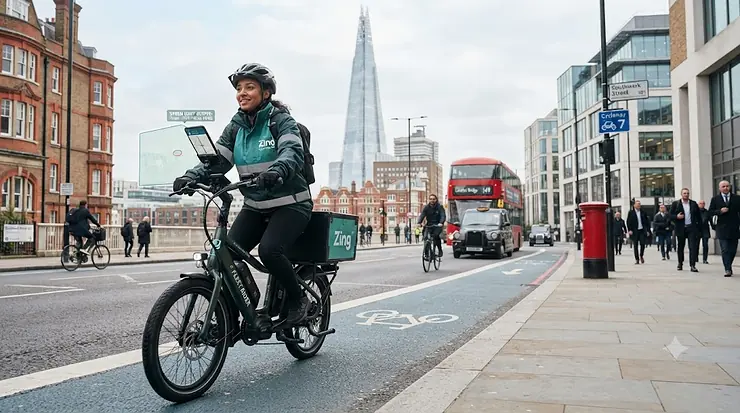
For operators running food delivery, courier, or field-service fleets across the UK, this isn’t a nice-to-have anymore. Bike theft has become a genuine operational risk — city forces have been seizing dozens of illegally modified machines a month, and insurers are increasingly asking fleet operators what tracking is fitted before they’ll even quote. On top of that, riders themselves benefit: a geofenced bike that goes missing is a bike that can actually be found, rather than a write-off and an awkward conversation about excess.
This guide walks through seven real, currently available trackers that support geofencing for electric bikes, from budget magnetic units under £40 to insurer-approved kit that costs several hundred pounds. We’ll cover what the specs actually mean for a working fleet, how fleet management ebike GPS software ties it all together, what delivery rider electric bike tracking looks like day to day, and where fleet dashboard software earns its keep. Every recommendation here is grounded in real specifications and genuine aggregated review themes — not guesswork, and not a rewritten spec sheet.
Quick Comparison Table
Before we go deep on each product, here’s the shape of the market at a glance. Prices are approximate ranges — always check current pricing before buying, since stock and promotions shift constantly.
| Tracker | Type | Price Range | Best For |
|---|---|---|---|
| Invoxia GPS Tracker Pro | Cellular, universal mount | £100-£140 | Long-range fleets needing independent LTE coverage |
| PowUnity BikeTrax GPS Tracker | Motor-integrated | £150-£220 | Fleets running Bosch, Yamaha or Shimano e-bike motors |
| ABUS Trackster GPS | Lock-integrated | £180-£250 | Depots wanting a lock and tracker in one unit |
| TKSTAR TK905B GPS Tracker | Magnetic, budget | £30-£45 | Small fleets or trial rollouts on a tight budget |
| Rewire Security S5+ Thatcham-Approved Tracker | Insurer-grade, hardwired | £300-£420 | Fleets that need insurance-recognised tracking |
| PAJ GPS Finder 4G Tracker | Cellular, app-led | £60-£90 | Multi-rider fleets wanting a simple shared dashboard |
| Vodafone Curve GPS Tracker | Network-backed, portable | £70-£100 | Riders who value carrier-grade signal reliability |
Looking at the spread above, there’s a clear split between trackers built to bolt onto any bike and trackers designed to disappear inside the bike’s own electronics. The PowUnity BikeTrax GPS Tracker and ABUS Trackster GPS sit in that second, harder-to-steal category, while the TKSTAR TK905B GPS Tracker and Invoxia GPS Tracker Pro are the ones you can move between bikes as your fleet rotates. If insurance compliance is non-negotiable for your business, the Rewire Security S5+ Thatcham-Approved Tracker is really the only entry here built specifically for that requirement.
💬 Just one click — help others make better buying decisions too!😊
Top 7 Electric Bike Geofencing Trackers: Expert Analysis
Each of these seven trackers is a real product available to UK buyers, chosen to cover budget, mid-range and premium options as well as different mounting approaches. We’ve grouped honest analysis with aggregated review sentiment for each one — never invented quotes, always framed as what reviewers report in aggregate.
1. Invoxia GPS Tracker Pro — longest independent LTE range on this list
The standout here is that the Invoxia GPS Tracker Pro doesn’t rely on a paired phone to hold a connection; it talks directly to LTE networks across more than 40 countries, which matters the moment your riders drift outside a single city’s coverage patchwork. The unit ships with a built-in SIM and a claimed multi-week battery life between charges, with actual runtime depending heavily on how often you set location pings to refresh — a five-minute interval will drain it faster than a thirty-minute one, and that trade-off is worth discussing with whoever configures your fleet.
For fleet riders specifically, the appeal is flexibility: the tracker isn’t married to one bike, so if a rider swaps machines mid-shift, you move the tracker rather than re-registering a whole new device. Based on the spec comparison with cheaper magnetic units, the Invoxia’s IP67-rated housing and speaker-assisted “find me” function are aimed squarely at operators who need to locate a bike parked somewhere non-obvious, not just watch a dot on a map. Reviewers consistently note that the companion app’s geofencing setup is quicker to configure than most rivals, with virtual boundaries drawn directly on the map in a couple of taps.
Pros:
- ✅ Independent LTE connection works without a paired phone nearby
- ✅ IP67 weatherproofing suits year-round outdoor fleet use
- ✅ App-based geofencing is quick to set up per rider or zone
Cons:
- ❌ Requires an ongoing data subscription after the introductory period
- ❌ Not motor-integrated, so it can be spotted and removed by a determined thief
Sitting in the £100-£140 range with a data plan on top, the Invoxia GPS Tracker Pro earns its keep on fleets that value flexibility over deep concealment.
2. PowUnity BikeTrax GPS Tracker — hides inside the motor housing
What most buyers overlook about the PowUnity BikeTrax GPS Tracker is that it isn’t just water-resistant — it’s designed to sit inside the battery compartment or motor unit of e-bikes running Bosch, Yamaha, or Shimano drive systems, drawing power directly from the bike rather than needing its own separate battery to manage. That single design choice changes the theft-deterrence maths: a tracker a thief can’t see is a tracker they can’t remove in the thirty seconds they’ve got before someone notices.
On paper this means near-zero maintenance once fitted, since there’s no separate battery to charge on a schedule. The trade-off is compatibility — this only works cleanly on e-bikes using the supported motor brands, so a mixed fleet of different manufacturers will need a mixed tracking strategy. Aggregated review sentiment across cycling and e-bike security forums points to strong satisfaction with theft-recovery outcomes specifically, with several riders reporting bikes located and recovered within hours of a geofence breach alert, alongside occasional complaints about installation requiring a bike shop visit rather than a DIY fit.
Pros:
- ✅ Draws power from the bike’s own battery — no separate charging
- ✅ Concealed inside the motor housing, very hard to spot or remove
- ✅ Strong aggregated theft-recovery sentiment in review discussions
Cons:
- ❌ Only compatible with supported motor brands (Bosch, Yamaha, Shimano)
- ❌ Professional installation is usually needed, adding to setup cost
At roughly £150-£220 plus a subscription after the first year, the PowUnity BikeTrax GPS Tracker is the pick for fleets standardised on one of the supported motor systems.
3. ABUS Trackster GPS — a proper lock and a tracker in one unit
The short version of what makes the ABUS Trackster GPS different: it’s built into a genuine ABUS-grade bike lock, so you’re not choosing between security hardware and tracking hardware — you get both from a brand with decades of lock-making behind it. That matters for fleet riders because a tracker alone doesn’t stop opportunistic theft; a lock alone doesn’t help you find the bike once someone’s cut through it.
The lock body houses the GPS module and reports position via a mobile network connection, with geofence alerts triggered either by a boundary crossing or by unexpected movement while the lock is engaged — useful for spotting an attempted theft in progress rather than just confirming the bike’s gone after the fact. Here’s what to weigh: because the tracker lives in the lock rather than the bike frame, if a rider forgets to lock up, you lose tracking coverage too, which is a behavioural risk worth building into training. Reviewers commonly praise the build quality and the dual alert system, while a recurring theme in aggregated feedback is that the subscription cost stacks up if you’re running a large fleet.
Pros:
- ✅ Combines genuine lock security with live GPS tracking
- ✅ Movement alerts flag attempted theft, not just completed theft
- ✅ ABUS build quality trusted across the wider cycling market
Cons:
- ❌ Tracking coverage depends on the rider actually locking the bike
- ❌ Subscription costs add up quickly across a large fleet
Priced around £180-£250, the ABUS Trackster GPS suits depots that want security and tracking bundled rather than bought separately.
4. TKSTAR TK905B GPS Tracker — cheapest reliable geofence alerts here
The TKSTAR TK905B GPS Tracker earns its spot through sheer accessibility: a magnetic-mount unit that any fleet can afford to buy in bulk, with GSM/SMS reporting, geofencing, and real-time tracking as standard features rather than premium add-ons. For an operator trialling geofencing across a small fleet before committing budget to something pricier, this is the low-risk entry point.
What the spec sheet won’t tell you, but user reports suggest, is that GPS accuracy in dense urban canyons (think narrow streets between tall buildings) can lag behind the cellular-only trackers on this list by tens of metres at times — worth knowing if you’re setting tight geofence boundaries around a small depot rather than a whole postcode area. The magnetic mount is genuinely a strength for fleet use, since it takes seconds to move between bikes at shift changeover, no tools required. Aggregated customer sentiment is broadly positive on value for money, with a common complaint being that the required SIM/data subscription isn’t always clearly flagged at point of purchase.
Pros:
- ✅ Lowest entry price of any tracker on this list
- ✅ Magnetic mount moves between bikes in seconds
- ✅ Real-time tracking and geofencing included as standard
Cons:
- ❌ GPS accuracy can dip in dense urban environments
- ❌ Ongoing SIM/data costs aren’t always obvious upfront
At around £30-£45, the TKSTAR TK905B GPS Tracker is the sensible starting point for fleets that want to prove the concept before scaling up.
5. Rewire Security S5+ Thatcham-Approved GPS Tracker — the insurer-recognised option
If your business’s insurance renewal hinges on demonstrable tracking, the Rewire Security S5+ Thatcham-Approved GPS Tracker is the standout because it carries Thatcham approval — a recognised UK security standard that insurers specifically look for when assessing risk and setting premiums. Based on the spec comparison with the rest of this list, this is the only tracker here built from the ground up around that formal accreditation rather than general-purpose consumer tracking.
Fitted by a professional installer and hardwired into the bike’s power system where applicable, the S5+ includes tamper alerts, movement detection, and immobilisation-adjacent features aimed at commercial and insurance-grade use cases. What most buyers overlook is that the price tag reflects installation and ongoing monitoring support, not just hardware — this isn’t a self-fit magnetic puck, it’s closer to a managed security service. Reviewers in fleet and commercial vehicle forums consistently note the value of the insurer discount offsetting the higher upfront cost over a year or two, alongside occasional frustration that professional fitting means scheduling downtime for each bike.
Pros:
- ✅ Thatcham approval can directly reduce commercial insurance premiums
- ✅ Professional installation and ongoing monitoring support included
- ✅ Tamper and unauthorised movement alerts built in
Cons:
- ❌ Highest upfront cost of any tracker in this guide
- ❌ Requires scheduled professional installation, not DIY
Sitting around £300-£420 with installation, the Rewire Security S5+ Thatcham-Approved GPS Tracker is worth it specifically when insurance compliance drives the purchase decision.
6. PAJ GPS Finder 4G Tracker — best all-rounder for shared fleet dashboards
The PAJ GPS Finder 4G Tracker stands out for a straightforward reason: its companion app is built around managing multiple devices from one login, which is exactly what a fleet coordinator needs rather than what a single bike owner needs. Setting geofence boundaries per rider, per zone, or per shift pattern is handled from the same dashboard, without needing to switch between separate app instances for each tracker.
Here’s what to weigh in practice — the 4G connection gives solid real-time updates, and the device supports multiple alert types including geofence exit, low battery, and SOS. On paper this means a coordinator managing eight or ten riders can watch the whole fleet on a single screen rather than juggling apps. Aggregated review sentiment highlights the multi-device dashboard as the standout feature, with a recurring theme being that battery life drops noticeably if update frequency is set too aggressively, which is worth tuning during onboarding rather than leaving on default settings.
Pros:
- ✅ Single dashboard manages multiple riders and trackers at once
- ✅ Supports geofence, low-battery and SOS alerts together
- ✅ Reasonable mid-range price for the feature set included
Cons:
- ❌ Aggressive update frequencies noticeably shorten battery life
- ❌ Housing is less rugged than the insurer-grade options on this list
At around £60-£90, the PAJ GPS Finder 4G Tracker is a strong middle ground for fleets that have outgrown single-bike trackers but aren’t ready for insurer-grade kit.
7. Vodafone Curve GPS Tracker — network reliability from a UK mobile carrier
The final entry, the Vodafone Curve GPS Tracker, leans on something the smaller brands on this list can’t easily match: it’s backed by one of the UK’s largest mobile networks, which translates into more consistent signal in areas where smaller MVNO-based trackers sometimes struggle. For fleet riders covering mixed urban and semi-rural delivery zones, that network backbone can be the difference between a geofence alert arriving in seconds and one arriving five minutes late.
Reviewers consistently note the app’s clean interface and straightforward geofence setup, both clearly aimed at consumers rather than commercial fleets specifically — so while it works well for tracking, it lacks some of the multi-device management depth of dedicated fleet tools like the PAJ Finder. What the spec sheet won’t tell you, but user reports suggest, is that customer support response times have been inconsistent according to aggregated feedback, which matters more for a fleet operator troubleshooting ten devices than a single consumer with one tracker.
Pros:
- ✅ Backed by Vodafone’s national network for reliable signal
- ✅ Clean, easy-to-use app for setting geofence boundaries
- ✅ Portable design moves easily between bikes
Cons:
- ❌ Less built for multi-device fleet management than dedicated options
- ❌ Aggregated feedback flags inconsistent customer support response times
Priced around £70-£100, the Vodafone Curve GPS Tracker is a solid pick when network reliability matters more than fleet-specific dashboard features.
Full Spec & Value Comparison
| Tracker | Fleet Size Fit | Mounting Style | Subscription Needed | Standout Strength |
|---|---|---|---|---|
| Invoxia GPS Tracker Pro | Small-medium | Universal bolt-on | Yes | Independent LTE, no phone needed |
| PowUnity BikeTrax GPS Tracker | Medium | Motor-integrated | Yes (free year 1) | Nearly invisible to thieves |
| ABUS Trackster GPS | Small-medium | Lock-integrated | Yes | Lock + tracker combined |
| TKSTAR TK905B GPS Tracker | Any (budget trial) | Magnetic | Yes | Lowest cost of entry |
| Rewire Security S5+ | Medium-large commercial | Hardwired, professional fit | Yes | Insurer-recognised accreditation |
| PAJ GPS Finder 4G Tracker | Medium-large | Universal bolt-on | Yes | Multi-rider dashboard |
| Vodafone Curve GPS Tracker | Small-medium | Universal bolt-on | Yes | Carrier-grade network reliability |
Every tracker on this list requires an ongoing subscription of some kind, which is worth budgeting for as a per-bike monthly cost rather than treating the hardware price as the full picture. If you’re running more than five bikes, the PAJ GPS Finder 4G Tracker and Rewire Security S5+ pull ahead specifically because their software is built to manage a roster, not just a single device. For a two- or three-bike trial, the TKSTAR TK905B GPS Tracker lets you test the concept without much financial exposure.
Practical Usage Guide: Setting Up Geofence Boundary Alerts
Getting geofence boundary alerts working well isn’t just a case of dropping a circle on a map and walking away — the setup choices you make in the first week shape whether the system is genuinely useful or just a source of alert fatigue.
Start by mapping your actual delivery or service radius, not an idealised one. Draw the boundary slightly wider than your real operating area to avoid false alerts every time a rider takes a legitimate detour around roadworks. Most apps, including those for the PAJ GPS Finder 4G Tracker and Invoxia GPS Tracker Pro, let you layer multiple geofences — one for the whole operating zone and smaller ones around the depot or key drop points, so you get differentiated alerts rather than one blunt trigger.
A common mistake in the first 30 days is setting update intervals too aggressively, which drains battery and can trigger unnecessary support calls about “dead” trackers that are simply mid-charge. Five- to ten-minute refresh intervals are usually a sensible middle ground for delivery fleets — tight enough to catch a genuine deviation quickly, loose enough to preserve battery through a full shift. Build in a weekly maintenance check: confirm every tracker is still reporting, charge levels are healthy, and mounting points haven’t loosened from vibration on rough roads. For motor-integrated units like the PowUnity BikeTrax GPS Tracker, this check is even simpler since there’s no separate battery to worry about.
Finally, tell your riders exactly what’s being tracked and why before you switch anything on — not after. This isn’t just good practice; it’s a legal requirement under UK data protection law, which we cover properly later in this guide.
Real-World Scenario: Matching Riders to the Right Tracker
Picture three different operators, each with a genuinely different problem to solve.
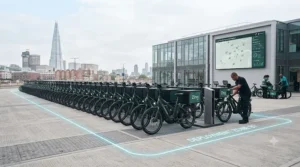
First, a two-rider takeaway running its own delivery service on a tight margin. Budget is the whole story here — they need geofencing to work, full stop, without a big monthly software bill eating into thin delivery fees. The TKSTAR TK905B GPS Tracker fits this brief: cheap enough to buy two units outright, simple enough that the owner can set it up between shifts without training, and the magnetic mount means it survives being swapped between the two bikes as needed.
Second, a mid-sized courier company running eight electric bikes across a city centre, all on Bosch motor systems from the same supplier deal. This is exactly the scenario the PowUnity BikeTrax GPS Tracker was built for — standardised hardware compatibility means every bike gets the same install, the concealed mounting deters casual theft in a busy city where bikes get chained up in public for minutes at a time, and the coordinator manages the whole roster from one app.
Third, a regional logistics firm running twenty-plus bikes across a mixed urban-rural patch, where insurance terms explicitly require demonstrable tracking as a condition of the policy. Here the calculus changes entirely — the Rewire Security S5+ Thatcham-Approved GPS Tracker costs more per unit, but the insurance premium reduction and the professional installation support make it the only sensible choice once you run the numbers over a full year rather than just looking at sticker price.
Problem → Solution: Fixing Common Fleet Tracking Headaches
Problem: Riders complain that tracking feels like surveillance, not support. Solution — involve riders in the rollout, not just the announcement. Explain that geofence alerts protect them too, since a stolen bike often means lost income and a difficult conversation about liability. Transparency, covered by data protection guidance later in this piece, isn’t optional, but framing genuinely changes acceptance rates.
Problem: False geofence alerts every single shift. Solution — widen the boundary slightly and add a short delay (some apps call this a “dwell time”) before an exit triggers a notification, so a rider briefly crossing a boundary line to overtake traffic doesn’t set off a false alarm every ten minutes.
Problem: A tracker “goes dark” mid-shift. Solution — check battery status first, since most reported outages on budget units like the TKSTAR TK905B GPS Tracker trace back to charge level rather than a hardware fault. Build a charging rota into shift handovers so no bike leaves the depot below 50% charge.
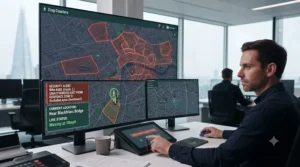
Problem: Multiple riders, one overwhelmed coordinator. Solution — this is precisely where fleet dashboard software earns its cost. A single-screen view of every rider’s position and geofence status, as offered by the PAJ GPS Finder 4G Tracker, turns a job that needed constant app-switching into one that takes thirty seconds every hour.
Problem: A bike is stolen despite tracking being fitted. Solution — report it to police immediately with the tracker’s last known location and movement history, and separately notify your tracking provider, since several of these services (including PowUnity BikeTrax GPS Tracker and Rewire Security S5+) offer active recovery assistance rather than just a location pin.
Buyer’s Decision Framework: Choosing Fast Without Guesswork
If you’re short on time, work through this in order rather than comparing every spec side by side.
If your fleet is under three bikes and budget is the deciding factor, choose a magnetic budget tracker because you can trial the concept cheaply before committing further. If your fleet runs a single, standardised e-bike motor brand across every machine, choose a motor-integrated tracker because the concealment and zero-extra-battery design pay off at scale. If insurance compliance is a stated policy condition, choose a Thatcham-approved option because nothing else on this list will satisfy an underwriter in the same way. If you’re managing more than eight riders day to day, choose a tracker with genuine multi-device dashboard software because coordinator time is the real cost you’re trying to control, not just hardware price. And if network reliability in patchy-signal areas has caused problems before, choose a tracker backed by a major mobile carrier over a smaller MVNO-based alternative.
How to Choose Electric Bike Geofencing for Fleet Riders
Working through these seven criteria in order will get most fleet operators to a confident decision without overthinking it.
- Define your operating radius first. A tight city-centre delivery zone needs different geofence precision to a sprawling regional patch, and that shapes which tracker’s GPS accuracy actually matters.
- Match the tracker to your bike fleet’s uniformity. Mixed motor brands rule out motor-integrated trackers; standardised fleets can exploit them for better concealment.
- Decide whether insurance compliance is a hard requirement. If your policy demands demonstrable tracking, Thatcham-approved hardware isn’t optional — it’s the whole point of the purchase.
- Check subscription costs against your rider count. A tracker that’s cheap upfront but charges per device monthly can cost more than a pricier unit over eighteen months at scale.
- Assess dashboard software, not just hardware. For anything beyond two or three riders, fleet management ebike GPS software with a proper multi-rider view saves real coordinator time.
- Confirm mounting method fits your workflow. Magnetic mounts suit fleets that rotate riders between bikes; hardwired or integrated units suit fixed rider-to-bike assignments.
- Factor in installation logistics. Self-fit units get you running the same day; professional installation needs scheduling, which matters if you can’t take bikes off the road easily.
Fleet Management eBike GPS: Features That Actually Matter
Marketing copy for fleet management ebike GPS systems tends to lean hard on buzzwords — “AI-powered insights,” “smart routing” — while quietly glossing over the features that actually change your day-to-day operations. Here’s an honest filter.
Real-time location refresh rate matters more than almost anything else on the spec sheet, because a system that updates every thirty minutes is functionally useless for catching a live theft in progress, no matter how polished its dashboard looks. Geofence flexibility — the ability to draw multiple, differently shaped zones rather than one crude circle — matters because real delivery areas aren’t circular, and a boundary that clips through the middle of your actual patch generates constant false alerts. Battery health reporting matters because a tracker that silently dies mid-shift is worse than no tracker at all, since it creates false confidence.
What tends to matter far less than the marketing suggests: route optimisation algorithms, which are genuinely useful for van fleets covering dozens of miles but add little value for bike couriers working a two-mile radius where riders already know the streets better than any algorithm. Similarly, elaborate analytics dashboards with dozens of metrics sound impressive in a sales demo but often go unused by coordinators who really just need three things — where’s the bike, is it inside the fence, and is the battery healthy.
Delivery Rider Electric Bike Tracking vs Manual Route Sheets
Before GPS trackers became affordable, fleet coordinators managed delivery rider electric bike tracking the old way: paper route sheets, radio check-ins, and a lot of trust. That approach hasn’t disappeared entirely, particularly among very small operators, but the comparison below shows why it’s losing ground fast.
| Factor | GPS Geofence Tracking | Manual Route Sheets |
|---|---|---|
| Best For | Fleets of 3+ riders, any delivery radius | Single-rider or owner-operator setups |
| Real-time visibility | Live, continuous | None until check-in |
| Theft recovery odds | Meaningfully improved | Essentially none |
| Setup effort | One-time device install | Ongoing manual admin |
| Ongoing cost | Monthly subscription | Free, but time-intensive |
The gap is starkest on theft recovery and real-time visibility — a manual system simply cannot tell a coordinator that a bike has left its zone until someone notices it’s late, by which point a stolen bike is usually long gone. That said, manual route sheets aren’t entirely obsolete: a genuine one- or two-bike owner-operator with full personal oversight of the machine may reasonably decide the subscription cost of any of the trackers above isn’t yet justified. The tipping point tends to arrive the moment a second or third rider joins the operation, since that’s when direct personal oversight of every bike, every shift, stops being realistic.
Fleet Dashboard Software: What to Expect in Real-World Performance
Spec sheets describe fleet dashboard software in terms of features; what you actually experience day to day is different. Here’s the honest gap between the pitch and the practice.
On paper, a dashboard promises a single pane of glass showing every rider’s location, geofence status, and battery health. In practice, the useful version of that promise depends heavily on how many riders you’re managing. For two or three bikes, even a basic single-device app like the one bundled with the TKSTAR TK905B GPS Tracker is perfectly workable — you’re not drowning in data, so a simple map view does the job. Once you’re past six or seven riders, the difference between a genuine multi-rider dashboard, like the one built into the PAJ GPS Finder 4G Tracker, and a collection of separate single-device apps becomes the difference between a five-minute morning check and a genuinely frustrating start to every shift.
What reviewers consistently flag as underrated: alert customisation. A dashboard that lets you set different alert rules for different riders or zones — say, stricter boundaries for a new starter still learning the patch — tends to get far higher satisfaction ratings in aggregated feedback than one offering only a single blanket setting for the whole fleet. What gets overrated in marketing materials: predictive analytics. Several platforms now advertise AI-driven “risk scoring” for routes or riders, but aggregated commercial feedback suggests most small-to-mid fleets get more practical value from simple, reliable geofence alerts than from any predictive layer sitting on top of them.
Multi-Rider Tracking for Larger Fleets
Multi-rider tracking changes shape entirely once a fleet crosses roughly the eight-to-ten-rider threshold, and treating it the same way you’d manage two bikes is a common and costly mistake.
At small scale, a coordinator can hold the whole picture in their head — which rider is where, which bike needs charging, which geofence matters today. Past that threshold, cognitive load becomes the real bottleneck, not the hardware. This is where dashboard-led platforms like the PAJ GPS Finder 4G Tracker genuinely separate themselves from single-device trackers: grouped views by shift, zone, or rider role let a coordinator scan status at a glance rather than clicking through individual bike profiles one at a time.
For larger fleets, it’s also worth building tiered alerts rather than treating every notification with equal urgency. A geofence exit during an active delivery shift needs an immediate response; the same exit at 2am when the bike should be parked at the depot needs an even faster one, arguably flagged differently. Fleets running a genuine mix of experienced and newer riders often benefit from setting tighter geofence boundaries for newer starters during a probation period, loosening them as trust and familiarity build — a practical use of the flexibility that better dashboard software provides over rigid single-zone setups.
Safety, Regulations & Compliance for UK Electric Bike Fleets
Fitting a tracker doesn’t exist in a legal vacuum, and UK fleet operators need to get two separate compliance areas right: the bikes themselves, and the tracking of the people riding them.
On the bike side, any electric bike used commercially still needs to meet the UK’s electrically assisted pedal cycle rules to be ridden legally without a licence, tax or insurance — motor power capped at 250 watts, with assistance cutting out at 15.5mph. As the official government guidance on electric bike rules sets out, anything exceeding those limits is legally a moped or motorcycle, requiring registration, insurance and a licensed rider — a distinction that’s become a genuine flashpoint, with a recent BBC report on illegally modified delivery e-bikes highlighting growing safety concerns and calls for tighter industry regulation around gig-economy delivery fleets specifically.
On the tracking side, GPS monitoring of riders — even riders using company-provided bikes — falls under UK data protection law, and getting this wrong exposes an employer to real legal risk. As industry guidance on vehicle tracking transparency requirements makes clear, employers must inform riders that tracking is in place, explain what’s being monitored and why, and generally secure some form of consent rather than switching on covert monitoring. In practice, this means a written policy in the staff handbook, a clear explanation at onboarding, and — where practical — the ability to disable tracking outside working hours if a bike also sees personal use. The underlying concept of a virtual tracking boundary itself is well documented too; if you want the broader technical background, the Wikipedia entry on geofencing covers how the technology works across industries beyond just fleet bikes.
Getting this compliance layer right isn’t just box-ticking — fleets that handle it transparently report far fewer rider objections to tracking overall, echoing what several trackers’ own review sentiment already suggests about acceptance improving with clear communication.
✨ Don’t Miss These Exclusive Deals!
🔍 Take Your Fleet Tracking Further Give your riders — and your insurance premium — the protection real-time geofencing provides. Click through on any tracker above to check current pricing and availability, and set up your first geofence boundary this week.
Frequently Asked Questions
❓ What is electric bike geofencing for fleet riders?
❓ Do fleet electric bike trackers need a monthly subscription?
❓ Is it legal to track delivery riders' electric bikes in the UK?
❓ Which geofence tracker works best for a small delivery fleet?
❓ Can geofence alerts help recover a stolen fleet e-bike?
Conclusion
Electric bike geofencing for fleet riders isn’t a single product decision so much as a matching exercise between your fleet’s size, your bikes’ motor systems, and your compliance obligations. A two-bike takeaway and a twenty-bike regional courier operation genuinely need different tools, and treating this guide as a ranked “best overall” list would miss the point of the research behind it.
What’s consistent across every tier, though, is the underlying value: real-time geofence boundary alerts turn theft from a total loss into a recoverable incident, turn a missing rider into a quick phone call rather than a panic, and turn fleet management ebike GPS data into something a coordinator can actually act on rather than just admire on a screen. Start with your operating radius, be honest about your budget, and work through the decision framework above rather than chasing the tracker with the longest feature list. Whichever of these seven you land on, pairing it with a clear, transparent tracking policy for your riders will matter just as much as the hardware itself.
Recommended for You
- Electric Bike with Apple Find My Tracking: 7 Smart Picks (2026)
- Keyless Entry Electric Bike Locks 2026: 7 Fob-Free Picks
- Fully Insured Electric Bike: 7 Best Picks for 2026
Disclaimer: This article contains affiliate links. As an Amazon Associate, I earn from qualifying purchases. If you purchase products through these links, we may earn a small commission at no additional cost to you.
✨ Found this helpful? Share it with your friends! 💬🤗
