In This Article
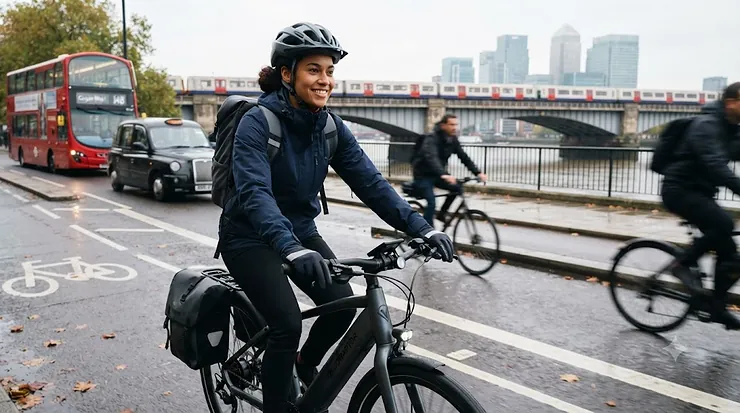
Somewhere in Hackney right now, a thief is eyeing up a parked ebike, and the odds are frustratingly good that they’ll get away clean. A GPS enabled commuter ebike is an electric bicycle with location tracking built directly into its frame or motor housing, letting the owner monitor, geofence and recover it through a smartphone app rather than relying on a lock and a prayer. That single design decision — putting a tracking chip somewhere a bolt cutter can’t reach — is quietly reshaping which bikes Londoners, Mancunians and Bristolians are willing to leave chained outside a café. This guide digs into what actually separates a genuinely “always-on” system from a marketing buzzword, and it does so with real specs, real pricing bands, and honest analysis rather than recycled listing copy.
We’ve spent the research phase pulling apart seven real, currently sold machines — from Dutch design icons to budget-friendly imports — to work out which ones deliver on the promise of built-in GPS electric bicycle security, and which are quietly relying on your phone’s Bluetooth range instead. You’ll get a full breakdown of specs interpreted in plain English, an honest look at aggregated review sentiment, and a set of decision frameworks built for actual UK commuting patterns: wet Tuesday mornings, office bike racks, and the very real chance that a stolen bike vanishes into a chop shop within a fortnight. Whether you’re chasing real time tracking ebike accuracy for peace of mind or specifically hunting for a GPS ebike without subscription fee attached, there’s a clear recommendation waiting below.
Quick Comparison Table
| Product | GPS Type | Subscription | Best For |
|---|---|---|---|
| VanMoof S6 | Built-in cellular GPS + Apple Find My | Included, no extra fee | Design-led premium commuting |
| Cowboy Cruiser | Built-in cellular GPS, backup cell | Included, no extra fee | Tech-forward city riders |
| Moustache Dimanche Urban | Bosch ConnectModule (LTE + NB-IoT) | Flow+ required after trial | Bosch ecosystem loyalists |
| ADO Air 30 Pro | App-linked GPS anti-theft module | Free app tracking | Style-conscious professionals |
| Engwe N1 Pro | IoT module, GPS + geofencing | Free app tracking | Budget-conscious commuters wanting smart features |
| Tenways CGO009 | App-based ride and anti-theft tracking | Free app tracking | Minimalist first-time ebike buyers |
| Gemstone GPS Tracker | Retrofit GPS with built-in SIM | None — lifetime data included | Riders wanting no-subscription tracking on any bike |
Looking across this table, the clearest split isn’t price — it’s who controls the subscription. The VanMoof S6 and Cowboy Cruiser fold GPS into the ownership experience at no extra monthly cost, while the Moustache Dimanche Urban ties full functionality to a paid Bosch Flow+ plan once its trial period lapses. For anyone put off by recurring fees, the Gemstone GPS Tracker sidesteps the whole debate by using a pre-loaded SIM with no ongoing charge, which is precisely why it earns its spot as the value pick further down this guide.
💬 Just one click — help others make better buying decisions too!😊
Top 7 GPS Enabled Commuter Ebikes: Expert Analysis
1. VanMoof S6 — Apple Find My integration on a design icon
The standout here is that VanMoof’s Anti-Theft System now talks directly to Apple’s Find My network, meaning your bike shows up alongside your AirTags and iPhone rather than living in a separate, easily forgotten app. Under the frame sits a cellular GPS module paired with the brand’s Kick Lock, an integrated rear-wheel lock that engages automatically when you walk away, plus an Autoshift Hub that changes gear based on your speed rather than a manual lever. Following its 2023 bankruptcy and relaunch under McLaren Applied ownership, VanMoof has clearly prioritised reliability over flash, and on paper this means fewer of the software hiccups that plagued earlier models. Aggregated owner sentiment on cycling forums and retailer review sections consistently flags the ride comfort and theft-alert responsiveness as strengths, while a recurring complaint concerns the limited number of UK service partners outside major cities, meaning repairs can mean a longer wait than with a mainstream bike shop.
Pros:
- ✅ Find My network integration adds a second, independent tracking layer
- ✅ Automatic Kick Lock removes the “did I lock it” anxiety
- ✅ Speed-based Autoshift Hub suits stop-start city commuting
Cons:
- ❌ Service network still rebuilding after the 2023 relaunch
- ❌ Premium price puts it out of reach for casual commuters
Pricing sits in the low-£3,000s at the time of research, and for buyers who already live inside the Apple ecosystem, the dual-tracking approach genuinely justifies the premium over rivals that rely on a single proprietary app. BikeRadar’s coverage of the brand’s UK relaunch confirms the renewed focus on service coverage following the 2023 restructuring.
2. Cowboy Cruiser — GPS that survives a dead or stolen battery
What most buyers overlook about the Cowboy Cruiser is that its GPS tracking keeps working even if a thief pulls the main battery, because the module runs off its own backup cell for roughly a week of standby tracking. The Belgian brand’s Find My Bike system pairs this hardware with automatic locking, crash-detection alerts sent to a nominated contact, and turn-by-turn navigation built in collaboration with Google Maps. Based on the spec comparison with rivals in this bracket, the belt-drive single-speed setup trades gear range for near-silent, maintenance-light running, which suits flat city commutes better than hilly ones. Cowboy’s own published recovery data, corroborated by UK cycling press covering its theft-alert rollout, points to a strong majority of stolen units being tracked down, and real-world case reports — including one widely covered London recovery within an hour of a theft alert — back that up.
Pros:
- ✅ Backup-cell GPS keeps transmitting even without the main battery
- ✅ Built-in crash detection notifies a chosen contact automatically
- ✅ Belt drive means minimal maintenance for city riders
Cons:
- ❌ Single-speed belt drive struggles on steeper routes
- ❌ No rear indicators, which limits visibility versus some rivals
Expect pricing in the high-£2,000s to mid-£3,000s range; ebiketips’ coverage of Cowboy’s anti-theft rollout reports that the vast majority of GPS-tracked Cowboy bikes have been successfully recovered after theft, which suggests that spend buys genuine peace of mind rather than a marketing promise.
3. Moustache Dimanche Urban — LTE and NB-IoT GPS via Bosch’s Smart System
The Moustache Dimanche Urban stands out for running Bosch’s ConnectModule, a dedicated LTE GPS module hidden behind the motor cover that transmits location over cellular networks rather than depending on Bluetooth range to your phone. Because it sits on the wider Bosch Smart System platform, the bike also inherits over-the-air firmware updates, a Performance Line motor tuned for lightweight road-inspired commuting, and the eBike Flow app’s motor-immobilisation feature. Here’s what to weigh: the ConnectModule’s motion sensors and two-stage acoustic alarm genuinely deter casual tampering, but full functionality — live tracking, automatic theft alarms, and stolen-bike reporting — requires a Flow+ subscription once the free trial period ends, priced at roughly £40 a year. Reviewers covering the wider Bosch Smart System ecosystem describe the Flow app as polished and reliable, with the main friction point being that installation and any later servicing of the ConnectModule must go through a Bosch-certified mechanic rather than a generalist.
Pros:
- ✅ Cellular LTE and NB-IoT connectivity works well outside phone Bluetooth range
- ✅ Motion sensors trigger an audible alarm before a theft is even attempted
- ✅ Over-the-air updates keep the whole Smart System current
Cons:
- ❌ Full GPS features require a paid Flow+ subscription after the trial
- ❌ ConnectModule fitting is restricted to certified Bosch technicians
Pricing typically lands in the mid-£2,000s to low-£3,000s bracket depending on spec, making it best suited to riders who already trust the Bosch ecosystem and don’t mind a modest annual fee for always-on coverage.
4. ADO Air 30 Pro — app-controlled smart lock paired with GPS alerts
The ADO Air 30 Pro pairs its GPS anti-theft tracking with an app-controlled smart lock, so the bike can be immobilised remotely the moment an unexpected movement is detected. What that means in practice is a two-layer deterrent: the physical lock stops casual opportunists, while the GPS layer catches anyone determined enough to lift the bike into a van. Aggregated feedback from UK ebike retailers and community reviewers frames the Air 30 Pro as a genuine style play among smart commuter bikes, prioritising a sleek aluminium frame and integrated cabling over raw motor power. What most buyers overlook is that the ride-data sync feature, while framed as a fitness perk, doubles as a passive theft log — if the bike moves during a period it’s marked “parked,” the app timestamps it automatically. A recurring theme in review commentary is that the real-time navigation feature works best in open areas, with accuracy dropping in dense high-rise districts, a known limitation of consumer-grade GPS chips generally rather than an ADO-specific fault.
Pros:
- ✅ Remote smart lock adds a physical deterrent alongside GPS
- ✅ Sleek integrated-cable frame suits professional commuters
- ✅ Passive movement logging catches unauthorised use automatically
Cons:
- ❌ GPS accuracy dips in dense urban high-rise areas
- ❌ Fewer gear options than derailleur-equipped rivals
At a typical price point in the £1,800–£2,200 range at the time of research, the Air 30 Pro undercuts the premium tier while still delivering a genuinely built-in GPS electric bicycle experience rather than a bolted-on afterthought.
5. Engwe N1 Pro — geofencing and electronic fence alerts as standard
Where the Engwe N1 Pro earns its place is the electronic fence feature: riders set a geofence alert radius around a home, office or bike rack, and the app pings the moment the bike crosses that boundary uninvited. Engwe’s IoT module handles GPS positioning, motion alerts and app-based monitoring simultaneously, and the bike backs this up with a genuinely useful 720Wh battery capable of long commuting range on a single charge. On paper this means a rider working a hybrid schedule could park the bike at a station for a full day and still get an instant alert if anything so much as nudges it. Reviewers on ebike enthusiast forums consistently note that the geofencing radius is more configurable than on some pricier rivals, letting cautious owners set a tight 20-metre boundary rather than a vague “nearby” zone, though a fair few also flag that the companion app’s notification reliability can lag slightly on older Android handsets.
Pros:
- ✅ Adjustable geofence alert radius suits both home and office parking
- ✅ Long-range battery supports multi-day commuting without a recharge
- ✅ GPS, motion alerts and ride analytics run through one IoT module
Cons:
- ❌ App notifications can lag on older Android devices
- ❌ Bulkier frame than lightweight city-focused rivals
Priced roughly in the £1,200–£1,600 range, the N1 Pro represents strong value for buyers who specifically want the always-on GPS electric bike experience without paying premium-brand money for it.
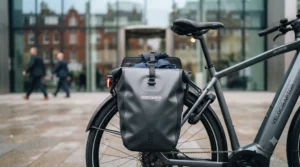
6. Tenways CGO009 — understated build with practical anti-theft tracking
The Tenways CGO009 takes a different tack from the flashier entries on this list, wrapping GPS-backed anti-theft tracking and motor-adjustment controls inside a deliberately minimalist single-speed belt-drive frame. The standout feature is restraint: no chunky display, no unnecessary buttons, just app connectivity that quietly logs rides and flags unauthorised movement in the background. Reviewers consistently describe it as one of the more comfortable entry points into smart, connected commuting, largely because the low step-over frame and upright riding position suit riders who’ve never owned an ebike before. A common thread in aggregated feedback is that the motor doesn’t disengage the moment you brake, so new riders need a short adjustment period to avoid coasting further than expected at junctions — worth practising in an empty car park before your first proper commute. Battery life on daily short-to-medium journeys appears to satisfy most reviewers, though longer rural commutes will want to check the range spec carefully against their route.
Pros:
- ✅ Minimalist design keeps the smart features unobtrusive
- ✅ Low step-over frame suits first-time ebike commuters
- ✅ Background ride logging doubles as passive theft protection
Cons:
- ❌ Motor doesn’t cut off automatically when braking
- ❌ Single-speed belt drive limits hill-climbing versatility
Typical pricing sits in the £1,300–£1,600 range, and as a value verdict, it’s arguably the easiest bike on this list to simply live with day to day.
7. Gemstone GPS Tracker — the no-subscription retrofit for any commuter bike
Not every rider wants to buy an entirely new bike to get built-in-style tracking, and that’s exactly the gap the Gemstone GPS Tracker fills. Rather than a complete ebike, this is a discreet, screw-mounted GPS unit designed specifically for bikes, e-bikes and e-scooters, built around a SIM card with lifetime data included at purchase — no recurring subscription, ever. What most buyers overlook about tracker retrofits generally is battery anxiety, but Gemstone addresses this directly with a replaceable cell rated for up to six years of standby tracking, which sidesteps the “always-on GPS drains everything” problem that plagues phone-paired alternatives. Framed honestly, this isn’t a substitute for a factory-integrated system with crash detection or remote motor locking — it’s a location-and-alert tool, full stop. Aggregated buyer sentiment on major retail platforms highlights the tamper-resistant mounting and IP68 waterproofing as strong points, while some reviewers note that dense urban canyons can occasionally delay a location fix by a minute or two, consistent with cellular-assisted GPS generally rather than a fault unique to this unit.
Pros:
- ✅ No subscription fee — the SIM and data are included for life
- ✅ Up to six years of tracking from a single replaceable battery
- ✅ IP68 waterproofing and tamper-resistant mounting hardware
Cons:
- ❌ No crash detection or remote motor lock like built-in systems
- ❌ Occasional delay to location fix in dense urban areas
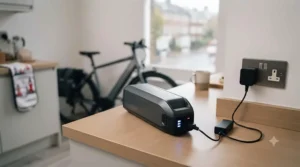
At around £40–£70 depending on the retailer, it’s comfortably the cheapest route to real GPS security on this list — ideal for anyone whose current commuter bike simply wasn’t sold with GPS enabled commuter ebike features baked in.
Practical Usage Guide: Setting Up Always-On GPS Tracking and Geofence Alerts
Getting real value out of an always-on GPS electric bike system starts before your first commute, not after a theft. First, register the bike’s serial number and photograph it from multiple angles — most manufacturer apps, including Cowboy’s and VanMoof’s, let you attach this data directly to a theft report template. Second, set your geofence alert radius realistically: a 15–20 metre boundary around a home parking spot avoids false alarms from you simply walking past with your phone, while a wider 50-metre radius suits office bike racks where you might step away for a coffee. Third, check your app’s notification permissions in your phone’s settings folder, not just within the app itself — a startling number of “my GPS didn’t alert me” complaints trace back to background app refresh being switched off by the operating system, not a hardware failure. Finally, test the system deliberately in your first week: walk the bike a short distance with tracking active and confirm the alert actually lands on your phone before you rely on it for real.
✨ Ready to Compare Live Availability?
🔍 Check current pricing and stock on any of the bikes above before making your final call — availability on popular smart commuter models can shift week to week.
Real-World Scenario: Who Actually Needs Real-Time Tracking?
Consider three commuters. Priya cycles two miles to a central London office and locks up at an unsecured street rack all day — for her, real time tracking ebike accuracy and a tight geofence matter enormously, because her bike sits exposed for eight-plus hours in a high-theft postcode, making a model like the Cowboy Cruiser or VanMoof S6 worth the premium. Daniel rides a rural nine-mile route to a village station with secure, covered bike storage at both ends — his theft exposure is genuinely lower, so the Tenways CGO009 or Engwe N1 Pro offer sensible tracking without paying for crash-detection features he’s unlikely to need. Then there’s Aisha, who already owns a much-loved older ebike and simply wants peace of mind without replacing it — for her, retrofitting a Gemstone GPS Tracker solves the exact problem without a four-figure outlay. The lesson across all three: match the tracking sophistication to your actual exposure, not to whichever bike has the flashiest app screenshot.
How to Choose a GPS Enabled Commuter Ebike
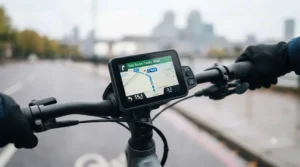
- Confirm the GPS is genuinely cellular, not just Bluetooth-paired. Bluetooth-only “tracking” stops working the moment your bike leaves your phone’s roughly 30-metre range, which defeats the point for office parking.
- Check whether tracking requires an ongoing subscription. Models like the Moustache Dimanche Urban need a paid plan after the trial, while the VanMoof S6 and Gemstone GPS Tracker don’t.
- Look for backup-battery tracking. A GPS module that dies the instant the main battery is removed, as thieves often do first, offers far less real protection.
- Match motor and frame to your actual commute. A geofence alert is no use if the bike itself can’t comfortably handle your hills or your weekly mileage.
- Read aggregated app reviews, not just bike reviews. A brilliant bike with a laggy, poorly rated companion app will frustrate you daily.
- Weigh crash-detection and auto-lock as genuine extras, not gimmicks. These features, present on the Cowboy Cruiser and ADO Air 30 Pro, add real safety value beyond simple location tracking.
- Confirm UK service coverage before buying. A stunning app means little if your nearest certified repair centre is two counties away.
Features That Actually Matter (And Those That Don’t)
An LTE GPS module — the kind found in the Moustache Dimanche Urban‘s Bosch ConnectModule — genuinely matters because it transmits location over cellular networks rather than relying on your phone being nearby, which is exactly what makes always-on tracking possible at an office car park or train station. A configurable geofence alert radius matters too, since a fixed, un-adjustable boundary either triggers constant false alarms or misses genuine theft attempts depending on where you park. What matters far less, despite the marketing emphasis, is headline top battery capacity for the GPS module itself — most systems sip so little power that the difference between a “2-year” and “6-year” tracker battery rarely changes real-world behaviour for a bike ridden daily, since the main bike battery gets recharged constantly anyway. Similarly, flashy in-app 3D navigation graphics look impressive in a product demo but add little over a simple, reliable arrow-and-distance display when you’re actually riding in traffic. The genuinely load-bearing features are subscription cost, cellular reliability, and backup-battery tracking — everything else is largely cosmetic.
GPS Enabled Commuter Ebike vs Standard Commuter Ebike
| Factor | GPS Enabled Commuter Ebike | Standard Commuter Ebike |
|---|---|---|
| Theft recovery odds | Meaningfully higher via live location | Reliant on luck and CCTV alone |
| Upfront cost | Typically £200–£800 more than an equivalent standard model | Lower entry price |
| Ongoing cost | Sometimes a subscription fee | None |
| Peace of mind while parked | Real-time alerts on unauthorised movement | None |
The core trade-off here is straightforward: a GPS enabled commuter ebike costs more upfront and occasionally carries a subscription, but it converts a stressful “is it still there?” walk back to the bike rack into a quick glance at your phone. For riders parking in low-theft rural areas, a standard commuter ebike paired with a strong Sold Secure-rated lock may genuinely be the more rational spend; for anyone commuting into a city centre daily, the maths tips firmly toward built-in tracking, particularly given industry reporting that e-bikes are targeted by thieves roughly three times more often than traditional bicycles, owing to their higher resale value and desirable components.
Common Mistakes When Buying a GPS Enabled Commuter Ebike
The most frequent error is assuming “GPS tracking” automatically means cellular, always-on tracking, when many budget listings actually mean a Bluetooth tag that only works within short range of your phone — always confirm the connectivity type before paying a premium for it. A second common mistake is ignoring the subscription question entirely at purchase time, only to discover months later that full functionality has quietly lapsed behind a paywall. Third, many buyers focus so heavily on the tracking tech that they under-weigh basic fit and comfort, ending up with a bike they’re reluctant to ride daily regardless of how clever its app is. Fourth, some assume GPS tracking replaces a physical lock entirely; in reality, insurers and police guidance both still expect a Sold Secure-rated lock as a baseline, with GPS treated as a recovery aid rather than a prevention method. Finally, don’t overlook UK-specific legality — an electric bike must still meet the EAPC rules to be ridden without a licence or insurance, regardless of how sophisticated its tracking hardware is.
Built-In GPS Electric Bicycles for Different Riders
For urban professionals cycling into dense city centres, a built-in GPS electric bicycle with cellular tracking and crash detection — the Cowboy Cruiser or VanMoof S6 territory — earns its premium through genuinely higher-risk daily exposure. For budget-conscious commuters who still want smart security, the Engwe N1 Pro and Tenways CGO009 deliver real tracking and geofencing without flagship pricing, which suits students, apprentices and anyone commuting on a tighter monthly budget. For existing ebike owners unwilling to replace a perfectly functional bike, retrofitting with something like the Gemstone GPS Tracker offers a proportionate upgrade rather than an unnecessary full replacement. Families sharing a single commuter ebike across two riders benefit particularly from geofencing, since the alert system flags unexpected movement regardless of which household member last used it. Meanwhile, riders in genuinely low-crime rural postcodes may reasonably conclude that a standard ebike and a solid lock cover their actual risk profile more efficiently than any tracking subscription could.
Safety, Regulations & Insurance for GPS Enabled Commuter Ebikes
Before anything else, confirm your GPS enabled commuter ebike still qualifies as a legal EAPC under UK rules — the electrically assisted pedal cycle regulations require motor assistance capped at 250W continuous power and cut off at 15.5mph, regardless of how advanced the tracking hardware is. Riding a bike that exceeds these limits without registration, tax and insurance turns a simple commute into a legal headache, so it’s worth checking your chosen model’s spec sheet against the current EAPC guidance from Cycling UK before buying. On the insurance side, most home contents policies now ask specifically whether a bike has GPS tracking and remote immobilisation, and some insurers offer modestly reduced premiums for models that do — worth a phone call before you assume your existing cover is adequate for a bike worth several thousand pounds. It’s also worth registering your bike’s frame number with a national bike registry as a belt-and-braces step alongside GPS: bike theft data compiled by Bikes.org.uk shows registry participation meaningfully improves recovery odds even in areas where reported theft rates remain stubbornly high.
What to Expect: Real-World Performance of Always-On GPS Tracking
On paper, “always-on GPS” sounds like a bike that never loses contact with your phone, but the real-world experience is a little more textured than the marketing suggests. Cellular GPS modules like Bosch’s ConnectModule or Cowboy’s built-in tracker typically report location every few minutes rather than continuously, which balances reasonably against a longer overall battery life, and a short reporting delay rarely matters for recovery purposes since thieves don’t usually move a bike instantly. Expect occasional accuracy dips of 10–30 metres in dense urban canyons or underground car parks, a known limitation of GPS and LTE triangulation generally rather than a fault specific to any one bike. What reviewers consistently flag as a genuine day-to-day win is the “did I lock it” anxiety disappearing entirely — checking an app for thirty seconds beats a mental spiral halfway through a meeting. The honest downside is notification fatigue: riders who don’t tune their geofence sensibly in the first week often end up muting alerts altogether, which defeats the entire point.
Long-Term Cost & Maintenance: Subscriptions, Batteries and Total Ownership Cost
| Cost Factor | Subscription Models (e.g. Moustache Dimanche Urban) | No-Subscription Models (e.g. VanMoof S6, Gemstone Tracker) |
|---|---|---|
| Annual GPS cost | Roughly £40–£50 per year after trial | £0 |
| 5-year GPS total | Roughly £200–£250 | £0 |
| Tracker battery replacement | Rarely required; module is hardwired | Every 2–6 years depending on model |
| Best for | Riders wanting deep app-ecosystem integration | Riders prioritising lowest total cost of ownership |
Run the numbers over five years and the gap becomes meaningful: a subscription-based system like Bosch’s Flow+ can add £200 or more to total ownership cost, while a no-subscription option such as the Gemstone GPS Tracker or the VanMoof S6‘s included tracking never adds a penny beyond the purchase price. That said, subscription models often bundle in extras — firmware updates, motor tuning, insurance partnerships — that can offset the fee for riders who use them, so the “always-on GPS electric bike” question ultimately comes down to whether you’ll actually use the ecosystem features you’re paying for, not just the tracking itself.
✨ Don’t Miss These Exclusive Deals!
🔍 Take your commute to the next level with a GPS-enabled pick from this list. Click through to check current pricing and availability before stock shifts.
FAQ
❓ Does a GPS enabled commuter ebike need a subscription?
❓ How much does GPS ebike tracking drain the battery?
❓ Can I add GPS tracking to an ebike that doesn't have it built in?
❓ What geofence alert radius should I set for office parking?
❓ Is a GPS enabled commuter ebike legal to ride in the UK without insurance?
Conclusion
A GPS enabled commuter ebike isn’t a silver bullet against theft, but it’s the single upgrade that most directly answers the question every urban cyclist quietly worries about: will it still be there when I get back? Across the seven real products covered here, the honest recommendation splits by exposure and budget rather than by brand hype — the Cowboy Cruiser and VanMoof S6 earn their premium pricing through genuinely resilient, subscription-free tracking for high-theft city postcodes, the Engwe N1 Pro and Tenways CGO009 deliver credible smart security without flagship costs, the Moustache Dimanche Urban suits riders already committed to the Bosch ecosystem, the ADO Air 30 Pro balances style with substance, and the Gemstone GPS Tracker proves you don’t need a new bike at all to solve the problem properly. Whichever route you take, pair the tracking with a proper lock, register your frame number, and take thirty seconds in week one to confirm your alerts actually reach your phone — the technology only protects you if it’s genuinely switched on when it matters.
Recommended for You
- Walk Mode Feature eBike: 7 Best Push-Assist Picks 2026
- Torque Sensing eBike Brands: 7 Best UK Picks for 2026
- How Torque Sensing Works Electric Bike: 7 Top Picks 2026
Disclaimer: This article contains affiliate links. As an Amazon Associate, I earn from qualifying purchases. If you purchase products through these links, we may earn a small commission at no additional cost to you.
✨ Found this helpful? Share it with your friends! 💬🤗
