In This Article
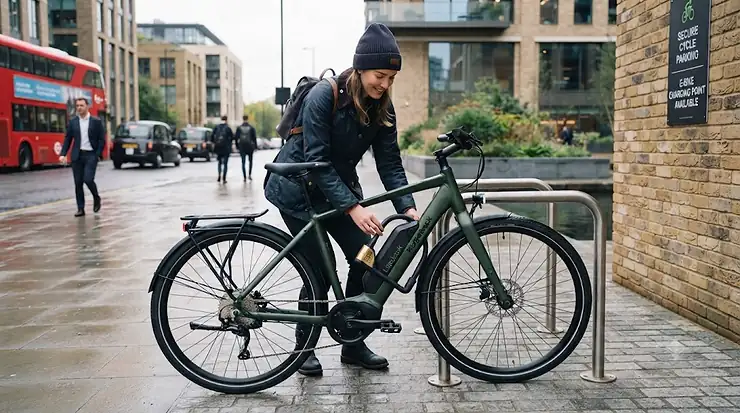
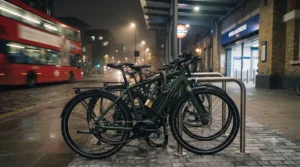
Lock your bike outside a flat in Hackney or a bike rack at Waterloo for more than a few hours and you’re taking a gamble whether you like it or not. London consistently posts some of the highest bike theft figures of any UK city, and ebikes — heavier, pricier, and packed with removable batteries — are a particularly juicy target. So what actually is the most secure electric bike London riders can buy? In short: it’s a bike built with theft-resistance baked into the frame — hidden GPS, an automatic locking motor, tamper alarms, and companion apps that scream the moment someone touches it — rather than one you simply bolt a lock onto and hope for the best.
That distinction matters more than most buyers realise. A gorgeous ebike with a flimsy kickstand lock is still an easy target, whereas a mid-range commuter fitted with a reinforced frame, a built-in immobiliser and a Sold Secure Gold-rated lock bundle can be a genuinely tough nut to crack. This guide walks through seven real ebikes on sale in the UK right now, each chosen for a different blend of built-in tech, physical security, and value, plus the practical knowledge — immobilisers, PIN locks, forensic marking, insurance rules — that turns any ebike into a harder target. According to the Metropolitan Police, locking the frame and both wheels to a secure stand remains the single most effective deterrent, and every bike below is built to make that job easier.
Quick Comparison Table
Before diving into the full breakdown, here’s how the seven contenders stack up on the security features that actually matter for London riders.
| Ebike | Built-In Security | Price Range | Best For |
|---|---|---|---|
| Cowboy Cruiser ST | Hidden GPS, auto-lock, theft alerts | £2,300-£2,400 range | Tech-focused commuters |
| VanMoof S6 | Kick Lock, Anti-Theft System, Find My | Around £3,100 | Design-led daily riders |
| Riese & Müller Charger4 GT | Built-in ABUS frame lock, Bosch ConnectModule-ready | From around £4,500 | Premium, do-it-all buyers |
| Brompton Electric P Line | Folds and travels with you | £3,800-£4,100 range | Zone 1 commuters, train users |
| Gocycle G4 | Quick-fold, lockable Cleandrive | Low-to-mid £3,000s | Riders who carry the bike indoors |
| ADO Air 28 Pro | Reinforced double-lock mounts, battery lock | £950-£1,100 range | Budget-conscious commuters |
| ENGWE EP-2 Pro | Dual reinforced lock points | Under £900 | Entry-level, secure parking spots |
Looking across the table, the pattern is clear: the closer a bike gets to “true” built-in electronic security — hidden trackers, automatic locking, tamper alarms — the higher the price climbs, while the budget end relies on physical reinforcement that rewards you for adding your own Sold Secure Gold lock. Neither approach is automatically “better”; a VanMoof S6 with its automatic Kick Lock suits someone who parks briefly outside a café, while an ADO Air 28 Pro paired with a solid chain suits someone who locks up all day near King’s Cross. The right choice depends on where you’ll actually leave the bike unattended, and for how long.
💬 Just one click — help others make better buying decisions too!😊
Top 7 Most Secure Electric Bikes for London: Expert Analysis
1. Cowboy Cruiser ST — hidden GPS with auto-lock and theft alerts
The standout feature here is that the security tech disappears into the bike itself: no bolt-on tracker box, no external alarm siren, just a SIM-equipped GPS module hidden deep in the frame. The Cowboy Cruiser ST pairs this with an automatic locking system that engages the moment you walk away, plus real-time theft alerts and crash detection pushed straight to your phone. Riding on a 250W motor within EAPC limits, it’s fully road-legal without registration or insurance.
Based on the spec comparison with rivals in this bracket, what most buyers overlook is that Cowboy’s “Find My Bike” feature isn’t a bolt-on subscription tracker — it’s built into the purchase price, which meaningfully changes the total cost of ownership versus adding a third-party GPS unit. This makes it a strong pick for commuters who park on unpredictable London streets rather than a private garage. Reviewers and owner forums consistently flag the auto-lock as the standout convenience feature, since you don’t need to fumble with a key or app every time you stop.
Pros:
- ✅ Hidden GPS tracker built into the frame from the factory
- ✅ Automatic locking with instant theft-alert push notifications
- ✅ No separate tracker subscription needed to use core features
Cons:
- ❌ App-dependent locking means a dead phone battery is inconvenient
- ❌ Replacement parts rely on Cowboy’s own service network
At around £2,300-£2,400, the Cowboy Cruiser ST sits mid-pack, and given that a decent aftermarket GPS-and-alarm combo alone can run to £150-£250, the built-in system represents solid value for anyone who’d have bought one separately anyway.
2. VanMoof S6 — integrated Kick Lock and Find My tracking
VanMoof’s signature party trick is the Kick Lock: a mechanical wheel lock built into the rear frame that engages with a flick of the heel, immobilising the rear wheel without you reaching for anything. The VanMoof S6, relaunched in the UK after the brand’s 2023 restructuring under McLaren Applied-backed owner Lavoie, pairs this with an Anti-Theft System offering granular location tracking and Apple Find My integration.
What the spec sheet won’t tell you outright is how this changes daily habits: because the Kick Lock takes under a second, riders are far more likely to actually use it for thirty-second stops — the exact moments most bikes get taken. Here’s what to weigh, though: mechanical wheel locks like this stop opportunistic wheel-away theft, not a determined thief with a van and bolt cutters, so it’s a first line of defence rather than a replacement for a proper D-lock overnight.
Pros:
- ✅ Kick Lock engages instantly without keys or an app
- ✅ Apple Find My network adds passive tracking coverage
- ✅ Rebuilt under new ownership with an extended warranty
Cons:
- ❌ Kick Lock alone won’t satisfy most insurers’ overnight requirements
- ❌ Premium price reflects design as much as raw security hardware
At roughly £3,098, the VanMoof S6 is a design-forward choice; pair it with a Sold Secure Gold D-lock for anything left out overnight and you’ve covered both the quick-stop and long-park scenarios.
3. Riese & Müller Charger4 GT — Bosch Smart System with built-in ABUS frame lock
This is the bike for buyers who want German engineering and are prepared to pay for it. The Riese & Müller Charger4 GT ships with a built-in ABUS frame lock as standard — a proper mechanical immobiliser through the rear wheel, not just a light deterrent — and runs on Bosch’s Smart System, which supports the optional ConnectModule: a retrofit GPS tracker, motion-sensor alarm, and remote lock/unlock function accessed through the eBike Flow app.
On paper this means you’re buying two layers of protection from day one and can add a third. Based on the spec comparison, the 85Nm Performance Line CX motor and 750Wh PowerTube battery put this firmly in the touring and daily-workhorse category rather than a lightweight commuter, so the added weight of the security hardware is barely noticeable. What most buyers overlook is that the ConnectModule’s alarm has two response levels — a short deterrent chirp for a bumped bike, and a loud alarm with GPS activation for genuine tampering — which cuts down on false-alarm annoyance compared with cheaper motion sensors.
Pros:
- ✅ Built-in ABUS frame lock included as standard equipment
- ✅ Optional Bosch ConnectModule adds GPS, alarm and remote lock
- ✅ Enormous 750Wh battery reduces daily charging dependency
Cons:
- ❌ Entry price from around £4,500 puts it out of reach for many
- ❌ ConnectModule and premium locks add further cost on top
Prices start from around £4,500 and climb past £5,000 with the Vario or GT Touring specs, but for buyers who see an ebike as a car replacement, the layered security arguably justifies it.
4. Brompton Electric P Line — folds and travels with you, so it’s never left outside
Sometimes the smartest security feature is simply not leaving your bike outside at all. The Brompton Electric P Line folds in around fifteen to twenty seconds into a package roughly the size of a large suitcase — small enough to wheel into an office, tuck under a desk, or store in a train luggage rack. No lock in the world beats a thief who can’t get near the bike in the first place.
Here’s what to weigh: this titanium-framed folder is genuinely the lightest electric Brompton yet, which matters enormously if you’re carrying it up stairs at a Tube station daily. Reviewers highlight that the fold sequence becomes muscle memory within about a week, and the removable 300Wh battery pack can travel separately in a bag, which also means a stationary folded frame has no battery worth stealing. What the spec sheet doesn’t emphasise is that this approach essentially sidesteps most theft risk categories entirely — you’re not fighting angle grinders, you’re avoiding the confrontation altogether.
Pros:
- ✅ Genuinely portable fold removes the need to lock up in public
- ✅ Lightweight titanium build makes carrying practical, not just possible
- ✅ Removable battery can travel with you, separate from the frame
Cons:
- ❌ Small wheels and folding frame trade off some ride comfort
- ❌ Premium pricing for what is, mechanically, a fairly simple ebike
At £3,799-£4,099 depending on spec, you’re paying for portability and brand pedigree as much as raw power, but for Zone 1 commuters mixing bike and rail, it may be the single most theft-resistant option here by design rather than tech.
5. Gocycle G4 — quick-fold portability plus a lockable Cleandrive gearbox
Gocycle’s approach splits the difference between a “proper” ebike and a Brompton-style folder. The Gocycle G4 folds in under ten seconds thanks to its award-winning mechanism, rolls on its own wheels once folded so you’re not lugging dead weight, and uses a fully enclosed Cleandrive gearbox that shields the chain and gearing from both grime and casual tampering.
Based on the spec comparison, its carbon-fibre mid-frame and single-sided front fork keep total weight to around 16.6kg — light enough that “take it inside” becomes a realistic daily habit rather than a chore reserved for overnight parking. What most buyers overlook is that a removable 300Wh battery with an LED fuel gauge means you can pull the power source indoors even if the frame itself has to stay locked outside briefly, denying a thief the most expensive component.
Pros:
- ✅ Sub-10-second fold that rolls on its own wheels
- ✅ Enclosed Cleandrive gearbox reduces tampering access
- ✅ Removable battery can be taken indoors separately
Cons:
- ❌ Folded footprint is bulkier than a Brompton for train storage
- ❌ Replacement parts and servicing require specialist Gocycle dealers
Typically priced in the low-to-mid £3,000s, the Gocycle G4 suits riders who want more performance than a Brompton offers but still want the option to remove the bike from public view entirely.
6. ADO Air 28 Pro — reinforced double-lock mounts for a budget commuter
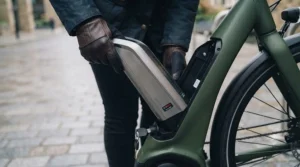
Not every secure ebike needs a four-figure price tag and a companion app. The ADO Air 28 Pro takes a simpler route: a BAFANG rear hub motor with torque-sensing assistance, a carbon belt drive that removes an easy-to-cut chain from the equation, and — critically for security — a dedicated battery lock accessory that clamps the removable battery and seatpost in place, stopping the most commonly stolen component from simply sliding out.
What most buyers overlook with budget ebikes is that the battery, not the frame, is often the real theft target, since it’s expensive and easy to resell. Reviewers on ADO’s own product pages note the bike’s mounting points make it straightforward to run a chain lock and a D-lock simultaneously through the frame and rear wheel, though several buyers have flagged loose fixture bolts on delivery, so a pre-ride check is worth doing regardless of which security kit you add.
Pros:
- ✅ Dedicated battery lock accessory prevents battery slide-out theft
- ✅ Belt drive removes a vulnerable, easily cut chain
- ✅ Mounting points support running two lock types at once
Cons:
- ❌ No built-in alarm or GPS — security is entirely add-on
- ❌ Some units arrive with fixtures needing a bolt check first
In the £950-£1,100 range, the ADO Air 28 Pro is honest about what it is: a well-specified budget commuter that rewards you for investing the savings into a proper Sold Secure Gold lock and the battery clamp.
7. ENGWE EP-2 Pro — dual reinforced lock points for under £900
Don’t let its mountain-bike looks fool you — the ENGWE EP-2 Pro is aimed squarely at urban riders on a tight budget. Its dual-suspension frame happens to include reinforced mounting points positioned so a D-lock and a chain lock can both be threaded through the frame and rear triangle simultaneously, effectively forcing a would-be thief to defeat two separate lock types rather than one.
Here’s what to weigh: at this price point you are not getting GPS, an alarm, or an immobiliser, so the entire security proposition rests on you supplying good-quality locks and using them properly every time. On paper, that’s a limitation; in practice, a cheap frame double-locked with Sold Secure Gold-rated hardware is often more secure than an expensive bike relying on a single weak lock, because thieves overwhelmingly target the path of least resistance.
Pros:
- ✅ Reinforced frame points for genuine double-locking
- ✅ Full suspension adds comfort on London’s rougher back streets
- ✅ Sub-£900 pricing frees up budget for premium locks
Cons:
- ❌ Zero built-in electronic security — you must add it all
- ❌ Heavier frame makes it impractical to carry indoors daily
Priced under £900, the ENGWE EP-2 Pro proves that “most secure” doesn’t have to mean “most expensive” — provided the savings genuinely go toward a Gold-rated lock rather than being pocketed.
Practical Usage Guide: Locking Your Ebike Right From Day One
Buying a security-focused ebike is only half the job — how you use it in the first month sets the habits that keep it yours. Start by registering the frame number on a police-recognised database such as BikeRegister the day it arrives; the Met Police notes this makes a recovered bike traceable back to its owner, and a visible registration sticker alone puts off a chunk of casual thieves.
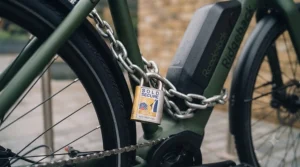
Next, set up any app-based features immediately rather than “getting round to it later” — pair the Cowboy Cruiser ST‘s theft alerts, the VanMoof S6‘s Find My integration, or the Bosch Flow app on the Riese & Müller Charger4 GT before the first ride, not after a scare. A common early mistake is locking only the frame to a stand and leaving both wheels un-secured; always run your lock through the frame and at least the front wheel, ideally both. Finally, build a simple maintenance habit: check lock mechanisms monthly for grit or corrosion, keep your PIN or app credentials backed up somewhere other than your phone, and re-tighten any quick-release fixtures, since a loose battery clamp or seatpost is both a safety and a security issue.
Real-World Scenarios: Which Secure Ebike Suits You
Consider a first-year university student commuting three miles across Zone 3, locking up outside lecture halls for six-hour stretches with no covered parking. For that pattern, the ADO Air 28 Pro or ENGWE EP-2 Pro paired with a Sold Secure Gold chain makes more financial sense than a premium electronic system, since the bike itself is a lower-value target and the main risk is long, unsupervised daytime parking.
Now picture a finance professional living in a Zone 1 flat with a lift but no secure bike storage, riding two miles to the office and popping into shops along the way. Frequent short stops favour the VanMoof S6‘s instant Kick Lock or the Cowboy Cruiser ST‘s auto-lock, since convenience directly determines whether the rider actually locks up every single time. Finally, think of a family living near a mainline station who combines a folding bike with a forty-minute train commute into central London. Storage space is the binding constraint here, not budget, which makes the Brompton Electric P Line or Gocycle G4 the logical pick — both remove the parking problem almost entirely by coming indoors with you.
Problem → Solution: Fixing London’s Top Ebike Theft Risks
Problem: Battery theft from a securely locked frame. Solution: fit a dedicated battery lock (as available for the ADO Air 28 Pro) or choose a bike with a removable battery you take indoors, like the Gocycle G4.
Problem: Wheel theft while the frame stays locked to a stand. Solution: always loop your lock through the frame and a wheel, or fit locking skewers; models like the Riese & Müller Charger4 GT with a built-in frame lock reduce this risk further by immobilising the rear wheel directly.
Problem: Opportunistic short-stop theft outside shops. Solution: an automatic or near-instant lock, such as the VanMoof S6‘s Kick Lock, removes the “I’ll only be a minute” excuse that leads to most casual thefts.
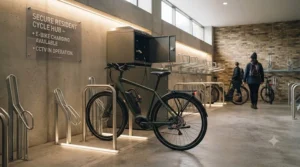
Problem: No safe overnight parking at home. Solution: consider a folding option that comes indoors, such as the Brompton Electric P Line, or invest in a ground anchor and Sold Secure Gold D-lock if outdoor storage is unavoidable.
Problem: Uncertainty over whether your insurance will actually pay out. Solution: check your policy’s specific lock requirements before you ever need to claim — most UK cycle insurers, including Bikmo, require a minimum Sold Secure rating tied to your bike’s declared value, and using anything less voids cover entirely, according to guidance from Cycling UK.
✨ Don’t Miss These Exclusive Deals!
🔍 Compare Prices Before You BuyTake your ebike security to the next level with these carefully selected models. Click on any highlighted bike to check current pricing and availability on Amazon UK. A little research now could save you a very bad morning later!
How to Choose the Most Secure Electric Bike for London
Picking the right bike comes down to matching its built-in defences to how and where you’ll actually park it. Work through these steps in order:
- Map your typical parking scenario first. Short stops, all-day office parking, and secure home storage each call for different priorities — convenience-focused locking versus maximum physical deterrence.
- Check what’s genuinely built in versus optional. A bike advertised as “theft-resistant” may only mean reinforced lock mounts; confirm whether GPS, alarms, and immobilisers are standard or an added-cost extra.
- Match the bike’s value to your lock’s Sold Secure rating. As a rule of thumb, insurers typically expect Gold or Diamond for anything over roughly £1,500, and Silver below that.
- Factor in battery security separately from frame security. A stolen battery can cost several hundred pounds to replace, so check whether a lock or quick-release protection exists.
- Weigh portability against raw security tech. A folding bike you carry indoors can outperform an expensively alarmed bike that still has to sit on the street.
- Ask about app dependency. Features requiring a live app connection are only as reliable as your phone’s battery and signal — have a backup plan.
- Confirm EAPC compliance before you buy. Motor power capped at 250W and assistance cutting off at 15.5mph keeps the bike road-legal without registration; full details sit on the government’s official electric bike guidance.
Common Mistakes When Buying a Secure Electric Bike
The single most common mistake is buying the ebike and the lock as separate afterthoughts, rather than budgeting for both together from the start — a £3,000 bike secured with a £15 cable lock is, frankly, an invitation. A close second is assuming a built-in alarm or GPS feature replaces the need for a physical lock entirely; in reality, electronic deterrents work best layered on top of, not instead of, a Sold Secure-rated D-lock or chain.
Buyers also frequently overlook insurance small print, discovering only after a theft that their policy required a specific lock rating they weren’t using. Another recurring error is skipping frame registration because it feels like an unnecessary extra step — yet it costs nothing and directly helps police return a recovered bike. Finally, many riders forget that batteries are a separate theft risk from the frame itself, and fail to ask whether a battery lock or removable-and-portable design is available before they buy.
Electric Bike Built-In Alarm vs Aftermarket Lock: Which Wins?
An electric bike built-in alarm and a good aftermarket lock solve different problems, and the honest answer is that neither replaces the other. A built-in alarm, like the motion-sensor system on the Riese & Müller Charger4 GT‘s optional ConnectModule, reacts the moment someone touches or moves the bike, creating noise and a phone alert designed to make a thief abandon the attempt before it succeeds. A quality aftermarket lock, by contrast, is a physical barrier: it doesn’t detect an attack, it simply makes the attack take longer, and time is exactly what opportunistic thieves don’t have.
| Feature | Built-In Alarm | Aftermarket Sold Secure Lock |
|---|---|---|
| Reaction speed | Immediate, alerts you live | None — passive deterrent |
| Physical barrier | Usually none on its own | Strong, rated resistance |
| Ongoing cost | Sometimes app/data fee | One-off purchase |
| Best against | Casual tampering, snatch theft | Determined, tooled-up theft |
Reading the table, it’s clear the strongest setup layers both: an alarm to interrupt an attempt in progress, and a rated lock to physically slow down anyone who doesn’t scare off. Bikes like the Cowboy Cruiser ST and VanMoof S6 build the alarm layer in from the factory, but every one of the seven bikes above still benefits from a proper lock added on top for anything left unattended for more than a few minutes.
Ebike Immobiliser Systems and PIN Code Locks Explained
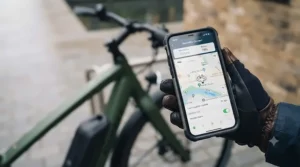
An ebike immobiliser system works by disabling the motor’s ability to deliver assistance until it’s disarmed — think of it as the bicycle equivalent of a car’s engine immobiliser, useful because it removes the point of stealing a powered bike in the first place if the thief can’t ride it away under its own power. Systems like the Bosch Smart System used on the Riese & Müller Charger4 GT support this through the connected app, locking the drive electronically even if the physical frame lock is somehow bypassed.
An ebike with a PIN code lock takes a slightly different, more physical approach: rather than relying on an app or a key, the rider punches a numeric code into a mechanical or electronic keypad built into the lock itself to release it. This has a genuine practical advantage in London commuting life — no fumbling for keys with cold hands on a wet cycle lane, and nothing to lose down a drain. On the spec comparison, PIN-based systems tend to appear on higher-end wheel and frame locks rather than as standard ebike equipment, so most riders add this as an aftermarket upgrade rather than finding it built into the bike itself. What most buyers overlook is that a PIN system is only as secure as the number of possible combinations and whether it has an anti-pick or anti-shim design, so it’s worth checking a lock’s Sold Secure rating rather than assuming “keyless” automatically means “more secure.”
Insurance-Approved Ebike Locks, Sold Secure Gold and Datatag Marking
What Makes a Lock “Insurance Approved”?
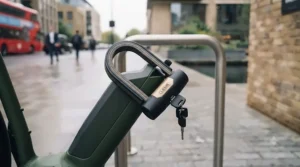
An insurance-approved ebike lock is simply one that meets the minimum Sold Secure rating your specific policy demands, and this is non-negotiable — using anything below the required tier is one of the most common reasons cycle insurance claims get rejected. Sold Secure, run by the Master Locksmiths Association, tests locks against real attack methods and grades them Bronze, Silver, Gold, or Diamond, with a newer Powered Cycle category that includes angle-grinder resistance testing specifically for higher-value ebikes.
Understanding the Sold Secure Gold Rating
A Sold Secure Gold rating sits above Silver and below Diamond, and according to Cycling UK’s guide to insuring your bike, most specialist insurers require at least Gold for any bike valued above roughly £1,000-£1,500. In practice this means premium picks like the Riese & Müller Charger4 GT or VanMoof S6 almost certainly need a Gold or Diamond lock to stay properly covered, while a budget commuter like the ENGWE EP-2 Pro can often get away with Silver. It’s worth being realistic here: Gold is a meaningful step up from budget cable locks, but it’s a minimum insurance threshold rather than a guarantee against a determined, tooled-up thief.
| Sold Secure Tier | Typical Bike Value Covered | Notes |
|---|---|---|
| Bronze | Up to around £250 | Minimum viable, low deterrent |
| Silver | Roughly £250-£1,500 | Common insurer minimum for mid-value bikes |
| Gold | Above roughly £1,500 | Standard requirement for most ebikes |
| Diamond / Powered Cycle | High-value or targeted risk | Includes angle-grinder resistance testing |
The takeaway from this table is straightforward: check your specific ebike’s insured value against your insurer’s stated requirement rather than assuming any “good” lock will do, since a claim can be refused on a technicality even after a genuine theft.
Datatag Marking System and Insurance Premium Discounts
The Datatag marking system takes a different angle: instead of stopping the theft, it makes the bike traceable and harder to resell afterwards, combining UV “stealth” etching on the frame with RFID transponders and microdot marking on components. Datatag says a marked cycle is significantly less likely to be stolen in the first place, since visibly marked bikes are less attractive to thieves who profit from stripping and reselling parts anonymously.
The financial upside is real too: several UK insurers offer a straightforward insurance premium discount, commonly around 10%, simply for fitting a recognised marking system like Datatag, and the discount typically applies every year at renewal, not just once. Given that Datatag kits generally cost under £30, the savings on an average annual premium can cover the outlay within the first year alone, making it one of the cheapest genuine security upgrades available for any of the seven bikes covered here.
What to Expect: Real-World Security Performance in London
Specs on a page rarely capture what daily security actually feels like. In practice, an automatic lock like the VanMoof S6‘s Kick Lock gets used every single time precisely because it takes no extra effort — the psychological barrier to “just quickly popping in” disappears. GPS-equipped bikes like the Cowboy Cruiser ST won’t stop a theft in progress, but owners report real peace of mind from knowing a stolen bike stands a meaningfully better chance of recovery than one with no tracking at all, particularly since industry data suggests GPS-tracked bikes see notably higher recovery rates than untracked ones.
Folding bikes change the picture entirely: with the Brompton Electric P Line or Gocycle G4, “security performance” mostly becomes a non-issue on short trips, because the bike simply isn’t outside long enough to be a target. Budget bikes like the ADO Air 28 Pro and ENGWE EP-2 Pro perform exactly as well as the locks you pair them with — the frame reinforcement does nothing on its own, but combined with a Gold-rated chain and D-lock, real-world outcomes for these bikes can match far pricier models locked carelessly.
Long-Term Cost and Maintenance of a Secure Ebike
Security hardware has an ongoing cost story that’s easy to miss at the point of purchase. Built-in electronic systems like the ones on the Cowboy Cruiser ST or Riese & Müller Charger4 GT‘s ConnectModule sometimes carry a small subscription for live GPS data — factor this into total cost of ownership rather than comparing sticker prices alone. Mechanical systems like the VanMoof S6‘s Kick Lock or a built-in ABUS frame lock carry no ongoing fee but do need occasional servicing to keep the mechanism free of grit, especially through a British winter of grit and road salt.
Aftermarket Gold or Diamond locks represent a genuine long-term investment too, typically costing anywhere from £60 to well over £150 depending on brand and rating, but this is small change against the cost of replacing an entire ebike, which can run into the thousands. Add Datatag marking’s near-permanent, fee-free protection and its recurring 10% insurance discount, and the maths increasingly favours spending a little more upfront on layered security rather than absorbing the far larger cost of a single successful theft.
Frequently Asked Questions
❓ What is the most secure electric bike for London commuters?
❓ Do insurance companies require a specific type of ebike lock?
❓ Is an ebike immobiliser system worth adding?
❓ Does Datatag marking actually reduce my insurance premium?
❓ Can I use a PIN code lock instead of a key on my electric bike?
Conclusion
There’s no getting around it: London’s bike theft problem is real, and an ebike’s higher value and removable battery make it a bigger target than an ordinary bicycle. The good news is that the market has genuinely responded, from the Cowboy Cruiser ST‘s hidden GPS and the VanMoof S6‘s instant Kick Lock through to the Riese & Müller Charger4 GT‘s built-in ABUS lock and the sheer disappearing act of the Brompton Electric P Line and Gocycle G4. Even the budget-focused ADO Air 28 Pro and ENGWE EP-2 Pro hold their own once paired with a Sold Secure Gold lock and a bit of consistent habit.
The honest takeaway is that no single feature makes a bike theft-proof — it’s the combination of built-in tech, a properly rated physical lock, sensible parking choices, and cheap extras like Datatag marking that genuinely shift the odds in your favour. Match the bike to how and where you’ll actually use it, budget for security alongside the bike itself rather than as an afterthought, and check your insurer’s small print before you ever need to rely on it. Do that, and whichever of these seven you choose, you’ll be riding one of the harder targets on London’s streets rather than one of the easier ones.
Recommended for You
- GPS Enabled Commuter Ebike: 7 Best Picks for 2026 UK Riders
- Electric Bike With Walk Assist: 7 Top UK Picks for 2026
- Walk Mode Feature eBike: 7 Best Push-Assist Picks 2026
Disclaimer: This article contains affiliate links. As an Amazon Associate, I earn from qualifying purchases. If you purchase products through these links, we may earn a small commission at no additional cost to you.
✨ Found this helpful? Share it with your friends! 💬🤗
