In This Article
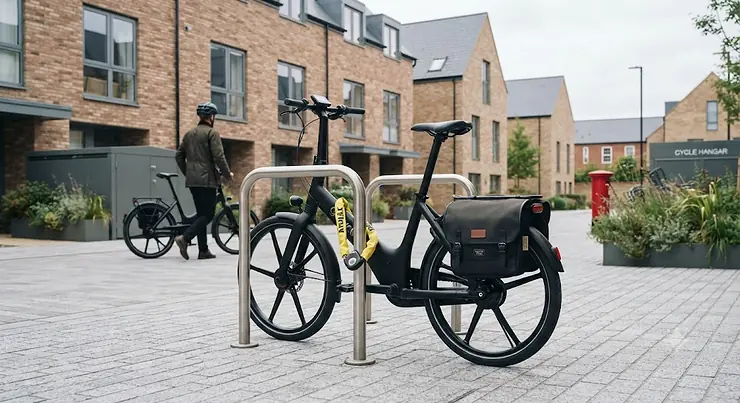
Somewhere in London right now, someone is walking back to the spot where they left their electric bike, and it isn’t there. That gap on the railings — just a cut cable or an empty patch of pavement — has become a depressingly familiar sight, and the electric bike theft statistics behind it are not moving in the right direction. Met Police figures show 2,966 powered cycles and e-bikes were reported stolen across London in 2025, up from 2,448 the year before, and Pelion Research reckons that’s likely the highest annual total ever recorded in the capital. It isn’t just a London problem, either — it’s a nationwide symptom of a fast-growing market that thieves have clocked onto faster than most owners have.
Here’s the blunt truth nobody selling you a bike wants to lead with: electric bike theft statistics keep climbing because ebikes are simply worth more to steal than a normal pushbike, easier to resell for parts, and — thanks to weak factory locks and owners who assume a quick nip into the shop is “just a minute” — surprisingly easy to lift. This piece walks through what the numbers actually say, then gets practical: seven real anti-theft products worth your money, how motion sensor alarms and tamper detection genuinely work, and a layered security approach that professional bike couriers swear by. No scaremongering, no fluff — just what the data shows and what to do about it.
What Is Electric Bike Theft, and Why Do the Statistics Matter?
Electric bike theft is the unauthorised removal of a pedal-assist or throttle bicycle, typically through cable-cutting, lock-picking, angle-grinder attacks, or simply carrying an unlocked bike away. The statistics matter because they reveal where, when, and how thieves operate — turning vague anxiety into an actual buying decision about locks, alarms, and trackers.
Unlike a stolen umbrella, an ebike theft rarely resolves itself. Bikes.org.uk’s 2025 report notes that only around 1 in 50 bike theft cases in the UK are ever solved, and just 11% of registered stolen bikes are returned to their owners even with a serial number on file. That recovery gap is precisely why prevention — rather than hoping the police catch up after the fact — is where nearly all of the value sits.
Quick Comparison: Electric Bike Theft Statistics at a Glance
| Type | Best For | Price Range | |
|---|---|---|---|
| Hiplok D1000 | Diamond D-lock | High-value ebikes, daily commuting | £100-£150 |
| Litelok X1 | Diamond double-shackle lock | Compact carry, cold-weather use | £100-£150 |
| Abus SmartX 770A | Alarmed U-lock | Busy streets, active deterrence | £70-£100 |
| PowUnity BikeTrax | Motor-integrated GPS | Bosch/Brose/Shimano ebikes, invisible tracking | £150-£200 + sub |
| Monimoto 7 | Standalone passive tracker | Battery-independent silent tracking | £120-£150 + sub |
| Ravemen ABF01 | Bluetooth Find My tracker | Budget backup layer, urban areas | £35-£45 |
| OnGuard Pitbull STD | Gold D-lock | Budget bikes, secondary lock | £30-£50 |
A quick glance at that table tells an uncomfortable story: while overall bicycle theft in London has actually dipped slightly year-on-year, powered cycles are bucking the trend and climbing fast, which lines up with the sheer number of new ebikes hitting UK streets. The 62% at-home figure is arguably the most useful line in the whole table, because it destroys the common assumption that theft mostly happens “out there” — most owners are losing bikes from their own driveway, garden, or hallway. And with recovery rates sitting in the low single digits once a bike is gone, everything below this table is really about stopping step one, not fixing step two.
💬 Just one click — help others make better buying decisions too!😊
Top 7 Electric Bike Anti-Theft Products: Expert Analysis
Rather than reviewing ebikes themselves, this section focuses on the anti-theft layer — the locks, alarms, and trackers that actually move the needle on electric bike theft statistics for individual owners. All seven are real, currently available products, spanning budget, mid-range, and premium price points.
1. Hiplok D1000 — angle-grinder-resistant D-lock built for ebikes
The Hiplok D1000 opens this list because it’s currently rated by Sold Secure at Diamond for Powered Cycles, the toughest bracket that exists for ebike locks. That single certification tells you almost everything: this lock has been timed against an angle grinder in a lab in Rugby and survived long enough to matter. Its 16mm hardened boron-steel shackle and compact shape make it genuinely awkward to lever, and unlike some Diamond-rated rivals it’s light enough (roughly 1.4kg) to actually carry around rather than leave permanently chained to a rack. Reviewers consistently flag the trade-off buyers should expect — Diamond security means a smaller internal clearance, so you’ll want to check it fits your frame and a ground anchor or fixed rack together before buying. This is the lock for commuters whose ebike cost more than a second-hand car and who refuse to gamble that on a cheap cable lock. Aggregated review sentiment across UK retail sites is strongly positive on build quality, with the most common complaint being the price relative to lighter, lower-rated alternatives.
Pros:
- ✅ Sold Secure Diamond rating for powered cycles
- ✅ Compact shackle resists leverage attacks
- ✅ Reasonably portable for a Diamond-grade lock
Cons:
- ❌ Premium price versus Gold-rated alternatives
- ❌ Tight shackle clearance limits what it can lock to
Expect to pay in the £100-£150 range at the time of research — check current price before buying, since retail pricing shifts often. For a bike worth over £1,500, most insurers will want exactly this tier of lock anyway, so the value case largely makes itself.
2. Litelok X1 — double shackle design that resists cutting from two angles
The Litelok X1 takes a different engineering approach to the same problem: instead of one thick shackle, it uses two smaller ones side by side, forcing an attacker to cut through twice in a confined space where an angle grinder simply can’t get a clean line. On paper this means the X1 achieves Diamond-level resistance without the shackle bulk you’d expect, which is why it’s become a favourite among ebike owners who still want to sling the lock over a bag rather than strap it to a pannier. What most buyers overlook about this model is that its compact frame, while excellent against grinders, does reduce how much you can lock to — it’s built for “wheel plus frame to a solid anchor,” not wrapping around wide industrial railings. Reviewers on major UK retail platforms repeatedly praise the mechanism’s smoothness in cold weather, a detail that matters more than it sounds for anyone locking up before 8am in January.
Pros:
- ✅ Diamond-level resistance in a lighter package
- ✅ Smooth mechanism performs well in cold weather
- ✅ Distinctive design deters casual opportunists
Cons:
- ❌ Smaller locking capacity than bulkier chain options
- ❌ Higher price point than standard Gold locks
At the time of research this sits in a similar £100-£150 range to the Hiplok, so the decision between the two often comes down to shackle shape preference and what you’re locking to, rather than price.
3. Abus SmartX 770A — 100dB motion sensor alarm built into a Sold Secure U-lock
Here’s where electric bike motion sensor alarm technology gets folded directly into the lock itself. The Abus SmartX 770A pairs a Sold Secure-rated U-lock body with an integrated vibration sensor that triggers a genuinely startling 100dB siren the moment someone starts tampering with it — loud enough to draw attention on a busy street, which is precisely the point, since most opportunistic thieves want silence, not a scene. Based on the spec comparison with silent Diamond locks like the Hiplok and Litelok above, the trade-off here is clear: the SmartX trades a small amount of raw cutting resistance for an active deterrent layer, on the theory that a screaming alarm often stops an attack before the cutting tool even makes contact. Reviewers consistently report that the sensitivity is well-tuned rather than a nuisance alarm — brushing past it doesn’t set it off, but a deliberate tamper does. For anyone who parks somewhere with foot traffic, that active response matters more than a few extra seconds of pure grinder resistance.
Pros:
- ✅ 100dB alarm actively deters mid-attack
- ✅ App connectivity via Abus Bordo/SmartX ecosystem
- ✅ Sold Secure rated on top of the alarm feature
Cons:
- ❌ Alarm relies on a replaceable battery
- ❌ Slightly bulkier than non-alarmed equivalents
Typically found in the £70-£100 range, making it one of the more accessible ways to add an active alarm layer without buying a separate device.
4. PowUnity BikeTrax — motor-integrated GPS tracker for ebike tamper detection
This is the product that most directly answers the “ebike tamper detection” and “electric bike motion sensor alarm” side of the anti-theft equation, and it does so invisibly. The PowUnity BikeTrax installs inside the motor housing itself on roughly 95% of major ebike systems, including Bosch, Brose, Yamaha, and Shimano units, which means there is nothing external for a thief to spot and rip off before making a getaway. What most buyers overlook is that BikeTrax draws power directly from the ebike’s own battery, sidestepping the constant recharging hassle that plagues bolt-on trackers, and it reports location every ten seconds in active tracking mode over a 4G connection that PowUnity says covers 146 countries. The tamper detection side works through motion and vibration thresholds set from the companion app — nudge the bike and nothing happens, wheel it away and an alert lands on your phone within moments. One documented UK case saw a stolen ebike recovered within roughly half an hour after police used the live GPS feed to intercept the thieves mid-escape, which is about as good a real-world advert for integrated tracking as exists. The obvious limitation, and it’s a genuine one, is compatibility — not every motor variant has room inside the housing, so checking your specific model against PowUnity’s compatibility tool before buying is essential.
Pros:
- ✅ Invisible motor-housed installation
- ✅ Draws power from the ebike battery, no separate charging
- ✅ 10-second location updates during an active theft
Cons:
- ❌ Requires motor compatibility check before purchase
- ❌ Annual subscription needed after the first year
Hardware sits around £150-£200 with an annual subscription typically landing near £40/year at the time of research — prices may vary, so check current terms on PowUnity’s own site before ordering.
5. Monimoto 7 — passive alarm electric bicycle tracker with key-fob arming
The Monimoto 7 approaches passive protection from a different angle to the BikeTrax: rather than integrating with the motor, it’s a standalone unit roughly the size of a small torch that you hide anywhere on the frame, paired with a keyfob you carry. Walk more than about 30 metres away with the fob and the tracker quietly arms itself; move the bike without the fob nearby and it silently calls your phone and starts sending GPS coordinates, no siren, no drama, just a direct alert to you. This passive alarm approach is deliberately low-key — Monimoto’s own design philosophy is that a silent notification to the owner beats a loud siren that a thief simply grabs the bike and runs from anyway. Reviewers on major UK retailers consistently praise the AA-battery power source, which lasts roughly a year and means the tracker never touches your ebike’s actual battery or range, a genuine advantage over motor-integrated systems for owners nervous about drawing down charge. It isn’t a Thatcham-approved monitored system, so recovery still depends on you or the police acting on the alert quickly, but as a self-monitored option its combination of battery independence and low £34-40/year subscription is hard to beat.
Pros:
- ✅ Battery-powered, doesn’t drain the ebike
- ✅ Silent passive alarm avoids tipping off the thief early
- ✅ Low annual subscription versus rivals
Cons:
- ❌ Not a Thatcham-monitored professional service
- ❌ Finding a discreet mounting spot takes trial and error
Hardware typically runs around £120-£150, with a subscription in the mid-£30s to low-£40s per year — again, check current pricing at the time of purchase.
6. Ravemen ABF01 — lightweight Apple Find My tracker for opportunistic theft prevention
Not every owner wants to spend £150+ on a dedicated cellular tracker, and that’s exactly the gap the Ravemen ABF01 fills. At roughly 27g it tucks discreetly under a bottle cage mount, syncs with Apple’s Find My network, and runs on an 8-month rechargeable battery rather than a subscription — a meaningfully different cost model to the cellular options above. Based on the spec comparison, this is squarely an opportunistic theft prevention tool rather than a professional recovery system: it leans on the density of nearby iPhones to relay location via Bluetooth, which works brilliantly in a busy UK city and considerably less well on a quiet rural lane where there’s nobody nearby to “see” it. What most buyers overlook is that the tamper-resistant mount matters as much as the tracker itself — a thief who spots a bare AirTag-style device and simply pockets it defeats the whole system, so the ABF01’s under-cage concealment is doing real security work, not just aesthetic tidiness. Aggregated UK retailer reviews rate it well ahead of comparable budget Bluetooth trackers for both battery longevity and mounting discretion.
Pros:
- ✅ No subscription cost, ever
- ✅ Genuinely discreet under-bottle-cage mounting
- ✅ 8-month battery life on a single charge
Cons:
- ❌ Relies on nearby Apple devices, weaker in rural areas
- ❌ No cellular fallback if Bluetooth range is empty
Priced around £35-£45 at the time of research, this is realistically the cheapest layer of protection on this list, and arguably the easiest one to justify adding “just in case.”
7. OnGuard Pitbull STD U-Lock — best budget Sold Secure Gold pick
Not every ebike needs — or can financially justify — a £150 Diamond lock, and that’s where the OnGuard Pitbull STD earns its spot. It carries a Sold Secure Gold rating, one tier below Diamond, using a 13mm hardened steel shackle that resists standard bolt cutters and casual leverage attacks, even if it won’t survive a determined angle-grinder assault the way the Hiplok D1000 does. Here’s what the spec sheet won’t tell you but reviewers note repeatedly: for a huge proportion of real-world ebike theft, which official UK council cycling security guidance describes as overwhelmingly opportunistic rather than planned, a visible Gold-rated lock is often enough to send a thief looking for an easier target elsewhere. This is the sensible choice for a budget or entry-level ebike, a second bike kept for occasional errands, or as a genuine second lock layered alongside a Diamond-rated primary — which, as the layered security section below explains, is exactly how professional couriers approach the problem. Aggregated review sentiment is positive on value for money, with the most common criticism being the mounting bracket rattling on rough roads rather than any security shortfall.
Pros:
- ✅ Sold Secure Gold rating at a budget price
- ✅ Wide compatibility with racks and ground anchors
- ✅ Ideal as a second layered lock
Cons:
- ❌ Won’t resist a sustained angle-grinder attack
- ❌ Mounting bracket can rattle over time
Typically available in the £30-£50 range, making it the most accessible entry point on this list and a smart “buy two, use both” companion to a higher-tier lock.
Benefits vs Traditional Security Approaches
| Approach | Theft Deterrence | Recovery Chance | Ongoing Cost |
|---|---|---|---|
| Single cheap cable lock | Low | Near zero | £10-£20 one-off |
| Sold Secure Gold/Diamond lock alone | High | Near zero (no tracking) | £30-£150 one-off |
| Lock + integrated/standalone tracker | High | Meaningfully improved | £30-£200 one-off + £30-£40/yr |
| Lock + tracker + registration (BikeRegister) | Highest | Best available odds | As above, registration is free |
The jump from “lock alone” to “lock plus tracker” is where the real transformation in outcomes happens — a Diamond lock stops the theft attempt itself, but if a bike does still vanish (stolen from indoors, taken with keys, or simply overpowered by a determined thief with the right tools), a tracker is the only layer that turns a total loss into a recoverable one. Free bike registration through schemes like BikeRegister adds almost nothing to the cost column but meaningfully improves the odds if police do recover a bike during a stop-and-check, since a registered serial number can be matched back to an owner in seconds. None of this guarantees a happy ending — recovery rates across all methods remain low by any honest measure — but each additional layer measurably shifts the odds in the owner’s favour rather than leaving it entirely to chance.
Practical Usage Guide: Setting Up Your Ebike Security in the First 30 Days
Buying the gear is only half the job — how you set it up in the first month determines whether it actually works when it matters. Start on day one by fitting your primary Diamond or Gold lock and testing it against your specific parking spot: does the shackle actually fit around the rack you use daily, with room for the frame and a wheel? A surprising number of owners discover their expensive new lock doesn’t physically fit their usual bike stand only after the first attempted lock-up, which defeats the point entirely.
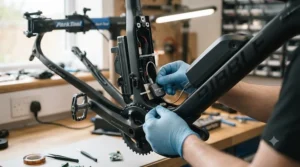
If you’re installing a tracker, budget a proper hour rather than rushing it — motor-integrated units like the PowUnity BikeTrax need the motor cover removed carefully, and standalone units like the Monimoto 7 need a genuinely hidden spot, not just “under the saddle” where every thief now knows to check first. Test the alarm sensitivity over the first week: an electric bike motion sensor alarm set too sensitively will trigger every time a bus rumbles past, which trains you to ignore it — precisely the outcome you don’t want. Most apps let you adjust this threshold; do it early rather than living with false alarms for months.
Finally, register your frame serial number with BikeRegister within the first 30 days, photograph the bike from multiple angles, and store both somewhere other than your phone (a cloud drive works fine). The most common first-30-days mistake, based on aggregated owner reports across forums, is treating security as a one-off purchase rather than a habit — locking up correctly every single time, including “just popping in for two minutes,” is what the statistics above are really asking of you.
Real-World Scenarios: Matching Security to How You Actually Ride
The daily commuter, £2,000 ebike, locks up in a busy city centre car park for 8 hours. This is the highest-risk profile in the electric bike theft statistics — long dwell time, high resale value, semi-public location. The sensible setup pairs a Hiplok D1000 or Litelok X1 as the primary lock with a PowUnity BikeTrax or Monimoto 7 for recovery insurance, plus BikeRegister registration. The lock buys time and deters casual attempts; the tracker covers the worst-case scenario during those unsupervised hours.
The occasional weekend rider, mid-range ebike, mostly stored at home. Given that ONS data puts 62% of thefts at or around the home, this rider’s biggest risk isn’t the café stop, it’s the garden shed or hallway. An OnGuard Pitbull STD used to lock the bike to a fixed ground anchor indoors, combined with the budget Ravemen ABF01 tracker, covers this profile well without overspending on Diamond-grade street security that mostly matters for long unattended stops in public.
The delivery rider or courier, high-mileage ebike, multiple short stops daily. Speed of locking and unlocking matters as much as raw security here, since dozens of daily stops make a slow, heavy chain impractical. The Abus SmartX 770A‘s alarm does useful work in the seconds between parking and walking away, while a motor-integrated tracker like BikeTrax means no extra device to fumble with stop after stop.
Problem → Solution: Fixing the Five Most Common Ebike Security Mistakes
Problem: Only using the lock that came free with the bike. Factory-supplied cable locks are almost universally rated at Sold Secure Bronze or unrated entirely, cuttable in seconds with basic bolt cutters. Solution: treat the included lock as a backup at best, and budget for a Gold or Diamond-rated lock like the OnGuard Pitbull STD or Hiplok D1000 from day one.
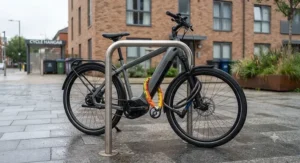
Problem: Locking only the frame, not the wheels. Quick-release wheels are a gift to thieves if a lock only secures the frame to a rack. Solution: run the lock through the frame, the rear wheel, and the anchor point together, or fit locking skewers on quick-release wheels.
Problem: Leaving the bike unlocked “for two minutes.” This single habit accounts for a disproportionate share of opportunistic thefts according to UK police guidance. Solution: build a rule of locking every single time, full stop, regardless of duration — an electric bike motion sensor alarm like the one built into the Abus SmartX 770A helps cover the moments discipline slips.
Problem: Assuming home storage is automatically safe. With 62% of UK bike thefts happening at or around the home, sheds and hallways are not the safe zone owners assume. Solution: bolt a ground anchor to a solid floor or wall and lock the bike to it even indoors, particularly overnight.
Problem: No record of the bike if it does go missing. Without a serial number, photos, or registration, even a recovered bike can be hard to reunite with its owner. Solution: register free with BikeRegister and photograph the frame, including any distinguishing marks, immediately after purchase.
How to Choose Electric Bike Anti-Theft Gear
- Match the lock rating to the bike’s value. Insurers commonly require Bronze for bikes under roughly £250, Silver up to £1,500, and Gold or Diamond above that — independent testing behind the Sold Secure rating system is worth understanding before assuming any lock qualifies, so check your own policy’s wording carefully.
- Decide whether you need active deterrence or silent tracking, or both. A loud alarm like the Abus SmartX 770A stops attacks in progress; a silent tracker like the Monimoto 7 focuses purely on recovery odds after the fact.
- Check motor compatibility before buying an integrated tracker. Not every Bosch, Brose, Yamaha, or Shimano variant has room for a unit like the PowUnity BikeTrax inside the housing — confirm first.
- Weigh subscription costs over three years, not just the sticker price. A cheaper tracker with a high annual fee can cost more over time than a pricier one with a lower subscription.
- Consider where you actually park most often. Dense urban areas favour cellular trackers with wide coverage; quieter areas may get little benefit from Bluetooth-only devices that rely on nearby phones.
- Layer rather than choose one product. The strongest real-world setups combine a rated lock, an alarm or tracker, and free registration — not any single item alone.
- Register the frame serial number regardless of what else you buy. This is free, takes minutes, and materially improves recovery odds if police do intercept a stolen bike.
Common Mistakes When Buying Ebike Security Gear
The single biggest mistake is buying purely on Sold Secure colour without checking the Pedal Cycle versus Powered Cycle distinction — a lock rated Diamond for standard bicycles may not meet the tougher Powered Cycle Diamond standard that ebikes specifically require, since testers push cutting attempts against powered-cycle locks for longer to reflect their higher value. A close second is under-budgeting for the tracker’s ongoing subscription and then letting it lapse after year one, quietly turning an active recovery tool back into a dead weight on the frame. Some owners also buy a heavy chain lock assuming weight equals security, when in reality shackle material and Sold Secure certification matter far more than raw kilograms — a lighter Diamond lock like the Litelok X1 can outperform a heavier uncertified chain. Finally, plenty of buyers treat a Bluetooth tracker like the Ravemen ABF01 as equivalent to a cellular unit like PowUnity BikeTrax, when the two serve genuinely different use cases — one is a low-cost urban backup, the other a dedicated recovery system, and conflating them leaves a gap in coverage nobody notices until it’s too late.
What to Expect: Real-World Performance of a Layered Security Approach
On paper, stacking a Diamond lock, an alarm, and a tracker sounds like overkill for a bike that cost a few hundred pounds. In practice, this layered security approach is exactly how bike couriers and delivery riders — the people with the most at stake and the least patience for gear that doesn’t work — actually operate, because each layer covers a gap the others leave open. The lock buys time against a determined attacker; the alarm buys attention during that window, often enough to make a thief simply walk away rather than risk being seen; and the tracker is the only layer that still helps if the first two somehow fail. What most buyers overlook is that this isn’t really about spending more money, it’s about not relying on a single point of failure — a £40 Gold lock plus a £35 Bluetooth tracker delivers meaningfully better real-world odds than a single £150 Diamond lock used alone, because a determined thief who does eventually beat the lock still has to contend with a working tracker afterwards.
Long-Term Cost & Maintenance of Ebike Anti-Theft Systems
A Sold Secure Diamond lock like the Hiplok D1000 is essentially a one-off cost with an occasional need for light lubrication of the mechanism, making its total cost of ownership fairly predictable over several years. Trackers behave differently: a cellular unit like PowUnity BikeTrax or Monimoto 7 carries an annual subscription in the £30-£40 range, which over a three-year ownership period adds roughly £90-£120 on top of the hardware cost — worth factoring into the “is this ebike affordable” conversation from day one, not discovered a year in when the renewal email lands. Bluetooth-only trackers like the Ravemen ABF01 flip this equation entirely, trading a subscription for periodic recharging every eight months or so, which suits owners who’d rather pay once and forget than manage an ongoing bill. Viewed purely as cost-per-year-of-protection, a Gold lock plus a subscription-free Bluetooth tracker is the cheapest layered setup on this list, while a Diamond lock plus a cellular tracker sits at the premium end but delivers the strongest combined deterrence and recovery odds for a genuinely high-value ebike.
Features That Actually Matter (And Those That Don’t)
Sold Secure or ART certification actually matters — it’s independently tested against real tools, not marketing copy. A loud, well-tuned alarm actually matters, because deterrence during the attack is often more valuable than any amount of post-theft recovery. Motor compatibility for integrated trackers actually matters enormously, since a beautifully specced tracker that physically can’t fit your motor housing is worthless. What tends not to matter nearly as much as marketing suggests: raw lock weight (a heavier uncertified chain is not automatically safer than a lighter certified one), claimed GPS accuracy figures in perfect conditions (real-world performance in cities with tall buildings is consistently worse than lab claims), and flashy app dashboards that look impressive in a screenshot but add nothing to actual theft deterrence or recovery speed.
Safety, Regulations & Compliance Guide
UK law defines an Electrically Assisted Pedal Cycle (EAPC) as one with a motor no more powerful than 250W and assistance that cuts out at 15.5mph, and only bikes meeting that definition can be ridden without registration, insurance, or a licence — anything faster or more powerful legally counts as a moped and needs proper registration, which matters for owners considering aftermarket tuning, since an illegally modified ebike can complicate an insurance claim if it’s later stolen. Insurance compliance is equally worth understanding before buying a lock: most policies specify a minimum Sold Secure or ART rating tied to the bike’s value, and using an unrated or under-rated lock can void a claim entirely even if the theft itself wasn’t the owner’s fault. The Metropolitan Police has also stepped up seizures of illegally modified and speed-tampered ebikes as part of a wider 2025-26 crackdown, a reminder that anti-theft compliance isn’t purely about locks and trackers — it’s also about making sure the bike itself is road-legal in the first place, which the Metropolitan Police’s own guidance covers in more detail.
Buyer’s Decision Framework
If your ebike cost more than £1,500 and you park it in public for extended periods, choose a Sold Secure Diamond lock plus a cellular tracker, because the recovery stakes justify the higher upfront and ongoing cost. If your ebike is mid-range and mostly stored at home, choose a Gold lock plus a ground anchor and a low-cost Bluetooth tracker, because the ONS’s 62% at-home theft figure means indoor security deserves at least as much attention as street parking. If you’re on a tight budget, choose the OnGuard Pitbull STD paired with the Ravemen ABF01, because together they cover both physical deterrence and a basic recovery layer for under £90 combined. And if you already own a rated lock but nothing else, adding any tracker — even the cheapest Bluetooth option — is the single highest-value next purchase you can make, because it’s the only layer that helps once the lock has already failed.
Frequently Asked Questions
❓ How common is electric bike theft in the UK in 2026?
❓ What's the best lock rating for an electric bike?
❓ Do GPS trackers actually help recover a stolen ebike?
❓ Where do most electric bike thefts actually happen?
❓ Is it worth registering my ebike's serial number?
Conclusion
The electric bike theft statistics for 2026 tell a consistent story: more ebikes on the road means more targets, thefts are climbing fastest in exactly the powered-cycle category, and the majority of losses happen closer to home than most owners expect. None of that is a reason to give up on riding — it’s a reason to treat security as part of ownership, not an afterthought bought in a panic after the fact. A properly rated lock like the Hiplok D1000 or Litelok X1 stops the opportunistic majority of attempts outright. An alarm like the Abus SmartX 770A buys crucial seconds during a determined attack. And a tracker — whether the motor-integrated PowUnity BikeTrax, the passive Monimoto 7, or the budget-friendly Ravemen ABF01 — is the layer that turns a total loss into a recoverable one. Layered together, even on a modest budget with the OnGuard Pitbull STD, these products don’t make theft impossible, but they shift the odds meaningfully in your favour, which is really all any of us can ask for.
✨ Don’t Miss These Exclusive Deals!
🔍 Take your ebike security to the next level with these carefully selected products. Click on any highlighted item to check current pricing and availability. These tools will help you protect the ride you rely on every day!
Recommended for You
- Most Secure Electric Bike London: 7 Theft-Proof Picks (2026)
- GPS Enabled Commuter Ebike: 7 Best Picks for 2026 UK Riders
- Electric Bike With Walk Assist: 7 Top UK Picks for 2026
Disclaimer: This article contains affiliate links. As an Amazon Associate, I earn from qualifying purchases. If you purchase products through these links, we may earn a small commission at no additional cost to you.
✨ Found this helpful? Share it with your friends! 💬🤗
