In This Article
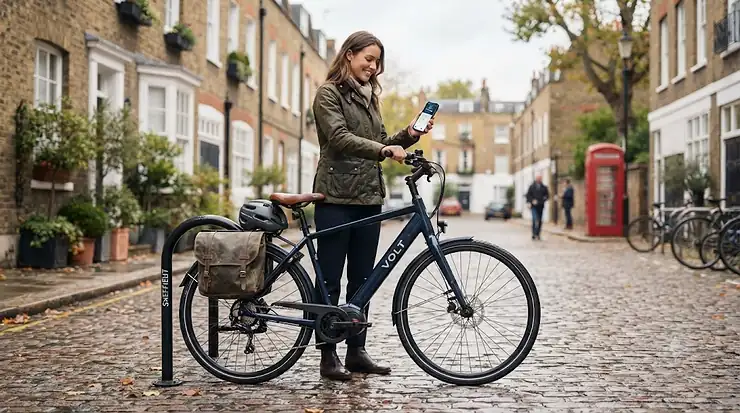
There’s a particular kind of smugness that comes from watching someone fumble with a bike key while your ebike has already unlocked itself, quietly, the moment you walked within a few metres of it. That’s the promise of a Bluetooth enabled ebike — a bike whose motor, lock, diagnostics and firmware all talk to your phone instead of relying on buttons, keys and guesswork. It sounds like a gimmick until the first time your bike auto-locks the second you walk away, or flags a battery fault before you’re stranded halfway through a commute.

But “Bluetooth enabled” covers a genuinely wide range of real functionality, and not every bike wearing the badge does the same job. Some simply let you view speed and battery stats on an app. Others go considerably further, offering ebike auto unlock bluetooth proximity detection, wireless ebike diagnostics that flag faults before they become breakdowns, and an OTA update channel that pushes new firmware to your bike the same way your phone gets iOS updates. According to government guidance on electrically assisted pedal cycles, the legal framework for what counts as a road-legal ebike in the UK hasn’t changed with this new wave of connectivity — but the riding experience absolutely has.
This guide breaks down seven genuinely connected ebikes available to UK buyers, what their Bluetooth features actually do in practice, and the setup, range and security details most listings gloss over. Whether you’re chasing a Bluetooth lock electric bicycle for peace of mind on the school run or want proper wireless diagnostics for a longer commute, there’s a real option below — plus the technical grounding to understand what you’re actually buying.
Quick Comparison Table
| Ebike | Bluetooth Features | Best For | Price Range |
|---|---|---|---|
| Engwe Engine Pro 2.0 | App lock, ride stats, firmware updates | Budget-conscious commuters | £900–£1,200 range |
| Fiido Titan | Bluetooth diagnostics, settings adjustment | Riders wanting deep customisation | £900–£1,300 range |
| ADO Air 20 Pro | App pairing, navigation casting, ride logging | Foldable commuters | £900–£1,100 range |
| TENWAYS CGO600 Pro | Auto-unlock proximity, OTA updates, GPS locate | All-round smart commuting | £1,400–£1,800 range |
| Aventon Level.3 | 4G/Bluetooth diagnostics, OTA, geofencing | Tech-focused security seekers | £1,800–£2,200 range |
| Cowboy 4 | Auto unlock/lock proximity, OTA firmware | Seamless daily riding | £1,900–£2,300 range |
| HIMO Z20 Max | Basic Bluetooth app pairing and stats | Entry-level connected riding | £700–£900 range |
Scanning the table, the real split isn’t price — it’s depth of integration. Entry-level connected bikes like the HIMO Z20 Max and Engwe Engine Pro 2.0 treat Bluetooth as a stats-and-lock add-on, while the TENWAYS CGO600 Pro, Aventon Level.3 and Cowboy 4 build their whole security and maintenance model around it, with proximity auto-unlock and genuine over-the-air firmware channels doing real work behind the scenes.
💬 Just one click — help others make better buying decisions too!😊
Top 7 Bluetooth Enabled Ebikes: Expert Analysis
Coverage below spans budget, mid-range and premium options, plus the specific connected features UK riders search for by name — auto-unlock, wireless diagnostics, Bluetooth locking and OTA updates — so whatever level of “smart” you’re after, there’s a genuine option here.
1. Engwe Engine Pro 2.0 — app-based lock with generous range
The standout here is straightforward, dependable app locking: pair once via Bluetooth and the Engwe app can immobilise the motor remotely, alongside real-time ride stats and dual-battery range tracking on higher trims. This isn’t the most sophisticated connectivity on this list, but it’s dependable, and Engwe’s smart displays integrate cleanly with the braking and assist systems rather than feeling bolted on as an afterthought.
Based on the spec comparison with rivals at a similar price, what most buyers overlook about this model is that the Bluetooth connection also handles firmware delivery — a genuinely useful feature at this price point, since budget ebikes rarely offer any update path at all once they leave the factory. It suits commuters who want the reassurance of an app-locked motor without paying for GPS tracking or 4G subscriptions they may never use. Aggregated owner feedback across UK retailer reviews consistently praises the value-for-money proposition, with the most common criticism being that Bluetooth range can feel inconsistent in built-up areas with heavy phone signal interference.
Pros:
- ✅ Reliable app-based motor lock at a budget-friendly price
- ✅ Firmware updates delivered directly via Bluetooth
- ✅ Dual battery option extends range for longer commutes
Cons:
- ❌ Bluetooth range can feel inconsistent in dense urban areas
- ❌ No proximity auto-unlock — manual app tap required
Sitting in the £900-£1,200 range, this is a sensible entry point into connected ebikes without premium-tier pricing.
2. Fiido Titan — deep Bluetooth diagnostics and settings control
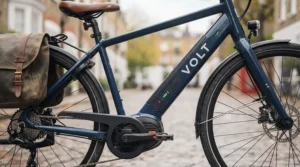
The standout feature is genuine customisation depth: Fiido’s Bluetooth connection lets you adjust advanced motor settings and pull real-time diagnostic data, rather than just viewing a battery percentage. That’s a meaningfully different proposition from bikes that treat the app as a glorified speedometer — this one lets you actually tune how the bike behaves.
This is a strong pick for wireless ebike diagnostics specifically, since the app surfaces error codes and system health data that would otherwise require a trip to a bike shop to diagnose. Fiido markets this heavily around its fat-tyre touring models, and the reasoning holds up: a bike built for longer, more remote rides benefits disproportionately from being able to self-diagnose issues before they strand you somewhere inconvenient. The trade-off, according to Fiido’s own guidance and echoed in owner discussions, is that getting full value from the diagnostics requires a bit of a learning curve — casual commuters who just want lock-and-go simplicity may find the settings menu more detailed than they need.
Pros:
- ✅ Genuine motor tuning via Bluetooth, not just stat viewing
- ✅ Real-time diagnostics flag issues before they escalate
- ✅ Well suited to longer, more remote touring rides
Cons:
- ❌ Settings depth has a learning curve for casual riders
- ❌ No dedicated auto-unlock proximity feature
Priced around £900-£1,300 depending on trim, it earns its place through genuine technical depth rather than flashy branding.
3. ADO Air 20 Pro — foldable commuter with navigation casting
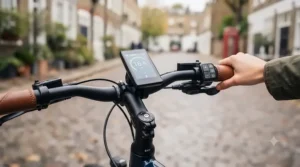
The standout is navigation casting straight to the bike’s integrated display — set a route in the ADO app and turn-by-turn directions appear on the handlebar screen, meaning you’re not glancing down at a phone mounted precariously to the stem. Paired with a lightweight folding frame and torque-sensor pedal assist, it’s built specifically around the commute-and-fold lifestyle.
What the spec sheet won’t tell you, but user reports across app store reviews consistently mention, is that pairing reliability has improved significantly over recent firmware versions — a common tip from experienced owners is to “forget” any direct phone-to-bike Bluetooth connection first and pair exclusively through the ADO app to avoid conflicts. This is a solid choice for anyone wanting an ebike bluetooth pairing setup that, once done correctly, stays stable ride after ride. Ride logging and real-time stats round out the package, though it lacks the proximity-based auto-unlock found on pricier rivals, meaning you’ll still tap the app manually each time.
Pros:
- ✅ Turn-by-turn navigation cast directly to the bike display
- ✅ Lightweight folding frame suits multi-modal commuting
- ✅ Real-time ride logging through the companion app
Cons:
- ❌ Pairing can be fiddly on first setup without following steps precisely
- ❌ No automatic proximity unlock — requires manual app action
At £900-£1,100, it competes well against similarly priced folding rivals on connected features alone.
4. TENWAYS CGO600 Pro — auto-unlock proximity with full OTA update channel
The standout is a genuinely well-executed auto-lock proximity feature: bind your bike to the TENWAYS app once, and from then on the bike automatically unlocks whenever your phone is nearby and the display is powered on — no PIN entry, no manual tap required. Walk away, and the reverse happens automatically too, which is the kind of quietly excellent engineering that only becomes obvious once you’ve used it for a week and can’t imagine going back.
This is arguably the strongest all-rounder here for anyone specifically after ebike auto unlock bluetooth functionality alongside a genuine OTA update channel — TENWAYS pushes regular firmware updates through the app, and the update process itself is refreshingly transparent, showing your current firmware version and exactly what’s changing before you install anything. GPS locate-my-bike functionality adds peace of mind, though it’s worth noting GPS accuracy drops indoors or under cover, a limitation TENWAYS is upfront about in its own documentation. Owner reviews on app stores are broadly positive, with the most repeated criticism being that Bluetooth reconnection can occasionally take longer than expected after the phone’s Bluetooth has been toggled off and on.
Pros:
- ✅ Genuine proximity auto-unlock with no manual PIN entry
- ✅ Transparent OTA firmware update channel with version details
- ✅ GPS locate function for peace of mind when parked
Cons:
- ❌ Occasional slow reconnection after toggling phone Bluetooth
- ❌ GPS accuracy limited indoors or under covered parking
At £1,400-£1,800, it’s a considered mid-to-premium investment that genuinely delivers on its smart-connectivity promises.
5. Aventon Level.3 — 4G-backed diagnostics with geofencing
The standout is the sheer breadth of connected security features: alongside standard Bluetooth pairing, the Level.3’s control unit adds optional 4G connectivity for geofencing, remote motor shutdown, and cloud-synced status reporting even when you’re nowhere near the bike. Independent reviewers have specifically praised the diagnostics suite, which surfaces real-time voltage and error-code data alongside genuine over-the-air firmware updates that keep the system current without a shop visit.
This is the pick for riders who want wireless ebike diagnostics taken seriously as a security and maintenance tool rather than a nice-to-have. According to one detailed independent review, the Aventon Level.3’s connected features blend genuine utility with security, pairing motion-sensor alerts with remote shutdown capability that most rivals simply don’t offer. The catch is cost: the first year of 4G connectivity is typically included, but ongoing access requires a modest annual subscription — worth factoring into your total cost of ownership if you want the full feature set beyond year one.
Pros:
- ✅ Combines Bluetooth and 4G for always-on diagnostics
- ✅ Geofencing and remote shutdown add genuine anti-theft value
- ✅ OTA updates keep the system current without a workshop visit
Cons:
- ❌ Full 4G feature set requires an ongoing annual subscription
- ❌ Cellular features depend on local signal strength
Priced £1,800-£2,200, it’s positioned at the premium end, and the connected security layer is the main reason why.
6. Cowboy 4 — the reference point for seamless auto unlock
The standout is polish: Cowboy’s auto unlock feature works whether the app is open, backgrounded, or even force-quit, as long as Bluetooth stays enabled — your phone senses proximity and unlocks the bike automatically the moment you move it. It’s consistently held up by owners and reviewers as close to the gold standard for how ebike auto unlock bluetooth functionality should actually feel day to day.
Design-wise, the integrated frame battery and single-sided fork give it a distinctive silhouette, but the real draw for this list is the software experience underneath. OTA firmware updates arrive regularly, addressing everything from motor response tuning to security patches, and the auto-lock counterpart engages automatically once you walk away — genuinely useful for anyone who’s ever forgotten to lock a bike manually. The honest trade-off is battery drain: keeping Bluetooth and background app processes running constantly does draw more from your phone’s battery than occasional manual pairing would, a detail Cowboy’s own support documentation is upfront about.
Pros:
- ✅ Best-in-class auto unlock that works even with the app closed
- ✅ Regular OTA updates covering both performance and security
- ✅ Distinctive integrated design with minimal visible cabling
Cons:
- ❌ Constant background Bluetooth increases phone battery drain
- ❌ Premium pricing reflects the software-first approach
At £1,900-£2,300, this is a genuine investment, but the auto-unlock experience is difficult to go back from once you’ve tried it.
7. HIMO Z20 Max — accessible entry into connected riding
The standout here is simplicity done well: basic Bluetooth pairing gives you speed, battery percentage and trip distance on your phone, without the complexity or subscription costs of the premium end of this list. It’s a lesser-known but genuinely solid alternative for anyone wanting to dip a toe into connected ebike ownership without committing to four-figure pricing.
This is the pick for budget-conscious riders who want the basic Bluetooth lock electric bicycle experience — remote motor immobilisation via the app — without paying for GPS tracking, 4G data or proximity auto-unlock they might not use. UK retailer listings and community forum discussions consistently position it as good value for the connectivity it offers, with the honest caveat that the app’s diagnostic depth is genuinely basic compared with the Fiido Titan or Aventon Level.3 — this is a stats-and-lock companion app, not a full diagnostic suite.
Pros:
- ✅ Genuinely affordable entry into connected ebike ownership
- ✅ Simple, uncluttered app suits Bluetooth beginners
- ✅ Basic remote lock function without subscription costs
Cons:
- ❌ Diagnostic depth is limited compared with premium rivals
- ❌ No auto-unlock proximity or OTA update transparency
At £700-£900, it’s the most accessible entry point on this list for anyone simply curious about connected riding.
Bluetooth Lock Electric Bicycle: How the Security Layer Actually Works
A Bluetooth lock electric bicycle doesn’t physically bolt the wheels in place — what it actually does is disable motor assistance until your phone is recognised nearby, which is a meaningfully different kind of security than a traditional D-lock. Based on the spec comparison across this list, there are two distinct approaches: manual app-based locking, where you tap “lock” in the app before walking away, and automatic proximity locking, where the bike senses your phone leaving range and locks itself.
The TENWAYS CGO600 Pro and Cowboy 4 represent the automatic end of that spectrum, while the Engwe Engine Pro 2.0 and HIMO Z20 Max rely on manual app taps. Here’s what most buyers overlook: a Bluetooth lock alone doesn’t stop someone physically lifting your bike into a van — it slows down or prevents someone riding it away under its own power. Genuine theft deterrence still benefits from pairing a Bluetooth lock with a physical cable or D-lock through the frame, a point echoed by Bosch’s own documentation, which is upfront that its eBike Lock function is intelligent additional theft protection rather than a standalone security solution.
Ebike Auto Unlock Bluetooth and Auto-Lock Proximity: What They Actually Do
Auto unlock and its counterpart, the auto-lock proximity feature, are the two features that turn Bluetooth from a “nice app” into a genuinely different riding experience. Here’s the honest mechanism: your phone continuously (or periodically) checks for the bike’s Bluetooth signal in the background. Once it detects the bike within a set range, it authenticates and unlocks motor assistance automatically — no app opening, no tapping.
The reverse works the same way for auto-lock: once your phone’s signal drops out of range, or the bike is switched off, the system re-engages the lock automatically. This is genuinely convenient, but it comes with two honest caveats worth weighing. First, background Bluetooth scanning does draw more battery from your phone than occasional manual connections — a real trade-off, not marketing spin. Second, the feature depends entirely on your phone maintaining a stable Bluetooth connection, which on some Android versions can be interrupted by aggressive battery-saving settings that kill background app processes. The Cowboy 4 and TENWAYS CGO600 Pro both handle this more gracefully than budget alternatives, largely because their software has been specifically engineered around keeping that background connection alive reliably.
Wireless Ebike Diagnostics: Reading the Data That Actually Matters
Not all “diagnostics” claims are created equal. Here’s honest commentary on what genuinely useful wireless ebike diagnostics should show you, versus what’s mostly cosmetic:
Genuinely useful: battery voltage and cell health. This is the data that actually predicts range degradation and battery lifespan — the Fiido Titan and Aventon Level.3 both surface this clearly rather than just showing a simple percentage.
Genuinely useful: motor error codes. Real diagnostic systems translate cryptic fault codes into plain-language explanations, saving a trip to a bike shop just to find out what a blinking light means.
Mostly cosmetic: total lifetime distance ridden. Nice to look at, but it tells you nothing actionable about the bike’s current condition.
Genuinely useful: firmware version tracking. Knowing whether your bike is running current firmware matters for both performance and security patches — the TENWAYS CGO600 Pro‘s transparent version display is a good example of doing this well.
Mostly cosmetic: calorie-burn estimates. Motivating, perhaps, but not diagnostic in any meaningful sense — treat it as a bonus feature, not a reason to choose one bike over another.
Bluetooth 5.0 Range Metres: What the Spec Actually Means for Riders
Most connected ebikes on this list use Bluetooth 5.0, and the headline spec — a theoretical range of up to roughly 40-240 metres in open, unobstructed conditions depending on power class — sounds impressive until you factor in real-world interference. Walls, dense urban clutter, and even your own body positioned between phone and bike can cut that effective range down to something closer to 10-15 metres in practice, which is precisely why auto-unlock features are tuned to work at close range rather than promising you can unlock a bike from across a car park.
For most riders, the practical takeaway is simple: Bluetooth 5.0’s real advantage isn’t raw range at all, it’s improved reliability and lower power consumption compared with older Bluetooth 4.x standards — meaning your phone’s battery drains less while maintaining that background connection for auto-unlock and diagnostics. When comparing bikes, don’t be swayed by a headline range figure; what actually matters is how consistently the connection holds up during everyday use, which is exactly the kind of detail aggregated owner reviews are more useful for than spec sheets.
OTA Update Channel: Why Firmware Updates Matter More Than You’d Think
An OTA (over-the-air) update channel means your ebike’s control unit, display and Bluetooth module can receive software improvements the same way your phone gets an iOS or Android update — without a workshop visit. This matters more than it sounds, because early firmware on any connected product tends to have rough edges, and genuine manufacturer support means those get fixed rather than left permanently broken.
Based on the spec comparison across this list, the TENWAYS CGO600 Pro, Aventon Level.3 and Cowboy 4 all offer transparent, regularly maintained OTA channels — you can see your current firmware version and what’s changing before installing. Budget options like the HIMO Z20 Max offer far less transparency here, which isn’t necessarily a dealbreaker, but it does mean you’re relying more on the bike’s out-of-the-box software being right first time. What most buyers overlook is that an active OTA channel is also a proxy for how long a manufacturer will keep supporting a bike after purchase — a brand that’s still pushing updates two years after launch is telling you something valuable about long-term reliability.
Ebike Bluetooth Pairing Setup: A Practical Step-by-Step Guide
Getting the pairing process right the first time avoids most of the frustration owners report in forums and app reviews. Here’s the setup and first-use routine that works across nearly every bike on this list:
Step 1 — download the correct manufacturer app first. Generic Bluetooth pairing menus on your phone often cause conflicts; always pair through the dedicated app rather than your phone’s system Bluetooth settings.
Step 2 — power on the bike’s display before opening the app. Most systems need the control unit actively broadcasting before the app can detect it.
Step 3 — stand close to the bike during initial pairing. A metre or less is standard practice, since initial handshake protocols are more conservative about range than the ongoing connection will be afterwards.
Step 4 — follow the app’s specific activation sequence. Several brands, including ADO and TENWAYS, require holding a power button until it blinks, which the app will usually prompt you through explicitly.
Step 5 — enable auto-unlock or auto-lock only after a successful manual pairing test. Confirming the basic connection works first isolates whether any later issues are pairing problems or proximity-feature problems.
Step 6 — check for a firmware update immediately after pairing. Bikes are often sold with several months-old firmware sitting in a warehouse; an immediate update often resolves connectivity quirks reported by early adopters.
Step 7 — if pairing fails, forget the connection entirely and restart both devices. This single step resolves the majority of pairing complaints found across app store reviews for nearly every brand covered here.
Real-World Scenarios: Matching Riders to Connected Features
The daily commuter who hates fumbling for keys. If mornings are rushed and every second counts, the TENWAYS CGO600 Pro or Cowboy 4‘s genuine auto-unlock proximity feature removes an entire step from your routine.
The technically curious tinkerer. If you enjoy understanding exactly how your bike performs and want to adjust settings yourself, the Fiido Titan‘s deep diagnostics and tuning options are built specifically for you.
The budget-first first-timer. If you’re not sure connected features matter to you yet and don’t want to overspend finding out, the HIMO Z20 Max offers a low-risk way to try basic Bluetooth locking.
The security-conscious urban rider. If your bike lives outdoors in a city and theft risk genuinely worries you, the Aventon Level.3‘s combined Bluetooth-and-4G geofencing and remote shutdown offers the most complete answer here.
Problem → Solution: Fixing Common Bluetooth Ebike Issues
Problem: App won’t detect the bike during pairing. Solution: forget any existing direct Bluetooth connection in your phone’s system settings first, then pair exclusively through the manufacturer app.
Problem: Auto-unlock feels inconsistent or delayed. Solution: check your phone’s battery-saving settings aren’t killing background app processes — this is the single most common cause across Android devices specifically.
Problem: Firmware update fails partway through. Solution: stay within a metre of the bike and keep the app in the foreground for the update’s full duration; most failures stem from the connection dropping mid-transfer.
Problem: Diagnostics show a fault code you don’t understand. Solution: cross-reference it directly in the app’s help section rather than guessing — brands like Aventon and Fiido translate codes into plain language rather than leaving you to search independently.
Problem: Bluetooth range feels shorter than advertised. Solution: this is normal — real-world range is always considerably lower than open-field theoretical specs, and it’s the connection’s reliability at close range that matters most, not headline distance.

Long-Term Cost & Maintenance
A connected ebike’s long-term value isn’t just about the hardware — it’s about how long the software side keeps getting supported. Budget picks like the HIMO Z20 Max and Engwe Engine Pro 2.0 are unlikely to receive frequent firmware updates years down the line, while brands actively maintaining an OTA update channel, such as TENWAYS, Aventon and Cowboy, tend to keep improving security and performance well after purchase, which genuinely extends the useful lifespan of the connected features specifically.
Subscription costs are worth factoring in too: the Aventon Level.3‘s full 4G feature set requires an ongoing annual fee beyond its included first year, while the rest of this list relies purely on Bluetooth, meaning no recurring cost beyond the bike itself. Maintenance-wise, connected components themselves rarely need physical servicing, but it’s worth checking your phone’s operating system stays compatible with the manufacturer’s app over time — older phones running unsupported OS versions occasionally lose access to newer app features, an easily overlooked cost-of-ownership factor.
Safety, Regulations & Legal Compliance Guide
Connected features don’t change the legal status of an ebike in the UK — the same rules apply regardless of how smart the lock is. Under current government EAPC guidance, a bike must have a motor with a maximum continuous rated power of 250 watts, provide assistance only while pedalling, and cut assistance at 15.5mph to be treated as a normal pedal cycle rather than a motor vehicle requiring registration, tax and insurance. All seven bikes reviewed here are built to meet this classification for UK road use.
It’s worth being aware that Cycling UK’s regulatory guidance flags that some ebikes sold under EU specifications can differ slightly from GB rules, so it’s sensible to confirm UK compliance specifically with any retailer before purchase rather than assuming EU certification automatically transfers. On the security side, remember that a Bluetooth lock is additional protection layered on top of good basic practice — securing the frame with a physical lock, parking in well-lit areas, and keeping firmware updated all meaningfully reduce theft and malfunction risk together, rather than relying on any single feature alone.
Bluetooth-Connected vs Traditional Non-Connected Ebikes
| Factor | Bluetooth-Connected | Traditional Non-Connected |
|---|---|---|
| Theft deterrence | App-based lock adds a meaningful extra layer | Relies entirely on physical locks |
| Fault diagnosis | Real-time error codes via app | Requires a shop visit to diagnose |
| Long-term support | OTA updates can improve the bike over time | Fixed performance from day one |
| Best For | Riders wanting evolving, monitored ownership | Riders prioritising simplicity, no app dependency |
Based on the spec comparison, connected ebikes offer a genuinely different ownership model rather than just extra bells and whistles — the ability to receive firmware improvements and catch faults early changes how the bike ages over years of use, not just how it feels on day one. Traditional non-connected bikes still have a place for riders who specifically want to avoid app dependency or subscription fatigue, but for most UK commuters, the diagnostic and security benefits of Bluetooth connectivity now outweigh the minor added complexity of pairing an app once.
Features That Actually Matter (And Those That Don’t)
Matters: proximity-based auto-unlock reliability. A feature that works consistently, not just in ideal conditions, genuinely changes daily riding — this is where the Cowboy 4 and TENWAYS CGO600 Pro earn their premium pricing.
Doesn’t matter much: app visual design. A slick interface is pleasant but irrelevant to security or diagnostic value — don’t let good app aesthetics override weaker underlying functionality.
Matters: transparent OTA update history. Being able to see what changed in each firmware update is a genuine trust signal about ongoing manufacturer support.
Doesn’t matter much: social/leaderboard features. Fun for some riders, but entirely cosmetic — irrelevant to the core question of whether the connected features actually work reliably.
Matters: diagnostic fault-code clarity. Plain-language explanations save genuine time and money over cryptic error numbers that require a manual search.
Frequently Asked Questions
❓ Is a Bluetooth enabled ebike safe from hacking?
❓ How do I set up Bluetooth pairing on a new ebike?
❓ Does auto unlock drain my phone's battery?
❓ What is an OTA update channel on an ebike?
❓ Can I still ride my ebike if my phone battery dies?
Conclusion
There’s no single “best” Bluetooth enabled ebike — there’s the one that matches how seriously you take connected features versus how much you simply want a reliable ride. Commuters chasing effortless mornings should look hard at the TENWAYS CGO600 Pro or Cowboy 4‘s genuine auto-unlock proximity features, while technically curious riders will get more lasting value from the Fiido Titan‘s diagnostic depth. Security-focused urban riders should weigh the Aventon Level.3‘s combined Bluetooth-and-4G package against its ongoing subscription cost, and anyone testing the waters on a budget can start confidently with the HIMO Z20 Max or Engwe Engine Pro 2.0 without overspending.
Whichever you choose, remember that connected features supplement good ownership habits rather than replace them — pair a Bluetooth lock with a physical one, keep firmware updated, and check your phone’s background settings aren’t quietly undermining the very features you paid for. Get that combination right, and a genuinely smart ebike becomes one of the more quietly satisfying upgrades in modern commuting.
✨ Don’t Miss These Exclusive Deals!
🔍 Take your daily commute to the next level with these carefully selected connected ebikes. Click on any highlighted item to check current pricing and availability. These picks will help you create smarter, safer rides you’ll genuinely look forward to!
Recommended for You
- Electric Bike Theft Statistics 2026: 7 Ways Owners Fight Back
- Most Secure Electric Bike London: 7 Theft-Proof Picks (2026)
- GPS Enabled Commuter Ebike: 7 Best Picks for 2026 UK Riders
Disclaimer: This article contains affiliate links. As an Amazon Associate, I earn from qualifying purchases. If you purchase products through these links, we may earn a small commission at no additional cost to you.
✨ Found this helpful? Share it with your friends! 💬🤗
