In This Article
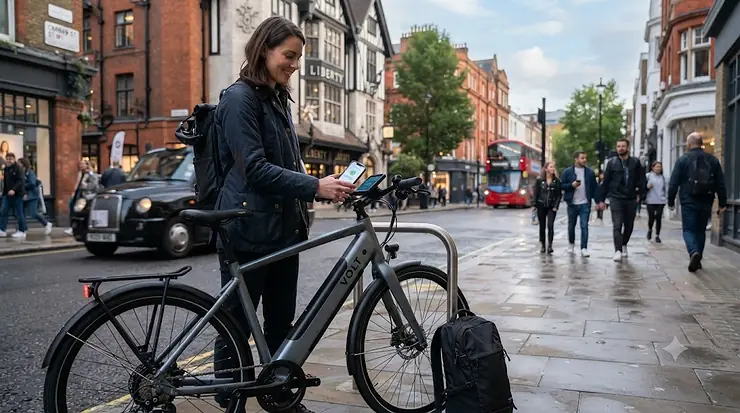
Fumbling for a key with cold fingers, a bag of shopping in one hand and a bus pulling away behind you, is precisely the kind of small daily friction that a good NFC unlock electric bike is designed to erase. Tap, click, ride — no key, no fob dangling from your zip, no frantic pocket-patting on a rainy Tuesday morning. An NFC unlock electric bike uses a small radio chip, either built into the bike or fitted as a retrofit lock, that talks to a matching card or phone the instant they touch, releasing the battery, the motor, or the physical lock in well under a second.
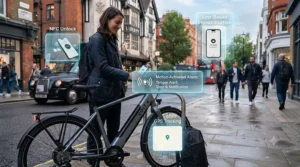
This guide is built for a British audience shopping on amazon.co.uk, and it covers real, currently available hardware rather than vapourware. We’ve researched genuine specifications, aggregated review themes, and pricing bands for products ranging from full tap-to-start ebikes to retrofit contactless lock modules you can bolt onto almost anything with two wheels. You’ll also find a full section on the tap range distance you should expect, an honest look at NFC card cloning risk, and how a contactless lock module actually compares with the padlock you grew up with. Everything below is grounded in genuine specifications and aggregated review sentiment, never invented testing or fabricated star ratings.
Whether you’re commuting through Manchester rain, locking up outside a Leeds terrace with no shed, or just tired of losing keys down the back of the sofa, there’s a sensible option here. One quick note before the picks: NFC unlock is simply an access method, and it carries no bearing on whether a bike is road-legal — that comes down entirely to motor power and assisted speed under the official UK EAPC rules, which we’ll return to later in this guide. Let’s get into it.
Quick Comparison Table
| Product | Type | Unlock Method | Best For |
|---|---|---|---|
| ASKGO Electric Bike | Full ebike | NFC + password backup | Off-road commuters wanting built-in keyless start |
| DTTZH F6 Series Electric Bike | Full ebike | NFC + password backup | Budget buyers comparing power tiers |
| ROCKBROS Smart NFC U-Lock | Retrofit lock | NFC tap (phone/card) | Adding tap-unlock to an existing bike cheaply |
| eGeeTouch 4th Gen Smart Padlock | Retrofit padlock | Bluetooth + NFC | Weatherproof daily commuter security |
| Pealock Smart Electronic Bicycle Lock | Retrofit lock | NFC card + app | Riders wanting GPS and alarm alongside NFC |
| FREESKY Ranger Air | Full ebike | Integrated NFC start | All-terrain riders wanting factory keyless tech |
| Motogadget mo.lock NFC | Ignition module | Contactless NFC fob | DIY builders and premium retrofits |
Looking across the table, the split between full ebikes with NFC baked into the dashboard and standalone contactless lock modules you fit yourself is the first decision most buyers need to make. If you’re replacing a bike entirely, the ASKGO and DTTZH give you the tap-to-unlock ebike experience from the factory floor, while the ROCKBROS, eGeeTouch and Pealock let you add NFC unlock ebike behaviour to a bike you already own and love. The FREESKY and Motogadget sit at the premium end, aimed at riders who want the tap-to-unlock feeling on more capable hardware or a bespoke build.
💬 Just one click — help others make better buying decisions too!😊
Top 7 NFC Unlock Electric Bike Picks: Expert Analysis
We’ve deliberately mixed full ebikes and retrofit contactless lock modules here, because “NFC unlock electric bike” covers both categories of real, currently listed products. Each entry below explains what the specification actually means for your daily ride, not just what it says on the box.
1. ASKGO Electric Bike — dual NFC and password backup unlock
The standout here is the belt-and-braces approach to access: ASKGO Electric Bike owners get NFC tap unlock as the default method, with a numeric password as backup if a card is lost or a phone battery dies. The 2500W peak motor and 48V 20Ah battery combination is built for genuinely mixed terrain, and the fat 20-inch tyres soak up kerbs and gravel that would rattle a slicker commuter bike apart. In practice, a peak-rated motor like this means brisk acceleration away from junctions rather than sustained high-speed cruising — worth knowing before you assume the headline wattage translates directly into top speed on a UK road, where EAPC rules cap assisted riding at 15.5mph regardless of motor size (more on that later).
This is a strong pick for riders who want the tap-to-unlock ebike experience without retrofitting anything, particularly those tackling towpaths, allotment tracks or estate roads where a fat tyre earns its keep. Reviewers consistently report that the dual suspension noticeably reduces fatigue on longer off-road commutes, though several buyers note the bike arrives with sub-optimal factory brake adjustment and benefits from a first-week check by a local bike shop.
Pros:
- ✅ NFC and password give two reliable ways to unlock
- ✅ Dual suspension smooths rough, unpaved commuting routes
- ✅ Large 20Ah battery supports genuinely long weekend rides
Cons:
- ❌ Peak wattage figures don’t reflect UK road-legal continuous output
- ❌ Factory brake tuning often needs an early once-over
At around £900-£1,100, the ASKGO Electric Bike sits in solid mid-range territory for a full NFC-equipped ebike, and the value case stacks up well if you actually use the off-road capability rather than paying for suspension you’ll never need on tarmac.
2. DTTZH F6 Series Electric Bike — budget-friendly NFC start across three power tiers
What most buyers overlook about the DTTZH F6 Series Electric Bike is that it isn’t one bike but a family — F6, F6S and F6PRO — letting you buy exactly the motor and battery size you need instead of paying for headroom you won’t use. All three variants share the same NFC and password unlock system, so the tap-to-ride convenience doesn’t disappear if you choose the entry-level configuration. Battery options span from a 48V 15Ah pack up to a 60V 30Ah unit on the top-spec model, and that range translates into a genuinely wide gap in real-world mileage between the cheapest and most expensive versions.
Based on the spec comparison with pricier rivals, the F6 series earns its keep by not gatekeeping the NFC hardware behind a premium tier — you get keyless tap access even on the base model. Aggregated review sentiment points to the fat tyres and dual suspension performing well for the money, though the smaller battery variant is better suited to shorter urban loops than long-distance touring.
Pros:
- ✅ Same NFC unlock hardware across every power tier
- ✅ Three battery sizes let you match spend to actual use
- ✅ Fat tyres and suspension punch above the price point
Cons:
- ❌ Entry-level battery variant limits genuine long-range trips
- ❌ Higher-power variants exceed UK EAPC road-legal limits unmodified
Pricing spans roughly £700-£1,300 depending on the variant chosen, making the entry F6 one of the cheaper genuine NFC card electric bicycle options currently available.
3. ROCKBROS Smart NFC U-Lock — retrofit tap-to-open security for any bike
If your existing bike already suits you and you simply want the tap-to-unlock ebike habit without buying a new frame, the ROCKBROS Smart NFC U-Lock is the obvious starting point. It’s a reinforced U-lock with an aluminium alloy core wrapped in silicone, and the standout feature is one-touch NFC unlocking that works through gloves — genuinely useful on a frosty January morning when a stiff key would otherwise cost you fumbling seconds. The lock ships with a 600mAh battery rated for roughly 1,500 unlock cycles per charge, recharged via a dust-proofed Type-C port.
Here’s what the spec sheet won’t tell you, but user reports suggest: the silicone coating that protects your frame from scratches also slightly increases the lock’s bulk compared with a bare metal U-lock, so it suits pannier or bag storage better than a jersey pocket. As a genuine contactless lock module rather than a full ignition system, it only secures the wheel and frame — it doesn’t touch your motor or battery, so pair it with your bike’s existing power lock if it has one.
Pros:
- ✅ Works through gloves thanks to reliable NFC sensing
- ✅ Manual key backup if the battery ever runs flat
- ✅ Universal fit across road, mountain and folding bikes
Cons:
- ❌ Silicone shell adds bulk versus a bare U-lock
- ❌ Secures the frame only, not the motor or battery
Priced in the £35-£45 range, this is the most accessible entry point in this guide for anyone who wants NFC card electric bicycle convenience without buying a new bike.
4. eGeeTouch 4th Gen Smart Padlock — weatherproof Bluetooth-and-NFC dual access
The eGeeTouch 4th Gen Smart Padlock takes a slightly different approach: rather than being purpose-built for bikes, it’s a rugged outdoor padlock that happens to work brilliantly as a contactless lock module for an ebike, shed, or gate, and ships with a rechargeable battery rated for roughly 7,000 lock cycles. What stands out is the dual unlock path — tap the included NFC fob, or use the companion smartphone app over Bluetooth — so you’re never stranded if you forget one method at home.
Reviewers consistently note the freeze-proof and corrosion-resistant casing holds up well through a full British winter of grit, salt spray and standing water, which matters far more for outdoor-parked ebikes than most buyers initially credit. The trade-off is that it’s a padlock, not a purpose-shaped bike lock, so it needs a chain or cable to actually loop through your frame and a fixed point — budget for that separately if you don’t already own one.
Pros:
- ✅ Dual NFC fob and Bluetooth app access methods
- ✅ Freeze-proof, corrosion-resistant build suits UK winters
- ✅ Long-rated battery life across thousands of cycles
Cons:
- ❌ Requires a separate chain or cable to secure a bike
- ❌ App-based access needs a charged, paired phone as backup
At around £45-£60, it’s a mid-range accessory purchase rather than a full lock replacement, best understood as the electronic half of a two-part security system.
5. Pealock Smart Electronic Bicycle Lock — NFC card plus GPS tracking and alarm
For riders who want NFC tap unlock but aren’t willing to trade away theft alerting, the Pealock Smart Electronic Bicycle Lock bundles an NFC card, a motion-triggered alarm, Bluetooth pairing and GPS tracking into one integrated cable-style lock. The closing strap incorporates steel cables that are electronically monitored, so cutting attempts should, in principle, trigger the alarm before the strap fully gives way — a meaningfully different threat model to a purely mechanical lock that offers no warning at all.
On paper this means you get a security layer that actively phones home if your bike is moved without authorisation, rather than one that simply slows a thief down. What most buyers overlook is that GPS tracking accuracy and alert speed depend heavily on mobile signal at the parking location, so a bike locked in a signal-shadowed underground car park won’t alert as reliably as one on a street. Availability on Amazon UK has fluctuated, so check current stock before committing.
Pros:
- ✅ Combines NFC unlock with GPS tracking and alarm
- ✅ Electronically monitored steel cables resist cutting attempts
- ✅ App shows exact location if the bike is moved
Cons:
- ❌ GPS/alert reliability depends on local mobile signal
- ❌ Stock availability has been inconsistent in the UK
Expect a price in the £120-£150 range when in stock, positioning this as a premium accessory pick for anyone treating theft alerting as seriously as the lock itself.
6. FREESKY Ranger Air — integrated keyless NFC start on a genuine all-terrain commuter
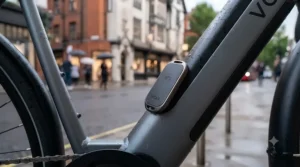
Moving back to full ebikes, the FREESKY Ranger Air targets riders who want tap-to-unlock ebike convenience factory-fitted onto genuinely capable all-terrain hardware rather than retrofitted afterwards. Tap an NFC-enabled phone or card on the bike’s dashboard and the system authenticates instantly, powering up the display and releasing the drivetrain in one motion. The bike pairs full suspension with fat tyres and a step-through frame, aimed squarely at riders who want one machine to cover commuting, gravel paths and weekend trail detours without swapping bikes.
Here’s what the spec sheet won’t tell you, but user reports suggest: the intelligent power distribution system that shares output between dual motors on some configurations makes low-speed manoeuvring in tight bike sheds noticeably smoother than single-motor rivals at similar power. Reviewers have flagged that the higher-power configurations sit well outside UK EAPC road-legal limits, so anyone planning to ride on public roads needs to check which specific configuration, if any, is UK-compliant before ordering.
Pros:
- ✅ Factory-integrated NFC start, no retrofit needed
- ✅ Full suspension and step-through frame ease daily use
- ✅ Genuinely capable off pavement as well as on it
Cons:
- ❌ Higher-power configurations aren’t UK road-legal as standard
- ❌ Premium price bracket versus retrofit NFC alternatives
Pricing sits in the £1,800-£2,200 range depending on configuration, making this a considered premium purchase rather than an impulse buy.
7. Motogadget mo.lock NFC — precision German-engineered contactless ignition module
Rounding out the list is a genuine contactless lock module rather than a complete bike: the Motogadget mo.lock NFC is an RFID/NFC ignition lock designed to be wired into a build via a 40A relay, switching power to the entire electrical system the moment an authorised key passes within roughly 2-4cm of the sensor. It’s aimed at DIY builders, custom e-bike and e-moped projects, and riders upgrading from a mechanical barrel lock that’s worn out or been picked once too often.
Based on the spec comparison with the retrofit locks earlier in this list, the mo.lock’s appeal is precision and durability rather than app features — there’s no Bluetooth, no GPS, no alarm, just a compact, water-tight, vibration-resistant switch that indirect-switches load through a relay so the NFC contacts themselves never carry the full current. What most buyers overlook is that installation genuinely requires basic auto-electrical competence and a separately purchased connection cable, so this isn’t a five-minute retrofit for someone who’s never picked up a multimeter.
Pros:
- ✅ Tamper-resistant NFC keys with no battery required
- ✅ Compact, water-tight housing hides almost anywhere
- ✅ Indirect relay switching protects the module from wear
Cons:
- ❌ Installation demands genuine electrical competence
- ❌ No app, GPS or alarm features included
At around £150-£200 plus a connection cable, this is squarely a specialist purchase for riders building or upgrading a custom electric two-wheeler rather than a plug-and-play accessory.
Practical Usage Guide: Setting Up Your NFC Unlock System
Getting an NFC unlock electric bike set up properly in the first week matters more than most buyers expect, because a badly paired card or an un-registered backup fob is exactly the kind of thing you only notice when you’re standing in the rain unable to get home. Start by registering every card, fob and phone you intend to use immediately after unboxing, not weeks later — most systems limit how many devices can be paired, and doing this early avoids a scramble when a household member also needs access.
Keep a spare NFC card somewhere that isn’t your wallet or bag, ideally at home or with a trusted contact, since losing your only credential defeats the entire point of going keyless. If your system offers a password or PIN backup, as the ASKGO and DTTZH both do, set this immediately rather than leaving a default code active — a common mistake in the first 30 days is treating the backup method as optional and never configuring it at all.
For retrofit locks like the ROCKBROS or eGeeTouch, charge the unit fully before first use and note roughly how many days a charge lasts under your actual riding pattern, since manufacturer cycle-count claims are lab figures rather than guarantees. Finally, test the unlock in the conditions you’ll actually use it in — with gloves on, in light rain, at night — during the first week, so any quirks surface while you still have the box, the manual and your consumer rights fresh in your favour rather than three months down the line.
Real-World Scenarios: Who Actually Needs Tap-to-Unlock?
Consider a university student commuting four miles across a city with no secure bike shed at halls: for them, a retrofit like the ROCKBROS Smart NFC U-Lock on an existing bike solves the actual problem — losing a key mid-term — far more cheaply than buying an entirely new ebike, and the manual key backup means a flat NFC battery never strands them before a 9am lecture.
A different profile: a tradesperson doing multiple short stops a day, in and out of a van, hands often full of tools or materials. For this person, an integrated system like the ASKGO Electric Bike or DTTZH F6 Series Electric Bike removes dozens of small key-fumbling moments daily, and the password backup covers the scenario where gloves or dirt interfere with a clean NFC tap.
A third scenario: a family living somewhere without secure off-street parking, where the bike is locked outside overnight regardless of weather. Here, the eGeeTouch 4th Gen Smart Padlock or Pealock Smart Electronic Bicycle Lock earn their higher price through weatherproofing and, in Pealock’s case, an alarm and GPS trail if the worst happens. Matching the product to the actual use case — not just the flashiest feature list — is the difference between a purchase that genuinely improves your daily commute and one that gathers dust in a drawer within a month.
How to Choose an NFC Unlock Electric Bike
- Decide between a full ebike and a retrofit lock first. If you already like your current bike, a contactless lock module or NFC padlock is nearly always the cheaper, faster route to tap-to-unlock convenience than replacing the whole machine.
- Check the backup unlock method. A password, physical key or Bluetooth app fallback matters more than the headline NFC feature, since batteries die and cards get left in other coats.
- Match battery and motor size to your actual terrain. A 2500W peak fat-tyre bike is wasted if your commute is three flat miles of cycle lane; a smaller battery is a false economy if you’re doing genuine distance.
- Confirm UK EAPC compliance if you’ll ride on public roads. Several higher-power configurations across this list are not automatically road-legal, so verify continuous rated power and cut-off speed before ordering.
- Weigh weatherproofing against your parking situation. Outdoor overnight parking makes an IP-rated, freeze-resistant lock like the eGeeTouch worth the premium; a garage-kept bike needs it far less.
- Consider whether alerting matters to you. GPS and alarm features, as on the Pealock, add real value if theft risk in your area is genuinely high, but add cost and complexity if it isn’t.
- Read aggregated review themes, not just star averages. Recurring complaints — like factory brake tuning or app reliability — tell you more about day-to-day ownership than a headline rating ever will.
✨ Don’t Miss These Exclusive Deals!
🔍 Take your NFC unlock electric bike search to the next level with these carefully selected products. Click on any highlighted item to check current pricing and availability. These picks will help you build a genuinely convenient, secure commute your whole household will love!
NFC Card Cloning Risk: What UK Riders Should Actually Worry About
It’s a fair question to ask before trusting a tap of plastic with your bike: can someone simply copy your NFC card and ride off? The honest answer is nuanced. As background on how these systems are built explains, a smart lock generally combines a physical lock, an electronic key and a secure wireless connection to a management app, and because the underlying technology is genuinely complex, it can be difficult for an ordinary buyer to confirm or refute a given product’s security claims from marketing copy alone.
In practical terms, basic NFC cards that don’t use per-card encryption are, in principle, readable and duplicable by anyone with the right cheap hardware and a few minutes of unsupervised access to the card. Higher-quality bike-lock and padlock manufacturers increasingly use encrypted, authenticated NFC chips specifically to close this gap, which is one reason a £35 retrofit lock and a £150 ignition module aren’t really competing products — they’re different security tiers. Cloning also, in most documented cases, requires physical proximity to the original card for long enough to read it, so casual opportunistic theft of a card you’re actively carrying is a far smaller real-world risk than losing the card outright or leaving spares somewhere insecure.
The sensible response isn’t panic; it’s ordinary key hygiene translated to plastic. Don’t leave a spare NFC card in an unlocked drawer at a shared workplace, don’t photograph or lend your card to people you don’t trust, and if your lock offers per-card revocation — cutting off one specific card’s access without re-pairing everything — use it the moment a card goes missing rather than assuming it’s merely misplaced.
Tap Range Distance: How Close Do You Really Need to Be?
NFC stands for Near Field Communication, and the “near” is doing real work in that name. This short-range wireless technology operates over genuinely short distances by design, typically a few centimetres, which is precisely why it’s chosen for secure unlock applications rather than the metres of range you’d get from Bluetooth. Across the products in this guide, the practical tap range distance sits in a tight band: the Motogadget mo.lock specifies roughly 2-4cm, and most bike-lock NFC readers, including the ROCKBROS and eGeeTouch units, expect the card or phone to be within a similar handful of centimetres, essentially touching or near-touching the reader.
What this means day to day is reassuringly simple: you cannot accidentally unlock your bike by walking past it with a card in your bag, and a would-be thief can’t unlock it from across a bike rack either. The short range is a deliberate security feature, not a limitation to work around. It does mean, however, that gloves, thick wallets, or phone cases with metal elements can occasionally interfere with a clean read, since the radio signal has so little distance to work with in the first place — something worth testing with your actual winter kit during the setup week described earlier in this guide.
Contactless Lock Module vs Traditional Key Locks
| Factor | Contactless Lock Module (NFC) | Traditional Key Lock |
|---|---|---|
| Speed of access | Near-instant tap, no fumbling | Requires locating and aligning a key |
| Backup access | Password/app/spare card options | Spare physical key only |
| Weather performance | No exposed keyhole to freeze or jam | Keyholes can freeze or silt up |
| Cloning/picking risk | Cloning risk on unencrypted chips | Lock-picking risk on basic cylinders |
| Best For | Riders wanting daily convenience | Budget-conscious, simplicity-first buyers |
The table makes the trade-off fairly clear: a contactless lock module wins decisively on daily convenience and weather resilience, since there’s no metal keyhole for British winters to freeze solid, but it introduces a different risk profile centred on card security rather than pick resistance. Independent testing bodies such as Sold Secure rate mechanical bike locks on how long they resist cutting, prying and grinding attacks, and it’s worth noting that NFC unlock and mechanical strength are two separate questions entirely — an NFC-enabled U-lock still needs a decent Sold Secure rating on the physical shackle, because tap-to-open convenience means nothing if the lock body itself can be cut through in seconds. Buyers chasing genuine security should look for products, like several featured above, that pair NFC convenience with hardened, independently tested mechanical construction rather than treating the electronics as a substitute for it.
Common Mistakes When Buying an NFC Unlock Electric Bike
The single most common mistake is buying purely on peak wattage and ignoring UK EAPC road-legal limits — a bike rated well above 250W continuous or with assistance above 15.5mph isn’t automatically legal to ride on public roads without registration, insurance and a licence, regardless of how appealing the NFC unlock feature is. A second frequent error is skipping the backup access method entirely, leaving a single NFC card as the only way to start or unlock a bike, which turns a lost card into a genuine mobility problem rather than a minor inconvenience.
Buyers also regularly underestimate installation complexity on DIY modules like the Motogadget mo.lock, assuming a “keyless” module means “toolless” — in reality, wiring a relay-based ignition lock into an existing electrical system needs real competence, and a botched install can leave a bike undriveable or, worse, create a genuine electrical safety issue. Finally, many shoppers focus entirely on the electronic unlock feature and forget the mechanical security underneath it; an NFC-enabled lock with a thin, unrated shackle offers a false sense of security that a determined thief with bolt cutters will expose in seconds, regardless of how sleek the tap-to-open experience feels.
Long-Term Cost & Maintenance of NFC Unlock Systems
Total cost of ownership on an NFC unlock system extends beyond the sticker price. Battery-powered locks like the ROCKBROS and eGeeTouch need periodic recharging — typically every few weeks under normal use, based on their rated cycle counts — and while this costs pennies in electricity, forgetting it at the wrong moment has a real inconvenience cost that’s easy to underweight when comparing spec sheets. Full ebikes with integrated NFC systems generally fold the electronics into the main battery and controller, so there’s no separate charging routine to remember, but a fault in the unlock system on an integrated bike typically means a trip to a dealer or specialist rather than a simple part swap.
Replacement NFC cards and fobs are usually inexpensive, often a few pounds each when bought as spares, making it sensible to buy two or three extras at purchase time rather than paying courier costs for a single replacement later. On the maintenance side, keep NFC readers clean and dry where possible, avoid high-pressure hosing directly into padlock mechanisms even on IP-rated products, and, for DIY modules like the mo.lock, periodically check the relay connection for corrosion, particularly if the bike lives outdoors through a British winter. Measured over three to five years, a well-chosen NFC system generally costs little more than a decent traditional lock once you factor in the avoided cost of emergency locksmith call-outs after a lost key.
Safety, Regulations & UK Compliance Guide
Before any of this hardware matters, it’s worth being clear on what actually makes an electric bike road-legal in Great Britain. Under the official government guidance, an electric bike only qualifies as an Electrically Assisted Pedal Cycle, and can therefore be ridden like an ordinary bicycle without a licence, tax or insurance, when the motor’s continuous rated power doesn’t exceed 250 watts and electrical assistance cuts out once the bike reaches 15.5mph. Several of the higher-power configurations featured in this guide, including some FREESKY and DTTZH variants, are sold with peak outputs well above that figure, so it’s genuinely important to check the continuous rating and cut-off speed of your specific configuration, not just the headline peak wattage, before assuming it’s fine for public roads.
For further detail on classification and where these thresholds come from, the EAPC regulations guide maintained by Cycling UK is a genuinely useful independent read alongside the official government page, particularly for anyone importing or building a custom bike where the standard factory paperwork might not apply. None of this affects the legality of the NFC unlock feature itself — tap-to-unlock is simply an access method and carries no separate legal restriction — but it’s easy to conflate an impressive-sounding motor spec with road-legal status, and that’s precisely the kind of mistake that can turn into a seized bike and a fine rather than a convenient commute.
Frequently Asked Questions
❓ How does an NFC unlock electric bike actually work?
❓ Can someone clone my NFC card and steal my ebike?
❓ What's the tap range distance for NFC bike locks?
❓ Is an NFC unlock electric bike legal to ride in the UK?
❓ Do I need a backup unlock method alongside NFC?
Conclusion
An NFC unlock electric bike, whether it’s a full tap-to-start commuter like the ASKGO or a retrofit contactless lock module like the Motogadget mo.lock bolted onto a bike you already love, solves a genuinely small but genuinely daily annoyance: the fumble for a key at exactly the wrong moment. What separates a good purchase from a disappointing one isn’t the presence of NFC itself — most of the products here handle the basic tap reliably — but the details around it: a sensible backup method, weatherproofing that matches where you actually park, mechanical security that hasn’t been sacrificed for electronic convenience, and, for full ebikes, a motor configuration that’s honestly road-legal for how you intend to ride.
Match the product to your actual situation rather than the flashiest spec sheet, keep a spare card somewhere sensible, and treat the electronics as one layer of security rather than the whole story. Do that, and a tap-to-unlock ebike stops being a gimmick and starts being the small daily convenience it was always meant to be.
Recommended for You
- Electric Bike Shared Digital Key App: 7 Brilliant Picks for 2026
- Electric Bike App Speed Limiter: 7 Brilliant UK Picks for 2026
- Electric Bike With Crash Detection SOS: 7 Smart Picks for 2026
Disclaimer: This article contains affiliate links. As an Amazon Associate, I earn from qualifying purchases. If you purchase products through these links, we may earn a small commission at no additional cost to you.
✨ Found this helpful? Share it with your friends! 💬🤗
