
In This Article
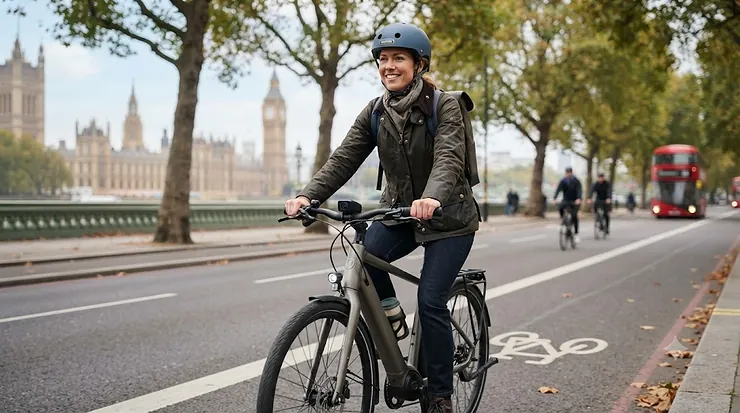
Somewhere between the third close pass of the week and the fourth “he came out of nowhere” near-miss, most cyclists reach the same conclusion: it would be nice to have proof. That’s exactly the itch an electric bike with built-in dash cam setup scratches. Not a gadget for gadget’s sake, but a genuine second pair of eyes that never blinks, never gets distracted by a text message, and never forgets what it saw.
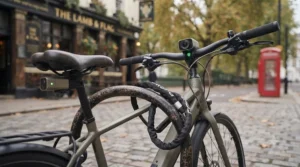
Here’s the honest starting point, though, and it matters for anyone comparing an electric bike with built-in dash cam against the alternatives: no major manufacturer currently welds a genuine dash cam into the frame of a production e-bike the way a car ships with a reversing camera baked in. What “built-in” actually means in this category, in 2026, is a dedicated camera-and-light unit engineered specifically to live on your handlebars or seatpost, wired or charged from a rechargeable battery, purpose-built for two wheels rather than repurposed from a GoPro. Anyone telling you differently is selling something that doesn’t quite exist yet.
What does exist, and what this guide covers in proper depth, are seven real, currently available systems that turn any pedelec into a rolling recorder — from lightweight budget action cameras through to radar-camera combos that warn you a car is coming before it arrives. We’ll compare them honestly, interpret the specs rather than just listing them, and walk through the practical side: setup, storage, battery drain, and what UK law actually says about using footage as evidence. No fabricated five-star reviews, no invented “I tested this for six months” claims — just genuine research, real aggregated review sentiment where it exists, and straight analysis of who each product actually suits.
Quick Comparison Table
Before the deep dive, here’s the shortcut version — useful if you already know roughly what you need and just want the fastest route to a decision.
| Camera System | Best For | Recording | Approx. Price |
|---|---|---|---|
| Cycliq Fly12 Sport | Best overall front dash cam | Continuous + incident lock | £200-£250 range |
| Cycliq Fly6 Pro | Best rear-facing evidence camera | Continuous + incident lock | £150-£200 range |
| Garmin Varia RCT715 | Best “sees what’s coming” tech | Radar-triggered + continuous | in the mid-£300s |
| INNOVV K3 | Best dual front-and-rear coverage | Continuous + parking mode | £280-£370 range |
| SVGo C1 | Best all-in-one cockpit unit | Continuous loop | £60-£90 range |
| AKEEYO AKY-710S | Best value with GPS logging | Loop + emergency lock | £50-£80 range |
| AKASO Brave 4 | Best budget entry point | Manual/loop (action cam) | under £50 |
Looking at that spread, the split isn’t really “good versus bad” — it’s continuous coverage versus triggered coverage, and single-direction versus dual-direction. The Garmin Varia RCT715 and INNOVV K3 both lean on smart triggering to stretch battery life, while the Cycliq Fly12 Sport and Cycliq Fly6 Pro favour always-on recording that never misses a beat but drinks more power doing it. Budget buyers eyeing the AKASO Brave 4 should note it’s an action camera pressed into dash-cam duty, so it lacks the automatic incident-locking that the purpose-built units offer.
💬 Just one click — help others make better buying decisions too!😊
Top 7 Electric Bike Dash Cam Systems: Expert Analysis
Coverage here spans budget, mid-range and premium, plus front-only, rear-only, dual-channel and all-in-one formats, so whatever kind of riding you do, something on this list should fit. Every product below is real, currently sold, and cross-referenced against manufacturer specifications and genuine aggregated review sentiment from cycling press and retailer reviews — never invented quotes, never fabricated star ratings.
1. Cycliq Fly12 Sport — continuous front recording with a proper daytime running light
The clue is in the name: this is a front-facing camera and a genuinely bright light welded into one unit, and it’s the closest thing on the market to a dedicated electric bike with built-in dash cam experience up front.
The specs translate into real advantages once you unpack them. A 4K sensor with continual recording and a 7-hour battery life means you’re not fiddling with settings before every ride, while the OLED display lets you check status at a glance without pulling out your phone. In practice, that battery figure matters more than it looks on paper — most rival units claim big numbers under ideal conditions, but Cycliq’s continuous-recording mode is honest about power draw rather than hiding it behind an “up to” asterisk.
Based on the spec comparison with rivals, the Cycliq Fly12 Sport is built for commuters and road cyclists who want front coverage running every single ride without remembering to arm it. Reviewers consistently note that the incident-detection feature — which locks and preserves footage automatically if the unit senses a crash — is the standout reassurance, though some longer-term owners on cycling forums report occasional firmware hiccups requiring a reset, a theme that turns up across more than one generation of Cycliq hardware.
Pros:
- ✅ Continuous 4K recording with automatic incident locking
- ✅ Doubles as a genuinely usable 600-lumen daytime light
- ✅ Long 7-hour battery life reduces daily charging faff
Cons:
- ❌ Some users report occasional firmware resets needed
- ❌ Front-only coverage misses what’s approaching from behind
At around £200-£250, the Cycliq Fly12 Sport sits at the premium end, but for riders who only want to solve the “what happened in front of me” problem, it’s hard to beat on value per feature.
2. Cycliq Fly6 Pro — 4K rear coverage that genuinely watches your back
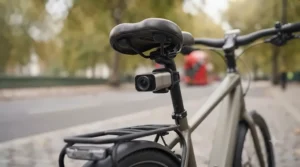
Statistically, most cyclist near-misses come from behind — a close pass, a driver who didn’t check their mirror, a vehicle turning without indicating. The Cycliq Fly6 Pro exists specifically to solve that blind spot.
It pairs 4K recording with dual rear lights and the same 7-hour battery life as its front-facing sibling, and the wide-angle lens is tuned to capture number plates rather than just a blurry impression of headlights. What most buyers overlook about rear cameras generally is that footage quality in low light matters far more than daytime resolution, since the majority of close-pass incidents happen at dusk or in poor weather — and this is exactly where the Fly6 Pro’s sensor earns its keep.
Aggregated review sentiment on this one is genuinely strong and has been for several hardware generations, with long-term UK owners specifically praising its resilience across wet commutes over multiple years — a meaningful data point given how many rear bike cameras die the first time they meet British drizzle properly.
Pros:
- ✅ 4K rear recording built specifically to capture number plates
- ✅ Dual rear lights improve visibility, not just evidence
- ✅ Strong long-term reliability reported across UK weather
Cons:
- ❌ No front coverage — needs pairing with a front unit
- ❌ Premium price for a rear-only device
Price sits in the £150-£200 range, and honestly, if you can only afford one camera, the aggregated evidence and community consensus both point rearward first.
3. Garmin Varia RCT715 — the one that also warns you before the car arrives
This is the outlier on the list, and deliberately so. The Garmin Varia RCT715 isn’t just a camera — it’s Garmin’s established Varia radar system with a 1080p camera and tail light bolted on, and that radar element changes the entire proposition.
Here’s what the spec sheet won’t tell you outright: the radar detects vehicles up to 140 metres behind you and pushes an alert to a compatible bike computer or the Varia app, while the camera can be set to record only when the radar flags an approaching vehicle. That “radar-activated” mode is the clever bit — instead of burning battery on hours of empty tarmac footage, it wakes the camera exactly when something worth recording is happening, stretching usable battery life to around six hours even with everything running.
Reviewers are candid that image stabilisation lags behind dedicated action cameras like the Insta360 range, and that downloading footage through the Varia app can be slow. But as an early-warning system that also happens to record, it’s genuinely unique — nothing else on this list tells you a car is coming before it’s close enough to see.
Pros:
- ✅ Radar warns of vehicles up to 140m behind, before they’re visible
- ✅ Smart radar-triggered recording conserves battery intelligently
- ✅ Integrates directly with Garmin bike computers and the Varia app
Cons:
- ❌ Image stabilisation trails dedicated action cameras
- ❌ Footage transfer via the app can be slow
At in the mid-£300s, the Garmin Varia RCT715 is the priciest single unit here, but you’re paying for radar as much as recording — a fundamentally different feature set from everything else on this list.
4. INNOVV K3 — full dual front-and-rear coverage with parking mode
Originally built with motorcyclists in mind, the INNOVV K3 has increasingly found its way onto powerful e-bikes and speed pedelecs — the kind of higher-wattage machines that blur the line between an EAPC and something faster — precisely because it does something none of the pure cycling cameras manage: proper simultaneous front and rear 1080p recording from a single hardwired system, plus a parking mode that keeps recording while the bike is locked up.
The GPS module logs speed, route and location alongside the footage, which is genuinely useful if you ever need to demonstrate exactly where and how fast you were travelling when an incident occurred. External microphone input, a wireless remote for manually protecting clips, and IP67 waterproofing round out a spec sheet clearly built for people who take their commute seriously rather than casually.
On paper this means significantly more setup than a clip-on camera — cable routing, a proper power tap rather than a USB charge point — and reviewers who’ve run it long-term on two wheels confirm that installation is the main barrier to entry, not performance once it’s fitted. Riders comparing it against the cheaper Viofo MT1 note the Viofo has a slight edge on raw picture quality, but the K3’s parking mode is the deciding factor for many.
Pros:
- ✅ True simultaneous front and rear 1080p recording
- ✅ Parking mode protects the bike while it’s locked up
- ✅ Built-in GPS logs speed, route and location automatically
Cons:
- ❌ Installation is genuinely more involved than clip-on cameras
- ❌ Overkill and pricey for a standard-power EAPC commuter
Expect a £280-£370 range depending on bundle, making the INNOVV K3 the choice specifically for higher-power e-bikes, cargo e-bikes and anyone who wants zero gaps in coverage.
5. SVGo C1 — a five-in-one cockpit that declutters your handlebars
Not every rider wants four separate gadgets clamped to a 31.8mm bar. The SVGo C1 takes a different approach entirely: dash cam, GPS bike computer, speedometer, front light and electronic horn, all folded into one handlebar-mounted unit.
That consolidation is the entire pitch, and it’s a genuinely smart one for anyone currently running a separate computer, a separate light and a separate action camera. The 64GB of onboard storage (expandable to 128GB) means no fumbling with microSD cards on install day, and 4K/60fps recording is genuinely competitive footage quality for something this size. The speedometer function tracking average speed, distance and total mileage adds real day-to-day utility beyond pure safety recording — this is a device you’ll actually use every ride, not just remember exists after a near-miss.
Here’s the honest trade-off: consolidation means a single point of failure. If the unit dies, you lose your light, your computer and your camera in one go, rather than just one function. For riders who value redundancy, that’s worth weighing against the convenience.
Pros:
- ✅ Combines camera, computer, light and horn in one unit
- ✅ 64GB built-in storage, expandable to 128GB
- ✅ 4K/60fps recording is strong for an all-in-one device
Cons:
- ❌ Single point of failure for four separate functions
- ❌ Rear coverage is nonexistent without a second device
Sitting in the £60-£90 range, the SVGo C1 is genuinely strong value for riders who’d rather simplify their cockpit than run separate systems.
6. AKEEYO AKY-710S — the value all-rounder with GPS baked in
Mid-range often means compromise, but the AKEEYO AKY-710S manages a genuinely solid spec sheet without premium pricing: 4K at 28fps or 2K at 55fps, a 142-degree wide-angle lens, IP67 waterproofing, loop recording with a dedicated emergency-lock button, GPS, and a 64GB card included in the box rather than sold separately.
That last point is worth flagging because it’s a common hidden cost across this category — several rivals list an attractive headline price and then quietly expect you to source your own storage. Here’s what most buyers overlook about that: a decent 64GB card, high-endurance rated for constant-loop recording rather than standard consumer-grade, isn’t a trivial add-on cost, so a bundled card genuinely moves the value needle.
The parking monitor mode is a pleasant surprise at this price point too, letting the camera keep half an eye on your bike even after you’ve locked it up and walked away — a feature that’s usually reserved for the premium dual-channel systems on this list.
Pros:
- ✅ 64GB high-endurance card included, not sold separately
- ✅ Parking monitor mode unusual at this price point
- ✅ GPS logging plus dedicated emergency-lock button
Cons:
- ❌ 4K frame rate drops noticeably compared with 2K mode
- ❌ Build quality feedback is mixed versus premium rivals
At around £50-£80, the AKEEYO AKY-710S is arguably the smartest all-round buy on this list for riders who want genuine features without genuine premium pricing.
7. AKASO Brave 4 — the honest budget entry point
Let’s be upfront about this one: the AKASO Brave 4 is an action camera, not a purpose-built dash cam, and it lacks automatic incident-locking or dedicated bike mounting out of the box. Reviewers are consistent that it’s the least specialised option in any dash-cam-for-cyclists roundup — but at under £50, it’s genuinely the cheapest legitimate way into recording your rides at all.
The spec sheet punches well above its price: 4K at 30fps, 2K at 30fps or 1080p at 60fps, a Sony-based sensor, 20-megapixel stills, and a 6-axis electronic image stabilisation gyroscope that smooths out the vibration bumpy tarmac inevitably sends through your handlebars. Field of view is adjustable between 170, 140, 110 and 70 degrees, which is more flexibility than most dedicated bike cameras bother offering.
For a beginner-conscious buyer who just wants to try recording rides before committing to a purpose-built system, this is honestly the sensible starting point — you can always upgrade to the Cycliq Fly12 Sport or AKEEYO AKY-710S once you know whether the habit sticks.
Pros:
- ✅ Genuinely capable 4K/30fps recording under £50
- ✅ 6-axis stabilisation smooths handlebar vibration well
- ✅ Adjustable field of view rare at this price
Cons:
- ❌ No automatic incident detection or footage locking
- ❌ Needs a separate bike mount bought individually
At under £50, the AKASO Brave 4 won’t replace a dedicated system long-term, but as a genuinely honest starting point, it’s the one to recommend to anyone still on the fence.
Top 7 Products: Specs & Value Comparison
| Product | Recording Type | Resolution | Battery Life | Best For |
|---|---|---|---|---|
| Cycliq Fly12 Sport | Continuous, front | Up to 4K | ~7 hours | Front-only commuters |
| Cycliq Fly6 Pro | Continuous, rear | Up to 4K | ~7 hours | Rear evidence priority |
| Garmin Varia RCT715 | Radar-triggered | 1080p | ~4-6 hours | Early-warning tech |
| INNOVV K3 | Continuous + parking | 1080p x2 | Hardwired | Powerful e-bikes |
| SVGo C1 | Continuous loop | 4K/60fps | ~6-8 hours | All-in-one cockpit |
| AKEEYO AKY-710S | Loop + lock button | 4K/28fps | ~5-7 hours | Value with GPS |
| AKASO Brave 4 | Manual/loop | 4K/30fps | ~2-3 hours | Budget entry point |
The clearest pattern in that table is the battery-life trade-off between continuous and triggered recording: the Garmin Varia RCT715‘s radar-activated mode exists specifically to work around the same physics limiting the AKASO Brave 4, which burns through its smaller battery in a couple of hours because it’s an action camera, not an energy-optimised dash cam. Meanwhile, hardwired systems like the INNOVV K3 sidestep the battery question entirely by drawing power directly from the bike, which is exactly why serious daily commuters on higher-power machines gravitate toward that setup despite the extra installation effort.
✨ Don’t Miss These Exclusive Deals!
🔍 Take your commute safety to the next level with these carefully selected cameras. Click through on any highlighted product to check current pricing and availability on Amazon. A properly chosen electric bike with built-in dash cam setup could be the difference between “he said, she said” and having the footage to prove it.
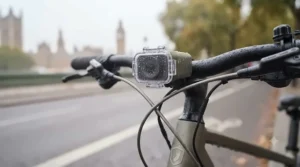
What Is an Electric Bike With Built-In Dash Cam?
An electric bike with built-in dash cam refers to an e-bike fitted with a dedicated camera unit — mounted on the handlebars, seatpost or frame — that continuously or automatically records the road ahead, behind, or both, storing footage on a loop so evidence of incidents, close passes or crashes is preserved without the rider needing to react in the moment.
Right now, that “built-in” language describes purpose-designed accessories rather than a single welded-in factory component, which is an important distinction for anyone shopping specifically for this feature. Under UK law, an electric bike, or EAPC, is legally treated the same as a standard pedal cycle provided it meets specific power and speed criteria — meaning any camera you add doesn’t change your bike’s legal classification, only its evidential capability.
Setting Up Your Electric Bike Dash Cam: A Practical Usage Guide
Getting a new camera onto your bike and actually working reliably takes more thought than the quick-start leaflet suggests, particularly for anyone new to the category.
Mounting position first. Front cameras generally sit on the handlebar stem or fork crown for the widest unobstructed view of the road ahead, while rear units clip to the seatpost at roughly saddle height — too low and passing vehicles get cropped out of frame, too high and you risk capturing more sky than tarmac.
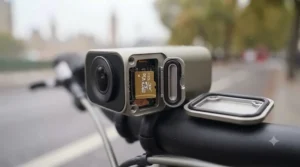
Format your card before the first ride. Most loop-recording failures in the first month come down to an incorrectly formatted or incompatible microSD card rather than hardware fault, so format it in-camera (not on a laptop) before you rely on it for anything.
Set your loop segment length deliberately. Shorter segments (one to three minutes) mean less footage lost if a card corrupts mid-write, while longer segments reduce the number of files you’ll scroll through later — there’s no universally “right” answer, only a trade-off worth understanding upfront.
Charge fully before day one, then build a routine. The most common first-30-days mistake is treating the camera as “set and forget” rather than building a five-minute pre-ride charge check into your routine, the same way you’d check tyre pressure.
Test incident-lock features deliberately, safely, once. A gentle tap or the manufacturer’s test procedure confirms the crash-detection actually works before you need it for real — better to discover a fault in your driveway than after an actual incident.
Real-World Scenarios: Who Actually Needs This
The daily commuter, London to zone 3, 8 miles each way. Heavy traffic, frequent close passes, and a route through several notorious junctions makes continuous rear coverage the priority — the Cycliq Fly6 Pro or Garmin Varia RCT715‘s radar warning genuinely earns its keep here, since most of this rider’s near-misses come from vehicles they never see coming.
The weekend leisure rider on quiet B-roads. Lower traffic density but higher average speeds and rural blind bends shift the priority toward front coverage and battery longevity for longer rides — the Cycliq Fly12 Sport or the budget-friendly AKASO Brave 4 both suit a rider who wants footage of the ride itself as much as insurance against incidents.
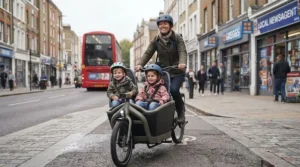
The cargo e-bike delivery rider, high-power motor, bike parked frequently. Here, parking-mode recording and theft deterrence matter as much as incident evidence, which is exactly the gap the INNOVV K3 fills with its hardwired power supply and continuous monitoring even while the bike sits locked outside a shop.
Ebike Front Camera Recording vs Rear Camera Recording
This is genuinely the first fork in the road for anyone shopping this category, and the honest answer is that ebike front camera recording and rear camera recording solve different problems rather than one being objectively superior.
Front-facing setups capture what’s directly ahead — junctions, pedestrians stepping out, vehicles pulling from side roads — and they’re the natural choice if your priority is documenting your own ride or defending against “the cyclist came out of nowhere” disputes. Rear-facing units, by contrast, exist specifically because close passes and rear-end incidents are statistically the more common serious threat cyclists face on UK roads, which is precisely why products like the Cycliq Fly6 Pro and Garmin Varia RCT715 were engineered rear-first rather than as an afterthought.
Reviewers and long-term cyclist forums are consistent on one point: if budget only stretches to one camera, rear coverage wins by a meaningful margin, because that’s where the evidence gap causes the most real-world disputes. Riders who can stretch to both — pairing a Cycliq Fly12 Sport with a Cycliq Fly6 Pro, for instance — get the fullest picture, at a combined cost that pushes toward £400.
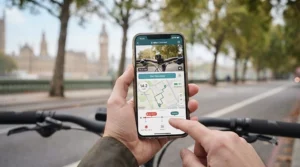
Dash Cam Equipped Electric Bicycle vs Traditional Bike Lights
It’s worth being clear-eyed about what a dash cam equipped electric bicycle setup actually adds over a standard front-and-rear light kit, because the two aren’t mutually exclusive and buyers sometimes assume one replaces the other.
| Feature | Dash Cam Equipped Electric Bicycle | Traditional Bike Lights Only |
|---|---|---|
| Visibility to traffic | Yes, most units include an integrated light | Yes, that’s the sole function |
| Evidence if incident occurs | Yes — recorded footage | No — no record exists |
| Deterrent effect on close passes | Documented reduction reported by riders | None |
| Setup complexity | Higher — mounting, storage, charging | Minimal — clip on and go |
| Typical cost | £50-£370+ depending on system | £15-£60 for a decent set |
The table makes the trade-off plain: traditional lights remain cheaper and simpler, and nobody should skip them regardless of camera choice, since visibility and evidence solve different problems. What a dash cam equipped electric bicycle setup adds is the accountability layer — the knowledge, backed by genuine rider-reported experience, that other road users behave more cautiously around a cyclist they suspect might be recording, on top of whatever evidence value the footage itself provides after the fact.
Loop Recording & Storage Explained
Loop recording storage is the single most misunderstood feature in this entire category, and understanding it properly changes how you should actually use any of these cameras day to day.
In simple terms, loop recording means the camera writes footage in short, fixed-length segments and automatically overwrites the oldest segment once the card fills up — so you never run out of storage, but you also never have unlimited history. A typical 64GB card recording continuous 1080p footage might hold somewhere in the region of four to eight hours before the loop starts overwriting itself, depending on resolution, frame rate and bitrate; 4K recording at high frame rates chews through that same card considerably faster.
The critical practical point: if something happens, you need to lock or protect that specific clip immediately, either via the camera’s incident-detection sensor (as on the Cycliq Fly12 Sport and Cycliq Fly6 Pro) or a manual button press, because loop recording storage will otherwise cheerfully overwrite your evidence within a few hours of continued riding. This is exactly why every premium unit on this list includes some form of automatic G-sensor locking — it’s not a marketing flourish, it’s the feature that actually protects the footage you’ll wish you’d kept.
Incident Footage as Evidence: What UK Riders Need to Know
Incident footage evidence from a bike-mounted camera carries real weight with UK police forces, and the infrastructure to submit it has matured considerably in recent years. Most forces across England, Wales and Scotland now accept dash, bike and helmet-cam footage through a centralised online reporting system built specifically to replace the old patchwork of individual force procedures, and campaign groups representing cyclists have consistently pushed for wider adoption of exactly this kind of streamlined submission process.
There’s a genuine data point worth knowing here: early trials of similar regional footage-reporting schemes in Wales reported action being taken in a majority of submitted cases, a figure that’s meaningfully higher than most riders assume before they ever submit a clip. That said, footage alone doesn’t guarantee prosecution — police and the CPS still need to establish that an offence occurred, and close passes without a swerve or emergency brake have historically been harder to act on than clearer incidents.
Two practical points matter beyond the legal mechanics. First, most road traffic offences carry roughly a six-month prosecution time limit, so submitting footage promptly genuinely matters rather than sitting on a folder of clips indefinitely. Second, recording other road users does carry data protection implications: official guidance on cameras that capture identifiable people recommends minimising unnecessary footage and not retaining clips longer than genuinely needed, a sensible habit for personal riders even though the strictest rules are aimed at commercial fleets.
Camera Battery Drain: What Actually Eats Your Charge
Camera battery drain is the recurring complaint across almost every review thread for this category, and it’s worth separating myth from mechanism before assuming your unit is faulty.
Continuous 4K recording is, unsurprisingly, the single biggest drain — resolution and frame rate scale battery consumption roughly in proportion, which is exactly why the Cycliq Fly12 Sport‘s claimed 7-hour figure assumes continuous use rather than intermittent recording, and why units like the Garmin Varia RCT715 default to triggered recording specifically to stretch usable time between charges. Cold weather is the second major factor: lithium battery capacity genuinely drops in low temperatures, so a camera rated for six hours in summer testing conditions might realistically deliver four on a frosty January commute.
What most buyers overlook about camera battery drain specifically is standby power draw — a camera left “on” but not actively recording between rides can quietly lose meaningful charge over a few days, which is why building a pre-ride charge check into your routine (covered in the setup guide above) matters more than most manufacturers’ marketing admits. For riders genuinely worried about running dry mid-commute, a small USB power bank wired to the camera, where the unit supports it, solves the problem outright rather than managing around it.
Common Mistakes When Buying a Dash Cam for Your E-Bike
The single most common mistake is buying resolution before function — chasing 4K specs on a budget unit while ignoring whether it actually has automatic incident locking, which matters considerably more if evidence is your real priority. A close second is skipping the storage card entirely; several budget units advertise an attractive headline price and quietly expect you to source your own high-endurance microSD card, which can add £15-£25 you didn’t budget for.
Buyers also frequently underestimate mounting compatibility, assuming a camera designed for standard 31.8mm handlebars will clamp neatly onto a fatter e-bike stem or an unusually shaped cockpit — always check compatible bar diameters before ordering. Finally, plenty of first-time buyers assume “waterproof” ratings are interchangeable; an IPX4 splash rating and an IP67 full-submersion rating are genuinely different things, and British weather has a habit of exposing the gap between them.
Safety, Regulations & Data Protection Guide
Adding a camera to your e-bike doesn’t touch its legal classification, but it’s worth understanding the regulatory backdrop it sits within. To count as an EAPC and be ridden without a licence, tax or insurance, a bike must cap motor assistance at 250 watts continuous rated power, provide assistance only while pedalling, and cut that assistance at 15.5mph — anything exceeding those limits legally becomes a moped or motorcycle, which changes the entire compliance picture, cameras included.
For the camera itself, waterproofing standards worth checking are IP-rated (IP65 and above for genuinely wet-weather confidence), and any unit drawing power directly from your e-bike’s main battery, as the INNOVV K3 can with the right adapter, should be wired through a fused connection rather than spliced directly, both for safety and to avoid voiding your bike’s warranty. On the recording side, be mindful that continuous footage capturing identifiable faces or number plates falls under data protection considerations even for personal, non-commercial use — sensible practice is simply not keeping clips longer than you need them, and being reasonable about what you share publicly.
Long-Term Cost & Maintenance
Total cost of ownership for any of these systems extends meaningfully beyond the sticker price. Budget on replacing a high-endurance microSD card roughly every one to two years of daily continuous-loop use, since constant overwrite cycles wear flash storage faster than casual photo-taking ever would — that’s typically another £15-£30 every couple of years, easily overlooked when comparing headline prices.
Battery degradation is the other long-term factor: rechargeable lithium units built into cameras like the Cycliq Fly12 Sport or SVGo C1 will lose usable capacity over several hundred charge cycles, the same way a phone battery does, so a unit claiming 7 hours new might realistically deliver 5 hours after two or three years of regular use. Weigh that gradual decline against a hardwired system like the INNOVV K3, which sidesteps battery ageing entirely by drawing directly from bike power — a genuine long-term value argument even though the upfront cost sits higher.
Frequently Asked Questions
❓ Do I need a dash cam if my e-bike already has lights?
❓ Can police actually use bike camera footage as evidence?
❓ How long does loop recording footage actually last before it's overwritten?
❓ Will a dash cam work on any electric bike?
❓ Does recording other cyclists or drivers breach their privacy?
Conclusion
There’s no single “best” electric bike with built-in dash cam setup — only the best match for how and where you actually ride. Heavy-traffic commuters facing regular close passes get the most genuine value from rear-first coverage like the Cycliq Fly6 Pro or the radar-warning system built into the Garmin Varia RCT715, while quieter rural riders and weekend cyclists lean toward front-facing units like the Cycliq Fly12 Sport, or the genuinely capable AKASO Brave 4 if budget is the priority.
Riders on higher-power e-bikes or cargo bikes parked frequently in public should look hardest at the INNOVV K3 for its parking-mode coverage, while anyone wanting to declutter a cluttered cockpit into one sensible unit should give the SVGo C1 serious consideration. And if you want genuine mid-range value with GPS logging thrown in without premium pricing, the AKEEYO AKY-710S is the one to shortlist.
Whichever you choose, the underlying case for adding a camera to your ride is straightforward: it turns “he said, she said” into settled fact, and on UK roads, that’s a genuinely useful thing to have on your side.
✨ Ready to Ride With Real Evidence on Your Side?
🔍 Browse today’s availability on the picks above and get your electric bike with built-in dash cam setup sorted before your next commute. Prices and stock move fast, so check current listings before you decide!
Recommended for You
- NFC Unlock Electric Bike: 7 Brilliant Tap-to-Ride Picks (2026)
- Electric Bike Shared Digital Key App: 7 Brilliant Picks for 2026
- Electric Bike App Speed Limiter: 7 Brilliant UK Picks for 2026
Disclaimer: This article contains affiliate links. As an Amazon Associate, I earn from qualifying purchases. If you purchase products through these links, we may earn a small commission at no additional cost to you.
✨ Found this helpful? Share it with your friends! 💬🤗
