In This Article
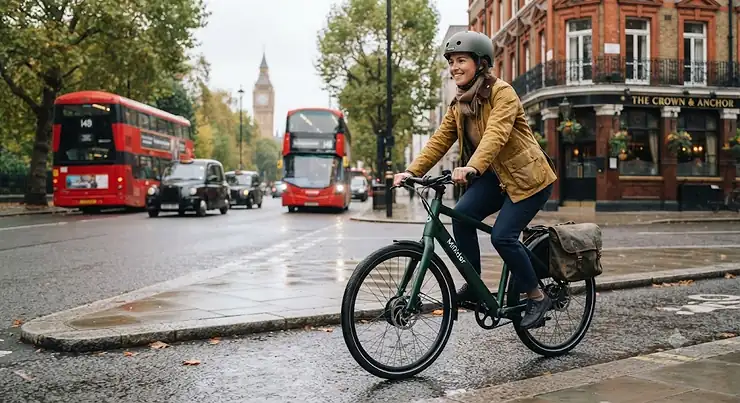
Rain on the chain. Grit in the derailleur. A gear change that crunches like you’ve just run over gravel with your foot. If any of that sounds painfully familiar, an internal hub gear electric bike might be the quiet revolution your commute has been waiting for. Instead of a dangling cassette and a delicate derailleur hanger exposed to every puddle and pothole on your route, the entire gear mechanism sits sealed inside the rear hub — out of sight, out of the weather, and largely out of mind.

This isn’t a niche gimmick either. More than one in ten bikes now sold in the UK are electric, and a growing slice of those are turning to hub-based drivetrains for exactly the reasons above. The technology itself isn’t new: the Shimano Nexus 3-speed hub and its descendants trace back decades of steady refinement, and the Wikipedia entry on hub gears traces the concept back even further, to enclosed epicyclic gear systems designed to survive exactly the abuse British weather throws at bicycles.
What is an internal hub gear electric bike? It’s an e-bike where the gear-changing mechanism (usually 3, 5, 7, 8 or an infinitely variable “stepless” range) is fully enclosed within the rear wheel hub rather than spread across an external derailleur and cassette, giving low-maintenance, weather-sealed shifting that works even when you’re stationary at the lights.
Below, we’ve dug into seven real, currently available machines — from a featherweight folder to a German-engineered belt-drive tourer — and pulled apart what the spec sheets actually mean for your daily ride. No fabricated five-star reviews, no invented test rides: just honest analysis grounded in real specifications and the aggregated sentiment reviewers consistently report.
Quick Comparison Table
| Bike | Gear System | Motor | Best For |
|---|---|---|---|
| Ahooga E-Max | Shimano Nexus 7-speed | Bafang front hub | Lightest folding option |
| Tern HSD P5i | Shimano Nexus Inter-5E | Bosch Performance Line | Compact cargo hauling |
| Gazelle Ultimate C5+ | Shimano Nexus 5-speed | Bosch Active Line Plus | Simplicity-first touring |
| Gazelle Ultimate C8+ HMB | Shimano Nexus 8-speed | Bosch Active Line Plus | Versatile hilly commutes |
| Cannondale Mavaro Neo | Shimano Nexus 5-speed | Bosch Performance Line Sport | Long-range commuting |
| Riese & Müller Roadster Vario | Enviolo stepless CVT | Bosch Performance Line CX | Stop-start city traffic |
| Schindelhauer Hannah/Heinrich | Shimano Alfine 8 / Enviolo Automatiq | Bosch Active Line Plus | Design-led premium urban |
Looking across the table, the spread is deliberate: you’ve got a sub-20kg folder at one end and a near-luxury German tourer at the other, with genuine variety in gear count and shifting philosophy in between. The Ahooga E-Max and Gazelle Ultimate C5+ keep things mechanically simple with fewer, wider-spaced gears, while the Riese & Müller Roadster Vario and Schindelhauer Hannah/Heinrich trade simplicity for stepless or near-stepless shifting that never leaves you hunting for the “right” gear. Notice, too, that Bosch motors dominate — a reflection of how often Bosch and enclosed hub gears get paired on quality European-built machines.
💬 Just one click — help others make better buying decisions too!😊
Top 7 Internal Hub Gear Electric Bikes: Expert Analysis
Before diving into each bike individually, here’s the fuller picture, including the current price bracket at the time of research (never treat these as fixed — always check current pricing before buying).
1. Ahooga E-Max — lightest folding hub-gear commuter
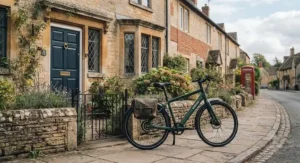
The Ahooga E-Max earns its standout tag through sheer portability: at roughly 19kg, it’s genuinely light enough to lift onto a train luggage rack without throwing your back out. That matters more than it sounds, because most folding e-bikes with any kind of internal hub gearing tip well past 22-24kg. A 36V Bafang front hub motor pairs with a seatpost-integrated, removable battery and a Shimano Nexus 7-speed hub, giving a wider gear spread than the 3-speed folders that dominate this category — useful if your route includes even a modest bridge or underpass ramp. Based on the spec comparison, this is squarely aimed at commuters who fold, carry, and stash rather than riders chasing outright range or hill-flattening torque. Reviewers on cycling comparison sites consistently note that the Nexus 7 hub on test can occasionally slip under heavy load, a known quirk of lighter-duty internal hubs when pushed hard rather than a manufacturing fault specific to this bike. What most buyers overlook is that a front hub motor changes the bike’s handling slightly under acceleration compared with rear or mid-drive systems — something worth test-riding before you commit.
Pros:
- ✅ Among the lightest folding e-bikes with hub gearing
- ✅ Removable, lockable seatpost battery for easy charging
- ✅ Wider 7-speed range than typical 3-speed folders
Cons:
- ❌ Reported gear slip under load on steep inclines
- ❌ Front hub motor feels less planted than rear-drive rivals
Expect to pay around £3,000 for the Ahooga E-Max; for buyers prioritising portability over outright hill-climbing, that’s a fair trade-off rather than a compromise.
2. Tern HSD P5i — best for compact cargo hauling
The Tern HSD P5i compresses genuine cargo-bike carrying capacity into a footprint barely longer than a standard hybrid, which is the whole point of its “compact long-tail” design. A Bosch Performance Line motor delivering 75Nm of torque, paired with a 545Wh battery, gives real hill-climbing muscle for a fully loaded bike — Bosch’s own figures put assistance up to 340%, meaning the motor is doing a genuinely heavy share of the work when you’re hauling a rear-mounted child seat or panniers full of shopping. The Shimano Nexus Inter-5E hub and Gates Carbon Belt Drive combination is specifically built for the extra chain-tension stress cargo riding puts on a drivetrain, which is exactly why Tern didn’t fit a derailleur here. This is a bike for parents doing the nursery run, small-business owners doing last-mile deliveries, or anyone replacing short car trips with something more practical than a standard commuter bike. Reviewers consistently point to the belt drive and hub gearing as the reason the Tern HSD P5i feels “maintenance-free” in daily use, with owners on retailer sites reporting minimal servicing needs beyond battery care and tyre pressure. On the spec sheet alone that’s easy to miss, but in practice it’s the difference between a bike you ride and a bike you also have to fettle every weekend.
Pros:
- ✅ Genuine cargo capacity in a compact wheelbase
- ✅ Belt drive plus Nexus hub built for high chain tension
- ✅ Strong 75Nm Bosch motor for loaded hill starts
Cons:
- ❌ At 27.9-28.1kg, awkward to lift up steps unloaded
- ❌ Five-speed range feels narrow on genuinely hilly routes
At £4,300-£4,400, the Tern HSD P5i isn’t cheap, but measured against a cargo-specific bike or a second car trip, the value case holds up well.
3. Gazelle Ultimate C5+ — best for simplicity-first Dutch touring
The Gazelle Ultimate C5+ is the “why overcomplicate it” pick in this line-up, built around the idea that most UK commuters don’t actually need eight gears to get to work. Its Shimano Nexus 5-speed hub, paired with a Bosch Active Line Plus motor, means fewer moving parts to fettle and a gear range wide enough for all but the steepest UK hills. What the spec sheet won’t tell you, but reviewers note, is how this simplicity translates into fewer things going wrong on a wet Tuesday morning — a genuinely appealing trait for buyers who just want to arrive at work dry and on time, not tinker with limit screws. The classic Dutch step-through frame, integrated lighting, and enclosed chain guard round out a bike clearly designed for upright, relaxed riding rather than sporty commuting. Based on the spec comparison with its Nexus 8-speed sibling below, the C5+’s narrower gear range does mean bigger jumps between gears, which some taller or stronger riders notice on rolling terrain. Aggregated owner feedback across cycling retailer sites suggests this is rarely a dealbreaker for city and suburban riders, though it’s worth weighing seriously if your commute includes a genuinely steep climb.
Pros:
- ✅ Fewer gears mean fewer parts that can fail
- ✅ Classic Dutch step-through frame, easy on-off
- ✅ Enclosed chain guard adds extra weatherproofing
Cons:
- ❌ Wider gear jumps than the 8-speed alternative
- ❌ Less suited to genuinely hilly or hilly-adjacent commutes
Priced in the £2,700-£3,100 range, the Gazelle Ultimate C5+ represents a smart value pick for riders who value reliability over gear-count bragging rights.
4. Gazelle Ultimate C8+ HMB — best for versatile hilly commutes
Step up to the Gazelle Ultimate C8+ HMB and you get the same trusted Dutch build quality as the C5+, but with a Shimano Nexus 8-speed hub that closes the gap on the steeper inclines the 5-speed struggles with. Unlike derailleur systems where you can feel and hear each gear change, the internal hub shifts feel almost imperceptible, and combined with the Gates Carbon Belt Drive fitted to several trims, the overall ride is close to silent. A Bosch Active Line Plus motor (50Nm) and a battery ranging from 500-625Wh depending on the exact spec give genuinely usable range for mixed commuting. On paper this means a bike that copes with both flat towpath sections and the occasional steep street without you needing to plan your route around gear limitations — genuinely useful in undulating UK towns and cities. Reviewers consistently flag the hydraulic disc brakes and low centre of gravity as standout real-world traits, translating spec-sheet numbers into a bike that simply feels stable and controlled at speed, particularly for less confident riders. If you’re torn between this and the C5+, the extra gears here earn their keep the moment your commute includes any meaningful hill.
Pros:
- ✅ 8-speed Nexus hub handles hillier routes with ease
- ✅ Near-silent belt drive on Gates-equipped trims
- ✅ Hydraulic disc brakes for confident stopping power
Cons:
- ❌ Costs more than the 5-speed C5+ for the extra range
- ❌ Heavier overall than lighter hybrid alternatives
Expect £2,900-£3,500 depending on trim and retailer — a reasonable premium for buyers whose daily route genuinely demands the extra gear range.
5. Cannondale Mavaro Neo — best for long-range commuting
The Cannondale Mavaro Neo pairs a Bosch Performance Line Sport motor with a hefty 625Wh battery, and that battery is really the headline here: it’s the largest capacity in this line-up, aimed squarely at riders whose commute is measured in double-digit miles rather than a quick hop across town. A Shimano Nexus 5-speed internal hub keeps the drivetrain low-maintenance, echoing the same logic Gazelle applies to its C5+, while Cannondale’s own frame geometry leans slightly sportier than the upright Dutch bikes elsewhere on this list. Based on the spec comparison, that 625Wh pack should comfortably outlast the smaller 500Wh batteries fitted to several rivals here, particularly useful if your workplace doesn’t offer convenient charging. What most buyers overlook is that a bigger battery also means a heavier bike, so the trade-off for range is a slightly less nimble low-speed feel when manoeuvring in tight bike storage or narrow hallways. Aggregated review sentiment around Cannondale’s e-bike range generally points to dependable Bosch integration and a comfortable, road-bike-influenced riding position — worth noting if you’ve found upright Dutch-style bikes uncomfortable on longer rides.
Pros:
- ✅ Largest 625Wh battery in this comparison
- ✅ Sportier geometry suits longer, faster commutes
- ✅ Reliable Bosch Performance Line Sport integration
Cons:
- ❌ Heavier handling at low speed than lighter rivals
- ❌ Only 5-speed hub despite the performance-oriented positioning
Sitting in the £3,200-£3,800 range, the Cannondale Mavaro Neo rewards riders who value range and a sportier feel over ultimate gear versatility.
6. Riese & Müller Roadster Vario — best for stop-start city traffic
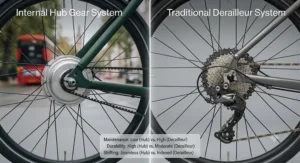
If shifting at standstill is your priority, the Riese & Müller Roadster Vario is arguably the standout of this entire list. Its Enviolo continuously variable transmission (CVT) hub offers a roughly 480% gear ratio range with genuinely stepless shifting — no clicks, no fixed ratios, just a twist grip that lets you dial in exactly the resistance you want, even while the bike is completely still. Paired with a Bosch Performance Line CX motor (85Nm) and a 625Wh battery, this is a genuinely premium touring and commuting package, backed by a Gates Carbon Belt Drive for near-silent, low-maintenance running. The Enviolo gearhub, controlled by a rotating handle, allows for continuous gear ratio selection rather than forcing you into predefined steps — a real advantage at traffic lights, junctions, and the stop-start crawl of a typical UK city centre commute. Reviewers consistently highlight how this removes the classic “caught in the wrong gear” panic that plagues derailleur riders pulling away from a standstill on a hill. What the spec sheet won’t tell you is how much smoother this makes group rides or family cycling, where matching pace with slower riders becomes trivial rather than a constant gear-fumbling exercise.
Pros:
- ✅ True stepless shifting, even from a complete stop
- ✅ Powerful 85Nm Bosch Performance Line CX motor
- ✅ Gates belt drive for near-silent, low-maintenance running
Cons:
- ❌ Premium price reflects the premium engineering
- ❌ Enviolo CVT hubs need occasional oil-bath servicing
At £4,300-£4,700, the Riese & Müller Roadster Vario sits at the top of this comparison on price, but for stop-start urban riders, the shift-at-standstill capability alone can justify the outlay.
7. Schindelhauer Hannah/Heinrich — best for design-conscious premium urban riding
Rounding out the list, the Schindelhauer Hannah/Heinrich pairing (Hannah for step-through frames, Heinrich for diamond frames) brings German industrial design sensibility to the internal hub gear electric bike category, offered with either a Shimano Alfine 8-speed hub or the automatic Enviolo Automatiq transmission. The Alfine 8 gives a wider, more defined gear range than the Nexus hubs used elsewhere on this list, aimed at slightly more performance-conscious riders, while the Enviolo Automatiq version senses cadence and shifts automatically — effectively turning the bike into a fully automatic-transmission e-bike. A Bosch Active Line Plus motor (50Nm) and 500Wh battery keep the overall package lighter than the Roadster Vario, with belt drive fitted throughout for the same low-maintenance benefits already covered above. Here’s what to weigh: the automatic-shifting Enviolo variant costs a premium over the manually-operated Alfine 8, and whether that’s worth it depends entirely on how much you value not thinking about gears at all versus wanting some manual control. Aggregated feedback from European cycling publications consistently praises the minimalist frame design and integrated cabling, though buyers should factor in that Schindelhauer’s UK dealer network is smaller than mainstream brands like Gazelle or Cannondale, which can affect servicing convenience.
Pros:
- ✅ Choice of manual Alfine 8 or automatic Enviolo shifting
- ✅ Distinctive, minimalist German design with clean cable routing
- ✅ Belt drive throughout for low-maintenance running
Cons:
- ❌ Smaller UK dealer network than mainstream rivals
- ❌ Automatic Enviolo Automatiq variant commands a real price premium
Pricing sits under £4,800 depending on the gearing option chosen, positioning the Schindelhauer Hannah/Heinrich as a genuine premium alternative to the more mainstream Dutch and German brands above.
Practical Usage Guide: Setting Up and Maintaining Your Enclosed Gear Hub Ebike
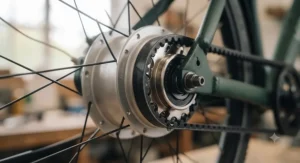
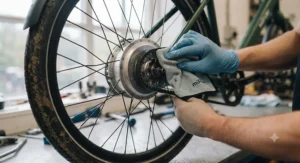
Getting the most from an enclosed gear hub ebike starts before you even ride it. On delivery, check the hub’s indicator line (most Shimano Nexus and Alfine hubs have one) lines up correctly with the shifter cable — a common first-30-days mistake is riding around with a slightly misaligned cable, which causes hesitant or incomplete shifts that many new owners wrongly assume is a hub fault. Unlike a derailleur, you generally shouldn’t shift while pedalling hard on a hub gear; ease off pressure for a fraction of a second as you shift, and the mechanism will thank you with smoother, quieter changes. Maintenance is refreshingly minimal: most hubs need an oil bath or grease service roughly once a year or every 3,000-5,000 miles, considerably less frequent than the constant cassette cleaning a derailleur demands. Gear hub sealing is the real headline benefit here — the enclosed design keeps road grime, rain, and salt off the actual gear mechanism, which is precisely why hub-geared bikes tend to outlast derailleur equivalents in wet UK conditions. That said, sealing isn’t invincible: check the small rubber gaskets around the hub shell periodically, since a perished seal is the single most common cause of internal contamination on older hubs. Cycling UK’s e-bike advice is a useful independent reference point if you want broader guidance on running an e-bike day-to-day, including battery care that complements the hub maintenance above.
Real-World Scenarios: Who Should Buy an Internal Hub Gear Electric Bike?
Picture Sarah, a university student commuting four miles each way across a hilly campus town. She’s locking her bike outside all day, every day, rain or shine — for her, the Gazelle Ultimate C5+‘s sealed hub and enclosed chain guard mean she’s not scrubbing rust off a cassette every fortnight, and the simpler 5-speed system suits her limited budget and modest hill-climbing needs.
Now consider Dev, a delivery courier doing 25+ miles a day across a mixed urban-suburban patch with genuine hills. He needs range and torque above all else, making the Cannondale Mavaro Neo‘s 625Wh battery and Bosch Performance Line Sport motor the sensible pick, even though it costs more upfront than a budget alternative.
Finally, there’s Priya, juggling nursery drop-offs and a part-time job, riding in genuinely stop-start city traffic multiple times a day. The Riese & Müller Roadster Vario‘s shift-at-standstill Enviolo hub removes the single biggest frustration of her ride — never again stalling at a junction stuck in the wrong gear — and the belt drive means less mess on her work clothes.
Problem → Solution: Common Internal Hub Gear Electric Bike Issues Solved
Problem: Gear changes feel sluggish or won’t fully engage. This is almost always a cable tension issue rather than a hub fault — realign the indicator marks per the manufacturer’s manual before assuming the worst.
Problem: The hub feels heavier than expected when carrying the bike. Internal hub gears do add rotational weight versus a lightweight derailleur cassette; if portability is critical, prioritise lighter options like the Ahooga E-Max over heavier belt-drive tourers.
Problem: You’re unsure whether to service the hub yourself. Unlike derailleur adjustments, hub internals genuinely benefit from a specialist’s oil-bath service — most local bike shops handle Shimano Nexus and Alfine servicing routinely, so this needn’t be a DIY job.
Problem: Range anxiety on longer commutes. If you’re consistently running low on charge, the fix usually isn’t the hub gear at all — it’s battery capacity. The Cannondale Mavaro Neo and Riese & Müller Roadster Vario‘s larger batteries directly address this.
Problem: Struggling on unexpectedly steep sections. A 5-speed hub can feel limiting on hilly routes; stepping up to an 8-speed Nexus, Alfine, or a stepless Enviolo hub (as fitted to several bikes above) widens your usable gear range considerably.
✨ Don’t Miss These Exclusive Deals!
🔍 Take your internal hub gear electric bike search to the next level with these carefully selected models. Click on any highlighted bike to check current pricing and availability. These enclosed, weather-sealed drivetrains will help you build a genuinely low-maintenance daily commute your future self will thank you for!
How to Choose an Internal Hub Gear Electric Bike: 7 Expert Criteria
Choosing the right internal hub gear electric bike comes down to matching gear count, motor power, and battery size to your actual commute, not the flashiest spec sheet. Here’s how to work through it methodically:
- Map your terrain honestly. Count the genuine hills on your route, not the ones you imagine — a flat commute rarely needs more than a 5-speed hub.
- Weigh up standstill shifting. If you regularly stop mid-hill at junctions, an Enviolo-style stepless hub removes a genuine daily frustration.
- Match battery size to distance. Anything under 8 miles each way rarely needs a 625Wh pack; longer commutes justify the extra weight and cost.
- Consider storage and carrying. If you’re lifting the bike onto trains or up flights of stairs, prioritise total weight over gear count.
- Check local servicing availability. Mainstream brands like Gazelle and Cannondale have wider UK dealer networks than boutique makers.
- Factor in belt versus chain drivetrains. Belt-drive bikes pair beautifully with hub gears for near-silent, oil-free running, but replacement belts can be pricier than chains.
- Set a realistic total budget. Include a service plan or annual maintenance allowance rather than just the sticker price.
For an independently tested perspective alongside this analysis, Which?’s electric bike reviews are a genuinely useful cross-reference before you commit to a specific model.
Hub Gear vs Derailleur: Which Wins for UK Commuters?
The hub gear vs derailleur debate isn’t really about which system is objectively “better” — it’s about which trade-offs suit your riding. Derailleurs remain lighter, offer wider gear ranges on performance bikes, and are cheaper to repair piecemeal (a bent derailleur hanger is a five-minute fix; a failed internal hub often means a full hub replacement). But for daily UK commuting, hub gears win on the things that matter most for reliability: full weather sealing, dramatically reduced maintenance, and — critically — the ability to shift gear while completely stationary.
| Factor | Internal Hub Gear | Derailleur |
|---|---|---|
| Weatherproofing | Fully enclosed | Exposed to elements |
| Shift at standstill | Yes | No |
| Maintenance frequency | Roughly annual | Frequent cleaning/adjustment |
| Typical weight | Heavier | Lighter |
| Repair cost if damaged | Higher (specialist) | Lower (DIY-friendly) |
The table above crystallises the trade-off nicely: hub gears sacrifice some weight and specialist repair cost in exchange for weatherproofing and near-zero routine maintenance — a fair trade for most commuters, but perhaps not for a weight-obsessed sportive rider chasing every spare gram.
Shift at Standstill: Why This Matters More Than You Think
A shift at standstill electric bike solves a problem derailleur riders often don’t even realise they have until they’ve experienced the alternative. On a derailleur bike, changing gear requires the chain to be moving — stall at a junction in third gear on a hill, and pulling away means grinding through an awkward, underpowered start while the mechanism catches up. On any of the hub-geared bikes above, you simply twist or click the shifter while stationary, select your preferred starting gear, and pull away smoothly the instant the lights change. For nervous or less confident riders in particular, this single feature can be the difference between dreading busy junctions and barely noticing them.
Shimano Nexus Hub Explained: What Sets It Apart
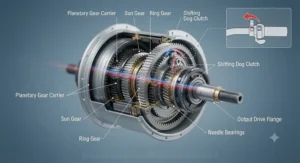
The Shimano Nexus hub is the workhorse of this entire category, fitted across four of the seven bikes reviewed above. Available in 3, 5, 7, and 8-speed variants, it uses a planetary gear system enclosed entirely within the rear hub shell, sealed against water and grit by rubber gaskets and a bath of internal lubricant. Reviewers consistently note that the Nexus range trades outright gear range (it can’t match a 12-speed derailleur cassette) for genuinely exceptional reliability and near-zero maintenance — precisely why it’s become the default choice for Dutch-style touring and commuter bikes across Europe.
Common Mistakes When Buying an Internal Hub Gear Electric Bike
The most frequent mistake is over-buying gear count. Riders assume more speeds automatically means a better bike, then pay a premium for an 8-speed or stepless hub they barely shift out of third gear on a genuinely flat commute. The second common error is ignoring total weight, particularly for buyers who need to carry the bike up stairs or lift it onto a train — hub gears and belt drives both add weight versus a lightweight derailleur setup, and that extra heft is easy to underestimate until you’re actually hauling it. Third, some buyers skip checking local servicing availability, only to discover the nearest specialist who handles Enviolo or Alfine hubs is an inconvenient distance away. Finally, many shoppers fixate on the headline motor torque figure while overlooking battery capacity, which matters just as much — arguably more — for how far and how confidently you can actually ride.
What to Expect: Real-World Performance
On paper, the differences between a 5-speed and 8-speed Nexus hub look modest — a few extra numbers on a spec sheet. In practice, the difference shows up most on rolling terrain, where a narrower gear range forces bigger jumps in pedalling effort between gears, occasionally leaving you spinning too fast in one gear and straining in the next. Stepless Enviolo hubs remove this entirely, delivering a sensation closer to a continuously variable car transmission than a traditional bike gear change — smooth, seamless, and slightly uncanny the first few times you experience it. Belt-drive bikes, meanwhile, translate into a genuinely quieter ride than chain-driven equivalents; several reviewers across the models above specifically flag how much less mechanical noise there is at low speed, which matters more than you’d think when riding through quiet residential streets early in the morning.
Long-Term Cost & Maintenance: Total Cost of Ownership
Upfront price is only part of the story with any internal hub gear electric bike. Where derailleur bikes rack up small, frequent costs — chain replacement every few thousand miles, regular cassette cleaning, occasional hanger realignment — hub-geared bikes shift that cost profile toward less frequent but sometimes pricier specialist servicing. A typical Nexus or Alfine oil-bath service runs into the tens of pounds annually at most local bike shops, considerably less than the cumulative cost of frequent derailleur tune-ups over the same period. Belt drives compound this saving further, typically lasting several times longer than a chain before replacement is needed, with no oil or grease required in daily use. Where the maths shifts back toward derailleurs is repair cost after damage: a snapped derailleur cable or bent hanger is a cheap, quick DIY fix, whereas a failed internal hub can mean a costly specialist replacement. Over a typical 3-5 year ownership window, though, aggregated owner experience across cycling forums suggests hub-geared, belt-driven bikes tend to work out cheaper overall for higher-mileage commuters, simply because they need attention less often.
Features That Actually Matter (And Those That Don’t)
Gear count sounds impressive on a spec sheet, but for the vast majority of UK commuters, motor torque and battery capacity matter considerably more day-to-day. A 5-speed Nexus hub on a flat commute will outperform an 8-speed hub paired with a weaker motor on a genuinely hilly one. Belt drive versus chain is a feature that genuinely matters — the maintenance and noise reduction benefits are real and consistently reported. Conversely, marketing language around “seamless integration” or “premium feel” is largely subjective fluff that tells you nothing concrete; always cross-reference against actual torque figures, battery Wh, and hub speed count. Frame material (aluminium versus steel) matters less than manufacturers imply for most urban riders, since the ride-quality difference is marginal compared with tyre choice and suspension fork travel — features that genuinely affect comfort on typical British road surfaces.
Safety, Regulations & UK Compliance Guide
Every bike featured in this guide qualifies as an EAPC (Electrically Assisted Pedal Cycle) under UK law, meaning motor assistance is capped at 250W continuous power and cuts out once you reach 15.5mph (25km/h) — beyond that speed, you’re pedalling entirely under your own steam. Riding an EAPC doesn’t require a licence, registration, tax, or insurance, though insurance is still sensible given the higher replacement cost of these bikes. For the full, current legal detail, the UK government’s official EAPC guidance is the definitive source and worth reading before you buy, particularly if you’re considering any aftermarket “derestriction” modifications, which move a bike outside EAPC rules entirely and into moped-style registration requirements. Beyond legal compliance, always check that lights, reflectors, and a bell meet Road Traffic Act requirements for road use after dark, and consider a UKCA or CE-marked helmet even though it isn’t legally mandatory for adult cyclists in the UK.
FAQ
❓ How fast can an internal hub gear electric bike go in the UK?
❓ Is a Shimano Nexus hub better than a derailleur for an ebike?
❓ Can you shift gears on an enclosed gear hub ebike while stationary?
❓ How much does it cost to service an internal hub gear electric bike?
❓ Is gear hub sealing enough to stop water damage?
Conclusion
Across all seven bikes here, one theme holds steady: an internal hub gear electric bike trades a little weight and occasionally higher specialist repair costs for genuinely lower day-to-day maintenance and drivetrain components that simply shrug off British weather. Budget-conscious folding commuters should look closely at the Ahooga E-Max, families and small-scale haulers will get real value from the Tern HSD P5i, and anyone who values simplicity above all else should test-ride the Gazelle Ultimate C5+. Riders tackling hillier routes will appreciate the extra range of the Gazelle Ultimate C8+ HMB, while longer-distance commuters should prioritise the Cannondale Mavaro Neo‘s bigger battery. For genuinely stop-start city traffic, the Riese & Müller Roadster Vario‘s stepless, shift-at-standstill Enviolo hub is hard to beat, and design-conscious buyers willing to pay a premium should shortlist the Schindelhauer Hannah/Heinrich. Whichever you choose, always verify current pricing and availability directly before purchasing, since prices shift regularly across UK retailers.
Recommended for You
- Electric Bike With Built-In Dash Cam: 7 Brilliant 2026 Picks
- NFC Unlock Electric Bike: 7 Brilliant Tap-to-Ride Picks (2026)
- Electric Bike Shared Digital Key App: 7 Brilliant Picks for 2026
Disclaimer: This article contains affiliate links. As an Amazon Associate, I earn from qualifying purchases. If you purchase products through these links, we may earn a small commission at no additional cost to you.
✨ Found this helpful? Share it with your friends! 💬🤗
