In This Article
Somewhere between your third chain-lube session of the month and the moment your trousers pick up a fresh oil stripe, most cyclists start wondering if there’s a better way. There is, and it usually comes down to a single decision: belt drive vs hub gear electric bike, or the traditional chain-and-derailleur setup you’ve probably ridden your whole life. It’s not just a spec-sheet footnote, either — it shapes how often you’ll touch a spanner, how your trousers survive the commute, and how your bike feels five years from now.
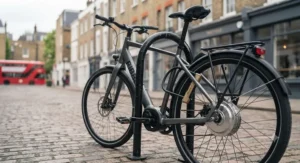
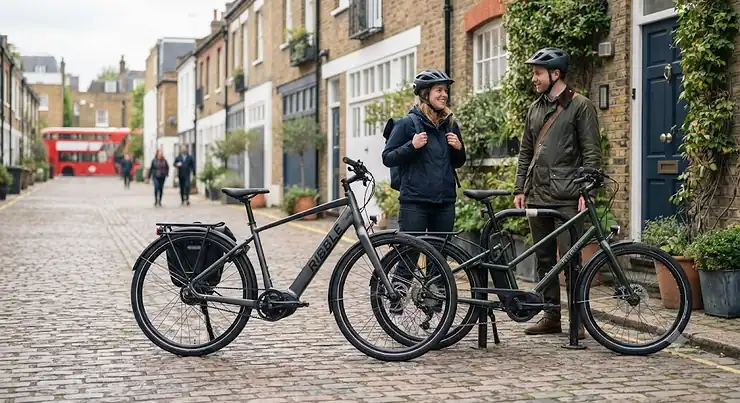
Here’s the short version. A belt drive swaps the metal chain for a toothed polyurethane belt reinforced with carbon fibre, and because that belt can’t be split and rejoined like a chain, it almost always pairs with a hub gear — a sealed gearbox tucked inside the rear wheel rather than an exposed derailleur. Together, belt and hub form a closed, weatherproof system that barely needs touching between services. Chain-and-derailleur setups, by contrast, offer wider gear range and cheaper parts, at the cost of regular lubrication and exposure to grit.
This guide breaks down seven real, currently available UK e-bikes that use belt drives and hub gears, from a featherweight single-speed under £1,600 to a touring-ready SUV e-bike north of £4,800. We’ll compare real specifications, summarise genuine aggregated review sentiment, and walk through exactly how to choose between the two systems for your own commute, terrain and budget.
Quick Comparison Table
| Bike | Drivetrain | Motor Torque | Price Range | Best For |
|---|---|---|---|---|
| Tenways CGO600 Pro | Single-speed Gates belt | 40 Nm | Under £1,600 | Flat-city minimalists |
| Estarli e28.X | Belt + 2-speed auto hub | 45 Nm | £1,850-£1,950 range | Budget low-fuss commuting |
| Tenways AGO T | Belt + Enviolo stepless hub | 80 Nm | £2,300-£2,700 range | Hilly commutes on a mid budget |
| Trek District+ 2 Belt Lowstep | Belt + Shimano hub gears | Bosch Compact | Around £2,199 | Step-through comfort |
| Cube Kathmandu Hybrid Comfort Pro 800 | Belt + Enviolo stepless hub | 90 Nm | Around £3,499 | Mixed-terrain all-rounder |
| Gazelle Ultimate C380 | Belt + Enviolo stepless hub | Bosch Performance | From £3,999 | Long-distance touring comfort |
| Kalkhoff Entice 5+ Advance Belt | Belt + Enviolo Trekking hub | 85 Nm | £4,800-£5,300 range | Heavy-load SUV touring |
Looking across the table, torque and battery size climb steadily with price, but the drivetrain philosophy barely changes — every bike here pairs a Gates belt with some form of internally geared hub, because that combination is what actually delivers the low-fuss, weatherproof riding this whole category promises. The real decision isn’t whether to go belt-and-hub; it’s how many gears, how much torque, and how much comfort kit you’re willing to pay for. Budget riders sacrifice stepless shifting and suspension, while the premium end adds bigger batteries and beefier brakes to match the extra weight they’re hauling around.
💬 Just one click — help others make better buying decisions too!😊
Top 7 Belt Drive and Hub Gear Electric Bikes: Expert Analysis
1. Tenways CGO600 Pro — lightest, cleanest single-speed belt
The Tenways CGO600 Pro strips the belt-and-hub concept down to its purest form: no hub gear at all, just a single-speed Gates CDN belt turning a Mivice M070 rear hub motor. That simplicity is the whole point — fewer moving parts means less to go wrong and almost nothing to maintain. The 250W motor delivers around 40 Nm of torque through a magnetic torque sensor, paired with a 36V battery in the 252-360Wh range depending on spec, giving a claimed range up to roughly 62 miles in ideal conditions. At just 15-16.8kg, this is genuinely one of the lightest e-bikes on the UK belt-drive market, which matters enormously if you’re lugging it up flat steps to a flat or wrestling it onto a train.
Based on the spec comparison, this is squarely a flat-city tool rather than a hill-climber — without gears, steep inclines will test your legs and the motor’s single ratio equally. Reviewers at road.cc praised the CGO600 Pro’s grease-free belt and easily removable wheels and battery as reasons to buy it “with long-term use in mind,” while testers at BikeRide.com consistently note fast acceleration and a natural pedal feel, alongside a common complaint that the single gear struggles on hills and the bike ghost-pedals as it nears the 20mph cut-off. If your commute is genuinely flat, that trade-off barely registers; if it isn’t, look further down this list.
Pros:
- ✅ Among the lightest belt drive electric bikes sold in the UK
- ✅ Genuinely maintenance-free — no chain, no hub gear to service
- ✅ Quick, punchy acceleration thanks to a responsive torque sensor
Cons:
- ❌ Single gear makes steep or rolling terrain hard work
- ❌ Smaller battery means shorter real-world range than rivals here
At the time of research, pricing sits under £1,600, making it the most affordable route into belt drive riding — check current price for the latest figure, as e-bike pricing shifts often.
2. Estarli e28.X — best British-brand low-fuss city bike
Where the CGO600 Pro goes single-speed, the Estarli e28.X takes a genuinely clever middle path: a Gates-style belt paired with a Bafang two-speed automatic hub motor delivering up to 45 Nm of torque, so the bike shifts gear for you as your cadence changes. There’s no shifter cable to route, no lever to fumble at a red light — the drivetrain quietly does its own thing. Estarli, notably, is a British brand with a growing UK dealer network, which counts for something when you need a warranty conversation to be a phone call rather than an international parcel.
What most buyers overlook about automatic hub motors is that they’re not trying to be a full-range derailleur replacement — they’re solving the specific, everyday problem of starting from a standstill and cruising at motor-assisted speed without you thinking about gears at all. On the spec sheet that reads as a modest two ratios; in practice, reviewers found it made setting off and slow manoeuvring noticeably easier, and it helped meaningfully on moderate inclines even if it isn’t a hill-climbing weapon. Aggregated review sentiment from road.cc is strongly positive: their reviewer described it as a low-maintenance urban commuter that is enjoyable, practical, and exceptionally easy to live with, and an earlier version of the bike was a finalist in the publication’s annual e-bike awards.
Pros:
- ✅ British brand with UK-based dealer support and warranty backup
- ✅ Automatic hub gear removes the need to think about shifting
- ✅ Fully internal cable routing for a clean, chainless silhouette
Cons:
- ❌ Only two automatic ratios, so it’s not built for steep hills
- ❌ Bafang hub motor feels less punchy than the mid-drives further up this list
Prices sit in the £1,850-£1,950 range at the time of research, positioning this as one of the most value-dense belt drive e-bikes currently sold in the UK — check current price before you buy.
3. Tenways AGO T — best stepless hub for hill confidence
Step up to the Tenways AGO T and you get a proper mid-drive belt-and-hub system: a Bafang M410/M420 motor rated at 80 Nm working through a Gates carbon belt into an Enviolo stepless hub gear. Instead of fixed gear “steps,” Enviolo’s continuously variable transmission lets you dial in resistance like tuning a radio, even while stationary at a junction. Paired with a 504Wh battery and a claimed range around 62 miles, this is a genuinely capable urban and touring hybrid, not just a city runabout.
Here’s what the spec sheet doesn’t quite convey: an 80 Nm mid-drive with stepless gearing means you can hold an efficient cadence on rolling terrain without hunting for the “right” fixed ratio, which is precisely the everyday advantage a hub gear has over a single-speed belt. Reviewers at Electric Bike Report liked how intuitively the CVT let them increase or decrease resistance on the fly, and found the overall ride fun and responsive thanks to the motor’s torque sensor — though they also noted inconsistent power output even after a software update, plus a sharper-than-expected drop-off in assistance as the battery depleted. Worth weighing if you’re planning long, hilly rides on a single charge.
Pros:
- ✅ Enviolo stepless hub adjusts resistance smoothly, even at a standstill
- ✅ Strong 80 Nm mid-drive motor handles urban hills with ease
- ✅ Large 504Wh battery supports genuinely long commutes
Cons:
- ❌ Some testers reported inconsistent motor output after updates
- ❌ Power delivery reportedly tails off more sharply as the battery empties
Expect a price in the £2,300-£2,700 range depending on retailer and current promotions — always check current price, as this model has moved around that band since launch.
4. Trek District+ 2 Belt Lowstep — best low-step Bosch commuter
The Trek District+ 2 Belt Lowstep takes a different angle: rather than chasing outright torque, it prioritises everyday accessibility. Built around a low-step Alpha Smooth Aluminium frame with an integrated Bosch Compact PowerTube battery, it pairs a Gates belt with Shimano-style internal hub gears for a setup that’s easy to swing a leg over and just as easy to leave alone between services. Trek positions this squarely as a commuter tool, and the spec sheet backs that up — clean integration, sensible geometry, and a drivetrain built to disappear into the background of daily use.
Based on the spec comparison with the rest of this list, the District+ 2 sits in the same sensible middle ground as the Estarli and Tenways AGO T, but leans harder into comfort-first ergonomics thanks to that low-step frame, which matters if you’re stepping on and off in work clothes multiple times a day. At the time of writing, independently verified aggregated review data specifically for this generation of the District+ 2 Belt was limited, so rather than inventing sentiment, it’s worth judging this one on Trek’s well-documented reputation for Bosch-integrated commuter bikes and on a test ride at a local dealer, which most UK Trek stores will happily arrange.
Pros:
- ✅ Low-step frame makes mounting and dismounting effortless
- ✅ Bosch Compact PowerTube keeps the battery neatly integrated
- ✅ Belt and hub gear combination needs minimal ongoing attention
Cons:
- ❌ Independently verified UK review data was limited at the time of research
- ❌ Bosch Compact system offers less torque than the CX motors used higher up this list
Pricing sits around £2,199 at the time of research — check current price and local dealer stock, since Trek bikes are frequently sold through a physical dealer network rather than direct online checkout alone.
5. Cube Kathmandu Hybrid Comfort Pro 800 — best all-rounder for mixed terrain
The Cube Kathmandu Hybrid Comfort Pro 800 is where this list starts getting genuinely serious about performance. A Bosch Performance Line CX motor delivering up to 90 Nm works through a Gates CDX belt into an Enviolo MC-TWIST stepless hub, backed by an 800Wh PowerTube battery — a specification that wouldn’t look out of place on a proper touring bike. A 100mm-travel Suntour air fork and Shimano hydraulic disc brakes round out a package built for commuting five days a week and disappearing on weekend rides the other two.
What most buyers overlook about pairing a high-torque CX motor with a stepless hub is how much it changes hill-climbing behaviour: instead of hunting between fixed gears as gradient changes mid-climb, you continuously trim resistance to keep your cadence steady, while the motor’s 90 Nm does the heavy lifting. That combination — big motor, infinitely adjustable gearing, generous suspension travel — is what pushes this bike from “city commuter” into genuine all-terrain hybrid territory. Reviewers and retailers consistently flag the belt-and-Enviolo combination as the standout feature of this model, framing it as a bike that removes gear-hunting from the equation entirely rather than merely reducing chain maintenance.
Pros:
- ✅ Powerful 90 Nm Bosch CX motor tackles hills with real authority
- ✅ 800Wh battery supports genuinely long-range commuting and touring
- ✅ Suspension fork and hydraulic disc brakes add real off-road capability
Cons:
- ❌ Heavier overall package than the entry-level bikes on this list
- ❌ Premium components push this well past budget-commuter pricing
At the time of research, this bike is priced around £3,499 — check current price, since finance and seasonal promotions frequently shift the headline figure.
6. Gazelle Ultimate C380 — best long-distance touring comfort
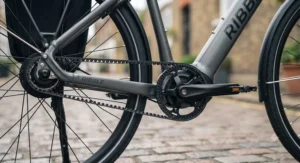
Dutch brand Gazelle has been building bicycles since 1892, and the Gazelle Ultimate C380 shows a century of accumulated know-how about what makes a bike comfortable over long distances. A Gates carbon belt drives an Enviolo stepless gear hub, powered by a Bosch mid-motor and an integrated battery in the 500-625Wh range depending on configuration, with Magura hydraulic disc brakes handling stopping duties. The frame is offered in both high-step and low-step configurations, so fit isn’t a barrier regardless of riding style.
Here’s what most spec sheets won’t tell you outright: the Enviolo hub’s genuinely useful trick isn’t just avoiding maintenance, it’s letting you shift down to a comfortable gear while completely stationary — useful at every set of traffic lights on a long urban route, and something no derailleur system can replicate. On paper this means less stop-start fumbling and a smoother relationship with hills that build gradually rather than hit all at once. One long-term buyer’s experience shared on Gazelle’s own site describes a partner comfortably out-riding a companion on steep, sustained climbs thanks to the bike’s assistance and gearing combination — the kind of anecdotal feedback worth weighing alongside, rather than instead of, independent reviews.
Pros:
- ✅ Enviolo stepless hub allows shifting while completely stationary
- ✅ Bosch motor and large battery options suit long-distance touring
- ✅ Magura hydraulic brakes provide confident stopping in all weather
Cons:
- ❌ No suspension seatpost as standard, which some buyers note as a comfort gap
- ❌ Premium Dutch-brand pricing puts it well above budget commuter options
UK pricing starts from £3,999 depending on frame, motor and battery configuration — check current price, as Gazelle offers several C380 variants at different points on the range.
7. Kalkhoff Entice 5+ Advance Belt — best heavy-duty SUV e-bike
At the top of this list sits the Kalkhoff Entice 5+ Advance Belt, a German-engineered e-SUV built for riders who need to carry serious loads over serious distances. A Bosch Performance CX motor with 85 Nm of torque pairs with a Gates CDX belt and an Enviolo Trekking stepless hub, all backed by an 800Wh Bosch PowerTube battery — one of the largest capacities on this list. A 120mm-travel Suntour Mobie34 air fork and Tektro four-piston brakes complete a spec sheet built for rough surfaces and heavy panniers rather than a light dash to the office.
The spec comparison here tells a clear story: this bike is rated for a system weight of up to 170kg, which is a meaningful headline if you’re planning to carry a child seat, full panniers, or simply ride at a heavier body weight without worrying about strain on the drivetrain. Reviewers consistently flag the maintenance-free Gates belt paired with the continuously variable Enviolo hub as the bike’s defining strength, precisely because high-torque motors like the CX generate loads that are genuinely harder on a chain and cassette than on a sealed belt-and-hub system — a mechanical reality this bike is specifically engineered around rather than merely marketed on.
Pros:
- ✅ Rated for up to 170kg system weight — ideal for loaded touring
- ✅ 800Wh battery and 85 Nm CX motor suit long, hilly routes
- ✅ Air suspension fork adds real comfort on rough surfaces
Cons:
- ❌ The heaviest and most expensive bike on this list
- ❌ Overkill for short, flat urban commutes where lighter options suffice
Expect pricing in the £4,800-£5,300 range at the time of research — check current price, since Kalkhoff’s UK RRPs can vary meaningfully between dealers and finance packages.
Practical Usage Guide: Living With a Belt Drive or Hub Gear E-Bike
Buying the bike is the easy part; living with it well is where the real value of a belt-and-hub system shows up. In your first 30 days, the single most important habit is checking belt tension roughly once a month — Gates recommends periodic tension checks using a simple app or gauge, since a belt that’s too loose will skip under load and one that’s too tight accelerates bearing wear. Most owners never need to touch this more than a couple of times a year once the tension settles in.
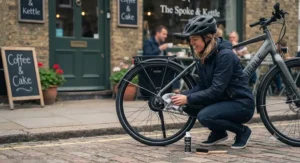
A common first-30-days mistake is treating the belt like a chain and reaching for lubricant — don’t. Gates belts are explicitly designed to run dry; oil or wax actually attracts grit and can degrade the polyurethane compound over time. If it gets muddy, a hose-down or a wipe with a damp cloth is genuinely all it needs. For the hub gear itself, Enviolo and Shimano internal hubs use a small reservoir of oil that typically needs changing every 5,000-10,000km, a job most dealers complete in under half an hour. Keep an eye on the belt’s edges for fraying rather than the surface for wear, since edge damage is the earliest real warning sign something needs attention. Set a simple annual reminder for a full drivetrain check at your local dealer, and that’s genuinely the entire maintenance schedule for most riders.
Real-World Scenarios: Which Drivetrain Suits You?
Consider Priya, a 34-year-old marketing manager commuting 6 miles each way through central Manchester on mostly flat roads, wearing office clothes she can’t afford to get oily. For her, a single-speed belt like the Tenways CGO600 Pro removes the two biggest daily frictions — no chain grease near her trousers, and no gears to think about on a route that barely changes elevation. The lighter weight is a genuine bonus too, since she stores the bike in a third-floor flat with no lift.
Now picture Dave, a 52-year-old retiree in the Peak District doing 15-mile loops most weekends, often loaded with camera gear and a packed lunch. His terrain climbs and descends constantly, so a fixed single-speed would leave him either grinding uphill or spinning wildly on descents. A stepless hub like the Enviolo system on the Tenways AGO T or Cube Kathmandu Hybrid Comfort Pro 800 lets him trim resistance continuously as the gradient shifts, without ever hunting for the “right” gear mid-climb.
Finally, consider Amara, a family cyclist in Bristol who tows a child trailer twice a week and does the full weekly shop by bike. Her priority isn’t speed, it’s dependable torque and load capacity — which is exactly what the Kalkhoff Entice 5+ Advance Belt‘s 170kg system weight rating and 85 Nm motor are built around. Matching rider profile to drivetrain like this, rather than just chasing the biggest number on a spec sheet, is the single most useful thing you can do before spending several thousand pounds.
Problem → Solution: Fixing Common Belt Drive and Hub Gear Niggles
Problem: The belt makes an occasional clicking or slapping noise. This is almost always a tension issue rather than a fault — check it against the manufacturer’s recommended tension using a simple phone app or gauge, and adjust the eccentric bottom bracket or dropout accordingly.
Problem: Gear changes on the hub feel sluggish or delayed. Internal hubs, unlike derailleurs, generally shift best when you briefly ease off pedal pressure during the change. Riders coming from chain-and-derailleur bikes often keep pedalling hard through the shift out of habit, which can make the change feel notchy.
Problem: You can’t find a shop that services belt drives. Ask your local dealer directly — Gates-certified workshops are increasingly common in UK cities, and most competent mechanics can service the hub and belt tension even without a formal Gates certification, since the process is genuinely simpler than derailleur tuning.
Problem: You’re worried about belt life on a high-torque motor. This is a legitimate concern with 80-90 Nm mid-drives, which is exactly why manufacturers like Gates offer a higher-load CDX belt specifically rated for e-bikes, used across most of the bikes in this guide — check your bike specifically uses CDX rather than the lighter CDN belt if you’re riding a high-torque motor regularly.
Problem: You need a wider gear range than a hub can offer for very steep terrain. An 8-speed Alfine-style hub typically offers around a 307% gear range, which covers most UK terrain comfortably, but for genuinely mountainous touring, a wider-range hub like a Rohloff (often available as a paid upgrade) may be worth the extra cost.
What Is a Belt Drive vs Hub Gear Electric Bike?
A belt drive vs hub gear electric bike refers to an e-bike using a toothed carbon-reinforced belt instead of a metal chain, paired with an internally sealed hub gear rather than an exposed derailleur. It’s widely considered the cleanest drivetrain ebike option available, and among UK commuters it’s often described simply as the low fuss electric bike drivetrain choice.
The two components work as a pair for a mechanical reason, not just a stylistic one. A belt is a single continuous loop that can’t be split and rejoined like a chain, so it needs a frame with a splittable rear triangle or a raised chainstay to fit at all — and because it can’t run across multiple sprockets the way a chain does over a derailleur cassette, it needs its gearing built into the hub instead. That’s why you essentially never see a belt drive paired with an external derailleur on a production e-bike; the two technologies solve the “gears” problem in fundamentally different, mutually exclusive ways.
How to Choose Between Belt Drive and Hub Gear
- Assess your terrain honestly. A single-speed belt suits genuinely flat commutes; anything with meaningful hills needs at least a multi-speed hub, and steep sustained climbs may justify a wider-range option like Rohloff.
- Work out your realistic annual mileage. Higher-mileage riders benefit disproportionately from a belt’s extended service intervals, since the time saved compounds year after year.
- Check your storage situation. If you’re carrying your bike up stairs regularly, the lighter single-speed and two-speed options on this list will matter more than they might elsewhere.
- Match motor torque to belt rating. Anything above roughly 75 Nm should be paired with a CDX-rated Gates belt rather than the lighter CDN belt, to avoid premature wear.
- Decide how much you value stepless shifting. Enviolo-style continuously variable hubs cost more but genuinely change how a bike feels on rolling terrain, letting you fine-tune cadence rather than jumping between fixed ratios.
- Factor in load-carrying needs. Family cargo runs or loaded touring point toward higher system-weight ratings, like the Kalkhoff’s 170kg limit, rather than the lightest bikes on this list.
- Budget for the belt-hub premium honestly. Expect to pay roughly £300-£800 more for a belt-and-hub setup versus an equivalent chain-and-derailleur bike, a premium that’s typically recovered in saved servicing costs within three to five years of regular riding.
Belt Drive vs Hub Gear vs Chain Derailleur: The Full Comparison
| Factor | Belt + Hub Gear | Chain + Derailleur |
|---|---|---|
| Maintenance frequency | Roughly annual | Every 1-3 months for lubrication |
| Cleanliness | No grease, no chain stains | Requires regular oiling |
| Gear range | Moderate (typically 300-500%) | Wide (often 500%+) |
| Weight | Slightly heavier hub, lighter belt | Lighter hub, heavier when chain is lubed with debris |
| Shifting while stationary | Yes, on most hub gears | No |
| Typical drivetrain lifespan | 3-5x a chain’s mileage | Shorter, but individual parts are cheap to replace |
The numbers make the trade-off obvious: a chain-and-derailleur system wins decisively on raw gear range and per-part cost, which is exactly why it still dominates performance road and mountain bikes where every gram and every percentage of range matters. A belt and hub, on the other hand, wins on total cost of ownership and day-to-day cleanliness for anyone doing repetitive commuting miles, because the maintenance interval gap is not small — we’re talking annual attention versus a job that, done properly, should happen every few weeks. For UK commuters riding through rain, road grit and winter salt for months at a time, that difference in exposed-versus-sealed mechanics tends to matter more than an extra couple of gear ratios ever will.
Drivetrain Lifespan Comparison: Belt, Hub, and Chain
This is one of the most searched questions among people comparing a belt drive vs hub gear electric bike, so it deserves specific numbers rather than vague reassurance. Gates rates its CDX carbon belts for roughly 30,000km (around 18,600 miles) of riding under normal conditions, compared with a typical bicycle chain’s realistic lifespan of 3,000-5,000km before stretch and wear start affecting shifting and efficiency — meaning a well-maintained belt can outlast several chains over its service life. Internal gear hubs are similarly long-lived: Shimano and Enviolo both design their hubs for tens of thousands of kilometres between overhauls, since the entire mechanism is sealed away from road grit, rain and salt that erode an exposed derailleur’s pivots and jockey wheels over time.
Servicing Frequency: What to Expect
In practical terms, most belt-and-hub owners will do a tension check and a visual inspection roughly once a year, alongside an oil change inside the hub every 5,000-10,000km depending on the specific model. Compare that with a chain-and-derailleur bike, where regular commuters are typically lubricating the chain every couple of weeks in wet UK winters and having the derailleur indexed or adjusted every few months as cables stretch and settle. Reviewers consistently frame this gap not as a marginal convenience but as the entire reason to choose a belt-and-hub setup for commuting: fewer trips to the shop, less time spent cross-legged on a garage floor, and considerably less risk of a chain snapping mid-commute in the rain.
Combined Belt-Hub Systems Explained
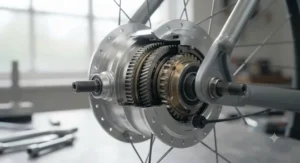
Every bike featured in this guide uses what’s technically called a combined belt-hub system — the specific pairing of a Gates carbon belt with an internally geared hub, rather than either technology used in isolation. This combination exists because, as covered earlier, a belt physically cannot work with a derailleur, so manufacturers building belt-drive e-bikes default to internal hub gearing almost without exception. What varies significantly between bikes on this list is which type of hub sits behind that belt: fixed-step hubs like Shimano’s Alfine and Nexus ranges offer a set number of discrete gears (commonly 3, 5, 8 or 11 speeds), while stepless CVT hubs like Enviolo offer infinitely variable resistance within a similar overall range.
Reviewers and manufacturers alike tend to agree that stepless Enviolo-equipped combined systems feel noticeably smoother on rolling or unpredictable terrain, since there’s no discrete “step” between gears to feel or hear — you simply twist to the resistance that matches the moment. Fixed-step hubs, by contrast, are typically cheaper, slightly more mechanically efficient (since a CVT introduces a small amount of extra friction), and easier for most bike shops to service, since they’re a more established, widely understood technology. Neither is objectively superior; the choice comes down to whether you value shifting resolution or mechanical simplicity more.
Common Mistakes When Buying a Belt Drive or Hub Gear E-Bike
The most frequent mistake buyers make is assuming a belt drive automatically means low maintenance regardless of motor power — pairing a high-torque 90 Nm mid-drive with a lightweight CDN belt rather than the reinforced CDX version can shorten belt life considerably, so always check which belt grade a specific bike uses. A second common error is underestimating gear range needs: riders moving from a 21-speed derailleur bike to a 5-speed fixed hub sometimes find hills harder work than expected, particularly if they live somewhere genuinely hilly rather than gently rolling.
Buyers also frequently skip test rides, which matters more with hub gears than with derailleurs because the shifting sensation is genuinely different — Enviolo’s stepless feel in particular divides opinion, and it’s worth experiencing before committing several thousand pounds. Finally, many first-time buyers overlook belt replacement cost when comparing total ownership expense; while belts last far longer than chains, a replacement CDX belt typically costs more than a chain does, so the savings come from frequency rather than per-unit price, and it’s worth budgeting accordingly rather than assuming belts are simply “cheaper” outright.
Long-Term Cost & Maintenance: The Real ROI
Running the numbers honestly: a typical UK bike shop chain service (clean, lube, adjust) costs somewhere in the £15-£30 range and, for a regular commuter, might happen six to ten times a year once you include occasional derailleur indexing. Over five years that’s a meaningful ongoing cost purely in labour, before accounting for replacement chains, cassettes and jockey wheels as they wear. A belt-and-hub system, by contrast, typically needs one annual check-up costing broadly the same per visit, plus an occasional hub oil change — meaning the total maintenance spend over five years can come in significantly lower, even though the upfront purchase price of a belt-and-hub bike usually runs £300-£800 higher than an equivalent chain-driven model.
The other side of the ROI equation is time, which is harder to put a number on but arguably matters more to busy commuters: fewer unscheduled repairs, less oil on your hands before a meeting, and a drivetrain that’s still working reliably on a wet Tuesday in February without you having thought about it since last spring. For riders doing five-plus commuting days a week year-round, that combination of lower long-term servicing cost and near-zero day-to-day fuss is usually what tips the decision in favour of belt and hub, even at the higher upfront price.
✨ Don’t Miss These Exclusive Deals!
🔍 Take your commute to the next level with one of these low-fuss, clean-riding e-bikes. Click on any highlighted model to check current pricing and availability. A belt-and-hub drivetrain could be the upgrade your daily ride — and your trousers — have been waiting for!
According to guidance published by Cycling UK, belt-and-hub bikes are increasingly common on British utility and touring bikes precisely because they suit the demands of everyday transport better than performance-oriented derailleur setups. It’s a useful independent reference point if you want a non-manufacturer perspective before you commit to a specific model. All of the e-bikes in this guide are legally EAPCs under UK regulations, provided the manufacturer specification and labelling requirements set out in the government’s own consultation on e-cycle rules are met — meaning no licence, insurance, tax or registration is required to ride any of them on public roads, as long as motor assistance is capped at 250W and cuts out at 15.5mph.
Frequently Asked Questions
❓ Is a belt drive better than a hub gear on an electric bike?
❓ How long does a belt drive last on an e-bike?
❓ Can you fit a belt drive to any electric bike?
❓ Do hub gear electric bikes need less servicing than derailleur bikes?
❓ Are belt drive electric bikes more expensive to buy in the UK?
Conclusion
Choosing between a belt drive vs hub gear electric bike and a traditional chain-and-derailleur setup really comes down to one honest question: how much do you value not thinking about your drivetrain? If you’re chasing the widest possible gear range for genuinely mountainous terrain, or you want the cheapest parts to replace at your corner bike shop, a chain-and-derailleur bike still makes sense. But for the overwhelming majority of UK commuters and everyday riders, the seven bikes in this guide demonstrate just how far belt-and-hub technology has come — from the featherweight simplicity of the Tenways CGO600 Pro right up to the load-hauling capability of the Kalkhoff Entice 5+ Advance Belt.
What ties every one of these bikes together is the same underlying promise: a quieter, cleaner, genuinely low-fuss ride that asks very little of you between services, while keeping your trousers considerably cleaner than a chain ever would. Whichever price point you land on, take the time to match motor torque and hub type to your actual terrain and mileage rather than simply buying the biggest numbers on the spec sheet — that’s where the real long-term satisfaction with a belt-and-hub e-bike comes from.
Recommended for You
- Internal Hub Gear Electric Bike: 7 Brilliant 2026 Picks
- Electric Bike With Built-In Dash Cam: 7 Brilliant 2026 Picks
- NFC Unlock Electric Bike: 7 Brilliant Tap-to-Ride Picks (2026)
Disclaimer: This article contains affiliate links. As an Amazon Associate, I earn from qualifying purchases. If you purchase products through these links, we may earn a small commission at no additional cost to you.
✨ Found this helpful? Share it with your friends! 💬🤗
