In This Article
Grease down the right trouser leg, a re-lubed chain every fortnight, and that faint metallic tang on your hands after every ride, sound familiar? If you commute by bike regularly, a belt drive commuter ebike solves that entire category of annoyance in one go, and it’s exactly why the technology has gone from niche curiosity to a genuine mainstream option across UK bike shops in the last few years.
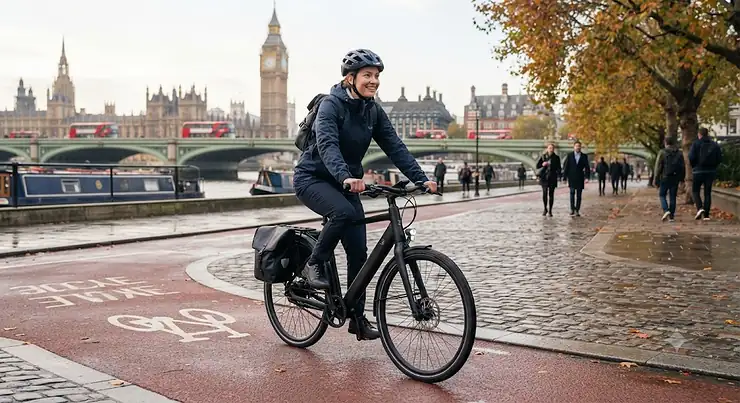
A belt drive commuter ebike replaces the traditional metal chain with a toothed, carbon-fibre-reinforced belt that runs between a front sprocket and a rear cog, transmitting power from your pedals without any lubrication at all. As Wikipedia’s overview of belt-driven bicycles explains, because derailleurs can’t shift a continuous belt the way they shift a chain, any belt drive bike needing more than one gear has to pair the belt with an internal hub gear rather than conventional external gearing. That single fact shapes almost every buying decision in this guide, from which bikes suit hilly commutes to which stay wonderfully simple and light.
Most belt-drive commuter bikes on the market use Gates Carbon Drive, the dominant belt system by a wide margin, though the specific belt series, tension requirements, and gearbox pairing vary considerably between models. This guide breaks down seven real, currently available UK options spanning budget single-speed commuters through to premium internal-gearbox tourers, with honest notes on which is genuinely trouser-friendly, how belt tension and stretch actually work in practice, and which drivetrain suits your specific commute.
Quick Comparison Table
| Product | Drivetrain | Best For | Price Range |
|---|---|---|---|
| Tenways CGO600 Pro | Single-speed Gates CDN belt | Budget flat-terrain commuting | £1,100-£1,700 range |
| Cowboy 4 | Single-speed Gates Carbon Drive | Sporty smart-bike commuting | £1,700-£2,300 range |
| Volt Lite | Gates CDX + Shimano Nexus 3-speed | Folding, British-built commuting | Around £2,200 |
| Ampler Curt | Single-speed Gates Carbon Drive | Lightweight, minimalist urban riding | £2,600-£3,100 range |
| Cube Kathmandu Hybrid Pro | Bosch motor + hub gear + belt | Long-distance touring commutes | £2,800-£4,500 range |
| Gazelle Ultimate C380 | Bosch + Enviolo CVT + Gates belt | Hilly terrain, stepless shifting | £4,000-£4,500 range |
| Riese & Müller Roadster Vario | Bosch + Enviolo CVT + Gates belt | Premium all-weather touring | £4,000-£4,400 range |
Looking at this spread, the single-speed options at the top are genuinely the simplest and lightest, ideal for flatter commutes across cities like London, Cambridge or Bristol’s flatter routes, while the internal-gearbox models further down the table trade some weight and price for the range needed to handle hillier terrain without you doing all the work yourself.
💬 Just one click — help others make better buying decisions too!😊
Top 7 Belt Drive Commuter Ebikes: Expert Analysis
We’ve grouped these across budget, mid-range and premium, and across drivetrain types, so whichever commute you’re tackling, there’s a genuinely relevant option below.
1. Tenways CGO600 Pro — best budget belt drive commuter ebike
The Tenways CGO600 Pro pairs a 250W rear hub motor with a Gates CDN carbon belt and a single-speed drivetrain, and at a genuinely light 16kg it’s one of the lightest belt-drive ebikes available at this price point. Based on the spec comparison with pricier options on this list, the CDN belt series is Gates’ entry-level line, built for lighter torque loads rather than the high-output demands of a mid-drive motor, which is exactly why it suits this bike’s modest rear hub motor rather than a punchier system. Reviewers consistently note the bike’s near-silent operation and the genuine relief of never having to touch a greasy chain before heading into the office. What most buyers overlook is that the single-speed setup, while brilliant for flat routes, means you’re relying entirely on leg power and motor assistance on hills, so anyone commuting across genuinely undulating terrain should weigh this against a geared option further down this list.
Pros:
- ✅ Genuinely lightweight at around 16kg
- ✅ Removable battery with up to 100km claimed range
- ✅ Low entry price for a Gates belt-equipped ebike
Cons:
- ❌ Single-speed limits hill-climbing flexibility
- ❌ Basic component spec reflects the budget price point
Priced in the £1,100-£1,700 range depending on edition and retailer, this is one of the most accessible ways into belt drive ownership currently available in the UK.
2. Cowboy 4 — best sporty single-speed for confident urban riders
The Cowboy 4 is a Belgian-designed smart ebike that pairs a 250W hub motor with a genuine Gates Carbon Drive belt, and the single-speed gear ratio has been specifically tuned for a comfortable cadence at typical UK commuting speeds rather than simply borrowed from a standard bicycle setup. On paper, the bike maxes out the legally permitted 250W/15.5mph assistance envelope, and reviewers consistently describe the power delivery as smooth and confidence-inspiring rather than jerky, largely thanks to a well-tuned torque sensor working in tandem with the belt’s consistent, slip-free power transfer. The app-based unlock, theft detection and ride tracking add a genuinely useful security layer for anyone locking up in a city centre regularly. Here’s what to weigh: the one-size-frame design (or limited size range depending on generation) suits riders roughly 5ft7 and taller most comfortably, so it’s worth checking geometry carefully before buying.
Pros:
- ✅ Genuine Gates Carbon Drive belt, not a generic alternative
- ✅ Smart theft detection and app-based security features
- ✅ Smooth, well-tuned power delivery from the torque sensor
Cons:
- ❌ Frame sizing suits taller riders best
- ❌ Single-speed drivetrain limits hilly-route flexibility
Typically priced in the £1,700-£2,300 range depending on current offers, the Cowboy 4 sits as a considered mid-tier pick for confident urban riders who value style alongside genuine belt-drive practicality.
3. Volt Lite — best belt drive compatible internal gearbox for folding commutes
The Volt Lite is a British-assembled folding ebike that pairs a Gates CDX belt, the toughest of Gates’ belt series, with a Shimano Nexus three-speed internal hub gear, making it one of the few genuinely folding commuters to offer a belt drive compatible internal gearbox rather than forcing a single-speed compromise. Based on the spec sheet, the CDX belt is rated for meaningfully higher torque loads than the CDN belt found on entry-level single-speed bikes, so pairing it with even a modest three-speed Nexus hub gives noticeably more flexibility on inclines without sacrificing the low-maintenance, clean-drivetrain appeal that draws people to belt drive in the first place. The hinge-in-the-middle fold and height-adjustable one-size handlebar setup make it genuinely practical for anyone combining a bike commute with a train leg. What most buyers overlook is that folding belt-drive bikes are still relatively rare, since the continuous belt loop typically requires a specifically designed, non-folding frame; Volt’s engineering around this is a genuine point of difference.
Pros:
- ✅ Genuine folding frame paired with a belt drive
- ✅ Shimano Nexus 3-speed hub adds real hill flexibility
- ✅ British-assembled with integrated lighting and mudguards
Cons:
- ❌ Three gears is modest range for very hilly commutes
- ❌ Heavier than the pure single-speed options on this list
At around £2,199, the Volt Lite occupies a genuinely useful niche for commuters who need both a belt drive and a bike that folds down for multi-modal journeys.
4. Ampler Curt — best lightweight, trouser-friendliest belt drive ebike
The Ampler Curt‘s single-speed version is arguably the most minimalist bike on this list, hiding its battery inside a conventionally sized downtube and its rear hub motor almost entirely behind the disc brake and belt pulley, so at a glance it barely reads as an ebike at all. At a genuinely light 14.4kg, it’s noticeably lighter than most belt-drive competitors, and reviewers consistently praise how close the ride feel is to an unassisted bicycle, with the motor’s assistance blending in rather than announcing itself. On paper, the belt drive here is precisely why this is one of the more trouser-friendly options on the market: no chain means no risk of oil transferring to a trouser leg or bag strap, and the belt itself never needs the degreasing and relubing that keeps a chain clean. What most buyers overlook is that the smaller 336Wh battery trades some range for that low weight, so anyone with a genuinely long commute should compare real-world range carefully against the heavier, bigger-battery options further down this list.
Pros:
- ✅ Exceptionally light at 14.4kg for a belt-drive ebike
- ✅ Belt and hidden motor keep it looking like a standard bike
- ✅ Genuinely trouser and bag-strap friendly with zero chain mess
Cons:
- ❌ Smaller battery than most rivals on this list
- ❌ Premium price for a relatively minimal spec sheet
Priced in the £2,600-£3,100 range depending on configuration, the Ampler Curt rewards buyers who prioritise weight and clean aesthetics over maximum range or gear flexibility.
5. Cube Kathmandu Hybrid Pro — best belt drive commuter ebike for longer touring commutes
The Cube Kathmandu Hybrid Pro pairs Bosch’s Performance Line CX mid-drive motor, one of the most torque-rich systems on the market, with an internal hub gear and Gates belt drive, aimed squarely at commuters whose route stretches well beyond a typical short urban hop. Based on the spec comparison with the lighter single-speed bikes earlier in this list, pairing a genuinely powerful mid-drive motor with a belt requires a higher-rated belt series than the entry-level CDN line, since mid-drive systems put considerably more torque through the drivetrain than a modest rear hub motor. Reviewers consistently highlight the large 750-800Wh battery as a genuine standout, comfortably covering long, hilly commutes or weekend touring without range anxiety. On paper, the combination of hub gears and belt drive means gear changes can happen while stationary at traffic lights, a genuinely practical advantage over a chain-and-derailleur setup for stop-start city riding.
Pros:
- ✅ Powerful Bosch mid-drive motor suits hilly, longer routes
- ✅ Large battery genuinely supports touring-length commutes
- ✅ Hub gears allow shifting while stationary at junctions
Cons:
- ❌ Considerably heavier than the single-speed options here
- ❌ Premium price reflects the higher-spec motor and battery
At a price range of roughly £2,800-£4,500 depending on trim, the Cube Kathmandu Hybrid Pro is the considered choice for commuters who need genuine range and hill-climbing power alongside a clean drivetrain.
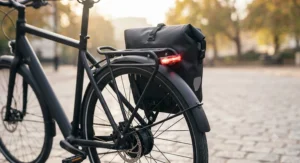
6. Gazelle Ultimate C380 — best stepless gearbox for hilly commutes
The Gazelle Ultimate C380 combines a Bosch Performance Line motor with an Enviolo continuously variable hub gear and Gates Carbon Drive belt, and the Enviolo system is genuinely different from a conventional stepped hub gear: rather than clicking between fixed ratios, it uses a continuously variable planetary system that lets you dial in your exact preferred cadence rather than settling for the nearest available gear. On paper, this stepless shifting pairs particularly well with a belt drive, since both systems favour smooth, low-maintenance operation over the fiddly adjustment a derailleur setup demands. Reviewers consistently describe the shifting experience as genuinely transformative for anyone who’s found conventional stepped gears frustrating on rolling terrain, since you’re never caught between two ratios that are both slightly wrong. What most buyers overlook is that the Enviolo hub’s efficiency dips slightly at the extremes of its gear range, though on an ebike this is largely masked by the motor compensating for any small mechanical loss.
Pros:
- ✅ Stepless Enviolo shifting suits genuinely hilly terrain
- ✅ Bosch motor and large battery options support long rides
- ✅ Belt and hub gear combination is essentially maintenance-free
Cons:
- ❌ Premium price reflects the touring-grade component spec
- ❌ Heavier overall package than lighter single-speed options
At a price range of roughly £4,000-£4,500, the Gazelle Ultimate C380 is aimed at commuters and tourers who want the smoothest possible gear changes alongside a fully belt-driven system.
7. Riese & Müller Roadster Vario — best premium belt drive compatible internal gearbox
The Riese & Müller Roadster Vario pairs a Bosch Performance Line CX Gen 4 motor with an Enviolo CVT hub gear and Gates belt drive, representing about as refined an example of a belt drive compatible internal gearbox as currently exists on the UK market. Riese & Müller’s naming convention actually spells this out directly: “Vario” specifically denotes the Enviolo hub-and-belt pairing within their range, distinct from their chain-driven “Touring” spec or their Rohloff-equipped premium option, which tells you how deliberately engineered this combination is rather than being a simple aftermarket swap. Reviewers consistently note the exceptionally smooth, forgiving ride quality, and the German engineering extends to genuinely thoughtful details like weatherproofing around the belt area for UK winter commuting. On paper, this is the most expensive option on this list, but what most buyers overlook is that the total cost of ownership over several years of daily commuting compares favourably against a cheaper bike needing regular chain replacement, cassette wear, and degreasing sessions.
Pros:
- ✅ Purpose-engineered Enviolo and belt pairing, not an aftermarket fit
- ✅ Powerful Bosch CX motor handles hills and touring loads
- ✅ Genuinely weatherproofed for year-round UK commuting
Cons:
- ❌ Highest price point on this list by a clear margin
- ❌ Overkill for a short, flat daily commute
At a price range of roughly £4,000-£4,400, the Riese & Müller Roadster Vario is the top-tier pick for commuters who want the belt-and-hub-gear formula executed to the highest standard money can currently buy.
✨ Don’t Miss These Exclusive Deals!
🔍 Take your commute to the next level with these carefully selected belt drive ebikes. Click on any highlighted item to check current pricing and availability. These picks will help you build a genuinely clean, low-maintenance daily ride!
Gates Carbon Drive Ebike: Why This Specific System Dominates
When people say “belt drive,” in the vast majority of cases on this list and across the wider market, they specifically mean Gates Carbon Drive, the system that has become close to the industry standard for a Gates Carbon Drive ebike setup. Gates offers several belt series tailored to different torque demands: the CDN series suits lighter, entry-level applications like the Tenways CGO600 Pro‘s rear hub motor, CDC handles mid-torque e-bike loads up to around 75Nm, and CDX is rated for the highest, most demanding torque loads, including powerful mid-drive systems like the Bosch motor found on the Cube Kathmandu Hybrid Pro and Riese & Müller Roadster Vario. According to a detailed explainer on belt-drive bicycle pros and cons from BikeRadar, correct belt tension is genuinely important to how the drivetrain performs, since too little tension risks the belt skipping under load while too much accelerates wear on the belt and sprockets. This is precisely why buying a bike specifically designed around Gates Carbon Drive from the outset, rather than a generic aftermarket conversion, matters so much for long-term reliability.
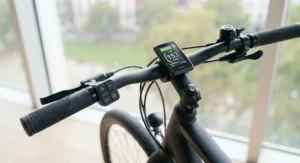
Belt Drive Ebike Trouser Friendly: The Practical Case for Commuters
For a huge proportion of commuters, the single biggest practical draw of a belt drive commuter ebike has nothing to do with performance figures and everything to do with arriving at work without an oily stripe up one trouser leg. A chain and derailleur setup relies on regular lubrication to function properly, and that lubricant inevitably transfers to clothing, bag straps, and hands during everyday handling, whether that’s lifting the bike onto a train, adjusting a pannier, or simply brushing past the drivetrain while locking up. A belt drive runs completely dry, with no lubrication required at any point in its service life, which is precisely why models like the Ampler Curt and Volt Lite are marketed so heavily on their suitability for smart, office-ready commuting rather than purely on performance. Reviewers consistently cite this trouser-friendliness as a genuinely underrated benefit compared with headline numbers like torque or battery capacity, since it’s the difference riders notice every single day rather than only on longer or harder rides.
Clean Drivetrain Electric Bicycle: What “Low Maintenance” Actually Means Day to Day
“Low maintenance” gets used loosely in ebike marketing, so it’s worth being specific about what a genuinely clean drivetrain electric bicycle saves you from doing. With a chain, you’re looking at regular degreasing and relubing, periodic replacement as the chain stretches and wears, and matching cassette replacement once wear becomes significant, plus the ever-present risk of a dropped chain mid-commute. With a belt drive, none of that routine maintenance applies: there’s no lubrication schedule, no chain-stretch monitoring, and belts are rated for tens of thousands of kilometres of service life under normal use. What most buyers overlook is that “low maintenance” doesn’t mean “zero maintenance”; belt tension should still be checked periodically, and the belt itself should never be twisted during removal or reinstallation, since twisting can crack the internal carbon-fibre cords even if no damage is visible externally. Beyond that occasional check, though, a belt-drive commuter ebike genuinely does deliver on the promise of a cleaner, quieter ownership experience than a chain-driven equivalent.
Gates CDX Belt Tension: Getting It Right
Belt tension is the one piece of maintenance a belt-drive ebike owner genuinely needs to understand, even if it’s checked only occasionally rather than constantly. Unlike a chain, which has some built-in tolerance for slack, a Gates belt needs to sit within a fairly specific tension window to perform properly: too loose and the belt can skip teeth under hard acceleration or when climbing, particularly noticeable on higher-torque mid-drive bikes like the Cube Kathmandu Hybrid Pro; too tight and you accelerate wear on both the belt and the sprockets it runs over, along with added drag. Gates recommends checking tension using either a dedicated tension gauge or, informally, a smartphone app that measures the belt’s vibration frequency when plucked, similar in principle to tuning a guitar string. Reviewers consistently note that once correctly tensioned, a Gates belt genuinely holds that setting for a long time under normal riding, needing only occasional rechecking rather than constant fiddling, particularly compared with a derailleur that regularly needs indexing adjustments.
Belt Drive Compatible Internal Gearbox: Matching Gears to Your Commute
Because a belt can’t be shifted by a derailleur, every geared belt-drive bike on this list relies on a belt drive compatible internal gearbox rather than external gearing, and the type of hub gear fitted meaningfully affects how the bike handles hills. The Volt Lite‘s Shimano Nexus three-speed hub offers a modest but genuinely useful range for gently rolling routes without adding much weight or cost. Further up the price range, the Cube Kathmandu Hybrid Pro uses a stepped internal hub gear paired with its powerful Bosch motor to handle genuinely hilly, longer-distance routes. At the premium end, the Gazelle Ultimate C380 and Riese & Müller Roadster Vario both use Enviolo’s continuously variable hub, trading the familiar “click between gears” feel for stepless, infinitely adjustable resistance. Choosing between these largely comes down to how hilly your specific commute is and how much you’re willing to spend for smoother, wider-range gearing on top of the base belt-drive benefits.
Carbon Belt Stretch Rate: Does It Actually Wear Out?
A common worry among people considering their first belt-drive ebike is whether the belt will stretch and need re-tensioning the way a chain gradually elongates with wear. In practice, this is one of belt drive’s genuine strengths: the carbon fibre cords embedded within a Gates belt are specifically engineered to resist stretching under normal riding loads, which is precisely why the belts are described as carbon-reinforced rather than simply rubber or plastic. This near-zero stretch rate means belt tension, once correctly set, tends to remain stable for a very long time under typical commuting use, unlike a chain, which measurably elongates as its rollers and pins wear against each other. That said, belts aren’t literally immortal: they will eventually wear at the tooth surface after tens of thousands of kilometres, and manufacturers specify service-life mileage figures for this reason, but the day-to-day tension stability is genuinely a step change compared with chain maintenance.
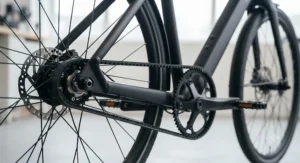
What to Expect: Real-World Performance on UK Commutes
On paper, all the technical benefits of belt drive sound compelling, but here’s what actually changes day to day. The most immediately noticeable difference is noise: a belt-drive bike is dramatically quieter than a chain-and-derailleur setup, with several reviewers describing the ride as near-silent, which matters more than it might sound for anyone commuting past pedestrians or through quieter residential streets early in the morning. The second noticeable difference is cleanliness, both of the bike itself and of anyone handling it; no oil residue means a belt-drive bike can genuinely be rinsed clean with water without any need to relubricate afterwards. What the spec sheet won’t tell you, but reviewer patterns suggest, is that single-speed belt bikes like the Tenways CGO600 Pro and Ampler Curt genuinely suit flatter UK cities well, but riders in hillier regions consistently report preferring the geared, internal-hub options for a noticeably less strenuous ride.
Long-Term Cost & Maintenance
Comparing total cost of ownership over several years of regular commuting tells a genuinely favourable story for belt drive, even accounting for the higher upfront price most belt-drive bikes carry compared with chain-driven equivalents. A chain-driven commuter typically needs periodic chain and cassette replacement, ongoing lubricant purchases, and more frequent workshop visits for indexing and adjustment. A belt-driven bike largely avoids all of that, with the main ongoing cost being an eventual belt replacement after tens of thousands of kilometres, alongside standard wear items like tyres and brake pads that apply to any bike regardless of drivetrain. For commuters covering meaningful annual mileage, the reduced maintenance frequency alone can offset a good portion of the higher purchase price over a three-to-five-year ownership period, particularly for premium options like the Riese & Müller Roadster Vario, which are built with genuine long-term durability in mind.
Safety, Regulations and UK Legal Requirements
Every belt-drive ebike featured on this list is designed to comply with the UK’s Electrically Assisted Pedal Cycle rules, and it’s worth understanding these regardless of which drivetrain you choose. According to official UK government guidance on electrically assisted pedal cycles, a compliant EAPC must have a motor with a maximum continuous rated power of 250 watts, must only provide assistance while the rider is pedalling, and that assistance must cut out once the bike reaches 15.5mph. Meeting these conditions means the bike is legally treated as a normal pedal cycle, with no requirement for a licence, insurance, road tax or registration. All seven bikes reviewed here are built to these EAPC specifications as standard, so buyers don’t need to check compliance individually, though it’s always worth confirming current specifications directly with the retailer before purchase, since derestriction kits or modifications would remove that legal status entirely.
🚲 Ready to Ride Clean and Quiet?
💪 Whether you want the lightest single-speed commuter or a hill-conquering internal-gearbox tourer, there’s a belt drive ebike above built for exactly that commute. Check current pricing and availability before your next ride to work!
How to Choose a Belt Drive Commuter Ebike
Working through seven genuinely different bikes gets easier with a short checklist in mind.
- Assess your terrain honestly. Flat, short commutes suit single-speed bikes like the Tenways CGO600 Pro; hillier routes benefit from an internal hub gear.
- Match belt series to motor power. Higher-torque mid-drive motors need a higher-rated belt series such as CDX rather than the lighter CDN line.
- Weigh weight against range. Lighter single-speed bikes are easier to lift and carry but generally offer smaller batteries than heavier touring models.
- Consider folding needs. If your commute includes a train leg, a genuine folding belt-drive option like the Volt Lite solves a problem most belt bikes can’t.
- Set a realistic budget band. Entry-level belt-drive commuters start around £1,100; premium hub-gear tourers run to £4,000-plus.
- Check UK EAPC compliance. Confirm the motor power and assisted speed limit meet the legal 250W/15.5mph requirements before buying.
- Factor in total cost of ownership. A pricier belt-drive bike can still work out cheaper over several years than a chain-driven bike needing regular servicing.
Common Mistakes When Buying a Belt Drive Ebike
The most frequent mistake is assuming any belt-drive bike can be shifted like a normal geared bike; because derailleurs are physically incompatible with a continuous belt loop, every multi-speed belt bike depends on an internal hub gear, and buyers occasionally discover this only after purchase. A second common error is underestimating how a single-speed drivetrain performs on hilly terrain, since the appeal of simplicity can outweigh a realistic assessment of your actual commute in the excitement of buying. Buyers also frequently overlook belt tension entirely, assuming “low maintenance” means “zero maintenance,” when in fact an occasionally under- or over-tensioned belt can meaningfully shorten its service life. Finally, it’s worth avoiding generic, non-Gates belt systems on unfamiliar budget imports, since replacement parts and correctly matched sprockets can be far harder to source than for the widely available Gates Carbon Drive ecosystem used across every bike on this list.
Frequently Asked Questions
❓ Is a belt drive better than a chain for commuting?
❓ How long does a Gates Carbon Drive belt last?
❓ Can I add gears to a single-speed belt drive ebike?
❓ Which belt drive ebike is best for hills?
❓ Do belt drive ebikes need any maintenance at all?
Conclusion
Choosing the right belt drive commuter ebike really comes down to an honest assessment of your specific commute rather than chasing the single “best” bike on paper. The Tenways CGO600 Pro and Cowboy 4 suit flatter routes and buyers prioritising a lower entry price or sportier styling, while the Volt Lite solves the folding-and-belt combination that most bikes in this category simply can’t offer. The Ampler Curt rewards anyone chasing the lightest, most trouser-friendly single-speed experience, and the Cube Kathmandu Hybrid Pro, Gazelle Ultimate C380, and Riese & Müller Roadster Vario all deliver genuinely hill-capable performance through their belt drive compatible internal gearbox setups, at increasingly premium price points. Whichever you choose, the underlying appeal is the same: a quieter, cleaner, lower-maintenance daily ride that keeps both your bike and your trousers in noticeably better shape than a traditional chain ever could.
Recommended for You
- Bluetooth Enabled Ebike UK: 7 Smart-Connected Picks for 2026
- Electric Bike Theft Statistics 2026: 7 Ways Owners Fight Back
- Most Secure Electric Bike London: 7 Theft-Proof Picks (2026)
Disclaimer: This article contains affiliate links. As an Amazon Associate, I earn from qualifying purchases. If you purchase products through these links, we may earn a small commission at no additional cost to you.
✨ Found this helpful? Share it with your friends! 💬🤗
