In This Article
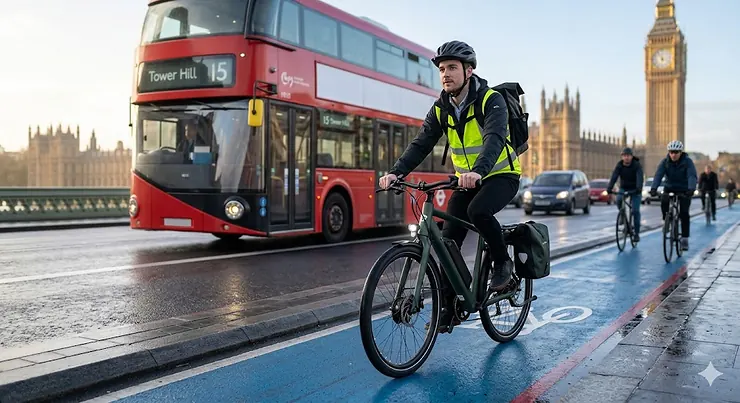
The British e-bike market has quietly transformed over the past two years. What once required a four-figure investment now sits comfortably under £500, and the quality gap has narrowed considerably. Entry-level e-bikes in 2026 aren’t just “cheap alternatives” — they’re properly engineered machines that handle wet Tuesday mornings in Manchester and hilly commutes through Edinburgh with equal composure. According to Cycling UK’s latest statistics, cycling participation continues growing across England, Scotland, and Wales, with e-bikes playing an increasingly significant role in this expansion.
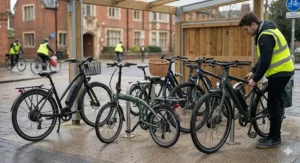
For first-time e-bike buyers navigating the UK market, the challenge isn’t finding options; it’s filtering through marketplace noise to identify which budget models actually deliver. The under-£500 category now offers 250W EAPC-compliant motors, removable batteries pushing 60 km of real-world range, and IP-rated waterproofing that doesn’t surrender after the first autumn drizzle. This matters in Britain, where your e-bike needs to function as reliable daily transport rather than a fair-weather accessory.
What’s particularly notable about entry-level e-bikes in 2026 is how manufacturers have addressed the UK’s specific riding context. Compact folding frames suit terraced housing and cramped bike sheds, whilst sealed components resist the relentless damp that defines British weather from October through April. The best budget e-bikes balance performance with practical concerns like storage space, theft deterrence, and whether you can lug them up three flights of stairs after the battery runs flat.
This guide examines seven entry-level e-bikes currently available on Amazon.co.uk that meet UK EAPC regulations whilst offering genuine value. We’ll cover which models suit different UK riding scenarios, from Zone 2 London commutes to rural Cotswolds lanes, and identify the specific trade-offs each price point demands.
Quick Comparison: Top Entry-Level E-Bikes at a Glance
| Model | Motor Power | Battery Range | Weight | Price Range | Best For |
|---|---|---|---|---|---|
| iSinwheel U1 | 500W peak | 45-50 km | 16 kg | £350-£380 | Ultra-compact city commuting |
| DYU D3F | 500W peak | 50-60 km | 17 kg | £380-£420 | Folding versatility |
| iSinwheel U3 | 500W peak | 45-50 km | 17 kg | £420-£460 | Space-saving storage |
| Fiido D3 Pro | 250W | 60-79 km | 17.3 kg | £400-£460 | Extended range riding |
| iSinwheel U4 | 500W peak | 70-88 km | 18 kg | £420-£460 | Long-distance commuters |
| Hidoes C5 | 350W peak | 50-60 km | 18 kg | £400-£450 | Traditional bike feel |
| Twofish TF1 | 250W | 80-100 km | 22 kg | £480-£530 | Hill climbing capability |
💬 Just one click — help others make better buying decisions too! 😊
Top 7 Entry-Level E-Bikes: Expert Analysis for UK Riders
1. iSinwheel U1 — The Ultra-Compact City Solution
The iSinwheel U1 sits at the absolute entry point of serious e-biking, and it’s rather cleverly designed for urban Britain’s spatial constraints. This 14-inch folding model weighs just 16 kg and collapses to dimensions that fit under most office desks or in the boot of a Fiat 500 — genuinely useful if you’re combining cycling with train commutes or storing it in a one-bedroom flat.
What makes this model particularly suited to UK city riding is its 500W peak motor output (250W continuous, meeting EAPC regulations) paired with a 280.8Wh battery. In practical terms, that delivers approximately 45-50 km of pedal-assist range on flat urban routes, dropping to around 35-40 km when you’re battling November headwinds or the gentle inclines around Bristol. The IP65 water resistance means Manchester’s drizzle won’t compromise the electronics, though you’ll still want to bring it indoors for storage rather than leaving it chained outside year-round.
UK riders consistently praise the U1’s manoeuvrability in traffic and its quick-fold mechanism that doesn’t require tools. The compact 14-inch wheels make tight corners feel natural rather than twitchy, whilst the four pedal-assist levels provide enough granularity to conserve battery when you’re cruising versus tackling a sudden hill. One genuine limitation: riders above 6’1″ report feeling cramped on longer journeys, and the smaller wheels transmit more road vibration than full-size models.
Pros:
✅ Exceptionally compact when folded — perfect for British urban living
✅ IP65 waterproofing handles typical UK weather without complaint
✅ Low weight makes carrying upstairs genuinely feasible
Cons:
❌ Range drops noticeably in cold, wet conditions (expect 35 km realistic winter range)
❌ Smaller wheels feel less stable on uneven British road surfaces
Current pricing sits in the £350-£380 range on Amazon.co.uk, making this the most accessible true e-bike that doesn’t compromise on essential safety features. For Central London commuters or students navigating compact city centres, the U1’s portability advantage outweighs its modest range limitations.
2. DYU D3F — Proven Folding Performance
The DYU D3F has maintained consistent popularity on Amazon.co.uk for good reason: it delivers balanced performance at a price point that doesn’t require financial gymnastics. Powered by a 250W motor (500W peak) and equipped with a 36V 10Ah removable battery, this 14-inch folder achieves up to 60 km of pedal-assist range under optimal conditions — translate that to roughly 45-50 km in typical British riding scenarios that involve frequent stops, gradual inclines, and the occasional strong crosswind.
What distinguishes the D3F in the UK market is its build quality relative to price. The aluminium frame feels reassuringly solid rather than flexi, whilst dual disc brakes provide confident stopping power on wet autumn tarmac where rim brakes would struggle. The front suspension fork isn’t sophisticated, but it absorbs enough vibration from Britain’s pothole-scarred roads to prevent the constant jarring that makes budget e-bikes exhausting over longer distances.
British buyers particularly value the removable battery feature, which means you can charge indoors without lugging the entire bike up stairs — essential if you live in a second-floor flat without lift access. The battery reaches 80% charge in approximately 4 hours, allowing overnight top-ups that don’t require careful timing. One practical observation: the spring suspension setup works adequately for urban commuting but feels overwhelmed on genuinely rough surfaces like canal towpaths or rural farm tracks.
Pros:
✅ Removable battery enables practical indoor charging in British homes
✅ Dual disc brakes maintain consistent performance in wet conditions
✅ Adjustable seat height accommodates riders from 155-180 cm
Cons:
❌ Suspension struggles with rougher terrain beyond smooth urban roads
❌ Display screen can be difficult to read in direct sunlight
Priced in the £380-£420 range, the DYU D3F represents solid value for riders who prioritise reliable daily transport over cutting-edge features. This suits someone cycling 8-12 km daily to work in Birmingham or Norwich — practical, dependable, unglamorous.
3. iSinwheel U3 — The Space-Efficient Alternative
The iSinwheel U3 occupies a curious middle ground in the brand’s lineup, offering nearly identical specifications to the U1 but with subtle refinements that appeal to specific use cases. Same 500W peak motor, same 280.8Wh battery capacity, same 14-inch folding frame — but the U3 features an ergonomic sport-cushion seat that UK riders find noticeably more comfortable on journeys exceeding 30 minutes.
For British riders, this becomes relevant when you’re using the bike for more than just quick errands. If your commute involves 45 minutes each way rather than 20, or if weekend leisure rides appeal, that improved saddle genuinely matters. The U3 also includes slightly refined cable management that protects connections better from spray kicked up by wet roads — a minor detail that extends component lifespan when you’re riding through six months of British drizzle.
Battery range sits around 45-50 km in mixed conditions, identical to the U1. What you’re paying extra for here isn’t performance but refined comfort and build details that make daily use less wearing. The foldable frame collapses to the same compact dimensions, maintaining the practical storage advantages essential for British urban environments where bike storage remains perpetually problematic.
UK customer feedback highlights the U3’s appeal to riders who initially bought budget e-bikes expecting minimal quality but found themselves using them daily. The sport seat reduces post-ride discomfort on longer journeys, whilst the overall package maintains the compact portability that makes folding e-bikes popular in Britain’s dense city centres.
Pros:
✅ Enhanced seat comfort for extended UK commutes
✅ Improved weather-resistant cable routing
✅ Identical compact folding benefits to U1
Cons:
❌ Marginal improvements over U1 might not justify price difference
❌ Still limited to 45-50 km realistic range in British conditions
Current pricing around £420-£460 positions the U3 as the choice for riders who’ve decided compact folding suits their needs but want slightly better daily comfort. It’s the bike for someone who’s moved beyond “will e-biking work for me?” to “which e-bike makes daily riding pleasant?”
4. Fiido D3 Pro — Extended Range Specialist
The Fiido D3 Pro distinguishes itself through battery engineering rather than motor power theatrics. Whilst the 250W continuous motor won’t impress on paper compared to 500W peak competitors, the 280.8Wh battery paired with intelligent power management delivers genuinely impressive range — up to 79 km under optimal pedal-assist conditions, which translates to approximately 60-65 km in typical British mixed riding that involves traffic stops, gradual hills, and the energy drain of cold morning starts.
For UK commuters, this extended range fundamentally changes usage patterns. Instead of charging every second day, you’re looking at twice-weekly top-ups even with daily 15 km round-trip commutes. The practical advantage becomes apparent during British winter when battery chemistry performs poorly in cold temperatures — where other budget e-bikes might barely complete your return journey on a December evening, the D3 Pro maintains comfortable reserve capacity.
The 14-inch aluminium frame follows familiar folding e-bike conventions but includes IP54 waterproofing that handles British weather without requiring obsessive post-ride maintenance. Mechanical disc brakes provide adequate stopping power, though they lack the refined modulation of hydraulic systems found on premium models. The 17.3 kg weight sits marginally above ultra-compact competitors, but the difference only matters if you’re regularly carrying the bike up multiple flights of stairs.
British riders appreciate the adjustable components that accommodate heights from 150-185 cm, making this genuinely family-shareable if multiple household members want to try e-biking without each purchasing separate machines. One limitation worth noting: the 6 km/h throttle function only works as walk-assist (pushing the bike whilst walking alongside) to remain UK road-legal, so don’t expect twist-and-go functionality.
Pros:
✅ Extended battery range reduces charging frequency significantly
✅ IP54 waterproofing adequate for British weather conditions
✅ Height adjustability suits wide range of UK riders
Cons:
❌ Slightly heavier than ultra-compact competitors
❌ Walk-assist throttle only (no twist-and-go to maintain EAPC compliance)
Pricing in the £400-£460 range makes the Fiido D3 Pro the intelligent choice for riders whose commutes push 20 km daily or who want weekend range that doesn’t require mid-ride charging anxiety. It’s the bike that rewards riders who value practical utility over flashy specifications.
5. iSinwheel U4 — The Long-Distance Champion
The iSinwheel U4 represents what happens when manufacturers stop compromising battery capacity to hit rock-bottom pricing. Equipped with a substantial 374.4Wh battery paired to a 500W peak motor, this step-through folder delivers up to 88 km of claimed range — which translates to approximately 70 km in realistic British conditions that include hills, headwinds, and the inevitable energy drain from cold weather riding.
What makes this particularly relevant for UK riders is how it eliminates range anxiety as a daily concern. Even heavy users completing 25 km round-trip commutes through hilly terrain can expect 2-3 days between charges, whilst lighter usage patterns might stretch to a full week. The removable battery design means you can charge at your office desk if securing bike storage remains problematic, or bring it indoors overnight without wrestling the entire bike through narrow British doorways.
The step-through frame geometry deserves specific mention for UK riding context. Lower top tube height makes mounting easier when wearing work clothes or carrying bags, whilst the overall design feels stable rather than twitchy despite the 16-inch compact wheels. Front suspension absorbs enough road shock to handle Britain’s degraded road surfaces without the constant vibration that makes budget bikes exhausting on longer journeys.
UK customer reviews consistently highlight the U4’s hill-climbing capability, which matters significantly if your commute involves genuine gradients rather than pancake-flat urban routes. The 500W peak motor output provides enough torque to maintain reasonable speed on 10-12% inclines without requiring maximum pedal effort. In practice, this means arriving at work without requiring immediate recovery time, unlike underpowered budget bikes that leave you sweating through your shirt.
Pros:
✅ Extended 70+ km realistic range handles even demanding UK commutes
✅ Step-through design facilitates easy mounting in work attire
✅ Powerful hill-climbing capability suits British topography
Cons:
❌ Slightly higher price point than ultra-budget competitors
❌ 18 kg weight makes stair-carrying more demanding
Priced around £420-£460, the U4 offers exceptional value for riders whose usage patterns justify the battery capacity investment. This suits someone with a 15-20 km commute through varied terrain who values arriving fresh rather than exhausted, or weekend riders who want genuine exploration range without constant charging interruptions.
6. Hidoes C5 — Traditional Geometry Meets Electric Assist
The Hidoes C5 takes a different design approach from mini-folder competitors, offering more traditional bicycle geometry in a still-compact package. The 14-inch frame maintains portability whilst the upright riding position and swept-back handlebars create a riding experience closer to conventional bikes — appealing to riders who find aggressive forward positions uncomfortable or intimidating.
Powered by a 250W motor (350W peak) and equipped with a 36V battery, the C5 delivers approximately 50-60 km of pedal-assist range in typical British conditions. What distinguishes this model is the front shock absorber that provides noticeably better vibration damping than basic rigid forks, making it more comfortable on Britain’s pothole-riddled urban roads and rough canal towpaths that serve as popular cycling routes.
For UK riders, the C5’s appeal lies in its approachability. The traditional riding position reduces lower back strain on longer journeys, whilst the higher handlebar position improves visibility in traffic — genuinely useful when navigating British city streets where motorists remain somewhat hostile to cyclists. The dual disc braking system maintains consistent performance in wet conditions, addressing one of the primary safety concerns for year-round British riding.
British customer feedback particularly praises the build quality relative to price point. Components feel solid rather than fragile, assembly arrives largely complete (reducing the intimidation factor for first-time e-bike buyers), and the overall package suggests the manufacturer prioritised longevity over shaving every possible pound off production costs. One practical limitation: the battery isn’t removable, requiring you to bring the entire bike to your charging location rather than just carrying a compact battery pack indoors.
Pros:
✅ Comfortable upright geometry reduces back strain on longer UK rides
✅ Superior front suspension for British road conditions
✅ Traditional bike feel appeals to conventional cycling converts
Cons:
❌ Non-removable battery complicates indoor charging logistics
❌ Slightly less compact when folded compared to mini-frame competitors
Current pricing around £400-£450 positions the Hidoes C5 for riders who prioritise comfort and traditional handling over maximum compactness. This suits older riders, those with back issues, or anyone transitioning from conventional bikes who finds aggressive riding positions uncomfortable.
7. Twofish TF1 — The Hill-Climbing Specialist
The Twofish TF1 pushes the boundaries of what “entry-level” reasonably describes, sitting at the premium end of budget e-bike territory. What justifies its position in this roundup is the inclusion of a proper Shimano 7-speed derailleur system paired with a 250W motor delivering 45 Nm of torque — specifications that transform performance on Britain’s hillier terrain.
Equipped with a substantial 36V 15Ah battery, the TF1 delivers claimed range up to 100 km in optimal conditions, translating to approximately 80 km in realistic British mixed riding. More significantly, the 26-inch wheels and full-size frame geometry provide stability and momentum that compact folders simply cannot match. This feels like riding a proper bicycle that happens to have electric assistance, rather than a motorised folding contraption.
For UK riders tackling genuinely hilly commutes — think Sheffield, Bristol, Edinburgh, or rural Wales — the TF1’s gearing advantage becomes immediately apparent. The Shimano 7-speed system allows you to select appropriate ratios for steep climbs whilst the motor torque provides consistent assistance without requiring maximum pedal effort. In practice, this means maintaining reasonable speed on 15% gradients without arriving at work requiring immediate recovery time.
The LCD display provides clear visibility in British daylight conditions (unlike cheaper models with dim screens), showing battery level, speed, and assist mode. Cruise control functionality allows consistent speed maintenance on long flat sections, reducing pedal fatigue on extended commutes. British riders also appreciate the included lights that meet UK visibility standards rather than token accessories that fail after the first heavy rain.
Pros:
✅ Shimano 7-speed drivetrain dramatically improves hill-climbing capability
✅ Full-size 26-inch wheels provide stable, confident handling
✅ Extended 80 km realistic range handles demanding UK commutes
Cons:
❌ 22 kg weight makes stair-carrying impractical
❌ Full-size frame less convenient for compact British storage
Priced around £480-£530, the Twofish TF1 sits at the absolute ceiling of budget territory but delivers performance that justifies the premium for riders with specific needs. This suits someone with a hilly 20+ km commute who values arriving fresh, or riders who want a single bike capable of both daily commuting and weekend exploration without requiring constant range management.
How to Choose Entry-Level E-Bikes for British Riding Conditions
Selecting your first e-bike requires matching specifications to your specific British riding context rather than chasing impressive-looking numbers on spec sheets. Here’s how to evaluate what actually matters for UK usage:
1. Assess Your Realistic Range Requirements
Battery capacity claims assume optimal conditions that rarely exist in British riding. A manufacturer’s “60 km range” typically translates to approximately 45-50 km in mixed urban riding with traffic stops, gradual inclines, and cold weather drain. Calculate your daily round-trip distance, add 30% buffer for unexpected detours and battery degradation over time, then select capacity accordingly. If your commute totals 20 km daily, target models offering 60+ km claimed range to maintain comfortable reserve even during winter when battery performance drops 10-15%.
2. Prioritise Weather Resistance Over Aesthetic Features
British weather demands proper sealing rather than fashion-forward design. Look for IP54 minimum waterproofing on battery compartments and controllers, sealed bearing hubs that resist damp penetration, and rust-resistant frame materials. Aluminium frames outperform steel in wet climates, whilst stainless steel hardware prevents the corrosion that plagues cheaper bikes after one British winter. Remember that your e-bike needs to function reliably through six months of drizzle, not just sunny Saturday rides.
3. Match Motor Power to Your Terrain Profile
Flat urban routes around Cambridge or Norwich function adequately with basic 250W continuous motors, whilst hilly cities like Sheffield, Bristol, or Edinburgh benefit significantly from 500W peak output that provides additional torque on climbs. Don’t be seduced by illegal 750W+ motors marketed online — they void your EAPC classification and technically require registration, insurance, and a driving licence for UK road use. Stick with 250W continuous ratings that clearly state EAPC compliance.
4. Consider Storage Realities of British Housing
Terraced houses, second-floor flats without lifts, and cramped bike sheds define British urban living. Folding e-bikes weighing 16-18 kg remain just about manageable for daily stair-carrying, whilst 22+ kg full-size models become genuinely burdensome if you’re hauling them up three flights after a long commute. Measure your available storage space before purchasing — folded dimensions matter as much as performance specifications if the bike won’t actually fit in your hallway or under your desk at work.
5. Evaluate Component Quality for Long-Term Ownership
Budget e-bikes cut costs somewhere, so identify which compromises you’ll tolerate. Mechanical disc brakes require more maintenance than hydraulic systems but cost considerably less to repair when components wear. Basic LCD displays provide adequate functionality compared to smartphone integration that adds complexity and cost. Shimano drivetrain components offer better longevity and parts availability than no-name alternatives, justifying modest price premiums for riders planning multi-year ownership. Independent consumer testing organisations like Which? rigorously evaluate e-bikes across various price points, providing valuable unbiased assessments of build quality and real-world performance.
6. Verify UK EAPC Compliance Before Purchase
According to UK Government EAPC regulations, road-legal electric bikes must feature 250W maximum continuous motor output, 15.5 mph (25 km/h) speed limiting, and pedal-assist operation. Models advertising “unlock modes” for higher speeds or “twist-and-go” throttles without pedalling aren’t street-legal for UK public roads. Check product descriptions explicitly state EAPC compliance — reputable sellers will prominently feature this information, whilst dodgy marketplace listings bury or omit it entirely.
7. Factor British Climate Impact on Battery Longevity
Lithium-ion batteries perform poorly in cold temperatures, losing approximately 10-15% capacity when ambient temperature drops below 5°C. British winter riding means your advertised 60 km range might realistically deliver 45-50 km on cold January mornings. Select battery capacity with this degradation factored into your calculations, and store batteries indoors overnight during winter months to maintain optimal performance. Removable battery designs facilitate this practical requirement for British year-round riding.
Real-World UK Riding Scenarios: Which E-Bike Fits Your Needs?
Different British riding contexts demand different e-bike characteristics. Here’s how to match models to specific UK usage patterns:
The London Zone 2 Commuter
Profile: 12 km round-trip daily commute through urban traffic, mostly flat terrain, storing bike in second-floor flat, combining cycling with Tube journeys.
Optimal choice: iSinwheel U1 or DYU D3F
The ultra-compact folding design enables seamless train integration and cramped storage. Range requirements remain modest (12 km daily easily covered by 45 km battery capacity), whilst manoeuvrability in dense traffic and lightweight portability matter more than extended range or hill-climbing power. Removable battery (D3F) allows convenient indoor charging without hauling the entire bike upstairs nightly.
The Hilly Commuter (Sheffield, Bristol, Edinburgh)
Profile: 15-20 km round-trip involving genuine gradients, arriving at work without excessive sweating, parking in secure bike shed.
Optimal choice: Twofish TF1
The Shimano 7-speed drivetrain paired with 45 Nm motor torque maintains reasonable speed on 12-15% inclines without requiring maximum pedal effort. Full-size 26-inch wheels provide momentum that compact folders struggle to match on extended climbs. Extended battery capacity ensures reserve power even when tackling demanding gradients that drain batteries faster than flat urban riding.
The Compact Living Cyclist
Profile: Terraced house with no garden shed, storing bike in narrow hallway or living room, short 6-8 km commutes, prioritising minimal space occupation.
Optimal choice: iSinwheel U3
Folds to genuinely compact dimensions that fit unobtrusively in British living spaces. Enhanced seat comfort (versus ultra-basic U1) matters for daily riding even on short distances, whilst improved cable management resists damp penetration during British weather. Range requirements remain modest for short commutes, allowing smaller battery capacity that reduces weight and bulk.
The Extended Range Rider
Profile: 20-25 km daily commute or weekend exploration rides, varying terrain, wants to avoid constant charging, values reliability over compactness.
Optimal choice: iSinwheel U4
Extended 374.4Wh battery capacity delivers 70+ km realistic range even in challenging British conditions with cold weather, hills, and headwinds. Eliminates range anxiety as daily concern, allowing 2-3 days between charges even with demanding usage patterns. Step-through design facilitates mounting in work clothes, whilst removable battery enables office charging if needed.
The Traditional Bike Convert
Profile: Accustomed to conventional bicycles, uncomfortable with aggressive riding positions, concerned about comfort on Britain’s rough roads, older rider or back issues.
Optimal choice: Hidoes C5
Upright geometry and swept-back handlebars create comfortable riding position that reduces back strain. Enhanced front suspension absorbs vibration from pothole-riddled British roads better than rigid forks. Traditional bike handling appeals to riders transitioning from conventional cycling who find mini-folders twitchy or unstable.
Common Mistakes When Buying Entry-Level E-Bikes in the UK
British first-time e-bike buyers repeatedly make predictable errors that compromise satisfaction or legal compliance. Here’s what to avoid:
Ignoring EAPC Compliance in Favour of “Better Specs”
Marketplace listings advertising 750W or 1000W motors might seem appealing, but they’re not road-legal for UK public roads without registration as mopeds. These require insurance, a driving licence, registration plates, and MOT certification. Many buyers discover this only after purchase, leaving them with expensive paperwork hurdles or bikes restricted to private land use only. Always verify 250W continuous motor rating and explicit EAPC compliance before purchasing.
Underestimating British Weather Impact
Budget e-bikes marketed primarily for Mediterranean climates struggle with British damp. Inadequate waterproofing means controllers and batteries fail after one winter of typical British weather. Look specifically for IP54 minimum water resistance, sealed bearing hubs, and rust-resistant materials. Paying £30 extra for proper sealing saves hundreds in premature component replacement after your first British autumn.
Purchasing Based Solely on Advertised Range
Manufacturer range claims assume 70 kg riders on flat terrain in mild weather with minimal wind resistance — conditions that rarely exist in British riding. Real-world range typically runs 20-30% below advertised figures when you factor in hills, traffic stops, cold weather battery drain, and rider weight with bags/cargo. Always select battery capacity substantially exceeding your minimum requirements to maintain comfortable reserve.
Overlooking Storage and Transport Practicalities
Full-size e-bikes weighing 25+ kg become genuine burdens when you’re hauling them up three flights of narrow British stairs daily. Measure your actual storage space and honestly assess whether you’ll carry 20 kg up stairs twice daily before choosing frame size. Folding mechanisms that require tools or complex sequences get abandoned after the first week, leaving bikes permanently unfolded and occupying excessive space.
Neglecting Post-Brexit Import Considerations
Some Amazon marketplace sellers ship from EU warehouses, potentially incurring customs duties and VAT complications post-Brexit. UK-based sellers or Amazon.co.uk Prime-eligible products avoid these delays and hidden costs. Check seller location and shipping origin before purchasing, especially for time-sensitive orders.
Assuming “Foldable” Means “Easy to Carry”
Even compact folders weighing 16-18 kg become unwieldy when folded, particularly for smaller riders or those with limited upper body strength. Test the actual carrying experience before committing to daily stair-climbing routines. Some riders discover too late that their “portable” e-bike remains permanently stationed on the ground floor because hauling it upstairs proves impractical.
Buying the Absolute Cheapest Available Option
Sub-£300 e-bikes exist but typically sacrifice essential safety features, reliable components, or legal compliance to hit rock-bottom pricing. Mechanical disc brakes, sealed bearings, proper battery management systems, and adequate frame strength all cost money to engineer. The £350-£500 range represents the minimum threshold where manufacturers can deliver genuinely functional e-bikes rather than dangerous compromises.
Entry-Level E-Bikes vs Traditional Bikes: The British Context
The decision between electric and conventional bikes involves specific considerations for UK riding conditions:
Cost Analysis Over Three Years
Initial investment: Entry-level e-bikes cost £350-£530 versus quality conventional bikes at £200-£400.
Running costs: E-bike electricity averages approximately £15-£25 annually for typical British commuting (based on current UK electricity rates around 24p per kWh). Conventional bikes require no charging costs but often demand higher maintenance spending on chain/cassette replacement from increased pedal effort.
Replacement parts: E-bike batteries typically last 500-800 charge cycles (3-5 years for daily commuters) before capacity degrades significantly, costing £150-£250 for replacement. Conventional bikes avoid this expense but may require more frequent drivetrain component replacement.
Total three-year ownership (15 km daily commute):
Entry-level e-bike: £420 (purchase) + £60 (electricity) + £0 (battery still functional) = £480
Quality conventional bike: £300 (purchase) + £0 (electricity) + £120 (additional drivetrain wear from increased effort) = £420
The financial difference narrows considerably over multi-year ownership, particularly when you factor in reduced car usage and eliminated public transport costs.
Fitness Impact for British Commuters
E-bikes don’t eliminate exercise — they modify its intensity and consistency. Pedal-assist modes require genuine pedalling effort, particularly on lower assistance settings. British riders report maintaining e-bike commuting consistency through winter weather that would deter conventional cycling, resulting in greater annual exercise volume despite lower per-ride intensity.
Research from UK universities indicates e-bike commuters achieve approximately 70-85% of the cardiovascular benefit of conventional cycling whilst maintaining substantially higher adherence rates during adverse British weather. The practical result: more total annual exercise from consistent year-round riding versus sporadic fair-weather conventional cycling.
Weather Tolerance Reality Check
British climate defines nine months of the year as “potentially wet.” E-bikes’ electrical assistance reduces the physical exertion that causes excessive sweating when battling November headwinds or January rain whilst wearing waterproofs. Arriving at work damp but not drenched in sweat matters significantly for maintaining daily ridership through British winters.
Conventional bikes require greater physical effort in adverse conditions, leading many British commuters to abandon cycling during the October-March period when weather turns consistently grim. E-bikes’ assistance maintains rideable comfort levels even when conditions deteriorate, improving annual utilisation rates.
Long-Term Cost & Maintenance for UK E-Bike Ownership
Understanding the complete ownership costs helps British buyers make informed decisions:
Battery Replacement Economics
Typical lifespan: 500-800 charge cycles (approximately 3-5 years for daily 15 km commuters)
Replacement cost: £150-£250 depending on capacity and brand
Extending lifespan: Store batteries indoors during British winter to avoid cold-induced degradation, charge to 80% rather than 100% for daily use, avoid complete discharge cycles
Regular Maintenance Requirements
Every 500 km: Clean and lubricate chain (more frequently during wet British weather), check tyre pressure, inspect brake pads
Every 1,000 km: Full drivetrain cleaning, brake adjustment, electrical connection inspection
Annually: Professional service including bearing inspection, electrical system check, comprehensive safety assessment
Estimated annual maintenance costs: £80-£120 for riders performing basic tasks themselves, £150-£200 for full professional servicing
Component Replacement Timeline
Tyres: 2,000-3,000 km (British road conditions accelerate wear from potholes and debris)
Brake pads: 1,500-2,500 km (mechanical discs), 2,500-4,000 km (hydraulic systems)
Chain/cassette: 2,000-3,500 km (varies significantly based on maintenance quality)
Battery: 3-5 years (depends heavily on charging habits and storage conditions)
UK-Specific Insurance Considerations
Home insurance policies typically cover bicycles up to £500-£1,000 whilst stored at home, but may exclude theft from public locations or not cover electrical components adequately. Specialist e-bike insurance costs approximately £60-£150 annually depending on bike value and postcode (London significantly higher). Consider whether your usage pattern and storage security justify dedicated coverage.
Frequently Asked Questions About Entry-Level E-Bikes
❓ Are e-bikes legal on UK roads?
❓ How far can budget e-bikes actually travel in British weather?
❓ Can entry-level e-bikes handle British hills?
❓ What's the real-world charging cost for UK e-bike commuting?
❓ Do budget e-bikes survive British winter weather?
Conclusion: Finding Your Perfect Entry-Level E-Bike
The British e-bike market in 2026 offers genuinely capable entry-level options that function as reliable daily transport rather than expensive disappointments. The seven models reviewed here represent the current sweet spot where price, performance, and UK-specific practicality converge.
For urban riders prioritising compact storage and portability, the iSinwheel U1 and DYU D3F deliver exceptional value below £420. Those tackling extended commutes or wanting weekend exploration range should seriously consider the iSinwheel U4‘s extended battery capacity that eliminates charging anxiety. Riders facing genuinely hilly terrain justify the Twofish TF1‘s premium pricing through superior gearing and motor torque that transforms climbing capability.
What matters most isn’t selecting the objectively “best” e-bike — it’s identifying which specific model matches your British riding context. Measure your actual storage space, honestly assess your daily distance requirements including seasonal variation, and consider whether your commute involves flat urban routes or demanding gradients. The right entry-level e-bike handles your specific needs without compromise, whilst the wrong choice becomes an expensive garage ornament after the initial enthusiasm fades.
British e-bike adoption continues accelerating as infrastructure improves, component quality rises, and prices remain accessible. The UK Government’s cycling traffic index shows sustained growth in cycling levels across England, with e-bikes contributing significantly to this upward trend. Entry-level models no longer require accepting dangerous compromises or questionable reliability. Choose wisely based on your specific circumstances, and you’ll join the growing number of British riders who’ve discovered that electric assistance transforms cycling from occasional recreation into practical daily transport that functions year-round through our characteristically damp climate.
✨ Don’t Miss These Exclusive Deals!
🔍 Take your urban commuting to the next level with these carefully selected products. Click on any highlighted item to check current pricing and availability on Amazon.co.uk. These picks will help you find exactly what you need!
Recommended for You
- Best Electric Bikes Under £1000 UK 2026
- 7 Best Electric Bikes with Built-in Lights UK 2026
- 7 Best Electric Bikes with Full Mudguards UK 2026
Disclaimer: This article contains affiliate links. As an Amazon Associate, I earn from qualifying purchases. If you purchase products through these links, we may earn a small commission at no additional cost to you.
✨ Found this helpful? Share it with your mates! 💬🤗
