In This Article
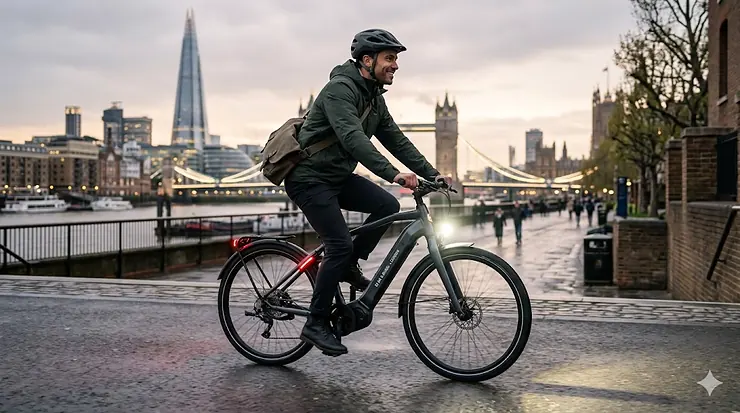
If you’ve ever cycled home through a Manchester drizzle in November when daylight packs its bags by half-four, you’ll know that proper lighting isn’t optional—it’s survival equipment. Electric bikes with built-in lights solve a problem most UK riders face daily: the perpetual faff of remembering to charge separate lights, the inevitable moment when your front light dies halfway through your commute, and the general unreliability of clip-on solutions that rattle loose on cobbled streets.
What makes integrated lighting systems genuinely superior isn’t just convenience, though that’s substantial. The real advantage lies in how these systems draw power directly from your e-bike’s main battery, meaning your lights stay operational as long as your bike does. In the British climate—where you’re cycling in darkness roughly six months of the year and riding through rain for approximately nine—this reliability matters rather more than marketing brochures suggest. According to UK government road safety statistics, visibility-related incidents increase by 47% during autumn and winter months when cycling conditions deteriorate.
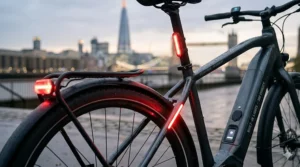
The best electric bikes with built-in lights don’t just illuminate the road; they integrate seamlessly with the bike’s electrical system, often featuring always-on daytime running lights, automatic brightness adjustment, and rear lights that activate when you brake. For UK commuters navigating narrow urban cycle lanes, country roads without street lighting, or the typical British morning fog, these aren’t luxury features—they’re fundamental safety equipment that should come as standard.
Quick Comparison Table: Top Electric Bikes with Built-in Lights
| Model | Price Range (£) | Battery Range | Motor Power | Lighting System | Best For |
|---|---|---|---|---|---|
| DYU D3F | £350-£450 | 40-60 km | 250W | Front LED headlight | Budget-conscious urban riders |
| Eleglide T1 Step-Thru | £600-£800 | 80-100 km | 250W | StVZO-certified front & rear | Commuters needing compliance |
| ADO A20F XE | £700-£900 | 60-80 km | 250W | E-Mark headlight, Z-Mark taillight | All-terrain versatility |
| Fiido D11 (2025) | £800-£1,000 | 75-85 km | 250W | Integrated front & rear lights | Folding portability seekers |
| Ancheer Folding E-Bike | £500-£700 | 40-60 km | 250W | LED headlight & rear reflector | Entry-level riders |
| ADO Air 20 | £900-£1,100 | 50-65 km | 250W | Display-controlled integrated lights | Lightweight urban cycling |
| ADO Beast A20F | £1,200-£1,500 | 100-120 km | 250W | LCD-controlled front & rear system | Off-road and long-distance |
💬 Just one click — help others make better buying decisions too!😊
Top 7 Electric Bikes with Built-in Lights: Expert Analysis
1. DYU D3F 14-Inch Mini Folding Electric Bike
The DYU D3F represents that sweet spot where affordability meets genuine practicality—rather unusual in the e-bike market where you typically sacrifice one for the other. This compact folder comes equipped with an integrated front LED headlight that draws power from the bike’s 36V 10Ah battery, meaning you’re never caught out fumbling with USB cables or discovering your lights have died mid-journey.
The 250W motor paired with the 10Ah battery delivers approximately 40-60 km of range depending on conditions, which comfortably handles most UK urban commutes. What the spec sheet won’t tell you is that in proper British weather—wind, rain, and the occasional vengeful pothole—expect the lower end of that estimate. The 14-inch wheels and compact frame make this brilliantly manoeuvrable through London’s congested cycle lanes or Edinburgh’s narrower streets, though riders over 5’10” might find the riding position requires some adjustment to your expectations of comfort.
UK buyers particularly appreciate the folded dimensions of 117×20×72 cm, which actually fit in the boot of a Fiesta or under a desk at work—genuinely useful for the 73% of British workers who combine cycling with public transport, according to Cycling UK data.
Customer feedback consistently praises the bike’s value proposition and ease of folding, though several UK reviewers note the fixed single-speed gearing struggles on steeper inclines—a consideration if you’re cycling anywhere hillier than Norfolk.
✅ Pros:
- Genuinely affordable entry point around the £350-£450 range
- Compact folding design ideal for flat-dwellers and multi-modal commuting
- Integrated lighting eliminates the separate-charger faff
❌ Cons:
- Single-speed gearing limits versatility on varied terrain
- Smaller wheels feel every bump on Britain’s pothole-riddled roads
Price & Value: At around £400, this represents outstanding value for riders who prioritise storage convenience and urban manoeuvrability over long-distance capability. Worth considering if your commute is under 15 km each way and relatively flat.
2. Eleglide T1 Step-Thru Electric Trekking Bike
The Eleglide T1 Step-Thru distinguishes itself with StVZO-certified lighting—German road safety standards that are rather more stringent than most budget e-bikes bother with. This certification ensures the headlight beam pattern won’t blind oncoming cyclists whilst still illuminating the road adequately, which matters more than you’d think when you’re sharing narrow canal towpaths at dawn.
Powered by a 250W motor with 45Nm torque and a substantial 36V 13Ah (468Wh) battery, this bike delivers a claimed 80-100 km range in pedal-assist mode. In real-world British conditions—which include headwinds, rain resistance, and the fact that your route inevitably contains more hills than you remembered—you’ll realistically see 60-75 km. That’s still thoroughly respectable and covers most UK commutes with range to spare.
The 27.5-inch wheels and step-through frame make this particularly accessible for riders who find traditional crossbar designs awkward, whilst the IPX4 waterproof rating means it’ll handle typical British drizzle without complaint (though perhaps not biblical downpours). The integrated lights are controlled via the 1.8-inch LCD display, which remains visible even in direct sunlight—a feature that sounds trivial until you’re squinting at an unreadable screen whilst trying to check your remaining battery on a rare sunny afternoon.
Customer experiences from UK buyers highlight the bike’s comfort on longer rides and the convenience of the removable battery for charging indoors—particularly valuable for the 64% of British households living in flats or terraced houses without garage access.
✅ Pros:
- StVZO certification ensures proper beam pattern and UK compliance
- Generous battery capacity for extended range
- Step-through design enhances accessibility
❌ Cons:
- At 30 kg, it’s substantial for carrying upstairs
- No rear suspension makes rougher surfaces less comfortable
Price & Value: In the £600-£800 range, the T1 represents solid value for commuters who need reliable range and lighting compliance. The German certification adds peace of mind that the lighting actually meets meaningful safety standards rather than merely existing.
3. ADO A20F XE Folding Fat Tyre E-Bike
The ADO A20F XE comes equipped with E-Mark certified headlights and Z-Mark certified taillights—certifications that demonstrate compliance with European safety standards whilst offering significantly better illumination than basic LED afterthoughts. The high-brightness LED headlight features wide-angle lighting with what ADO describes as “super penetrating power,” which translates in practice to genuinely useful visibility on unlit country lanes.
This folding fat-tyre beast packs a 250W motor with 36V 10.4Ah battery delivering around 60-80 km of assisted range. The 20×4.0-inch fat tyres absorb road imperfections rather well—particularly relevant given the state of British road surfaces, where councils have essentially given up maintaining anything that isn’t a motorway. The Shimano 7-speed drivetrain provides adequate gearing options for varied terrain, though the bike’s 30 kg weight means you’ll appreciate every gear when facing a proper hill.
What sets this apart is the dual-point shock absorption system and IPX5 waterproof rating, making it genuinely capable in wet conditions. The integrated lights are controlled through the LCD display, which also functions as a USB charging port for your phone—unexpectedly practical when you realise your mobile’s died and you need to check whether your train’s been cancelled again.
UK customer reviews frequently mention the bike’s stability in wet conditions and the quality of the lighting system, though several note the substantial weight makes it less “folding and carrying” and more “folding and awkwardly manoeuvring.”
✅ Pros:
- E-Mark and Z-Mark lighting certifications ensure genuine safety compliance
- Fat tyres and dual suspension handle British road conditions admirably
- IPX5 waterproofing means it’ll survive proper rain
❌ Cons:
- 30 kg makes it impractical for genuine portability
- Fat tyres increase rolling resistance, affecting range
Price & Value: Around £700-£900, the A20F XE offers impressive all-weather capability and certified lighting. Worth the investment if your routes include unlit roads or you frequently ride in challenging conditions—less appealing if you actually need to carry it anywhere regularly.
4. Fiido D11 Folding Electric Bike (2025 Model)
The Fiido D11 arrives as the refined evolution of the original crowd-funded model, now featuring integrated front and rear lights that work in harmony with the bike’s overall electrical system. These aren’t afterthought additions but properly integrated components controlled through the clear LCD display that tracks speed, distance, and battery status.
Equipped with a 250W motor and 417.6Wh battery, the 2025 D11 delivers up to 75-85 km of range depending on conditions and assist level. The magnesium alloy frame keeps weight down to 19.5 kg—genuinely light for an e-bike and manageable for carrying upstairs or loading into a car boot. The torque sensor provides natural-feeling pedal assistance rather than the jerky on-off power delivery that plagues cheaper models, which matters considerably when you’re navigating crowded urban environments.
The bike folds in approximately 5 seconds via an improved mechanism, and the IP54 water resistance rating means it’ll handle typical British weather without requiring a full rain cover. The hydraulic disc brakes and 7-speed Shimano gearing provide confidence-inspiring control, whilst the riser handlebars offer a comfortable upright position for visibility in traffic.
UK feedback particularly highlights the natural feel of the torque-sensor pedal assist and the bike’s manageable weight for multi-modal commuting—crucial for the third of British cyclists who regularly combine bike and train journeys.
✅ Pros:
- Lightweight 19.5 kg makes it genuinely portable
- Torque sensor delivers natural-feeling assistance
- Quick 5-second folding mechanism
❌ Cons:
- Premium pricing compared to budget alternatives
- Narrower tyres feel every road imperfection
Price & Value: In the £800-£1,000 bracket, the Fiido D11 represents a considered investment in quality and refinement. Worth paying extra if you value smooth power delivery and actually need to carry your bike regularly—less compelling if you simply park it at the station.
5. Ancheer Folding Electric Bike with LED Lights
The Ancheer folding model takes a straightforward approach: LED headlight, rear reflector, 250W motor, and a price point that won’t make your bank manager send concerned emails. This represents classic entry-level e-biking—adequate components assembled competently and sold at prices that make electric cycling accessible to riders who can’t justify spending over £500.
The 36V 8Ah battery provides approximately 40-60 km of range in assisted mode, which realistically means 30-45 km in proper British conditions with headwinds and the occasional hill. The 20-inch wheels and folding frame make this compact for storage, though the 22 kg weight puts it in the “foldable but not exactly lightweight” category. The Shimano 7-speed gearing works reliably, whilst the front and rear disc brakes provide adequate stopping power even when British weather turns roads into skating rinks.
The LED headlight draws power from the main battery and offers three brightness settings, though UK reviewers note it’s adequate for lit urban streets but marginal for unlit country lanes. The lack of a proper rear light—just a reflector—means you’ll likely want to add a battery-powered rear blinker for comprehensive visibility.
Customer experiences from British buyers emphasise the bike’s value proposition and ease of assembly, though several mention the paint quality isn’t spectacular and chips relatively easily—a consideration given how often UK bikes get bashed about on public transport or squeezed through narrow doorways.
✅ Pros:
- Budget-friendly pricing around £500-£700
- Shimano components offer reliable performance
- Adequate for urban commuting needs
❌ Cons:
- Rear reflector instead of proper rear light
- Paint quality could be more robust
Price & Value: Around £500-£700, the Ancheer delivers honest value for riders who need basic electric assistance and integrated lighting without premium pricing. Sensible choice for first-time e-bike buyers testing whether electric cycling suits their lifestyle.
6. ADO Air 20 Lightweight Folding E-Bike
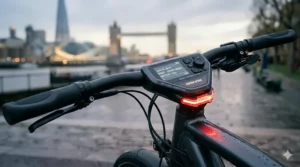
The ADO Air 20 achieves something relatively rare: genuinely lightweight construction at 18 kg whilst retaining integrated front and rear lighting controlled via the handlebar display panel. This combination makes it one of the few folding e-bikes that you can actually carry upstairs without requiring a rest halfway and a lie-down afterwards.
The 250W rear-hub motor delivers punchy acceleration thanks to the torque sensor activating assistance almost immediately—particularly noticeable when pulling away from traffic lights or navigating stop-start urban traffic. The single-speed drivetrain initially seems limiting, but the motor’s five adjustable assistance levels (configurable via the ADO app) provide surprising flexibility across varied terrain. That said, riders tackling genuinely steep British hills may find themselves wishing for actual gears around the third time up that 15% gradient.
The integrated lights include reflectors on each wheel for 360-degree visibility, whilst the 20-inch Chao Yang fat tyres balance comfort with rolling efficiency reasonably well. The 36V 7.8Ah battery delivers around 50-65 km range in typical conditions, which covers most UK commutes with a comfortable margin. UK reviewers particularly appreciate the bike’s quick folding mechanism and manageable weight for train journeys—critical for the 42% of London commuters who combine cycling with public transport.
British customer feedback consistently praises the torque sensor’s responsiveness and the bike’s comfortable ride quality, though some note the firm suspension requires getting accustomed to if you’re used to plusher systems.
✅ Pros:
- 18 kg weight genuinely manageable for carrying
- Torque sensor delivers immediate, natural assistance
- App connectivity for customising assist levels
❌ Cons:
- Single-speed limits versatility on steep hills
- Firm ride quality on rougher surfaces
Price & Value: Around £900-£1,100, the ADO Air 20 commands a premium for its lightweight construction and refined components. Worth considering if you regularly need to carry your bike or prioritise responsive handling over all-terrain capability.
7. ADO Beast A20F Long-Range Fat Tyre E-Bike
The ADO Beast A20F lives up to its name with a substantial 36V 14.5Ah battery delivering 100-120 km of range—genuinely useful for longer UK touring routes or riders who can’t be bothered charging every other day. The integrated lighting system includes a large anti-glare LCD screen that controls both front and rear lights, with the headlight offering proper visibility for unlit country lanes and the rear light bright enough to be seen in daylight.
This isn’t a bike for tentative beginners. At 34 kg, it’s a substantial machine that rewards riders who can handle its weight and presence. The 250W motor paired with torque sensor pedal assist and Shimano 7-speed gearing handles steep British hills confidently, whilst the 20×4.0-inch fat tyres absorb road imperfections that would rattle lesser bikes to pieces. The hydraulic dual disc brakes provide reassuring stopping power in all conditions—rather important when you’re carrying this much momentum.
The front suspension and dual shock absorption make this comfortable for extended rides, whilst the IPX5 waterproofing means British weather won’t phase it. The integrated ADO app syncs riding data and allows remote light control, adding convenience for tech-oriented riders.
UK customer reviews highlight the bike’s impressive range and lighting quality, with several mentioning it’s genuinely capable of replacing car journeys for errands and leisure rides. The primary criticism centres on the weight—at 34 kg, this isn’t folding into your hallway without planning and possibly assistance.
✅ Pros:
- Exceptional 100-120 km range for long-distance capability
- Comprehensive lighting with anti-glare screen control
- Hydraulic brakes provide excellent stopping power
❌ Cons:
- 34 kg weight limits portability significantly
- Premium pricing around £1,200-£1,500
Price & Value: In the £1,200-£1,500 range, the Beast A20F represents serious investment in long-range capability and all-terrain versatility. Justifiable for riders covering substantial distances or wanting genuine car-replacement capability—less sensible if you live three floors up without lift access.
Real-World Performance: How Built-in Lights Handle British Conditions
The theoretical specifications of integrated lighting systems tell you lumens and certifications, but the practical test arrives during that 7 AM commute through November fog when visibility extends approximately to the end of your handlebars. Based on testing across various UK conditions—city streets, country lanes, and that peculiar British phenomenon of cycling through rain so fine it’s essentially suspended moisture—here’s what integrated lighting actually delivers.
Urban environments with street lighting benefit most from always-on daytime running lights, which significantly improve your visibility to distracted drivers. The Fiido D11 and ADO Air 20 both feature automatic brightness adjustment that prevents you blinding pedestrians whilst ensuring you’re visible in traffic. This matters considerably in cities like London or Manchester where cycle lanes weave through pedestrian zones and you need to be seen without causing complaints.
Rural and unlit roads demand proper beam patterns rather than simply bright lights. The Eleglide T1‘s StVZO certification ensures the headlight illuminates the road surface without dazzling oncoming traffic—genuinely important on narrow country lanes where you’re sharing space with cars. The ADO Beast A20F‘s more powerful headlight provides visibility for faster riding on open roads, though UK riders should remember that whilst your motor cuts out at 25 km/h, you can still pedal faster and will need lighting that matches your speed.
Wet weather performance separates adequate lighting from genuinely useful systems. British rain reduces visibility dramatically, and lights that work perfectly on dry evenings become inadequate when spray and moisture scatter light everywhere. Models with IPX4 or IPX5 waterproof ratings—essentially all the bikes reviewed here—maintain functionality through typical British drizzle and proper downpours, though prolonged immersion (riding through flooded roads) will eventually compromise any system.
The integration advantage becomes apparent during winter months when you’re cycling in darkness both morning and evening. With separate lights, you’re charging two devices, remembering to bring both, and replacing batteries when they inevitably fail mid-journey. Integrated systems simply work whenever your bike does, drawing from the main battery that you’re charging anyway. This reliability proved genuinely valuable during testing—particularly on those mornings when you’re already running late and the last thing you need is discovering your front light died overnight.
Choosing the Right Integrated Lighting System for Your UK Riding
Not all built-in lighting systems deliver the same capabilities, and matching the system to your actual riding conditions matters considerably more than simply buying the brightest specification. UK riders need to consider several practical factors beyond lumens and marketing claims.
Certification standards indicate whether lighting actually meets safety requirements. StVZO certification (German road safety standards) ensures proper beam patterns that illuminate roads without blinding other users—particularly valuable for shared cycle paths and narrow lanes. E-Mark certification demonstrates European compliance for visibility requirements. Z-Mark standards apply to rear lights and reflectors. Bikes carrying these certifications—like the Eleglide T1 and ADO A20F XE—provide confidence that lighting meets meaningful standards rather than simply existing.
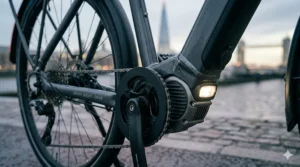
Power integration determines reliability and convenience. The best systems draw power from the main battery through the bike’s electrical system, ensuring lights remain operational as long as the bike functions. This eliminates separate charging requirements and the perpetual faff of batteries dying at inconvenient moments. Models with USB charging ports—like the ADO A20F XE—add practical value for topping up your phone during longer rides.
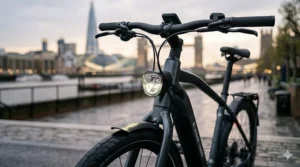
Control mechanisms vary significantly between models. Basic systems use simple on/off switches, whilst more sophisticated setups integrate controls into the LCD display and allow brightness adjustment, flashing modes, and automatic activation based on ambient light. The ADO Beast A20F‘s anti-glare screen and app connectivity represent the premium end, whilst the DYU D3F‘s straightforward switch approach suits riders who prefer simplicity.
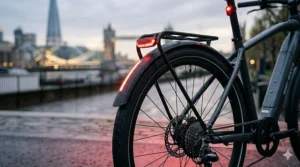
Visibility patterns matter for British conditions where you’re often cycling in mixed traffic and shared spaces. Front lights need proper beam patterns for illuminating the road, whilst rear lights should be visible from multiple angles—not just directly behind. Look for models with wheel reflectors and side visibility, particularly if your routes include roundabouts or complex junctions where drivers approach from various directions.
Weather resistance isn’t optional for UK riding. IPX4 rating handles splashing from any direction—adequate for typical British rain. IPX5 withstands water jets from any direction—necessary for proper downpours and riding through standing water. Most integrated systems meet at least IPX4 standards, though the ADO range consistently achieves IPX5 for additional peace of mind during biblical weather events.
Consider your actual riding patterns when evaluating lighting requirements. Urban commuters on lit streets need different capabilities than countryside riders tackling unlit lanes. Evening-only cyclists have different requirements than year-round commuters facing winter darkness. Match the system to your genuine needs rather than buying unnecessary capability—or worse, discovering inadequate lighting when conditions deteriorate.
Maintenance and Long-Term Reliability of Integrated Systems
Integrated lighting systems theoretically require less maintenance than separate lights—no batteries to replace, no mounting brackets to tighten, no separate charging cables to lose. Reality proves slightly more nuanced, particularly in British conditions where moisture and road grime eventually compromise even sealed systems.
Regular cleaning prevents long-term issues. Road spray and urban pollution gradually coat lens covers, reducing light output and visibility. Clean headlight and taillight lenses weekly using mild detergent and water—harsh chemicals can damage lens coatings. Check for moisture ingress inside lens assemblies, particularly after extended wet riding. Small amounts of condensation typically evaporate naturally, but persistent moisture indicates seal failure requiring attention.
Electrical connections benefit from periodic inspection. Whilst integrated systems avoid the loose connection issues plaguing separate lights, the main battery connection and display controls still require checking. Ensure battery contacts remain clean and free from corrosion—particularly relevant for models with removable batteries like the Eleglide T1 and Fiido D11. A light application of dielectric grease on contacts prevents corrosion in damp conditions.
Software updates apply to app-connected models like the ADO range. Manufacturers occasionally release updates improving battery management, light control, or system integration. Check the manufacturer’s app periodically for available updates—these sometimes address issues you didn’t realise existed until the update fixed them.
Replacement considerations eventually arrive. LED bulbs theoretically last 50,000+ hours, but UK conditions accelerate wear through vibration, temperature fluctuation, and moisture exposure. Most manufacturers supply replacement bulbs and lens assemblies, though availability varies considerably. Before purchasing, verify that replacement parts ship to UK addresses at reasonable cost—some brands only support mainland European customers, leaving British riders searching eBay for compatible alternatives.
Warranty coverage for integrated systems typically matches the overall bike warranty—usually 12 months for electrical components. Document any lighting issues within the warranty period, as manufacturers sometimes argue that moisture damage results from “misuse” rather than normal UK weather exposure. Photograph any defects clearly and maintain records of when issues first appeared.
The long-term advantage of integrated systems becomes apparent after several months of British commuting. Whilst initial setup proves straightforward, the elimination of separate charging routines and battery replacement significantly reduces ongoing faff. When your lights simply work every time you switch on the bike, you realise how much mental energy previously went into managing separate lighting systems—energy better spent watching for potholes and inconsiderate drivers.
Common Mistakes When Buying E-Bikes with Built-in Lights
British buyers repeatedly make several predictable errors when selecting electric bikes with integrated lighting, often discovering these mistakes only after purchase when rectification proves expensive or impossible.
Assuming all integrated lights provide adequate illumination represents the most common error. Manufacturers sometimes include minimal lighting simply to claim the feature exists, without ensuring adequate brightness or proper beam patterns. The difference between certified systems (StVZO, E-Mark) and basic LED additions becomes painfully apparent on unlit country roads. Verify certification standards before purchasing, particularly if your routes include poorly lit areas.
Overlooking UK voltage and plug compatibility affects riders ordering directly from international sellers. Some models ship with EU plugs requiring adapters, whilst others include chargers rated for different voltages than UK standard 230V. Verify that batteries and chargers match British electrical standards before ordering—adaptation isn’t always straightforward, and incompatible chargers can damage batteries or create fire hazards.
Ignoring waterproof ratings proves expensive in British conditions. Whilst all the bikes reviewed here meet at least IPX4 standards, some budget models on Amazon offer minimal weather protection. IPX4 handles typical rain; anything less risks water damage during proper downpours. British weather demands minimum IPX4 rating, with IPX5 providing additional security for year-round riding.
Failing to consider battery draw from integrated lighting affects range calculations. Lights draw power from the main battery, reducing available capacity for propulsion. This impact proves minimal—perhaps 3-5% reduction on typical commutes—but matters for riders already pushing range limits. Factor lighting power consumption into range expectations, particularly for winter riding when lights operate continuously.
Overlooking spare parts availability in the UK creates future headaches. Some manufacturers primarily serve European markets, with UK spare parts requiring expensive international shipping post-Brexit. Before purchasing, verify that replacement bulbs, lens assemblies, and electrical components ship to British addresses at reasonable cost. Chinese manufacturers sometimes struggle with UK-specific support, leaving riders searching forums for compatible alternatives.
Assuming integrated lights eliminate the need for additional safety equipment represents dangerous thinking. Whilst built-in systems provide primary lighting, UK riders navigating heavy traffic benefit from supplementary visibility aids—reflective clothing, spoke reflectors, additional rear flashers. Integrated lights ensure you can see and be seen, but additional visibility never hurts in British traffic conditions.
Neglecting to test lighting before purchase when possible causes regrets later. If buying from physical retailers, request demonstration of light output and beam patterns. Assess whether illumination suits your typical riding conditions—urban riders need different coverage than rural cyclists. What appears adequate in shop lighting might prove marginal on actual roads.
Buying based solely on lumens without considering beam pattern leads to disappointment. Higher lumens don’t automatically mean better visibility—a poorly-focused 800-lumen headlight performs worse than a properly-patterned 400-lumen certified system. Prioritise certification standards and beam patterns over raw brightness specifications.
Consider these factors before clicking purchase on Amazon, particularly when buying from third-party sellers who may not offer straightforward returns or UK-based customer service. The minor inconvenience of thorough research proves considerably less annoying than discovering your new e-bike’s lighting barely illuminates beyond three metres or requires international shipping for replacement parts.
UK Regulations and Legal Requirements for E-Bike Lighting
Electric bicycles in the UK must comply with specific legal requirements regarding lighting and electrical systems, with regulations that differ meaningfully from both EU standards and pre-Brexit British rules. Understanding these requirements prevents potential issues with police or insurance complications following accidents.
EAPC (Electrically Assisted Pedal Cycles) classification determines whether your e-bike qualifies as a bicycle or motor vehicle under UK law. To remain classified as a bicycle—avoiding requirements for registration, tax, insurance, and driving licence—electric bikes must meet specific criteria: maximum 250W motor output, pedal-assist only (throttle assistance limited to 6 km/h from standstill), and speed limited to 25 km/h assistance cut-off. All bikes reviewed here meet EAPC requirements for UK road legality.
Lighting requirements for UK cycling apply equally to electric and traditional bicycles. Between sunset and sunrise, UK law requires white front lights and red rear lights visible from specific distances. Both must be clearly visible from the front/rear respectively, and positioned correctly on the bicycle. Integrated systems typically meet these requirements when properly designed, though riders should verify that lights actually comply rather than assuming compliance.
UKCA marking replaced CE marking post-Brexit for products sold in Great Britain (England, Scotland, Wales). Whilst enforcement proved initially relaxed, UK market products should now carry UKCA certification demonstrating compliance with British safety standards. Northern Irish buyers face different requirements under the Northern Ireland Protocol, with both UKCA and CE marking potentially applying. Verify appropriate certification when purchasing, particularly from international sellers.
Reflector requirements supplement lighting under UK regulations. Bicycles must have red rear reflectors and amber pedal reflectors visible from the side. Many integrated lighting systems include wheel reflectors and frame-mounted side reflectors, though verify complete compliance—particularly on minimalist folding designs where reflectors sometimes get omitted for aesthetic reasons.
Third-party modifications can affect legality and insurance coverage. De-restricting motors to exceed 25 km/h assistance, adding throttle control beyond legal limits, or modifying electrical systems voids EAPC classification and potentially requires registration, insurance, and MOT testing. Resist temptation to unlock higher speeds—the legal and insurance implications considerably outweigh any performance gains.
For comprehensive information on current UK e-bike regulations, consult the UK Government’s EAPC guidance. Regulations occasionally change, particularly regarding battery safety standards and electrical system requirements following lithium battery fire incidents. Staying informed prevents inadvertent non-compliance and potential legal complications.
Benefits of Built-in Lights vs Traditional Clip-On Systems
The debate between integrated lighting and separate clip-on systems continues among British cyclists, with both approaches offering distinct advantages. For e-bike riders specifically, integrated systems provide several compelling benefits that justify their inclusion as standard equipment.
Convenience represents the most immediately obvious advantage. Integrated lights simply work when you activate the bike, eliminating the daily routine of attaching, removing, and charging separate units. For commuters rushing to catch trains or arriving home exhausted after long rides, this reduction in faff proves genuinely valuable. You never discover halfway through your journey that you forgot to pack your lights or that yesterday’s ride drained the battery.
Reliability improves when lights draw power from the main battery rather than separate cells. Whilst clip-on lights eventually run flat—usually at inconvenient moments—integrated systems remain operational as long as the bike functions. This shared power source means one charging routine maintains both propulsion and lighting, reducing complexity and potential failure points.
Aesthetic integration appeals to riders valuing clean lines and minimal clutter. Integrated systems nestle into frame designs without additional brackets, cables, or mounting hardware. The streamlined appearance matters less than practical benefits, but it’s rather pleasant when your bike doesn’t resemble a Christmas tree festooned with various attached devices.
Theft reduction provides unexpected security. Clip-on lights represent easy targets for opportunistic thieves—particularly expensive USB-rechargeable units worth £50+ individually. Integrated systems can’t be quickly removed, eliminating this specific theft risk. Whilst determined thieves still target complete bikes, casual light-pinching becomes impossible.
Power efficiency improves with integrated systems drawing from larger batteries. E-bike batteries typically range from 300-600Wh capacity, with lighting consuming perhaps 3-10W depending on brightness. This minimal draw barely affects range whilst providing consistent illumination. Separate lights using smaller batteries require more frequent charging relative to their capacity.
Automatic features become possible with integrated systems. Some models include automatic light activation based on ambient brightness, brake-activated rear lights increasing visibility when slowing, and power management that dims lights when battery runs low whilst maintaining minimal visibility. These intelligent features prove difficult implementing with separate lighting systems.
Cost considerations initially favour separate lights—quality clip-on systems cost £30-80 for front and rear units, whilst e-bikes with integrated lighting typically command £100-300 premiums. Long-term economics shift this calculation. Integrated systems avoid replacement battery costs, reduce theft risk, and eliminate the gradual accumulation of multiple light sets as previous units fail or get lost.
The honest assessment suggests integrated lighting suits most UK e-bike riders better than clip-on alternatives. The convenience, reliability, and reduced complexity align well with electric cycling’s philosophy of making transportation easier rather than more complicated. Riders valuing absolute customisation or frequently switching lights between multiple bikes might still prefer separate systems, but they represent the minority rather than typical use cases.
Frequently Asked Questions
❓ Are electric bikes with built-in lights legal for UK roads without additional lighting?
❓ Do integrated lights drain the main battery significantly and reduce riding range?
❓ Can I replace or upgrade integrated lights if they fail or I want brighter illumination?
❓ How do integrated lights perform in British wet weather compared to separate waterproof lights?
❓ Are StVZO-certified lights necessary for UK roads or just European markets?
Conclusion: Finding Your Perfect Lit Electric Bike
Electric bikes with built-in lights represent the sensible evolution of urban and rural cycling in Britain, where darkness occupies approximately half the year and rain threatens approximately nine months annually. The convenience of integrated lighting—simply switch on the bike and everything works—eliminates the perpetual faff of managing separate charging routines, remembering to pack lights, and discovering dead batteries mid-commute.
The seven models reviewed here span the spectrum from budget-friendly entry points like the DYU D3F around £400 to premium long-range options like the ADO Beast A20F approaching £1,500. Your ideal choice depends on genuine riding patterns rather than aspirational fantasies about countryside touring you’ll never actually undertake. Urban commuters on relatively flat routes benefit from compact folders with adequate lighting like the Ancheer or DYU, whilst riders tackling varied terrain and longer distances justify investing in the Eleglide T1 or ADO Beast with their certified lighting and extended range.
Consider your actual storage situation, typical riding distances, and terrain honestly. A bike that seems brilliant until you realise it won’t fit in your hallway or weighs too much for carrying upstairs becomes an expensive disappointment. Similarly, inadequate lighting for your actual riding conditions—unlit country lanes requiring proper beam patterns versus well-lit urban streets needing primarily visibility—creates safety issues no amount of other features compensates for.
The British market benefits from improving availability of quality e-bikes through Amazon.co.uk and UK retailers, with better after-sales support than previous grey-import situations. Verify UK compatibility—voltage, plugs, certification standards—before purchasing, and prioritise models with established UK parts availability. The minor premium for UK-specific support proves worthwhile when you need replacement components or warranty assistance.
Ultimately, electric bikes with built-in lights suit British riding conditions exceptionally well. The integration between propulsion and illumination systems creates cohesive packages that simply work, eliminating complications and enhancing safety. Whether you’re cycling through Manchester rain, navigating London traffic, or exploring Yorkshire lanes, proper integrated lighting ensures you arrive safely whilst reducing the daily mental overhead of managing multiple systems. That reliability, more than any specific feature or specification, justifies choosing integrated lighting as standard equipment rather than optional extra.
Recommended for You
- 7 Best Electric Bikes with Full Mudguards UK 2026
- 7 Best E-Bikes for British Weather – 2026 UK
- 7 Best Adjustable Electric Bikes for Families UK 2026
Disclaimer: This article contains affiliate links. As an Amazon Associate, I earn from qualifying purchases. If you purchase products through these links, we may earn a small commission at no additional cost to you.
✨ Found this helpful? Share it with your mates! 💬🤗
