In This Article
There’s a peculiar British experience that aluminium e-bikes have never quite solved. It goes like this: you arrive at the station in the rain, you fold your bike — or attempt to — and then you lug it up three flights of stairs in a Clapham flat while simultaneously questioning your life choices and whether sustainable transport was worth it. A carbon fibre ebike doesn’t fix everything, but it does make that particular scenario roughly 4–6 kg lighter. Which, if you’ve ever wrestled a 26 kg aluminium beast up a Victorian terraced staircase, sounds very much like a miracle.
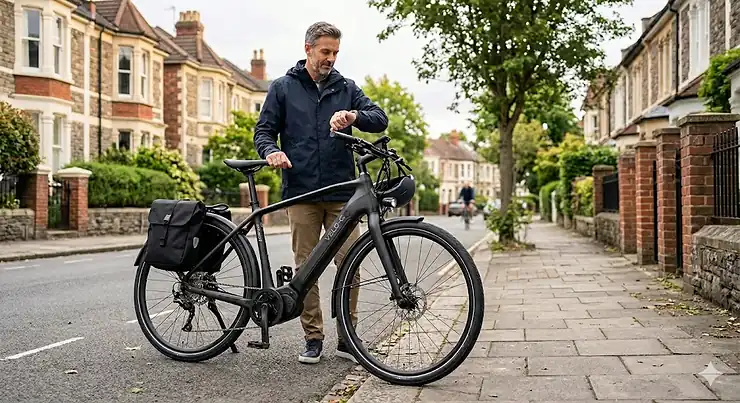
What is a carbon fibre ebike, exactly? It’s an electrically assisted pedal cycle (EAPC) built around a frame made from carbon fibre-reinforced polymer — the same aerospace-grade composite used in aircraft fuselages and Formula 1 chassis. The material delivers a strength-to-weight ratio that aluminium simply cannot match, resulting in bikes that are dramatically lighter, absorb road vibration naturally, and respond to rider input with a directness that feels almost uncanny on your first ride.
Carbon fibre e-bikes are no longer the sole preserve of lycra-clad professionals with a cycling budget that eclipses most people’s annual rent. In 2026, genuinely capable carbon fibre ebikes enter the UK market from around £1,200, and the category now spans everything from sleek urban folders to blistering gravel machines. This guide covers seven of the best — tested against real British conditions, which is to say: persistent drizzle, potholed council roads, and the general sense that the weather is personal.
Quick Comparison: Top 7 Carbon Fibre Ebikes at a Glance
| Model | Weight | Motor | Battery Range | Price Range | Best For |
|---|---|---|---|---|---|
| Engwe MapFour N1 Air | 19.8 kg | 250W rear hub | 60–90 km | £1,100–£1,300 | First carbon ebike, value seekers |
| Fiido Air | 13.75 kg | 250W Mivice | 60–80 km | £1,550–£1,700 | Minimal urban design, train commuters |
| ADO Air Carbon | 12.5 kg | 250W BAFANG | 70–100 km | £1,700–£1,900 | Lightest folder, flat urban commuting |
| Carbo X | 11 kg | 250W Fazua | 50–70 km | £2,800–£3,200 | Premium ultra-light, city riders |
| Cannondale Topstone Neo Carbon | 13.2 kg | 250W Bosch | 80–130 km | £3,500–£4,500 | Gravel/mixed terrain, weekend rides |
| Specialized Turbo Creo 2 Comp | 12.3 kg | 240W SL 1.2 | 100–150 km | £4,000–£5,500 | Road cycling, long-distance touring |
| Specialized Turbo Levo SL Comp Carbon | 14.8 kg | 240W SL 1.2 | 80–120 km | £5,500–£6,500 | Trail riding, UK hill country |
The table above tells one clear story: weight savings arrive at a cost, but that cost has come down considerably. The Engwe N1 Air delivers real carbon construction at a genuinely accessible entry point, though it’s heavier than its more expensive siblings. At the premium end, the Specialized Creo 2 and Levo SL occupy a different universe — bikes that happen to have a motor rather than motors that happen to have a bike. Budget buyers should note that sub-£1,500 carbon bikes may use carbon only for the main frame triangle, with alloy forks and components, which is perfectly fine but worth clarifying before purchase
💬 Just one click — help others make better buying decisions too! 😊
✨ Don’t Miss These Exclusive Deals!
🔍 Take your carbon fibre ebike search to the next level with these carefully selected products. Click any highlighted item to check current pricing and availability on Amazon.co.uk — these picks are updated regularly to reflect the best value for UK riders!
Top 7 Carbon Fibre Ebikes: Expert Analysis
1. Engwe MapFour N1 Air — Best Entry-Level Carbon Fibre Ebike
The Engwe MapFour N1 Air is doing something rather useful for the British market: making carbon fibre feel approachable. At a price point in the £1,100–£1,300 range, it’s the obvious starting point for anyone curious about what the material actually feels like without committing to a mortgage-sized outlay.
The 250W rear hub motor paired with a 36V battery delivers a comfortable 60–90 km of realistic range — in dry conditions. Add British autumn to the equation, a headwind along the A316, and perhaps a few extra layers on the body, and you’re looking at the lower end of that estimate. The Shimano 7-speed gearing is a genuine highlight at this price; it shifts cleanly and gives you enough range to tackle moderate hills without the motor working itself into audible protest. At 19.8 kg, it’s heavier than its carbon badge might suggest, but that’s partly down to the alloy fork and components — the main frame triangle is genuine carbon.
What most buyers overlook at this price point is the GPS tracking and geofencing capability built into the N1 Air. In cities where cycle theft costs UK riders an estimated £20 million annually, having real-time location data is not a gimmick — it’s practical insurance. UK customer feedback notes the tyres as a weak point in wet conditions, which is worth addressing early with a set of Schwalbe Marathons.
✅ Genuinely affordable carbon construction
✅ GPS anti-theft tracking built in
✅ Shimano gearing punches above its weight
❌ Heavier than premium carbon rivals
❌ Stock tyres struggle in persistent British drizzle
Price range: £1,100–£1,300 | A solid value proposition for a first carbon e-bike.
2. Fiido Air — Best for Minimal Urban Design
The Fiido Air is the bike you buy when you’ve tired of explaining to colleagues why your e-bike looks like a prop from a dystopian sci-fi film. It’s won a Red Dot Design Award, and while design prizes don’t make bikes faster, they do indicate that someone thought carefully about how this machine looks in the real world — parked against the wall at a London office, or leaning outside a Bristol café.
At 13.75 kg with a full carbon frame, it’s one of the lightest production e-bikes on the market at this price. The 250W Mivice rear hub motor with torque sensor produces 42Nm — enough for confident acceleration through city traffic and sufficient torque for moderate inclines, though steeper hills will have you working harder. The Gates Carbon Drive belt system is genuinely transformative for urban riders: silent, maintenance-free, and completely indifferent to British road grime. No chain oil on your trousers. No rattling. Just progress.
The battery is the honest limitation here. At 208Wh, the 60–80 km real-world range is adequate for most commutes but limiting if you want to combine the bike with weekend leisure rides. The single-speed drivetrain makes perfect sense in flat cities like Cambridge or Oxford; it’s a consideration if your commute involves anything resembling a proper hill. UK reviewers consistently praise the ride quality while noting that mudguards are a worthwhile add-on for winter riding.
✅ Exceptional design, looks nothing like a typical e-bike
✅ Gates belt drive — silent and maintenance-free
✅ Genuinely premium 13.75 kg weight
❌ Smaller battery limits range on longer rides
❌ Single-speed limits versatility on hilly routes
Price range: £1,550–£1,700 | Worth every pound for flat-route city commuters.
3. ADO Air Carbon — Best Ultra-Lightweight Folding Ebike
At 12.5 kg, the ADO Air Carbon is the answer to a very specific question that thousands of British commuters ask every morning: “Is there a folding e-bike that won’t destroy my lower back?” It folds in approximately 15 seconds, fits under a desk, and can be carried on the shoulder without requiring the kind of core strength associated with professional athletes.
The 250W BAFANG motor — one of the most trusted names in e-bike drive systems — delivers 37Nm of torque with a dual-sided torque sensor that reads pedal pressure with genuine precision. The result is an assist that feels natural rather than mechanical, which matters more on a daily commuter than it sounds. The integrated 36V 9.6Ah Samsung battery sits within the seat post (clean design, good weight distribution) and offers a claimed 100 km range; real-world testing in British conditions suggests 60–80 km is more honest. The IPX5 water resistance rating on the frame and electronics means it handles British weather competently, though IPX5 is splash-proof rather than submersible, so riding through deep puddles warrants a degree of caution.
The GPS Smart Connect module and app integration make this one of the most theft-aware bikes in this price bracket — particularly relevant in urban areas where the Metropolitan Police recorded over 24,000 cycle thefts in London in 2024 alone. For riders who live in flats, work in open-plan offices, or regularly use trains, this is simply the most practical carbon folder available.
✅ 12.5 kg — lightest folder in this review
✅ BAFANG motor with genuine torque sensor quality
✅ GPS anti-theft, IPX5 weather resistance
❌ Battery range overstated in manufacturer claims
❌ 20-inch wheels less stable at speed than larger alternatives
Price range: £1,700–£1,900 | The definitive argument for going carbon on a folder.
4. Carbo X — Best Premium Ultra-Light City Ebike
If the ADO is for the practical commuter, the Carbo X is for the commuter who has decided that practicality and aesthetic pleasure are not mutually exclusive. At around 11 kg, it holds a claim to being one of the lightest production e-bikes available with full UK legal compliance — and it rides with a fluidity that heavier bikes simply cannot replicate.
The 250W Fazua Evation motor is worth understanding properly: it’s a mid-drive system that integrates the motor, battery, and electronics into a single removable unit inside the down tube. The practical implication is that you can pull the whole drive unit out, drop it in a bag, and ride the Carbo X as a 9 kg conventional bicycle — remarkably useful if your route occasionally takes you somewhere the motor isn’t needed. Real-world range sits in the 50–70 km bracket at moderate assist, which is honest territory for a 160Wh battery. It’s designed for urban riding rather than long-distance touring, and it’s upfront about that.
UK availability requires checking with specialist retailers; some Amazon.co.uk marketplace sellers stock the Carbo X, though direct retailer purchase may offer better warranty support — always worth considering given the Consumer Rights Act 2015 protections UK buyers enjoy when purchasing directly from authorised sellers.
✅ ~11 kg — extraordinary weight achievement
✅ Removable Fazua drive unit for pure-bicycle option
✅ Premium aesthetics, genuinely distinctive on UK streets
❌ Smaller battery better suited to shorter urban routes
❌ Premium price demands careful budget consideration
Price range: £2,800–£3,200 | For riders who want the lightest possible urban experience.
5. Cannondale Topstone Neo Carbon — Best Carbon Gravel Ebike
The Cannondale Topstone Neo Carbon arrives from a brand that genuinely understands what British roads are. Not smooth ribbons of Tarmac with predictable surfaces, but a geological assault course of variable tarmac, farm tracks, canal towpaths, and the kind of gravel that seems specifically designed to test rim integrity. The Topstone Neo Carbon handles it all without complaint.
The Bosch Performance Line CX mid-drive motor is arguably the benchmark against which other e-bike motors are measured. It produces up to 85Nm of torque — a number that translates, practically, to climbing any hill a British cyclist is likely to encounter without feeling like the motor is being asked to do something beyond its capability. The 500Wh PowerTube battery delivers 80–130 km of range depending on assist mode, with the Bosch eBike Systems app providing granular control over power distribution. The Kingpin suspension system and carbon frame absorb the kind of road vibration that characterises British B-roads, making long rides feel shorter than the distance suggests.
At the £3,500–£4,500 price point, the Topstone Neo Carbon competes directly with the Specialized Creo 2 entry variants. The Topstone wins on off-road versatility; the Creo wins on road speed. For riders who want one bike that covers the commute on Monday and a Peak District gravel loop on Saturday, the Cannondale makes a compelling argument. Check Amazon.co.uk marketplace and specialist retailers like Evans Cycles for current UK availability.
✅ Bosch CX motor — industry-leading torque
✅ 500Wh battery delivers real-world range
✅ Genuinely capable on both tarmac and gravel
❌ Heavier than non-Bosch carbon competitors
❌ Premium price; check for Amazon UK marketplace availability
Price range: £3,500–£4,500 | The one-bike solution for varied British terrain.
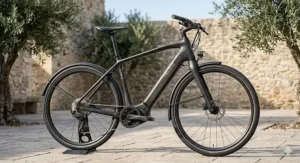
6. Specialized Turbo Creo 2 Comp Carbon — Best Carbon Road Ebike
Specialized builds the Turbo Creo 2 on a premise that sounds almost offensively simple: what if an e-road bike weighed so little that you forgot it had a motor? At 12.3 kg with the FACT 11r carbon frame, the Creo 2 Comp is legitimately close to achieving exactly that. The SL 1.2 motor — Specialized’s own 240W unit — produces 35Nm of torque in a package that weighs just 1.95 kg, which is why the overall bike feels more like a performance road bike that occasionally helps you up hills rather than an e-bike that has been designed to look like a road bike.
The Future Shock 3.0 suspension in the stem head absorbs road vibration before it reaches your hands — profoundly useful on British A-roads where surface quality is, to put it diplomatically, inconsistent. The dual-battery system (internal plus range extender option) can push real-world range to 130–150 km at conservative assist levels, which covers most UK sportive routes and touring days. Shimano GRX Di2 electronic shifting on the Comp model makes gear changes instantaneous and never misses a beat in the rain.
This is not an Amazon.co.uk mainstream listing — the Creo 2 is sold through Specialized concept stores and authorised UK retailers. That actually has advantages: UK warranty support, professional fitting, and access to Specialized’s service network. Under the Consumer Rights Act 2015, UK buyers purchasing from authorised retailers retain strong protection regardless of purchase channel.
✅ 12.3 kg — extraordinary for a road ebike with motor
✅ Future Shock 3.0 transforms comfort on rough tarmac
✅ Dual-battery option for exceptional range
❌ Premium investment; not sold on standard Amazon.co.uk
❌ SL motor produces less torque than Bosch CX rivals
Price range: £4,000–£5,500 | The benchmark for British road and mixed-terrain ebike riding.
7. Specialized Turbo Levo SL Comp Carbon — Best Carbon eMTB
The Levo SL Comp Carbon is the mountain bike for riders who’ve always found full-power eMTBs slightly unedifying — machines that do so much of the work that descending becomes the only genuinely challenging part. The SL (Super Light) motor philosophy changes that relationship, keeping the weight at 14.8 kg and the rider engagement high while still providing meaningful assistance on the climbs.
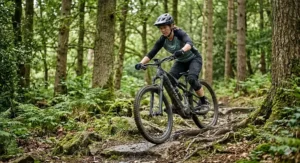
The FACT 9m carbon frame handles UK trail conditions — muddy berms in the Lake District, rocky descents in Snowdonia, loamy singletrack in the New Forest — with the confidence that only quality carbon construction delivers. The Fox suspension package (36mm Float 150 fork, Float DPS rear) is tuned for British trail riding, which tends to involve more technical, slower-speed sections than US or European Alpine trail centres. At 80–120 km of range with the SL 1.2 motor, you won’t be running dry mid-ride on typical UK trail centres, though more aggressive all-day riding with maximum assist will test the limits. Available through Specialized UK retailers; check current Amazon.co.uk marketplace listings for availability.
✅ 14.8 kg — genuinely light for a full-suspension eMTB
✅ Keeps the rider engaged rather than passive
✅ Fox suspension tuned for technical trail conditions
❌ SL motor means less grunt for very steep, technical climbs
❌ High investment; compare carefully against Cannondale Topstone Neo for mixed-use riders
Price range: £5,500–£6,500 | For serious trail riders who want the lightest capable eMTB.
How to Choose a Carbon Fibre Ebike in the UK: 5 Key Criteria
Choosing a carbon fibre ebike in Britain involves different trade-offs than in sunnier, flatter countries. Here’s how to approach it.
1. Clarify your primary use case first. A folding carbon commuter (ADO Air Carbon, Fiido Air) is a fundamentally different machine from a gravel carbon e-bike (Cannondale Topstone Neo) or a road carbon e-bike (Specialized Creo 2). Buying the wrong category is expensive. Spend 20 minutes honestly mapping your typical week before reading any specifications.
2. Check the EAPC compliance. Every e-bike in this guide is designed to meet UK EAPC requirements: 250W continuous rated motor, pedal-assist only, motor cut-off at 15.5 mph (25 km/h). According to gov.uk guidance on electrically assisted pedal cycles, compliant bikes require no licence, registration, tax, or insurance — though specialist e-bike insurance is strongly recommended given the values involved.
3. Understand real-world battery range. Manufacturer range claims are calculated under optimal laboratory conditions: flat terrain, light rider, warm temperature, eco assist mode. In British autumn and winter, expect 20–30% less than the headline figure. Cold temperatures reduce lithium battery efficiency. Headwinds cost energy. A bike claiming 100 km range delivers roughly 65–75 km on a typical British commute day.
4. Consider the full ownership cost in GBP. A £1,200 carbon e-bike with cheap components may cost more over three years than a £2,000 bike with quality parts. Gates Carbon Drive belt systems cost roughly £50–£80 to replace every 30,000 km; conventional chains need replacing every 2,000–3,000 km and cost £15–30 each time. Bosch service batteries cost £350–£500 to replace after approximately 1,000 charge cycles. Factor these in.
5. Prioritise theft deterrence. UK cities have significant e-bike theft problems. Any carbon e-bike represents a substantial investment that requires serious security: a Sold Secure Gold-rated lock (around £60–£90), registered with BikeRegister (the UK’s National Cycle Database), and ideally covered by a dedicated cycle insurance policy. GPS tracking (built into the ADO and Engwe) provides recovery capability when prevention fails.
Carbon Fibre Ebike vs Aluminium Ebike: What the Spec Sheet Won’t Tell You
The marketing says carbon is lighter, stiffer, and more comfortable than aluminium. All of that is true. But the spec sheet won’t tell you what it feels like on a typical British winter commute — and that’s where the real comparison lives.
| Feature | Carbon Fibre Ebike | Aluminium Ebike |
|---|---|---|
| Typical frame weight | 1.2–2.0 kg | 2.5–4.0 kg |
| Vibration damping | Excellent (material absorbs high-frequency buzz) | Average (transfers road texture to rider) |
| Repairability after impact | Requires specialist repair; can crack catastrophically | Dents but often rideable; cheaper to repair locally |
| Cold weather behaviour | Maintains stiffness in cold | Can feel slightly different as temperatures drop |
| Typical complete bike weight | 10–20 kg | 18–28 kg |
| UK Price entry point | ~£1,100–£1,200 | ~£500–£700 |
| Longevity | Indefinite if undamaged | 10–15 years typical frame life |
| Best For | Commuters, performance riders, hill country | Budget buyers, utility riders, high-risk storage |
The carbon advantage is most felt on longer rides and daily commutes where accumulated fatigue matters. After 45 minutes in the saddle, the difference in vibration damping between a carbon frame and an aluminium one is not subtle — it’s the difference between arriving at work feeling like you cycled and arriving feeling like you survived a road drill. For a commuter covering 15 km each way, five days a week, that daily comfort gain compounds meaningfully over months and years.
The aluminium e-bike retains one genuine advantage: repairability. A carbon frame that’s been impacted — by a pothole at speed, a fall, or an encounter with a careless car door — requires specialist carbon repair or frame replacement. Aluminium dents; it rarely catastrophically fails. For bikes stored in uncertain conditions (communal bike sheds, busy urban environments, building sites) this is worth weighing carefully.
Real-World Riding in British Conditions: What to Actually Expect
Here are three honest British use cases, matched to specific bikes from this guide.
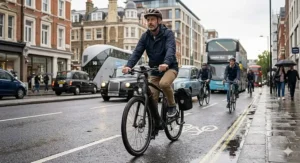
The London Zone 2 Commuter, 8 km Each Way. You live in Hackney, work near Liverpool Street, and your bike either shares your flat or goes under your desk. The ADO Air Carbon or Fiido Air are the obvious answers. Both fold acceptably, weigh under 14 kg, and carry enough range for several days of commuting between charges. The belt drive on both means no chain maintenance in London’s particular blend of grime and persistent damp. Security is the primary anxiety: GPS tracking plus a quality Kryptonite lock, registered on BikeRegister, is the minimum sensible precaution.
The Sheffield Weekend Explorer, 30–50 km Mixed Rides. Sheffield has seven hills and excellent cycle infrastructure, but the surrounding Peak District demands range and gearing. The Cannondale Topstone Neo Carbon earns its higher price here — the Bosch CX motor handles gradient changes that would labour smaller motors, and the 500Wh battery gives you genuine confidence that you’re not rationing assist on the return leg. Mudguards are essential in the Peaks between October and April; plan for them in your budget.
The Retired Cyclist in the Cotswolds, Leisure Touring. The Specialized Turbo Creo 2 is, frankly, the finest leisure touring ebike in this guide. The Future Shock absorbs country lane imperfections beautifully, the range extends to genuine all-day touring at relaxed assist levels, and the understated carbon aesthetic doesn’t look out of place leaning against a Cotswolds dry-stone wall. It’s a considerable investment, but the UK’s Cycle to Work scheme — if applicable through employment — can make premium bikes significantly more accessible through salary sacrifice.
UK Regulations, Safety & Legal Requirements for Carbon Fibre Ebikes
All seven bikes in this guide are designed to comply with UK EAPC (Electrically Assisted Pedal Cycle) requirements. To be ridden legally on public roads, paths, and cycle lanes in England, Scotland, and Wales as a bicycle, an e-bike must:
- Have a continuous rated motor of 250W maximum
- Provide pedal-assist only (the motor must stop when you stop pedalling, with a permitted starting assist up to 6 km/h)
- Cut motor assistance at 15.5 mph (25 km/h)
- Have working pedals
No licence, registration, tax, or insurance is legally required for a compliant EAPC. You must be aged 14 or over. Full details are available on gov.uk’s official guidance on electric bike rules. Note that Northern Ireland follows the same rules as Great Britain; however, if you purchase a bike manufactured in the EU, be aware that post-Brexit import rules may affect warranty service — always confirm UK warranty terms before purchasing.
UKCA marking (which replaced CE marking for products sold in Great Britain post-Brexit) applies to certain electrical products. For e-bikes, UKCA or CE marking may both be acceptable depending on the supply date and market of origin; when in doubt, purchase from a UK-based authorised retailer who can confirm compliance. This is particularly relevant for Chinese-manufactured bikes that may not have been specifically assessed for UK market compliance.
One common purchase mistake: buyers from continental Europe sometimes purchase higher-powered models (350W, 500W) that are legal in Germany, France, or the Netherlands but exceed UK EAPC limits. A 500W e-bike on a UK public road is classified as a moped, requiring registration, tax, insurance, and a driving licence. The law on this is clear and the penalties include police seizure of the vehicle.
Long-Term Cost & Maintenance for UK Riders
The up-front investment in a carbon fibre ebike is only part of the story. Here’s the honest total ownership picture over three years, in GBP.
Battery replacement: Most e-bike batteries retain around 80% capacity after 500–700 full charge cycles. For a daily commuter charging three times per week, that’s approximately 3–4 years before meaningful degradation. Replacement batteries typically cost £200–£400 for mainstream brands; Bosch system batteries run £350–£500. Bosch, Shimano, and Bafang batteries are widely available in the UK; proprietary batteries from smaller brands carry more supply risk.
Drivetrain maintenance: A Gates Carbon Drive belt costs £50–£80 to replace but lasts 30,000–40,000 km with basic care. A conventional chain-and-cassette drivetrain costs £15–£50 per replacement and needs replacing every 2,000–3,000 km under British conditions (more frequently than in drier climates). Over three years, the belt drive is typically cheaper on maintenance despite the higher initial cost.
Tyre replacement: Carbon e-bike tyres cost £25–£60 each and typically last 3,000–6,000 km on British roads. Budget accordingly and never wait until you’re riding on threads; a puncture on a wet A-road is miserable.
Frame care: Carbon frames don’t rust — an advantage over aluminium in the British damp — but they need inspection after any significant impact. A small crack in a carbon frame that goes unnoticed can propagate into a serious structural failure. Annual inspection by a qualified mechanic is worthwhile investment.
Common Mistakes When Buying a Carbon Fibre Ebike in the UK
Even experienced cyclists make these errors when buying their first carbon e-bike.
Ignoring motor type. Hub motors (Bafang, Mivice) are lighter and simpler; mid-drive motors (Bosch, Shimano) deliver better hill performance and more natural feel. For hilly cities — Bristol, Sheffield, Edinburgh — mid-drive is meaningfully superior. For flat urban commuting, a quality hub motor is excellent value.
Believing headline range figures. See above. A 100 km claim from a manufacturer tested at 70 kg, flat terrain, 20°C, eco mode is not your real-world range in Manchester in November carrying a laptop bag.
Underestimating theft risk. A £2,000 carbon ebike attracts exactly the same attention from opportunist thieves as a £2,000 conventional bike — probably more, because it’s visually distinctive. Budget at minimum £70–£100 for a quality lock and register on BikeRegister immediately upon purchase.
Skipping mudguards. Riding a clean carbon e-bike without mudguards for three weeks and then wondering why your back looks like you’ve been Pollocked is a uniquely British rite of passage. Save yourself the experience.
Not checking post-Brexit warranty terms. Some EU-manufactured e-bikes have warranty service routed through European service centres. Post-Brexit, this may mean shipping costs or delays for warranty claims. Always confirm UK-based warranty support before purchasing.
FAQ: Carbon Fibre Ebikes — UK Questions Answered
❓ Are carbon fibre ebikes legal on UK roads?
❓ How much does a carbon fibre ebike cost in the UK?
❓ Are carbon fibre ebikes available on Amazon.co.uk?
❓ How long does a carbon fibre ebike battery last in UK conditions?
❓ Do I need specialist insurance for a carbon fibre ebike in the UK?
Conclusion: Which Carbon Fibre Ebike Should You Buy in the UK?
The best carbon fibre ebike is, predictably, the one that actually suits how you ride — which is less obvious than it sounds when standing in front of a comparison table.
For most British city commuters who use trains, buses, and lifts as part of their daily journey, the ADO Air Carbon or Fiido Air are the straightforward recommendations: genuinely light, genuinely refined, and practical in a way that heavier alternatives aren’t. The Engwe N1 Air serves as an excellent and more affordable entry point if the sub-£1,300 budget is a firm constraint.
For riders who split their time between weekday commuting and weekend leisure riding — a growing cohort as UK cycling infrastructure improves — the Cannondale Topstone Neo Carbon is the single most versatile recommendation in this guide. The Bosch motor handles whatever British terrain produces with a reliability that justifies the higher investment. And for pure road riding or serious trail use, the Specialized Creo 2 and Levo SL represent the state of the art: bikes that happen to have motors rather than motors that happen to be bikes.
All of these represent a decisive step forward from aluminium alternatives. Not because aluminium is bad, but because carbon fibre ebikes are now genuinely accessible — and on a wet Tuesday morning in February, lighter and more comfortable is always better.
✨ Ready to Find Your Perfect Carbon Fibre Ebike?
🔍 Click on any highlighted model above to check current pricing and availability on Amazon.co.uk. These recommendations are updated regularly to reflect the best options for UK riders in 2026.
Recommended for You
- Best Weekend Touring Range Ebike UK 2026: 7 Long-Distance Picks
- Best 100 Mile Range Ebike UK 2026: 7 Long-Distance Picks That Eliminate Range Anxiety
- 7 Best Electric XC Bikes UK 2026: Lightweight, Fast & Ready to Race
Disclaimer: This article contains affiliate links. As an Amazon Associate, I earn from qualifying purchases. If you purchase products through these links, we may earn a small commission at no additional cost to you. All prices are indicative ranges only — always check Amazon.co.uk for current pricing. This article was last updated June 2026.
✨ Found this helpful? Share it with your mates! 💬🤗
