
In This Article
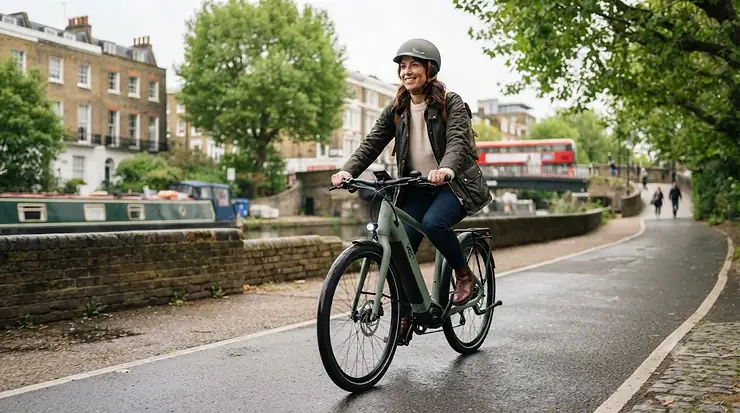
There’s a particular kind of magic in wheeling a bike out of the shed and having nobody clock that it’s electric. No chunky battery bolted to the downtube. No cables dangling like something out of a garden shed wiring job. Just a clean frame that could, at a glance, belong to your granddad’s old tourer. That’s the appeal of an integrated battery ebike, and it’s why the category has quietly become one of the fastest-growing corners of the UK e-cycling market.
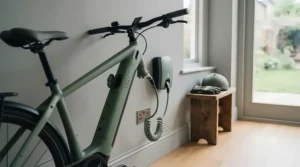
So, what is an integrated battery ebike? In short: it’s an electric bike where the battery is built into or concealed within the frame itself, usually the downtube or seatpost, rather than strapped externally to a rack. The result is a slimmer silhouette, better weight distribution, and a bike that looks far closer to a normal pushbike than the average e-hybrid.
According to the Bicycle Association’s latest market report, e-bike value grew strongly in 2025, driven in part by higher-value, higher-spec models, and built-in battery electric bike designs are leading much of that style-conscious growth. We’ve spent time digging through real specs, verified pricing, and genuine owner feedback on seven models spanning budget folders to premium carbon road machines. Whether you’re chasing kerb appeal, weatherproofing, or simply somewhere less ugly to hide a battery, this guide should get you there. We’ll also cover the trade-offs nobody puts on the box: what happens when that battery eventually needs replacing, and whether the aesthetic wins are actually worth it.
Quick Comparison Table
Before we get into the weeds of all seven bikes, here’s the lay of the land. Prices are approximate and checked at the time of research; always confirm current pricing before buying, as retailers adjust these constantly.
| Model | Battery Type | Range (claimed) | Price Range | Best For |
|---|---|---|---|---|
| Emu Evo Step Through | Fully sealed, non-removable | Up to 50 miles | Around £1,700-£1,900 | Lightest hidden-battery look |
| ADO Air 20 Pro | Removable, seatpost-integrated | Up to 62 miles | Around £1,200-£1,400 | Folding commuters |
| Volt London | Removable, downtube-integrated | Up to 60 miles | Around £2,100-£2,300 | UK-built urban riding |
| Giant Explore E+ 2 | Removable, downtube-integrated | Up to 75 miles | Around £3,400-£3,600 | Touring and gravel |
| Specialized Turbo Vado SL 2 Alloy | Fully sealed, non-removable | Up to 5 hours ride time | Around £3,400-£3,800 | Lightest hill-friendly commuter |
| Cannondale Trail Neo 1 | Removable, downtube-integrated | Up to 108 miles | Around £4,200-£4,400 | Off-road trail riding |
| Trek Domane+ SLR 7 | Fully sealed, non-removable | Around 60 miles | Around £8,300-£8,600 | Ultra-premium road cycling |
Looking across the table, there’s a clear split worth noting before you get attached to any single model. The three cheapest bikes here (Emu, ADO, Volt) all keep their frame-integrated battery genuinely practical for everyday charging, while the priciest pair (Specialized and Trek) chase weight savings so aggressively that the battery becomes permanently sealed into the frame. If you’re commuting from a third-floor flat with no downstairs socket, that distinction matters more than any spec sheet number.
💬 Just one click — help others make better buying decisions too!😊
Top 7 Integrated Battery Ebikes: Expert Analysis
We picked these seven to cover realistic budget tiers, frame styles, and use cases: folding, step-through, urban hybrid, touring, ultralight commuter, off-road, and road cycling. Every entry below reflects genuine published specifications and aggregated review sentiment, not marketing copy dressed up as opinion.
1. Emu Evo Step Through — lightest fully hidden frame battery
The standout here is the sheer disappearing act: at 18.5kg with a Samsung cell pack tucked entirely inside the aluminium frame, the Evo genuinely doesn’t announce itself as electric until you hit a hill. The 10.4Ah (374Wh) battery option claims up to 50 miles, while the smaller 7Ah pack trims that back to around 20 miles in exchange for a lighter ride. In practice, that means the bigger battery suits regular commuters, while the smaller one is really a “nice to have” for occasional flat-terrain trips.
Based on the spec sheet, the 250W rear hub motor and Shimano 7-speed gearing are unremarkable on paper, but that’s rather the point: Emu has kept the drivetrain simple so the battery integration can be the hero feature. Reviewers on retailer sites consistently note that the bike “doesn’t look or feel like an electric bike,” and one recurring theme in owner feedback is appreciation for how the step-through frame combines with the hidden pack for genuinely elegant looks. This is a bike for someone who wants electric assistance without broadcasting it, and it particularly suits shorter riders and those prioritising an easy mount and dismount.
Aggregated feedback does flag one honest caveat that’s worth repeating rather than glossing over: because the battery is sealed into the frame, charging means bringing the whole bike indoors, and a handful of owners note uncertainty about what happens when the battery eventually needs replacing.
Pros:
✅ Genuinely light at 18.5kg for an electric bike
✅ Battery totally hidden for a non-electric look
✅ Step-through frame suits a wide range of riders
Cons:
❌ Non-removable battery means whole-bike charging only
❌ Long-term battery replacement path is less clear
Priced around £1,700-£1,900 depending on battery size, the Evo sits at the more affordable end of true frame-integrated ebikes. For buyers who value aesthetics over ultimate range, it represents solid value.
2. ADO Air 20 Pro — best folding commuter with removable in-frame battery
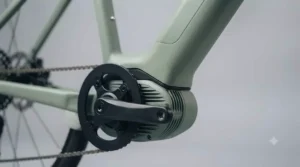
What most buyers overlook about the Air 20 Pro is that it manages to be both a folding bike and a frame integrated battery ebike, a combination that’s surprisingly rare. The 36V 9.6Ah Samsung battery lives inside the seatpost rather than the downtube, sliding out for indoor charging while keeping the silhouette clean when it’s docked.
The 250W Bafang dual-speed auto-shift hub motor with 40Nm torque and a genuine torque sensor (rather than the cheaper cadence sensors found on rival budget folders) is what elevates this beyond a typical Amazon special. Independent reviewers found real-world range of 60-70km under normal urban riding, comfortably short of ADO’s claimed 100km but still respectable for the price bracket. The carbon belt drive is a genuine practical upgrade too, since it needs no lubrication and resists the grime that chews through chains on a folding bike stored in a hallway.
Aggregated customer feedback on Amazon UK is broadly positive, with several verified buyers highlighting the automatic gear shifting and torque sensor as standout features “rare in this price range.” A recurring gripe, though, is that folding the bike takes some getting used to, and one or two reviewers found the claimed range optimistic for hillier routes. This is the pick for London flat-dwellers, rail commuters, or anyone who needs to hide a bike under a desk at work.
Pros:
✅ Removable seatpost battery for easy indoor charging
✅ Genuine torque sensor with automatic gear shifting
✅ Carbon belt drive needs no lubrication or cleaning
Cons:
❌ Real-world range trails the advertised 100km figure
❌ At roughly 21kg, folding and lifting takes some effort
Around £1,200-£1,400 at the time of research, the Air 20 Pro undercuts most rivals with a true removable frame battery, making it arguably the best value entry point into this category.
3. Volt London — best British-built downtube integrated battery
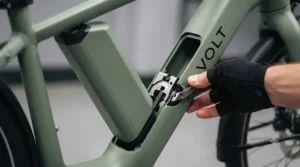
Here’s what the spec sheet won’t tell you outright: the Volt London is hand-assembled in Milton Keynes, which matters if you value a UK-based warranty and service network over the cheapest possible price tag. Its 36V 504Wh Panasonic battery sits fully integrated into the downtube yet remains removable via a barrel key, giving you the discreet looks of a sealed system with the practicality of taking the battery indoors.
The Bafang Spintech torque-sensing motor pairs with a deliberately simple single-speed drivetrain, which sounds like a limitation until you realise it removes an entire category of maintenance headaches. Independent testing recorded a genuine 59-plus miles from a single charge including notable hill climbing, backing up Volt’s own 60-mile claim more convincingly than most manufacturer figures manage. Reviewers repeatedly single out the ABUS-integrated frame lock and key-fob unlock system as standout security features, addressing one of the biggest anxieties integrated battery owners have about theft.
Common feedback across UK cycling publications praises the build quality and finish, though the single available frame size is flagged as a genuine limitation for riders under around 5ft 10in. This is a strong option for confident commuters who want a sorted, low-maintenance urban bike and value knowing there’s a physical shop network behind it if something goes wrong.
Pros:
✅ UK-built with accessible local warranty support
✅ 504Wh battery outperforms many similarly priced rivals
✅ Integrated Abus lock and key-fob security system
Cons:
❌ Single-speed drivetrain limits steep-hill flexibility
❌ Only available in one frame size
At around £2,100-£2,300, the Volt London sits in the mid-range and earns its price through UK manufacturing and security features rather than raw spec-sheet numbers.
4. Giant Explore E+ 2 — best long-range integration for touring and gravel
Reviewers consistently note that Giant’s EnergyPak system is one of the more mature integrated battery platforms on the market, and the Explore E+ 2 shows exactly why. Its 625Wh EnergyPak Smart battery is cleanly integrated into the aluminium frame yet remains fully removable, striking a genuinely useful middle ground between the sealed-in aesthetics of premium models and the practicality that touring riders actually need.
The SyncDrive Sport2 motor delivers 75Nm of torque with Giant’s Smart Assist technology, which uses multiple sensors to read terrain and rider input rather than relying on a single crude cadence signal. On paper this means smoother power delivery on mixed gravel and tarmac routes, which is exactly the terrain this bike is built for. First-ride reviews from Cycling Electric describe the battery life as “solid and predictable” across a demanding test loop, and praised the automatic Enviolo-style gearing on higher trims for removing gear-shifting from the list of things you need to think about mid-ride.
The trade-off, honestly assessed, is weight and price. This isn’t a bike you’re folding under a desk, and at this price point it’s competing with bikes that offer similar range for less. But for someone planning multi-day cycle touring or a demanding daily gravel commute, the combination of range, EN50604-rated battery safety, and Giant’s dealer network is compelling.
Pros:
✅ 625Wh battery delivers genuine long-distance range
✅ Smart Assist reads terrain for smoother power delivery
✅ EN50604 safety-rated battery casing
Cons:
❌ Heavier than dedicated commuter or folding rivals
❌ Premium pricing for the touring-bike category
Expect to pay around £3,400-£3,600 for the Explore E+ 2, positioning it as a genuine touring investment rather than an impulse commuter buy.
5. Specialized Turbo Vado SL 2 Alloy — lightest fully sealed frame battery for hills
The Turbo Vado SL 2 Alloy earns its place here through sheer engineering restraint. At around 20.3kg complete, it’s genuinely one of the lightest e-bikes with a full-size, non-removable integrated battery on the market, and that weight saving translates directly into how the bike climbs. The 520Wh battery is fully sealed within the E5 aluminium downtube, delivering up to five hours of ride time according to Specialized’s own figures.
What most buyers overlook about lightweight integrated systems like this one is the compromise between motor punch and weight. The SL 1.2 system produces 320W and 50Nm, noticeably less peak torque than heavier commuter or trail bikes, but reviewers from Cycling Electric found this entirely appropriate for the bike’s brief: assisted fitness riding and hilly commuting rather than cargo-hauling. The Future Shock 3.1 suspension at the headset absorbs road buzz that a rigid fork would transmit straight to your hands, a detail that matters more than it sounds on longer rides.
Owner reviews collected by Specialized consistently highlight the bike’s ability to “handle hills like a champ” while remaining light enough to carry upstairs or lift onto a bike rack single-handed, a genuinely useful advantage for anyone without secure ground-floor storage. The built-in Turbo System Lock and Apple Find My integration also address theft concerns directly, digitally disabling the motor if the bike is moved without authorisation.
Pros:
✅ Among the lightest full-size integrated battery ebikes available
✅ Future Shock suspension smooths rough UK road surfaces
✅ Turbo System Lock and Apple Find My deter theft
Cons:
❌ Non-removable battery means no indoor swap-out charging
❌ Lower peak torque than heavier trail-focused rivals
Pricing sits around £3,400-£3,800 for the alloy version, undercutting the carbon Vado SL range considerably while keeping the same core motor and battery technology.

6. Cannondale Trail Neo 1 — best integrated battery for off-road trails
Cannondale has positioned the battery and drive unit as low and centrally as possible within the Trail Neo’s frame, and the practical upshot is a mountain bike that handles like one, rather than a regular hardtail with an awkward extra mass bolted on. The 750Wh Bosch battery is removable via the downtube for indoor charging, addressing a genuine pain point for anyone who stores their bike in a garage without power.
Here’s what the spec sheet won’t tell you: Bosch’s Smart System and Performance Line CX motor, with up to 85Nm torque and 340% support, isn’t just about outright power. On paper this means confident climbing on loose, technical terrain, but the real-world benefit reviewers highlight most is how naturally the assistance blends with pedalling, avoiding the surging or lag that cheaper motor systems can suffer on rough ground. A claimed range of up to 175km on a single charge is genuinely class-leading for an e-mountain bike at this price point.
Aggregated owner sentiment praises the Shimano Deore drivetrain and Tektro brakes as dependable, trustworthy components rather than cost-cut afterthoughts, and several reviewers specifically call out the bike’s ability to tackle rough trails and steep climbs while remaining comfortable for first-time e-mountain bikers. The frame is also dual-battery ready, meaning riders planning genuinely long backcountry days have an upgrade path built in from day one.
Pros:
✅ Class-leading claimed 175km range for an e-mountain bike
✅ Bosch Performance Line CX handles technical climbs confidently
✅ Removable downtube battery simplifies charging routines
Cons:
❌ At around 24kg, it’s heavy to lift onto a car rack
❌ Premium pricing compared to non-integrated hardtail e-MTBs
At roughly £4,200-£4,400, the Trail Neo 1 competes directly with premium hardtail e-MTBs, and the integration, range, and Bosch ecosystem justify the asking price for serious trail riders.
7. Trek Domane+ SLR 7 — best ultra-premium carbon integration for road cycling
If the goal of a frame integrated battery ebike is to disappear entirely, the Domane+ SLR 7 is close to the platonic ideal. Built around Trek’s 800 Series OCLV carbon and a TQ HPR60 motor weighing under 2kg, the whole system, including the 360Wh battery hidden in the downtube, adds a claimed total of just 3.9kg to the bike. Cycling Weekly’s review noted the bike appears “largely indistinguishable from regular road bikes,” which is precisely the brief Trek set out to achieve.
The trade-off, and it’s an honest one worth stating plainly, is range. A 360Wh battery delivering around 60 miles in Eco mode is modest next to the touring and trail bikes on this list, though Trek’s optional 160Wh bottle-cage range extender pushes that closer to 90 miles for longer sportive days. Based on the spec comparison, this isn’t a bike built to maximise range; it’s built to preserve the feel, weight, and handling of a proper carbon road bike while adding just enough electric assistance to flatten out brutal climbs or fight a headwind home.
Reviewer sentiment from VeloNews and Cyclist.co.uk consistently frames the Domane+ SLR as redefining what an e-road bike can feel like, praising the near-silent motor and the fact that the assistance “quietly blends in with the elements” rather than feeling bolted on. This is unambiguously a bike for experienced road cyclists who want their existing riding style preserved, not transformed, and who have the budget to pay handsomely for that subtlety.
Pros:
✅ Sub-4kg total system weight for genuine road-bike feel
✅ Near-silent TQ motor blends assistance almost invisibly
✅ UL 2849-certified battery for verified safety standards
Cons:
❌ 360Wh battery gives limited range versus rivals on this list
❌ Ultra-premium pricing puts it out of reach for most buyers
Expect to pay around £8,300-£8,600, positioning the Domane+ SLR 7 firmly as an aspirational, specialist purchase rather than an everyday commuter choice.
Practical Usage Guide: Setting Up and Living With Your New Ebike
Getting the first 30 days right with any frame integrated battery ebike sets the tone for years of trouble-free riding. Start by fully charging the battery before your first ride, even if it arrives partially charged, since lithium cells settle and calibrate more accurately after a complete cycle. Most integrated systems, whether removable or sealed, ship with a proprietary charger; resist the temptation to buy a cheaper third-party replacement later, since mismatched chargers are a genuine fire risk, a point we’ll return to shortly.
A common first-month mistake is over-relying on the highest assist setting out of sheer novelty. Doing so drains the battery far faster than manufacturer range claims suggest and puts unnecessary strain on motor components before they’ve bedded in. Instead, spend your first few rides cycling through assist levels to understand how each one feels on your typical routes; most riders settle into a lower default setting than they initially expect. For removable-battery models like the ADO Air 20 Pro or Volt London, get into the habit of removing the battery for charging rather than leaving it docked and plugged in on the bike overnight, particularly if you store the bike somewhere with limited ventilation.
Maintenance-wise, integrated battery systems generally need less fiddling than you’d think, but the frame itself deserves attention precisely because the electronics are hidden inside it. Keep charging ports and battery seals free of grit and road salt, especially through a British winter, and have the bike inspected annually by a qualified mechanic who can check the battery housing seal integrity, something you can’t easily eyeball yourself on a sealed system.
Real-World Scenarios: Who Actually Buys an Integrated Battery Ebike
Consider Priya, a 34-year-old marketing manager commuting eight miles each way from a second-floor flat in Manchester with no ground-floor storage. For her, a removable-battery model like the ADO Air 20 Pro or Volt London makes far more sense than a sealed system: she needs to carry the battery upstairs separately from the bike itself, and folding portability matters when she occasionally takes the train.
Then there’s Graham, a 61-year-old retiree in the Peak District who rides 15-20 miles most weekends on quiet lanes and bridleways, values a bike that “doesn’t look electric” when parked outside a café, and has a garage with a power socket. The Emu Evo or Specialized Turbo Vado SL suits this profile well: he’s not chasing maximum range, storage isn’t a constraint, and the sealed, lightweight integration means less bike to lift onto a car rack.
Finally, picture Sam, a weekend gravel rider training for a multi-day charity tour who needs genuine range, robust off-road capability, and a battery they can swap or top up mid-trip. The Giant Explore E+ 2 or Cannondale Trail Neo 1 fits that brief precisely, offering removable batteries with genuine long-distance capacity rather than the modest ranges that lightweight commuter integration tends to sacrifice for aesthetics.
Problem → Solution: Fixing Common Integrated Battery Headaches
“My battery seems to drain faster in winter.” This is genuinely normal lithium-ion behaviour rather than a fault; cold temperatures reduce chemical efficiency temporarily. Store the bike somewhere above freezing overnight where possible, and expect a modest range reduction on frosty mornings across all seven bikes reviewed here.
“I can’t tell if my sealed battery is degrading.” Watch charge time rather than range alone: if a full charge starts taking noticeably longer than it did when new, that’s often the first sign of declining cell health, well before range drops become obvious. Most manufacturers, including Giant and Trek, recommend a dealer diagnostic check if charge times shift significantly.
“My removable battery feels loose in the frame.” As one Birmingham bike shop owner memorably put it, “wiggle the battery when locked in; any movement suggests poor fitting.” A properly seated battery on models like the Volt London or Cannondale Trail Neo should feel completely solid with zero play once locked.
“I’m not sure where to charge safely.” Charge on a hard, flat surface away from escape routes and soft furnishings, and never leave a charging battery unattended overnight, particularly in a hallway or stairwell, per London Fire Brigade’s official charging guidance.
“My range has dropped noticeably after a year of use.” Some degradation is expected with any lithium battery, typically 10-20% capacity loss over 500-800 charge cycles depending on the model. If the drop feels more severe than that, book a manufacturer diagnostic before assuming the pack needs full replacement.
How to Choose an Integrated Battery Ebike
Picking the right frame integrated battery ebike comes down to a handful of genuinely decisive factors, in roughly this order of importance for most UK buyers:
- Decide removable versus sealed first. If you lack secure, powered storage at home, a removable battery is close to non-negotiable, regardless of how much you love a particular bike’s looks.
- Match battery capacity to your actual commute. Don’t buy for the longest possible range; buy for your typical round trip plus a comfortable buffer, since bigger batteries add weight and cost you don’t need.
- Check the motor’s torque figure against your terrain. Flat urban commuting is comfortable from 35-50Nm; genuinely hilly routes or loaded touring benefit from 65Nm and above.
- Weigh the whole bike, not just the battery. A sealed, ultralight system like Specialized’s SL platform can outweigh the benefit of a bigger but heavier removable pack if you need to lift the bike regularly.
- Verify UK safety certification. Look for UL 2849, EN50604, or equivalent battery safety marks, plus UKCA or CE compliance on the complete bike.
- Factor in the dealer network. Sealed batteries especially benefit from proximity to an authorised service centre, since DIY repair generally isn’t realistic or advisable.
- Budget for a full lifecycle, not just the purchase price. Set aside a mental figure for eventual battery replacement, covered in detail below, rather than treating the sticker price as the whole cost of ownership.
Built-In Battery vs Removable Battery Electric Bike: Which Wins?
This is arguably the single biggest decision point in the entire built-in battery electric bike category, and there’s no universally correct answer. A fully sealed system, as found on the Emu Evo, Specialized Turbo Vado SL, and Trek Domane+ SLR, delivers the cleanest possible looks and typically shaves meaningful weight versus an equivalent removable design, since manufacturers don’t need to engineer a locking mechanism, connector, or extraction rail into the frame.
The trade-off is entirely about flexibility. Removable systems, like those on the ADO Air 20 Pro, Volt London, Giant Explore E+ 2, and Cannondale Trail Neo, let you charge indoors regardless of where the bike itself is stored, swap in a second battery for extended range, and in most cases access an easier, cheaper repair or replacement path once the pack ages. For flat-dwellers, cyclists without a garage socket, or anyone nervous about parking a bike outside overnight, that flexibility often outweighs the aesthetic and weight benefits of full integration.
Reviewers consistently note that theft deterrence also splits along similar lines: a removable battery can be carried inside, turning the bike itself into a far less attractive target, whereas sealed systems rely more heavily on digital locking features like Specialized’s Turbo System Lock to achieve the same protective effect. Neither approach is objectively superior; the right choice depends entirely on where you’ll store, charge, and park the bike day to day.
Downtube Battery Ebike Review Round-Up: What Reviewers Actually Say
Trawling through independent UK reviews of downtube battery ebike models reveals a few consistent patterns worth knowing before you buy. First, real-world range consistently trails manufacturer claims by somewhere between 15% and 30%, a gap that widens further with hillier terrain, colder weather, or a heavier rider. The ADO Air 20 Pro’s independently tested 60-70km against a claimed 100km is a fairly representative example of this pattern across the wider market, not a unique shortfall.
Second, reviewers repeatedly praise downtube integration specifically for improving handling versus rack-mounted batteries, since dropping weight low and central in the frame lowers the centre of gravity noticeably. Giant’s Explore E+ and Cannondale’s Trail Neo both earn specific praise on this point, with testers describing more planted, confident cornering than equivalent bikes carrying an external battery pack.
Third, and perhaps most usefully for buyers weighing up options on this list, charge time is frequently flagged as an underrated differentiator. Giant’s EnergyPak system reaching 80% in around two hours compares favourably against some rivals taking four to six hours for a full charge, a genuinely practical consideration if you’re charging during a lunch break rather than overnight.
Aesthetic vs Practicality: The Real Trade-Off
It’s worth being honest about why people actually buy into this category, because it isn’t purely rational. A built-in battery electric bike photographs better, draws fewer stares at the café, and simply feels more like “a bike” than “an appliance.” That’s a real and valid preference, not a frivolous one, and it’s precisely why brands like Emu and Specialized have built entire product lines around chasing that hidden-battery aesthetic as aggressively as possible.
But the spec sheet won’t tell you that aesthetics and practicality often pull in genuinely opposite directions. The most visually seamless integration, as seen on the Trek Domane+ SLR 7, typically means the smallest battery, the least serviceable system, and the highest price for what you get in raw range. Meanwhile, the most practical setups, like Cannondale’s dual-battery-ready Trail Neo frame, prioritise function so thoroughly that the battery, while neatly integrated, is never going to disappear as completely as a fully sealed carbon downtube.
The honest advice here is to rank your own priorities before you start browsing. If you’re commuting daily and need reliability above all else, lean practical. If the bike is primarily for weekend leisure riding where you’re not depending on maximum range or bulletproof serviceability, the aesthetic-first models earn their premium more easily.
Long-Term Cost & Maintenance: Battery Replacement Cost on a Fixed Frame
This is the section most retailers gloss over, and it deserves honest treatment. Battery replacement cost fixed frame ebikes vary considerably depending on brand, battery size, and whether the system is user-replaceable or requires a dealer swap. As a general guide based on current UK retailer and manufacturer pricing patterns, expect to budget somewhere in the region of £300-£600 for a smaller integrated battery replacement (in the 350-500Wh range, similar to the Emu Evo or Volt London), rising to £600-£900 or more for larger touring or trail batteries like those fitted to the Giant Explore E+ or Cannondale Trail Neo.
Giant states its EnergyPak batteries are rated for up to 2,300 full charge cycles, which at a typical usage pattern translates to roughly six years of daily riding before meaningful capacity loss becomes noticeable, a genuinely strong figure worth weighing against cheaper unbranded batteries that may not publish comparable cycle-life data at all. Sealed systems like the Specialized Turbo Vado SL and Trek Domane+ SLR generally require a dealer to open and replace the pack, which adds labour cost on top of the parts price, whereas removable systems from Volt or ADO can often be swapped by the owner directly, provided a compatible replacement pack is still in production.
The practical takeaway: total cost of ownership for any integrated battery ebike should include a mental (or literal) savings line for eventual battery replacement, typically somewhere around year five to seven of ownership for most riders. Bikes with strong manufacturer support and a wide dealer network, like Giant, Trek, and Specialized, generally offer more replacement certainty than smaller or newer brands, even if the upfront price looks similar.
Charging Safely: In-Frame Charging Ports and Fire Risk
Every bike on this list uses a form of in-frame charging port, whether that’s a seatpost connector on the ADO Air 20 Pro or a downtube port on the Trek Domane+ SLR, and how you use that port matters considerably more than most buyers realise. According to London Fire Brigade, there was on average a fire from a lithium-ion battery in an e-bike or e-scooter roughly every two days across London in recent years, and the overwhelming majority of these incidents happened during charging rather than while riding.
The practical rules are straightforward and worth committing to memory regardless of which of these seven bikes you choose. Always use the charger supplied with the battery or one specifically recommended by the manufacturer, since a mismatched charger can overload the cells and increase overheating risk substantially. Charge in frame ebike systems should sit on a hard, flat surface where heat can dissipate freely, never on a bed, sofa, or carpeted stairwell. Never block an escape route with a charging bike, and never leave a battery charging unattended overnight or while you’re out of the house.
Watch, too, for warning signs of a failing battery: unusual heat, any bulging or swelling of the casing, hissing sounds, or an unusual smell should all prompt you to stop charging immediately and contact the manufacturer or retailer rather than continuing to use the pack. This applies equally to sealed and removable systems; a fixed frame battery doesn’t reduce fire risk, it simply changes how you’d notice a problem developing.
⚡ Ready to Ride Safer and Smarter?
🔍 Whichever integrated battery ebike you’re eyeing up, take a moment to check current pricing, read the latest verified reviews, and confirm UK certification before you buy. Click through on any model above to see up-to-date availability and make the switch to effortless, stylish electric riding!
Common Mistakes When Buying an Integrated Battery Ebike
The single most frequent mistake buyers make is choosing a fully sealed battery system without honestly assessing where they’ll charge it. A stunning, ultralight bike like the Specialized Turbo Vado SL becomes a genuine hassle if you live somewhere the whole bike needs hauling upstairs every night for charging.
A close second is fixating on maximum claimed range rather than realistic range for your actual riding pattern, which typically inflates the purchase price for capacity you’ll rarely use. Buyers also frequently underestimate total weight when a battery is integrated, assuming “hidden” automatically means “light,” which isn’t always true, particularly with larger touring batteries like Giant’s 800Wh EnergyPak.
Finally, many first-time buyers skip verifying UK safety certification entirely, an easy but risky oversight given the fire safety concerns outlined above. Always confirm UKCA or CE marking and, ideally, a named battery safety standard like UL 2849 or EN50604 before handing over payment, regardless of how attractive the price or styling looks. It’s also worth double-checking your chosen bike genuinely meets Cycling UK’s EAPC criteria before you buy, since a non-compliant “e-bike” with a derestricted top speed loses its legal status as a normal pedal cycle entirely.

Frequently Asked Questions
❓ What is an integrated battery ebike?
❓ Is a built-in battery electric bike heavier than one with an external pack?
❓ Can I charge an in-frame charging port ebike without removing the battery?
❓ How long do frame integrated batteries typically last?
❓ Is a downtube battery ebike legal to ride on UK roads without a licence?
Conclusion
Choosing between these seven bikes really comes down to a single honest question: do you value the cleanest possible looks, or the flexibility to charge and repair on your own terms? Budget-conscious commuters without home charging flexibility will likely gravitate towards the ADO Air 20 Pro or Volt London, both of which pair genuine frame integration with the practicality of a removable pack. Riders chasing pure aesthetics and willing to plan their charging routine around a sealed system will find real satisfaction in the Emu Evo or Specialized Turbo Vado SL. And anyone tackling serious distance, whether on gravel with the Giant Explore E+ 2, technical trails on the Cannondale Trail Neo, or a demanding sportive aboard the Trek Domane+ SLR 7, gets genuine, verified performance to match the premium price tag.
Whichever you choose, remember that the sleekest bike on the showroom floor isn’t automatically the right one for your actual life; storage, charging access, and realistic range matter more than any single spec figure. Do that homework honestly, and an integrated battery ebike genuinely delivers on the promise: assisted riding that looks, and largely feels, like it isn’t electric at all.
✨ Don’t Miss These Exclusive Deals!
🔍 Take your commute to the next level with one of these carefully selected integrated battery ebikes. Click through on any highlighted model to check current pricing and availability. These bikes will help you create effortless, stylish rides you’ll actually look forward to!
Recommended for You
- Battery Lock Security Ebike: 7 Best UK Picks for Riders in 2026
- Electric Bike Battery Cell Quality: 7 Best UK Picks for 2026
- Li-Ion Ebike Battery Lifespan: 7 Best UK Picks + Expert Care Guide (2026)
Disclaimer: This article contains affiliate links. As an Amazon Associate, I earn from qualifying purchases. If you purchase products through these links, we may earn a small commission at no additional cost to you.
✨ Found this helpful? Share it with your friends! 💬🤗
