
In This Article
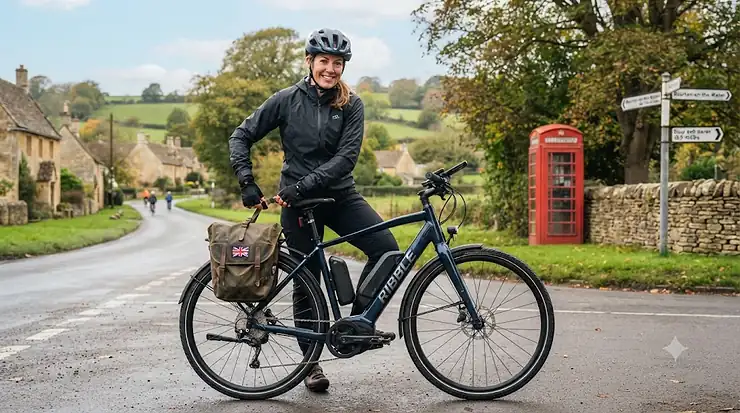
Range anxiety on an e-bike has a very particular flavour. It’s not the dramatic, pull-over-and-panic kind you get in an electric car with 4% left and no charger in sight — it’s the quieter, creeping dread of watching the battery icon drop from two bars to one on the exact hill you didn’t plan for, ten miles from home, with the throttle suddenly feeling more like a suggestion than a promise.
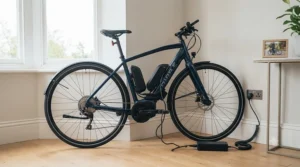
So what does it actually mean to add second battery electric bike setups people talk about online? In practice it’s one of three things: bolting on a dedicated OEM range extender that talks to your bike’s existing system, carrying or mounting a completely separate spare battery you swap in mid-ride, or building a dual power pack electric bicycle setup from scratch using a bracket, a bag, and a generic replacement cell. Under UK law, an e-bike still counts as a standard bicycle as long as it stays within EAPC limits regardless of how many batteries you’re carrying, which is worth knowing before you start bolting extra hardware to the frame.
This guide covers seven genuinely available products spanning that whole spectrum — from a £20 mounting bracket to a £400-odd OEM extender — with honest notes on where each one is actually sold, since this is one of those categories where “just check Amazon” doesn’t always tell the full story. We’ve drawn on real specifications and aggregated customer feedback throughout, and we’ll flag clearly whenever something is more readily available through a specialist dealer network than a straightforward Amazon listing. If your riding life involves long commutes, cargo hauling, or the kind of weekend routes that make “will I make it home” a genuine question, there’s an option here worth your attention.
Quick Comparison Table
| Product | Type | Price Range | Best For |
|---|---|---|---|
| YOSE POWER 48V Universal Spare Battery | Universal replacement/spare battery | £150-£230 range | Generic and converted e-bikes needing a true spare |
| Downtube Battery Adapter Bracket Mount | Universal mounting bracket | Under £25 | DIY second-battery mounting on bottle-cage bosses |
| KEMIMOTO 40L Ebike Battery Bag | Rear rack carrier bag | £35-£55 range | Carrying a spare battery securely on longer rides |
| CHIMONA 30L Ebike Battery Bag | Rear rack carrier bag | £25-£40 range | Budget-friendly battery and gear storage |
| Bosch PowerMore 250 Range Extender | OEM Smart System range extender | £380-£420 range | Bosch Smart System e-bikes wanting factory integration |
| Giant EnergyPak Plus 240Wh | OEM range extender battery | £350-£450 range | Giant e-bikes with EnergyPak-compatible frames |
| Specialized SL Range-Extender (160Wh) | OEM niche range extender | £300-£340 range | Specialized Turbo SL riders chasing extra climbing range |
Notice the split in this table: the top four items are the DIY, bring-your-own-solution route, while the bottom three are manufacturer-locked range extenders that only work with their own ecosystem. That’s not a flaw in the research — it’s genuinely how this category works, and understanding which side of that line your bike sits on before you spend anything is the single most useful thing this guide can do for you.
💬 Just one click — help others make better buying decisions too!😊
Top 7 Second-Battery Options: Expert Analysis
1. YOSE POWER 48V Universal Spare Battery — best true second battery for generic and converted e-bikes
If your e-bike didn’t come from one of the big five manufacturers with a proprietary charging ecosystem, this is where the search usually ends up. YOSE POWER builds Hailong and Silverfish-style downtube and seat-tube batteries designed to match the shape and connector layout used across a huge swathe of generic, own-brand, and converted electric bikes — the kind of machine that doesn’t have an app, a dealer network, or a five-year compatibility roadmap.
Based on the spec sheet, capacities run from around 10Ah up to 18Ah depending on the exact model, with a built-in BMS handling overcharge, overdischarge, and short-circuit protection — the electronic equivalent of a seatbelt you never think about until you need it. What most buyers overlook is that “universal” here means universal within a shape family, not universal full stop; you’re matching connector pinout and physical dimensions to your existing mount, not just voltage.
Reviewers consistently describe these as a genuinely cheaper alternative to manufacturer-branded replacement batteries for bikes like Rad Power, Ecotric, and various Halfords-sold models, with several specifically noting they’ve used the original charger without issue. A common complaint in user reviews is that matching the exact connector pinout requires careful cross-referencing against your existing battery before ordering — get the pin layout wrong and it simply won’t communicate with your controller.
Pros:
- ✅ Significantly cheaper than most OEM replacement or second batteries
- ✅ Wide range of capacities and shapes to match existing mounts
- ✅ Built-in BMS protection standard across the range
Cons:
- ❌ “Universal” fit still requires careful connector and shape matching
- ❌ Not compatible with proprietary Smart System-style ecosystems
Expect to pay somewhere in the £150-£230 range depending on capacity, which comfortably undercuts most manufacturer-branded second batteries for equivalent capacity.

2. Downtube Battery Adapter Bracket Mount — best budget mounting solution for DIY dual-battery builds
Sometimes the entire obstacle between you and a second battery isn’t the battery itself — it’s having nowhere sensible to put it. This aluminium adapter bracket bolts onto standard bottle-cage bosses and gives you a proper mounting plate for a rectangular or Hailong-style battery pack, without drilling a single new hole into your frame.
Here’s what to weigh: this is a mechanical solution to a mechanical problem, not an electrical one. It solves second battery mounting ebike questions around physical placement, but it does nothing for wiring a second pack into your existing system — that’s a separate consideration entirely, and one worth researching (or getting a bike mechanic’s opinion on) before you assume a bracket alone gets you to a working dual-battery setup.
Aggregated feedback on this style of bracket consistently praises the CNC-machined build quality and the fact that it doubles up as extra frame real estate for accessories beyond just batteries — bottle cages, tool mounts, small bags. A recurring theme in reviews is that the seven-hole adjustable design is genuinely necessary rather than a marketing flourish, since bottle-boss spacing varies more between frames than you’d expect.
Pros:
- ✅ No drilling required on most standard frames
- ✅ Genuinely versatile beyond just battery mounting
- ✅ Solid aluminium construction holds weight without flexing
Cons:
- ❌ Solves mounting only, not electrical integration
- ❌ Adds a small amount of extra bulk to the frame profile
At under £25, this is one of the cheapest entry points into a proper dual-battery frame layout, provided you’ve thought through the wiring side separately.
3. KEMIMOTO 40L Hard Shell Ebike Battery Bag — best carrier for a spare battery on longer rides
For riders who’d rather swap a fresh battery mid-ride than fuss with wiring a second one permanently into the system, a proper rack bag changes the whole equation. This 40-litre hard-shell bag is built with a dedicated padded compartment specifically designed around carrying a spare e-bike battery safely, rather than just hoping a rucksack pocket does the job.
Based on the build description, the EVA hard-shell panels keep their shape under load and protect the battery from knocks in a way soft fabric panniers simply can’t, while the waterproof cover adds a genuinely useful layer of protection against the kind of British drizzle that turns a “quick ride” into a soggy commute. What stands out here is the reflective strip and light-mounting hook — a small detail that matters more than it sounds once you’re riding home after dark with an extra 2-3kg on the rear rack.
Reviewers consistently mention the tool-free Velcro strap installation as genuinely quick, and several specifically praise the internal battery-protection separator for preventing the battery from knocking against other gear during a rough ride. A common complaint in user reviews is that the bag’s dimensions need checking carefully against your specific rack width before buying, since not every rear rack sits within the recommended fitting range.
Pros:
- ✅ Dedicated padded compartment built around battery shape and weight
- ✅ Waterproof cover suits unpredictable UK weather
- ✅ Reflective detailing improves visibility riding after dark
Cons:
- ❌ Rack width compatibility needs checking before purchase
- ❌ Added rear weight changes bike handling noticeably when full
Priced in the £35-£55 range, this is a sensible buy for anyone whose “second battery” plan is really a “spare battery I swap in halfway through the day” plan.
4. CHIMONA 30L Hard Shell Ebike Battery Bag — best budget-friendly battery and gear storage
Slightly smaller and noticeably cheaper than the KEMIMOTO option above, this 30-litre hard-shell bag covers the same essential ground — a rack-mounted, battery-friendly storage solution — for riders who don’t need the extra 10 litres of capacity and would rather save the difference.
On paper, the multi-use framing is genuinely accurate rather than marketing spin: reviewers describe using it interchangeably as a shoulder bag, a handbag, and a rack-mounted trunk bag depending on the day, which suits anyone who splits their time between cycling commutes and other errands. The dedicated battery compartment opening and internal protective separator mirror the more expensive option’s core safety feature, just in a smaller footprint.
Aggregated sentiment across this bag category consistently highlights the adjustable shoulder strap and carry handles as the differentiator for riders who need to actually walk somewhere with the bag once they’ve locked up the bike — a genuinely underrated feature for commuters heading straight into an office. A recurring theme in less positive feedback is that the smaller 30L size can feel tight if you’re carrying a battery alongside a laptop bag or a full change of clothes.
Pros:
- ✅ Genuinely versatile as both a rack bag and a carry bag
- ✅ Noticeably cheaper than larger 40L alternatives
- ✅ Dedicated battery compartment with protective separator
Cons:
- ❌ Limited space if carrying a battery plus other bulky items
- ❌ Smaller profile than 40L competitors for the same basic design
At roughly £25-£40, this is the pick for anyone who wants the carrying-solution approach without paying for capacity they won’t use.
5. Bosch PowerMore 250 Range Extender — best factory-integrated extender for Bosch Smart System bikes
This is where the category shifts from DIY workaround to proper factory engineering. The Bosch PowerMore 250 is a genuine OEM range extender designed to plug directly into the Bosch Smart System, adding 250Wh of capacity in a bottle-shaped housing that sits in a standard bottle cage mount rather than bolting on awkwardly.
Based on Bosch’s own specifications, the unit weighs around 1.5-1.6kg and can be used either alongside your main battery for extended range, or on its own for a lighter bike on shorter rides — a genuinely flexible bit of engineering rather than a bolt-on afterthought. What most buyers overlook, and what’s worth flagging clearly, is that compatibility isn’t universal even within Bosch’s own lineup: your specific bike needs a Smart System from roughly the 2024 model year onward, software enabled by the manufacturer, and a specific connector cable ordered separately based on your frame design.
Aggregated feedback across specialist retailers consistently praises the plug-and-play simplicity once compatibility is confirmed, and Bosch’s own DualBattery mode — which intelligently manages draw between the two packs — gets particular praise for genuinely extending range on cargo and speed e-bikes rather than just adding dead weight. A recurring theme in customer queries is confusion over the separate connector cable requirement, which isn’t included in the base kit and varies by bike model.
Pros:
- ✅ True factory integration with intelligent dual-battery management
- ✅ Flexible enough to run as a standalone lightweight battery too
- ✅ Compact, bottle-shaped design keeps the bike’s profile clean
Cons:
- ❌ Requires a separate, bike-specific connector cable not included in the kit
- ❌ Only compatible with newer Smart System bikes, not older Bosch systems
Priced around £380-£420 through specialist e-bike retailers and dealer networks — this is genuinely one of those range extender compatibility list situations where checking your exact model via the manufacturer’s app before buying isn’t optional, it’s essential.
6. Giant EnergyPak Plus 240Wh Range Extender — best OEM option for Giant e-bike owners
Giant’s EnergyPak Plus follows the same basic logic as the Bosch option above, engineered specifically to extend range on Giant’s own SyncDrive-equipped bikes rather than working as a generic add-on. At 240Wh, it sits in a similar capacity bracket to the Bosch PowerMore, though the fitting kit is sold as a genuinely separate purchase — a detail that trips up more first-time buyers than the product listings tend to make clear.
Here’s what to weigh: because this is a closed ecosystem product, the value proposition depends entirely on already owning a compatible Giant frame. For those riders, though, it means a range extender that’s been engineered and tested specifically for their bike’s weight distribution and motor draw characteristics, rather than a generic pack that happens to fit.
Reviewers within the Giant ecosystem consistently describe the installation as straightforward once you have both the battery and the separate accessory fitting kit in hand, and the capacity boost is frequently described as meaningfully extending commute range on Giant’s road and hybrid e-bike lines. A common complaint in aggregated feedback is exactly the fitting-kit-sold-separately issue mentioned above — it’s easy to order the battery alone and find yourself unable to actually mount it.
Pros:
- ✅ Purpose-engineered for Giant’s own e-bike platforms
- ✅ Meaningful, well-tested range boost on compatible models
- ✅ Straightforward installation once all components are in hand
Cons:
- ❌ Fitting kit sold separately from the battery itself
- ❌ Zero use outside the Giant ecosystem
Expect to pay in the £350-£450 range for the battery, with the fitting kit adding a further cost on top — budget for both before you commit.
7. Specialized SL Range-Extender (160Wh) — best niche extender for lightweight Turbo SL bikes
Specialized’s SL Range-Extender takes a different design philosophy entirely: rather than chasing maximum capacity, it’s built for the brand’s lightweight Turbo SL platform, where keeping total system weight down matters as much as absolute range. At 160Wh, it’s the smallest capacity option on this list, but it’s specifically tuned to complement bikes that were designed to be light in the first place.
Based on the spec sheet and aggregated rider feedback, this adds roughly 40 miles or one additional hour of assisted riding — a genuinely useful boost for road and gravel riders rather than the all-day touring range some buyers might expect from the price tag. What stands out in owner feedback is the ability to run the extender as a standalone battery for short, unassisted-feeling rides, dropping several kilograms of total bike weight when full range isn’t needed.
Reviewers frequently mention this being close to essential for longer club rides and Gran Fondo-style events, with several specifically noting it lets them keep pace with riders on larger 700Wh-plus batteries despite the SL’s smaller stock capacity. A recurring theme in feedback is that a matching cable, sold separately and specific to each SL bike generation, is required to actually connect it — precisely the kind of detail buried in the small print that this compatibility-first approach to shopping is designed to catch before it becomes a returns headache.
Pros:
- ✅ Purpose-built to complement a genuinely lightweight bike platform
- ✅ Can run standalone for shorter, lighter-weight rides
- ✅ Well-regarded for closing the gap with larger-capacity competitors
Cons:
- ❌ Smallest capacity on this list at 160Wh
- ❌ Requires a separate, generation-specific connector cable
Priced around £300-£340, this is a considered buy for Turbo SL owners specifically, and essentially irrelevant to anyone outside that ecosystem.
Practical Installation Guide: Fitting a Second Battery Properly
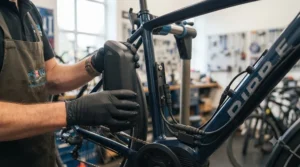
Before anything gets bolted on, confirm exactly what you’re working with: take a photo of your existing battery’s connector pins, note the physical dimensions and mounting bolt spacing, and check your motor system’s rated voltage. This single step prevents the single most common and expensive mistake in this entire category — ordering a battery that’s physically close enough to fit but electrically wrong for your controller.
For DIY bracket-and-bag builds, mount the bracket first and test-fit the battery before wiring anything, since even a millimetre of misalignment on a downtube boss can put unwanted stress on the connector over hundreds of charge cycles. If you’re running two batteries wired in parallel rather than swapping them manually, get this specific step checked by a qualified bike mechanic or the battery manufacturer’s support line — mismatched cell chemistry or charge states between two packs wired together is a genuine safety issue, not just a performance quibble.
For OEM range extenders like the Bosch, Giant, or Specialized options, resist the temptation to skip the manufacturer’s app-based compatibility check even if the product page looks like a match. Software gating is common in this category specifically to prevent unsupported or unsafe combinations, and a range extender that shows as available for purchase isn’t automatically confirmed to work with your exact frame and firmware version.
Real-World Scenarios: Matching the Setup to Your Actual Riding
The daily commuter on a generic or converted e-bike. A YOSE POWER universal spare battery paired with the downtube bracket mount solves this cleanly and affordably — swap batteries at the office if your commute exceeds single-charge range, without touching your bike’s core wiring.
The weekend long-distance rider on a big-brand e-bike. If your bike runs Bosch’s Smart System, Giant’s SyncDrive, or Specialized’s SL platform, the OEM range extenders genuinely earn their higher price here — factory-tested integration matters more when you’re 30 miles from home than it does on a five-mile commute.
The cargo or family e-bike owner hauling serious weight. This is where the dual battery ebike weight penalty conversation becomes unavoidable — Bosch’s DualBattery mode specifically targets this use case, since cargo bikes chew through range fastest and benefit most from genuinely intelligent load-sharing between two packs rather than a simple swap.
Common Mistakes When Adding a Second Battery
- Ordering by voltage alone. Matching 36V or 48V isn’t enough — connector pinout, physical dimensions, and BMS communication protocol all need to line up too.
- Assuming a mounting bracket solves the whole problem. A bracket handles placement; wiring a second pack in safely is a separate consideration that shouldn’t be skipped or improvised.
- Buying an OEM range extender before checking the manufacturer’s app. Product availability doesn’t guarantee compatibility with your specific frame year or firmware version.
- Forgetting the connector cable is often sold separately. This trips up buyers across nearly every OEM range extender on this list — budget for it upfront.
- Ignoring the weight penalty when planning cargo or hilly routes. An extra 1.5-2kg on the rear rack changes handling more noticeably on tight, technical routes than on flat, straight commutes.
Second Battery vs Buying a Higher-Capacity Replacement Battery
It’s worth asking directly: why add a second battery at all, rather than simply replacing your existing one with a higher-capacity single pack? The honest answer depends on your specific use case. A single larger battery is lighter overall than two smaller packs providing equivalent combined capacity, and it’s mechanically simpler — one connector, one charge cycle, nothing to coordinate.
A second battery setup wins when you need flexibility rather than raw capacity: the ability to remove weight entirely for short rides, to keep a fully charged spare as backup rather than relying on one point of failure, or to add range incrementally to a bike that already has a perfectly good, non-swappable primary battery. Cycling UK’s guidance on e-bike regulations is worth a read if you’re modifying an existing EAPC in any way, since altering power delivery incorrectly can affect a bike’s legal status on public roads.
Weight Penalty and Long-Term Value
Every one of these seven options adds weight somewhere between roughly 1.5kg and 3kg to your total setup, and that number matters more than most buying guides admit. A dual battery ebike weight penalty of 2kg is barely noticeable on a flat commute but genuinely changes how a bike climbs, corners, and manoeuvres at low speed — something worth test-riding before committing to a permanent dual-battery configuration rather than a swap-in-swap-out spare.
Cost-per-mile-of-added-range is the most honest way to judge value here. A £180 YOSE POWER spare battery adding a full second charge’s worth of range works out considerably cheaper per additional mile than a £400 OEM range extender adding a smaller capacity boost — but the OEM option buys genuine intelligent integration, warranty support, and manufacturer-tested safety that a generic spare can’t match. Neither approach is objectively better; they’re solving different problems at different price points.
Battery degradation adds a further wrinkle: lithium-ion cells lose capacity gradually regardless of brand, so a spare battery that sits unused for months should still be cycled occasionally to avoid deep-discharge damage, and any dual-battery system should ideally use packs of similar age and health rather than pairing a brand-new cell with a three-year-old one.
Safety Considerations for Second and Spare Batteries
Lithium-ion batteries are safe under normal use, but e-bike battery fires have become a genuine, well-documented concern in the UK in recent years, and adding a second power source is precisely the moment to take charging and storage habits seriously rather than an afterthought. The London Fire Brigade’s guidance on charging e-bike batteries safely recommends always using the charger supplied with each specific battery, never leaving batteries charging unattended or overnight, and charging on hard, flat surfaces away from escape routes.
This matters more, not less, when you’re running two batteries rather than one — never mix chargers between packs unless a manufacturer explicitly confirms compatibility, and never charge two batteries from a single adapted or homemade splitter cable. If either battery shows signs of swelling, unusual heat, or a hissing noise, stop using it immediately and contact the seller or manufacturer rather than attempting a workaround.
How to Choose the Right Second Battery Setup: A Step-by-Step Framework
What’s the best way to add a second battery to an electric bike? Confirm your existing battery’s connector, voltage, and physical mount type first, decide between a swap-in spare and a permanently wired dual system, then match your choice to either a universal generic battery or a manufacturer-specific OEM range extender depending on your bike’s ecosystem.
- Identify your bike’s ecosystem first. Big-brand Smart System bikes need OEM range extenders; generic and converted bikes have far more universal options available.
- Photograph and measure your existing battery and connector. This single step prevents the most expensive and common ordering mistake in this category.
- Decide between swap and permanent integration. A spare battery in a bag is simpler and safer for most riders; a wired dual system needs professional installation.
- Check the manufacturer’s compatibility app or tool for OEM options. Product availability alone doesn’t confirm your specific frame or firmware is supported.
- Budget for connector cables and fitting kits separately. These are frequently sold apart from the battery itself across nearly every OEM option.
- Weigh the handling trade-off before committing. Test-ride with the added weight if possible, particularly for hilly or technical routes.
- Plan your charging and storage setup from day one. Two batteries means twice the charging discipline, not just twice the range.
What to Expect: Real Range Gains vs the Marketing Numbers
Manufacturer range figures are measured under close-to-ideal conditions — flat terrain, moderate assistance, favourable weather — and real-world gains from any second battery typically land somewhere below the headline number once hills, headwinds, and higher assistance modes enter the picture. A 250Wh range extender advertised as adding “up to” a certain distance will genuinely add less than that on a hilly commute in winter than on a flat summer test loop.
That said, the psychological benefit is arguably as valuable as the raw numbers: riders consistently report choosing more ambitious routes and worrying less about a single low-battery warning once a second power source is available, regardless of whether they end up using the full extra capacity on any given ride.
Frequently Asked Questions
❓ Can I add any second battery to my electric bike, or does it need to match my brand?
❓ How much extra weight does a second battery add?
❓ Is it legal to modify my e-bike with an extra battery in the UK?
❓ Do I need a specialist to fit a range extender?
❓ Will using two batteries damage my e-bike's controller?
Conclusion
There’s no single correct answer to how to add second battery electric bike setups should work, because the honest answer depends entirely on what you’re already riding. Big-brand ecosystem owners are best served by the OEM range extenders built specifically for their platform, expensive as they are, because that integration and safety testing is genuinely worth paying for. Everyone else — riders on generic, converted, or older e-bikes — has a wider, cheaper, and more flexible set of options in universal batteries, mounting brackets, and dedicated carrier bags.
Start with the compatibility check, not the price tag: know your connector, your voltage, and your ecosystem before you spend a penny, and the rest of this decision gets considerably easier. Whichever route you land on, the destination is the same — fewer nervous glances at a dropping battery icon, and a few more miles of confidence in every ride.
✨ Ready to stop worrying about range?
🔍 Scroll back up to the comparison table, match it against your bike’s ecosystem, and take the first step toward never watching that battery icon with dread again.
Recommended for You
- Integrated Battery Ebike: 7 Sleek 2026 Picks (UK Guide)
- Battery Lock Security Ebike: 7 Best UK Picks for Riders in 2026
- Electric Bike Battery Cell Quality: 7 Best UK Picks for 2026
Disclaimer: This article contains affiliate links. As an Amazon Associate, I earn from qualifying purchases. If you purchase products through these links, we may earn a small commission at no additional cost to you.
✨ Found this helpful? Share it with your friends! 💬🤗
