In This Article
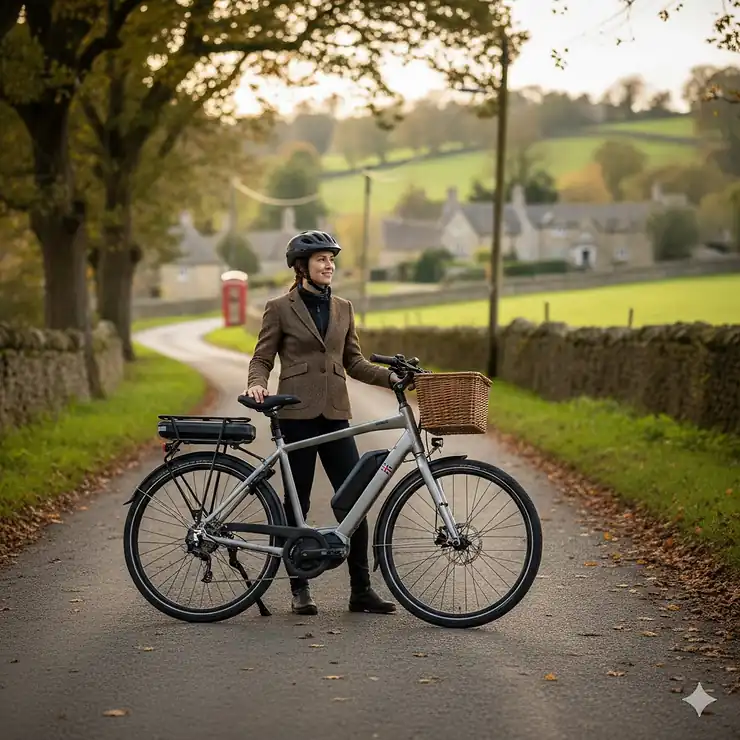
Picture this: you’re halfway through an exhilarating 80-mile countryside tour when that dreaded battery warning appears. Your heart sinks. But what if that anxiety simply didn’t exist? Welcome to the transformative world of the dual battery electric bike – a game-changing innovation that’s reshaping how UK cyclists approach long-distance journeys.
Gone are the days when “range anxiety” dictated your cycling adventures. With dual battery systems now offering up to 150 miles (241 kilometres) on a single charge, these technological marvels are liberating riders from the constraints of traditional single-battery e-bikes. Whether you’re a dedicated commuter tackling the London-to-Brighton route, a touring enthusiast exploring the Scottish Highlands, or simply someone who refuses to compromise on freedom, dual battery electric bikes represent the cutting edge of 2026’s cycling technology.
According to recent data from the UK Department for Transport, e-bike adoption has surged by 47% since 2024, with long-range models leading this growth. The dual battery electric bike isn’t just a luxury anymore – it’s becoming the intelligent choice for riders who demand more from their cycling experience.
Quick Comparison Table: Top Dual Battery Electric Bikes 🔋
| Model | Battery Capacity | Max Range | Motor Power | Price (GBP) | Best For |
|---|---|---|---|---|---|
| ENGWE M20 | 48V 26Ah (1,248Wh) | 150 km | 750W peak | £1,299-£1,499 | Off-road adventures |
| HITWAY BK17 | 48V 26Ah (1,248Wh) | 150 km | 250W | £1,099-£1,199 | Budget touring |
| ENGWE X26 | 48V 38.4Ah (1,843Wh) | 160 km | 1,200W peak | £1,599-£1,799 | Extreme terrain |
| Lectric XPedition | 48V 28Ah (1,344Wh) | 120 km | 750W | £1,899-£2,199 | Cargo hauling |
| ENGWE Engine Pro 2.0 | 52V 32Ah (1,664Wh) | 130 km | 750W | £1,699-£1,899 | Premium touring |
| Riese & Müller Delite5 | 1,600Wh | 210 km | MGU E1.12 | £6,499-£7,999 | Luxury touring |
| Bosch DualBattery Systems | Up to 1,600Wh | 200+ km | Various | £4,999+ | High-end touring |
💬 Just one click – help others make better buying decisions too!😊
Top 7 Dual Battery Electric Bike Models: Expert Analysis 🏆
1. ENGWE M20 Dual Battery Fat Tyre E-Bike
The ENGWE M20 has rapidly become a favourite amongst UK adventurers seeking exceptional value without compromising performance. This motorcycle-inspired e-bike combines rugged aesthetics with impressive dual battery technology.
Key Specifications:
- Dual 48V 13Ah batteries (1,248Wh total capacity)
- 750W rear hub motor (1,000W peak)
- 20″ × 4.0″ fat tyres with three-layer construction
- Range: 80-150 km depending on terrain and assist level
- Full suspension system (hydraulic front, air rear)
Price Range: £1,299-£1,499
The M20 excels in versatility. UK customers consistently praise its ability to handle everything from city commutes to muddy bridleways. The dual battery setup means you can tackle the 87-mile South Downs Way without range concerns. The SHIMANO 7-speed drivetrain provides smooth gear transitions, whilst the dual-disc brake system delivers reliable stopping power even in wet British conditions.
Pros:
✅ Exceptional value for dual battery technology
✅ Motorcycle-inspired design with robust build quality
✅ Triple suspension system absorbs rough terrain brilliantly
Cons:
❌ Weighs 41kg – challenging for frequent lifting
❌ Fat tyres can feel sluggish on smooth tarmac
UK buyers particularly appreciate the M20’s compliance with EAPC regulations when the speed limiter is engaged, making it road-legal across England, Scotland, and Wales.
2. HITWAY BK17 Dual Battery Electric Bike
For budget-conscious riders seeking genuine dual battery capability, the HITWAY BK17 (also marketed as BK29S) delivers remarkable value. This folding fat-tyre e-bike proves you don’t need to spend thousands to enjoy extended range cycling.
Key Specifications:
- Dual 48V 13Ah batteries (1,248Wh combined)
- 250W rear hub motor (UK road-legal)
- 20″ × 4.0″ puncture-resistant fat tyres
- Range: 80-150 km per charge
- Compact folding design for storage
Price Range: £1,099-£1,199
What sets the BK17 apart is its genuine UK road-legal status straight from the box. The 250W motor complies perfectly with EAPC regulations, meaning no licence, insurance, or registration required. The dual removable batteries offer brilliant flexibility – charge one at home whilst using the other, or remove both for lightweight transport.
Pros:
✅ Outstanding affordability for dual battery system
✅ Fully UK road-legal (250W motor)
✅ Fat tyres provide excellent traction in all weather
Cons:
❌ Basic LCD display lacks smartphone connectivity
❌ Heavier than standard folding e-bikes
British cyclists frequently mention the BK17’s capability to handle the notoriously wet UK climate, with sealed electrical connections preventing moisture ingress – a crucial consideration for year-round riding.
3. ENGWE X26 Extreme All-Terrain E-Bike
The ENGWE X26 represents the pinnacle of accessible high-performance dual battery electric bikes. With its aggressive styling and formidable specifications, this beast tackles terrain that would defeat lesser e-bikes.
Key Specifications:
- Dual 48V 19.2Ah batteries (1,843Wh total)
- 1,000W motor (1,200W peak power)
- 26″ × 4.0″ motorcycle-grade fat tyres
- Range: Up to 160 km
- Triple suspension system with 110mm front travel
Price Range: £1,599-£1,799
The X26’s party piece is its hill-climbing prowess. With 30° climbing ability, this e-bike laughs at the steep gradients found in the Lake District or Brecon Beacons. The triple suspension setup – including an inverted dual-crown fork – provides exceptional comfort over the roughest terrain. UK reviewers consistently highlight how the 6061 aluminium alloy frame supports riders up to 136kg (300lbs) whilst maintaining structural integrity.
Pros:
✅ Exceptional power and torque for UK hills
✅ Premium triple suspension absorbs brutal terrain
✅ Hydraulic disc brakes provide confident stopping power
Cons:
❌ Off-road mode exceeds UK road-legal limits
❌ Substantial 41kg weight requires strength to manoeuvre
Important Note: When using off-road modes that exceed 15.5 mph assisted speed, this bike must only be ridden on private land with owner’s permission, as per UK regulations.
4. Lectric XPedition Long-Range Cargo E-Bike
American brand Lectric has made significant inroads into the UK market with the XPedition, a dual battery cargo e-bike that redefines family cycling and utility transport.
Key Specifications:
- Dual 48V 14Ah batteries (1,344Wh combined)
- 750W rear hub motor
- 20″ × 2.5″ puncture-resistant street tyres
- Cargo capacity: 204kg (450lbs) total
- Range: 80-120 km
Price Range: £1,899-£2,199 (imported to UK)
The XPedition excels at the practical side of cycling. The integrated rear rack holds up to 136kg (300lbs), making school runs, grocery shopping, or weekend camping trips genuinely viable without a car. UK customers appreciate the thoughtful British-friendly features like integrated lights powered by the main battery – essential for our dark winter commutes. The Courier 50 suspension fork with 50mm travel smooths out potholes and cobblestones alike.
Pros:
✅ Enormous cargo capacity for family adventures
✅ Running boards and accessories for passenger comfort
✅ Dual-leg kickstand provides stable loading
Cons:
❌ Higher price point reflects import costs
❌ Street tyres limit off-road capability
Many UK families report the XPedition has genuinely replaced their second car for local journeys, with the dual battery system eliminating “what if we run out?” worries on longer trips.
5. ENGWE Engine Pro 2.0 Premium Touring E-Bike
The ENGWE Engine Pro 2.0 targets serious touring cyclists who demand premium features without entering the stratospheric pricing of European boutique brands.
Key Specifications:
- Dual 52V 16Ah batteries (1,664Wh)
- 750W mid-drive motor with torque sensor
- Range: 100-130 km
- Full suspension with adjustable damping
- 20″ folding frame
Price Range: £1,699-£1,899
What distinguishes the Engine Pro 2.0 is its sophisticated torque sensor, which provides remarkably natural pedal assistance that mirrors your own effort. This makes it brilliant for long-distance touring where efficiency matters. The 52V system delivers snappier acceleration compared to 48V rivals, whilst the mid-drive motor placement improves weight distribution and handling. UK touring cyclists particularly value the comprehensive lighting system – essential for navigating country lanes during shorter winter days.
Pros:
✅ Torque sensor provides natural, efficient assistance
✅ 52V system delivers superior performance
✅ Folding design suits multimodal transport
Cons:
❌ Mid-drive motors require more drivetrain maintenance
❌ Smaller 20″ wheels feel twitchier at speed
The Engine Pro 2.0 has earned praise from British bikepacking enthusiasts who’ve successfully completed multi-day tours from John O’Groats to Land’s End, with the dual battery system providing ample range between charging stops.
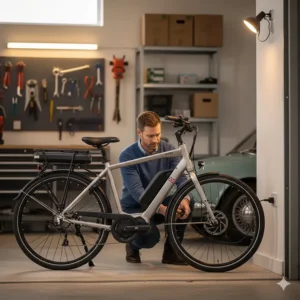
6. Riese & Müller Delite5 Luxury Touring E-Bike
For cyclists seeking the absolute pinnacle of dual battery electric bike engineering, the German-engineered Riese & Müller Delite5 represents cycling perfection – at a commensurate price.
Key Specifications:
- Bosch DualBattery system (1,600Wh)
- Pinion MGU E1.12 motor system
- Range: 180-210 km
- Fox suspension with 120mm travel
- Gates Carbon Belt drive
Price Range: £6,499-£7,999
The Delite5 isn’t just an e-bike; it’s a statement about prioritising quality, longevity, and riding pleasure above all else. The Pinion MGU smart gearbox combines motor and transmission into one sealed, maintenance-free unit – no chain stretch, no derailleur adjustments, just effortless gear changes regardless of weather. The 1,600Wh Bosch DualBattery system provides genuinely transcontinental range, whilst the full Fox suspension specification soaks up British B-roads with aplomb.
Pros:
✅ Exceptional build quality and component specification
✅ Maintenance-free Gates belt drive and Pinion gearbox
✅ Industry-leading range and reliability
Cons:
❌ Premium pricing reflects German engineering
❌ Substantial 34.5kg weight
UK owners report the Delite5 as a “buy once, ride forever” investment, with many accumulating over 16,000 km (10,000 miles) with minimal maintenance beyond tyre changes and brake pad replacements.
7. Bosch DualBattery-Equipped Touring Bikes (Various Brands)
Rather than a single model, this category encompasses multiple premium e-bikes utilising Bosch’s DualBattery system, available from brands like Cube, Haibike, and Trek in the UK market.
Key Specifications:
- Bosch DualBattery (1,250Wh or 1,600Wh configurations)
- Various Bosch Performance motors (250W continuous)
- Range: 150-200+ km
- Integration varies by frame manufacturer
- Full UK EAPC compliance
Price Range: £4,999-£8,500+
Bosch’s DualBattery technology represents the gold standard for reliability and integration. The system manages both batteries intelligently, discharging them evenly to maximise lifespan. What makes this particularly appealing for British cyclists is the established UK dealer network – Bosch service centres are widespread, ensuring support wherever your touring adventures take you. The clever weight distribution maintains natural handling characteristics despite the added battery capacity.
Pros:
✅ Proven reliability with excellent UK dealer support
✅ Seamless battery management system
✅ Wide choice of frame styles and specifications
Cons:
❌ Premium pricing across the range
❌ Locked to Bosch ecosystem for batteries
Many UK touring clubs now specify Bosch DualBattery bikes for group rides, knowing that standardised charging solutions simplify logistics during multi-day tours through Wales or Scotland.
✨ Don’t Miss These Exclusive Deals!
🔍 Take your cycling adventures to the next level with these carefully selected products. The highlighted dual battery electric bikes above represent the best options available on Amazon.co.uk and specialist UK retailers. These models will help you create authentic long-distance experiences your family will cherish!
Understanding Dual Battery Electric Bike Technology 🔬
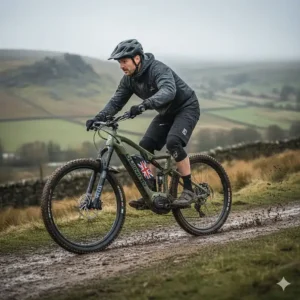
The science behind dual battery systems is elegantly simple yet profoundly transformative. Rather than relying on a single large battery pack, these e-bikes distribute energy storage across two independent units. This approach delivers multiple advantages beyond just extended range.
How Dual Battery Systems Work
Modern dual battery electric bikes employ sophisticated Battery Management Systems (BMS) that orchestrate power delivery. As research from the University of Cambridge demonstrates, parallel battery configurations allow for simultaneous discharge, effectively doubling capacity whilst maintaining voltage consistency. The controller continuously monitors both batteries, drawing current proportionally to maintain even discharge rates.
This intelligent management prevents the premature ageing that occurs when single batteries experience deep discharge cycles. By keeping each individual battery within optimal charge ranges (typically 30-80%), overall lifespan increases significantly – often by 40-60% compared to equivalent single-battery systems subjected to full discharge cycles.
The Engineering Benefits
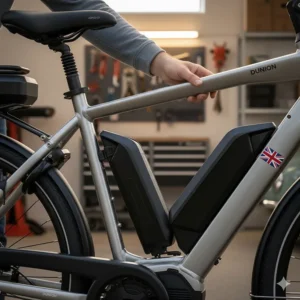
Weight distribution represents another crucial advantage. Single large batteries concentrate mass in one location, often the downtube, which can negatively affect handling. Dual battery systems allow strategic placement – one in the downtube, another at the seat tube or integrated into the rear rack – creating better balance and more neutral handling characteristics.
Power delivery also improves. When climbing steep gradients or accelerating from standstill, electric motors draw substantial current. Splitting this demand across two batteries reduces strain on individual cells, minimising voltage sag and maintaining consistent power output even under heavy loads.
Why Choose a Dual Battery Electric Bike? The Compelling Advantages 🌟
1. Range That Redefines Possibilities 🚵♀️
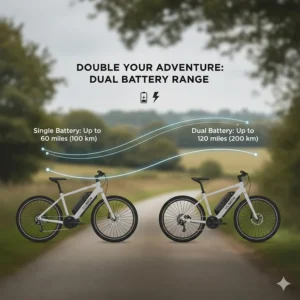
The most obvious benefit – and the one that attracts most buyers – is the dramatic extension of usable range. Where single-battery e-bikes typically manage 40-80 km (25-50 miles) before requiring recharge, dual battery systems push this to 100-200+ km (62-124+ miles).
For UK cyclists, this transforms practical possibilities. Suddenly, touring the 140-mile Coast to Coast cycle route across northern England becomes feasible in just two days with overnight charging. Commuters facing 65+ km (40+ mile) round trips can confidently complete their journey without workplace charging facilities.
According to data from Cycling UK, the average British leisure ride spans approximately 32 km (20 miles). With a dual battery electric bike, you can complete three such rides before charging – perfect for weekend warriors who enjoy Saturday morning rides followed by Sunday afternoon adventures.
2. Redundancy Provides Peace of Mind 🛡️
Battery failure, whilst uncommon, remains a legitimate concern. With a dual battery system, you possess built-in redundancy. Should one battery develop faults or simply reach the end of its charge, the second continues delivering power. You might limp home at reduced range, but you won’t find yourself stranded 48 km (30 miles) from the nearest train station.
This redundancy proves particularly valuable for remote touring through the Scottish Highlands or Welsh mountains, where assistance could be hours away. The psychological freedom from range anxiety alone justifies the investment for many riders.
3. Flexible Usage Patterns 🔄
Perhaps surprisingly, dual battery systems offer brilliant day-to-day flexibility. For shorter local rides – popping to the shops, visiting friends across town – you can run on a single battery. This reduces weight, improves handling for leisurely rides, and preserves your second battery in pristine condition for when serious range becomes necessary.
Many UK riders adopt a rotation strategy: using Battery A for Monday-Wednesday commutes, Battery B for Thursday-Friday, then both for weekend adventures. This approach maximises battery longevity by preventing any single pack from experiencing excessive cycling.
4. Faster Effective Charging ⚡
Whilst charging two batteries takes longer than charging one, dual battery systems offer a practical advantage: simultaneous charging with two chargers (where supported). Some riders charge one battery at home overnight whilst leaving the second at work to charge during the day. This rotation ensures you always have at least one fully charged battery ready.
Additionally, if you only need partial recharge, topping up one battery to 80% takes far less time than charging a larger single battery to the same absolute capacity.
5. Superior Hill Climbing Performance ⛰️
British terrain doesn’t offer the towering Alpine peaks, but we certainly don’t lack challenging gradients. From the infamous Hardknott Pass in Cumbria (33% gradient) to the punishing Bwlch y Groes in Snowdonia (25% gradient), UK cycling features plenty of lung-busting climbs.
Dual battery systems excel here. By splitting current draw across two packs, voltage sag decreases and power delivery remains consistent throughout the climb. Riders report noticeably stronger assistance on steep gradients compared to equivalent single-battery bikes.
6. Future-Proofing Your Investment 💷
Battery technology continues evolving rapidly, with energy density improving approximately 7-10% annually according to industry analysts. When your current batteries eventually reach end-of-life (typically 800-1,000 charge cycles), replacement options will likely offer superior capacity in identical form factors.
With dual battery systems, you can replace one battery at a time, spreading cost whilst immediately benefiting from improved technology. Some riders strategically replace batteries sequentially, ensuring they always have one relatively new high-capacity pack paired with an ageing unit.
Dual Battery vs Single Battery: Making the Right Choice ⚖️
Choosing between single and dual battery configurations requires honest assessment of your cycling needs. Let’s examine the key considerations:
When Dual Battery Makes Sense:
- Long-distance touring: Planning multi-day rides exceeding 80 km (50 miles) daily
- Extended commutes: Round trips exceeding 50 km (31 miles) without charging access
- Cargo hauling: Regular heavy loads reduce range significantly
- Hilly terrain: Steep gradients drain batteries faster than flat roads
- Cold weather riding: British winters reduce battery efficiency by 20-30%
- Multiple riders: Tandem setups or towing trailers with children
- Future flexibility: Want the option for longer rides without replacement
When Single Battery Suffices:
- Urban commuting: Daily distances under 25 km (15.5 miles) with charging access
- Leisure riding: Occasional recreational rides staying close to home
- Budget constraints: Dual battery systems cost £300-£800 more typically
- Weight sensitivity: Every kilogramme matters for frequently carried bikes
- Minimal charging access: Paradoxically, if charging opportunities are very limited, a single battery with fast-charging may prove more practical
UK-Specific Considerations for Dual Battery Electric Bikes 🇬🇧
Legal Compliance and EAPC Regulations
Understanding UK e-bike law proves essential before purchasing any dual battery electric bike. The Electrically Assisted Pedal Cycles (EAPC) regulations specify strict requirements:
- Motor power: Maximum continuous rated power of 250W
- Speed limit: Motor assistance must cut out at 15.5 mph (25 km/h)
- Pedal assist: The motor can only engage whilst pedalling
- Age requirement: Riders must be 14+ years old
- No licensing: EAPC-compliant bikes require no licence, insurance, or registration
Many dual battery electric bikes – particularly those from Chinese manufacturers – offer “off-road modes” with motors exceeding 250W and assistance beyond 15.5 mph. Whilst tempting, using these modes on public roads is illegal and can result in fines, penalty points, and potential bicycle seizure.
Always verify UK road-legal status before purchasing. Reputable UK retailers ensure compliance, but imported bikes from Amazon marketplaces sometimes include non-compliant specifications.
Weather Resistance for British Conditions ☔
British cycling means confronting rain. Lots of rain. Dual battery systems require robust weather sealing to prevent moisture ingress into electrical connections.
Look for these weather-resistant features:
- IPX4 or higher ratings: Indicates splash resistance
- Sealed battery cases: Prevents water damage to cells
- Protected connectors: Rubber gaskets on all electrical connections
- Corrosion-resistant materials: Stainless steel or aluminium components
Many cheaper dual battery electric bikes skimp on weather sealing, leading to premature failures in UK conditions. Investing in proper weather resistance pays dividends over years of soggy British riding.
Cold Weather Performance ❄️
Lithium-ion batteries lose capacity in cold temperatures – typically 20-30% reduction at 0°C compared to optimal 20°C performance. British winters, whilst not Arctic, definitely impact range.
Dual battery systems offer an advantage here: you’re still left with substantial range even after cold-weather capacity loss. A bike rated for 150 km warm-weather range still delivers 105-120 km in winter – ample for most rides.
Some tips for cold-weather dual battery electric bike use:
- Store batteries indoors when not riding
- Install neoprene battery covers for additional insulation
- Charge batteries at room temperature
- Use lower assist levels to reduce current draw
- Plan for 25% less range than summer riding
Cycle to Work Scheme Compatibility 💼
Many UK employers participate in the Cycle to Work scheme, allowing tax-free bicycle purchases. Dual battery electric bikes qualify, provided they meet EAPC regulations.
The scheme operates via salary sacrifice, saving 25-39% depending on your tax bracket. With dual battery systems costing £1,100-£8,000, potential savings range from £275 to £3,120 – substantial enough to upgrade to better specifications.
However, note the £1,000 or £2,000 limits that some schemes impose. Higher-end dual battery electric bikes exceeding these caps may require additional personal contribution.
How to Choose Your Ideal Dual Battery Electric Bike 🎯
Step 1: Define Your Primary Use Case
Begin by honestly assessing your most common riding scenarios:
- Commuting: Prioritise reliability, weather resistance, and practical features like integrated lights and mudguards
- Touring: Focus on comfort, cargo capacity, and genuine long-range capability
- Off-road adventures: Emphasis on suspension, tyre size, and motor power
- Urban versatility: Consider folding frames, lighter weight, and compact dimensions
- Cargo hauling: Verify maximum load ratings, rack capacity, and stability
Step 2: Calculate Real-World Range Requirements
Manufacturers’ range claims assume optimal conditions: moderate temperatures, flat terrain, light rider, minimal wind, lowest assist levels. Real-world range typically achieves 50-70% of maximum claims.
Calculate your requirements:
- Measure your longest typical ride distance
- Add 25% safety buffer for detours/emergencies
- Account for terrain (add 15% for hilly routes)
- Consider weather (add 25% for winter riding)
- Factor in cargo weight (add 10% per 10kg load)
For example: 48 km (30-mile) commute + 25% buffer + 15% hills + 25% winter = 79 km real-world requirement. A bike rated for 120 km provides comfortable margin.
Step 3: Budget Realistically
Dual battery electric bikes span enormous price ranges. Set realistic expectations:
- £1,000-£1,500: Entry-level with basic components, Chinese brands, adequate for casual use
- £1,500-£2,500: Mid-range with better components, improved build quality, suitable for regular riding
- £2,500-£5,000: Premium specifications, established European brands, excellent longevity
- £5,000-£8,000+: Ultra-premium with cutting-edge technology, boutique brands, investment pieces
Remember to budget for essential accessories: quality locks (£50-£150), spare charger (£60-£120), panniers or bags (£80-£250), and maintenance tools (£50-£100).
Step 4: Test Ride Before Committing
Never purchase a dual battery electric bike without test riding, if at all possible. Key evaluation points:
- Motor feel: Does assistance engage smoothly or abruptly?
- Handling: Does the bike feel balanced despite extra battery weight?
- Comfort: Can you maintain riding position for extended periods?
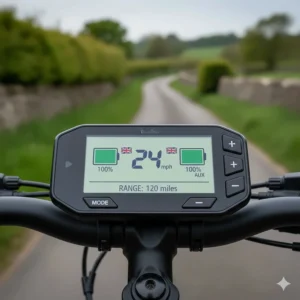
- Controls: Are display and assist controls intuitive?
- Braking: Do brakes inspire confidence at speed?
- Noise: Excessive motor noise indicates potential quality issues
Many UK cycling shops now offer demo days specifically for e-bikes, providing opportunity to compare multiple models directly.
Step 5: Verify After-Sales Support
Dual battery electric bikes contain sophisticated electronics requiring specialist knowledge for repairs. Before purchasing, research:
- Warranty coverage: Minimum 2 years on electrical components, 1 year on batteries
- UK service network: Availability of qualified repair centres
- Parts availability: Can replacement batteries be sourced?
- Manufacturer reputation: Check independent reviews and forum discussions
Established brands like Bosch, Shimano, and Brose offer excellent UK support networks. Newer Chinese brands sometimes struggle with UK parts supply and technical assistance.
Essential Maintenance for Dual Battery Electric Bikes 🔧
Proper maintenance extends lifespan whilst ensuring safety and performance. Follow these guidelines:
Battery Care (Critical!)
- Optimal storage charge: Maintain batteries at 40-80% when not riding for extended periods
- Temperature management: Store indoors between 10-25°C
- Regular cycling: Use batteries at least monthly to prevent cell degradation
- Avoid full discharge: Recharge before reaching 20% remaining capacity
- Clean contacts: Wipe battery terminals monthly with dry cloth
Electrical System Checks
- Monthly: Inspect all cable connections for corrosion or looseness
- Quarterly: Check motor mounting bolts for proper torque
- Annually: Professional electrical system inspection
Mechanical Maintenance
- Weekly: Check tyre pressures (dual battery bikes’ extra weight accelerates wear)
- Monthly: Clean and lubricate chain or inspect belt drive
- Quarterly: Brake pad inspection and adjustment
- Annually: Full professional service including bearing inspection
Software Updates
Many modern dual battery electric bikes receive firmware updates improving battery management or motor performance. Check manufacturer websites quarterly for available updates, typically requiring connection to smartphone apps or dealer diagnostic systems.
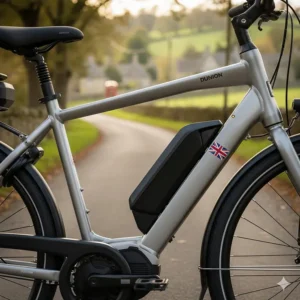
Maximising Your Dual Battery Electric Bike Range 🔋⚡
Even with dual batteries, intelligent riding techniques extend range significantly:
Riding Technique Optimisation
- Maintain optimal cadence: 70-90 RPM keeps motors in efficient operating range
- Anticipate stops: Coast to red lights rather than braking hard at the last moment
- Use appropriate gears: Lower gears reduce motor strain on climbs
- Minimise wind resistance: Tuck in when safe to reduce aerodynamic drag
- Smooth power application: Avoid aggressive acceleration except when necessary
Assist Level Management
Don’t automatically select maximum assistance. Strategic assist level selection dramatically impacts range:
- Eco mode (Level 1-2): Use on flat sections with tailwinds – extends range by 60-80%
- Tour mode (Level 3): Balanced assistance for moderate terrain – standard efficiency
- Sport mode (Level 4): Reserved for challenging hills or headwinds – reduces range by 40%
- Turbo mode (Level 5): Emergency power only – halves range
Route Planning Strategies
- Utilise elevation tools: Plan routes avoiding unnecessary climbing
- Monitor wind forecasts: Tailwinds significantly extend range; headwinds drain batteries rapidly
- Identify charging opportunities: Coffee shops, pubs, and leisure centres often accommodate charging requests
- Understand battery recovery: Regenerative braking (where fitted) recovers minimal energy – don’t rely on it
Common Dual Battery Electric Bike Myths Debunked 🔍
Myth 1: “Dual Batteries Double the Weight”
Reality: Dual battery systems typically add 2-4 kg compared to equivalent single-battery bikes. Whilst noticeable, modern e-bikes already weigh 20-35 kg, so the proportional increase remains modest (8-15%). Additionally, battery technology improvements continue reducing weight annually.
Myth 2: “They’re Too Complicated for Average Cyclists”
Reality: Modern Battery Management Systems handle complexity automatically. Riders simply monitor overall charge percentage and plug in two chargers instead of one. Operation remains identical to single-battery bikes.
Myth 3: “The Second Battery Rarely Gets Used”
Reality: Both batteries discharge simultaneously in most systems, ensuring even wear. Some bikes allow single-battery operation for lighter local rides, but both batteries contribute equally during long-distance riding.
Myth 4: “Replacement Batteries Cost a Fortune”
Reality: Whilst individual lithium-ion battery packs cost £300-£800, they last 800-1,000 charge cycles (typically 3-5 years of regular use). Divided across lifespan, cost per kilometre remains competitive with petrol mopeds or even public transport for regular commuters.
Myth 5: “Dual Battery Bikes Are Only for Professional Athletes”
Reality: Quite the opposite! Extended range particularly benefits leisure riders, tourists, and older cyclists who value confidence in reaching destinations without exhaustion or range anxiety. Professional athletes typically prioritise lightweight racing bikes over extended-range commuters.
Real-World Testimonials from UK Riders 💬
Sarah, 52, Inverness:
“I purchased the HITWAY BK17 for touring Scotland’s North Coast 500. The dual batteries provided immense peace of mind through remote stretches with zero charging options. Managed 120 km daily for six consecutive days with overnight charging at B&Bs. The Scottish Highlands defeated my old single-battery bike, but this conquered every gradient thrown at it.”
James, 38, Manchester:
“My daily commute is 35 miles round trip with significant climbing. Single-battery bikes left me anxious about making it home, especially in winter. The ENGWE M20’s dual battery system eliminated that worry completely. Even in January’s freezing conditions, I still had 25% charge remaining. Plus, the money saved versus driving pays for the bike within two years.”
Margaret & Tom, both 67, Cornwall:
“We invested in matching Riese & Müller Delite5 bikes for our retirement. Initially hesitant about the price, we now consider them amongst our best purchases. The dual battery system allows proper day-long touring through Cornwall’s hilly countryside without concern. We’ve clocked over 8,000 miles between us in 18 months – far more cycling than we ever managed previously.”
Frequently Asked Questions (FAQ) ❓
❓ How long does a dual battery electric bike take to charge fully in the UK?
❓ Can I legally ride a dual battery electric bike with 750W motor on UK roads?
❓ What's the real-world range of dual battery electric bikes in British winter?
❓ Are dual battery systems more reliable than single large batteries?
❓ Can I upgrade my existing e-bike to dual battery configuration?
Conclusion: Is a Dual Battery Electric Bike Right for You? 🤔
The dual battery electric bike represents more than mere incremental improvement over single-battery alternatives – it fundamentally transforms the cycling experience by eliminating range as a limiting factor. For UK riders facing our famously variable weather, challenging terrain, and substantial commuting distances, these bikes offer genuine freedom.
If your cycling involves any of the following, dual battery systems deserve serious consideration:
✅ Regular round trips exceeding 50 km (31 miles)
✅ Multi-day touring adventures across Britain
✅ Hilly terrain requiring substantial motor assistance
✅ Cold-weather winter commuting
✅ Cargo hauling or passenger transport
✅ Desire for future-proof capability and flexibility
Conversely, riders primarily undertaking short urban journeys with convenient charging access may find single-battery bikes perfectly adequate at lower cost.
The dual battery electric bike market continues maturing rapidly. While 2026 models already offer impressive capability, expect continued improvements in battery energy density, system integration, and price competitiveness. Today’s £1,500 dual battery bike delivers performance that required £4,000 just three years ago.
Whether you choose the budget-friendly HITWAY BK17, the versatile ENGWE M20, or invest in premium Bosch DualBattery systems, you’re embracing technology that expands cycling’s possibilities. Range anxiety becomes historical curiosity. Long-distance touring transforms from exhausting challenge to exhilarating adventure. And perhaps most importantly, the car stays parked whilst you rediscover the joy of two-wheeled freedom across Britain’s magnificent landscapes.
The revolution in extended-range cycling is here. The only question remaining: where will your dual battery electric bike take you?
Recommended for You 📚
- 7 Best Longest Range Ebikes UK 2026
- 7 Best Waterproof Integrated Battery E-Bikes UK 2026
- 7 Best Sleek Integrated Battery Ebikes UK 2026
Disclaimer: This article contains affiliate links. If you purchase products through these links, we may earn a small commission at no additional cost to you. Prices shown are approximate and may vary. We recommend verifying specifications and UK road-legal compliance before purchasing. Always ride responsibly and wear appropriate safety equipment.
✨ Found this helpful? Share it with your mates! 💬🤗
