In This Article
The British electric bike market has undergone a quiet revolution in 2026, and carbon fibre sits at its heart. What was once the preserve of professional cyclists and serious enthusiasts — frames costing thousands, reserved for weekend warriors — has become genuinely accessible to everyday commuters navigating the Tube-to-office dash or weekend explorers tackling the South Downs.
Here’s what makes carbon fibre electric bikes worth your attention in the British context: they’re roughly 30-40% lighter than traditional aluminium e-bikes, which transforms the entire ownership experience when you’re lifting your bike onto a train at Victoria during rush hour or wrestling it up three flights of stairs to your Clapham flat. The material naturally absorbs road vibration — rather important when British councils seem to view pothole repair as an optional extra — and responds to your input with a directness that aluminium simply can’t replicate.
This guide examines seven carbon fibre electric bikes available to UK buyers in 2026, from genuinely affordable folding models around £1,200 to premium road machines approaching £5,000. Every recommendation reflects real-world British riding conditions: wet weather performance, compact urban storage, hills that make you question your life choices, and the perpetual challenge of keeping a bike secure in cities where theft remains distressingly common.
Quick Comparison: Top Carbon E-Bikes at a Glance
| Model | Weight | Price Range (£) | Best For | Battery Range | UK Availability |
|---|---|---|---|---|---|
| ADO Air Carbon | 12.5kg | £1,200-£1,500 | Ultra-light commuting | 80-100km | ✅ Prime eligible |
| Fiido Air | 13.75kg | £1,300-£1,600 | City riding | 60-80km | ✅ UK stock |
| Pedibal Explora Carbon | 21kg | £2,800-£3,200 | Legal throttle option | 80-120km | ✅ Direct UK |
| Ribble CGR Carbon | 16kg | £3,800-£4,500 | Gravel/road hybrid | 100-140km | ✅ UK built |
| Specialized Turbo Levo | 19kg | £6,000-£7,000 | Mountain biking | 80-100km | ✅ Evans Cycles |
| Canyon Endurace ONfly CF | 14.5kg | £4,800-£5,500 | Road performance | 100-130km | ✅ Direct order |
| Orbea Wild M20 | 20kg | £5,100-£6,000 | Trail riding | 70-90km | ✅ 99 Bikes UK |
From the comparison above, the ADO Air Carbon offers exceptional value under £1,500 for urban riders, but if you’re tackling proper off-road trails, the Specialized Turbo Levo’s full suspension justifies the extra £4,500. Budget-conscious buyers should note that the first three options deliver genuine carbon construction at prices that seemed impossible just two years ago — though you’ll sacrifice battery capacity and premium components compared to the high-end models.
💬 Just one click — help others make better buying decisions too! 😊
Top 7 Carbon Fibre Electric Bikes: Expert Analysis
1. ADO Air Carbon — The Ultra-Lightweight Champion
The ADO Air Carbon has quietly become the benchmark for genuinely affordable full-carbon e-bikes in the UK market. At just 12.5kg without battery (15.9kg with mudguards and rack fitted), this folding e-bike weighs less than most laptops and gym bags combined — rather transformative when your daily commute involves Overground stairs at Highbury & Islington.
Key Specifications WITH Real-World Context: The 250W Bafang motor with 37Nm torque handles London’s hills competently — Highgate Hill won’t leave you breathless, though you’ll feel it in Eco mode. The 36V 9.6Ah Samsung battery delivers 80-100km in typical British conditions, which realistically means 65-75km when you factor in damp autumn mornings and the fact that nobody actually rides in Eco mode the entire time. Full carbon construction includes frame, fork, handlebar, and seatpost. The carbon belt drive eliminates chain maintenance entirely — no more oily trouser legs or rust from six months of British drizzle.
Expert Commentary: What sets the ADO Air Carbon apart in the UK context isn’t just the weight — though lifting 12.5kg versus 25kg makes a meaningful difference if you’re doing it twice daily — it’s the complete absence of maintenance faff. The carbon belt drive never needs lubrication, the torque sensor provides smooth, natural assistance, and the integrated GPS anti-theft system (via the ADO app) offers peace of mind in urban areas. UK buyers benefit from UKCA certification and a two-year frame warranty. The only genuine compromise is battery capacity; if your commute exceeds 30km each way, you’ll need to charge at work.
UK Customer Feedback: Amazon.co.uk reviews consistently praise the sleek design and genuinely impressive range, with UK-based purchasers noting the bike’s ability to handle wet weather without performance degradation. Several London commuters report using it daily for 8-12 months without any mechanical issues.
Pros:
✅ Lightest full-carbon e-bike under £1,500 on the UK market
✅ Zero-maintenance carbon belt drive ideal for British weather
✅ GPS tracking and movement alerts reduce theft anxiety
Cons:
❌ Smaller battery limits longer-distance touring
❌ 20-inch wheels feel less stable at speed than 700c
Price & Value: Around £1,200-£1,500 depending on retailer. At this price point, you’re getting aerospace-grade carbon technology that would’ve cost £4,000+ just three years ago. For urban riders prioritising weight and low maintenance, the value proposition is genuinely exceptional.
2. Fiido Air — The Silent Performer
The Fiido Air represents the other end of the lightweight carbon spectrum — slightly heavier than the ADO at 13.75kg, but with a more refined riding experience and better component selection throughout.
Key Specifications WITH Real-World Context: The 250W Mivice rear hub motor with torque sensor delivers 42Nm of torque, which translates to confident acceleration through Birmingham’s ring road traffic and enough grunt for moderate hills without the motor straining audibly. The 208.8Wh battery is notably smaller than competitors, offering 60-80km range in real UK conditions — perfectly adequate for most urban commutes but limiting for weekend excursions. Full carbon construction throughout, paired with hydraulic disc brakes that inspire confidence in wet weather. The Gates Carbon Belt Drive is whisper-quiet; you genuinely cannot hear it operating, even when pushing hard uphill.
Expert Commentary: The Fiido Air excels at feeling like a premium bicycle that happens to have electric assistance, rather than an electric bike trying to feel like a bicycle. The torque sensor calibration is particularly well-judged for British riding — it responds proportionally to your effort without the on-off feeling some cheaper systems exhibit. For riders in terraced housing or flats, the compact fold and light weight solve the storage challenge that stops many people considering e-bikes. The hydraulic brakes are a genuine safety advantage in British autumn and winter when roads are perpetually damp.
UK Customer Feedback: Reviews from UK buyers on specialist e-bike sites highlight the refined ride quality and near-silent operation. Several Manchester-based riders note the bike handles cobbled streets and tram tracks with composure. The primary complaint centres on battery anxiety — 60km sounds generous until you realise it’s closer to 45km with hills and headwinds.
Pros:
✅ Whisper-quiet Gates belt drive suits quiet residential areas
✅ Hydraulic brakes provide confident stopping in wet conditions
✅ Torque sensor feels more natural than cadence-only systems
Cons:
❌ Smaller 208Wh battery requires more frequent charging
❌ Premium price relative to aluminium alternatives
Price & Value: In the £1,300-£1,600 range. You’re paying a premium over the ADO, and the question is whether the refinement justifies it. For riders who value near-silent operation and premium component feel, yes. For pure utility, the ADO offers better value.
3. Pedibal Explora Carbon — The Legal Throttle Option
The Pedibal Explora Carbon occupies a unique position in the UK market as one of very few carbon folding e-bikes with DVSA-certified throttle capability, meaning you can activate the motor without pedalling — legally — up to 15.5mph.
Key Specifications WITH Real-World Context: At 21kg, this is significantly heavier than the ADO or Fiido, but that weight buys you practical advantages: a robust 50Nm dual-automatic gear system, DVSA L1e Type Approval for throttle use, and a maintenance-free belt drive with hydraulic brakes. The integrated battery in the seatpost delivers 80-120km range depending on assist level — genuinely usable for longer rides or hilly commutes. The throttle function is particularly valuable for riders with mobility challenges or those who need a rest period mid-journey without stopping completely.
Expert Commentary: The Pedibal Explora Carbon serves a specific UK audience: riders who want throttle capability without the insurance, licence, and MOT requirements of a 350W-plus e-bike. The DVSA certification means you’re riding legally on roads and cycle paths, which isn’t true for most throttle-equipped e-bikes sold online. For elderly riders or those recovering from injuries, the throttle provides genuine independence. The trade-off is weight — 21kg isn’t prohibitive, but you’ll notice it compared to sub-15kg alternatives when lifting or carrying. Build quality is noticeably robust; this feels like a bike engineered for daily use over years rather than minimised for weight above all else.
UK Customer Feedback: Buyers appreciate the legal throttle option and the ability to ride without pedalling when needed. Several reviewers in hilly regions (Peak District, Scottish Highlands) note the dual-automatic gearing handles steep gradients better than single-speed systems.
Pros:
✅ Legal throttle option unique in the carbon folding category
✅ DVSA certification ensures regulatory compliance
✅ Dual-automatic gearing handles hills effectively
Cons:
❌ 21kg weight reduces portability advantage
❌ Higher price reflects specialised legal certification
Price & Value: Around £2,800-£3,200. This is premium pricing, justified primarily if you specifically need throttle capability or have mobility considerations. For standard pedal-assist use, lighter options offer better value.
4. Ribble CGR Carbon — British-Built Premium Gravel
The Ribble CGR Carbon represents a different category entirely: a proper performance e-bike built in Lancashire and designed for everything from the daily commute to weekend gravel adventures across the Cotswolds.
Key Specifications WITH Real-World Context: The Mahle X30 motor system delivers 55Nm torque with remarkably natural pedal feel — it amplifies your effort rather than taking over — and integrates so cleanly into the carbon frame that the bike passes for non-assisted at first glance. Weight starts at 16kg for the base build, though component choices can push this higher. The 350Wh battery delivers 100-140km range in real-world mixed riding, which comfortably covers most British day rides with power to spare. SRAM Apex XPLR AXS wireless shifting is a genuine luxury — no cables, precise shifts, and it works flawlessly even when your hands are frozen on February morning rides.
Expert Commentary: The Ribble CGR Carbon is what happens when a proper British bike manufacturer applies decades of frame-building expertise to e-bike design. The ride quality is genuinely exceptional — the carbon frame absorbs road chatter without feeling flexy, and the geometry is pitched perfectly between aggressive road bike and relaxed tourer. For UK riders who want one bike for everything — commuting Monday to Friday, canal path rides at weekends, occasional sportive participation — this is arguably the best option at any price. The Mahle motor is quiet, efficient, and crucially provides assistance up to the 15.5mph cutoff without the abrupt wall some systems exhibit. Custom builds mean you can specify exactly what you want, though this flexibility comes with decision paralysis and typically a 4-6 week build time.
UK Customer Feedback: Owners consistently praise the refined ride quality and British customer service. Several reviewers note the bike’s versatility — equally comfortable on Surrey Hills climbs and Manchester’s urban cycle lanes.
Pros:
✅ Hand-built in the UK with customisable components
✅ Mahle motor system feels exceptionally natural
✅ Versatile enough for commuting, touring, and sportives
Cons:
❌ Premium pricing reflects British manufacturing
❌ Custom builds require patience (4-6 weeks typical)
Price & Value: £3,800-£4,500 depending on build specification. This is serious money, but you’re buying a bike built to last decades rather than a disposable commodity. For riders who can afford it and value supporting British manufacturing, the Ribble represents money well spent.
5. Specialized Turbo Levo — Carbon Mountain Bike Authority
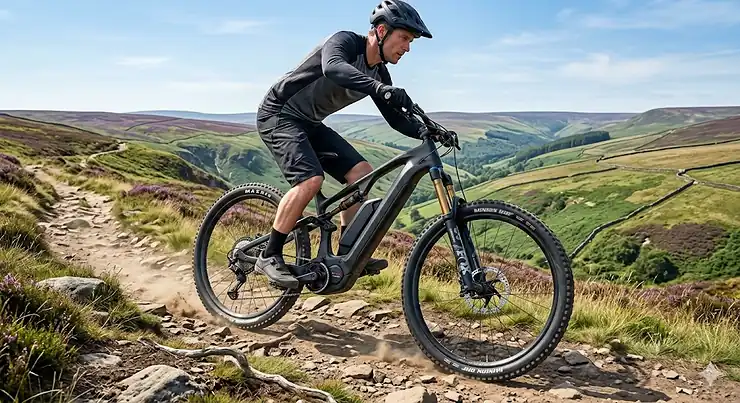
The Specialized Turbo Levo with carbon frame is the benchmark against which other electric mountain bikes are judged. At around 19kg for the carbon models, this is a proper full-suspension eMTB designed for actual trail riding rather than gentle towpath cruising.
Key Specifications WITH Real-World Context: The Specialized 2.2 motor delivers 90Nm of torque — enough to haul you and a week’s camping kit up Lake District fire roads without complaint — and the 700Wh battery provides 80-100km of mixed terrain riding in typical British conditions. The carbon frame saves roughly 2kg versus the aluminium version, which you’ll feel when manhandling the bike over stiles or lifting it onto car racks. Full suspension with 150mm travel absorbs the worst British trails can throw at you. The Mission Control app allows detailed power customisation, though most riders settle on one profile and forget about it.
Expert Commentary: The Specialized Turbo Levo answers a specific question: can you build an electric mountain bike that performs like a proper MTB rather than a motorised compromise? The answer is yes, but it requires premium components throughout and the willingness to spend accordingly. For UK riders exploring Coed-y-Brenin, Hamsterley Forest, or Scottish Highland trails, this is transformative technology — you can ride further, explore more technical terrain, and still have energy to enjoy the descent. The carbon frame option makes sense if you’re regularly lifting the bike or prioritise the most responsive handling. The aluminium Levo is 95% of the experience at 80% of the cost, which makes the carbon version a marginal gain rather than a fundamental upgrade.
UK Customer Feedback: Available through Evans Cycles and specialist MTB retailers across the UK. Owners report exceptional build quality and reliable performance across two-plus years of regular trail use. The primary criticism centres on weight — 19kg is light for a full-suspension eMTB but still heavy compared to traditional mountain bikes.
Pros:
✅ Best-in-class motor and battery system for trail riding
✅ Carbon frame provides responsive handling
✅ Wide UK dealer network ensures local service access
Cons:
❌ Premium pricing reflects Specialized brand positioning
❌ 19kg weight still requires strength for car loading
Price & Value: £6,000-£7,000 range for carbon models. This is serious investment territory, justified if mountain biking is your primary passion. For occasional trail riders, aluminium alternatives or lighter carbon models offer better value.
6. Canyon Endurace ONfly CF — Lightweight Road Performance
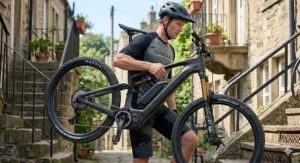
The Canyon Endurace ONfly CF represents the cutting edge of lightweight carbon road e-bikes, combining Canyon’s acclaimed endurance geometry with TQ’s innovative HPR40 motor system.
Key Specifications WITH Real-World Context: The TQ-HPR40 motor weighs just 2.5kg complete with battery, enabling a total bike weight of 14.5kg — remarkable for an e-bike with full road bike performance. The 40Nm torque sounds modest on paper but feels entirely adequate on British A-roads; you won’t win Strava segments against 25-year-olds, but you’ll keep pace with club runs without embarrassment. The 250Wh battery delivers 100-130km range depending on terrain and assist level — perfectly judged for typical British road rides. Canyon’s direct-to-consumer model means you’re ordering online with home delivery, which works brilliantly when things go right but adds complexity if you need warranty support.
Expert Commentary: The Canyon Endurace ONfly CF solves the road cycling e-bike problem: how do you add electric assistance without the bike feeling like a compromise? Canyon’s solution is elegant — use the lightest motor system available, integrate it invisibly into the frame, and maintain genuine road bike geometry and handling. The result feels remarkably like riding a normal road bike that’s had all the hills flattened slightly. For UK riders who love road cycling but struggle with age, fitness, or injury limitations, this removes barriers without removing the fundamental pleasure of riding. The direct model means competitive pricing, but you’ll need mechanical competence or a friendly local bike shop for assembly and maintenance.
UK Customer Feedback: Direct ordering means limited UK reviews, but European feedback is consistently positive. British buyers note excellent customer service during ordering but flag that you’ll need confidence in basic bike assembly.
Pros:
✅ Exceptional weight for a road e-bike (14.5kg)
✅ TQ motor system feels natural and efficient
✅ Maintains proper road bike handling characteristics
Cons:
❌ Direct model requires self-assembly confidence
❌ Smaller 250Wh battery limits longest-distance rides
Price & Value: £4,800-£5,500 depending on component specification. This is premium road bike pricing, but the technology justifies it. For road riders considering e-assistance, this is among the best options available globally.
7. Orbea Wild M20 — Full-Power Carbon Trail Machine
The Orbea Wild M20 rounds out our selection as a genuinely capable full-power eMTB with high-modulus carbon construction throughout.
Key Specifications WITH Real-World Context: The Bosch Performance CX motor delivers 85Nm torque — the standard by which all eMTB motors are judged — paired with a 600Wh or 750Wh battery option. Real-world range is 70-90km on mixed terrain with the 600Wh, extending to 90-120km with the larger battery. The OMR carbon frame uses high-modulus fibres to achieve 20kg weight for the complete bike, which is genuinely impressive for a full-power 170mm-travel trail bike. Optimised weight distribution and gravity-oriented geometry make this one of the most capable descenders in the carbon eMTB category.
Expert Commentary: The Orbea Wild M20 represents a sweet spot: full-power motor performance with the weight savings and ride quality benefits of carbon construction. The Bosch motor is simply excellent — smooth, powerful, reliable, and with the widest service network of any eMTB motor in the UK. The carbon frame genuinely transforms the riding experience compared to aluminium equivalents; the bike feels alive and responsive rather than planted and numb. For UK trail centres (Bike Park Wales, Gisburn Forest, Glentress), this is arguably overkill — but delightfully so. The geometry handles British trail conditions brilliantly, offering confidence on wet roots and rocks without feeling sketchy at speed.
UK Customer Feedback: Available through 99 Bikes and specialist Orbea dealers across the UK. Owners report excellent reliability and responsive UK dealer support. The carbon frame has proven durable through typical trail abuse over multi-year ownership.
Pros:
✅ Bosch CX motor with the widest UK service network
✅ High-modulus carbon frame balances weight and strength
✅ 170mm travel handles serious terrain confidently
Cons:
❌ Premium pricing reflects competition-level specification
❌ 20kg weight still requires fitness for technical climbs
Price & Value: £5,100-£6,000 depending on battery size and component choices. This is expensive, but the combination of Bosch reliability, carbon frame quality, and Orbea’s engineering expertise delivers genuine value for serious mountain bikers.
UK Buyer’s Decision Framework: Choosing Your Carbon E-Bike
Selecting the right carbon fibre electric bike for British conditions requires matching the bike to your specific situation rather than chasing spec sheets. Here’s the practical decision tree:
If your primary use is urban commuting with daily train or Tube connections: The ADO Air Carbon or Fiido Air offer transformative portability at 12.5-13.75kg. The weight saving versus 25kg aluminium alternatives is the difference between dreading the daily carry and not thinking about it.
If you need throttle capability for mobility reasons or legal flexibility: The Pedibal Explora Carbon is essentially your only option with proper DVSA certification. The 21kg weight is the trade-off for robust construction and legal compliance.
If you want one bike for commuting, weekend rides, and occasional touring: The Ribble CGR Carbon offers genuine versatility. The hand-built British quality and Mahle motor system justify the premium pricing if you’re consolidating multiple bikes into one.
If mountain biking is your passion and budget allows: Choose between the Specialized Turbo Levo (best overall system integration), the Canyon Endurace ONfly CF (lightest weight if you prioritise road riding), or the Orbea Wild M20 (best motor/service network combination).
Budget hierarchy for UK buyers:
- £1,200-£1,600: Folding carbon e-bikes (ADO, Fiido)
- £2,800-£3,200: Specialist options (Pedibal with throttle)
- £3,800-£5,000: Premium road/gravel (Ribble, Canyon)
- £5,000-£7,000: Competition-level MTBs (Specialized, Orbea)
The climate consideration: British weather uniquely favours carbon belt drive systems — no chain rust, no regular lubrication, no grease transfer. Every bike with a belt drive (ADO, Fiido, Pedibal) offers meaningful maintenance advantages over traditional chains when riding through six months of drizzle. According to Cycling UK, the UK’s national cycling charity, e-bikes are helping more people embrace cycling as a practical transport solution, particularly in challenging weather conditions.
Real-World Performance: British Conditions Matter
Manufacturers quote range and performance figures in ideal conditions — 75kg rider, flat terrain, no wind, 15°C temperature. Here’s what actually happens in British riding conditions:
Winter Performance (October-March): Expect 15-20% range reduction due to cold battery performance and increased rolling resistance on wet roads. The ADO Air Carbon‘s quoted 100km becomes 75-80km in January riding through south London. This isn’t a failure; it’s physics. Plan accordingly.
Wet Weather Handling: Carbon frames with quality components (hydraulic brakes, decent tyres) handle British rain better than you’d expect. The Fiido Air and Ribble CGR inspire confidence on wet roads. Budget carbon models with mechanical brakes and cheap tyres feel sketchy when wet. Don’t compromise on braking systems if you ride year-round.
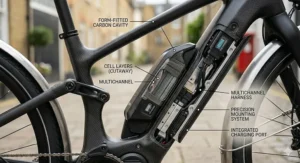
Urban Durability: Carbon frames are surprisingly robust against everyday knocks and scrapes. The main vulnerability is the battery and electronics. Look for bikes with integrated batteries (ADO, Fiido, Pedibal) rather than exposed bolt-on units, which suffer more from British weather exposure.
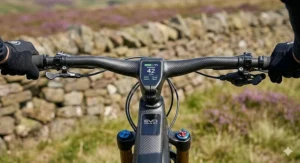
Hill Performance (UK-Specific): British cities offer deceptively challenging gradients. Edinburgh’s hills defeat many e-bikes. Bristol’s inclines are genuinely steep. The motor torque specifications matter here: 35-40Nm (ADO, Fiido) handle moderate hills adequately; 50Nm+ (Pedibal, Ribble, all MTBs) tackle steep gradients without strain. Know your route’s gradient profile before buying.
How to Choose Carbon Fibre Electric Bikes in the UK
Selecting a carbon fibre electric bike for British conditions requires evaluating five key criteria beyond the marketing spec sheets:
1. Actual Weight vs Quoted Weight: Manufacturers quote bare frame weight, but you’ll be lifting the complete bike with battery, mudguards, rack, and lock. The ADO Air Carbon claims 12.5kg; realistically, you’re carrying 16-17kg as equipped. Still light, but honest numbers prevent disappointment.
2. Battery Capacity for Your Actual Range Needs: British commutes average 8-12km each way. A 250Wh battery (Fiido Air) covers this comfortably even in winter with 50% charge remaining. Touring riders or those with 20km+ commutes need 400Wh+ (Ribble, Specialized, Orbea) to avoid range anxiety.
3. Service Network Accessibility: Direct-to-consumer models (Canyon, ADO, Pedibal) save money but require either mechanical competence or a willing local bike shop. Established brands (Specialized, Orbea, Ribble) offer formal dealer networks across the UK. Consider whether you can service basic issues or need dealer support.
4. British Weather Compatibility: Look for sealed bearings, quality weather sealing on battery connections, and ideally carbon belt drives. Traditional chain systems work fine but demand regular maintenance when riding through British winters. The Fiido Air and ADO Air Carbon offer essentially zero drivetrain maintenance.
5. UKCA Certification and Legal Compliance: All bikes here comply with EAPC regulations (250W motor, 15.5mph assist cutoff, pedal-activated assistance). Some retailers still sell non-compliant bikes. Verify UKCA marking and EAPC compliance before purchasing. The Pedibal Explora uniquely offers legal throttle capability through DVSA L1e Type Approval — worth understanding if you need throttle functionality.
Component Quality Hierarchy: Premium builds (Specialized, Orbea, Canyon, Ribble) specify hydraulic brakes, quality drivetrains, and proven motor systems. Budget carbon bikes (ADO, Fiido) compromise on components to hit price targets. Neither approach is wrong; they serve different buyers. Know which matters more to you: carbon frame or premium components.
Common Mistakes When Buying Carbon E-Bikes
British buyers consistently make five avoidable errors when purchasing carbon fibre electric bikes:
Mistake #1: Prioritising Weight Above All Else A 12kg bike with mechanical brakes and cheap tyres is less usable than a 15kg bike with hydraulic brakes and quality rubber. Weight matters, but only when other fundamentals are solved. The ADO Air Carbon at 12.5kg is brilliant because it doesn’t sacrifice essentials to achieve that weight.
Mistake #2: Ignoring UK-Specific Product Versions Many carbon e-bikes are designed for European or American markets. UK versions should include UKCA marking, UK plugs (230V), and comply with EAPC regulations. Buying grey-import models saves money initially but creates warranty, parts, and legal compliance issues later. Verify your bike is the UK model specification.
Mistake #3: Underestimating British Weather Impact Carbon frames handle rain brilliantly. Cheap electronics don’t. The battery connections, display unit, and motor controller are the vulnerable points. Look for bikes with proper weather sealing and enclosed battery systems. The Fiido Air‘s integrated design protects electronics better than bolt-on battery systems.
Mistake #4: Assuming Carbon Means Fragile Well-engineered carbon frames are exceptionally strong. The Orbea Wild M20 handles trail abuse that would buckle aluminium. The vulnerability is impact damage from sharp objects (rock strikes, crashes into concrete posts). Carbon can crack from impacts that would merely dent aluminium, but this is uncommon in normal use.
Mistake #5: Buying the Wrong Category A folding carbon e-bike optimised for portability (ADO, Fiido) isn’t suitable for serious trail riding. A full-suspension carbon MTB (Specialized, Orbea) is overkill for flat urban commuting. Buy the bike that matches your primary use case 80% of the time, not the aspirational 5% use case. You’ll enjoy it more and use it more often.
UK Regulations: What You Must Know
Electric bikes in the UK operate under EAPC (Electrically Assisted Pedal Cycle) regulations established in 2015 and updated in 2020. Here’s what actually matters:
Legal Requirements for Road Use: Your e-bike must have a maximum motor output of 250W (continuous rated power), provide assistance only when pedalling (except for throttles limited to 3.7mph), and cut motor assistance at 15.5mph (25km/h). All bikes reviewed here comply with these regulations.
No Licence, Tax, or Insurance Required: EAPC-compliant e-bikes are treated identically to regular bicycles under UK law. You can ride on roads, cycle paths, and bridleways (where cycling is permitted) without any additional documentation. No MOT, no registration, no number plate.
UKCA Marking Post-Brexit: Since January 2023, e-bikes sold in Great Britain require UKCA (UK Conformity Assessed) marking rather than EU CE marking. Northern Ireland follows different rules under the Protocol. Reputable UK retailers ensure compliance; grey imports may not. The ADO Air Carbon explicitly confirms UKCA certification, which offers peace of mind.
Throttle Regulations: Standard EAPC bikes cannot provide throttle assistance above 3.7mph (6km/h). The Pedibal Explora Carbon circumvents this through L1e-A classification (low-powered moped), which allows throttle use up to 15.5mph but requires DVSA type approval. This is legal and compliant but represents a different vehicle category technically.
Where You Can Ride: EAPC-compliant e-bikes are permitted on roads, dedicated cycle lanes, shared-use paths, and off-road routes where cycling is allowed (bridleways, permitted trails). They’re prohibited on footpaths where cycling is banned (same as regular bikes). National parks and private land have their own regulations; check before riding.
Seller Obligations: Retailers must provide clear information about motor power, speed limits, and whether pedalling is required for assistance. They cannot legally advertise or sell non-compliant e-bikes for road use. If a retailer offers “off-road mode” switches that increase power above 250W or speed above 15.5mph, those modes are illegal for public road use even if the switch is never activated.
Long-Term Ownership Cost in the UK
Carbon fibre electric bikes represent significant initial investment, but long-term running costs are modest compared to alternative transport:
Maintenance Costs (Annual):
- Belt-drive models (ADO, Fiido, Pedibal): £50-80 annually for brake pad replacement, tyre replacement, general servicing
- Chain-drive models (Specialized, Orbea, Ribble): £120-180 annually including chain replacement, cassette wear, brake servicing
- Major service (every 2 years): £80-150 depending on components
Electricity Costs: Charging an e-bike battery costs approximately 5-8p per full charge at current UK electricity rates (£0.24-0.28 per kWh). A 500Wh battery × £0.26/kWh = £0.13 per charge. Annual electricity cost for daily 10km commuting: roughly £15-25. Negligible compared to petrol, insurance, or public transport season tickets.
Battery Replacement: Lithium-ion batteries degrade gradually, typically retaining 70-80% capacity after 500-800 full charge cycles (roughly 3-5 years of regular use). Replacement batteries cost £200-600 depending on capacity and manufacturer. Factor this into long-term ownership calculations.
Insurance: E-bike insurance isn’t legally required but is recommended, particularly for premium models. Annual comprehensive insurance (theft, damage, third-party liability) costs £80-150 depending on bike value and where you store it. Many home insurance policies now include cycle cover as standard; check before buying separate insurance.
Cycle to Work Scheme Savings: The UK government’s Cycle to Work scheme allows employees to purchase bikes and equipment through salary sacrifice, saving 25-42% depending on your tax bracket. A £3,000 bike effectively costs £1,800-2,250 after tax savings. Higher-rate taxpayers save more. Most bikes reviewed here are eligible; check with your employer.
Comparison to Alternatives (5-Year Total Cost):
- Carbon e-bike ownership: £3,000 purchase + £750 maintenance + £100 electricity + £400 insurance + £400 battery = £4,650
- London Zone 1-3 Travelcard: £1,800 annually × 5 = £9,000
- Car ownership (small city car): £12,000+ purchase + £3,500 insurance + £4,000 fuel + £2,000 maintenance + £850 tax + £3,000 parking = £25,350+
The economics favour e-bike ownership overwhelmingly for anyone replacing car journeys or public transport commutes. Even premium carbon models pay for themselves within 2-3 years. Research from the Department for Transport suggests that e-bikes are playing an increasingly important role in the UK’s transition to sustainable transport, with adoption rates accelerating particularly in urban areas.
Practical Usage Guide: Getting the Most from Your Carbon E-Bike
Owning a carbon fibre electric bike in British conditions requires understanding a few practical realities:
First 30 Days: Expect a bedding-in period for brake pads (particularly hydraulic systems). Braking performance improves after 50-100km of use. The motor assistance will initially feel either too aggressive or too subtle; most bikes allow customisation through companion apps. Experiment with assist levels on your regular routes to find optimal settings.
Winter Storage in Damp British Conditions: Carbon frames handle moisture brilliantly, but batteries hate cold and damp. If storing in an unheated garage or shed through winter, remove the battery and store it indoors at 40-60% charge. This dramatically extends battery life. Bikes with integrated batteries (ADO, Fiido) often have removable battery units despite the integrated appearance.
Securing Your Investment: Premium carbon e-bikes are theft targets. Beyond quality locks, consider GPS tracking systems. The ADO Air Carbon includes GPS as standard; for other bikes, consider aftermarket options like Apple AirTag hidden in the seat tube or dedicated bike trackers (£60-100 annually). Register your bike’s serial number with BikeRegister.com — free and increases recovery chances if stolen.
Wet Weather Riding: After riding in rain, briefly wipe down the bike to prevent grime accumulation around seals and connections. Every few weeks, check battery connections for moisture. Modern e-bikes are weather-resistant, not waterproof. Don’t pressure-wash them.
Optimising Range for British Hills: Use lower assist levels on flat sections, increase assistance only on hills. Most riders do the opposite (high assist everywhere), which drains batteries unnecessarily. The Ribble CGR Carbon‘s Mahle system excels at this — it matches your effort proportionally, which naturally conserves battery on flat sections.
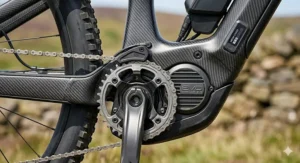
Component Wear Patterns: Tyres wear faster on e-bikes due to increased weight and torque. Budget £60-100 annually for replacement tyres. Brake pads similarly wear faster; inspect every 500-1,000km depending on terrain. Chain-drive systems need cleaning and lubrication every 200-300km in British conditions. Belt-drive systems (ADO, Fiido, Pedibal) require essentially zero maintenance.
Frequently Asked Questions
❓ Are carbon fibre electric bikes legal on UK roads?
❓ How much lighter are carbon e-bikes compared to aluminium models?
❓ Will carbon fibre frames crack in wet British weather?
❓ Can I charge my e-bike battery indoors, and is it safe?
❓ Do carbon e-bikes qualify for the UK Cycle to Work scheme?
Conclusion: The Carbon Revolution Has Arrived
The carbon fibre electric bike market in the UK has reached a genuine inflection point in 2026. What seemed impossibly expensive or niche just three years ago — full carbon frames, premium components, genuine performance — has become accessible to mainstream buyers through models like the ADO Air Carbon and Fiido Air.
For British riders navigating our unique conditions — perpetual damp, urban density, hills that mock optimistic planning, and transport infrastructure that forces uncomfortable compromises — carbon e-bikes solve problems that aluminium alternatives merely paper over. The 30-40% weight saving transforms the ownership experience when you’re lifting your bike daily. The vibration absorption matters when British councils treat pothole repair as optional. The maintenance-free belt drives available on several models (ADO, Fiido, Pedibal) eliminate the single most annoying aspect of winter cycling.
The question isn’t whether carbon fibre makes a difference — it demonstrably does — but whether that difference justifies the premium for your specific use case. Urban commuters prioritising portability will find exceptional value in the £1,200-£1,600 folding models. Serious road cyclists or mountain bikers will find the £4,000-£7,000 performance models transform their riding in ways that justify the investment. The middle ground — riders wanting one versatile bike for everything — find the Ribble CGR Carbon and similar models hitting that sweet spot.
British e-bike buyers in 2026 have access to genuinely world-class carbon technology at prices that seemed impossible even recently. Whether you’re replacing car journeys, avoiding Tube congestion, or simply rediscovering the pleasure of cycling without the bits that hurt, there’s a carbon e-bike here that will genuinely improve your daily life.
Recommended for You
- 7 Best Luxury Electric Bikes UK 2026: Premium Models Tested
- 7 Top-Rated E-Bikes £2500-£4000 UK 2026
- 7 High Specification Electric Bikes That Outperform Premium Rivals UK 2026
Disclaimer: This article contains affiliate links. As an Amazon Associate, I earn from qualifying purchases. If you purchase products through these links, we may earn a small commission at no additional cost to you.
✨ Found this helpful? Share it with your mates! 💬🤗
