In This Article
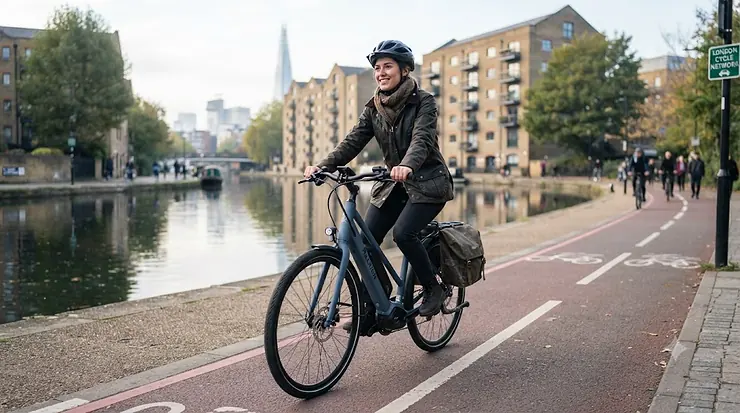
Is 36v enough for electric bike riding in Britain? In short: for flat-to-gently-rolling terrain and commutes under 15 miles, yes, a 36V system is genuinely enough — it’s the long-standing industry default for a reason. Where it starts to strain is on sustained hills, with heavier riders, or when you’re hauling cargo daily…

That one-line verdict, though, hides a lot of nuance, and nuance is exactly what a spec sheet on Amazon never gives you. Voltage isn’t some abstract engineering trivia — it’s the reason your bike either shrugs off a bridge ramp or grinds to a wheezy crawl halfway up it. I’ve spent the last few weeks pulling apart real spec sheets, cross-referencing UK rider reviews, and genuinely interrogating what a 36 volt battery electric bike range figure actually means once you take it off the marketing page and onto a wet Tuesday commute in, say, Leeds or Bristol.
Here’s the thing nobody tells you upfront: under UK law, every legal e-bike — whether it runs 36V or 48V — is capped at 250W continuous power and 15.5mph assisted speed anyway. So voltage doesn’t buy you a faster bike. What it buys you is torque delivery, hill-climbing stamina, and how gracefully the system behaves when the battery gets tired. That’s the real conversation, and it’s the one this guide is going to have with you, product by product, spec by spec, no fluff.
We’ll look at what 36V actually means for range and hills, walk through seven real bikes spanning budget to premium, and get into the unglamorous but genuinely useful stuff — voltage sag, controller pairing, and what happens to your battery after 18 months of daily use. Let’s get into it.
Is 36V Enough? Quick Comparison Table
Before the deep dive, here’s the shortcut version. This table lines up the voltage question against the terrain and rider profile that actually determines the answer — because “is 36v enough” only makes sense once you know what you’re asking it to do.
| Model | Battery | Motor | Claimed Range | Best For |
|---|---|---|---|---|
| EON SKY E14 | 36V 10.4Ah | 250W | ~35km | Ultra-short train commutes |
| Zinc Pro Folding | 36V 7.8Ah | 250W | Up to 34 miles | Simple flat commuting |
| HillMiles MilePort 1 | 36V 13Ah | 250W | ~100km | Mixed surfaces, gravel |
| COLORWAY 20″ Folder | 36V 15Ah | 250W | 45–100km | Budget with biggest battery |
| SAMEBIKE 20″×4.0 | 36V 13Ah | 250W | ~100km | City-and-towpath crossover |
| E-Movement Thor | 36V 10Ah Samsung | 250W | Terrain-dependent | Weekend trail crossover |
| ADO Air 20S | 36V Samsung | 250W | ~100km | Premium low-maintenance commute |
What jumps out here is that the “is 36v enough” question is really a terrain question wearing a voltage costume. On flat ground, a 36V pack and a 250W motor are working well within their comfort zone, and the battery barely breaks a sweat. Load the same system up with a steep hill or a heavier rider, though, and you’re asking a modest-pressure system to do a higher-pressure job — which is where voltage sag and reduced real-world range start creeping in, something we’ll unpack properly further down.
💬 Just one click — help others make better buying decisions too!😊
Top 7 36V Electric Bikes: Expert Analysis
We’ve deliberately spread this list across budget, mid-range and premium so you can see how 36V performs at every price point — not just on paper, but against what actual owners report once the bike’s been ridden through a British winter.
1. EON SKY E14 Folding Electric Bike — lightest true folder in this guide
The EON SKY E14 leans hard into portability, and it shows the moment you pick it up. Its 250W UK-legal motor pairs with a 36V 10.4Ah battery for a claimed 35km range, which sounds modest until you remember this is a 14-inch-wheeled bike built for the last mile of a train journey, not a weekend tour. The aluminium alloy frame keeps weight low enough to actually carry up a flight of station steps without a grimace.
Based on the spec comparison, this is the bike for someone whose commute is genuinely short and mostly flat — think the final 10–15 minutes between a station and an office. What most buyers overlook about compact 14-inch folders is that the smaller wheels make kerbs and potholes feel more pronounced, so this isn’t the bike for pothole-riddled B-roads. Reviewers consistently note that the fold mechanism is quick and the dual disc brakes feel reassuringly strong for such a small package, though a common complaint in user reviews is that the tiny wheels make the ride feel busier at speed than larger-wheeled alternatives.
Pros:
- ✅ Genuinely portable at 14-inch wheel size
- ✅ Quick, simple fold for train and office storage
- ✅ Dual disc brakes inspire confidence stopping
Cons:
- ❌ Smaller wheels feel busier over rough surfaces
- ❌ Range suits short hops, not longer rides
Prices for compact folders like this typically sit in the £500–£700 range at the time of research. Check current pricing on Amazon, as it fluctuates with stock and promotions — but as an entry point into folding 36V ebikes, the value proposition here is solid.
2. Zinc Pro Folding Electric Bike — best for straightforward train commuting
The Zinc Pro keeps things unfussy: a 250W rear hub motor matched to a 36V 7.8Ah battery, delivering a realistic range up to 34 miles (55km) according to retailer testing. A 12-point cadence sensor gets the motor engaging quickly from a standstill, which genuinely helps at junctions and traffic lights where hesitant assistance is more annoying than no assistance at all.
Here’s what the spec sheet won’t tell you, but the design choices suggest: this is a bike built around commuting logistics rather than performance thrills. The folding frame collapses for under-desk or car boot storage, and Shimano 6-speed gearing means that if the battery does run flat, you’re not stranded — you simply cycle it home like an ordinary bike, gears intact. Reviewers on comparable Zinc models consistently highlight walk-assist as a genuinely useful feature for manoeuvring through station concourses, where riding isn’t allowed but pushing a heavy bike is a hassle.
Pros:
- ✅ Responsive cadence sensor at traffic lights
- ✅ Functions as a normal bike if battery depletes
- ✅ Compact fold suits desks and car boots
Cons:
- ❌ Smaller 7.8Ah battery limits longer trips
- ❌ Entry-level components mean more frequent servicing
Entry-level 36V folders like the Zinc Pro tend to sit in the £600–£800 bracket at the time of writing. For a strictly flat, strictly short commute, it’s hard to argue with the value here — but it’s honestly not the bike for anyone eyeing hillier routes.
3. HillMiles MilePort 1 — best fat-tyre folder for mixed surfaces
The MilePort 1 takes the folding format and adds genuinely chunky 20×3.0-inch fat tyres, paired with a 36V 13Ah removable battery and a 250W motor. HillMiles quotes a 100km range and a 25km/h top speed, which lines up with the wider, more forgiving tyre profile doing some of the comfort work that suspension would otherwise need to handle.
What most buyers overlook about fat-tyre folders is that the extra rubber contact patch does more for confidence on gravel paths and broken tarmac than raw motor power ever could — this is a bike that flatters imperfect surfaces rather than punishing them. Based on the spec comparison against slimmer-tyred folders in this list, the trade-off is a heavier overall package, so if you’re regularly carrying it upstairs, factor that in before buying. Aggregated owner sentiment for fat-tyre folders in this category consistently praises the smoother ride quality, while a recurring theme in reviews flags that these wider tyres do add noticeably more rolling resistance than a slim commuter tyre, nudging real-world range down slightly from the claimed figure.
Pros:
- ✅ Fat tyres smooth out potholes and gravel
- ✅ Removable 13Ah battery for easy charging
- ✅ Strong claimed 100km range for the class
Cons:
- ❌ Heavier than slim-tyre folding alternatives
- ❌ Wider tyres add rolling resistance, trimming real range
At the time of research, fat-tyre 36V folders in this bracket sit around the £700–£900 range. If your commute involves towpaths, gravel, or genuinely inconsistent surfaces, the MilePort 1 earns its keep here.
4. COLORWAY 20″ Folding Electric Bike — best battery capacity in a budget folder
COLORWAY’s 20-inch folder punches above its price bracket on paper, fitting a 36V 15Ah removable battery — noticeably larger than most budget folders — alongside a 250W motor and 7-speed gearing, with a claimed range of 45–100km depending on assist level. Dual disc brakes and an LCD display round out a spec sheet that reads like a much pricier bike.
The honest analytical read here is that a bigger Ah rating on a budget bike is genuinely valuable, but it isn’t the whole story — the 15Ah pack means more watt-hours to work with, translating to real flexibility on higher assist settings without babysitting the battery gauge. That said, aggregated Amazon UK review sentiment for this model is mixed rather than uniformly glowing: customers report the bike is excellent value and easy to assemble, with positive feedback on the 7-speed gearing, but some reviewers have flagged wiring near the folding hinge as vulnerable to snagging if you’re not careful when folding it, and a handful mention the bike feeling heavier than expected for a “folding” model. One buyer specifically noted contacting customer support about a fault and finding the response underwhelming — worth weighing if after-sales support matters to you.
Pros:
- ✅ Larger 15Ah battery than most rivals at this price
- ✅ Dual disc brakes and clear LCD display
- ✅ No throttle, so straightforwardly EAPC road-legal
Cons:
- ❌ Some owners report snagged wiring at the fold hinge
- ❌ Heavier in hand than the “folding bike” label suggests
Typically priced in the £550–£750 range at the time of writing, this is a strong pick if you want maximum battery capacity without stepping up to mid-range pricing — just fold it with a little care.
5. SAMEBIKE 20″×4.0 Fat Tyre Electric Bike — best for confident city-and-gravel crossover riding
SAMEBIKE’s fat-tyre folder runs a 36V 13Ah removable battery through a 250W motor, with a 7-speed drivetrain and a claimed 100km range at up to 25km/h. The 4.0-inch tyres are noticeably chunkier again than the MilePort’s, aimed squarely at riders who want one bike that handles both tarmac and towpath without complaint.
What the spec sheet won’t tell you, but the tyre width strongly implies, is that this bike prioritises stability and grip over outright efficiency — you’re trading a small amount of range for a noticeably more planted, confident ride on anything less than pristine pavement. Here’s what to weigh: if your route is uniformly smooth tarmac, that trade-off buys you very little; if it’s mixed or unpredictable, it’s exactly the right call. Reviewers of comparable SAMEBIKE fat-tyre folders consistently describe the ride as reassuringly stable, with the recurring caveat that the extra tyre volume means slightly longer charge-to-charge intervals under harder acceleration.
Pros:
- ✅ Wide 4.0-inch tyres for genuine surface versatility
- ✅ Removable battery simplifies charging routine
- ✅ 7-speed gearing helps manage inclines manually
Cons:
- ❌ Chunkier tyres slightly reduce efficiency on tarmac
- ❌ Bulkier folded footprint than slimmer models
Expect a price point in the £650–£850 range at the time of research. This is the pick for riders who refuse to choose between “city bike” and “adventure bike.”
6. E-Movement Thor — best lightweight hardtail for weekend trail crossover
Stepping up from folders entirely, the E-Movement Thor is a 6061 aluminium hardtail running a 250W Bafang motor and a 36V 10Ah Samsung battery, paired with 27.5-inch Maxxis tyres, SRAM 7-speed gearing, hydraulic disc brakes and a lockable hydraulic suspension fork. At roughly 22kg, it’s genuinely the lightest bike in this line-up given its hardtail mountain-bike spec — a meaningful difference if you ever need to lift it.
Based on the spec comparison, using a Samsung cell in the battery pack matters more than the number on the box suggests: Samsung and LG cells are widely regarded across the industry as offering more consistent discharge under load than unbranded cells, which directly affects how well a 36V pack resists voltage sag on a climb. The honest trade-off here is payload: the Thor’s payload capacity sits at 120kg rather than the 150kg you’ll find on sturdier commuters, so heavier riders or loaded panniers should look elsewhere. It’s also worth flagging that this bike is sold in both 250W and 350W versions — only the 250W variant is EAPC road-legal in the UK, so double-check the listing before buying if road use is your plan. Reviewers consistently praise how capable it feels on light off-road terrain and how little the lockable fork gets in the way on tarmac stretches.
Pros:
- ✅ Genuinely light for a suspension-equipped hardtail
- ✅ Samsung cells support steadier power under load
- ✅ Capable on towpath-to-trail mixed routes
Cons:
- ❌ 120kg payload lower than commuter-style rivals
- ❌ 350W variant not EAPC road-legal — check before buying
At the time of research, this model has been seen around the £1,199–£1,699 range depending on promotions. For a rider who wants one bike for weekday commuting and weekend bridleways, this is the strongest all-rounder here.
7. ADO Air 20S — premium pick for refined, low-maintenance commuting
Topping this list is the ADO Air 20S, a folding belt-drive commuter built around a torque-sensing 250W motor and a 36V Samsung-cell battery claiming up to 100km of range. A carbon belt drive removes the chain entirely — no grease, no rust, no cleaning ritual — and an adjustable suspension fork with hydraulic disc brakes rounds out a spec sheet aimed at riders who want refinement over raw capability.
What most buyers overlook about torque sensors versus simpler cadence sensors is that torque-based systems respond to how hard you’re actually pushing the pedals, not just whether they’re turning — the practical result is assistance that feels proportionate rather than binary, especially noticeable pulling away from junctions in traffic. Reviewers consistently single out the suspension fork as the deciding factor for anyone riding broken B-roads regularly, and aggregated customer feedback describes the bike as needing almost no maintenance beyond charging and folding it. One recurring piece of owner advice worth passing on: the stock saddle is fine for commuting distances but riders doing 20-plus mile weekend rides often upgrade it for comfort. The honest trade-off at this price is that you’re paying a premium for polish rather than for extra watts or volts.
Pros:
- ✅ Belt drive means near-zero routine maintenance
- ✅ Torque sensor delivers natural, proportionate assistance
- ✅ Suspension fork tames broken road surfaces well
Cons:
- ❌ Premium price versus otherwise similar specs
- ❌ Stock saddle needs upgrading for longer rides
Expect pricing in the mid-£1,000s to low-£1,000s-plus range at the time of writing, positioning it as the premium, refinement-focused option in this line-up.
Setting Up and Getting the Most From Your 36V Ebike
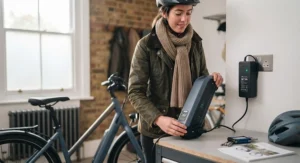
Getting a new 36V ebike is one thing; actually setting it up so the battery and motor perform as advertised is another. In the first 30 days, the single most common mistake is charging the battery to 100% and leaving it there — lithium cells sit happiest between roughly 20% and 80% charge for daily use, reserving a full charge for days you genuinely need maximum range.
Tyre pressure is the second most overlooked lever. An under-inflated tyre quietly eats into your battery’s real-world range by increasing rolling resistance, and on a 36V system that margin matters more than on a higher-voltage bike with power to spare. Check pressure weekly for the first month while you learn your bike’s baseline. Bed the brakes in gently over the first 50–100km, avoiding hard emergency stops where possible, and re-torque axle nuts after that same initial period, since components do settle. Finally, resist the urge to ride permanently in the highest assist mode — it’s the fastest way to make a perfectly adequate 36V range feel disappointing, when Eco or mid-assist would comfortably get you there with charge to spare.
Who a 36V Ebike Actually Suits: Three Real-World Scenarios
Picture a graduate trainee commuting eight flat miles into central Manchester three times a week, storing the bike under a desk the other days. A folding 36V bike like the Zinc Pro or EON SKY E14 suits this rider precisely: short distance, flat terrain, storage constraints, and a budget that doesn’t need to stretch to a bigger battery they’d rarely use fully.
Now picture a retired teacher in the Cotswolds who rides twice weekly on a mix of quiet lanes and the odd gentle rise, wanting comfort over speed. The COLORWAY or SAMEBIKE fat-tyre folders fit here — the wider rubber absorbs the rougher lane surfaces, and the larger battery means the occasional hillier loop doesn’t trigger range anxiety.
Finally, picture a weekend rider in Sheffield who commutes midweek but wants bridleway access on Saturdays. Here, 36V starts to feel genuinely tight on repeated climbs, which is exactly why the E-Movement Thor’s Samsung cell and lighter overall build were included in this list — it’s the 36V bike best positioned to cope with that dual demand, though a 48V mid-drive would still out-climb it on the steepest sections.
Problem → Solution: Fixing the Most Common 36V Ebike Complaints
Problem: “My range is much shorter than advertised.” Manufacturer figures are typically measured on flat ground, low assist, and a lighter-than-average rider. Solution: recalculate your expectations using mid-assist mode and your actual weight, and treat the marketing figure as a ceiling, not a promise.
Problem: “It really slows down on hills.” This is voltage sag in action — under heavy load, a 36V pack’s usable voltage temporarily dips, softening power delivery exactly when you need it most. Solution: shift down through the gears before the hill rather than during it, letting the motor spin at a more efficient cadence.
Problem: “The battery seems to die faster after a year.” Normal lithium degradation, accelerated by frequent full-discharge cycles or extreme heat. Solution: adopt the 20–80% charging habit outlined above and store the battery indoors during winter cold snaps.
Problem: “It doesn’t feel powerful pulling away from lights.” Often a cadence-sensor bike rather than a torque-sensor one — cadence sensors switch on more abruptly than they ramp up. Solution: pedal a half-turn before expecting assistance, or consider a torque-sensor model like the ADO Air 20S if this consistently bothers you.
Problem: “I’m not sure my charger or replacement battery is compatible.” Solution: always match voltage exactly to your bike’s original spec — a 36V system needs a 36V replacement pack, and a mismatched controller pairing genuinely risks damaging the electronics.
How to Choose Between 36V and Higher-Voltage Systems
- Map your actual terrain first. Flat or gently rolling ground rarely needs more than 36V; sustained gradients change the calculation quickly.
- Weigh yourself and your typical cargo honestly. Heavier total load draws more current, and a 36V pack has less headroom to absorb that than a 48V one.
- Check the cell brand, not just the voltage. A 36V Samsung or LG pack often outperforms an unbranded 48V pack under real load, because cell quality affects sag as much as voltage does.
- Consider your storage and lift requirements. 36V systems generally sit in lighter bikes, which matters if stairs or a car boot are part of your daily reality.
- Be honest about your budget ceiling. Stepping up to 48V usually means stepping up in price too — it’s rarely a straightforward battery swap.
- Factor in future use, not just today’s commute. If you’re likely to add a child seat, panniers or a hillier route within a year or two, buying slightly ahead of your current needs can save a second purchase.
- Test ride on your actual local hill if at all possible. Spec sheets can’t replicate your specific gradient, surface, and riding style.
36V Electric Bikes vs 48V Electric Bikes
The 36V vs 48V debate isn’t really about which is “better” — both comply with the same 250W/15.5mph EAPC rules, so neither is faster on paper. The practical difference sits in torque delivery and how the system behaves as the battery depletes. A 48V pack running through the same 250W motor typically delivers punchier acceleration and holds power more consistently uphill, because it’s operating with more electrical headroom before it needs to compensate with higher current draw.
Where 36V wins back ground is weight, cost, and simplicity. Lighter packs mean lighter bikes, which matters enormously for anyone lifting a folder up stairs daily. They’re also generally cheaper to manufacture and replace, and for genuinely flat commuting routes, the performance gap versus 48V is close to irrelevant in daily use. If your commute reads more like Cambridge than Bath — flat, short, predictable — the 36V vs 48V debate resolves itself in 36V’s favour on value alone.
What to Expect: Real-World Performance on Flat Terrain
Flat terrain is where 36v ebike for flat terrain use genuinely shines, and it’s worth being specific about why. On level ground, the motor isn’t fighting gravity, so current draw stays modest and consistent — this is 36v electric bike city commute territory at its most comfortable, where the battery barely dips below its resting voltage even under regular use. Flat terrain efficiency is essentially the best-case scenario for any 36V system: expect the upper end of manufacturer range claims to feel achievable rather than aspirational, particularly in Eco or low-assist mode.
The moment gradient enters the equation, that efficiency picture changes fast. Even a modest 5–8% incline forces the motor to draw noticeably more current to maintain speed, and that’s precisely where a 36V system’s more limited headroom becomes apparent compared with 48V. For genuinely flat-terrain riders, though, this is somewhat academic — you’re rarely asking the system to work outside its comfort zone in the first place.
Voltage Sag Explained: Why Your Battery Feels Weaker Under Load
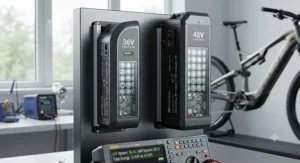
Voltage sag under load is the single most misunderstood concept in ebike shopping, and understanding it properly answers “is 36v enough” better than any spec sheet. Every lithium battery’s voltage briefly drops below its resting value when you demand a burst of current — climbing a hill, accelerating hard, or riding into a headwind all trigger this. On a 36V system, that dip has less margin to absorb before it noticeably affects motor performance, which is why hills feel like they sap power faster on 36V than on 48V, even at identical wattage.
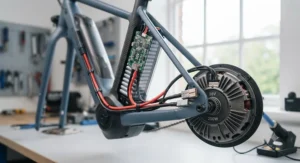
Battery quality plays a bigger role here than most buyers assume. A well-built pack with a genuine cell brand and a competent battery management system resists sag far better than a cheap, unbranded equivalent — this is precisely why the Thor and Air 20S in our list, both running named-brand cells, tend to feel more composed on inclines than a budget pack with the same headline Ah rating. If your bike consistently feels sluggish on hills it previously handled fine, sag caused by battery ageing — rather than terrain — is often the real culprit, and it’s a strong early warning sign the pack is nearing the end of its useful life.
Common Mistakes When Buying a 36V Electric Bike
The most frequent mistake is buying purely on headline range figures without checking the terrain those figures were tested on — a 100km claim on flat ground with a light rider means little if your commute is hillier and you weigh more than the test rider. A close second is ignoring 36V motor controller pairing entirely: swapping in a replacement battery or aftermarket controller that doesn’t precisely match voltage risks frying the electronics, and “close enough” voltage genuinely isn’t close enough here.
Buyers also regularly underestimate bike weight relative to their own strength and storage situation, only to discover a “folding” bike is still an awkward 22kg lift up three flights of stairs. Finally, plenty of shoppers skip checking whether a model is UK EAPC road-legal at all — some listings include higher-power variants alongside the compliant one, and it’s the buyer’s responsibility to confirm which they’re purchasing, since GOV.UK’s official e-bike rules guidance makes clear that non-compliant e-bikes are legally treated as motor vehicles requiring registration, tax and insurance.
Long-Term Cost & Maintenance of 36V Battery Systems
A quality 36V lithium battery typically delivers 500 to 1,000 full charge cycles before capacity noticeably declines, translating to roughly 3–5 years of regular use with sensible charging habits. Replacement packs for 36V systems tend to be somewhat cheaper than their 48V equivalents, partly reflecting lower cell counts and partly the more competitive, established market for this voltage class.
Total cost of ownership on a 36V ebike is genuinely modest compared with running a car or even a season rail ticket: charging costs amount to pennies per full charge, and routine maintenance — brake pads, tyres, an annual service — mirrors that of a normal bicycle rather than a motor vehicle. Belt-drive models like the ADO Air 20S push this further, removing chain maintenance almost entirely. The one line item worth budgeting for honestly is eventual battery replacement, typically in the low hundreds of pounds depending on Ah rating and brand, which is worth weighing against any bike advertising an unusually cheap unbranded pack up front — as BikeRadar’s ebike battery guide notes, poorly regulated batteries have been directly linked to a disproportionate share of UK ebike fire incidents, making cell quality a genuine safety consideration and not just a performance one.
Safety, Regulations and Compliance: Staying UK EAPC-Legal
Every bike in this guide is built around the UK’s 250W continuous power limit and 15.5mph assisted speed cap, the two pillars that qualify an e-bike as an EAPC — Electrically Assisted Pedal Cycle — and therefore exempt it from registration, tax, insurance and licensing requirements. According to Cycling UK’s regulatory guidance, the motor must also only provide assistance while the pedals are turning, ruling out throttle-only “twist and go” bikes unless they’ve been separately type-approved.
Where 36V riders occasionally trip up is with variant confusion, as we flagged with the E-Movement Thor’s 250W/350W split — always check the specific listing you’re buying, not just the model name. Fitting correct lights front and rear after dark and carrying a red rear reflector are also legal requirements for any pedal cycle on UK roads, EAPC or otherwise, so don’t treat these as optional extras once winter commuting sets in.
FAQ: Your 36V Ebike Questions Answered
❓ Is 36v enough for hills?
❓ How far can a 36V ebike battery actually go?
❓ Does a 36V battery charge faster than 48V?
❓ Can I upgrade my 36V ebike to 48V later?
❓ Is a 36V ebike battery good for daily commuting?
Conclusion
So, is 36v enough for electric bike riding in the UK? For the overwhelming majority of commuters and casual riders tackling flat or gently rolling terrain, the honest answer is yes — and the seven bikes above prove that a 36V system, paired with a quality battery and sensible expectations, delivers genuinely enjoyable, low-maintenance transport without needing to chase bigger voltage numbers. Where the calculation shifts is sustained hills, heavier cargo, or riders who simply want maximum headroom, and that’s a legitimate reason to look at 48V instead.
What matters more than the number on the battery casing is matching the bike to your actual terrain, weight and storage situation — something no spec sheet does for you, but that we’ve tried to make concrete throughout this guide. Whichever of these seven you’re leaning towards, checking current pricing and availability before you commit is always worth the extra minute, given how often stock and promotions shift.
✨ Ready to Find Your Perfect 36V Ebike?
🔍 Take your commute to the next level with one of the seven models above. Click through to check current pricing and availability on Amazon UK, and start enjoying the genuinely low-effort, low-cost mobility a well-matched 36V ebike delivers!
Recommended for You
- Add Second Battery Electric Bike: 7 Real Options (2026)
- Integrated Battery Ebike Charging: 7 Best Picks 2026
- Integrated Battery Ebike: 7 Sleek 2026 Picks (UK Guide)
Disclaimer: This article contains affiliate links. As an Amazon Associate, I earn from qualifying purchases. If you purchase products through these links, we may earn a small commission at no additional cost to you.
✨ Found this helpful? Share it with your friends! 💬🤗
