
In This Article
There’s a very specific moment every new e-bike owner remembers: the first time you pull away from a junction on a hill that used to make you sweat, and the bike just… goes. No wobble, no strained knees, no glancing around to see who’s watching you struggle. That moment is usually powered by a 48v ebike system, and it’s the reason this voltage has quietly become the default choice for anyone shopping seriously rather than just browsing the cheapest option on the shelf.
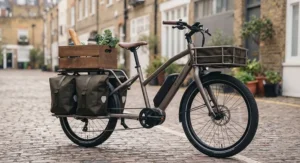
So what is a 48v ebike, in plain terms? It’s an electric bicycle whose battery pack delivers a nominal 48 volts to the motor and controller, typically built from 13 lithium-ion cells wired in series. Compared with the 36V packs common on budget bikes, 48v ebike brands generally offer stronger hill-climbing torque, quicker acceleration, and cooler running under load, because higher voltage moves the same power with less current.
Under UK law, any e-bike ridden on the road still has to keep its motor assistance capped at 250W continuous output and cut off at 15.5mph, regardless of what the battery’s nominal voltage says on the label — a 48v ebike doesn’t mean a faster legal top speed, it means more usable power reaching the wheel below that limit, and often a bigger buffer of range in the tank. That distinction trips up a surprising number of first-time buyers, and it’s one we’ll come back to throughout this guide.
Below, we’ve researched seven genuine 48v ebike brands and models currently sold in the UK, spanning honest budget picks through to serious mid-drive performers, alongside the technical detail — battery replacement costs, 48V versus 52V trade-offs, watt-hour range maths, and what’s actually inside a Samsung 21700 cell — that most listings conveniently skip.
Quick Comparison Table
If you’re short on time, here’s the snapshot. Full specs and honest analysis for every model follow in the next section.
| Category | Model | Battery | Best For |
|---|---|---|---|
| Best Budget | VARUN M27-1 | 48V 13Ah | First-time buyers wanting a straightforward, road-legal commuter |
| Best Value Folder | ENGWE EP-2 3.0 Boost | 48V 13.5Ah | Riders with limited storage who still want fat-tyre comfort |
| Best All-Rounder | ENGWE E26 | 48V 16Ah | Taller or heavier riders who don’t need to fold the bike |
| Best for Load Carrying | Kommoda 3.0 | 48V 20Ah | Retirees and step-through riders prioritising comfort over speed |
| Best Off-Road Power | Shengmilo S600 | 48V 17.5Ah | Adventure riders who want serious private-land capability |
| Best Full-Suspension Folder | ENGWE Engine Pro 3.0 Boost | 48V (Boost pack) | Hilly commutes on a bike that still folds down |
| Best Mid-Drive | L20 3.0 Pro | 48V 15Ah | Riders who want the smoothest, most efficient hill-climbing feel |
Looking across the table, the spread of battery capacities — from 13Ah right up to 20Ah — tells you more about intended use than price alone does. A 13Ah pack on a lightweight commuter isn’t inferior to a 20Ah pack on a heavier step-through; it’s simply matched to a lighter bike and shorter typical journeys. The L20 3.0 Pro stands apart from the rest of this table because it’s the only mid-drive system here, and that single difference in how the 48V is delivered to the wheel matters more for hilly UK commutes than any single spec on this sheet.
💬 Just one click — help others make better buying decisions too!😊
Top 7 48v Ebike Brands: Expert Analysis
1. VARUN M27-1 — best lightweight budget entry point
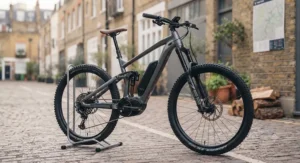
The VARUN M27-1 opens this list because it does the unglamorous job of a first 48v ebike properly, without dressing it up in features you’ll never use. It pairs a 27.5-inch mountain-bike-style frame with a road-legal 250W motor and a 48V 13Ah battery, which works out to a 624Wh pack — enough for genuinely useful daily mileage rather than a token demo lap.
Based on the spec comparison with rivals at a similar price, the 13Ah capacity is on the smaller side of the 48v ebike field, but that’s a sensible trade-off on a lighter frame: less weight to haul up hills, and a shorter, cheaper charge cycle for riders doing a routine commute rather than long weekend touring. Reviewers consistently note that the M27-1 handles potholed British roads with more composure than its price suggests, and it’s become a popular first e-bike for buyers who were nervous about spending on an unfamiliar category.
Aggregated UK buyer sentiment around this model is notably positive on value for money, with several owners specifically praising how it copes with rough surfaces on a daily shopping or commuting run of around 15-20 miles. The recurring criticism is that the stock saddle and grips feel like an obvious cost-saving measure, which is a fair trade at this price point but worth budgeting a small upgrade for.
Pros:
- ✅ Genuinely road-legal 250W motor, no grey-area speed unlocking
- ✅ Handles potholes and rough tarmac better than the price implies
- ✅ Straightforward, low-maintenance spec that suits e-bike beginners
Cons:
- ❌ 13Ah capacity limits it for longer weekend rides
- ❌ Stock saddle and grips feel like an obvious first upgrade
At around £700-£900 depending on retailer promotions, the VARUN M27-1 represents strong value for anyone who wants to try 48V power without committing to a premium price tag — check current price for the latest figure, as e-bike pricing shifts often.
2. ENGWE EP-2 3.0 Boost — best folding fat-tyre value pick
The ENGWE EP-2 3.0 Boost solves a genuinely common British problem: wanting real capability from an e-bike while living somewhere with nowhere to store a full-size one. It folds down for a shed, a car boot, or a flat’s hallway cupboard, while still running a proper 48V 13.5Ah battery (around 648Wh) through a torque-sensing 250W hub motor rated at 75Nm.
What most buyers overlook about this model is the torque sensor itself. Cheaper e-bikes often use a cadence sensor, which delivers power in a slightly delayed, on-off burst as soon as the pedals turn. A torque sensor, by contrast, reads how hard you’re actually pushing and scales assistance proportionally — the practical result is power that feels like it’s amplifying your own effort on a climb, rather than lurching you forward independently of it. Paired with 20-inch by 4.0-inch fat tyres and a hydraulic suspension fork, this is a bike built to shrug off potholes, gravel towpaths, and wet cobbles without the rider noticing much difference in ride quality.
Reviewers consistently flag the 150kg payload rating as unusually generous for a folding bike at this price, and the fat tyres draw particular praise for winter grip on wet leaves and loose surfaces. The honest trade-off is weight: at over 32kg, “folds” doesn’t mean “carries up three flights of stairs easily.”
Pros:
- ✅ Torque sensor gives proportional, natural-feeling power delivery
- ✅ 150kg payload is unusually high for a folding e-bike
- ✅ Fat tyres and hydraulic fork smooth out rough UK road surfaces
Cons:
- ❌ At over 32kg, it’s a folder you store rather than carry daily
- ❌ Recommended rider height tops out below 6’2″, so tall riders should check fit
Typically priced in the £1,000-£1,150 range, the ENGWE EP-2 3.0 Boost is one of the strongest value propositions among 48v ebike brands if fold-away storage genuinely matters to your living situation.
3. ENGWE E26 — best for taller and heavier riders
The ENGWE E26 exists for a specific, underserved group: riders over six foot who’ve tried other e-bikes and found their knees hitting the handlebars, or their weight tested a payload rating that was clearly designed for someone smaller. Its quoted rider height range runs from 5’6″ to 6’5″, which is unusually generous, and the 150kg payload backs that up rather than existing as a marketing figure nobody can rely on.
The 48V 16Ah battery (768Wh) is a genuine step up in real-world terms, not just on paper. Here’s what to weigh: a bigger battery means more weight to carry, but it also means less voltage sag under sustained load, which matters far more to a heavier rider or someone carrying a loaded pannier than it does to a light commuter on a flat route. The 26-inch by 4.0-inch fat tyres, paired with dual suspension, are specifically suited to broken tarmac and gravel verges rather than smooth cycle paths, and the 180mm hydraulic disc brakes give confident stopping power even fully loaded and wet.
Aggregated owner reviews for this model sit around 4.7 out of 5, which tallies with the specific, repeated feedback about comfort for larger riders rather than generic praise. It’s not a folding bike and, at over 34kg, it wants a shed or garage rather than a hallway.
Pros:
- ✅ Genuinely accommodating fit for riders over six foot
- ✅ 768Wh battery reduces power sag when loaded or riding two-up on effort
- ✅ 180mm hydraulic brakes stop confidently in wet UK conditions
Cons:
- ❌ Doesn’t fold, so it needs dedicated storage space
- ❌ At around 34.5kg, it’s not a bike you’ll lift onto a train easily
Expect to pay in the £1,200-£1,350 bracket for the ENGWE E26 — solid value for the specific fit problem it solves, though check current price before buying since promotional pricing moves around often.
4. Kommoda 3.0 — best for comfort and easy mounting
If your priority is getting on and off the bike easily rather than folding it away or racing anywhere, the Kommoda 3.0 is genuinely hard to fault. Its step-through frame removes the swing-your-leg-over barrier that puts off a lot of older or less mobile riders, and it’s paired with one of the largest batteries in this entire roundup: a 48V 20Ah pack, or 960Wh.
Based on the spec comparison, that capacity translates into roughly 60-70 miles of real-world range in typical mixed UK conditions on a moderate assist setting — noticeably more than most bikes here, and the kind of buffer that removes range anxiety on longer leisure routes entirely. The trade-off, and it’s a real one, is weight: at 37.7kg this is the heaviest bike on this list, so it’s not one you’ll be lifting anywhere. What the spec sheet won’t tell you, but reviewers note, is that the fat tyres and 180mm hydraulic disc brakes combine to make the Kommoda 3.0 feel remarkably planted on loose gravel and towpath surfaces, which matters more for a comfort-focused rider than raw power figures do.
Pros:
- ✅ Step-through frame makes mounting and dismounting genuinely effortless
- ✅ 960Wh battery gives some of the longest real-world range in this guide
- ✅ 180mm hydraulic brakes and fat tyres feel stable on gravel and canal paths
Cons:
- ❌ At 37.7kg, it’s the heaviest bike in this roundup
- ❌ Not a bike for anyone wanting to fold or carry it regularly
Pricing typically sits in the region of £1,400-£1,600 — check current price, as this model has moved in and out of promotional bundles recently.
5. Shengmilo S600 — best for serious off-road power
The Shengmilo S600 is the outlier on this list, and deliberately so. It runs dual 1000W motors (2000W combined peak) fed by a substantial 48V 17.5Ah Samsung-cell battery delivering 840Wh — one of the largest and most current-capable packs among mainstream 48v ebike brands. Unlocked, this configuration exceeds UK road-legal limits by a wide margin, but the bike can be restricted to the legal 15.5mph cut-off for road use, with the full power reserved for private land.
Here’s what to weigh before buying: dual-motor, high-wattage e-bikes like this exist for a genuinely different use case than a commuter model. The appeal is steep-gradient climbing and technical off-road terrain where a single 250W hub motor would simply run out of puff. On paper this means serious capability; in practice, reviewers consistently praise its climbing ability and overall build quality, particularly the wide fat tyres and dual suspension that keep the bike composed at speed on loose surfaces. Reviewers also flag the battery’s Samsung 21700-cell construction (more on why that matters below) as a meaningful reassurance on a bike drawing this much current.
The honest caveat: if you only ever plan to ride on public roads, you’re paying for headroom you’re legally not allowed to use. This bike earns its place for buyers who genuinely split their riding between road commuting and private land or off-road trails.
Pros:
- ✅ Dual 1000W motors give serious hill-climbing and off-road capability
- ✅ 840Wh Samsung-cell battery supports sustained high-current demand
- ✅ Restrictable to 15.5mph for legitimate road use when needed
Cons:
- ❌ Full power is only usable legally on private land, not UK roads
- ❌ Overkill, and extra cost, for purely urban commuting
Pricing generally falls between £1,300 and £1,650 depending on configuration — check current price before ordering, as dual-motor listings vary more than most.
6. ENGWE Engine Pro 3.0 Boost — best hilly-commute folder
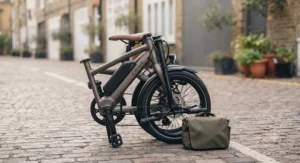
For a genuinely hilly daily commute — and in the UK, more routes qualify than most riders assume — the ENGWE Engine Pro 3.0 Boost is the folding option built specifically for that scenario. It combines full suspension (50mm front, 62mm rear) with 20-inch by 4.0-inch fat tyres, and its 48V motor delivers 90Nm of torque through a torque sensor, the highest figure among the folding bikes in this guide.
What most buyers overlook about torque figures is that they matter far more on a loaded uphill start than top speed ever does. Reviewers consistently note that the Engine Pro 3.0 Boost is the model to reach for if your commute genuinely finishes on an incline and you’re carrying a bag or panniers — the extra torque, combined with full suspension smoothing out the ride, makes a measurable difference that a spec sheet number alone doesn’t fully convey. It folds for storage despite weighing 34.7kg, which is a fair trade for the suspension and torque it delivers.
The honest trade-offs, stated plainly: it’s the priciest and heaviest folder in this guide, and its 20-inch wheels feel marginally less planted at speed than the 26-inch wheels on the non-folding E26. If your commute is flat, you’re paying for capability you won’t use.
Pros:
- ✅ 90Nm torque is the strongest of any folding bike in this guide
- ✅ Full front-and-rear suspension smooths broken UK road surfaces
- ✅ Still folds for storage despite its serious spec sheet
Cons:
- ❌ The priciest and heaviest folding option covered here
- ❌ 20-inch wheels feel slightly less stable at higher speeds than 26-inch alternatives
Typical pricing runs from £1,650 to £1,750 — check current price, as this is ENGWE’s flagship folder and promotional bundles change frequently.
7. L20 3.0 Pro — best mid-drive for hill-heavy routes
The L20 3.0 Pro closes this list because it represents a genuinely different approach to delivering 48V power: a mid-drive motor rather than a hub motor. Its Mivice X700 unit produces 100Nm of torque, delivered through the bike’s own gears rather than directly to the wheel — a completely different league to every hub-motor bike on this list.
Here’s what that distinction means in practice, based on the spec comparison rather than marketing copy: mid-drive systems use the bike’s gearing to multiply torque efficiently at low speed, which is precisely when hills demand the most from a motor. Reviewers consistently describe hills feeling comparatively flat once used to a mid-drive system, and the 48V 15Ah Samsung battery (720Wh), paired with an 8A fast charger, delivers the longest real-world range in this entire roundup. The front hydraulic fork with adjustable lockout, plus 30mm of rear suspension travel, rounds out a bike built for varied terrain rather than one specific surface type.
Reviewers consistently note this model is frequently bought through Cycle to Work schemes, and feedback from riders in genuinely hilly regions is unusually consistent: the mid-drive motor is the single feature they’d point to first when explaining why they chose it over a cheaper hub-motor alternative.
Pros:
- ✅ Mid-drive motor delivers noticeably smoother hill-climbing than hub motors
- ✅ 720Wh Samsung battery gives the longest range of any bike in this guide
- ✅ Adjustable-lockout front suspension suits genuinely varied UK terrain
Cons:
- ❌ Mid-drive systems typically cost more to service than hub motors
- ❌ Premium pricing puts it at the top end of this comparison
Expect a premium-end price, typically in the £1,800-£2,200 range depending on retailer — check current price, as mid-drive bikes see less frequent discounting than hub-motor equivalents.
Top 7 48v Ebike Brands: Full Specification Comparison
| Model | Battery | Motor Type | Torque | Approx. Range | Best For |
|---|---|---|---|---|---|
| VARUN M27-1 | 48V 13Ah (624Wh) | Hub | Standard | Up to ~62 miles claimed | Budget first-timers |
| ENGWE EP-2 3.0 Boost | 48V 13.5Ah (648Wh) | Hub, torque-sensed | 75Nm | Up to ~75 miles claimed | Storage-limited folders |
| ENGWE E26 | 48V 16Ah (768Wh) | Hub | 75Nm | Up to ~87 miles claimed | Tall/heavy riders |
| Kommoda 3.0 | 48V 20Ah (960Wh) | Hub | Standard | Up to ~68 miles claimed | Comfort, step-through |
| Shengmilo S600 | 48V 17.5Ah (840Wh) | Dual hub | High (unlocked) | Varies by mode | Off-road power |
| ENGWE Engine Pro 3.0 Boost | 48V Boost pack | Hub, torque-sensed | 90Nm | Up to ~81 miles claimed | Hilly commutes, folding |
| L20 3.0 Pro | 48V 15Ah (720Wh) | Mid-drive | 100Nm | Up to ~99 miles claimed | Serious hill climbing |
A quick honest note on that “approx. range” column: these are manufacturer-claimed figures on the lowest assist setting, and we’ll unpack exactly why your real number will likely land well below them in the watt-hour section further down. What the table does show clearly is the trade-off between hub-motor simplicity and mid-drive efficiency — the L20 3.0 Pro claims the longest range from a mid-sized 720Wh pack precisely because mid-drive systems waste less energy than hub motors under load, not because its battery is unusually large.
Setting Up and Maintaining Your 48v Ebike: A Practical Guide
Buying the right bike from the right 48v ebike brands is only half the job — how you set it up and maintain it in the first month determines whether it still performs well in year three. Start with tyre pressure: fat-tyre 48V bikes are commonly delivered under-inflated for shipping safety, and riding on soft tyres both increases rolling resistance (cutting your range noticeably) and accelerates wear on the sidewalls. Check the sidewall’s recommended PSI and inflate properly before your first ride.
Next, resist the urge to run every journey on the highest assist level. It’s tempting in week one, but high assist draws far more current from the battery, generating more heat and accelerating the gradual capacity loss every lithium-ion pack experiences over its lifetime. A common mistake in the first 30 days is treating pedal assist like a moped throttle rather than genuine assistance — using level 2 or 3 rather than maximum on flat sections extends both your range per charge and your battery’s total lifespan.
For maintenance, a monthly check of brake pad wear, chain lubrication, and torque on the axle bolts (fat-tyre bikes especially loosen these over rough terrain) will catch small issues before they become expensive ones. Store the bike, and ideally the battery, somewhere dry and temperature-stable — extreme cold measurably reduces both range and the battery’s willingness to accept a fast charge, which matters through a typical British winter.
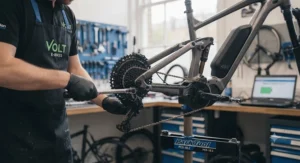
48v Ebike Battery Replacement: Costs, Signs and the Process
Every 48v ebike battery eventually needs replacing, typically after 800 to 1,000 full charge cycles, or roughly three to five years of regular commuting use. The clearest sign it’s time is a real-world range drop of more than around 20% from what the pack delivered when new, alongside the battery no longer holding charge overnight when parked at rest.
Replacement cost varies significantly by capacity: a genuine 48V 13-14Ah replacement pack from a reputable UK supplier typically runs from roughly £250 to £400, while a larger 20Ah pack with premium cells can reach £500-£600. This is where cutting corners genuinely matters — a cheap, unbranded replacement battery not only risks poor performance, but according to the London Fire Brigade, incompatible or counterfeit batteries and chargers are a leading cause of the lithium-ion fires it now attends roughly every two days across the capital.
When replacing a pack, always match the exact voltage, connector type, and mounting style to your original — a 48V (13S) pack requires a 54.6V charger, and using a 52V (14S) charger by mistake, even briefly, can damage the battery or your controller. If in doubt, contact the original brand or a specialist UK e-bike battery supplier with your bike’s model number rather than guessing from a generic online listing.
48v vs 52v Electric Bike Comparison: What Actually Changes
The 48V versus 52V question comes up constantly, and the honest answer is more nuanced than either camp on forums suggests. Both are nominal voltages built from lithium-ion cells in series — 48V packs use 13 cells (13S), 52V packs use 14 (14S) — and the practical difference in everyday riding is smaller than the numbers imply.
| Factor | 48V System | 52V System |
|---|---|---|
| Cell configuration | 13S | 14S |
| Full charge voltage | 54.6V | 58.8V |
| Typical feel | Strong, well-proven baseline | Slightly punchier acceleration |
| Controller compatibility | Broadest compatibility | Requires 52V-rated controller |
| Charger | 54.6V charger required | 58.8V charger required |
A 48V 20Ah pack and a 52V 18.5Ah pack store almost identical total energy — roughly 960Wh versus 962Wh — because watt-hours, not voltage alone, determine real range. The genuine advantage of 52V is a touch more headroom for peak current draw and marginally snappier acceleration on the same motor, but only if the controller is explicitly rated for it; fitting a 52V battery to a 48V-only controller risks damaging the electronics, so this isn’t a straightforward upgrade path for most riders. For the vast majority of UK commuters, a well-specced 48V system remains the more broadly compatible, better-proven choice, which is exactly why it dominates the 48v ebike brands covered in this guide.
Real-World Scenarios: Which 48v Ebike Actually Fits Your Life?
The city commuter with nowhere to store a bike. If you’re renting a flat with no shed, garage, or even hallway space, a folding model like the ENGWE EP-2 3.0 Boost solves the storage problem directly, and its 648Wh battery comfortably covers a typical 8-12 mile round commute across several days between charges.
The retired couple exploring greenways at weekends. Comfort and easy mounting matter more than raw performance here, which is exactly the case the Kommoda 3.0 makes for itself — its step-through frame and long 960Wh range suit unhurried weekend rides along canal paths and disused railway lines without a mid-ride charging concern.
The rider tackling a genuinely hilly commute with a work bag. This is where torque, not top speed, decides everything. Between the ENGWE Engine Pro 3.0 Boost‘s 90Nm hub motor and the L20 3.0 Pro‘s 100Nm mid-drive, the mid-drive option earns the edge for anyone doing this daily, since mid-drive systems maintain efficiency better under sustained load than hub motors do — though it comes at a real premium in price and servicing cost.
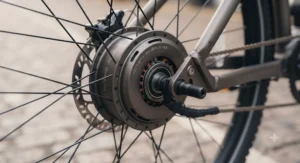
How to Choose a 48v Ebike Brand: 6 Steps That Actually Matter
What should you check before buying a 48v ebike? Confirm the battery’s genuine watt-hour rating, verify the motor is capped at 250W for UK road legality, check the cell brand (Samsung, Panasonic, or LG rather than unnamed), and confirm a UK-based warranty and spares supply before purchase.
- Start with watt-hours, not amp-hours. A 48V 13Ah pack (624Wh) and a 36V 17Ah pack (612Wh) store almost the same energy despite very different-looking Ah figures — always multiply voltage by amp-hours to compare fairly.
- Confirm UK road legality upfront. Any bike you intend to ride on public roads must cap assistance at 250W and 15.5mph; anything advertised with an “off-road unlock mode” that exceeds this isn’t legally an EAPC on the road.
- Check the cell brand inside the pack. Samsung, LG, and Panasonic cells carry a genuine safety and consistency track record; generic or unbranded cells are the leading cause of the failures fire services warn about.
- Match torque to your terrain, not your ego. A flat commute needs far less torque than a hilly one — don’t pay a premium for 90-100Nm you’ll never load.
- Weigh the bike, not just the spec sheet. A 37kg step-through and a 32kg folder both claim “portable” in marketing copy; only one of them actually is.
- Confirm warranty and UK spares availability before, not after, buying. A cheap import with no UK service network becomes an expensive shelf ornament the day something fails.
Watt-Hour Range Calculation: How Far Will a 48v Ebike Really Go?
How do you calculate real e-bike range? Divide the battery’s total watt-hours by your typical energy use per mile — usually 15-25Wh on a UK commute — rather than trusting the manufacturer’s claimed maximum, which is measured under near-ideal, low-assist conditions.
Manufacturer range claims are technically true and practically misleading. They’re almost always measured on the lowest assist setting, on flat ground, with a light rider, at a steady moderate speed — conditions few commutes actually match. A more honest formula: watt-hours (voltage × amp-hours) divided by realistic Wh-per-mile consumption. On a typical hilly UK commute using mid-level assist, expect to burn somewhere between 18 and 25Wh per mile; on flat ground at low assist, that can drop to 12-15Wh per mile.
Take the Shengmilo S600‘s 840Wh pack as an example: at a demanding 25Wh/mile (loaded, hilly, higher assist), that’s roughly 33 miles; at a gentler 15Wh/mile on flatter ground, it stretches to 56 miles. That’s a huge spread from one number on a spec sheet, which is exactly why the claimed maximum range figures in our comparison table above should be treated as a ceiling, not a promise. Cold weather, headwinds, higher rider weight, and heavier throttle use all push your real number down toward the lower end of that range.
Samsung 21700 Cells: What’s Actually Inside a Quality 48v Ebike Battery
Every battery pack in this guide, and most premium 48v ebike brands generally, are built from individual cylindrical lithium-ion cells, and the 21700 format — 21mm wide, 70mm tall — has become the industry standard for e-bike packs because it strikes a strong balance between energy density and current-handling capability.
The Samsung 40T, a widely used high-drain 21700 cell in e-bike packs, offers a nominal 4,000mAh capacity per cell with a continuous discharge rating of 35A, rising to 45A with active temperature control. Features That Actually Matter, and Those That Don’t: the headline mAh figure gets all the marketing attention, but the continuous discharge current rating is arguably more important for e-bike use, because it determines whether the pack can supply a dual-motor system’s peak demand without the battery management system cutting power or the voltage sagging under load. A pack built from genuine Samsung cells with a properly rated BMS, like those found in the Shengmilo S600 and L20 3.0 Pro reviewed above, is a meaningfully different product from a generically-labelled “high capacity” battery with no verifiable cell brand — even when both claim similar Ah figures on the box.
Common Mistakes When Buying a 48v Ebike
The most common mistake, by a wide margin, is comparing bikes purely on amp-hours rather than watt-hours, which — as covered above — can make a lower-voltage bike look more capable than it actually is. Close behind that is assuming “48V” alone guarantees a faster legal top speed; it doesn’t, since UK law caps assistance at 15.5mph regardless of voltage, and any bike promising more on the road isn’t legally an EAPC. A third frequent error is buying an unlocked, off-road-mode bike with genuine intentions of only riding on public roads — a decision that’s both illegal and invalidates any insurance claim if something goes wrong. Finally, many buyers skip checking UK spares and warranty support entirely, only discovering the gap when a battery or controller fails outside a returns window with no local repair option.
Safety, Regulations and Compliance: Is Your 48v Ebike Road Legal?
Under the Electrically Assisted Pedal Cycles Regulations, a bike qualifies as a legal EAPC — usable on UK roads without registration, tax, or insurance — only if its motor caps continuous power at 250W, assistance cuts off at 15.5mph, and power is only delivered while the rider is actively pedalling. Every model reviewed above ships in a road-legal configuration when used as intended; it’s specifically the “off-road unlock” modes on bikes like the Shengmilo S600 that step outside EAPC status the moment they’re engaged on a public road.
Battery safety deserves equal attention. Always use the charger supplied with your specific battery, never a generic replacement, and never leave a pack charging unattended or overnight while you sleep. Store batteries away from your main escape route in the home, ideally in a shed or garage, and watch for warning signs of failure — unusual heat, swelling, or a hissing sound — which mean the battery should be stopped from use immediately rather than “kept an eye on.”
Frequently Asked Questions
❓ What voltage should a UK ebike be?
❓ Is a 48v ebike faster than a 36v one?
❓ How long does a 48v ebike battery last?
❓ Can I charge a 48v ebike battery with any charger?
❓ How much does a 48v ebike battery replacement cost in the UK?
Conclusion
Across every one of these seven models, the pattern that matters most isn’t the voltage number on the box — it’s how well the whole system, motor, torque delivery, cell quality, and UK spares support, is matched to how you’ll actually ride. A 48v ebike gives you a genuinely useful power buffer over 36V systems without pushing into the compliance grey area that unlocked high-wattage bikes create, and that combination of legal simplicity and real capability is exactly why 48v ebike brands have become the sensible default for UK buyers in 2026.
Whether that’s the straightforward, budget-friendly VARUN M27-1 for a first e-bike, or the mid-drive L20 3.0 Pro for someone who commutes up a genuinely steep hill every day, the right choice comes down to matching torque, battery capacity, and weight to your specific routes rather than chasing the biggest number on a spec sheet. Take the watt-hour maths above with you when you compare listings, and you’ll be shopping with a genuinely clearer picture than most other buyers in the market.
✨ Don’t Miss These Exclusive Deals!
🔍 Take your 48v ebike search to the next level with these carefully researched picks. Click on any highlighted model to check current pricing and availability on Amazon UK. These bikes will help you build the effortless, hill-flattening commute you’ve been putting off!
Recommended for You
- 48V System Electric Bike Torque: 7 Top 2026 UK Picks
- 36V Ebike Brands: 7 Best Lightweight Picks for 2026
- Is 36V Enough for Electric Bike? 7 Models Tested (2026)
Disclaimer: This article contains affiliate links. As an Amazon Associate, I earn from qualifying purchases. If you purchase products through these links, we may earn a small commission at no additional cost to you.
✨ Found this helpful? Share it with your friends! 💬🤗
