In This Article
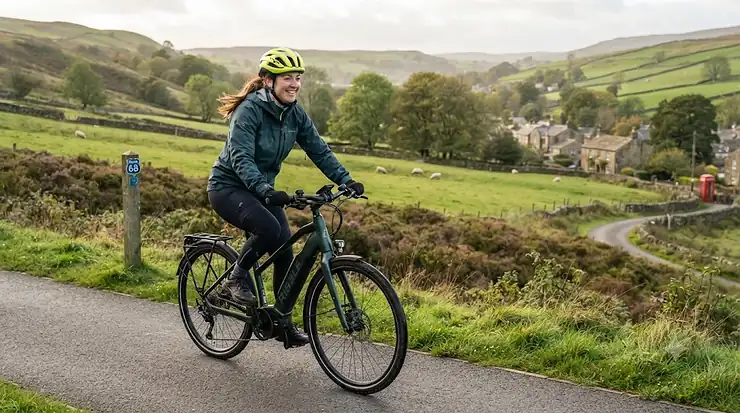
There’s a moment on every hill where a normal bike either turns you into a puddle of regret or makes you get off and push. A pedal assist electric bike for fitness changes that equation without removing the exercise altogether — you still pedal, your heart rate still climbs, and your legs still do genuine work, but the motor takes the edge off the bits that used to make you quit cycling by week three.
This guide focuses specifically on pedelecs built for fitness and commuting rather than throttle-driven electric mopeds. Every bike featured here is a genuine EAPC (Electrically Assisted Pedal Cycle) available through UK retailers, meaning the motor only assists while you pedal and cuts out at 15.5mph. We’ve dug into real specifications, aggregated review sentiment, and honest comparative analysis of sensor types, assist-level systems, and fitness-tracking features, so you can choose a bike that actually supports your training goals rather than just replacing the effort altogether.
A pedal assist electric bike for fitness is an EAPC-compliant bicycle with a motor that amplifies your own pedalling effort — detected via a cadence or torque sensor — rather than propelling you independently, letting you dial assistance up or down to control exercise intensity while still riding further and more often than you would on an unassisted bike.
Quick Comparison Table
| E-Bike | Sensor Type | Best For | Price Range |
|---|---|---|---|
| Carrera Crossfire E 2.0 | Cadence | Best pedelec commuter, budget | £1,000–£1,300 |
| Decathlon Riverside 520 E | Torque | Budget with fitness tracking app | £1,000–£1,200 |
| Trek Verve+ 3 | Torque + cadence hybrid | Eco to Turbo assist levels | £1,900–£2,000 |
| Specialized Turbo Vado SL 4.0 | Torque | Lightweight fitness riding | £2,499–£2,600 |
| Orbea Gain | Torque | Heart rate zone cycling | £3,500+ |
Prices are indicative ranges at the time of research and fluctuate regularly — always check current pricing before buying.
Looking at the spread above, there’s a clear divide between cadence-sensor budget bikes and torque-sensor mid-to-premium models, and that divide matters more for a fitness-focused buyer than raw motor power does. The Carrera Crossfire E 2.0 covers the best pedelec commuter brief at the lowest entry price, while the Orbea Gain sits at the opposite end with genuine heart rate zone integration through its companion app. According to British Cycling’s guidance on training zones, matching effort to a target zone matters more for fitness gains than raw speed — a principle that should guide which assist system you pick, not just which bike looks fastest on paper.
💬 Just one click — help others make better buying decisions too!😊
Top 7 Pedal Assist Electric Bikes for Fitness: Expert Analysis
We shortlisted these seven after comparing sensor type, assist-level structure, torque, and genuine aggregated review sentiment — not marketing claims about “instant power” or “effortless hills.” Each earns its place for a distinct fitness-riding reason, spanning budget commuters through to premium e-road bikes.
1. Carrera Crossfire E 2.0 — best pedelec commuter on a budget
Halfords’ Carrera Crossfire E 2.0 is the bike most UK first-time e-bike buyers land on, and the spec sheet explains why. A Suntour 36V rear-hub motor delivers 60Nm of torque from a 417Wh battery, giving an average range of 25-30 miles (up to 60 miles in ideal conditions), with four assistance levels — eco, tour, sport and turbo — selected via a bar-mounted remote and TFT display.
Here’s what most first-time buyers overlook: this bike uses a cadence sensor rather than a torque sensor, meaning the motor engages based on whether you’re pedalling and at what speed, not how hard you’re pushing. Based on the spec comparison with the rest of this guide, that makes the power delivery noticeably less proportional than the torque-sensor bikes further down this list — reviewers and forum discussions describe assistance that “comes in” once cadence rises, rather than scaling smoothly with effort. For fitness riders specifically, that’s not necessarily a downside: cadence sensors are more predictable to train against, since you know roughly what boost you’ll get once you hit your chosen assist level, regardless of how hard you’re pushing on any given pedal stroke.
Hydraulic Tektro brakes, puncture-resistant Kenda tyres, and a 75mm-travel suspension fork round out a genuinely practical commuter build.
Pros:
- ✅ Four assist levels give real control over workout intensity
- ✅ 60Nm torque handles hills confidently for the price
- ✅ Hydraulic brakes and puncture-resistant tyres as standard
Cons:
- ❌ Cadence sensor feels less proportional than torque-sensor rivals
- ❌ No companion app for fitness tracking or ride data
At around £1,000-£1,300, the Carrera Crossfire E 2.0 remains one of the most straightforward ways into pedal-assist fitness riding without committing premium-bike money to a habit you haven’t built yet.
2. Decathlon B’Twin Riverside 520 E — best budget pick with fitness tracking
Decathlon’s Riverside 520 E upgrades on cadence-only budget bikes with a genuine torque sensor fitted to the bottom bracket, meaning the harder you pedal, the more the motor responds — the more common setup on Riverside, Rockrider, and higher-end Decathlon models generally. A 250W, 42Nm rear-hub motor pairs with a 500Wh (15Ah) battery across three assistance modes, and Decathlon states each mode’s approximate power multiplier clearly: Mode 1 adds roughly 90% to your own output, Mode 2 around 150%, and Mode 3 up to 220% for the steepest climbs.
What most buyers overlook about this bike is the free Decathlon Ride app, which pairs over Bluetooth to log real-time speed, distance, battery level, and — crucially for fitness riders — which assistance mode was used on each section of a ride. That’s a genuinely useful training log most budget e-bikes simply don’t offer. Aggregated reviewer sentiment on Decathlon’s Riverside range consistently praises the torque sensor’s natural feel compared with cheaper cadence-only competitors, alongside solid Shimano 8-speed drivetrains and hydraulic disc brakes across the range.
This suits fitness-minded commuters who want app-based ride logging without paying for a premium-branded bike to get it.
Pros:
- ✅ Genuine torque sensor at this price point, unusual for the budget tier
- ✅ Free Decathlon Ride app logs speed, distance and assist mode used
- ✅ Hydraulic disc brakes and wide-range 8-speed gearing
Cons:
- ❌ Only three assist modes versus four or more on pricier rivals
- ❌ Around 22kg unassisted weight makes it hard work if the battery runs flat
Typical pricing sits around £1,000-£1,200, making the Riverside 520 E a genuine contender for anyone who wants torque-sensor smoothness and basic fitness tracking without stretching into four figures over budget.
3. Trek Verve+ 3 — best example of eco to turbo assist levels done well
The Trek Verve+ 3 runs a Bosch Performance Line Cruise motor (250W, up to 75Nm depending on spec) through the classic four-stage Bosch assist ladder: Eco, Tour, Sport and Turbo. Trek’s Removable Integrated Battery (RIB) system hides a 500-545Wh PowerTube inside the downtube, removable without tools, and the Bosch Purion or Smart System display lets you cycle cleanly between modes without hunting through menus mid-ride.
Based on the spec comparison with cheaper hub-motor bikes in this guide, the Verve+ 3’s mid-drive placement and Bosch’s torque-plus-cadence hybrid sensing genuinely change how eco to turbo assist levels feel in practice. Reviewers consistently describe the jump between Eco and Tour as barely perceptible on flat ground — useful if you want a genuine workout at lower assist — while Sport and Turbo deliver dramatically more support specifically when climbing, rather than uniformly boosting speed everywhere. The Bosch Flow app (or Trek Central on hub-motor Verve+ models) syncs completed rides to Strava and Apple Health automatically, though heart rate data requires a separate paired smartwatch, since Bosch’s app displays live heart rate but doesn’t reliably log it for export.
Best suited to riders who want a genuinely graduated assist ladder they can use to structure interval-style efforts between hills.
Pros:
- ✅ Four-stage Bosch assist ladder feels genuinely graduated, not binary
- ✅ Tool-free removable battery simplifies charging and security
- ✅ Automatic Strava and Apple Health sync via Bosch Flow app
Cons:
- ❌ Heart rate data isn’t reliably logged through the app itself
- ❌ Noticeably heavier than hub-motor budget alternatives
Confirmed UK retail pricing for the Verve+ 3 sits around £1,950, positioning it as the clearest mid-range example of what a properly tiered eco-to-turbo assist system should feel like.
4. Cube Kathmandu Hybrid Pro — best for serious hill training and touring fitness
The Cube Kathmandu Hybrid Pro pairs Bosch’s flagship Performance Line CX motor (85Nm) with a substantial 750Wh battery, and its four assist modes are unusually well documented by Cube: Eco sits at roughly 40-55% support, Tour around 100-120%, Sport 180-200%, and Turbo up to 340% amplification of your own pedalling effort. That’s a genuinely wide spread, letting fitness riders dial in exactly how much of the climbing they want to do themselves.
Here’s what the spec sheet won’t tell you outright: the Kathmandu Hybrid Pro is the first model in Cube’s range to include the Bosch Kiox 300 colour display, which supports fitness tracking and — with the right compatible strap — Bluetooth heart rate monitor pairing. Reviewers and forum users note this pairing can be inconsistent between HR monitor brands, with chest straps generally proving more reliable than optical armbands, and the display doesn’t log heart rate data for later export even when it shows live readings during a ride. Aggregated owner sentiment consistently praises the motor’s smooth, quiet delivery and genuine hill-climbing composure even loaded with panniers, with Shimano Deore 11-speed gearing providing a wide enough range to keep cadence sensible on steep gradients regardless of assist level chosen.
This is the strongest pick for anyone building fitness through longer, hillier rides rather than short flat commutes.
Pros:
- ✅ Four clearly documented assist levels from 40% to 340% support
- ✅ Kiox 300 display supports Bluetooth heart rate monitor pairing
- ✅ 750Wh battery comfortably covers long, hilly training rides
Cons:
- ❌ Heart rate data displays live but doesn’t reliably export for logging
- ❌ At around 27-28kg, it’s heavy to manoeuvre off the bike
Expect to pay in the region of £2,999-£3,399 depending on specification, positioning the Kathmandu Hybrid Pro as a genuine touring-fitness hybrid rather than a pure commuter.
5. Specialized Turbo Vado SL 4.0 — best lightweight pick for genuine fitness riding
Where most e-bikes add weight, the Specialized Turbo Vado SL 4.0 removes it. At around 15kg, its SL 1.1 motor weighs under 2kg — roughly half that of most mid-drive systems — while still delivering 35Nm of torque and up to 240W across three assistance levels (Eco, Sport and Turbo), each individually customisable through Specialized’s Mission Control app.
What most buyers overlook about lightweight e-bikes is that reduced weight matters twice: once for handling and portability, and again for how the bike rides once you exceed the 15.5mph assist cut-off, since a lighter unassisted bike is easier to keep moving under your own power alone. Based on the spec comparison, the Vado SL’s torque sensor is widely regarded by independent reviewers as among the smoothest in this category — power arrives proportionally to pedal pressure with no perceptible jerk, which reviewers repeatedly contrast favourably against cadence-only systems. The default Mission Control power splits (roughly 35% in Eco, 60% in Sport, 100% in Turbo) can be fully reprogrammed to suit a fitness-focused rider who wants more of their own effort in the mix, and the app’s “Smart Control” feature can pace battery use across a target distance or duration automatically.
Best suited to riders who already cycle regularly and want a bike that feels close to unassisted, with the motor as backup rather than the main event.
Pros:
- ✅ Sub-15kg weight, among the lightest e-bikes in its class
- ✅ Torque sensor rated among the smoothest by independent reviewers
- ✅ Mission Control app lets you fully customise each assist level’s power
Cons:
- ❌ 35Nm torque is modest next to heavier mid-drive rivals like the Kathmandu
- ❌ Optional range extender battery adds significant extra cost
UK retail pricing for the Turbo Vado SL 4.0 typically sits around £2,499-£2,600, positioning it as a genuine fitness-first alternative to bulkier, heavier-torque commuter e-bikes.
6. Orbea Gain — best for heart rate zone cycling and structured training
The Orbea Gain takes a deliberately different approach: a road-bike geometry paired with a discreet Mahle motor (either the X35+ at 40Nm/250Wh or the X20 at 55Nm/350Wh depending on spec) tuned specifically to feel like “enough power” rather than maximum power. Assistance peaks proportionally with your own effort across the modes, cutting out almost imperceptibly at the legal 25km/h limit so unassisted pedalling above that speed feels genuinely natural rather than draggy.
What sets the Orbea Gain apart for fitness riders specifically is the Mahle SmartBike app, which — according to Orbea’s own technical documentation — can link to a paired heart rate monitor and adjust motor output to help keep your effort within chosen heart rate zones during a ride, rather than simply offering fixed power percentages. That’s a genuinely rare feature among the bikes in this guide, and it directly supports zone-based training rather than treating the motor purely as a hill-flattening tool. Aggregated reviewer sentiment, including praise from UK cycling media naming Gain an ebike-of-the-year contender, consistently highlights the “natural assistance” and low system weight (around 3.2kg for motor and battery combined on the X20 spec) as the defining characteristics, alongside genuinely useful route and energy-consumption data logged through the app.
This is the clear pick for anyone training with heart rate zones who wants the e-bike itself to actively support that structure, not just record it afterwards.
Pros:
- ✅ Mahle SmartBike app can link to a heart rate monitor and adjust output
- ✅ Road-bike geometry and near-silent motor cut-off feel genuinely natural
- ✅ Very low system weight for an e-bike, aiding real fitness riding
Cons:
- ❌ Among the most expensive bikes in this guide
- ❌ Smaller 250-350Wh batteries mean shorter range than hub-motor hybrids
Pricing for the Orbea Gain range starts from around £3,500 and climbs considerably with carbon frame and groupset upgrades, reflecting its position as a specialist fitness and road-focused e-bike rather than a general commuter.
7. Ribble Hybrid AL e — best lightweight commuter for building daily riding habits
The Ribble Hybrid AL e uses a Mahle ebikemotion X35 rear-hub motor (40Nm) so discreetly integrated into a 6061-T6 aluminium frame that, at around 12.5-14.5kg fully built, it’s genuinely difficult to spot as an e-bike at a glance. A 250Wh battery hidden in the downtube delivers up to 60 miles of range across three assistance levels, with power delivered through a single top-tube button rather than a full handlebar display.
Based on the spec comparison, this is the most minimalist system in the guide: there are no numbered percentage assist figures published, and reviewers note the single-button interface cycles through levels via colour-coded lighting rather than a screen, which some find refreshingly simple and others find limiting for precise control. What most buyers overlook is that the accompanying ebikemotion app compensates for the sparse on-bike interface, offering journey tracking, location data, speed logging, and assistance-level history, effectively turning your phone into the display the bike itself lacks. Aggregated reviewer sentiment consistently praises the ride quality when unassisted — testers repeatedly note the bike “rides well even with the motor off” — a genuine rarity among e-bikes and a strong indicator of a fitness-appropriate build that doesn’t lean on the motor to feel adequate.
Best suited to riders who want the lightest possible e-bike for building a genuine daily cycling habit without the bulk of a hub-motor hybrid.
Pros:
- ✅ Among the lightest complete e-bikes available, rides well unassisted
- ✅ Nearly invisible motor and battery integration deters casual theft interest
- ✅ ebikemotion app logs journeys, speeds and assist-level history
Cons:
- ❌ No handlebar display; assist level shown only via a small light
- ❌ Smallest battery capacity of the mid-to-premium bikes in this guide
Expect to pay around £2,000-£2,700 depending on specification, with the Hybrid AL e carving out a genuine niche for riders who want an e-bike that behaves like a regular bike first and an e-bike second.
Practical Usage Guide: Getting the Most From Your Pedal Assist Electric Bike
The most common first-month mistake reviewers describe across every bike in this guide is riding permanently in the highest assist mode simply because it’s available. Whether it’s the Carrera Crossfire E 2.0‘s Turbo setting or the Cube Kathmandu Hybrid Pro‘s 340% Turbo amplification, constantly maxing out assist defeats the fitness purpose entirely and drains the battery far faster than manufacturers’ quoted ranges suggest. Start most rides in Eco or Tour, and reserve higher levels specifically for hills or headwinds where you genuinely need the help.
Charging habits matter for long-term battery health across every lithium-ion pack featured here. Topping up after each ride rather than routinely running the battery to zero preserves capacity over more charge cycles — most manufacturers, including Decathlon and Bosch, rate their packs for around 500 full charge cycles before capacity noticeably declines. In the first 30 days, get comfortable shifting into a lower gear before you stop, since a torque-sensor bike under load in a high gear from a standstill can lurch unpleasantly; this applies especially to the Specialized Turbo Vado SL and Orbea Gain, where assistance responds directly to pedal pressure.
Clean and lubricate the drivetrain regularly, exactly as you would on a non-assisted bike — the motor adds power but doesn’t reduce chain wear.
Real-World Scenarios: Which Pedal Assist Electric Bike Suits You?
The reluctant commuter rebuilding fitness. Priya hasn’t cycled regularly in years and worries about arriving at work drenched in sweat, but wants the exercise benefit rather than a free ride. The Decathlon Riverside 520 E‘s torque sensor and three clearly labelled assist modes let her start on Mode 1 for genuine effort, tracking her progress through the Decathlon Ride app as she gradually reduces reliance on Mode 2 and 3 over the following months.
The structured trainer chasing heart rate zones. Tom follows a heart-rate-based training plan and wants his commute to double as genuine zone-2 endurance work rather than an all-out effort or an entirely passive ride. The Orbea Gain‘s Mahle SmartBike app, which can adjust motor output to help keep effort within a chosen heart rate zone, directly supports this in a way none of the other bikes in this guide can match.
The weekend hill-climber building touring fitness. Sam wants to build up to longer, hillier weekend rides without being wrecked by the first steep climb of the day. The Cube Kathmandu Hybrid Pro‘s wide four-stage assist range, from a genuinely demanding 40% Eco boost to a hill-flattening 340% Turbo, lets Sam calibrate exactly how much of each climb to do unassisted as fitness improves.
Problem → Solution: Common Pedal Assist Fitness Bike Frustrations, Solved
Problem: The assistance feels jerky or unpredictable. This is almost always a cadence-sensor characteristic rather than a fault. Solution: if smooth, proportional power delivery matters to your training, prioritise a torque-sensor bike like the Decathlon Riverside 520 E or Specialized Turbo Vado SL over cadence-only budget models like the Carrera Crossfire E 2.0.
Problem: You can’t tell if you’re actually getting a workout. Solution: drop to the lowest assist level for a set portion of your ride and monitor perceived effort or heart rate — most bikes in this guide, including the Trek Verve+ 3, make Eco genuinely demanding rather than merely token assistance.
Problem: The battery drains faster than expected. Solution: check which assist mode you’re defaulting to. Reviewers consistently trace unexpectedly short range back to riding permanently in Sport or Turbo rather than reserving high assist for climbs, as covered in the usage guide above.
Problem: You want fitness data but your bike’s display won’t log it. Solution: pair a dedicated chest-strap heart rate monitor with a separate app like Strava or Garmin Connect rather than relying solely on the bike’s own display — as covered in the Bosch and Kiox systems fitted to the Trek Verve+ 3 and Cube Kathmandu Hybrid Pro, live heart rate often displays but doesn’t export.
Problem: Choosing between too many similarly specced bikes. Solution: work backwards from whether you prioritise proportional power delivery (torque sensor), a graduated multi-stage assist ladder, or genuine app-based fitness tracking, using the framework below rather than comparing motor wattage alone.
How to Choose a Pedal Assist Electric Bike for Fitness
What is a pedal assist electric bike for fitness? It’s an EAPC-compliant bicycle where a motor amplifies — rather than replaces — your own pedalling effort, letting you control assist levels to structure genuine cardiovascular exercise while still riding further and more consistently than on an unassisted bike.
- Decide between cadence and torque sensing first. Cadence sensors, as used on the Carrera Crossfire E 2.0, are cheaper and predictable; torque sensors, used on most of the remaining bikes here, feel smoother and respond proportionally to effort.
- Check how many assist levels are offered and how they’re documented. Bikes like the Cube Kathmandu Hybrid Pro that publish clear percentage figures per mode make it far easier to structure interval-style training than vaguely labelled “low/medium/high” systems.
- Weigh motor weight against battery capacity. Lightweight systems like the Specialized Turbo Vado SL and Ribble Hybrid AL e ride closer to a normal bike but carry smaller batteries; heavier mid-drive systems like Bosch trade portability for range and torque.
- Confirm what fitness data the bike or app actually records. Companion apps vary hugely in this guide, from Decathlon Ride’s mode-by-mode logging to the more limited single-light interface on the Ribble.
- Look specifically for heart rate integration if you train by zones. Only the Orbea Gain‘s Mahle SmartBike app in this guide can actively adjust assistance to help hold a target heart rate zone.
- Factor in unassisted ride quality. A bike that rides well with the motor off, like the Ribble Hybrid AL e, gives you genuine flexibility to switch off assistance entirely for pure-effort training days.
- Match battery range to your realistic weekly mileage, not the manufacturer’s best-case eco-mode figure, which rarely reflects real-world fitness riding at higher, more demanding assist levels.
Eco to Turbo: Understanding E-Bike Assist Levels
The eco-to-turbo naming convention, popularised by Bosch and echoed by many other manufacturers, typically spans four stages: Eco for maximum range and the most demanding workout, Tour for balanced everyday assistance, Sport for hillier or faster riding, and Turbo for maximum support on the steepest climbs. On the Cube Kathmandu Hybrid Pro, these translate to roughly 40-55%, 100-120%, 180-200%, and up to 340% amplification of rider input respectively — figures that make a genuine difference when deciding how much of a climb to do under your own power.
Not every bike in this guide uses named modes. The Decathlon Riverside 520 E instead uses numbered Mode 1-3 with published percentage boosts, while the Ribble Hybrid AL e simplifies further still with colour-coded levels and no numeric display at all. For fitness-focused buyers, the key distinction isn’t the naming scheme but whether the lowest mode still demands genuine effort — reviewers consistently note that a well-tuned Eco mode should still leave you noticeably out of breath on a hill, not glide you up it.
E-Bike Assist Sensitivity Compared: Cadence vs Torque Sensors
A cadence sensor, fitted to the Carrera Crossfire E 2.0 in this guide, detects whether the pedals are turning and at what speed, then delivers a preset amount of power for the selected assist level regardless of how hard you’re actually pushing. This makes for predictable, consistent assistance that’s cheaper to manufacture, but reviewers and forum discussions consistently describe it as feeling more like an on/off switch than a natural extension of effort — useful for steady cruising, less ideal for anyone who wants the bike to respond dynamically to a genuine training effort.
A torque sensor, used on the remaining six bikes in this guide, measures how hard you’re actually pressing the pedals and scales motor output proportionally. Independent reviewers of the Specialized Turbo Vado SL describe this as feeling like your own legs have simply gotten stronger, since the motor’s response tracks your effort in real time rather than triggering at a fixed threshold. For fitness riders specifically, torque sensitivity matters because it lets you genuinely modulate your own workout intensity within a single assist level — pedalling harder produces more support and, counter-intuitively, can still leave you working close to as hard as you choose, since the motor amplifies rather than caps your effort.
5-Level Assist Electric Bikes Explained
Many budget hub-motor e-bikes, though not all seven featured in this specific roundup, use a simple numbered 1-5 pedal assist system rather than named Eco-to-Turbo modes. In this format, Level 1 offers the lightest boost and maximum range, ideal for flat, steady-state fitness riding, while Levels 4 and 5 deliver progressively more power for steep climbs, headwinds, or heavier cargo loads, at the cost of noticeably faster battery drain. The system works identically in principle to the four-stage Bosch ladder used on the Trek Verve+ 3 and Cube Kathmandu Hybrid Pro, simply with one additional graduation and numeric rather than named labelling.
For fitness training specifically, a 5-level system offers finer granularity between “genuinely demanding” and “moderate effort” than a 3 or 4-mode system can, which suits riders who like to structure interval-style efforts — for example, alternating Level 1 flats with Level 4 hill repeats on a single route. The trade-off is that finer granularity means less difference between adjacent levels, so riders sometimes find themselves cycling through two or three settings before feeling a meaningful change in assistance, compared with the more dramatic jumps between Bosch’s four named modes.
Calorie Burn: Pedelec vs Regular Bike
Riding a pedal assist electric bike for fitness genuinely burns fewer calories per hour than an equivalent unassisted ride at the same speed, but the gap is smaller than many assume, and total weekly calorie expenditure often favours e-bike riders in practice. Research summarised across multiple cycling and fitness sources puts e-bike riders at roughly 300-500 calories burned per hour depending on assist level and terrain, against 400-600 calories per hour for unassisted cycling at a comparable pace — meaning a genuinely committed pedelec rider on a low assist setting can burn nearly as much as a casual unassisted cyclist.
What tips the overall picture in the e-bike’s favour is frequency and distance. Multiple studies, including a systematic review of e-cycling health outcomes, consistently find that e-bike owners ride more often and for longer distances than owners of unassisted bikes, since hills, headwinds, and fatigue are less likely to put them off a ride altogether. For fitness purposes, the practical takeaway from this guide’s product analysis is straightforward: choose the lowest assist level your route and energy levels genuinely allow, since every one of the seven bikes here — from the cadence-sensor Carrera Crossfire E 2.0 to the torque-tuned Orbea Gain — lets you reduce assistance to increase your own calorie burn on demand.
Heart Rate Zone Cycling on an E-Bike
Training by heart rate zone means keeping your effort within a target percentage of your maximum heart rate to achieve a specific fitness outcome, whether that’s easy recovery riding, aerobic base-building, or harder threshold efforts. According to the NHS’s physical activity guidelines for adults, moderate intensity activity should raise your heart rate and breathing noticeably while still allowing conversation — a useful, equipment-free way to judge zone-two-style effort on any of the bikes in this guide, even without a dedicated heart rate monitor.
Among the seven bikes featured, the Orbea Gain stands apart for genuinely integrating heart rate data into how the motor behaves, with its Mahle SmartBike app able to link to a paired monitor and adjust output to help keep effort within a chosen zone. The remaining bikes can still support zone training, just less directly: the Trek Verve+ 3 and Cube Kathmandu Hybrid Pro display live heart rate on their Bosch or Kiox screens when a compatible monitor is paired, though neither reliably exports that data afterwards, so a dedicated chest strap paired to a separate training app remains the more reliable option for anyone serious about logging zone-based sessions over time.
Fitness Tracking Integration: Apps, Heart Rate Monitors & Data
Companion apps vary dramatically in depth across this guide’s seven bikes. The Decathlon Riverside 520 E‘s free Ride app logs speed, distance, battery use and assist mode per ride segment, while the Ribble Hybrid AL e‘s ebikemotion app compensates for a minimal on-bike display with full journey, location and speed tracking on your phone. At the more sophisticated end, Bosch’s eBike Flow app, fitted across Trek Verve+ 3 and compatible Cube models, syncs completed rides automatically to Strava and Apple Health, though heart rate specifically remains a known limitation — it displays live on compatible Kiox and Nyon screens but frequently fails to log or export alongside cadence and power data, a gap acknowledged repeatedly in owner forums and one worth checking directly with a dealer if HR logging matters to your training.
For riders who want guaranteed, reliable heart rate logging rather than a best-effort in-app display, pairing a dedicated chest-strap monitor to a separate platform like Strava, Garmin Connect, or Apple Health directly — bypassing the bike’s own system entirely — remains the most dependable approach across every bike in this guide, including the app-integrated Orbea Gain.
Common Mistakes When Buying a Pedal Assist Electric Bike for Fitness
The most frequent mistake reviewers describe is buying based on maximum torque figures alone, without checking sensor type or how granular the assist levels actually are. A bike advertising 85Nm of torque, like the Cube Kathmandu Hybrid Pro, isn’t automatically better for fitness than a lighter 35-40Nm torque-sensor bike if your priority is a natural, effort-proportional feel rather than maximum hill-flattening power.
A second common error is assuming every e-bike will log fitness data usefully, then being disappointed when a bike’s app turns out to track only location and speed rather than exportable heart rate or calorie data. Finally, many buyers underestimate how much unassisted ride quality matters — a bike that feels sluggish or draggy with the motor off, unlike the genuinely rideable Ribble Hybrid AL e or Specialized Turbo Vado SL, discourages the very low-assist, high-effort riding that makes a pedelec useful for fitness in the first place.
Long-Term Cost & Maintenance
Total cost of ownership for a pedal assist electric bike extends well beyond the purchase price. Lithium-ion battery packs across every bike in this guide are typically rated for around 500 full charge cycles before capacity noticeably declines, meaning a daily commuter riding five days a week could see meaningful range reduction within two to three years of regular use — a genuine consideration when comparing the smaller 250-350Wh batteries on the Orbea Gain and Ribble Hybrid AL e against the substantial 750Wh pack on the Cube Kathmandu Hybrid Pro.
Cost-per-mile analysis favours higher-capacity batteries for anyone riding daily, since fewer partial charges over a given distance generally mean gentler treatment of the cells. For occasional fitness riders doing shorter weekend distances, a smaller, lighter battery like those fitted to the Specialized or Ribble represents better long-term value, since the reduced weight benefits every ride while the smaller capacity rarely becomes a genuine limitation. Servicing costs also differ meaningfully: Bosch and Shimano mid-drive systems, as used on the Trek Verve+ 3 and Cube Kathmandu Hybrid Pro, benefit from a wide UK dealer network for repairs, while the more compact Mahle systems on the Orbea Gain and Ribble Hybrid AL e have a smaller but growing specialist support base.
Safety, Legal Status & Regulations for UK E-Bikes
Every bike featured in this guide qualifies as an EAPC (Electrically Assisted Pedal Cycle) under UK law, meaning the motor must not exceed 250W of continuous rated power, assistance must cut out at 15.5mph, and the motor can only provide help while the pedals are turning — not via a throttle. According to official GOV.UK guidance on electric bike rules, a compliant EAPC does not need to be registered, taxed, or insured, and can legally be ridden by anyone aged 14 or over anywhere a normal pedal cycle is permitted, including cycle paths.
Beyond legal compliance, sensible riding habits matter for fitness-focused e-bike use specifically. Build up assist-level intensity gradually if you’re returning to exercise after a period of inactivity, and consider speaking with a GP before starting a new, more demanding cycling routine if you have any underlying health conditions. Always wear a properly fitted helmet, keep tyres at the recommended pressure for confident braking, and remember that a pedal assist bike’s higher typical cruising speed means earlier braking and greater following distance are needed compared with an unassisted bike, particularly in wet UK conditions.
FAQ
❓ What's the difference between a pedelec and a normal electric bike?
❓ Do more assist levels mean a better fitness workout?
❓ Should I choose a cadence sensor or torque sensor for fitness riding?
❓ How many calories does a pedal assist electric bike burn compared to a regular bike?
❓ Can I track my heart rate zones while riding a pedal assist e-bike?
Conclusion
The right pedal assist electric bike for fitness depends far more on sensor type, assist-level structure, and genuine app-based tracking than on maximum torque figures alone. If budget and simplicity matter most, the Carrera Crossfire E 2.0 and Decathlon Riverside 520 E both deliver a genuine best pedelec commuter experience without premium pricing, with the Decathlon’s torque sensor and Ride app edging it for anyone wanting basic fitness logging. For a properly graduated eco-to-turbo assist ladder, the Trek Verve+ 3 remains the clearest example in this guide, while the Cube Kathmandu Hybrid Pro suits serious hill-training and touring fitness with its wide 40-340% assist range. Riders prioritising a genuinely lightweight, close-to-unassisted feel should look at the Specialized Turbo Vado SL or Ribble Hybrid AL e, and anyone training seriously by heart rate zone should go straight to the Orbea Gain, the only bike here that actively links motor output to your target zone.
Whichever direction you choose, the honest advice holds across every price point: prioritise the lowest assist level that still lets you finish a ride comfortably, check what fitness data the bike’s app genuinely logs before assuming it will, and always confirm current pricing before you buy, since every figure above is a guide rather than a fixed number.
✨ Ready to Find Your Perfect Ride?
🔍 Compare today’s prices on any of the seven pedal assist electric bikes above and pick the one that matches your fitness goals, your budget, and your daily route. Your next PB commute could be one click away!
Recommended for You
- 48V System Electric Bike Torque: 7 Top 2026 UK Picks
- 36V Ebike Brands: 7 Best Lightweight Picks for 2026
- Is 36V Enough for Electric Bike? 7 Models Tested (2026)
Disclaimer: This article contains affiliate links. As an Amazon Associate, I earn from qualifying purchases. If you purchase products through these links, we may earn a small commission at no additional cost to you.
✨ Found this helpful? Share it with your friends! 💬🤗
