In This Article
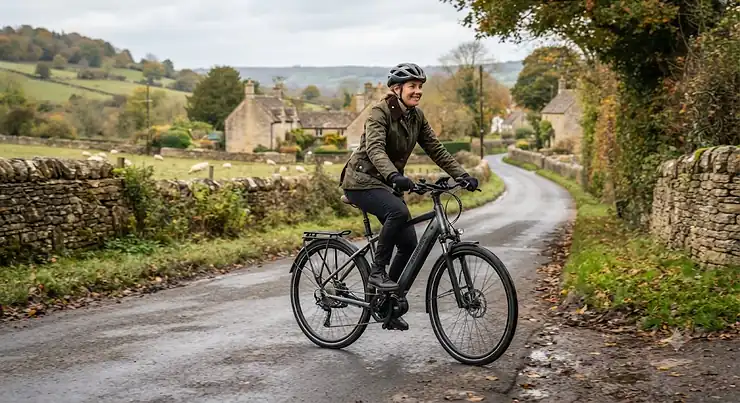
Your electric bike’s motor sorts out the hills. It does nothing for the pothole that just rattled your fillings loose. That’s the job of a suspension seatpost electric bike owners quietly swap in once they realise their standard alloy post is basically a steel rod transmitting every crack in the tarmac straight into their spine. It’s an unglamorous upgrade — nobody posts a suspension seatpost on Instagram — but it might be the single most comfort-per-pound modification you can make to a heavier, faster-accelerating e-bike.

Here’s the short version: a suspension seatpost electric bike setup uses a spring (coil, elastomer, or air) and often a parallel-link mechanism to let the saddle move independently of the frame, soaking up vertical shock before it reaches you. E-bikes benefit more than regular bikes because they’re heavier, ridden at higher average speeds, and frequently loaded down with panniers, kids’ seats, or delivery bags — all of which amplify impact forces through the saddle.
We’ve dug into seven real products across budget, mid-range and premium tiers, pulled apart the actual engineering differences between coil, elastomer, and parallelogram designs, and worked out which one suits which rider. Along the way we’ll also cover the regulatory side, because in Great Britain your e-bike’s classification is governed by the EAPC rules published on GOV.UK, and a seatpost swap — unlike a motor swap — doesn’t touch that classification at all, which is worth knowing before you start Googling whether this upgrade is “legal.”
Prices below are UK ranges only; always check current pricing before buying, since retailer prices shift constantly.
Quick Comparison Table
| Product | Type | Travel | Best For | Price Range |
|---|---|---|---|---|
| Cane Creek Thudbuster LT | Parallel-link, elastomer | 90mm | Maximum comfort, rough roads | £160-£190 |
| Kinekt 3.1 | Coil spring, tunable | 35mm | Heavy riders, cargo e-bikes | £210-£250 |
| Redshift ShockStop PRO | Active elastomer | 35mm | Lightweight performance | £190-£230 |
| Cane Creek Thudbuster ST | Parallel-link, elastomer | 50mm | Low standover, compact frames | £140-£170 |
| SR Suntour NCX | Parallel-link, elastomer | 50mm | Budget commuters | £50-£75 |
| Specialized CG-R | Carbon leaf-flex, elastomer | 18mm | Lightweight road/gravel e-bikes | £150-£200 |
| U.S.E. Vybe | Elastomer, compact | 35mm | Entry-level upgrade | £90-£125 |
Reading across this table, the split isn’t really “cheap versus expensive” — it’s mechanism versus mechanism. The Cane Creek Thudbuster LT and Kinekt 3.1 sit at opposite design philosophies (long-travel linkage versus tunable coil) yet land in similar price territory, so your choice comes down to rider weight and how much vertical bob you can tolerate. The SR Suntour NCX proves you don’t need premium money to get genuine parallelogram suspension, while the Specialized CG-R trades outright travel for weight savings that road- and gravel-leaning e-bike owners will actually notice.
💬 Just one click — help others make better buying decisions too!😊
Top 7 Suspension Seatposts for Electric Bikes: Expert Analysis
1. Cane Creek Thudbuster LT — most cushioning of any seatpost on the market
The Thudbuster LT is the seatpost people mean when they say “just get a Thudbuster.” Its claim to fame is genuinely earned: at 90mm of travel via a parallel-link mechanism, it offers more cushion than almost anything else you can bolt onto a bike without going full suspension.
Under the hood, a four-bar parallel linkage keeps the saddle moving in a controlled arc rather than a wobbly straight line, damped by an interchangeable elastomer bumper. That matters in practice because the saddle stays level and your pedalling position barely shifts even as the post compresses — cheaper telescoping posts tend to let the saddle tip backward under load, which throws off your hip angle. Cane Creek sell the elastomers separately in five firmness grades, so you’re not stuck with whatever ships in the box if you’re a heavier rider or prefer a firmer platform.
This is the post for anyone whose e-bike commute includes broken tarmac, cobbles, or towpaths, and who values comfort over outright pedalling stiffness. It’s less suited to road cyclists chasing every gram, given its noticeable extra length and weight. Reviewers on cycling forums consistently describe the LT as the most plush option they’ve tried, with a common caveat that the stock elastomer runs soft for riders over roughly 95kg until they buy a firmer one separately.
Pros:
- ✅ Longest travel of any post on this list at 90mm
- ✅ Tool-free elastomer swaps for weight/firmness tuning
- ✅ Keeps saddle angle stable through the stroke
Cons:
- ❌ Adds noticeable seatpost length and weight
- ❌ Stock elastomer often needs upgrading for heavier riders
At around £160-£190, the Thudbuster LT sits mid-pack on price but top of the class on comfort, making it strong value if rough-surface riding is a daily reality rather than an occasional annoyance.

2. Kinekt 3.1 — highly tunable coil spring built for heavier e-bikes
Where the Thudbuster relies on elastomer bumpers, the Kinekt 3.1 (the current version of what used to be sold as the Body Float) uses a genuine coil spring with preload adjustment, giving it a very different feel — more linear, less “cushioned,” more like a small shock absorber than a foam pad.
The 35mm of travel is shorter than the Thudbuster’s, but Kinekt compensates with a proper adjustment dial that lets you set sag to match your body weight, plus interchangeable springs rated for different rider weight bands stretching up toward 320lbs. That range-of-adjustment is exactly why this post shows up so often in threads about heavy riders and loaded cargo e-bikes — a fixed-rate elastomer post either bottoms out under a big rider or feels dead under a light one, whereas the Kinekt’s spring can be matched properly.
Riders who’ve run both a Thudbuster and a Kinekt back to back generally describe the Kinekt as feeling more controlled and less “pogo-like” under hard pedalling, though a minority find its shorter travel less plush on genuinely rough terrain. It’s a sensible pick if you’re carrying panniers, a child seat, or simply weigh more than the “average” rider most budget posts are tuned around.
Pros:
- ✅ Preload adjustment matches spring rate to rider weight
- ✅ Rated up to roughly 320lbs rider weight
- ✅ More linear, controlled feel than elastomer designs
Cons:
- ❌ Shorter travel (35mm) than the Thudbuster LT
- ❌ Premium price for the aluminium version
Expect to pay around £210-£250, which puts it at the top end of this list — but for a heavy rider or a loaded cargo e-bike, the tunability arguably justifies the premium over a fixed-rate alternative.
3. Redshift ShockStop PRO — active suspension without the pedalling bob
The ShockStop PRO is aimed at riders who want comfort without the “am I bouncing while I pedal” feeling that puts some cyclists off suspension posts entirely. Redshift’s pivot design sits low, close to the saddle rails, using a leaf-style elastomer spring that reacts to bumps but resists compressing under steady pedalling force.
That distinction between reactive (bump-triggered) and static (weight-triggered) compression is the whole selling point here. A parallel-link post like the Thudbuster compresses somewhat just from your body weight sitting on it; the ShockStop’s geometry is tuned to stay firmer under a smooth, steady pedal stroke and only really engage when it meets an actual impact. For riders who’ve tried a suspension post before and disliked the sensation of “sinking” every time they push hard on the pedals, this is the model most likely to change their mind.
Dual-spring elastomer kits let you fine-tune firmness for your weight, and the PRO version specifically trims weight over the standard ShockStop using a lighter clamp and rail hardware. Aggregated reviews consistently flag it as the most highly rated suspension post among owners who prioritise ride feel over maximum plushness, though a few note the 35mm travel isn’t enough for genuinely rough off-road sections.
Pros:
- ✅ Reactive design minimises bob under pedalling effort
- ✅ Dual-spring kit for weight-matched tuning
- ✅ Lighter than most parallel-link alternatives
Cons:
- ❌ Less outright travel than the Thudbuster LT
- ❌ Elastomer kits sold separately add to total cost
Priced around £190-£230, the ShockStop PRO earns its place for e-bike commuters who ride briskly and don’t want their power output soaked up by a soft post — an ROI story built on ride quality rather than raw comfort numbers.
4. Cane Creek Thudbuster ST — compact parallel-link for low seat heights and heavier riders
The Thudbuster ST is the LT’s shorter sibling, using the same parallel-link technology but in a more compact housing that drops overall stack height. Cane Creek rates it for riders up to roughly 150kg, making it one of the higher weight ratings on this list.
Its shorter linkage height solves a real problem: on smaller frames, or for riders who already run their saddle low, the full-length Thudbuster LT can simply be too tall to fit properly once you account for the extra travel mechanism. The ST compresses that same parallel-link concept into a package that suits low-standover setups without giving up the core benefit — a saddle that stays level and tracks in a controlled arc rather than wobbling on a spring.
It ships with three mid-range elastomer choices so you can dial in a starting firmness immediately, with softer and firmer options sold separately. Riders who’ve owned both Thudbusters describe the ST as marginally less plush than the LT on big hits, simply because there’s less material and travel to work with, but note it feels noticeably more stable for smaller riders or those with limited leg length to spare.
Pros:
- ✅ Rated for riders up to roughly 150kg
- ✅ Shorter stack suits low seat heights
- ✅ Three elastomer options included at purchase
Cons:
- ❌ Less travel than the LT (50mm vs 90mm)
- ❌ Compatible with round alloy rails only, not carbon
At roughly £140-£170, the ST undercuts the LT while keeping the same core mechanism, making it the pragmatic choice for anyone whose frame geometry rules out the longer post.
5. SR Suntour NCX — proven parallelogram design at an accessible price
If the Thudbuster LT is the aspirational choice, the SR Suntour NCX is the “just get this and stop worrying about it” choice. It uses the same fundamental parallelogram principle — a linkage that lets the saddle move in a controlled arc — but built to a price that regularly undercuts premium options by more than half.
Suntour, better known for suspension forks on entry and mid-range e-bikes, brought that same engineering pedigree down to seatpost level. The 50mm of travel sits between the Thudbuster ST and LT, and while the elastomer damping isn’t as finely tuneable as Cane Creek’s five-grade system, it does the fundamental job: absorbing sharp impacts before they reach the saddle rails. For a commuter e-bike ridden over cracked pavements and the occasional dropped kerb, that’s genuinely most of what you need.
Aggregated review sentiment for the NCX skews heavily toward “surprisingly good for the price,” with the most common criticism being that the elastomer wears and softens faster than premium alternatives after a couple of seasons of daily riding — a reasonable trade-off given the price gap.
Pros:
- ✅ Genuine parallelogram suspension at budget pricing
- ✅ 50mm travel — more than several pricier rivals
- ✅ Suntour’s established suspension engineering pedigree
Cons:
- ❌ Elastomer damping less tuneable than Cane Creek’s system
- ❌ Elastomer reportedly softens faster over 2+ seasons
At around £50-£75, the NCX delivers the best cost-per-millimetre-of-travel on this entire list, and is the obvious starting point if you’re not yet sure a suspension seatpost is worth committing serious money to.
6. Specialized CG-R — lightest way to add real vertical compliance
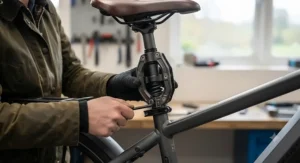
The CG-R (nicknamed the “Cobble Gobbler” after its cobbled-classics racing heritage) takes a completely different approach from everything else here. Instead of a hinge or coil spring, it’s a single piece of moulded carbon fibre with a kink below the saddle clamp, containing a Zertz elastomer insert that lets the whole post flex.
Specialized’s own figures claim up to 18mm of vertical compliance, and independent testing has broadly backed that up, with reviewers noting you can visibly see the post flexing on rough sections. That’s far less travel than a parallel-link post, but it comes with virtually no weight penalty and zero moving mechanical parts to service — which is exactly why it’s popular on lightweight gravel and road-leaning e-bikes where riders don’t want the bulk of a linkage post. One detailed independent review from road.cc found the difference “noticeable straight away” on broken tarmac, while stopping short of comparing it to full suspension.
This is the pick for e-bike owners who want to take the edge off buzz and small vibration without adding the bulk, weight, or maintenance of a linkage system — think fast hybrid or gravel e-bikes rather than heavy-duty cargo builds. Heavier riders reportedly get slightly more flex out of the post than very light riders, since it works on simple material deflection rather than a tunable spring rate.
Pros:
- ✅ Genuine carbon construction — lightest option here
- ✅ No moving parts, essentially zero maintenance
- ✅ Fits most modern road, gravel and cyclocross e-bikes
Cons:
- ❌ Far less travel (18mm) than linkage-style posts
- ❌ Premium carbon pricing for the compliance on offer
Typically priced around £150-£200, the CG-R is a value proposition built on weight and simplicity rather than raw shock absorption — you’re paying for what it doesn’t add as much as what it does.
7. U.S.E. Vybe — accessible entry point into suspension seatposts
Rounding out the list is the U.S.E. Vybe, a compact elastomer-sprung post that’s often the first suspension seatpost riders try before deciding whether to invest further up the range. It uses a simple telescoping elastomer design rather than a parallel-link, which keeps the price and the learning curve low.
At around 35mm of travel, it won’t match the plushness of the Thudbuster LT, and because it’s a straight telescoping design rather than a linkage, the saddle can tip back slightly under heavier compression — a known trade-off of this simpler mechanism versus parallelogram designs. What it does deliver is a noticeable step up from a rigid post for a fraction of the outlay, which makes it a sensible way to establish whether suspension seatposts suit your riding before spending three times as much on a Kinekt or Redshift.
It suits lighter riders and shorter commutes best; heavier riders or those covering serious daily mileage will likely find themselves wanting more adjustability sooner rather than later. As an entry point, though, it does exactly what it needs to.
Pros:
- ✅ Lowest price point among true suspension posts here
- ✅ Simple telescoping design, easy to fit
- ✅ Noticeable comfort gain over a rigid post
Cons:
- ❌ Saddle angle can shift slightly under compression
- ❌ Limited long-term adjustability versus tunable rivals
At roughly £90-£125, the Vybe is squarely aimed at first-time buyers testing the concept, and it’s a reasonable place to start if budget is the main constraint.
Electric Bike Suspension Setup Guide
Fitting a suspension seatpost badly is the single most common way people end up disappointed by one, so a few minutes of setup discipline pays off. Start by measuring your current post’s diameter precisely with digital calipers, not a ruler — the common sizes are 27.2mm, 30.9mm and 31.6mm, and even 0.2mm off will either jam or rattle in your seat tube.
Once fitted, set sag before anything else: sit on the bike in your normal riding position and check how much the post compresses under just your body weight. For coil designs like the Kinekt, this means dialling in the preload collar; for elastomer designs, it may mean swapping to a firmer or softer bumper. Too little sag and you lose most of the comfort benefit; too much and you’ll bottom out on every pothole and may even affect pedalling efficiency.
In the first 30 days, recheck the seat clamp bolt torque after your first few rides — suspension posts see more dynamic load than rigid ones, and a bolt that seemed tight when static can work loose under repeated flex. The most common early mistake is leaving the stock elastomer or spring in place despite being 20kg+ outside its intended range; if the post feels either wooden or overly bouncy in the first week, that’s almost always the fix, not a faulty unit. Keep the linkage or telescoping section lightly greased where the manufacturer specifies, and wipe down after wet rides — grit is the main cause of premature elastomer wear on any of these designs.
Real-World Scenarios: Which Suspension Seatpost Fits Your Ride
Consider three riders. First, a school-run parent doing a 4-mile daily loop on a cargo e-bike loaded with a child seat and shopping panniers — extra weight, frequent stop-start, budget-conscious. For this rider, the Kinekt 3.1‘s adjustable preload is worth the extra outlay, because a fixed-rate post either bottoms out under the loaded weight or feels too firm once the load comes off.
Second, a 30-mile weekend gravel rider on a lightweight e-gravel bike who wants comfort without adding bulk to an otherwise lean setup. The Specialized CG-R suits this profile precisely: minimal weight penalty, no maintenance, and just enough compliance to take the edge off washboard gravel and broken chip-seal without feeling like you’ve bolted on a hiking boot.
Third, a commuter riding 8 miles each way across pothole-riddled city streets on a mid-range hybrid e-bike, wanting maximum comfort on a realistic budget. The SR Suntour NCX or, with a bit more spend, the Cane Creek Thudbuster ST, both deliver genuine parallelogram cushioning without premium pricing — exactly matched to daily urban abuse rather than occasional weekend rides.
How to Choose a Suspension Seatpost for Your Electric Bike
- Measure your seatpost diameter first. Nothing else matters if the post doesn’t fit — check 27.2mm, 30.9mm and 31.6mm against your current post with calipers.
- Match spring type to your body weight. Heavier riders benefit from tunable coil designs like Kinekt; lighter riders often get better results from softer elastomer posts straight out of the box.
- Decide how much travel you actually need. Rough towpaths and cracked pavements reward more travel (50-90mm); smoother roads with occasional buzz suit lower-travel designs like the CG-R.
- Check frame and saddle rail compatibility. Parallel-link posts like the Thudbuster only work with round alloy rails — carbon rail saddles need a different mount.
- Factor in maintenance appetite. Linkage posts need periodic elastomer changes and light greasing; carbon flex posts need essentially none.
- Set a realistic budget band. Entry-level posts like the Vybe prove the concept works before you commit to premium tunable options.
- Read aggregated review sentiment, not star ratings alone. A 4.5-star average tells you less than a recurring comment about elastomer wear or fit issues at your specific weight.
eBike Suspension Travel mm Explained
Travel numbers on a spec sheet mean nothing without context, so here’s what they translate to on the road. A post with 18mm of travel, like the Specialized CG-R, is really only filtering out high-frequency buzz — road texture, minor cracks, chip-seal vibration. You won’t consciously feel it “working” so much as notice your hands and back feel less fatigued after a long ride.
Move up to 35-50mm, the range most parallel-link and coil posts occupy, and you start absorbing genuinely sharp hits — a dropped kerb edge, a pothole rim, a broken drain cover — without that impact translating into a jolt through your spine. At 90mm, the Thudbuster LT’s territory, you’re approaching what some riders describe as “almost like a hardtail’s rear travel” for seated comfort, useful on genuinely rough towpaths, bridleways, or poorly maintained back roads.
The trade-off as travel increases is stack height and, on parallel-link designs, a small amount of pedalling energy absorption under hard efforts — which is exactly the compression that reactive designs like the Redshift ShockStop are engineered to minimise. There’s no universally “best” travel figure; it’s a direct trade against your terrain, your weight, and how much you value outright plushness versus pedalling firmness.
Coil vs Air Suspension eBike: Which Seatpost Tech Wins
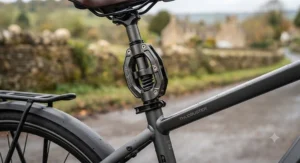
Full-suspension e-bikes give riders a real choice between coil and air shocks, but seatposts overwhelmingly stick to coil springs or elastomers rather than air — and there’s a specific reason why. Air springs need larger air chambers and seals to generate meaningful spring force at seatpost-scale dimensions, which adds cost, weight, and a maintenance requirement (periodic re-pressurising, seal servicing) that doesn’t suit a component meant to be fit-and-forget.
Coil springs, as used in the Kinekt range, scale down neatly to seatpost dimensions while staying linear and predictable — the same spring rate at the top of the stroke as the bottom, which suits the relatively small, consistent loads a seated rider applies compared to a full-suspension fork or shock taking hits at speed. Elastomer designs, used by Cane Creek, Redshift, U.S.E. and Specialized, go a step further in simplicity: a solid or semi-solid polymer bumper compresses and rebounds without needing any sealed air or oil chamber at all.
For a suspension seatpost electric bike buyer, this means the coil-versus-air debate that dominates fork and rear-shock discussions largely doesn’t apply here. Your real choice is coil (tunable, more consistent, pricier) versus elastomer (simpler, cheaper, needs periodic bumper swaps to stay matched to your weight) — both proven, both low-maintenance relative to air systems.
Elastomer vs Coil Post: The Real Difference
Elastomer posts — the Thudbuster, ShockStop, CG-R and Vybe on this list — use a solid polymer bumper that compresses under load and springs back through its own material memory. The upside is simplicity and low weight; the downside is that a single elastomer has one spring curve, so manufacturers sell multiple firmness grades and expect you to buy the one matched to your weight, rather than adjusting one part infinitely.
Coil posts, represented here by the Kinekt, use a metal spring with a preload collar, letting one physical spring serve a much wider weight range just by turning a dial. That tunability is genuinely useful for e-bike riders specifically, because e-bike total weight (rider plus bike plus battery plus any cargo) varies more dramatically than on an unpowered bicycle, and a preload adjustment lets you correct for a loaded pannier run without swapping parts.
Neither is objectively superior — reviewers who’ve run both consistently describe elastomer posts as feeling “plusher” and slightly more forgiving on sharp hits, while coil posts feel more controlled and less prone to that faint pogo sensation under hard, out-of-saddle pedalling efforts. If you expect your loaded weight to vary significantly ride to ride, lean coil; if you want maximum plushness for a fairly consistent rider weight, elastomer wins.
Vertical Compliance mm Travel Explained
“Vertical compliance” is the term you’ll see specifically around flex-based posts like the Specialized CG-R, and it’s worth distinguishing from “travel” on a linkage post, even though both get measured in millimetres. Travel on a Thudbuster or Kinekt describes a mechanical stroke — the linkage or spring physically moves through a defined range. Vertical compliance on a carbon flex post describes material deflection — the carbon itself bending slightly under load, with no hinge or spring involved.
In practical terms, 18mm of vertical compliance on the CG-R won’t feel anything like 18mm of linkage travel would if such a post existed — because a flex post reacts instantly and progressively, without a linkage’s slight initial “give” before resistance builds. It’s better suited to filtering constant road-surface vibration than absorbing a single sharp square-edge hit, which is precisely why it’s marketed at road and gravel riders chasing all-day comfort rather than mountain bikers hitting the occasional drop.
Knowing this distinction stops you comparing spec sheets like-for-like when they’re not measuring the same thing — a 35mm coil post and an 18mm carbon flex post aren’t simply “more” and “less” of the same experience; they’re different tools for different kinds of roughness.
Comfortable eBike for Long Rides: The Full Comfort System
A suspension seatpost is one part of a comfortable-long-ride equation, not the whole answer, and treating it as a standalone fix is a common mistake. Saddle choice matters just as much — a poorly shaped saddle will still cause pressure discomfort even on the plushest post, since a seatpost absorbs vertical shock but does nothing for sit-bone width mismatch or nose pressure. Bike fitters interviewed by BikeRadar on cycling back pain consistently point to saddle height and setback as bigger factors in long-ride discomfort than any single component swap, which is worth remembering before assuming a seatpost alone will solve everything.
Tyre pressure is the second piece riders overlook. Running a wide e-bike tyre a few PSI softer adds a meaningful layer of compliance before shock even reaches your seatpost, and it’s free — no parts required. Handlebar height and reach affect how much weight transfers through your hands versus your seat, which matters because a suspension post can’t compensate for a riding position that’s dumping too much weight rearward or forward.
For genuinely long rides — 20 miles plus — the combination that tends to work best is a suspension seatpost matched to your weight, a saddle shaped for your sit-bone width, slightly reduced tyre pressure, and a riding position that doesn’t force excessive weight onto any single contact point. Treat the seatpost as the last 20% of the comfort puzzle, not the first and only fix.
Kinekt Seatpost Review: Deep Dive
The Kinekt line (formerly branded Body Float before Cirrus Cycles rebranded it) deserves closer attention because it consistently comes up as the alternative recommendation whenever someone asks about Thudbusters. Riders who’ve owned both routinely describe the Kinekt as delivering “a slightly better ride” in direct back-to-back comparisons, specifically citing more controlled damping under hard efforts.
The 2.1 model sits below the 3.1 tested above, using a simpler single-spring design without the same breadth of tuning range, at a correspondingly lower price point — a sensible step-down if the full 3.1’s adjustability is more than you need. What both models share is the core coil-spring mechanism and preload adjustment that separates Kinekt from every elastomer post on this list, plus a genuinely wide rider weight range that stretches from around 80lbs up toward 320lbs depending on spring choice.
The most consistent piece of aggregated feedback across cycling forums is that the Kinekt rewards patience during setup — riders who don’t bother dialling in preload to their actual weight report a mediocre first impression, while those who take the ten minutes to set it properly describe it as transformative. That setup sensitivity is worth flagging honestly: this is not as plug-and-play as an elastomer post straight out of the box, but the payoff for those who tune it properly is real.
Common Mistakes When Buying a Suspension Seatpost
The single biggest mistake is ignoring seatpost diameter and assuming “it’ll probably fit” — suspension posts are precision-fit components, and a 0.2mm mismatch either won’t clamp into the frame or will rattle loose over time. Always measure with calipers before ordering.
The second mistake is buying based on maximum travel alone, without considering rider weight compatibility. A post rated for 60-100kg riders will feel harsh and under-sprung for a 110kg rider, and mushy or over-sprung for a 60kg one — travel numbers only tell half the story. Third, riders frequently skip checking saddle rail compatibility; parallel-link posts like the Thudbuster require round alloy rails, and forcing a carbon-railed saddle onto an incompatible clamp risks damaging the rails.
Fourth, some buyers assume a suspension seatpost replaces the need for proper saddle height and setback adjustment — it doesn’t, and riding with an otherwise poor bike fit will undermine even the best post on this list. Finally, don’t judge a post after one short test ride; elastomer and coil posts often need a genuine break-in period, and initial impressions on a five-minute car park test rarely match how the post feels after a proper commute.
Safety, Regulations & Compliance for UK E-Bike Modifications
Good news for anyone worried a seatpost swap might affect legality: it doesn’t. Your e-bike’s EAPC status under UK law is determined entirely by motor power (250W continuous maximum) and assistance cut-off speed (15.5mph/25km/h), as set out by Cycling UK’s summary of EAPC regulations — a seatpost has zero bearing on either figure, so you can fit any of the posts covered here without affecting your bike’s road-legal classification.
What you should check is your seatpost clamp’s maximum insertion depth marking and never exceed it, since suspension posts already occupy some of that length internally for their mechanism, leaving less usable insertion depth than a rigid post of the same overall length. Torque your seat clamp bolt to the manufacturer’s specified figure — suspension posts see more dynamic flex than rigid posts, and under- or over-torquing is a more common failure point here than on a standard post. Finally, if your e-bike carries a child seat or heavy cargo regularly, factor that combined weight (rider plus load) against the post’s rated weight limit, not just your own body weight, since several manufacturers specify a combined figure rather than rider-only.
FAQ
❓ Do suspension seatposts work on electric bikes?
❓ What travel do I need for a suspension seatpost on an e-bike?
❓ Can a suspension seatpost fit any electric bike?
❓ Do suspension seatposts affect pedalling efficiency?
❓ How much does a good suspension seatpost cost in the UK?
Conclusion
There’s no single best suspension seatpost electric bike buyers should default to — the right pick depends on your weight, your terrain, and how much plushness you’re chasing versus pedalling firmness. Heavier riders and loaded cargo e-bikes lean toward the tunable coil of the Kinekt 3.1; riders wanting maximum cushioning on genuinely rough roads should look at the Cane Creek Thudbuster LT; and anyone testing the concept on a budget can start with the SR Suntour NCX or U.S.E. Vybe without much financial risk.
What all seven products share is a straightforward value proposition: for the price of a decent set of panniers, you can meaningfully reduce the fatigue and jarring that builds up over a long e-bike ride. Pair whichever post you choose with a saddle actually shaped for your sit bones, and you’ll get more out of the upgrade than either component delivers alone.
Whichever you choose, measure your seatpost diameter first, match the spring or elastomer to your realistic riding weight, and give it a proper multi-ride break-in before judging the result.
✨ Don’t Miss These Exclusive Deals!
🔍 Take your e-bike comfort to the next level with these carefully selected suspension seatposts. Click on any highlighted product to check current pricing and availability. A smoother, more comfortable ride is one upgrade away!
Recommended for You
- 7 Best Suspension Commuter Ebike Picks for UK Roads (2026)
- Belt Drive eBike Maintenance Cost: 7 Models Worth It in 2026
- Belt Drive Commuter Ebike: 7 Best Clean-Riding Picks 2026
Disclaimer: This article contains affiliate links. As an Amazon Associate, I earn from qualifying purchases. If you purchase products through these links, we may earn a small commission at no additional cost to you.
✨ Found this helpful? Share it with your friends! 💬🤗
