In This Article
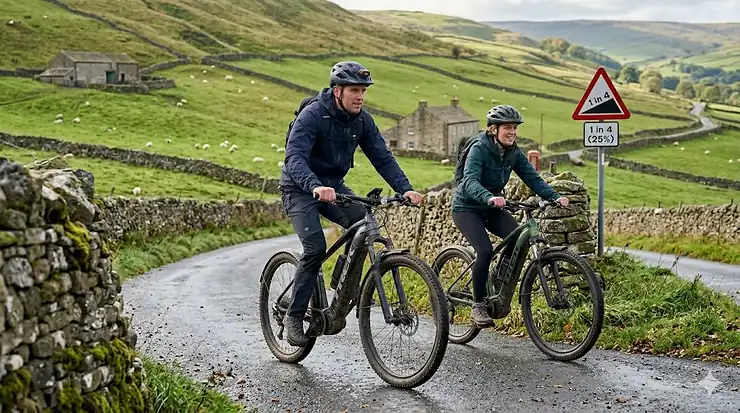
If you’ve ever stood at the bottom of a hill in Sheffield, Bath, or anywhere in the Cotswolds and thought “not today, thank you”, you’re exactly who this guide is for. A mid drive electric bike for hills puts the motor at the bottom bracket, working through your gears rather than fighting against your back wheel — which, in practice, means the difference between wheezing up a 12% gradient and gliding up it in second gear with a faint smile on your face.
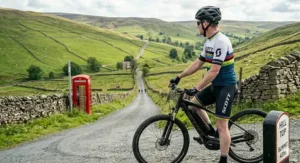
This isn’t a spec-sheet regurgitation. I’ve spent weeks digging through Amazon.co.uk listings, UK reviewer feedback, and the sort of forum threads where people argue passionately about torque sensors at 11pm. What follows is a properly opinionated rundown of seven mid drive electric bikes for hills that are actually available to UK buyers — with prices in pounds, honest pros and cons, and enough context about British weather, terraced housing, and EAPC law to keep you on the right side of common sense (and the DVSA).
Whether you’re commuting up out of a river valley every morning or just want weekend rides that don’t end with you pushing the bike home, there’s something here for you.
Quick Comparison: Mid Drive Electric Bikes for Hills at a Glance
| Bike | Motor & Torque | Battery / Range | Price Range (UK) | Best For |
|---|---|---|---|---|
| ESKUTE Netuno Pro | Bafang M410, 80Nm | 522Wh, ~50 miles | £1,250–£1,400 | Budget eMTB hill-climbing |
| ENGWE P275 Pro | Bafang, 65Nm | 691Wh, up to 160 miles claimed | £1,600–£1,900 | Premium hilly commute |
| Fafrees FM9 | Bafang, 65Nm | 540Wh, ~75 miles | £1,000–£1,250 | Trekking & light touring |
| ENGWE L20 3.0 Pro | Mid-drive, 100Nm | 720Wh, full suspension | £1,800–£2,200 | Folding + rough lanes |
| ENGWE Juggernaut Ultra Duo | Bafang Ultra, ~160Nm | Dual battery, 1000Wh+ | £2,300–£2,800 | Steepest gradients, cargo |
| ENGWE P275 ST | Ananda, 70Nm | 691Wh | £1,400–£1,700 | Step-through, shorter riders |
| Bafang BBS02B Conversion Kit | Bafang BBS02B, up to 120Nm | Battery sold separately | £280–£550 | Converting your own bike |
A glance at this table tells its own story: torque, not top speed, is what separates a competent hill-climber from a bike that’ll leave you red-faced outside the Co-op. Notice too that the conversion kit sits in a different universe price-wise — it’s the option for anyone with a perfectly good bike gathering dust in the shed, rather than a complete package. If your daily route includes anything steeper than a gentle B-road incline, anything under 65Nm on this list starts to feel like hard work; above 80Nm, and gradients that would normally have you standing on the pedals become almost a non-event.
💬 Just one click — help others make better buying decisions too! 😊
✨ Don’t Miss These Exclusive Deals!
🔍 Take your hill-climbing to the next level with these carefully selected mid drive electric bikes. Click through to check current pricing and availability on Amazon.co.uk — these picks should help you find the right fit for your gradient.
Top 7 Mid Drive Electric Bikes for Hills – Expert Analysis
1. ESKUTE Netuno Pro
The ESKUTE Netuno Pro is the bike that quietly upended the budget end of the eMTB market when it landed with a proper Bafang M410 mid-drive motor instead of the rear hub units that dominate this price bracket.
That 80Nm of torque is the headline, and rightly so — it’s in the same ballpark as motors found on bikes costing twice as much, which means 15–20% gradients (think the steeper bits of Bristol or the Mendips) get tackled by dropping into a low gear and letting the motor do the grunting. The 522Wh battery realistically gives 35–50 miles depending on how often you’re climbing, and the 27.5-inch wheels with chunky tyres add some welcome stability on wet British tarmac and gravel bridleways alike.
What most buyers overlook here is that this is genuinely a Pro upgrade over the standard Netuno — the mid-drive transforms how the bike feels on hills compared to its hub-motor sibling. UK reviewers consistently praise the value, though a few note the suspension fork and brakes feel basic compared to bikes at £2,000+.
✅ Genuine mid-drive torque at a hub-motor price
✅ Removable Samsung-cell battery, easy to charge in a flat
✅ Strong UK availability with quick Amazon delivery
❌ Suspension fork and brakes feel budget under hard use
❌ Heavier than premium alternatives at 25kg
Price & verdict: Around £1,250–£1,400 — arguably the best-value entry point into proper mid-drive hill-climbing on Amazon.co.uk.
2. ENGWE P275 Pro
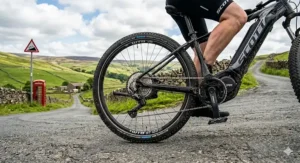
The ENGWE P275 Pro is the bike I’d point a design-conscious commuter towards — it pairs a Bafang torque-sensor mid-drive with a Gates Carbon Drive belt, which is the kind of detail that sounds like marketing fluff until you’ve spent a winter not degreasing a chain in your hallway.
The 65Nm torque figure looks modest next to the Netuno Pro, but the automatic 3-speed gear hub does the shifting for you, which suits riders who’d rather not think about gear changes on a steep approach to a roundabout. With a 691Wh battery, ENGWE’s claimed range figures (up to 160 miles) are wildly optimistic for hilly UK use — halve that for anything resembling reality, especially riding into a headwind on a damp morning, and you’re still looking at a genuinely useful commuting range.
What stands out for UK buyers specifically is the belt drive: no chain rust forming overnight in a cold garage, no oily marks on trouser legs cycling to the office. The step-over frame and sleek looks make it feel more like a “proper” bike than many budget alternatives, which matters if you’re locking it outside a café in the Peak District and don’t want to look like you’re riding a mobility scooter.
✅ Belt drive means near-zero maintenance in wet weather
✅ Automatic gear shifting suits hesitant climbers
✅ Sleek design that doesn’t scream “budget e-bike”
❌ 65Nm trails behind rivals on the very steepest climbs
❌ Premium price for a 250W-class motor
Price & verdict: Roughly £1,600–£1,900 — a premium pick for riders who value low maintenance and looks as much as raw climbing power.
3. Fafrees FM9
The Fafrees FM9 is the trekking bike option — 28-inch wheels, a more upright riding position, and a Bafang mid-drive with torque sensor delivering 65Nm, which is plenty for the rolling hills you’ll find on most UK National Cycle Network routes.
What the spec sheet won’t tell you is how much nicer torque-sensor mid-drives feel for longer rides compared to the cadence sensors fitted to many budget hub-motor bikes — power arrives proportionally to how hard you’re pushing, rather than in a slightly jarring on/off burst. The 540Wh integrated battery gives a genuinely usable 50–75 mile range for UK conditions (expect the lower end in winter, when cold knocks 10–15% off most lithium batteries).
For a buyer in, say, a semi-detached house in Birmingham wanting to do the school run plus the occasional longer weekend ride along a canal towpath with a couple of climbs out of the valley, this is a sensible middle-ground choice — less aggressive than an eMTB, more capable on hills than a flat-pack hybrid.
✅ Comfortable upright geometry for longer rides
✅ Torque sensor gives a natural, proportional pedal feel
✅ Integrated front battery looks tidy and is lockable
❌ 28-inch wheels less suited to off-road/bridleway riding
❌ Fewer UK reviews than more established brands
Price & verdict: Around £1,000–£1,250 — well worth considering if your “hills” are more rolling countryside than Lake District passes.
4. ENGWE L20 3.0 Pro
If your storage situation is “narrow hallway in a Victorian terrace”, the ENGWE L20 3.0 Pro solves a problem the others don’t: it folds, has full suspension, and still musters around 100Nm of torque from its mid-drive motor.
That torque figure puts it firmly in eMTB territory, and on test climbs it handles 15%+ gradients without the motor labouring — useful if your commute includes one of those short, brutal hills that flatten lesser bikes. The 720Wh battery is generous for a folder, and full suspension takes the edge off Britain’s pothole-riddled back lanes (a category of infrastructure problem that, refreshingly, no amount of UKCA certification can fix).
The trade-off is weight — folding e-bikes with full suspension and big batteries aren’t light, so “folds for the train” is more “folds for storage in a flat” than “folds for easy carrying up stairs”. For a London commuter living in a one-bed flat near a hilly bit of Zone 3, though, that’s a fair compromise.
✅ Genuine 100Nm mid-drive torque in a folding frame
✅ Full suspension smooths out potholed UK roads
✅ Large battery for a folder — less daily charging anxiety
❌ Heavy for a “folding” bike — not ideal for carrying upstairs
❌ Higher price bracket than non-folding rivals with similar specs
Price & verdict: Around £1,800–£2,200 — a strong pick for hilly commutes where storage space, not portability, is the real constraint.
5. ENGWE Juggernaut Ultra Duo (Step-Thru)
For riders facing the kind of hills that make other e-bikes audibly strain, the ENGWE Juggernaut Ultra Duo brings a Bafang Ultra mid-drive motor — the same family used on serious off-road builds — putting out roughly 160Nm of torque, paired with a dual-battery setup for genuinely long range.
In practice, what most buyers overlook about this tier of motor is how it changes your relationship with hills entirely: 20%+ gradients that would have you standing on the pedals and gasping become a matter of dropping a gear and pedalling normally. The step-thru frame is a small but meaningful detail for shorter riders or anyone who’d rather not swing a leg over a step-over frame while wearing a long coat in February.
This is the bike for a rural Cotswolds or Peak District resident doing genuinely steep daily climbs, or anyone planning to tow a trailer. It’s overkill for flat commuting — and at this price, you’re competing with entry-level Bosch-equipped bikes from established brands, so it’s worth comparing carefully.
✅ Near class-leading mid-drive torque for steep terrain
✅ Dual battery means real-world range anxiety mostly disappears
✅ Step-thru frame suits a wider range of riders
❌ Significant investment — competes with premium Bosch bikes
❌ Heavier overall system due to dual batteries
Price & verdict: Roughly £2,300–£2,800 — for riders whose hills are the steepest in the country, this earns its keep.
6. ENGWE P275 ST
The ENGWE P275 ST is essentially the step-through sibling of the P275 Pro, swapping the Bafang unit for an Ananda mid-drive motor delivering around 70Nm of torque with a torque sensor for natural-feeling assistance.
The lower, step-through frame makes a genuine difference for anyone who finds swinging a leg over a high top tube awkward — whether that’s due to height, mobility, or simply wearing a skirt to work. ENGWE’s claimed 260km eco-mode range is, again, a fantasy figure for UK hills; expect closer to 60–90km in mixed pedal-assist use on rolling terrain, dropping further on consistent climbs.
70Nm is a sensible middle ground — enough for most British hills without the bulk and price of the Ultra-motor bikes. For a retired couple in a village near the Peak District doing regular but not extreme climbs, or a shorter rider who’s found eMTB frames intimidating, this hits a comfortable spot.
✅ Step-through frame suits a wider range of riders and outfits
✅ Torque sensor gives smooth, proportional power delivery
✅ 70Nm comfortably handles most UK gradients
❌ Real-world range significantly below marketing claims
❌ Less off-road capable than full eMTB alternatives
Price & verdict: Around £1,400–£1,700 — a sensible all-rounder for hilly but not extreme terrain.
7. Bafang BBS02B Mid-Drive Conversion Kit
Here’s the curveball: the Bafang BBS02B Mid-Drive Conversion Kit isn’t a complete bike — it’s the motor unit that lets you bolt genuine mid-drive, hill-flattening power onto a bike you already own, with torque figures commonly quoted at up to 120Nm depending on configuration.
What the listing won’t tell you is that fitting one properly takes a free afternoon, a reasonable amount of mechanical confidence, and ideally a stand to hold the bike steady while you remove the bottom bracket. Once fitted, though, you’ve effectively turned your old hybrid or mountain bike into a mid-drive hill-climber for a fraction of the cost of buying new — and you keep the frame, wheels, and components you already know fit you.
The catch for UK buyers: a self-converted e-bike still needs to meet EAPC rules (250W continuous power, 15.5mph assist cut-off, pedal-assist) to be ridden on the road without insurance, tax, or a licence — so check your kit’s configuration before riding it on the high street. This is the option for the practically minded rider in a Cotswolds village with a perfectly good old bike and a shed.
✅ Dramatically cheaper than buying a new mid-drive bike
✅ Keep a frame and components that already fit you
✅ Wide range of power/torque configurations available
❌ DIY installation required — not for the mechanically nervous
❌ Must be configured carefully to remain EAPC-legal in the UK
Price & verdict: Roughly £280–£550 (kit only, battery extra) — the best-value route to mid-drive torque if you’re handy with a spanner.
The table above and these seven write-ups show a clear pattern: torque above 65Nm is where mid-drive bikes start meaningfully outperforming hub motors on real British gradients, and anything claiming “Bosch CX-rivalling” performance for under £1,500 deserves a healthy dose of scepticism — though, as the Netuno Pro shows, “rivalling” doesn’t always mean “matching”, and there’s real value to be had if you adjust expectations slightly.
Practical Usage Guide: Surviving British Weather and British Storage
A mid-drive e-bike is a more sophisticated bit of kit than a normal bicycle, and British conditions are not always kind to sophisticated kit. A few habits make a real difference. First, dry your bike down after wet rides — not obsessively, just enough that the motor casing and battery contacts aren’t sitting in standing water overnight. Most mid-drive units are IP65-rated, which means they shrug off rain, but prolonged damp around connectors over a British winter can still cause gremlins.
Second, storage: if you’re in a flat or terraced house with no garage, an unheated hallway or covered porch is far better for the battery than a freezing shed — lithium cells lose capacity rapidly below 0°C, and charging a stone-cold battery isn’t great for its long-term health either. Bring the battery indoors if you can, especially overnight in January.
Third, theft prevention matters more in cities — a mid-drive e-bike with a 100Nm motor is an attractive target. A D-lock through the frame and rear wheel, plus a secondary cable lock for the front wheel, is the bare minimum in urban areas; some insurers now require Sold Secure Gold-rated locks for cover on bikes over £1,500.
Finally, a quick monthly check of the motor mounting bolts (mid-drives vibrate more than hub motors, and bolts can work loose) and chain lubrication after wet rides will keep things running smoothly for years.
Real-World Scenarios: Matching the Bike to Your Postcode
Picture a London commuter navigating the climb out of a Zone 2 station towards home — daily distance under 10 miles, but with one genuinely steep section. The ENGWE P275 Pro or P275 ST makes sense here: low maintenance from the belt or clean drivetrain, decent looks for locking up outside the office, and torque that’s more than adequate for an occasional sharp hill.
Now picture a family in a semi-detached house on the outskirts of Sheffield, where literally every route out of the estate involves a climb. Here, the ESKUTE Netuno Pro earns its keep — its 80Nm motor handles repeated daily climbs without drama, and the lower price means a second bike for a partner is more realistic.
Finally, consider a retired couple in a village in the Peak District, riding for leisure several times a week on routes that include one or two proper climbs and some unsurfaced tracks. The ENGWE P275 ST’s step-through frame and 70Nm motor suit gentler but consistent riding, while the Juggernaut Ultra Duo would be the choice if their routes regularly hit the steepest 20%+ sections the National Park has to offer.
How to Choose a Mid Drive Electric Bike for Hills in the UK
- Check the torque figure first. For genuinely hilly UK terrain, 65Nm is a sensible minimum; 80Nm+ makes a noticeable difference on sustained 15%+ climbs.
- Be realistic about range. Halve any manufacturer claim for UK conditions — hills, cold, and headwinds all eat into range significantly.
- Match the frame style to your body and routes. Step-through frames suit shorter riders or those wanting easy mounting; eMTB frames suit off-road and steep terrain.
- Confirm EAPC compliance. Anything you’ll ride on UK roads without a licence must be 250W continuous, pedal-assist, and capped at 15.5mph.
- Consider weight if storage is tight. Mid-drive motors and bigger batteries add kg — fine if you’re not carrying the bike upstairs, less fine if you are.
- Look at gearing, not just motor power. A wide gear range lets a mid-drive motor work efficiently across both steep climbs and flat sections.
- Factor in UK after-sales support. Direct-to-consumer brands vary hugely in how easily UK buyers can get warranty support — check recent UK reviews specifically.
Mid Drive vs Hub Motor: Which Wins on Steep Gradients?
Hub motors push or pull the wheel directly, independent of your gears — which is fine on the flat but means they can struggle and overheat on sustained steep climbs, since they’re effectively stuck working in a single “gear ratio” regardless of gradient. Mid-drive motors, by contrast, send power through your bike’s existing drivetrain, so dropping into a low gear on a climb keeps the motor spinning efficiently rather than labouring.
The trade-off is cost and complexity — mid-drives are pricier and put more stress on chains and cassettes, which wear faster than on a hub-motor bike. For genuinely hilly UK terrain, though, the riding experience difference is significant enough that most cyclists who’ve tried both don’t go back to hub motors for hill work, even accounting for the higher running costs.
Common Mistakes When Buying a Mid Drive Electric Bike for Hills
The most common mistake is fixating on wattage rather than torque — UK law caps continuous power at 250W for road-legal EAPCs regardless of brand, so “750W” badges on some listings refer to peak power, not a loophole. The second is trusting range claims at face value; British hills, cold, and rain routinely cut real-world range by 30–50% versus the lab-tested figures on the box.
A third mistake, particularly relevant post-Brexit, is buying from sellers without clear UK stock or returns — some European-warehoused bikes carry import duties or lengthy delays if something goes wrong, eroding the savings versus a UK-stocked alternative. Finally, buyers sometimes ignore UKCA marking entirely; while most reputable Amazon.co.uk listings comply, it’s worth a quick check on the product page, particularly for batteries and chargers, which fall under stricter post-Brexit electrical safety rules.
What to Expect: Real-World Performance in British Conditions
On a damp Tuesday morning with a headwind, a 65Nm mid-drive bike on a 10% gradient feels markedly different from the same bike on a dry summer afternoon — expect roughly 10-15% less assistance “feel” as battery efficiency drops in the cold, and noticeably reduced range. Wet roads also mean disc brakes (standard on every bike in this guide) earn their keep; cheaper mechanical discs need more frequent adjustment than hydraulic systems once grit and rain get into the mix.
Shorter winter daylight hours mean lights matter more than the spec sheets suggest — several bikes here include StVZO-certified lights as standard, which is a genuinely useful feature for British commuters cycling home at 4:30pm in December, rather than an afterthought tacked on for European compliance.
UK Regulations, Safety Standards & Legal Requirements
Under UK law, an Electrically Assisted Pedal Cycle (EAPC) needs no licence, tax, or insurance provided the motor doesn’t exceed 250W continuous rated power, assistance cuts out above 15.5mph, and the bike has working pedals that must be used for the motor to engage — full details are on GOV.UK’s electric bike guidance. Anything exceeding these limits is legally a moped, with all the licensing and insurance implications that brings.
For batteries and chargers sold in Great Britain, look for UKCA marking (the post-Brexit replacement for CE marking) — most of the bikes covered here display both, since many manufacturers continue dual-marking to cover EU and UK markets simultaneously. Northern Ireland buyers should note that CE marking generally remains acceptable there under the Northern Ireland Protocol arrangements, which is one of the more fiddly bits of post-Brexit consumer electronics rules.
Consumer protection is on your side too: under the Consumer Rights Act 2015 and the Consumer Contracts Regulations, online purchases come with a 14-day cooling-off period — useful if a bike arrives and simply doesn’t suit your commute.
Long-Term Cost & Maintenance in the UK
| Cost Type | Hub Motor Bike | Mid-Drive Bike | Notes |
|---|---|---|---|
| Annual servicing | £40–£80 | £60–£120 | Mid-drives stress chains/cassettes more |
| Chain/cassette replacement | Every 2-3 years | Every 1-2 years | More frequent under heavy hill use |
| Battery replacement (5+ yrs) | £200–£400 | £250–£500 | Larger batteries cost more to replace |
| Insurance (optional) | £30–£80/yr | £50–£120/yr | Higher-value bikes attract higher premiums |
The table makes the trade-off explicit: mid-drive bikes cost more to run year-on-year, mainly through faster drivetrain wear, but the climbing performance gain on genuinely hilly UK terrain is substantial enough that most owners consider it a worthwhile trade. Which? recommends budgeting for an annual service regardless of motor type — a habit that catches small issues (loose bolts, worn brake pads) before they become expensive ones, particularly important given how much more British weather throws at moving parts than drier climates.
Frequently Asked Questions
❓ Are mid drive electric bikes legal on UK roads?
❓ Is a mid drive electric bike better for hills than a hub motor?
❓ How much torque do I need for steep UK hills?
❓ Do these mid drive electric bikes deliver to the whole UK?
❓ Will cold British winters affect my e-bike's range?
Conclusion
There’s no single “best” mid drive electric bike for hills — there’s the best one for your hills, your storage, and your budget. If you want the most torque per pound spent, the ESKUTE Netuno Pro is hard to beat. If low maintenance and looks matter as much as climbing power, the ENGWE P275 Pro’s belt drive is worth the premium. And if your daily route includes the kind of hill that’s named on Ordnance Survey maps for a reason, the Juggernaut Ultra Duo or a well-specced Bafang conversion kit will turn that hill from a dread into a non-event.
Whatever you choose, prioritise torque over headline wattage, be realistic about range in British conditions, and don’t skip the EAPC compliance check. Your legs — and your morning commute — will thank you.
✨ Don’t Miss These Exclusive Deals!
🔍 Ready to tackle those hills? Browse the picks above on Amazon.co.uk to check current pricing, UK availability, and Prime delivery options before you decide.
Recommended for You
- Mid Drive vs Direct Drive Ebike: 7 Best UK Picks for 2026
- Best Winter Electric Bike UK 2026: 7 All-Season eBikes Reviewed
- 7 Best Budget Riese Muller Alternatives UK 2026
Disclaimer: This article contains affiliate links. As an Amazon Associate, I earn from qualifying purchases. If you purchase products through these links, we may earn a small commission at no additional cost to you.
✨ Found this helpful? Share it with your mates! 💬🤗
