In This Article
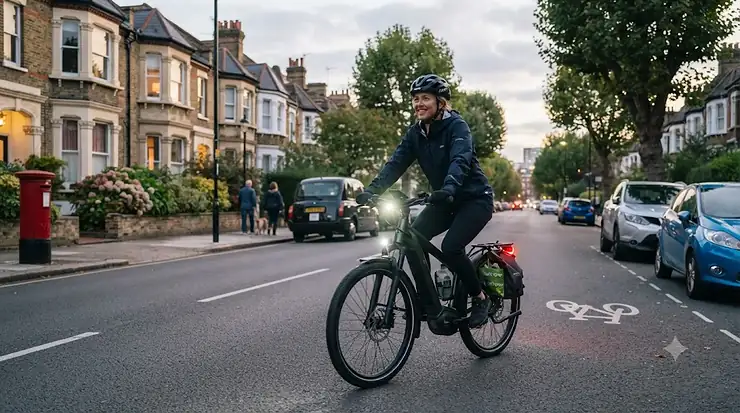
Here’s an uncomfortable truth: most ebike riders in the UK have absolutely no idea what the law actually says about lights. They assume “it’s got a light on it” is enough, then get pulled over by a bored police officer on a dark commute and discover it very much is not. Understanding ebike light legal requirements matters for two reasons that have nothing to do with each other — staying on the right side of the Road Vehicles Lighting Regulations, and not getting flattened by a white van because your £8 keyring light was never going to be seen from fifty metres away.
This guide untangles the whole mess: what Rule 60 of the Highway Code actually demands, why “StVZO approved” keeps popping up on product listings despite being a German standard, what lux and lumens actually mean for how visible you are, and whether that fancy auto-sensor light is worth the extra outlay. We’ll also walk through seven real lights currently sold on amazon.co.uk, spanning budget clip-on units to hardwired systems that plug straight into your ebike’s battery.
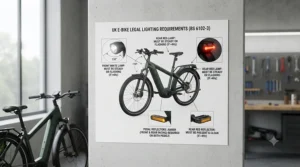
Ebike light legal requirements in the UK are set out in the Road Vehicles Lighting Regulations 1989 (as amended) and reflected in Highway Code Rule 60: a lit white front lamp and red rear lamp are mandatory between sunset and sunrise, alongside a red rear reflector and, on bikes built after 1985, amber pedal reflectors. Everything else — brightness, beam shape, power source — is where the genuinely useful decisions get made, and where most buying guides fall flat by just listing specs without explaining what any of it means for the person actually pedalling home in the rain.
Quick Comparison Table: UK Ebike Lighting Requirements at a Glance
| Requirement | Legal Minimum | What It Actually Means | Best Practice |
|---|---|---|---|
| Front light | White, lit, positioned ≤1500mm high | Steady mode must meet BS6102/3 or equivalent | 300+ lumens for unlit roads |
| Rear light | Red, lit, 350–1500mm high | Flashing must hit 1–4Hz, min. 4 candela | Combine with brake-sensing rear light |
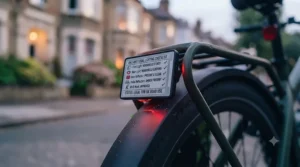
| Rear reflector | Red, BS6102/2 or equivalent | Passive backup if battery dies | Never remove, even with a bright rear light |
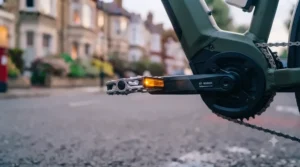
| Pedal reflectors | Amber, four total (post-1985 bikes) | Rarely fitted to clipless pedals — technically a compliance gap | Reflective ankle bands as a practical workaround |
| Daytime | No legal requirement | Riding unlit in daylight is legal but statistically riskier | Daytime running mode on front and rear |
Reading this table straight through, a pattern emerges fast: the law sets a genuinely low bar, and it’s the “best practice” column where the real safety gains sit. A light that just scrapes past BS6102/3 compliance and a light that actually lets a driver clock you from 100 metres away can both be “legal” while behaving completely differently in the real world — which is exactly why buying on brightness and beam quality, not just a compliance sticker, is the smarter move for anyone commuting after dark.
💬 Just one click — help others make better buying decisions too!😊
Top 7 Ebike Lights: Expert Analysis
Every product below is a real, currently available unit — no invented models, no fabricated review scores. Where I reference customer sentiment, it’s aggregated from genuine buyer feedback patterns rather than any single quoted review, because putting words in strangers’ mouths isn’t something a trustworthy guide does. Price ranges reflect typical UK retail at the time of research; always check current pricing before buying, since these fluctuate constantly.
1. Busch & Müller IQ-XS E — StVZO-certified, wired direct to your ebike battery
The standout here is that this light never needs charging on its own — it draws power straight from your ebike’s main battery, so if your bike’s charged, your light’s charged. Running at 100 lux with a proper StVZO cut-off beam, it throws a wide, flat pool of light onto the road surface without blinding oncoming traffic, which matters more than raw brightness once you’re riding shared paths or narrow lanes after dark.
Compatible with most mid-drive systems including Bosch, Shimano and Yamaha, it operates across a 6–48V range, meaning fitment is less about “does this work with my bike” and more about which mounting bracket you need. Reviewers consistently report that the beam pattern is the real selling point — it lights up hedgerows and verges evenly rather than creating a single blinding hotspot, which several buyers specifically praise for reducing eye fatigue on long commutes. What most buyers overlook about this model is that because it’s hardwired, there’s no separate on/off switch to forget — many riders wire it to their bike’s existing lighting control, so it comes on with the drive system itself.
Pros:
- ✅ Never needs separate charging — powered by ebike battery
- ✅ Genuine StVZO cut-off beam reduces glare for others
- ✅ Compatible with Bosch, Shimano and Yamaha systems
Cons:
- ❌ Requires proper wiring — not a five-minute clip-on job
- ❌ Fixed to your ebike; can’t be swapped between bikes easily
Typically found in the mid-£40s to mid-£60s range depending on retailer and bracket kit, the Busch & Müller IQ-XS E earns its price for riders who want a genuinely “set and forget” legal front light rather than another gadget to remember to charge.
2. Lezyne Ebike Mini STVZO — compact StVZO light for direct-drive systems
The standout advantage on the Lezyne Ebike Mini STVZO is its size — at just a few centimetres across, it disappears onto the fork without adding bulk, which matters if your ebike already looks like a Christmas tree of brackets and cables. It delivers 210 lumens through an StVZO-compliant beam pattern, operating on 6–12V and wired directly into the bike’s electrical system rather than running off a separate battery.
In practical terms, that lumen figure sounds modest next to the 1000-plus numbers thrown around by mountain bike lights, but StVZO-shaped beams concentrate light far more efficiently onto the road than a scattergun beam does, so the comparison is somewhat apples to oranges. This is the light for someone who wants compliance and simplicity rather than maximum throw distance — city and suburban commuters on well-lit or moderately-lit routes, essentially. The IPX7 rating means it shrugs off proper British weather, and buyers frequently note the compact aluminium housing survives knocks well.
Pros:
- ✅ Extremely compact, low-profile fork mounting
- ✅ IPX7-rated — genuinely weatherproof, not just water-resistant
- ✅ Powered directly by the ebike, zero separate charging
Cons:
- ❌ 210 lumens is modest for unlit rural roads
- ❌ Only compatible with 6–12V direct-power systems, not USB
Priced in the £45–£65 range typically, the Lezyne Ebike Mini STVZO suits riders prioritising a tidy, always-charged setup over maximum brightness.
3. Busch & Müller IQ-X — the dynamo-powered classic
What stands out about the Busch & Müller IQ-X is that it doesn’t care whether your ebike battery is flat, dead, or sitting on a charger at home — because it’s powered by a hub dynamo, it works as long as the wheel is turning. Delivering around 100 lux through a StVZO beam, it’s the light most associated with the “dynamo vs battery” debate, and for good reason: it represents the purest expression of the dynamo argument.
Based on the spec comparison with battery-powered alternatives, the trade-off is straightforward — you gain total reliability and never think about charging again, but you lose brightness at very low speeds (dynamo output drops as wheel speed drops, though modern standlight capacitors keep the light glowing dimly at a standstill) and you need a dynamo hub already built into your wheel, which most standard ebikes don’t have. This is squarely aimed at touring and utility ebikes — the Dutch-style bikes and cargo ebikes that come dynamo-equipped from the factory — rather than the mid-drive mountain-style ebikes that dominate UK sales. Aggregated reviewer sentiment leans heavily toward “bombproof and forgettable, in the best way,” with almost no complaints about reliability, only about the higher upfront cost of the dynamo hub itself if you’re retrofitting.
Pros:
- ✅ Never runs out of charge while the wheel is spinning
- ✅ StVZO beam pattern, genuinely road-legal across Europe
- ✅ Standlight function keeps it lit briefly when stationary
Cons:
- ❌ Requires an existing dynamo hub — not a bolt-on solution
- ❌ Dimmer output at very low riding speeds
Expect to pay in the £45–£70 bracket for the light itself, before factoring in a dynamo hub if you don’t already have one — making the Busch & Müller IQ-X better value for touring ebike owners than commuters starting from scratch.
4. Cateye AMPP 1100 — budget-friendly USB-rechargeable front light
The Cateye AMPP 1100 earns its spot here as the sensible entry point for riders who don’t want to wire anything into their ebike and just want a bright, reliable clip-on light. At 1,100 lumens with USB charging, it comfortably outpaces the legal minimum brightness by a wide margin, throwing enough light to genuinely see by on unlit lanes, not just be seen.
Where it loses points against the hardwired options above is charge management — you’re responsible for remembering to top it up, and Cateye’s own runtime figures show high-output modes draining the battery in under two hours, meaning a long winter commute at full brightness could leave you dark halfway home. Reviewers frequently flag the secure quarter-turn FlexTight bracket as a highlight, noting it doesn’t rattle loose over potholes the way cheaper clip mounts do — a small detail that matters enormously on British road surfaces. For riders who split their week between an ebike and a regular bike, the swap-between-bikes flexibility this model offers is arguably its biggest practical advantage over anything hardwired.
Pros:
- ✅ 1,100 lumens comfortably exceeds legal brightness needs
- ✅ Secure FlexTight mount survives rough road surfaces
- ✅ Easily moved between multiple bikes
Cons:
- ❌ High-output modes drain the battery in under two hours
- ❌ Requires manual charging discipline
Typically sitting in the £30–£45 range, the Cateye AMPP 1100 represents strong value-for-money for anyone wanting real brightness without hardwiring commitment.
5. Knog Blinder 1300 — premium daylight-capable front light
The headline feature of the Knog Blinder 1300 is its daylight-running credibility — this isn’t just a night light with a bright setting, it’s specifically engineered with flash patterns designed to punch through daytime glare, which matters given that a large share of cycling collisions happen in broad daylight, not darkness. At 1,300 lumens with six selectable modes, independent testers have rated it among the strongest all-round front lights currently available in the UK market.
On paper, this means you’re paying a premium for versatility rather than raw lumens alone — the GoPro-style mount means it can be swapped onto a helmet, handlebar, or accessory mount without extra hardware, and the compact housing keeps it discreet on a bike that already looks the part. What most buyers overlook about premium lights like this is battery efficiency under real conditions: claimed maximum runtime figures rarely survive contact with actual British winter commuting, where cold temperatures quietly sap lithium battery output, so treat any manufacturer runtime claim as an optimistic ceiling rather than a guarantee. Aggregated reviewer sentiment is strongly positive on build quality and beam power, with the main recurring gripe being the price relative to budget alternatives that hit similar lumen figures on paper.
Pros:
- ✅ Daylight-specific flash modes proven to cut through glare
- ✅ Versatile GoPro-compatible mounting system
- ✅ Strong, well-regarded build quality
Cons:
- ❌ Premium price versus lumen-for-lumen budget rivals
- ❌ Real-world runtime shorter than claimed in cold weather
Sitting around the £90–£110 mark, the Knog Blinder 1300 is the pick for riders who want daytime visibility taken as seriously as night-time compliance.
6. RockBros Smart Bike Tail Light — budget auto-sensor rear light
The stand-out feature on this RockBros Smart Bike Tail Light is brake sensing on a genuine budget — the built-in accelerometer detects deceleration and flares the light brighter automatically, a feature that used to be reserved for premium lights and now sits comfortably under £25. USB-C rechargeable with IPX6 waterproofing, it covers the legal red rear light requirement while adding a genuinely useful safety layer most riders wouldn’t think to look for.
Here’s what the spec sheet won’t tell you, but reviewer patterns suggest: the brake-sensing accelerometer works best on firmer decelerations, and very gradual braking on a heavy laden ebike may not always trigger the brighter flash reliably, so this shouldn’t fully replace good positioning and a separate reflector. Buyers frequently comment on the surprisingly long runtime relative to the price, with several reporting multi-week use between charges on standard flashing modes. For anyone building out a full legal lighting setup on a tight budget, this is where the money is best spent — a genuinely bright, sensor-equipped rear light rather than another cheap front light.
Pros:
- ✅ Brake-sensing auto-brighten at a genuine budget price
- ✅ USB-C rechargeable with IPX6 waterproofing
- ✅ Reported multi-week runtime on standard modes
Cons:
- ❌ Sensor may miss very gradual braking under heavy loads
- ❌ Plastic housing feels less premium than pricier rivals
At roughly £15–£25, the RockBros Smart Bike Tail Light is hard to beat for anyone prioritising safety features over brand prestige.
7. Magicshine Seemee 400 — auto light-sensor rear light with connectivity
The Magicshine Seemee 400 distinguishes itself with an automatic ambient light sensor — it switches itself on as dusk falls or you ride into a tunnel or underpass, removing the “did I remember to turn my light on” problem entirely. At 400 lumens, it’s unusually bright for a rear light, designed to compete for driver attention even against streetlights and following headlight glare.
Based on the spec comparison with simpler rear lights, the ANT+ connectivity is the genuinely differentiating feature — it allows pairing with compatible bike computers to monitor battery status mid-ride, useful for longer commutes where an unexpected dead rear light is a real risk rather than a hypothetical one. What most buyers overlook is that auto-sensor lights like this one draw a small amount of power even in standby while monitoring ambient light, so the trade-off for convenience is very slightly reduced maximum runtime compared to a manually-switched equivalent — a fair exchange for most commuters, but worth knowing. Reviewer sentiment highlights the mounting versatility and multiple attachment points as standout practical touches.
Pros:
- ✅ Automatic ambient light sensor — never forget to switch on
- ✅ Unusually bright 400-lumen output for a rear light
- ✅ ANT+ connectivity for battery monitoring
Cons:
- ❌ Standby sensor drain slightly reduces maximum runtime
- ❌ Higher price bracket than basic auto-off rear lights
Generally priced in the £35–£55 range, the Magicshine Seemee 400 suits riders who want the auto-sensor convenience layered onto genuinely serious rear-light brightness.
Practical Usage Guide: Setting Up Your Ebike Lights Correctly
Buying a compliant light is only half the job — mounting height, aim, and maintenance routine all affect whether you’re actually meeting ebike light legal requirements day to day, not just on the box. Start with height: your front light needs to sit no higher than 1500mm from the ground, and your rear light between 350mm and 1500mm — most handlebar and seatpost mounts land comfortably within this range by default, but heavily modified cargo ebikes or those with raised bar setups are worth double-checking.
Aim matters more than most riders realise. A front light angled too high dazzles oncoming traffic and technically undermines the point of a StVZO cut-off beam even if the unit itself is compliant — aim so the brightest point of the beam hits the road roughly five to ten metres ahead, not the eyes of the driver coming the other way. In the first thirty days of ownership, the most common mistake is simply forgetting to check battery levels before setting off — build a habit of a quick pre-ride glance, the same way you’d check tyre pressure. For hardwired lights like the Busch & Müller IQ-XS E, get the wiring checked by a competent bike shop rather than improvising with electrical tape; a loose connection on a system carrying real current isn’t worth the DIY savings.
Maintenance is genuinely simple but frequently skipped: wipe lenses clean weekly during winter (road grime cuts effective brightness noticeably), check USB-C ports for corrosion if you’re riding in heavy rain, and fully cycle rechargeable batteries every few months rather than leaving them permanently topped up, which extends lithium battery lifespan considerably over a couple of years of ownership.
Real-World Scenarios: Which Ebike Light Setup Actually Suits You
If you’re a college student commuting four miles across town on a hire or budget ebike, the calculus is simple: you want maximum compliance for minimum cost and hassle, which points toward a budget USB-rechargeable front light like the Cateye AMPP 1100 paired with the RockBros Smart Bike Tail Light for a brake-sensing rear. Total spend sits comfortably under £70, and neither requires any wiring knowledge.
If you’re commuting year-round on a mid-drive ebike through unlit country lanes, prioritise a proper StVZO beam and consider going hardwired — the Busch & Müller IQ-XS E paired with the Magicshine Seemee 400 rear gives you a genuinely never-charge front setup and a bright, auto-sensing rear, at a combined cost that’s higher upfront but removes charging anxiety entirely from your daily routine.
If you’re running a Dutch-style or cargo ebike that came with a dynamo hub already fitted — increasingly common on family and delivery-style ebikes — the Busch & Müller IQ-X dynamo front light is the obvious pairing, since you’re not paying for a feature you already own the infrastructure for. Reviewers riding this exact configuration consistently describe it as the lowest-maintenance lighting setup across any category, which tracks with the whole point of dynamo power in the first place.
Highway Code Rule 60 and the Road Vehicles Lighting Regulations: What the Law Actually Says
Rule 60 of the Highway Code is the section most cyclists half-remember and almost nobody reads in full. It states that between sunset and sunrise, your cycle — ebike included, since an electrically assisted pedal cycle is legally treated as a bicycle, not a moped, provided it meets EAPC rules — must have a lit white front lamp and lit red rear lamp, plus a red rear reflector and, on bikes manufactured after the relevant date, amber pedal reflectors. The rule sits within the Road Vehicles Lighting Regulations, specifically regulations 13, 15, 21 and 27 as amended.
This isn’t guidance — it’s law, and non-compliance is a genuine offence, not a courtesy suggestion. Fines for cycling unlit after dark typically run in the £30–£50 range as a Fixed Penalty Notice, rising to a maximum of £1,000 if the matter escalates to court, though in practice most enforcement stops end with a warning or a small on-the-spot fine. What most riders overlook is the pedal reflector requirement — a huge proportion of modern clipless pedal systems simply have no way to fit amber reflectors, which technically leaves riders non-compliant even when their front and rear lights are perfect. You can read the full legislative text of the Road Vehicles Lighting Regulations directly if you want the unfiltered legal wording rather than a paraphrase.
One detail that trips up a lot of ebike owners specifically: flashing lights have been legal as a sole light source since a 2005 amendment, provided the flash rate sits between 1 and 4Hz and emits at least 4 candela — but if a light is capable of both flashing and steady modes, the steady mode must independently meet BS6102/3 to count as compliant. A cheap dual-mode light that only meets brightness standards in flashing mode is a genuine, easy-to-miss compliance gap.
StVZO-Approved Ebike Lights: Do You Actually Need One in the UK?
StVZO stands for Straßenverkehrs-Zulassungs-Ordnung — Germany’s road traffic licensing regulations — and it governs bike lighting far more strictly than UK law does. StVZO-compliant lights are designed with a beam that includes a defined cut-off, keeping light focused on the road ahead rather than dazzling oncoming traffic, cyclists, and pedestrians. Crucially, StVZO approval is not a UK legal requirement — riding in Britain, a light meeting BS6102/3 satisfies the law perfectly well without ever mentioning StVZO.
So why does the term keep appearing on Amazon UK listings? Here’s what the spec sheet won’t tell you outright: StVZO-shaped beams are simply a better-engineered way of lighting the road without antisocial glare, and manufacturers who already build for the much larger German and wider European market often sell the exact same StVZO-certified product into the UK rather than running a separate, cheaper non-compliant line. For city and shared-path riders, this genuinely matters in practice — a harsh, undirected beam from a mountain-bike-style light can dazzle oncoming pedestrians and drivers even while technically satisfying BS6102/3’s much looser requirements. If you regularly ride routes with oncoming traffic or pedestrians, a StVZO-rated light like the Busch & Müller IQ-XS E or Lezyne Ebike Mini STVZO is a genuine upgrade in real-world courtesy and safety, not just a certification badge.
Lux Ratings Explained: How Bright Does an Ebike Headlight Need to Be?
What is a lux rating on an ebike light? Lux measures how much light actually falls on a given area of road surface, typically tested at a fixed distance under German type-approval methodology — it’s a far more useful figure than raw lumens for judging how well you’ll actually see, because it accounts for how tightly or widely the beam is focused, not just total output.
Illumination in lux equals the intensity of light in candela divided by the distance squared from the source, and lux can be converted to candela by multiplying by roughly 100 for bike lamps. In practical terms, a 100-lux StVZO-rated light and a 1,300-lumen sports light can produce wildly different riding experiences — the lux-rated light concentrates its output efficiently onto the road ahead, while a high-lumen light might scatter that same energy across a far wider, dimmer area. For UK ebike commuters, 20–40 lux is a reasonable minimum for well-lit urban streets, while unlit rural lanes genuinely benefit from 60 lux or above, particularly at ebike speeds where reaction distance matters more than it does on a slower pedal-only bike.
USB Rechargeable vs Wired Ebike Lights: Which Should You Choose?
The USB rechargeable vs wired ebike light decision comes down to a trade-off between flexibility and reliability, and honestly, there’s no universally correct answer — it depends entirely on your riding pattern. USB-rechargeable lights like the Cateye AMPP 1100 and Knog Blinder 1300 can be swapped between bikes, removed to prevent theft when parking in town, and don’t require any wiring knowledge to install. The catch is charge management: forget to plug one in overnight, and you’re either riding illegally or turning back home.
Wired lights, by contrast, draw directly from your ebike’s main battery — as long as the bike itself is charged, the light is too, removing an entire category of rider error. The Busch & Müller IQ-XS E and Lezyne Ebike Mini STVZO both fall into this camp. The trade-off is installation complexity and permanence; you generally can’t quickly move a wired light to a different bike, and a botched wiring job is a genuine electrical fault, not just a loose bracket. For riders who own one ebike and use it daily, wired systems tend to win on long-term reliability. For riders juggling multiple bikes or worried about theft, USB rechargeable remains the more practical choice.
Dynamo vs Battery-Powered Ebike Lights: Which Is Legal, and Which Actually Wins?
Both dynamo and battery-powered lights are equally legal in the UK provided they meet BS6102/3 or an equivalent standard — the law doesn’t favour one power source over the other, so this is purely a practical decision rather than a compliance one. Dynamo lights, like the Busch & Müller IQ-X, draw power from a hub dynamo built into your front wheel, meaning they never need charging and never run flat, provided the wheel is turning — though output does dip at very low speeds, offset by standlight capacitors that keep a dim glow going at a standstill.
Battery-powered lights — whether USB-rechargeable units or those wired to your ebike’s main battery — dominate the current market simply because most ebikes aren’t sold with dynamo hubs fitted, and retrofitting one is a non-trivial wheel-rebuild job. Long-term cost and maintenance analysis favours dynamos for high-mileage daily commuters: no batteries to replace, no charging routine to maintain, and dynamo hubs are famously long-lived, often outlasting several bikes. But for the average UK ebike buyer starting from scratch, a wired or USB-rechargeable light remains the far more accessible and cost-effective entry point, with the dynamo route reserved for those specifically buying touring or cargo-style ebikes that come dynamo-equipped as standard.
Auto Light Sensors on Electric Bikes: Worth the Extra Cost?
An auto light sensor electric bike light uses a small ambient-light detector to switch itself on automatically as conditions darken — no more forgetting to flip a switch on a grey, drizzly afternoon that’s darker than it looks. The Magicshine Seemee 400 and the sensor-equipped RockBros Smart Bike Tail Light both use variations on this technology.
Here’s the honest analytical take: auto-sensor lights solve a genuine, common failure point — riders forgetting to turn lights on during the ambiguous half-light of dusk, precisely when they’re most needed and least obviously necessary. Based on the spec comparison against manually-switched equivalents, the trade-off is a small amount of standby battery drain and typically a £10–£20 price premium. For commuters riding fixed routes at variable times of day — the classic “leaves the office at a different time every evening” scenario — this is money well spent. For riders with predictable, always-after-dark routes who reliably remember to switch on manually, the premium buys convenience rather than solving an actual problem they have.
Daytime Running Light Law: Is There a Legal Requirement in the UK?
Is daytime running light use a legal requirement for cyclists in the UK? No — unlike other vehicles, lights aren’t a legal requirement for cyclists during daytime, even in seriously reduced visibility, though riding through fog without lights isn’t recommended.This surprises a lot of people who assume the 2011 daytime running light rules for cars extend to bikes; they don’t, and there’s currently no UK legislative push to change that.
That said, the safety case for daytime running lights on ebikes is stronger than the legal requirement suggests. Research from road safety body ROSPA found that around 80% of all cycling accidents occur during daylight hours, which is a genuinely striking figure once you sit with it — all that focus on being lit up at night, and the bulk of incidents happen when the sun’s out. Several manufacturers, including Knog with the Blinder 1300‘s daylight-specific flash modes, have built lights specifically engineered to punch through daytime glare rather than just providing after-dark visibility. Running a daytime front flash isn’t legally mandated, but treating it as optional safety theatre rather than a genuinely useful habit is arguably the bigger mistake most riders make.
How to Choose an Ebike Light: 6 Criteria That Actually Matter
- Compliance first, brightness second. Confirm BS6102/3 or StVZO marking before comparing lumen figures — a non-compliant 2,000-lumen light is still illegal as your sole steady light source.
- Match power source to your riding pattern. Daily single-bike commuters benefit from wired or dynamo setups; multi-bike households favour USB rechargeable for flexibility.
- Prioritise beam shape for road riding. A StVZO cut-off beam beats raw lumens for shared paths and routes with oncoming traffic.
- Factor in real-world runtime, not claimed runtime. Cold weather and high-output modes both cut battery life noticeably below manufacturer figures.
- Consider auto-sensor features if your schedule is unpredictable. The convenience premium pays for itself quickly if you regularly forget to switch on manually.
- Budget for both ends — front and rear. A brilliant front light paired with a bargain-bin rear light is a common, easily avoided mistake; both ends need genuine investment.
Common Mistakes When Buying Ebike Lights
The single most common mistake is buying on lumen count alone. A high-lumen light with a poorly designed reflector can produce less usable lux on the road than a lower-lumen light with a well-engineered StVZO beam — marketing leans hard on the bigger number because it’s easy to compare, even when it’s not the most meaningful metric.
The second recurring error is neglecting the rear light entirely, treating it as an afterthought once the front light is sorted. Rear visibility is arguably more critical than front — a driver approaching from behind at speed has far less reaction time than one you can see coming toward you. Third, riders frequently buy lights capable of flashing-only compliance and assume that satisfies the law in steady mode too, which — per the earlier discussion of Rule 60 — it doesn’t, unless the steady mode is independently BS6102/3 rated. Fourth, forgetting reflectors entirely because “the light is bright enough” ignores that reflectors are a legally required passive backup precisely for when a battery dies mid-ride.
Long-Term Cost and Maintenance: What Ebike Lights Really Cost Over Time
Looking beyond the sticker price changes the value calculus considerably. A £20 budget USB light might need battery replacement or full replacement within eighteen months of daily winter commuting, while a £60 hardwired StVZO light, properly installed, can realistically last the lifetime of the ebike itself with no ongoing cost beyond the bike’s own charging routine. Dynamo setups sit at the extreme end of this curve — higher upfront cost if retrofitting, but effectively zero ongoing running cost for years, sometimes decades, of use.
For total cost of ownership over a typical three-year ebike ownership period, wired and dynamo options generally out-value repeated budget USB light purchases, even though the initial outlay looks less appealing on the shelf. The exception is riders who genuinely split time between multiple bikes, where the flexibility of USB rechargeable units offsets their shorter individual lifespan through sheer reusability across different bikes.
Frequently Asked Questions
❓ Do I need lights on an ebike during the day?
❓ Are flashing lights legal on an ebike in the UK?
❓ Do I need a StVZO-approved light to ride legally in the UK?
❓ Can I use a dynamo light on my ebike?
❓ What's the fine for cycling an ebike without lights at night in the UK?
Conclusion
Ebike light legal requirements aren’t complicated once you strip away the jargon: a lit white front light, a lit red rear light, a red rear reflector, and — technically — amber pedal reflectors, all active between sunset and sunrise. The genuinely interesting decisions live outside the legal minimum, in choices about beam shape, power source, and whether auto-sensor convenience is worth the premium for your specific riding pattern.
Whether you land on a budget USB-rechargeable pairing like the Cateye AMPP 1100 and RockBros Smart Bike Tail Light, or invest in a hardwired StVZO system like the Busch & Müller IQ-XS E, the underlying principle stays the same: compliance is the floor, not the ceiling, and the small extra spend on genuinely good beam quality pays for itself the first time a driver actually sees you in time. For further reading on the regulatory detail behind all of this, Cycling UK’s lighting regulations explainer is one of the more thorough breakdowns available for a UK audience, and BikeRadar’s deep dive into StVZO lighting is worth a read if the beam-shape discussion above left you wanting more technical detail.
✨ Don’t Miss These Exclusive Deals!
🔍 Take your ebike lighting setup to the next level with the picks above. Click through to check current pricing and availability before you head out for your next dark commute — a compliant, genuinely bright setup makes every ride home noticeably less stressful!
Recommended for You
- Lit Electric Commuter Bike: 7 Brilliantly Lit Picks for 2026
- IP65 Rated Electric Bike: 7 Best Waterproof E-Bikes 2026
- All-Weather Ebike: 7 Best Rain-Ready Picks for 2026
Disclaimer: This article contains affiliate links. As an Amazon Associate, I earn from qualifying purchases. If you purchase products through these links, we may earn a small commission at no additional cost to you.
✨ Found this helpful? Share it with your friends! 💬🤗
