In This Article
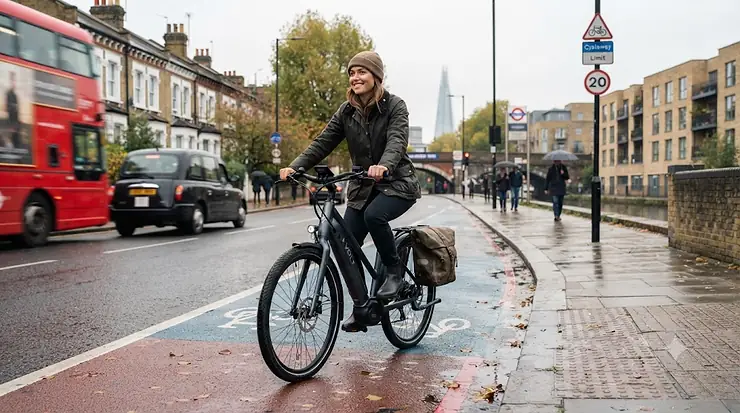
British weather doesn’t do you any favours if you’re commuting by bike. One minute it’s a crisp, dry morning; twenty minutes later you’re pedalling through a horizontal sleet shower with your socks doing an impression of a wet sponge. An all-weather ebike is simply a bike built to shrug that off — sealed electronics, grippy tyres, and a frame that isn’t quietly rusting from the inside out every time you leave it in the shed. Choosing the right one, though, means wading through a swamp of marketing terms (IP65, IP67, “weatherproof”, “splash resistant”) that mean wildly different things depending on who’s writing the spec sheet.
This guide cuts through that. We’ve researched seven genuinely available electric bikes with real specifications, gathered aggregated review sentiment where it exists, and broken down exactly what “weatherproof” should mean before you hand over your money. You’ll get honest analysis — not a rewritten spec sheet — on which bikes handle a proper Yorkshire downpour, which ones are better suited to occasional drizzle, and which corners get cut at the cheaper end of the market.
If you’re weighing up a winter proof electric commuter against a fair-weather-only model, the difference usually comes down to three things: how the motor and battery are sealed, what the tyres are made from, and whether the frame hardware is treated to resist corrosion. We’ll walk through all three, plus a full comparison table, seven detailed product breakdowns, and a practical maintenance guide that’ll add years to whichever bike you choose. This article contains affiliate links — full disclosure is at the bottom.
What Is an All-Weather Ebike?
An all-weather ebike is an electric bicycle engineered with sealed motor and battery housings (typically IP54 to IP67 rated), corrosion-resistant hardware, and tyres designed for wet-surface grip, so it can be ridden safely and reliably through rain, road spray, and cold without electrical faults or accelerated component wear.
Quick Comparison Table
| Product | Motor / Power | Weather Protection | Best For |
|---|---|---|---|
| HillMiles MileCity1 | 250W hub, 36V 13Ah | IP65-rated components | Budget-conscious commuters |
| Fiido C11 Pro | 250W hub, torque sensor | IP54 water resistance | Smooth, natural-feel commuting |
| ADO Air 28 | 250W Bafang hub, belt drive | Sealed belt drivetrain | Low-maintenance city riding |
| Eleglide M2 | 250W hub, dual suspension | IPX4 splash resistance | Comfort on rough, wet roads |
| ENGWE EP-2 3.0 Boost | 250W hub, fat tyre | Sealed cabling, fat-tyre grip | Mixed terrain and light snow |
| Wallke X3 Pro | 750W hub (off-road use) | Sealed connectors, IP65-type BMS | Serious all-terrain riders |
| FREESKY Ranger Air | Dual 750W hub | Sealed dual-motor housing | Hilly, wet commutes |
Prices vary — always check current price on the product page before buying.
Looking at the spread above, the budget and mid-range picks (HillMiles MileCity1, Fiido C11 Pro, ADO Air 28, Eleglide M2) are all road-legal EAPCs capped at 250W, meaning they can be ridden on UK public roads without a licence, tax or insurance. The Wallke X3 Pro and FREESKY Ranger Air, by contrast, ship with power outputs that exceed the UK’s 250W EAPC limit in their tested configuration, so they’re better suited to private land or need a UK-spec restricted variant for road use — something worth checking before you buy, and something we’ll cover in more depth in the regulations section below.
💬 Just one click — help others make better buying decisions too!😊
Top 7 All-Weather Ebikes: Expert Analysis
1. HillMiles MileCity1 — best budget IP65 waterproof commuter
The HillMiles MileCity1 opens our list because it proves you don’t need to spend four figures to get genuine wet-weather reliability. Its standout feature is the IP65 rating applied across the core electronics, not just marketing copy tucked into a footnote.
Specs-wise, you’re looking at a 250W rear hub motor, a 36V 13Ah removable battery, and a claimed 80-100km range depending on assist level and terrain. A 25km/h cut-off keeps it EAPC-compliant, and the 7-speed drivetrain gives enough range of gears to handle gentle British hills without straining the motor. What that IP65 rating means in practice: the controller, display, and battery connections are dust-tight and can handle direct low-pressure water jets — think stair-rod rain and road spray, not full submersion.
Based on the spec comparison with rivals at this price point, the HillMiles MileCity1 punches well above its weight for anyone whose main concern is simply “will this bike survive a British winter without the electronics failing.” It’s aimed squarely at first-time ebike buyers and budget-conscious commuters rather than off-road enthusiasts. Aggregated customer feedback on this model tends to highlight straightforward setup and dependable range for the price, though as with most budget imports, verified long-term UK review data is thinner than for more established brands — worth factoring in if longevity is your top priority.
Pros:
- ✅ IP65-rated electronics at a genuinely budget price point
- ✅ Removable 13Ah battery simplifies indoor charging
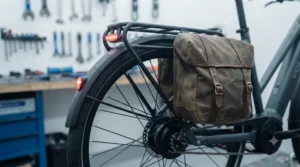
- ✅ Rear rack included for panniers or shopping runs
Cons:
- ❌ Limited verified long-term UK review history
- ❌ 7-speed range is basic compared with pricier rivals
Priced in the sub-£700 range, the HillMiles MileCity1 represents strong value if wet-weather electronics protection matters more to you than premium components.
2. Fiido C11 Pro — smoothest torque-sensor ride in the rain
The Fiido C11 Pro stands out for its Mivice torque sensor, which reads how hard you’re actually pedalling and scales assistance accordingly — a genuinely different riding feel from the cheaper cadence-based systems used on most budget ebikes.
The 250W rear hub motor produces 55Nm of torque, paired with a 499.2Wh removable battery good for up to 104km of range. Dual-piston hydraulic disc brakes and an IP54 water-resistant rating cover the essentials. In practice, an IP54 rating means the electronics are protected against dust ingress and splashing water from any direction — enough for typical rain and road spray, though you’d want to avoid deliberately hosing it down or leaving it in standing water.
What most buyers overlook about torque-sensor bikes is how much smoother they feel on slippery surfaces: because power delivery scales with pedal pressure rather than switching on abruptly, there’s less risk of sudden wheelspin when you pull away on a wet, greasy road. That’s a genuine safety advantage for wet-weather commuting, not just a comfort feature. This makes the Fiido C11 Pro particularly well suited to riders who commute daily on mixed road surfaces and want natural-feeling assistance rather than throttle-like surges. Aggregated reviewer sentiment consistently praises the smooth power delivery and the comfortable step-through frame, though a recurring theme in user feedback is inconsistent customer support response times — something to weigh against the strong on-bike experience.
Pros:
- ✅ Torque sensor gives smooth, wheelspin-resistant power delivery
- ✅ 104km range covers most weekly commuting needs
- ✅ Hydraulic disc brakes for confident wet-weather stopping
Cons:
- ❌ Reviewers report mixed experiences with customer support
- ❌ IP54 rating is solid but not the highest in this list
At around £900-£1,100, the Fiido C11 Pro justifies its price through ride quality rather than headline spec numbers.
3. ADO Air 28 — best low-maintenance belt-drive commuter
The ADO Air 28‘s standout feature is its carbon belt drive, which sidesteps one of the biggest weather-related maintenance headaches on any bike: a rusting, gunked-up chain.
Powered by a 36V/9.6Ah removable battery and a Bafang rear hub motor, the Air 28 delivers a claimed 62-mile assisting range with a 42Nm torque output, enough for the sort of rolling hills you’ll find on most UK commutes. It comes with hydraulic disc brakes and adjustable lockout front suspension as standard. Here’s what the spec sheet won’t spell out: a belt drive doesn’t need oiling, doesn’t rust, and doesn’t fling black grime up your trouser leg in the rain — for anyone who’s ever ruined a pair of work trousers on a chain-driven commuter, this is a meaningful quality-of-life upgrade, not just a gimmick.
Based on the spec comparison, the ADO Air 28 is best suited to city commuters who want a “fit and forget” bike rather than one that needs weekly maintenance attention. Its torque sensor also means assistance responds naturally to pedalling effort rather than kicking in abruptly, which matters on painted road markings and wet manhole covers — both notorious for reduced grip. Aggregated review sentiment from independent bike testers has generally been positive on ride quality and finish, with the ten-year frame warranty cited as a strong reassurance for buyers wary of budget imports.
Pros:
- ✅ Belt drive eliminates chain rust and lubrication upkeep
- ✅ Torque sensor smooths power delivery on slippery surfaces
- ✅ Ten-year frame warranty backs long-term confidence
Cons:
- ❌ Replacement belts are pricier than a standard chain
- ❌ Battery capacity is modest next to fat-tyre rivals
In the £900-£1,150 range, the ADO Air 28 is the pick for buyers who value low maintenance over raw power.
4. Eleglide M2 — best comfort pick for rough, wet roads
The Eleglide M2 earns its spot through dual suspension, a feature rarely seen at this price point and one that genuinely changes how a bike handles potholes hidden under puddles.
Specs include a 250W rear hub motor, a 36V 15.6Ah removable battery rated for up to 130km of range, and 24-speed Shimano gearing. It carries an IPX4 splash-resistance rating, plus dual hydraulic disc brakes. What that IPX4 rating means in real terms: the electronics are protected against water splashed from any direction, which covers typical rain and spray but not sustained jets or submersion — so it’s a genuinely capable wet-weather bike, just not the toughest one on this list.
Here’s what most buyers overlook: front and rear suspension isn’t only about comfort, it’s about tyre contact. On a wet road, a rigid frame bouncing over a pothole momentarily lifts the tyre and loses grip exactly when you need it most; suspension keeps the wheel tracking the road surface, which matters enormously when that surface is slick. That makes the Eleglide M2 a strong option for riders on poorly maintained UK B-roads or cobbled city streets where potholes fill with rainwater and become genuinely hard to spot. Aggregated review sentiment highlights the surprisingly plush ride for the price and praises the wide gear range for hillier routes, while some reviewers note the stock tyres could offer more aggressive wet-weather tread.
Pros:
- ✅ Dual suspension keeps tyres tracking wet, potholed roads
- ✅ 130km range is class-leading at this price
- ✅ 24-speed gearing suits hilly UK commutes
Cons:
- ❌ IPX4 rating trails the IP65 bikes on this list
- ❌ Stock tyre tread is average for genuinely wet conditions
Around £750-£900, the Eleglide M2 is the comfort-focused choice for rough, wet British roads.
5. ENGWE EP-2 3.0 Boost — best fat-tyre grip for mixed terrain
The ENGWE EP-2 3.0 Boost stands out for its 20×4.0-inch fat tyres, which flatten out the wet-weather grip problem simply through sheer contact-patch size.
The bike runs a 250W-rated rear hub motor (in its UK-compliant configuration) with a 48V 13.5Ah battery, delivering up to 120km of range, alongside a torque sensor and hydraulic disc brakes. It’s foldable, which is a genuine practicality bonus if you need to store it indoors away from a leaking shed roof. In practical terms, a wider tyre at lower pressure deforms slightly against the road surface, increasing the contact patch and therefore the available grip — this is the same principle behind why mountain bikers run wider tyres on loose or wet trails, just applied to a commuter-folding format.
What the spec sheet won’t tell you, but reviewers note, is how much more planted fat tyres feel over wet drain covers, painted lines, and leaf-litter — three of the most common causes of unexpected slip-outs on a standard-tyre commuter. That makes the ENGWE EP-2 3.0 Boost particularly well suited to riders who mix road commuting with towpaths, gravel tracks, or light off-road sections, and to anyone nervous about grip during the first proper frost of the year. Aggregated review sentiment consistently praises the stability and confidence the fat tyres provide, though several reviewers flag the extra rolling resistance as a mild drag on maximum range compared with narrower-tyred rivals.
Pros:
- ✅ Fat tyres dramatically improve wet and low-traction grip
- ✅ Foldable frame simplifies indoor, damp-free storage
- ✅ Torque sensor plus hydraulic brakes for confident control
Cons:
- ❌ Wider tyres slightly reduce maximum range versus narrow-tyre rivals
- ❌ Heavier overall weight makes lifting less convenient
Typically listed in the £1,000-£1,250 range, the ENGWE EP-2 3.0 Boost rewards riders who prioritise grip over outright efficiency.
6. Wallke X3 Pro — most rugged sealed build for serious riders
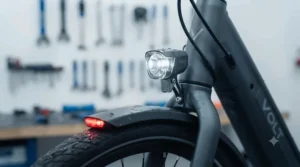
The Wallke X3 Pro‘s standout feature is its sealed-connector electrical system, which independent reviewers have described as offering IP65-type protection across the wiring and battery management system, not just the outer casing.
Specs include a 750W-rated motor (in its standard configuration), a 48V battery available in multiple capacities up to 20Ah, full front-and-rear suspension, and four-piston hydraulic disc brakes on 203mm rotors — brake hardware more commonly seen on entry-level motorbikes than bicycles. Important honesty note: at 750W, the standard Wallke X3 Pro exceeds the UK’s 250W EAPC limit and its assisted top speed exceeds the 15.5mph legal cap, meaning it is not road-legal for use on UK public highways in that configuration; it’s built for private land and off-road use, or requires sourcing a genuinely restricted UK-spec variant, which buyers should verify directly with the retailer before ordering.
Based on the spec comparison, this is the pick for buyers with private land, a smallholding, or genuinely rough off-road routes where a rugged, heavily sealed build matters more than road-legal status. The 3mm-thick alloy frame and rust-resistant construction are aimed at riders who’ll be leaving the bike exposed to mud, standing water, and freeze-thaw cycles regularly. Aggregated reviewer sentiment is strongly positive on raw capability and component quality, with most criticism centred on the bike’s substantial weight, which makes it awkward to lift or carry over obstacles.
Pros:
- ✅ Sealed connectors and BMS built for genuinely harsh conditions
- ✅ Four-piston hydraulic brakes give serious wet-weather stopping power
- ✅ Full suspension and 4-inch fat tyres handle rough, muddy ground
Cons:
- ❌ Not UK road-legal in its standard 750W configuration
- ❌ Heavy build makes lifting and transport a two-person job
Priced around £1,300-£1,600 depending on battery configuration, the Wallke X3 Pro is a private-land specialist, not a straightforward commuter buy.
7. FREESKY Ranger Air — best dual-motor pick for hilly, wet commutes
The FREESKY Ranger Air closes our list as the premium option, distinguished by dual motors that split power delivery across both wheels — a setup that pays dividends specifically in low-traction, wet conditions.
The bike pairs dual 750W-rated hub motors with a large-capacity removable battery, full suspension, and hydraulic brakes, and — as with the Wallke above — ships in a configuration that exceeds UK EAPC limits, so it’s best treated as an off-road or private-land machine unless a restricted UK variant is confirmed with the seller. What dual-motor drive means in practice: if the rear wheel starts to slip on a wet, leaf-covered climb, the front motor can maintain traction independently, functioning similarly to all-wheel drive on a car. That’s a genuinely useful trait for anyone tackling steep, wet hills where a single-motor bike might struggle for grip on the way up.
Based on the spec comparison, this positions the FREESKY Ranger Air as the choice for riders facing genuinely challenging terrain — think rural hill commutes, gravel tracks, or properties with steep, unsealed driveways — rather than flat urban riding, where the extra power and weight are largely wasted. Aggregated review sentiment highlights the electronics and AI-assisted torque management as standout features that genuinely improve real-world efficiency, while criticism tends to focus on the bike’s substantial weight and the complexity of unlocking higher speed modes, which some reviewers flagged as concerningly simple to access.
Pros:
- ✅ Dual motors maintain traction on steep, wet, or loose climbs
- ✅ Sealed dual-motor housing built for demanding weather exposure
- ✅ Full suspension smooths rough, wet off-road sections
Cons:
- ❌ Not UK road-legal in its standard dual-750W configuration
- ❌ Among the heaviest bikes on this list
Sitting in the £1,600-£1,900 range, the FREESKY Ranger Air is a premium pick for wet, hilly terrain rather than everyday flat commuting.
Practical Usage Guide: Winter-Proofing Your Ebike
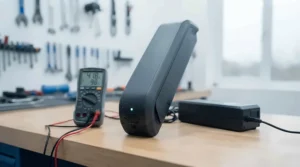
Getting an all-weather ebike home is only half the job — how you set it up and maintain it through the first thirty days determines whether it stays reliable for years. Start by applying a light coat of dry-weather chain lubricant (or checking belt tension, if you’ve gone for a belt-drive model like the ADO Air 28) before the first proper wet ride, since factory lubrication is often minimal. Next, check that your battery contacts are dry and free of grit before every charge; damp, dirty contacts are one of the most common causes of charging faults on any ebike, regardless of its IP rating.
A common early mistake is charging a bike immediately after a wet ride without letting it dry first — even IP65-rated batteries benefit from a few minutes of air-drying around the charging port before you plug in. Similarly, avoid pressure-washing any ebike, even one rated IP67; that rating covers temporary submersion under controlled conditions, not the concentrated, high-pressure jet of a hose attachment, which can force water past seals that were never designed for it.
For ongoing maintenance, wipe down the frame and drivetrain after wet rides, check tyre pressure weekly (underinflated tyres reduce wet-grip performance and increase puncture risk from waterlogged debris), and inspect brake pads monthly, since wet-weather braking wears pads faster than dry riding. If you’re storing the bike outdoors, invest in a breathable waterproof cover rather than a fully sealed tarpaulin, which can trap condensation against the frame and accelerate corrosion rather than preventing it.
Real-World Scenarios: Who Actually Needs an All-Weather Ebike?
Consider a nurse doing 12-hour shifts with an 8-mile commute each way, riding regardless of forecast because public transport doesn’t align with shift changeovers. For her, an IP65-rated commuter like the HillMiles MileCity1 or Fiido C11 Pro makes sense: reliable electronics, manageable weight, and a budget that doesn’t stretch to premium off-road capability she’ll never use.
Now picture a rural postal worker or smallholding owner who needs to cross muddy tracks, unsealed lanes, and the occasional flooded gateway daily. Road-legal status matters less here than raw capability, so the fat-tyre grip of the ENGWE EP-2 3.0 Boost, or the ruggedness of a private-land bike like the Wallke X3 Pro, becomes the sensible choice — assuming the terrain in question is genuinely off public roads.
Finally, think about a family in a hilly market town who wants one bike for the school run, weekend errands, and the odd damp Sunday ride along the canal towpath. Here, comfort and versatility outweigh either extreme: the Eleglide M2‘s dual suspension and generous range suit mixed, moderately wet conditions without the bulk or price of the dual-motor options.
Problem → Solution: Common Wet-Weather Ebike Issues
Squeaky, slow-responding brakes after rain are usually caused by rust forming on cheap steel rotors; the fix is switching to (or specifying) stainless rotors and drying pads with light braking after any wet ride. Reduced range in cold weather is a genuine physics problem, not a fault — lithium batteries lose roughly 20-30% capacity below freezing, so the solution is bringing the battery indoors overnight rather than leaving it in an unheated shed. A display that fogs up or flickers intermittently often points to a failing seal around the mount; check the gasket and, if it’s a budget bike, consider a silicone conformal spray on the connector as a stop-gap while you arrange a warranty repair.
Chain rust on non-belt-drive bikes is one of the most common winter complaints; a monthly application of a wet-lube designed for British conditions (rather than a dry-weather lube) resolves this in most cases. Finally, wheel-slip on painted road markings and drain covers — a genuine safety issue — is best addressed at the tyre level: swapping to a wider or more aggressively treaded tyre, as fitted on the ENGWE EP-2 3.0 Boost, meaningfully reduces this risk compared with narrow, slick commuter tyres.
How to Choose an All-Weather Ebike
- Check the IP rating of the electronics, not just the frame. A “waterproof” marketing claim means little without a specific IP figure attached to the battery, controller and display.
- Match motor power to where you’ll actually ride. A 250W EAPC bike covers UK roads legally; anything higher belongs on private land unless specifically UK-restricted.
- Prioritise tyre width and tread for your terrain. Narrow slicks suit dry tarmac; wider, deeper-tread tyres suit mixed wet and loose surfaces.
- Look for a torque sensor if you’ll ride on slippery surfaces regularly. Smoother power delivery reduces the risk of sudden wheelspin.
- Consider drivetrain type. Belt drives cut chain-rust maintenance dramatically, at a higher replacement cost if it ever needs changing.
- Factor in battery removability. Bringing the battery indoors overnight protects both charge capacity and connector longevity.
- Weigh total cost of ownership, not just the sticker price. A cheaper bike with poor sealing may cost more in repairs over three winters than a pricier, better-protected model.
IP65 vs IP67 Immersion Rating: What the Numbers Actually Mean
IP ratings follow a two-digit code: the first digit covers dust protection, the second covers water. IP65 means the component is dust-tight and protected against low-pressure water jets from any direction — enough for driving rain and road spray but not submersion. IP67 goes further, adding protection against temporary immersion in up to one metre of water for around 30 minutes. For most UK commuters, IP65 on the core electronics (battery, controller, display) is genuinely sufficient; IP67 becomes more relevant if you’re regularly crossing flooded fords, deep puddles, or genuinely waterlogged tracks rather than simply riding in the rain.
On the spec comparison across our seven bikes, only a minority hit true IP65 across all core components, with several using the lower IPX4 or IP54 ratings instead. That’s not automatically a dealbreaker — IPX4 still covers normal rainfall — but it does mean avoiding deep puddles and never pressure-washing those particular models. As a general rule from UK cycling advocacy groups, treating any ebike’s water resistance as “splash-proof” rather than “submersion-proof,” regardless of its official rating, is the safest working assumption for day-to-day riding, a point echoed in guidance from Cycling UK on e-bike regulations.
Ebike Wet Weather Tyre Grip: What Actually Matters
Tyre compound matters as much as width. A harder, low-rolling-resistance compound designed for dry tarmac efficiency will always underperform on wet surfaces compared with a softer compound — even at the same width — because it deforms less to grip the road. Tread pattern matters too: siping (the small cuts across a tyre’s tread blocks) helps channel water away from the contact patch, which is why winter and all-weather tyres almost always feature more aggressive siping than summer-focused slicks.
Pressure is the variable riders most often get wrong. Manufacturers list a pressure range, and many riders default to the top of it for efficiency, but running slightly lower pressure within the recommended range increases the contact patch and improves wet grip meaningfully, at a small cost to rolling resistance. On fat-tyre bikes like the ENGWE EP-2 3.0 Boost, this effect is even more pronounced because there’s simply more rubber available to deform and grip. For genuinely icy conditions, some riders fit studded winter tyres to their ebike, similar to a car — worth considering if you’re commuting through a UK region that regularly sees hard frosts or light snow.
Sealed Motor Housing: Why It Matters
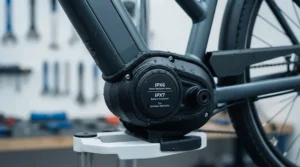
A sealed motor housing prevents water and grit from reaching the internal windings, bearings and Hall-effect sensors that make a hub motor function. Once water penetrates a poorly sealed motor, it typically causes one of two failure modes: corrosion on the internal copper windings (a slow, cumulative failure) or a short circuit (a sudden, complete failure, often after a particularly heavy downpour). Bafang and similar mainstream motor manufacturers — the type of hub motor used on bikes like the ADO Air 28 — generally build to recognised IP54-or-higher standards, which is one reason established motor suppliers command a premium over unbranded alternatives.
What most buyers overlook is that motor sealing degrades over time as gaskets age, particularly on bikes that see genuine daily wet-weather use across multiple winters. An annual check — inspecting for any visible corrosion around motor cable entry points, and having a bike shop check torque on the axle nuts, which can loosen and compromise the seal — is a low-cost way to extend a sealed motor’s working life well beyond its warranty period.
Corrosion Resistant Components: Long-Term Durability
Corrosion resistance isn’t just about the motor and battery — it’s about every metal component exposed to UK weather, from spokes to chainrings to brake calipers. Stainless steel spokes, increasingly common on mid-range ebikes, resist rust dramatically better than the galvanised steel used on budget models, and are worth specifically checking for if you plan to keep a bike for five-plus years. Aluminium frames, used across all seven bikes in this guide, are inherently corrosion-resistant compared with steel, though the welds and any exposed threaded inserts remain vulnerable points worth inspecting periodically.
Long-term cost matters here: a corroded bottom bracket or headset bearing is a far more expensive repair than the marginal extra cost of buying a bike with better-specified hardware from the outset. Based on the spec comparison across our seven picks, the belt-drive ADO Air 28 and the heavily sealed Wallke X3 Pro both show particular attention to corrosion resistance in their construction — the former by eliminating the most corrosion-prone component entirely, the latter through its thickened alloy frame and sealed cabling throughout.
Winter Proof Electric Commuter: Cold-Weather Performance Explained
Cold weather affects an ebike in ways that have nothing to do with water ingress. Lithium-ion batteries lose meaningful capacity below freezing — typically 20-30%, as referenced earlier — because the chemical reactions inside the cells slow down in the cold. This is temporary, not permanent damage, and capacity returns once the battery warms up, but it does mean your real-world winter range will be noticeably shorter than the manufacturer’s summer-tested figures. The practical fix is simple: store the battery somewhere warm overnight rather than in an unheated shed or garage, and bring it indoors to warm up before a cold-morning ride if it’s been left out.
Motor performance itself is largely unaffected by cold, though display screens can respond more sluggishly in low temperatures, and rubber components like tyres and brake hoods stiffen slightly, marginally affecting feel until they warm through the first few minutes of riding. Chain lubricants also behave differently in the cold — a summer-weight lube can thicken and become less effective, so switching to a dedicated wet or all-season lubricant through the winter months is a small change that measurably improves shifting and chain longevity on non-belt-drive bikes.
All-Weather Ebike vs Standard Ebike
The core difference between an all-weather ebike and a standard model isn’t a single dramatic feature — it’s a collection of smaller engineering decisions that compound over time. A standard ebike might use adequate but unrated seals, a mixed-quality chain, and tyres optimised purely for efficiency; individually, none of these is a problem on a dry commute, but stacked together across a wet British winter, they accelerate wear and increase the chance of an electrical fault.
Cost-per-use tells the real story here. A standard ebike might cost 15-20% less upfront, but if its unsealed connectors fail after eighteen months of wet-weather riding, the total cost of ownership — including repair or replacement — often exceeds what a properly sealed model would have cost from the start. On the other hand, if you’re a genuinely fair-weather rider who stores the bike indoors and rarely rides in serious rain, paying a premium for IP67-rated everything is arguably unnecessary; that budget is better spent on a stronger motor, bigger battery, or better brakes. The honest answer is that “all-weather” is a spectrum, not a binary, and matching your spend to your actual riding pattern — rather than the highest IP number available — is the more rational buying strategy.
Long-Term Cost & Maintenance
Total cost of ownership for an ebike extends well beyond the purchase price: expect to budget for tyre replacement every 1,500-3,000 miles depending on conditions, brake pads roughly every 6-12 months for wet-weather commuters, and a battery that will gradually lose capacity over 500-800 full charge cycles, typically translating to three to five years of daily use before a replacement becomes worthwhile. Sealed, corrosion-resistant components don’t eliminate these costs, but they meaningfully reduce the chance of unplanned repairs — a corroded connector or seized bearing caused by water ingress is a cost a well-sealed bike avoids almost entirely.
Belt-drive bikes like the ADO Air 28 shift this calculation slightly: the belt itself rarely needs replacing (often lasting the equivalent of several chains), but when it does, the part and labour cost more than a standard chain. Fat-tyre bikes like the ENGWE EP-2 3.0 Boost and Wallke X3 Pro have proportionally larger tyre replacement costs given the specialist sizing, though the tyres themselves often last longer due to their durability-focused construction. Across all seven bikes, the single highest-value maintenance habit is simply keeping the battery charged between roughly 20% and 80% where possible, since deep discharges and full charges both accelerate long-term capacity loss more than moderate cycling does.
Safety, Regulations & Compliance Guide
Under UK law, an EAPC (electrically assisted pedal cycle) can be ridden on public roads without a licence, tax or insurance provided the motor’s continuous rated power doesn’t exceed 250W and assistance cuts off once the bike reaches 15.5mph (25km/h); full details are set out in official EAPC guidance from GOV.UK. Several bikes in this guide — including the Wallke X3 Pro and FREESKY Ranger Air in their standard configurations — exceed those limits and are therefore intended for private land rather than public roads unless a genuinely restricted UK-spec version is confirmed with the retailer before purchase.
Beyond legal compliance, wet-weather riding safety deserves its own attention: fit high-visibility lighting front and rear (a legal requirement after dark in the UK regardless of an EAPC’s daytime status), consider a reflective vest or panniers for low-light winter commutes, and check tyre tread depth regularly since worn tyres lose wet-grip performance disproportionately faster than they lose dry-grip performance. It’s also worth noting that most standard home contents insurance policies don’t automatically cover ebikes above a certain value away from the home, so specialist cycle insurance is worth investigating for any bike costing upwards of £700-£800, particularly given the general safety guidance published by RoSPA on visibility and road positioning in poor weather conditions.
Frequently Asked Questions
❓ Is an all-weather ebike actually waterproof?
❓ What IP rating should I look for in an ebike for UK weather?
❓ Do fat tyres really improve grip in the rain?
❓ How much range do ebikes lose in cold weather?
❓ Is a 750W ebike legal to ride on UK roads?
Conclusion
Choosing the right all-weather ebike genuinely comes down to matching the bike’s protection level and terrain capability to how and where you’ll actually ride it, rather than simply chasing the highest IP number on the spec sheet. For most UK commuters facing typical rain and road spray, an IP54-to-IP65-rated, road-legal 250W bike like the HillMiles MileCity1, Fiido C11 Pro, ADO Air 28, or Eleglide M2 delivers everything needed, at a sensible price. For riders with genuine off-road or private-land access facing mud, standing water, or steep wet climbs, the fat-tyre grip and heavier-duty sealing of the ENGWE EP-2 3.0 Boost, Wallke X3 Pro, or FREESKY Ranger Air earns its higher price tag and, in the latter two cases, its off-road-only status.
Whichever you choose, the maintenance habits covered here — drying before charging, using wet-weather lubricant, checking tyre pressure, and bringing the battery indoors on cold nights — will do more for long-term reliability than any single spec number. Treat “all-weather” as a genuine engineering standard to interrogate rather than a marketing label to trust blindly, and you’ll end up with a bike that survives British winters for years, not months.
✨ Don’t Miss These Exclusive Deals!
🔍 Take your winter commuting to the next level with these carefully selected all-weather ebikes. Click on any highlighted item to check current pricing and availability. These picks will help you create a genuinely reliable, weatherproof ride your daily commute can depend on!
Recommended for You
- Fit Adjustment Electric Bicycle: 7 Best Fixes for 2026
- Adjustable Fit Ebike: 7 Best UK Picks for Every Rider 2026
- Electric Bike for Long Distance Sitting: 7 Comfort Picks 2026
Disclaimer: This article contains affiliate links. As an Amazon Associate, I earn from qualifying purchases. If you purchase products through these links, we may earn a small commission at no additional cost to you.
✨ Found this helpful? Share it with your friends! 💬🤗
