In This Article
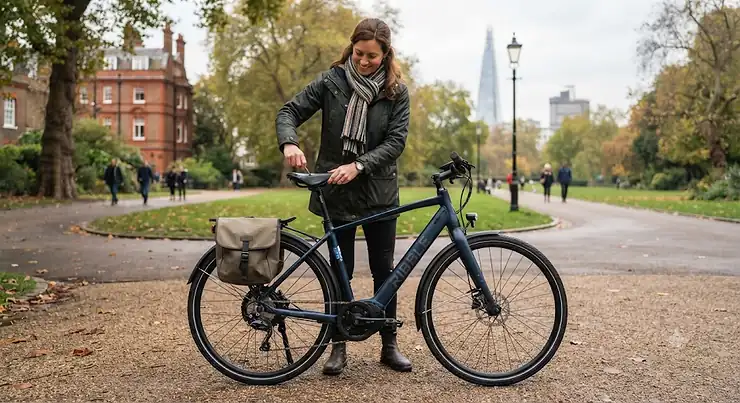
Buy an electric bicycle off the shelf and you’re getting a compromise. Manufacturers build around an “average” rider, but nobody actually rides an average body — they ride their own knees, their own spine, their own 5’2″ or 6’3″ frame — and a stock stem length or fixed seatpost rarely lines up with that reality. The result is a familiar list of complaints: sore knees by the second commute, a nagging ache between the shoulder blades, wrists that go numb halfway to the office. None of that is inevitable, and fixing it usually doesn’t mean buying a new bike.
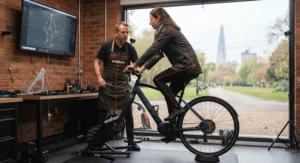
So what does fit adjustment on an electric bicycle actually involve? It means changing the components that control your riding position — stem length and angle, saddle height and setback, handlebar reach — so the geometry matches your body rather than the factory default, reducing strain on knees, back, neck and wrists while improving pedalling efficiency.
This guide is built around seven real, currently available fit-adjustment products, researched and compared honestly rather than lifted from a spec sheet. We’ll walk through adjustable stems that change bar height and reach, suspension and dropper seatposts that solve saddle height on the fly, and the genuine biomechanics behind saddle height formulas and knee angle — the kind of detail Cycling UK covers in its guidance on legal e-bike standards, because fit and legality both start with understanding your machine properly. Whether you’re commuting five miles a day on a heavy step-through or trying to stop your partner’s knees complaining on the family cargo e-bike, there’s a genuine fix below rather than a generic “just get used to it.”
Quick Comparison Table
| Product | Best For | Adjustment Type | Price Range |
|---|---|---|---|
| Redshift ShockStop Suspension Stem | Best premium bar height & neck strain fix | Angle + suspension | £160-£200 range |
| CYSKY Adjustable Stem Riser | Best budget bar height fix | Height riser | Under £15 |
| Zoom SP442 Suspension Seatpost | Best value ebike saddle comfort | Suspension + preload | £20-£35 range |
| Brand-X Ascend Dropper Post | Best budget dropper post ebike commuter | Cable-actuated dropper | Around £100 |
| PNW Components Cascade Dropper Post | Best externally-routed commuter dropper | Cable-actuated dropper | £140-£180 range |
| CXWXC Wireless Electric Dropper Post | Best cable-free ebike dropper | Wireless dropper | £40-£70 range |
| Redshift ShockStop Endurance Seatpost | Best premium saddle comfort & fit | Suspension seatpost | £120-£150 range |
Reading across the table, there’s a clear split between stem-based fixes (which change reach and bar height) and seatpost-based fixes (which change saddle height, comfort and, with a dropper, height on the fly). Based on the spec comparison, riders dealing primarily with neck or wrist strain should start with the stem category, while anyone struggling with knee pain or getting on and off a heavy ebike at traffic lights should look at the dropper post options instead. Budget doesn’t dictate function here — the £15 CYSKY Adjustable Stem Riser solves the same core reach problem as the £180 Redshift ShockStop Suspension Stem, just without the shock absorption.
💬 Just one click — help others make better buying decisions too!😊
Top 7 Fit Adjustment Electric Bicycle Products: Expert Analysis
1. Redshift ShockStop Suspension Stem — best for bar height and neck strain relief
The Redshift ShockStop Suspension Stem solves two fit problems at once, which is why it tops this list. First, it’s a genuine angle-adjustable stem — available in a +/-6 degree format across several lengths, plus a +30 degree high-rise version — so you can meaningfully raise or lower bar height to correct the forward lean that so often drives neck strain. Second, it adds up to 20mm of vertical suspension travel via five swappable elastomers, absorbing road buzz before it ever reaches your wrists and shoulders.
On paper this means a rider who currently hunches forward with a locked-out, jarring stem gets both a more upright angle option and genuine shock absorption in one component swap — precisely the two changes that BikeRadar’s physio-reviewed guide to cycling neck pain identifies as the core fix for excessive bar drop and reach. The elastomers are user-swappable, so heavier riders or rougher commuting routes can firm up the feel without buying a different stem.
Reviewers consistently note a genuine, noticeable reduction in hand and wrist fatigue on longer rides, particularly over cobbles, potholed cycle lanes and speed bumps — exactly the terrain a typical UK commute involves. The main honest caveat from real usage reports is weight: at over 300g it’s noticeably heavier than a fixed alloy stem, and the visible elastomer mechanism isn’t to everyone’s taste aesthetically.
This suits commuters and gravel-leaning ebike riders who’ve already identified reach or vibration as their specific problem and want a single, well-engineered component rather than a budget stopgap.
Pros:
- ✅ Angle-adjustable in +/-6° and +30° high-rise options
- ✅ Up to 20mm of tuneable suspension travel via elastomers
- ✅ Reduces hand, wrist and shoulder fatigue on rough roads
Cons:
- ❌ Noticeably heavier than a standard fixed stem
- ❌ Premium price for what is, mechanically, still just a stem
At around £160-£200, the Redshift ShockStop Suspension Stem is a genuine investment, best justified if you already ride daily and vibration or bar height is your specific complaint.
2. CYSKY Adjustable Stem Riser — best budget bar height fix
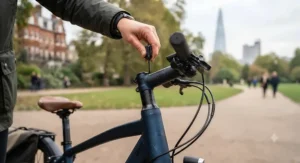
Not every fit problem needs a premium solution, and the CYSKY Adjustable Stem Riser exists for exactly that reason. It’s a simple aluminium alloy riser that sits between your fork steerer and existing stem, raising handlebar height by up to several inches and letting you tilt the angle to bring the bars closer or reduce forward reach.
The spec is straightforward: fits standard 1-1/8 inch steerer tubes, compatible with most flat-bar setups including many hybrid and commuter electric bicycles, and installs with basic tools in well under half an hour. What most buyers overlook about a riser like this is that it doesn’t just raise the bars — tilting it also shortens effective reach, which is precisely the adjustment BikeRadar’s neck pain research flags as the fix for riders who feel like they’re constantly overreaching for the grips.
Aggregated reviewer sentiment is positive on the core function — riders repeatedly report a genuinely more upright, comfortable position after fitting — but a recurring and fair complaint is the lack of included instructions, meaning less mechanically confident owners may need to look up an installation guide before starting. There’s also a legitimate ceiling on how much rise you should add before cable length (for both mechanical brakes and, on an ebike, any handlebar-routed wiring) becomes a problem.
Based on the spec and price point together, this is the sensible first step for anyone unsure whether bar height is really their issue, before committing to a pricier suspension stem.
Pros:
- ✅ Genuinely raises and adjusts bar angle to reduce reach
- ✅ Very low cost entry point into stem adjustment
- ✅ Straightforward installation with basic tools
Cons:
- ❌ No printed installation instructions included
- ❌ Excessive rise can strain brake and ebike display cabling
Priced under £15, the CYSKY Adjustable Stem Riser is close to risk-free as a first experiment in fixing bar height.
3. Zoom SP442 Suspension Seatpost — best value ebike saddle comfort upgrade
Saddle height gets most of the attention in fit discussions, but saddle comfort over bumps matters just as much on a heavier electric bicycle, and the Zoom SP442 Suspension Seatpost targets exactly that. It’s a multi-link suspension design offering 45mm of shock-absorbing travel with adjustable preload, explicitly rated and marketed for commuter and e-bike use with a maximum load around 242lbs (110kg) — a genuinely useful figure given how much heavier a mid-drive electric bicycle plus rider can be compared with an analogue bike.
Here’s what the spec sheet doesn’t fully explain: a suspension seatpost doesn’t change your saddle height formula, but it does soften the impact of small height-related errors, meaning the “sweet spot” knee angle window becomes slightly more forgiving over rough tarmac and potholes, which UK cycle lanes have no shortage of. The adjustable preload dial lets heavier or lighter riders tune firmness rather than accepting a single fixed spring rate.
Real review sentiment across retailers is broadly positive on comfort, particularly for riders switching from a rigid post on a hybrid or commuter ebike, with several buyers specifically noting reduced lower back fatigue on longer rides. A consistent minor criticism is that the multi-link mechanism adds a small amount of pedalling “bob” under hard effort, more noticeable on an unassisted bike than on a pedal-assist electric bicycle where the motor smooths out power delivery.
This is a strong pick for anyone whose “fit problem” is really a comfort problem on rough surfaces, rather than a pure geometry mismatch.
Pros:
- ✅ 45mm of adjustable-preload suspension travel
- ✅ High weight rating suited to heavier ebikes and riders
- ✅ Genuinely reduces lower back fatigue on rough roads
Cons:
- ❌ Slight pedalling bob under hard, unassisted effort
- ❌ Doesn’t address saddle height itself, only comfort
At roughly £20-£35, the Zoom SP442 Suspension Seatpost is one of the most cost-effective comfort upgrades on this list.
4. Brand-X Ascend Dropper Post — best budget dropper post ebike commuter
Dropper posts started life as a mountain biking tool, but they’ve quietly become one of the smartest fit-adjustment upgrades for commuter electric bicycles, and the Brand-X Ascend Dropper Post is widely regarded — including by independent UK cycling press — as the best-value entry point into the category. A remote lever, mounted on the bars, lets you drop the saddle instantly at a red light or junction and raise it again once moving, rather than living with a fixed height that’s either too high to plant a foot safely or too low for efficient pedalling.
Available across a wide range of drop lengths (from around 85mm up to 170mm depending on version) and most common seatpost diameters, it uses a cable-operated remote — genuinely simple to retrofit onto most commuter and hybrid ebike frames without special tooling. Independent UK reviewers have specifically praised it as excellent value, noting they “literally can’t fault” the mechanism for the price versus smoother, pricier rivals.
Reviewers consistently note that once riders get used to dropping the saddle at stops, going back to a fixed post feels genuinely unsafe by comparison, particularly for shorter riders on taller step-over ebike frames who previously had to awkwardly tip-toe or hop off the saddle at every stop. The honest trade-off, based on the review pattern, is that action feels less silky than premium droppers — a touch of stiction on return stroke — and the cable routing needs proper tensioning to avoid sponginess in the lever.
This is the standout pick for anyone whose actual problem is “saddle height is right for pedalling but wrong for stopping.”
Pros:
- ✅ Genuinely solves the stop-light saddle height compromise
- ✅ Wide range of drop lengths and diameter compatibility
- ✅ Exceptional value against smoother, pricier rivals
Cons:
- ❌ Slightly less smooth action than premium dropper posts
- ❌ Cable tension needs proper setup to avoid a spongy lever feel
At around £100, the Brand-X Ascend Dropper Post delivers a genuine safety and comfort upgrade most riders wouldn’t expect at this price.
5. PNW Components Cascade Dropper Post — best externally-routed commuter dropper
Many commuter and hybrid electric bicycles were never designed with internal dropper-post cable routing in mind, and that’s precisely the gap the PNW Components Cascade Dropper Post fills. It uses fixed external cable routing at the mid-cap rather than the post head, meaning it retrofits cleanly onto frames without dedicated internal ports — a real practical advantage over droppers built primarily for modern mountain bikes.
Built around a sealed air cartridge system known for reliable performance even in cold, damp conditions, it’s available in 125mm, 150mm and 170mm travel options with a 2-bolt microadjust head for precise saddle angle. Based on the spec comparison against the Brand-X pick above, the Cascade sits a tier higher on build quality and comes backed by a lifetime warranty from the manufacturer, which matters if the post is doing daily duty on a year-round commute.
What most buyers overlook about external routing specifically is that it also makes maintenance considerably easier — no need to strip cable housing out of the frame to service the mechanism, a genuine advantage for owners who’d rather do their own basic upkeep than book a workshop slot. Real UK buyer reviews highlight straightforward installation and note it’s a sensible, cost-effective replacement for an older or failed dropper, with several specifically comparing it favourably to pricier alternatives they’d previously owned.
A fair caveat is that the post doesn’t include a lever or cable and housing as standard — that’s sold separately or bundled — so budget for the full kit rather than the post price alone.
Pros:
- ✅ External routing fits frames without internal cable ports
- ✅ Sealed air cartridge performs reliably in cold, wet conditions
- ✅ Backed by a genuine lifetime manufacturer warranty
Cons:
- ❌ Lever, cable and housing typically sold separately
- ❌ Setup fiddlier than a plug-and-play fixed seatpost
Priced around £140-£180 for the post itself, the PNW Components Cascade Dropper Post is a strong mid-tier pick for a genuinely daily-driven commuter electric bicycle.
6. CXWXC Wireless Electric Dropper Post — best cable-free ebike dropper
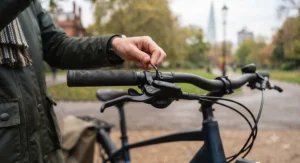
Modern electric bicycles already have a crowded cockpit — a display, a throttle or walk-assist button, lights, sometimes a phone mount — and finding room for another cable-operated remote lever is a genuine practical headache. The CXWXC Wireless Electric Dropper Post solves this directly with a battery-powered, cable-free actuation system, controlled via a compact wireless button that mounts almost anywhere on the bar without adding another housing run.
Rated IP67 dust and waterproof, it’s available across common 30.9mm and 31.6mm diameters with a choice of 100mm, 120mm or 150mm travel. On paper this means installation is dramatically simpler than a cable-actuated dropper — no housing to route through a frame that was never designed for it, no cable tension to fettle — which matters a great deal on an ebike where internal frame space is already partly occupied by battery and wiring.
Reviewers consistently flag the quick, responsive actuation as a genuine strength, and the wireless button’s small footprint as a real advantage for already-crowded ebike handlebars. The honest downside, reflected in real buyer feedback, is that it’s a newer, less established category than mechanical droppers, so long-term reliability data and battery life in daily use are less proven than for the mechanical alternatives on this list — worth factoring in if you want a component with a decade of track record behind it.
This is best suited to commuters specifically frustrated by handlebar clutter, or anyone retrofitting a dropper to a frame with no existing internal routing at all.
Pros:
- ✅ Genuinely cable-free — no routing required through the frame
- ✅ IP67-rated for dust and wet-weather commuting
- ✅ Compact wireless remote suits crowded ebike cockpits
Cons:
- ❌ Less established long-term reliability track record
- ❌ Battery charging is an added maintenance task
Sitting around £40-£70, the CXWXC Wireless Electric Dropper Post is a genuinely clever, budget-friendly answer to the ebike-specific routing problem.
7. Redshift ShockStop Endurance Suspension Seatpost — best premium saddle comfort and fit
Rounding out this list, the Redshift ShockStop Endurance Suspension Seatpost pairs with the ShockStop stem above to address the saddle side of the fit equation with genuine engineering rather than a basic sprung post. It uses the same elastomer-based suspension philosophy — swappable inserts to tune firmness — delivering meaningful vertical compliance without the vague, springy “bounce” that cheaper suspension posts are often criticised for.
Available in standard diameters to suit most commuter and hybrid electric bicycle frames, the design keeps saddle height and setback consistent through the travel range, which matters for maintaining the correct knee angle rather than having the saddle effectively lower itself unpredictably mid-stroke, as some cheaper multi-link suspension posts do.
Based on the spec comparison with the budget Zoom pick earlier, the difference buyers are paying for here is control and consistency under load rather than raw comfort alone — reviewers consistently note the ShockStop range feels notably more planted and predictable when climbing out of the saddle or hitting a pothole mid-pedal-stroke, precisely the moment a vague suspension post can feel unsettling. The obvious trade-off is price, sitting meaningfully above the Zoom SP442 for a refinement gain that matters most to daily, higher-mileage riders rather than occasional commuters.
Pros:
- ✅ Tuneable elastomer suspension avoids vague, springy bounce
- ✅ Maintains consistent saddle height and setback through travel
- ✅ Pairs naturally with the ShockStop stem for full-bike comfort
Cons:
- ❌ Premium price relative to basic suspension seatposts
- ❌ Marginal benefit for low-mileage or occasional riders
Typically priced in the £120-£150 range, this is the pick for daily commuters who’ve already tried cheaper fixes and want the final word in saddle comfort.
Practical Adjustment Guide: Setting Up Your Electric Bicycle Fit
Start with saddle height, since it affects everything downstream of it, including how a stem adjustment will feel. The most widely used starting point is the LeMond formula — multiply your barefoot inseam measurement (in millimetres, standing with a book held snug between your legs as a saddle proxy) by 0.883, then set that as the distance from the centre of the bottom bracket to the top of the saddle. It’s a genuinely useful ballpark, but independent bike-fit research summarised by Cycling Weekly notes that formula-based methods like this fall outside the ideal knee angle range more than half the time, because they don’t account for individual femur, tibia and foot-length proportions.
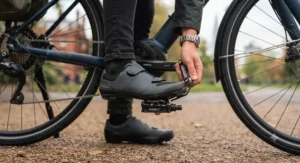
That’s where knee angle comes in as the more reliable check. With a pedal at the six o’clock position and your heel resting on it, your leg should be almost fully extended; once you clip in normally, most bike-fit research places the optimal knee flexion angle at the bottom of the stroke somewhere around 25-35 degrees (roughly 140-150 degrees of extension), a range associated with both better pedalling efficiency and lower injury risk. Adjust in small 5-10mm increments rather than guessing at a big change, and give each adjustment at least a few rides before judging it.
Once saddle height is close, move to the stem and bar height. A common first-30-days mistake is over-adjusting the stem before saddle height is settled, since a saddle that’s genuinely too low or high changes how far forward you naturally lean regardless of stem length. Fit the components from this list, note the change, and give your body a week to adapt before making a second adjustment on top of the first.
Real-World Scenarios: Matching the Fix to the Rider
Consider a 5’2″ commuter riding a mid-sized step-through electric bicycle bought secondhand — she finds the saddle height that suits her pedalling stroke is genuinely too tall to plant a foot flat at traffic lights, a common and slightly nerve-wracking problem on unisex frame sizing. The Brand-X Ascend Dropper Post is the obvious answer here: correct pedalling height on the move, instant safe height at every stop, without compromising either.
Now picture a 6’3″ rider on the same class of hybrid ebike, hunched forward with sore wrists after a 40-minute daily commute on pockmarked B-roads. For him, the Redshift ShockStop Suspension Stem addresses both the reach problem (via the high-rise angle option) and the vibration problem (via the elastomer suspension) in one component, which is more efficient than solving each separately.
Finally, picture a family with a heavy-duty cargo electric bicycle shared between two adults of noticeably different heights doing the school run and grocery runs. Here, a combination approach — the CYSKY Adjustable Stem Riser for quick bar-angle changes between riders, paired with the CXWXC Wireless Electric Dropper Post for tool-free saddle height changes at the push of a button — turns a genuinely awkward shared-bike compromise into something both riders can adjust in seconds.
Common Mistakes When Adjusting Electric Bicycle Fit
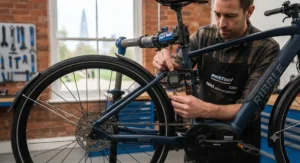
The most frequent mistake is changing multiple fit variables at once — saddle height, stem length and bar angle all in one sitting — which makes it almost impossible to identify which change actually fixed (or worsened) the discomfort. Adjust one thing, ride it for several sessions, then move to the next.
A second common error is chasing an aggressive, low, “sporty” position on a heavy electric bicycle that’s genuinely built for upright commuting comfort, not performance riding — the extra weight of a mid-drive motor and battery changes handling enough that a low, stretched-out position often creates more strain than it solves on this category of bike. Third, many riders adjust saddle height using feel alone and never revisit it after fitting new pedals, shoes or a dropper post, all of which change effective leg length and quietly shift the ideal setting. Fourth, it’s easy to overlook that raising bar height with a riser or high-rise stem shortens effective reach as a side effect — a genuinely useful fact if reach is also a problem, but confusing if you’re not expecting the saddle-to-bar distance to change too. Finally, plenty of owners buy a premium suspension component expecting it to fix a pure geometry mismatch — no amount of elastomer suspension corrects a saddle that’s simply the wrong height.
Bar Height and Neck Strain: What the Evidence Says
Neck pain is one of the most common cycling complaints, and it’s rarely really about the neck itself. Physiotherapists interviewed for BikeRadar’s dedicated guide on cycling neck pain consistently point to excessive handlebar drop and reach as the root mechanical cause, forcing prolonged neck hyperextension as the rider cranes their head up to see the road, which fatigues the deep neck extensor muscles and shifts load onto the trapezius over time.
The fix isn’t always “raise the bars as high as possible” — bike fitters note that bars set too high can encourage riders to lean their weight onto them rather than engaging the core, creating a different problem. The more reliable approach is reducing excessive reach and drop together, which is precisely what an angle-adjustable stem or riser achieves, followed by fine-tuning height based on how your neck actually feels after a real commute rather than a five-minute test ride around the block.
Dropper Post vs Fixed Seatpost for Commuter Ebikes
A fixed seatpost is simpler, lighter and cheaper, and for a rider who never needs to compromise saddle height for anything other than pedalling efficiency, that simplicity is genuinely fine. The comparison shifts, however, for anyone riding in traffic, stopping frequently, or sharing a bike between different-height household members.
A dropper post adds genuine safety value at junctions and traffic lights by letting the rider drop a foot flat to the ground instantly, without pre-emptively lowering the saddle (and therefore compromising pedalling efficiency) for the whole ride. The trade-off is added weight, a modest cost, and — for cable-actuated versions — a small amount of extra maintenance. On balance, for anyone doing genuine stop-start urban commuting on an electric bicycle, the safety and comfort case for a dropper post is considerably stronger than on a rural leisure bike ridden mostly at a steady pace with few stops.
Regulations and Safety: What UK E-Bike Riders Should Know
Fit adjustments don’t change your electric bicycle’s legal status, but it’s worth understanding where the two intersect. Under gov.uk’s official guidance on electrically assisted pedal cycles, a bike qualifies as an EAPC — usable without a licence, tax or insurance — only if the motor’s maximum continuous rated power doesn’t exceed 250 watts and assistance cuts out at 15.5mph, with pedals that must actually be capable of propelling the bike.
None of the fit-adjustment components covered here affect that classification, since stems, seatposts and droppers aren’t part of the motor or assistance system. That said, any component swap that adds handlebar-mounted electronics — like the wireless dropper remote — is worth double-checking for cable and mounting clearance against your existing ebike display and controls before committing to a purchase, simply to avoid a fiddly reinstall. As with any bike modification, it’s sensible practice to have a qualified mechanic check torque settings on stem and seatpost clamps, particularly on carbon-framed electric bicycles where over-tightening risks cracking the frame.
Frequently Asked Questions
❓ How do I know if my saddle height is wrong on my electric bicycle?
❓ Can I fit a dropper post to any commuter ebike?
❓ What's the LeMond formula for saddle height?
❓ Does raising my handlebars fix neck pain while cycling?
❓ Do I need a professional bike fit for an electric bicycle?
Conclusion
Getting fit adjustment right on an electric bicycle usually comes down to identifying which specific discomfort you’re actually solving, rather than guessing at a general upgrade. Riders dealing with neck, shoulder or wrist strain should start with the stem category — the budget CYSKY Adjustable Stem Riser as a low-risk first test, or the Redshift ShockStop Suspension Stem if vibration is a genuine daily complaint. Riders whose issue centres on saddle comfort over rough roads are well served by the Zoom SP442 Suspension Seatpost, while the more refined Redshift ShockStop Endurance Seatpost suits daily, higher-mileage commuters willing to pay for consistency.
For anyone whose real problem is the compromise between pedalling height and stopping safely, a dropper post is the single most transformative fix on this list — the Brand-X Ascend for value, the PNW Components Cascade for externally-routed reliability, or the CXWXC Wireless Electric Dropper Post for a genuinely cable-free retrofit on a crowded ebike cockpit. Adjust one variable at a time, give each change a proper trial, and most riders find their electric bicycle feels like a genuinely different machine within a couple of weeks.
✨ Ready to Fix Your Electric Bicycle’s Fit?
🔍 Compare the full range above, check current pricing and availability, and pick the adjustment that matches your body and your commute today!
Recommended for You
- Adjustable Fit Ebike: 7 Best UK Picks for Every Rider 2026
- Electric Bike for Long Distance Sitting: 7 Comfort Picks 2026
- Most Comfortable eBike Saddle 2026: 7 Picks That Actually Work
Disclaimer: This article contains affiliate links. As an Amazon Associate, I earn from qualifying purchases. If you purchase products through these links, we may earn a small commission at no additional cost to you.
✨ Found this helpful? Share it with your friends! 💬🤗
