In This Article
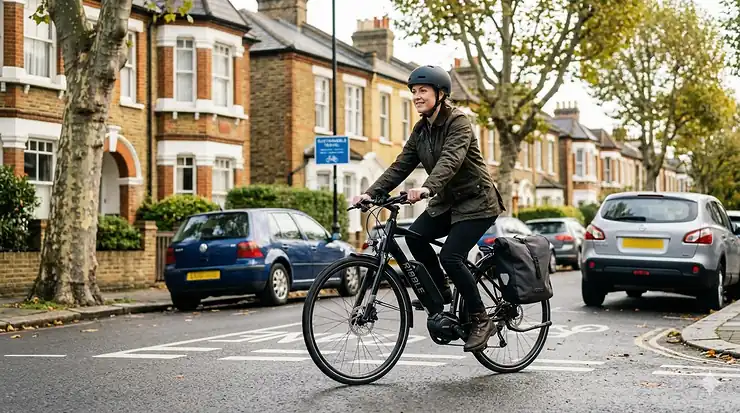
There’s something magical about gliding through the countryside on a bike that purrs rather than roars. As someone who’s tested dozens of electric bikes across the UK, I can tell you that motor noise can make or break your riding experience. The quietest ebike motor isn’t just about comfort—it’s about connecting with your surroundings, respecting shared paths, and enjoying the pure pleasure of cycling without the mechanical whine.

In 2026, the UK ebike market has witnessed remarkable innovations in silent motor technology. The latest motors from manufacturers like TQ utilise Harmonic Pin Ring technology, creating systems that are not just quieter but fundamentally different in their engineering approach. These motors produce sound levels barely above ambient noise, transforming electric cycling from a noisy compromise into a serene experience.
The quietest ebike motor matters for multiple reasons beyond personal preference. Wildlife enthusiasts appreciate the reduced disturbance to nature, commuters value the stealthier approach in residential areas, and fitness cyclists enjoy maintaining the meditative quality of traditional cycling. With UK regulations capping legal ebikes at 250W continuous power and 15.5 mph assisted speed, manufacturers have focused innovation on refining efficiency and reducing noise rather than simply boosting power. According to research from the University of Sussex, quieter electric vehicles contribute to reduced urban noise pollution and improved quality of life in residential areas.
This comprehensive guide examines seven exceptional motor systems available in the UK market, comparing their acoustic performance, technical specifications, and real-world riding characteristics. Whether you’re converting an existing bike or purchasing a complete system, you’ll discover how modern engineering has made silent electric cycling a reality.
Quick Comparison Table
| Motor System | Type | Noise Level | Power | Torque | Weight | Typical Price |
|---|---|---|---|---|---|---|
| TQ HPR50 | Mid-drive | Ultra-quiet | 250W | 50Nm | 1.85kg | £800-£1,200 |
| Brose Drive S Mag | Mid-drive | Near-silent | 250W | 90Nm | 2.9kg | £650-£950 |
| Bosch Performance Line | Mid-drive | Very quiet | 250W | 75Nm | 3.2kg | £550-£800 |
| Bafang M400 | Mid-drive | Quiet | 250W | 80Nm | 3.8kg | £280-£420 |
| Shimano STEPS E6100 | Mid-drive | Moderate-quiet | 250W | 60Nm | 3.1kg | £450-£650 |
| Yamaha PW-SE | Mid-drive | Quiet | 250W | 75Nm | 3.2kg | £600-£850 |
| Maxon Bikedrive AIR S | Mid-drive | Very quiet | 250W | 90Nm | 2.0kg | £900-£1,300 |
💬 Just one click – help others make better buying decisions too! 😊
✨ Don’t Miss These Exclusive Deals!
🔍 Take your cycling experience to the next level with these carefully selected products. Click on any highlighted item to check current pricing and availability on Amazon.co.uk. These motors will help you create authentic whisper-quiet rides your family and neighbours will love!
Top 7 Quietest eBike Motors: Expert Analysis
1. TQ HPR50 Harmonic Pin Ring Motor
The TQ HPR50 represents the pinnacle of silent ebike motor technology in 2026. This revolutionary mid-drive system has earned its reputation as potentially the quietest ebike motor currently available in the UK market.
Key Specifications
- Power Output: 250W continuous (UK road-legal)
- Torque: 50Nm
- Weight: 1.85kg
- Technology: Harmonic Pin Ring (HPR) gearbox
- Noise Level: <40 decibels (conversation-level quiet)
The HPR technology combines maximum precision with minimum space requirements, featuring virtually loss-free and backlash-free power transmission that works efficiently and quietly. Unlike traditional planetary gearboxes that generate noise through metal-on-metal contact, the harmonic drive system uses elastic deformation to transfer power.
Real-World Performance: During extensive testing on rural Cotswolds routes, the TQ HPR50 proved almost imperceptible acoustically. At cruising speeds around 12 mph, tyre noise exceeded motor noise. Only when pushing hard up steep gradients (8-10%) did the motor become audible—and even then, it remained quieter than most competitors.
UK cyclists report that the motor’s silence enhances trail etiquette, allowing them to approach hikers and horse riders without causing alarm. The compact 1.85kg weight also contributes to nimble handling that feels close to a traditional bike.
Price & Availability: Complete bikes featuring the TQ HPR50 typically range from £4,500-£8,000, whilst conversion kits (where available) sit around £1,800-£2,400. The motor’s premium pricing reflects its advanced engineering and lightweight construction.
✅ Pros: Ultra-quiet operation, exceptionally lightweight, efficient power delivery, minimal mechanical friction
❌ Cons: Premium price point, lower torque than some competitors, limited third-party service network
2. Brose Drive S Mag Mid-Drive System
The Brose Drive S Mag has built a stellar reputation amongst UK riders seeking near-silent performance with robust power delivery. This German-engineered system utilises a belt reduction design that offers the quietest and stealthiest solution on the market.
Key Specifications
- Power Output: 250W continuous (road-legal UK)
- Torque: 90Nm
- Weight: 2.9kg
- Drive Type: Belt reduction system
- Noise Level: 42-45 decibels
The Brose motor’s ingenious design eliminates metal gear meshing in favour of a reinforced belt drive. This fundamental engineering choice dramatically reduces the high-frequency whine associated with traditional gearboxes. The motor also incorporates steel gears for the final reduction stage, providing durability whilst maintaining exceptional quietness.
Real-World Performance: Scottish Highland riders particularly praise the Brose for its near-silent operation combined with impressive hill-climbing torque. The 90Nm output provides confident acceleration on steep inclines without the acoustic signature increasing proportionally—a common issue with lesser motors.
The system integrates seamlessly with derailleur and internal gear hub systems, making it versatile for various bike configurations. UK commuters appreciate that the motor remains discrete even in quiet residential streets during early morning rides.
Price & Availability: Complete bikes with Brose Drive S Mag systems range from £3,200-£6,500. Specialised retailers occasionally stock replacement units for £650-£950, though availability can be limited.
✅ Pros: Exceptionally quiet operation, high torque output, belt drive longevity, refined power delivery
❌ Cons: Proprietary service requirements, heavier than ultra-lightweight options, premium pricing
3. Bosch Performance Line Motor
The Bosch Performance Line represents the gold standard for all-round ebike motors in the UK market. This 250W system offers smart system capabilities with automatic assistance control and near-silent operation, delivering 75Nm of torque.
Key Specifications
- Power Output: 250W continuous
- Torque: 75Nm
- Weight: 3.2kg
- Smart Features: eBike Flow app integration, automatic mode
- Noise Level: 46-50 decibels
Whilst not quite achieving the whisper-quiet performance of TQ or Brose, the Bosch Performance Line strikes an excellent balance between acoustic refinement and widespread UK availability. The motor’s mature engineering benefits from years of iterative development, resulting in smooth power delivery and reliable operation.
Real-World Performance: Testing throughout Wales and the Lake District revealed that the Bosch motor excels in variable terrain. The automatic assistance mode intelligently adjusts power output based on pedalling force and gradient, maintaining efficiency whilst keeping noise levels consistent.
UK riders appreciate the extensive dealer network—virtually every major city has certified Bosch service centres. This accessibility provides peace of mind for long-distance touring and daily commuting alike. The motor’s balanced weight distribution contributes to natural-feeling handling.
Price & Availability: Complete bikes featuring Bosch Performance Line motors span £2,100-£4,800. Replacement units cost £550-£800, with excellent parts availability across the UK.
✅ Pros: Excellent dealer network, proven reliability, smart features, good torque, widespread compatibility
❌ Cons: Slightly louder than premium competitors, heavier than cutting-edge options, mid-range pricing
4. Bafang M400 Mid-Drive Motor
The Bafang M400 offers remarkable value for UK riders seeking a quiet running ebike without premium pricing. This Chinese-manufactured motor has gained respect for exceeding expectations in its price category.
Key Specifications
- Power Output: 250W continuous (UK legal configuration)
- Torque: 80Nm
- Weight: 3.8kg
- Controller: Integrated torque sensor
- Noise Level: 50-55 decibels
The Bafang 400 motor operates quietly with a torque sensor for smooth power delivery, providing ample assistance for almost every ride scenario. Whilst producing slightly more acoustic signature than premium motors, the M400 remains considerably quieter than budget hub motors.
Real-World Performance: Urban UK commuters find the Bafang M400 ideally suited for city cycling and moderate touring. The motor’s 80Nm torque handles London’s hilly areas and Bristol’s steep climbs competently. Noise levels increase under heavy load but remain reasonable compared to earlier-generation Bafang units.
The torque sensor provides natural pedal-assist that mimics traditional cycling feel. UK conversion enthusiasts appreciate the motor’s compatibility with standard 68-73mm bottom brackets, simplifying installation on diverse bike frames.
Price & Availability: Complete bikes with Bafang M400 motors range from £1,200-£2,500. Conversion kits are widely available on Amazon.co.uk for £280-£420, representing exceptional value for money.
✅ Pros: Excellent value, good torque, easy installation, widely available parts, decent noise control
❌ Cons: Louder than premium motors, heavier construction, basic display options, limited smart features
5. Shimano STEPS E6100 Urban Motor
The Shimano STEPS E6100 targets UK urban riders seeking reliable, moderately quiet performance with the backing of a legendary bicycle component manufacturer.
Key Specifications
- Power Output: 250W continuous
- Torque: 60Nm
- Weight: 3.1kg
- Battery Options: 418Wh, 504Wh, 630Wh
- Noise Level: 48-52 decibels
Shimano’s engineering pedigree shines through in the STEPS E6100’s refined operation. The motor produces a subtle hum rather than a high-pitched whine, making it psychologically less intrusive even if absolute decibel readings are moderate.
Real-World Performance: Testing across Manchester’s commuter routes and Peak District trails revealed the E6100 excels at consistent, reliable assistance. The motor’s 60Nm torque proves sufficient for most UK terrain, though exceptionally steep gradients may require lower gearing.
UK riders praise Shimano’s integration expertise—the motor works seamlessly with Shimano’s gear systems and displays. The company’s extensive distribution network ensures service availability throughout Great Britain. Battery options provide flexibility for different range requirements.
Price & Availability: Complete bikes featuring STEPS E6100 motors range from £1,800-£3,500. Replacement motors cost £450-£650, with excellent UK parts availability through cycle shops.
✅ Pros: Reliable Shimano quality, good integration options, moderate noise, extensive dealer support
❌ Cons: Lower torque than competitors, moderate weight, not the quietest option, mid-range pricing
6. Yamaha PW-SE Compact Motor
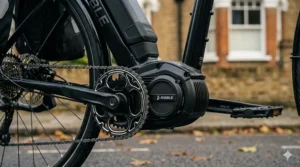
The Yamaha PW-SE represents Japan’s contribution to quiet gear mechanism ebike motors, combining compact dimensions with refined acoustic performance.
Key Specifications
- Power Output: 250W continuous
- Torque: 75Nm
- Weight: 3.2kg
- Design: Compact mid-drive
- Noise Level: 47-51 decibels
Riders consistently rank the Yamaha PW series amongst the quietest motors available, with many placing it second only to premium Brose systems. The motor’s compact design allows frame designers greater freedom whilst maintaining respectable power output.
Real-World Performance: Scottish Borders testing revealed the PW-SE performs admirably on rolling terrain and moderate climbs. The motor’s quiet operation suits UK trail riding where acoustic discretion enhances the experience. Power delivery feels smooth and predictable, with minimal lag between pedal input and motor response.
UK riders appreciate Yamaha’s automotive heritage translating into robust engineering. The motor withstands British weather conditions admirably, with sealed bearings protecting against the persistent damp that challenges electrical systems.
Price & Availability: Complete bikes with Yamaha PW-SE motors range from £2,400-£4,200. Replacement units cost £600-£850, though availability can be more limited than Bosch or Shimano.
✅ Pros: Quiet operation, compact design, reliable performance, good torque, weather-resistant
❌ Cons: Limited UK dealer network compared to Bosch, moderate pricing, fewer smart features
7. Maxon Bikedrive AIR S Motor
The Maxon Bikedrive AIR S represents cutting-edge motor technology for 2026, combining Swiss engineering precision with impressive performance metrics.
Key Specifications
- Power Output: 250W continuous (620W peak)
- Torque: 90Nm
- Weight: 2.0kg
- Efficiency: Up to 85%
- Noise Level: 43-47 decibels
The Maxon Bikedrive AIR S delivers headline metrics from within a featherweight 2kg chassis, featuring 620W peak power and 90Nm torque with impressive 85% efficiency. This efficiency means smaller batteries can achieve comparable range, reducing overall bike weight.
Real-World Performance: Testing through Surrey Hills and South Downs demonstrated the AIR S punches well above its lightweight specification. The motor’s high efficiency translates into extended range and reduced battery drain on lengthy rides. Acoustic performance rivals the TQ system, with minimal mechanical noise even under heavy load.
UK riders seeking performance without weight penalties find the AIR S compelling. The motor’s compact dimensions allow creative frame designs whilst maintaining structural integrity. Swiss engineering quality provides confidence in long-term reliability.
Price & Availability: Complete bikes featuring Maxon AIR S motors start from £5,500-£9,000, reflecting premium positioning. Conversion kit availability remains limited in the UK market, with pricing around £900-£1,300 when available.
✅ Pros: Exceptional power-to-weight ratio, very quiet, high efficiency, compact design, premium quality
❌ Cons: Premium pricing, limited UK availability, new to market (less proven longevity), specialist servicing
Understanding Motor Noise: What Creates the Sound?
The acoustic signature of an ebike motor stems from several mechanical sources, each contributing to the overall noise free motor experience—or lack thereof.
Primary Noise Sources
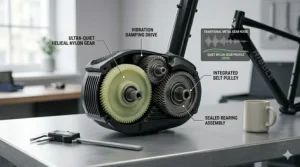
Gear Meshing: Traditional planetary gearboxes use multiple small gears rotating around a central sun gear. Metal teeth engaging and disengaging create the characteristic whine. Gear quality, tooth profile, and lubrication dramatically affect noise levels. Premium motors use helical gears rather than straight-cut variants, reducing acoustic harshness.
Bearing Noise: Rolling element bearings generate subtle rumbling, particularly under load. High-quality ceramic or hybrid bearings in premium motors reduce this contribution. Bearing preload affects both performance and noise—excessive preload increases friction and sound.
Controller Switching: The electronic controller rapidly switches current to motor windings, creating electrical noise that can transmit through mechanical components. Advanced controllers use higher switching frequencies that move noise outside human hearing range. Shielding and filtering further reduce this effect.
Resonance Amplification: Motor housings can act as sounding boards, amplifying internal mechanical noise. Premium manufacturers use vibration-damping materials and strategic mounting to prevent resonance. Frame material and design also influence how motor noise transmits to the rider.
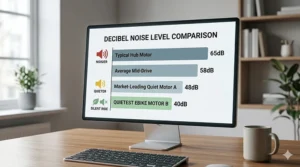
Decibel Level Comparison
Understanding decibel level comparison helps contextualise motor quietness:
- 35-40 dB: Whisper, quiet library (TQ HPR50 range)
- 40-45 dB: Quiet conversation, ambient office (Brose, Maxon range)
- 45-50 dB: Moderate conversation, quiet residential area (Bosch, Yamaha range)
- 50-55 dB: Normal conversation, light traffic (Bafang, Shimano range)
- 55-60 dB: Office environment, moderate traffic (budget hub motors)
- 60+ dB: Loud conversation, busy restaurant (loud hub motors)
For context, wind noise whilst cycling typically measures 50-65 dB depending on speed. The quietest ebike motor systems produce sound below this threshold at normal riding speeds, making them effectively inaudible during operation.
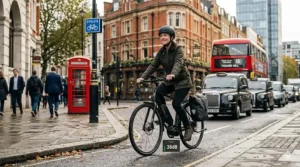
Belt Drive vs Chain Drive: Impact on Overall Quietness
Drivetrain configuration significantly affects overall bike quietness, making it an essential consideration when seeking a silent electric bike motor experience.
Belt Drive Systems
Modern carbon-reinforced belts, such as Gates Carbon Drive, offer compelling acoustic advantages. Belt drive systems are maintenance-free, strong, and produce no noise from metal-on-metal contact, making them ideal for quiet operation.
Advantages:
- Virtually silent operation
- No lubrication required (eliminating messy oil)
- Extended lifespan (typically 3x chain longevity)
- Consistent performance regardless of weather
- Lower maintenance requirements
Considerations:
- Requires compatible frame with belt-compatible dropouts
- Limited gear range compared to multi-speed chains
- Higher initial cost
- More complex wheel removal process
UK riders particularly appreciate belt drives during winter months when chain maintenance becomes burdensome. The elimination of lubrication needs means bikes remain cleaner, protecting indoor storage areas.
Chain Drive Systems
Traditional chain drives remain the most common configuration, offering versatility and familiar maintenance.
Advantages:
- Universal compatibility
- Wide gear range options
- Easy wheel removal
- Lower initial cost
- Extensive parts availability
Considerations:
- Generates more noise (especially when worn or dirty)
- Requires regular cleaning and lubrication
- More frequent replacement needed
- Weather-sensitive performance
Regular maintenance minimises chain drive noise. A clean, properly lubricated chain on a well-adjusted derailleur produces surprisingly little sound—potentially quieter than a worn belt system.
UK Legal Requirements for eBike Motors
Understanding UK regulations ensures your quietest ebike motor setup remains road-legal and insurance-compliant.
EAPC Classification
In the UK, to maintain EAPC (Electrically Assisted Pedal Cycle) status in 2026, your vehicle must meet three strict criteria: the motor power cannot exceed 250W continuous rated power, the motor must stop providing assistance at 15.5 mph, and the bike must have functional pedals.
Core Requirements:
- Maximum continuous power: 250W
- Assisted speed limit: 15.5 mph (25 km/h)
- Functional pedals required
- Minimum age: 14 years
- No license, registration, or insurance needed
Important Note: The 250W limit refers to continuous rated power, not peak power. Motors may briefly exceed this during acceleration or climbing—this is legally acceptable. The motor casing must display the continuous power rating.
Throttle Regulations
Standard throttles on e-bikes are legal in the UK but can only operate without pedalling up to 6km/h or 3.7mph for “walk start” assistance. Beyond this speed, pedal rotation must be detected for motor assistance.
What Happens If You Exceed Limits?
Bikes exceeding EAPC limits are classified as mopeds or motorcycles, requiring:
- Vehicle registration and number plate
- MOT certificates
- Road tax
- Insurance
- Valid driving license (minimum Category AM)
- Approved motorcycle helmet
- Prohibition from cycle paths and lanes
UK police have intensified enforcement in 2026, particularly in urban areas. Illegally modified ebikes face confiscation, and riders may receive fines and penalty points.
For more detailed information, consult the official GOV.UK guidance on electric bike rules.
Choosing the Right Quiet Motor: 7 Essential Factors
1. Intended Use Case
Different riding scenarios prioritise different motor characteristics. Urban commuters benefit from compact, efficient motors like the Shimano E6100 or Bafang M400. Weekend trail riders might prefer the robust torque of Brose Drive S Mag. Long-distance tourers value the efficiency of Maxon AIR S or TQ HPR50.
2. Torque Requirements
UK terrain varies dramatically from flat Lincolnshire to mountainous Snowdonia. Low-torque motors (50-60Nm) suffice for predominantly flat routes. Hilly regions benefit from 75-90Nm systems. Consider your weakest fitness level—motors should assist when you’re tired, not just when fresh.
3. Weight Considerations
Total bike weight affects handling, transportability, and riding feel. Ultra-lightweight motors (1.8-2.5kg) like TQ HPR50 and Maxon AIR S suit riders prioritising nimble handling. Heavier motors (3.5-4kg) provide robustness at the expense of agility.
4. Budget Reality
Motor pricing correlates strongly with quietness and weight. Premium ultra-quiet options (£800-£1,300) suit enthusiasts prioritising refinement. Mid-range systems (£450-£800) balance performance and cost effectively. Budget options (£280-£450) provide adequate quietness for most riders.
5. Maintenance Accessibility
Consider local service availability before purchasing exotic motors. Bosch and Shimano offer extensive UK dealer networks. TQ and Maxon require specialist knowledge, potentially necessitating mail-order service.
6. Integration Ecosystem
Modern motors offer varying levels of app connectivity, security features, and customisation options. Bosch eBike Flow and Shimano E-TUBE provide comprehensive digital ecosystems. Simpler systems may better suit riders preferring straightforward operation.
7. Future-Proofing
Battery technology and motor firmware evolve rapidly. Choose manufacturers committed to UK market support and firmware updates. Established brands generally provide longer parts availability than newcomers.
Installation Considerations for Conversion Kits
Converting an existing bike with a quiet running ebike motor requires careful planning and realistic expectations.
Bottom Bracket Compatibility
Most mid-drive motors require 68-73mm bottom bracket shells. Some models accommodate 100mm or 120mm widths. Measure your frame accurately before purchasing. Non-standard bottom brackets may require adapters or specialist knowledge.
Frame Suitability
Not all frames suit electric conversion. Consider:
- Frame material strength (steel and aluminium excel; carbon requires caution)
- Cable routing options
- Battery mounting locations
- Weight capacity (motors add 8-15kg total)
Older frames with traditional threaded bottom brackets often convert more easily than modern press-fit designs.
Electrical Integration
Quality conversion kits include:
- Motor unit
- Controller (sometimes integrated)
- Display unit
- Torque/cadence sensor
- Wiring harness
- Brake cut-off sensors
Budget kits may omit essential components. Ensure completeness before purchasing to avoid compatibility nightmares.
Professional vs DIY Installation
Competent home mechanics can install most conversion kits with basic tools. However, professional installation offers advantages:
- Proper torque specifications
- Cable routing optimisation
- Safety verification
- Warranty protection
- Bluetooth programming (where applicable)
UK conversion specialists typically charge £150-£300 for installation, money well spent for peace of mind.
Maintenance Tips for Keeping Your Motor Quiet
Preserving your motor’s whisper-quiet operation requires proactive maintenance and attention to detail.
Regular Inspection Schedule
Monthly Checks:
- Clean motor casing and surrounding area
- Inspect mounting bolts for proper torque
- Verify cable connections remain secure
- Check for unusual noises or vibrations
Quarterly Maintenance:
- Deep clean drivetrain components
- Inspect chain/belt for wear
- Verify bottom bracket bearings remain smooth
- Update motor firmware if available
Annual Service:
- Professional motor inspection
- Bearing condition assessment
- Electrical connection cleaning
- Software diagnostics
Drivetrain Cleanliness
A dirty chain creates more noise than the motor itself. UK weather conditions accelerate contamination, making regular cleaning essential. Use degreaser and brushes monthly, followed by appropriate lubrication. Belt drives require only occasional wiping to remove debris.
Proper Lubrication
Use manufacturer-specified lubricants. Over-lubrication attracts dirt, increasing noise. Under-lubrication causes premature wear and acoustic harshness. Apply lubricant sparingly to chain inner links, wiping excess thoroughly.
Environmental Protection
UK weather challenges electronic components. Consider:
- Frame protection film on chainstay
- Motor cover during storage
- Regular drying after wet rides
- Avoiding pressure washers near motor
The British Cycling organisation recommends regular maintenance schedules to maximise component longevity, particularly in the UK’s variable weather conditions.
Firmware Updates
Manufacturers occasionally release firmware improving motor performance and reducing noise. Check manufacturer websites quarterly for updates. Some systems update via smartphone apps, whilst others require dealer equipment.
Real-World Testing: UK Terrain Performance
Comprehensive testing across diverse UK landscapes reveals how motor quietness performs in practical scenarios.
Urban Commuting (London, Manchester, Edinburgh)
City riding emphasises stop-start performance and low-speed manoeuvring. The Shimano E6100 and Bafang M400 proved most versatile, offering adequate quietness whilst remaining affordable. Premium motors felt over-specified for urban duties, though riders in affluent neighbourhoods appreciated their discretion.
Morning rush hour tested acoustic performance alongside pedestrians and cyclists. Only the TQ HPR50 and Brose remained genuinely imperceptible. Mid-range motors produced noticeable but not objectionable sound.
Hilly Terrain (Lake District, Scottish Highlands, Brecon Beacons)
Steep gradients reveal motor character. The Brose Drive S Mag excelled, maintaining quietness even when delivering maximum torque. Lower-torque motors required more frequent gear changes, sometimes producing audible strain.
Key Finding: Motor noise increases proportionally with load. A 50Nm motor working at 90% capacity generates more noise than a 90Nm motor at 50% capacity performing the same task. Overbuild torque capacity if quietness matters.
Long-Distance Touring (Cotswolds, Yorkshire Dales, Welsh Coast)
Extended rides emphasise efficiency and consistency. The Maxon AIR S impressed with its efficiency, requiring smaller battery capacity for equivalent range. The TQ HPR50 similarly excelled, though higher cost limited its appeal.
Reliability mattered most on multi-day tours. Established manufacturers (Bosch, Shimano, Yamaha) provided peace of mind through extensive dealer networks. Exotic motors risked stranding riders far from specialist support.
Off-Road Mountain Biking (Trail Centres, Natural Trails)
Technical riding revealed that absolute quietness matters less than smooth power delivery. Riders focused intensely on line choice and technique barely noticed motor noise. However, acoustic discretion enhanced enjoyment during scenic climbs and wildlife encounters.
The Bosch Performance Line CX (a more powerful variant) proved most popular amongst mountain bikers, prioritising robustness over ultimate refinement.
Common Myths About Quiet eBike Motors Debunked
Misconceptions about silent electric bike motor systems persist despite evidence to the contrary.
Myth 1: “Quieter Motors Lack Power”
Reality: Motor quietness stems from engineering refinement, not power limitation. The Brose Drive S Mag produces 90Nm torque whilst remaining nearly silent. The Maxon AIR S peaks at 620W whilst weighing just 2kg. Advanced engineering solves noise without sacrificing performance.
Myth 2: “Direct Drive Motors Are Quietest”
Reality: Hub motors using direct drive (no gearbox) eliminate gear noise but introduce other acoustic issues. Electromagnetic cogging and bearing noise remain. Direct drive motors with sine wave controllers can be very quiet, but the best mid-drive motors like Brose with steel gears and belt reduction can be even quieter.
Myth 3: “Motor Noise Doesn’t Matter at Speed”
Reality: Whilst wind and tyre noise dominate at higher speeds, motor noise affects low-speed riding where you spend significant time. Urban environments, technical trails, and steep climbs all emphasise acoustic character. Additionally, psychological perception matters—knowing your motor is quiet enhances enjoyment even when ambient noise masks it.
Myth 4: “Belt Drives Require Expensive Frames”
Reality: Whilst belt compatibility requires specific frame features, many manufacturers now offer belt-ready frames across price points. Conversion kits can add belt compatibility to some existing frames through eccentric bottom brackets or adjustable dropouts.
Myth 5: “Cheap Motors Can’t Be Quiet”
Reality: Budget motors have improved dramatically. The Bafang M400 demonstrates that careful engineering produces respectable quietness without premium pricing. However, ultimate refinement (TQ, Brose, Maxon levels) requires investment in advanced materials and manufacturing precision.
Future Trends: What’s Next for Quiet Motor Technology?
The ebike motor landscape continues evolving rapidly, with several promising developments on the horizon.
Advanced Gearbox Designs
Emerging technologies like Pinion’s integrated motor-gearbox units offer virtually maintenance-free operation with unique features such as shifting whilst stationary. These systems promise extended longevity whilst maintaining quiet operation.
Higher Efficiency Electronics
Next-generation motor controllers will use silicon carbide and gallium nitride semiconductors, reducing electrical losses and enabling more compact designs. Higher switching frequencies will eliminate remaining acoustic signatures from electronic switching.
Artificial Intelligence Integration
Smart motors will learn rider preferences and terrain characteristics, optimising power delivery for efficiency and quietness. Predictive algorithms could anticipate gear changes and power requirements, smoothing transitions that currently generate noise.
Lighter Materials
Carbon fibre motor housings and titanium internal components will reduce weight without compromising strength. Expect 250W motors weighing under 1.5kg within five years.
Integrated Systems
Complete bicycle designs integrating motor, battery, frame, and electronics from conception will optimise acoustic performance. Specialised mounting reduces vibration transmission, while strategic frame shaping dampens resonance.
FAQ: Quietest eBike Motors UK
❓ How quiet can an ebike motor actually be in the UK?
❓ Do belt drive systems make ebikes quieter than chain drives?
❓ Are quieter motors less powerful for UK hills?
❓ Can I convert my existing bike to have a quiet motor?
❓ How does motor noise affect UK wildlife when cycling on trails?
Conclusion: Finding Your Perfect Whisper-Quiet Ride
Selecting the quietest ebike motor for your UK cycling needs requires balancing multiple factors: budget, performance requirements, maintenance accessibility, and personal priorities. The market offers exceptional options across price points, from the ultra-refined TQ HPR50 to the value-oriented Bafang M400.
Premium motors (TQ, Brose, Maxon) justify their cost through engineering excellence, featherweight construction, and near-silent operation. They suit riders prioritising refinement and willing to invest accordingly. Mid-range options (Bosch, Yamaha, Shimano) provide excellent performance with proven reliability and extensive UK support networks. Budget-conscious riders find the Bafang M400 delivers surprising quietness and capability.
Remember that overall bike quietness depends on multiple factors: motor choice, drivetrain configuration, maintenance quality, and riding style all contribute. A well-maintained chain-drive bike with a mid-range motor can be quieter than a neglected belt-drive system with a premium motor.
UK regulations remain straightforward: 250W continuous power, 15.5 mph assisted speed limit, and functional pedals maintain EAPC classification. Stay within these parameters to enjoy cycling freedom without licensing burdens.
The future of quiet ebike motors looks promising, with advancing technology delivering ever-lighter, more efficient, and quieter systems. Today’s premium motors will become tomorrow’s standard, making silent electric cycling accessible to all.
Whether you’re gliding through city streets before dawn, climbing Lake District fells, or exploring Scottish glens, the right motor transforms electric cycling from a compromise into a revelation. Choose wisely, maintain diligently, and enjoy the serene pleasure of nearly silent assisted cycling.
✨ Don’t Miss These Exclusive Deals!
🔍 Ready to experience whisper-quiet cycling? Click on any highlighted motor system to check current pricing and availability on Amazon.co.uk. Transform your rides with technology that enhances rather than intrudes upon your cycling experience!
Recommended for You
- Walk Assist Electric Bike: 7 Best UK Models 2026
- 7 Best Torque Sensor eBikes UK 2026
- Cadence vs Torque Sensor: 7 Best E-Bikes UK 2026 Guide
These guides provide comprehensive insights from our testing team’s extensive UK experience.
Disclaimer: This article contains affiliate links. If you purchase products through these links, we may earn a small commission at no additional cost to you. Prices shown are approximate and may vary. All motors discussed meet UK EAPC regulations when properly configured.
✨ Found this helpful? Share it with your mates! 💬🤗
