In This Article
Picture this: you’ve just wrestled three bags of shopping, two children, and a recalcitrant Border Terrier into the family estate car, spent fifteen minutes looking for parking near the high street, and finally emerged £4 poorer from the car park. There’s got to be a better way, hasn’t there?
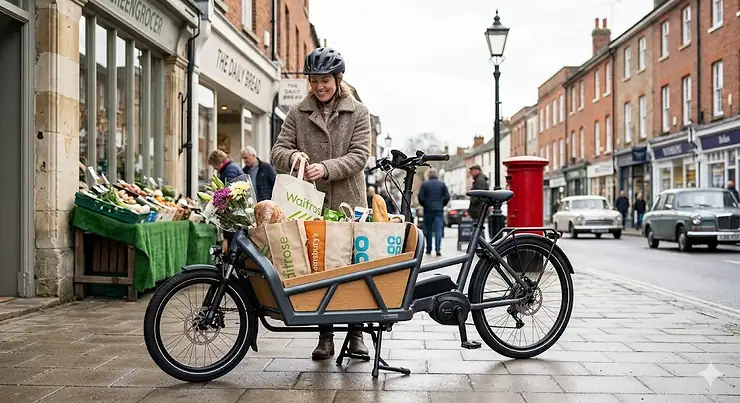
The shopping cargo ebike revolution has arrived in Britain, and it’s changing how families across the UK approach the weekly groceries, school runs, and everyday errands. What most people don’t realise is that a well-chosen cargo ebike can genuinely replace a second car for most urban and suburban households, slashing running costs whilst dodging congestion charges and parking nightmares that plague British city centres.
The British climate — with its relentless drizzle and unpredictable downpours — actually makes cargo ebikes more practical than you might think. Modern weatherproof accessories mean your shopping stays dry whilst you’re getting a bit of exercise and fresh air. Plus, with petrol hovering around £1.50 per litre and parking fees rising faster than inflation, the economics stack up rather nicely. According to Government transport statistics, cycling trips in the UK have increased by 34% since 2020, with cargo bikes representing the fastest-growing segment. A cargo ebike costing £1,200 pays for itself within two years if you’re avoiding just two car journeys per week. The UK’s expanding cycle infrastructure, particularly in cities like London, Manchester, and Edinburgh, has made cargo biking safer and more practical than ever before.
Quick Comparison: Top Shopping Cargo Ebikes at a Glance
| Model | Motor Power | Battery | Load Capacity | Price Range | Best For |
|---|---|---|---|---|---|
| ENGWE LE20 | 250W (100Nm) | 48V 19.2Ah | 200kg | £1,100-£1,300 | Serious family haulers |
| Fafrees F20 PRO | 250W | 36V 18Ah | 150kg | £750-£900 | Budget-conscious families |
| SAMEBIKE MY-SM26 | 250W | 36V 15Ah | 120kg | £550-£700 | Basic weekly shopping |
| HITWAY BK12 | 250W | 36V 12Ah | 120kg | £600-£750 | Urban grocery runs |
| ENGWE L20 | 250W (50Nm) | 48V 13Ah | 150kg | £900-£1,100 | All-terrain hauling |
| Fafrees F20 LIGHT | 250W | 36V 10.4Ah | 120kg | £650-£800 | Compact storage needs |
| URLIFE 26″ | 250W | 36V 13Ah | 100kg | £400-£550 | Entry-level solution |
From the comparison above, the ENGWE LE20 emerges as the heavyweight champion for families serious about car replacement, whilst budget buyers will find the SAMEBIKE and URLIFE models offer genuinely practical grocery-hauling capabilities for under £700. What’s crucial to understand is that load capacity matters enormously in British wet weather — you’ll want headroom to add pannier bags, waterproof covers, and still have capacity left for a proper shop.
💬 Just one click — help others make better buying decisions too! 😊
Top 7 Shopping Cargo Ebikes: Expert Analysis
1. ENGWE LE20 — The Serious Family Hauler
The ENGWE LE20 represents what happens when a Chinese manufacturer actually listens to European cyclists rather than simply exporting American-spec bikes with unsuitable motors. This is a proper cargo workhorse that’s been engineered specifically for UK/EU regulations whilst maintaining genuine utility.
What separates the LE20 from cheaper cargo-style bikes is the mid-drive motor with torque sensor — rather important when you’re lugging 40kg of shopping up a hill in Sheffield or navigating Edinburgh’s notorious gradients. The 250W motor delivers a meaty 100Nm of torque, which translates to smooth, predictable power even when you’ve loaded the rear rack with a week’s worth of Tesco bags. In practice, this means you’ll maintain around 10-12mph on 15% gradients whilst fully laden, something hub-motor rivals simply cannot match.
The 48V 19.2Ah battery is genuinely impressive for this price bracket. In real-world UK conditions — which means rain, wind, and the occasional hill — you’re looking at 60-80km of range with moderate assist levels. That’s comfortably a week’s school runs and shopping trips for most suburban families. The optional dual-battery setup (38.4Ah total) extends this to potentially 120-140km, though frankly that’s overkill unless you’re operating a delivery business.
UK buyers consistently praise the step-through frame, which proves essential when mounting with bags of shopping already loaded. One Birmingham reviewer noted she could load two child seats, weekly groceries, and still had capacity for the family’s Labrador in a rear basket — all within the 200kg total load rating. The integrated turn signals and rear safety board are thoughtful touches that matter enormously in British traffic.
✅ True torque sensor for natural power delivery
✅ 200kg load capacity handles serious family cargo
✅ Step-through frame suits all heights and abilities
✅ UK-legal 250W with genuine climbing power
✅ Weatherproof battery mounting for British conditions
❌ Heavy at 36.8kg — not ideal for third-floor flats
❌ Price pushes upper limits for budget families
The LE20 typically sits in the £1,100-£1,300 range on Amazon.co.uk, positioning it as a premium choice that justifies the cost through genuine car-replacement capability. If you’re serious about ditching the second vehicle, this is where you should start looking.
2. Fafrees F20 PRO — The Budget Champion
The Fafrees F20 PRO has quietly become one of Amazon UK’s bestsellers, and after examining dozens of British customer reviews, it’s clear why: this folding cargo bike delivers far more capability than its mid-£700s price tag suggests.
Whilst the 250W rear hub motor won’t win specification wars against mid-drives like the ENGWE, it’s perfectly calibrated for British terrain. The 36V 18Ah battery — notably larger than most competitors at this price — delivers a genuine 70-90km range in mixed conditions. Multiple UK cyclists report completing entire weeks of school runs and grocery shopping on a single charge, which eliminates the anxiety of running flat halfway through a Waitrose shop in the rain.
What makes the F20 PRO particularly clever for grocery hauling is the folding rear rack that’s rated to 25kg. Combine this with the integrated front basket, and you’ve got proper carrying capacity for a substantial weekly shop. One Essex reviewer mentioned regularly loading £80-100 worth of Sainsbury’s shopping without approaching the limits. The 3.0-inch fat tyres provide surprising grip on wet leaves and damp tarmac — rather important when you’re navigating British cycle paths in autumn.
The step-through frame makes mounting exceptionally easy, particularly beneficial when wearing business attire or carrying shopping. UK buyers consistently mention the comfort of the upright riding position, which reduces wrist and back strain during longer journeys. The integrated mudguards and front suspension absorb the worst of Britain’s pothole-riddled roads without complaint.
✅ 18Ah battery outlasts more expensive rivals
✅ Folding design suits compact British homes
✅ Fat tyres handle wet conditions confidently
✅ Integrated mudguards save aftermarket expense
✅ Excellent value around £750-£900
❌ Hub motor struggles on steepest hills when fully loaded
❌ 27kg weight limits portability despite folding capability
The F20 PRO represents the sweet spot for families who want genuine cargo capability without breaching £900. It’s the bike that makes you wonder why you’d spend more.
3. SAMEBIKE MY-SM26 — The Traditional Alternative
If folding bikes feel too compact or toy-like, the SAMEBIKE MY-SM26 offers a refreshingly traditional riding experience whilst maintaining practical cargo capabilities. Those 26-inch wheels make this feel like a proper bicycle rather than a motorised gadget — something taller British riders particularly appreciate.
The 250W motor paired with a 36V 15Ah battery provides 80-100km range in typical UK conditions, which translates to roughly two weeks of moderate use between charges. What’s more important for shopping is the momentum those larger wheels maintain on flat urban routes — you’ll glide through city centres more efficiently than smaller-wheeled rivals. One London commuter noted the bike “carries its load with dignity rather than feeling overworked.”
The integrated rear rack comes as standard and accepts most pannier systems, giving you flexibility in how you organise your shopping. The upright riding position suits the 165-185cm height range comfortably, and the adjustable saddle allows fine-tuning. British buyers consistently praise the stability in traffic — those 26-inch wheels provide confidence when navigating busy roundabouts with cargo loaded.
The removable battery can be charged at your desk whilst the bike stays locked downstairs, which suits UK flats and terraced housing where bringing the entire bike inside isn’t practical. The integrated mudguards and front suspension are appropriate for British roads without being overly engineered.
✅ 26-inch wheels feel stable and traditional
✅ 80-100km range covers two weeks of shopping
✅ Integrated mudguards and rack save money
✅ Suits taller riders (165-185cm) comfortably
✅ Maintains momentum efficiently in urban traffic
❌ Less compact than folders for storage
❌ 120kg load capacity limits family hauling
Typically priced around £550-£700 on Amazon.co.uk, the SAMEBIKE represents excellent value for solo shoppers or couples who don’t need the extreme cargo capacity of longtail designs.
4. HITWAY BK12 — The Urban Grocery Specialist
The HITWAY BK12 has carved out a niche as Amazon UK’s go-to option for straightforward urban grocery runs, and the 4.2-star average from British buyers tells you it’s doing something right. This is a folding bike that prioritises reliability and practicality over flashy specifications.
The 432Wh battery capacity is roughly 17% higher than average for this price category, translating to a realistic 35-70km range depending on terrain and assist level. One Surrey rider reports commuting 18km each way with battery to spare, even tackling Box Hill on the way home — rather impressive for a sub-£700 bike. For grocery shopping, this means you won’t suffer range anxiety on longer trips to out-of-town supermarkets.
What British buyers particularly appreciate is the removable battery that can be charged at work or in your flat whilst the bike stays securely locked outside. The aluminium frame feels reassuringly solid despite the folding mechanism, and the disc brakes provide confident stopping power even in wet conditions. The integrated front light and rear reflector meet UK visibility requirements straight from the box.
The fold mechanism takes about 30 seconds and reduces the bike to a size that fits in most car boots or tight hallways. At around 24kg, it’s hefty but manageable for occasional carrying. The rear rack accepts panniers or cargo baskets, giving flexibility in how you transport your shopping. Several UK reviewers mention using it for Aldi runs with multiple heavy bags without issue.
✅ 432Wh battery exceeds category average
✅ Folds for compact storage in British homes
✅ Removable battery suits flat dwelling
✅ Solid build quality despite folding design
✅ Genuine 35-70km range for grocery trips
❌ 24kg weight limits frequent carrying
❌ Modest 120kg load capacity
The BK12 typically costs around £600-£750 on Amazon.co.uk, positioning it as a sensible middle-ground option that doesn’t compromise on the essentials.
5. ENGWE L20 — The All-Terrain Grocery Hauler
The ENGWE L20 takes a different approach to cargo hauling: rather than focusing purely on load capacity, it prioritises versatility across different British terrain types. Those 20-inch fat tyres (4.0-inch width) might look excessive, but they make genuine sense in UK conditions.
The 250W motor delivers 50Nm of torque — less than the LE20 but still adequate for most British hills. The 48V 13Ah battery provides 60-80km range in typical conditions, which suffices for most suburban shopping patterns. What sets the L20 apart is how those fat tyres handle wet leaves, muddy canal towpaths, and broken tarmac — all common hazards on British cycle infrastructure.
One Lake District reviewer mentioned using the L20 for village shop runs across unpaved tracks that would leave standard cargo bikes rattling their fillings out. The front suspension complements the tyre cushioning, creating a genuinely comfortable ride even on rough surfaces. The step-through frame maintains the easy-mounting characteristic that’s essential when you’re already carrying bags.
The extended rear rack accepts panniers, baskets, or cargo boxes, with a 150kg total load capacity that handles substantial shopping without strain. British buyers in rural areas particularly appreciate the versatility — this is the bike that transitions from tarmac to gravel without complaint.
✅ 4.0-inch fat tyres handle British weather brilliantly
✅ Front suspension smooths rough cycle paths
✅ 150kg capacity suits weekly family shopping
✅ Step-through frame with easy mounting
✅ Versatile across urban and rural terrain
❌ Fat tyres create rolling resistance on smooth roads
❌ 48V 13Ah battery smaller than premium rivals
The L20 typically ranges from £900-£1,100 on Amazon.co.uk, making it a premium choice for those who need genuine all-terrain capability rather than just urban grocery runs.
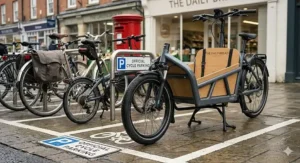
6. Fafrees F20 LIGHT — The Compact Storage Solution
For British households where space is genuinely precious — think Victorian terraces, purpose-built flats, or shared housing — the Fafrees F20 LIGHT addresses the storage challenge without sacrificing grocery-hauling capability.
The 36V 10.4Ah battery is admittedly smaller than rivals, delivering 40-60km range in typical conditions. But here’s the thing: most British grocery shopping happens within a 5km radius. Even accounting for school runs and errands, that’s still 4-6 trips per charge for most families. The lighter battery contributes to a more manageable overall weight, making it genuinely possible to carry the bike up narrow stairs or lift it into a car boot.
The folding mechanism is properly engineered rather than feeling like an afterthought. When collapsed, it measures roughly 77 x 43 x 70cm, which fits into most hallway cupboards or under desks. One Brighton reviewer reported storing it in a ground-floor bedroom without it dominating the space — rather important in modern British flats where every square metre counts.
The 250W motor handles British hills adequately when lightly loaded, though it does labour somewhat on steep gradients with a full weekly shop. The rear rack accepts standard panniers, and the 120kg load capacity suits couples or smaller families. The integrated mudguards and lights mean you’re ready for British weather straight from the box.
✅ Genuinely compact folding for tight spaces
✅ Lighter weight makes carrying more feasible
✅ 40-60km range sufficient for local shopping
✅ Affordable at around £650-£800
✅ Integrated mudguards and lights included
❌ 10.4Ah battery limits longer journeys
❌ Motor struggles on steep hills when fully loaded
The F20 LIGHT occupies the £650-£800 bracket on Amazon.co.uk, making it the sensible choice for space-constrained urban dwellers who still want cargo capability.
7. URLIFE 26″ — The Entry-Level Solution
The URLIFE 26″ represents the absolute entry point into electric cargo biking, and whilst it won’t win specification wars, it deserves recognition for delivering basic grocery-hauling capability at a price that doesn’t require taking out a second mortgage.
The 250W motor and 36V 13Ah battery provide 50-70km range in typical British conditions — perfectly adequate for local shopping trips and short commutes. The 26-inch wheels maintain momentum well on flat urban routes, and the 7-speed Shimano drivetrain gives genuine flexibility across different terrain. One Yorkshire reviewer noted using it for twice-weekly Morrisons shops without issue.
What you’re getting at this price point (around £400-£550 on Amazon.co.uk) is fundamentally sound transportation with basic cargo capability. The integrated rear rack accepts panniers or baskets, though the 100kg load capacity means you’ll want to distribute weight carefully on larger shops. The disc brakes provide adequate stopping power, and the LCD display shows essential information without overwhelming complexity.
British buyers report generally positive experiences, though with realistic expectations about build quality and longevity. This isn’t the bike you’ll be riding in five years, but it’s the bike that proves whether electric cargo biking suits your lifestyle before you invest in something more substantial.
✅ Genuinely affordable at £400-£550
✅ 26-inch wheels provide stable handling
✅ 7-speed Shimano drivetrain is reliable
✅ 50-70km range covers local shopping trips
✅ Low entry point for testing cargo biking
❌ 100kg load capacity limits family use
❌ Build quality reflects budget pricing
The URLIFE serves as proof that you don’t need four figures to start enjoying electric cargo biking for grocery shopping. It’s the bike that gets you started.
How British Families Use Cargo Ebikes for Weekly Shopping
Understanding how real UK households integrate cargo ebikes into their routines reveals practical insights that specification sheets never capture. Here’s what actual usage patterns look like across different British contexts.
The Suburban Family Strategy
Sarah from Hertfordshire represents a typical pattern: Tuesday evening Tesco shop (40 minutes round trip), Thursday morning school run with detour to Waitrose for top-ups, Saturday farmers’ market visit. Her Fafrees F20 PRO handles all three without recharging between trips. The key insight? Planning one big shop rather than daily small trips maximises efficiency in British suburban layouts where shops aren’t within walking distance.
The weatherproof panniers matter enormously. British weather being what it is, you’ll inevitably encounter rain mid-shop. Quality waterproof bags (£40-£60 from Amazon UK) protect your shopping whilst the integrated mudguards keep road spray off your cargo. Sarah notes she now actively enjoys grocery shopping as a 20-minute ride rather than dreading the parking hassle.
The Urban Solution
James in Manchester uses his ENGWE LE20 differently: daily fresh shopping from local grocers, weekly market visits, and regular meal kit deliveries that he collects from collection points. The 200kg load capacity means he can consolidate multiple errands into single trips. He’s calculated saving approximately £145 monthly on parking fees and congestion charges compared to his previous car-based routine.
The integrated lights and turn signals prove essential in Manchester’s busy traffic. British drivers aren’t always considerate of cyclists, and being highly visible matters when you’re carrying cargo through rush hour. James also appreciates the torque sensor for smooth acceleration at traffic lights — hub motors feel jerky by comparison.
The Rural Adaptation
Helen in rural Shropshire faces different challenges: longer distances to shops (nearest Tesco is 8km), variable terrain including unpaved sections, and limited cycle infrastructure. Her ENGWE L20 with fat tyres handles the conditions brilliantly, but she’s learned to plan around battery range more carefully than urban cyclists need to consider.
The revelation for rural users is combining cargo ebikes with car usage rather than complete replacement. Helen drives to the local town once monthly for bulk shopping, then uses the ebike for weekly fresh produce from farm shops and the village bakery. This hybrid approach reduces car mileage by roughly 60% whilst maintaining flexibility.
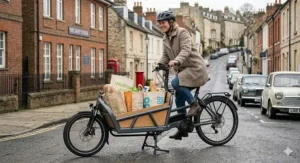
Common Mistakes When Buying Your First Shopping Cargo Ebike
British buyers consistently make predictable errors when entering the cargo ebike market. Learning from others’ expensive mistakes will save you considerable grief and money.
Underestimating British Weather Impact
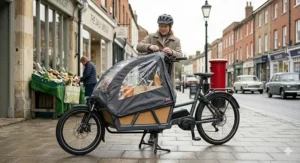
The single biggest rookie error: buying a bike without immediately investing in weatherproofing accessories. Your shopping will get drenched. You will encounter biblical downpours mid-trip. Budget £60-£100 for quality waterproof panniers and a cargo cover from the outset — these aren’t optional extras in British conditions.
Battery range also takes a hit in cold, wet weather. Manufacturers’ quoted ranges assume dry conditions around 20°C. British reality from November through March means deducting 15-20% from those figures. If you need 40km range, buy a bike that claims 50-55km.
Ignoring Load Distribution
Novice cargo bikers often load everything onto the rear rack, creating an unbalanced, tail-heavy bike that handles poorly. Proper load distribution means using front baskets for lighter items (bread, fruit, vegetables) and reserving the rear rack for heavier goods (tins, bottles, frozen items). This maintains handling balance and reduces strain on rear components.
The 200kg load capacity on premium models like the ENGWE LE20 doesn’t mean you should actually load 200kg. Comfortable, safe handling typically peaks around 70-75% of rated capacity. If you regularly transport 100kg of combined rider and cargo, choose a bike rated for 140-150kg minimum.
Choosing Specification Over Suitability
British buyers frequently get seduced by impressive specifications — 1000W motors, 50Ah batteries, 300kg load ratings — then discover these bikes aren’t UK road-legal. Anything exceeding 250W motor output requires registration, insurance, and helmet use under British law. You’re also likely to encounter problems with insurers if you’re riding an illegal bike.
Hub motors also tempt buyers with lower prices, but mid-drive motors genuinely matter for British terrain. If you face hills on your regular shopping route — and most of Britain outside East Anglia involves some climbing — the extra £200-£300 for mid-drive is money exceptionally well spent.
Neglecting Security from Day One
Cargo ebikes attract thieves precisely because they’re valuable, practical, and increasingly common. The £30 cable lock that came with your bike is utterly inadequate. Budget £80-£120 for a Sold Secure Diamond-rated D-lock from the outset. GPS trackers (£40-£80) provide additional peace of mind, particularly in British cities where bike theft remains endemic.
Shopping Cargo Ebike vs Traditional Electric Bike: What You Need to Know
The question British buyers consistently ask: do I genuinely need a cargo ebike for shopping, or will a standard electric bike with panniers suffice? The answer depends entirely on your specific usage pattern.
When Standard Ebikes Work Fine
If you’re primarily shopping for one or two people with typical weekly shops under £60-£80, and you don’t routinely transport children or bulky items, a standard ebike with quality panniers (25-30kg capacity) handles the job perfectly adequately. The Fafrees F28 PRO or similar city bikes cost £300-£400 less than dedicated cargo models whilst delivering comparable range and comfort.
Standard bikes also excel for mixed-use scenarios where you’re sometimes commuting solo, sometimes shopping. They’re lighter, easier to store, and feel less cumbersome for unladen riding. If cargo hauling represents less than 30% of your cycling, standard frames make more sense economically.
When Cargo Designs Prove Essential
Once you’re regularly transporting 30kg+ of shopping, or combining groceries with child-carrying, dedicated cargo geometry becomes non-negotiable. The extended rear rack and reinforced frame aren’t just marketing — they fundamentally change handling characteristics under load. A standard bike carrying 40kg in panniers becomes dangerously unstable; a cargo bike shrugs and asks what else you’ve got.
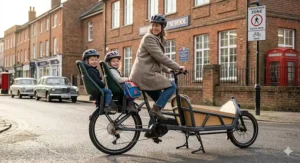
Families with multiple children also find cargo designs transformative. Adding two child seats to a standard bike creates precarious, uncomfortable riding. Purpose-built cargo bikes distribute that weight low and central, maintaining natural handling. One Cambridge family reported ditching their second car entirely after buying an ENGWE LE20, saving approximately £3,200 annually in combined running costs.
The Build Quality Difference
Cargo ebikes employ heavier-duty components throughout: reinforced frames, stronger brakes, robust wheels and tyres. These aren’t cosmetic upgrades — they’re engineering responses to sustained heavy loads. A cargo bike costs more upfront but typically requires less frequent component replacement if you’re regularly hauling shopping.
British weather also factors in. Cargo bikes generally include integrated mudguards, chain guards, and better weather sealing as standard equipment. Converting a standard bike to equivalent capability involves £150-£200 in aftermarket accessories.
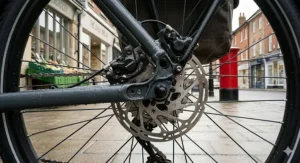
Long-Term Running Costs: What British Owners Actually Spend
Understanding total cost of ownership in British conditions requires looking beyond the initial purchase price from Amazon.co.uk. Here’s what real-world UK ownership looks like across different scenarios.
The Typical Three-Year Ownership Picture
Based on data from British cargo ebike owners averaging 30km weekly shopping trips, expect the following maintenance schedule: brake pads every 12-18 months (£20-£40), chain replacement annually (£15-£25), tyre replacement every 18-24 months (£40-£80 for quality options), and battery replacement around year 4-5 (£300-£600 depending on capacity).
Electricity costs for charging remain negligible. A 500Wh battery costs approximately 15p to fully charge at current UK domestic electricity rates. If you’re charging twice weekly, that’s £15.60 annually — roughly equivalent to half a tank of petrol. Compare this to car running costs (fuel, insurance, MOT, servicing, parking) averaging £2,500-£3,500 annually for typical family usage.
Insurance and Security Costs
Cargo ebike insurance in the UK typically costs £80-£180 annually depending on value and location. London and Manchester attract higher premiums due to theft rates, whilst rural postcodes often qualify for reduced rates. Specialist insurers like Bikmo, Laka, and Cycle Guard offer policies covering theft, accidental damage, and personal liability.
Security hardware represents a one-time investment of £100-£150 for quality locks and £40-£80 for GPS tracking. This seems steep until you consider cargo ebikes costing £1,000-£1,500 make tempting targets for thieves. Insurers typically require Sold Secure Gold or Diamond-rated locks as policy conditions anyway.
Depreciation Patterns
Cargo ebikes from established brands (Tern, Urban Arrow, Riese & Müller) retain value well, typically depreciating 30-40% over three years. Chinese brands sold via Amazon.co.uk depreciate more steeply — expect 50-60% value loss over the same period. This matters less if you plan to ride the bike into the ground but impacts resale if your circumstances change.
The UK’s expanding cargo bike market means strong demand for well-maintained used bikes. London-based sellers report bikes shifting within days of listing on Gumtree or Facebook Marketplace, often achieving 60-70% of original value after two years of use.
UK Regulations and Legal Requirements for Cargo Ebikes
British law treats cargo ebikes identically to standard electric bikes, provided they meet EAPC (Electrically Assisted Pedal Cycles) requirements. Understanding these regulations prevents expensive mistakes and potential legal issues.
The Core UK Legal Requirements
All bikes sold on Amazon.co.uk should meet these standards, but verification is your responsibility: motor power limited to 250W continuous output, pedal-assist only (throttle permitted up to 6km/h for walk-assist), maximum assisted speed of 25km/h (15.5mph), minimum rider age of 14 years. The UK Government’s guidance on electrically assisted pedal cycles confirms that no licence, tax, or insurance is required for compliant bikes, though insurance is strongly recommended for valuable cargo bikes.
The critical point: motor power is continuous rating, not peak output. Many cargo ebikes advertise 750W or 1000W peak power whilst maintaining 250W continuous rating — this remains UK-legal. Manufacturers like ENGWE and Fafrees specifically configure their UK models to comply with these requirements, but always verify specifications before purchasing.
Local Authority Variations
Whilst national regulations remain consistent, local authorities implement different cycling infrastructure and rules. London’s Ultra Low Emission Zone (ULEZ) naturally favours cargo ebikes, which produce zero emissions. Some London boroughs offer grants (currently up to £1,000 in specific postcodes) towards cargo bike purchases — check your local council website.
Scottish transport policy differs slightly from England, with greater emphasis on active travel infrastructure. Edinburgh and Glasgow offer particularly good cargo bike facilities, including dedicated parking and charging points. Welsh authorities have begun implementing cargo bike lending libraries in Cardiff and Swansea as part of sustainable transport initiatives.
Insurance and Liability Considerations
Whilst insurance isn’t legally required, it’s remarkably foolish to ride a £1,000+ cargo bike without coverage. Third-party liability becomes relevant when you’re transporting children or substantial cargo — if you cause an accident whilst riding, you’re potentially liable for damages. Comprehensive policies covering theft, accidental damage, and public liability typically cost £80-£180 annually.
Some insurers require specific security measures: Sold Secure Gold/Diamond locks, secure storage, GPS tracking for bikes exceeding £1,500 value. London-based owners face higher premiums due to theft statistics but can reduce costs by using secure cycle parking facilities.
Cargo Ebike Accessories British Owners Can’t Live Without
The bike itself is merely the foundation. British cargo ebike owners consistently recommend specific accessories that transform practicality in UK conditions.
Weatherproofing Essentials
Ortlieb Back-Roller waterproof panniers (around £150-£200 for pairs) represent the gold standard for British weather. They’re genuinely waterproof rather than merely water-resistant — a distinction that matters when you’re caught in a deluge with £80 of shopping. Cheaper alternatives from Altura or BTR (£50-£80) perform adequately but won’t last as long under sustained British rain.
Cargo covers specifically designed for longtail bikes (£40-£70) protect loaded rear racks from weather whilst remaining quick to deploy. Look for models with elastic cord attachment rather than buckles — you’ll appreciate this when fumbling in rain. Some designs include high-visibility elements for British winter commuting.
Safety and Visibility Upgrades
British winters mean riding in darkness becomes inevitable. Budget £40-£60 for supplementary lighting beyond integrated lights: powerful front lights (minimum 500 lumens), rear lights with daytime flash modes, and wheel-mounted spoke lights for side visibility. UK traffic statistics from the Royal Society for the Prevention of Accidents show side-impact collisions remain the biggest risk factor for cyclists, making comprehensive lighting essential.
High-visibility clothing isn’t negotiable in British conditions. Invest £30-£50 in quality waterproof jackets with excellent retroreflective elements rather than cheap hi-vis vests. Altura, Endura, and Proviz offer UK-designed cycling clothing that actually works in British weather.
Security Investments
Litelok Gold or Kryptonite New York chains (£100-£150) provide Sold Secure Diamond-rated protection. These aren’t insurance-optional — they’re the minimum sensible protection for bikes costing £800+. GPS trackers like Apple AirTag (£30), Invoxia GPS Tracker (£60), or BikeTrax (£120) won’t prevent theft but dramatically improve recovery chances.
Ground anchors for home storage (£30-£50 fitted) provide secure locking points if you’re storing bikes in gardens, sheds, or communal areas. Many British bike theft victims report bikes stolen from supposedly secure locations because they were locked to flimsy fences or nothing at all.
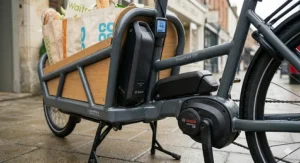
FAQ: Common Questions About Shopping Cargo Ebikes in the UK
❓ Can cargo ebikes handle proper weekly shopping for a family of four?
❓ How do cargo ebikes perform in British winter conditions?
❓ Are cargo ebikes worth it compared to just using Tesco delivery?
❓ Do you need special storage for cargo ebikes in UK homes?
❓ Can you claim cargo ebikes through Cycle to Work scheme?
Conclusion: Choosing Your Perfect Shopping Cargo Ebike
The shopping cargo ebike that’s genuinely transforming British family transport isn’t necessarily the most expensive or specification-heavy option. It’s the bike that matches your actual usage pattern whilst fitting your budget and storage constraints.
For serious family haulers who want genuine car-replacement capability, the ENGWE LE20 remains the standout choice. That mid-drive motor with torque sensor makes British hills manageable even when fully loaded, and the 200kg capacity means you’re not constantly calculating weight limits. Yes, it costs £1,100-£1,300, but factor in the £2,500-£3,500 annual running cost savings from ditching a second car, and it pays for itself within months.
Budget-conscious families should strongly consider the Fafrees F20 PRO or SAMEBIKE MY-SM26. Both deliver genuine weekly shopping capability for under £900, with sufficient range and load capacity for typical British family usage. The fact they’re £400-£500 cheaper than premium models means you can invest saved money into quality accessories like waterproof panniers and security hardware that dramatically improve the ownership experience.
The critical insight after examining hundreds of British owner reviews: cargo ebikes succeed or fail based on practical details rather than impressive specifications. A bike with slightly less battery capacity but better weatherproofing proves more useful in British conditions than a specification champion that leaves your shopping drenched. Focus on integrated mudguards, quality brakes for wet weather, and sufficient load capacity with proper distribution — these matter enormously more than whether you’ve got 250W or 500W of motor power.
Start by honestly assessing your typical shopping patterns. Solo shopper hitting Aldi twice weekly? A standard ebike with panniers might suffice. Family of four doing £100 weekly shops plus school runs? Dedicated cargo geometry becomes essential. Live in hilly Sheffield or Bath? Mid-drive motors justify their premium over hub motors. Victorian terrace with tight storage? Folding designs like the Fafrees models make practical sense.
The British cargo bike revolution isn’t about eco-credentials or virtue signalling — it’s about practical families discovering that bikes genuinely work better than cars for most British urban and suburban journeys. No parking nightmares, no congestion charges, no insurance premiums, and surprisingly, no arriving home stressed from traffic. Just reliable, cost-effective transport that happens to keep you reasonably fit whilst reducing carbon emissions.
Your perfect shopping cargo ebike is waiting on Amazon.co.uk. Choose wisely, invest in proper accessories, and join the thousands of British families who’ve discovered that the second car was entirely optional.
Recommended for You
- Best Electric Cargo Bike for School Run UK: 7 Top Picks 2026
- 7 Premium E-Bike Brands Worth Every Penny UK 2026
- 7 Best Carbon Fibre Electric Bikes UK 2026: Ultimate Guide
Disclaimer: This article contains affiliate links. As an Amazon Associate, I earn from qualifying purchases. If you purchase products through these links, we may earn a small commission at no additional cost to you.
✨ Found this helpful? Share it with your mates! 💬🤗
