In This Article
Picture this: you’re fifty kilometres into a solo ride across the North Downs, panniers loaded with camping kit, and that brutal 12% gradient you’ve been dreading suddenly doesn’t feel quite so intimidating. Why? Because you’ve discovered what thousands of British cyclists already know — a bikepacking electric bike transforms weekend escapes into genuine adventures without the suffering that usually comes with hauling 15kg of gear up a hillside.
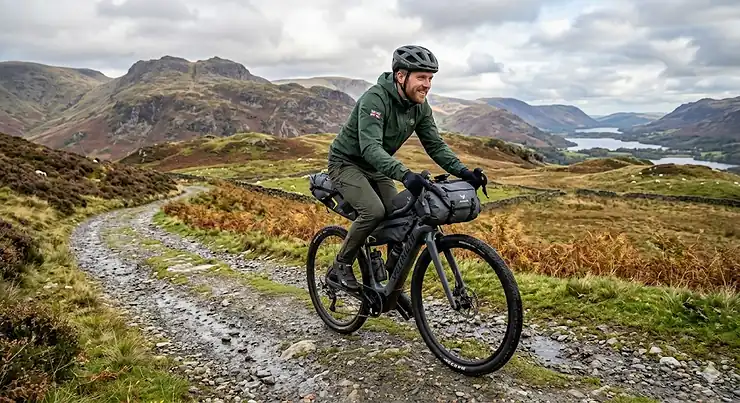
The bikepacking electric bike market in 2026 has matured rather brilliantly. Gone are the days when “electric touring” meant compromising on weight, range, or that all-important ability to squeeze through a kissing gate on a bridleway. Modern gravel touring electric bikes blend the agility of traditional bikepacking rigs with motors that won’t leave you stranded in the Yorkshire Dales with a dead battery and 30 miles still to pedal. What’s particularly clever about today’s offerings is how they’ve tackled the British cyclist’s unique challenges: wet weather durability, compact storage for terraced housing, and enough luggage mounting options to carry everything from a sleeping bag to a proper camping stove (because instant coffee simply won’t do on a proper adventure).
According to Cycling UK, all bikepacking electric bikes sold for road use must comply with EAPC regulations: 250W maximum motor output, pedal-assist only, and assistance limited to 15.5 mph. The UK Government’s Department for Transport maintains current EAPC standards to ensure safety whilst encouraging active travel. This ensures your overnight cycling trips remain legal whilst still giving you that welcome boost when the wind’s against you or the terrain turns properly hilly. Whether you’re eyeing a lightweight gravel ebike for fast-and-light missions or a robust tourer capable of self-supported touring with full panniers, this guide cuts through the marketing fluff to show you what actually works on British roads, trails, and everything in between.
Quick Comparison: Top Bikepacking Electric Bikes UK
| Model | Motor/Battery | Weight | Price Range (GBP) | Best For |
|---|---|---|---|---|
| Cube Nuroad Hybrid C:62 Race | Bosch SX 60Nm / 400Wh | ~18kg | £3,200-£3,700 | Lightweight touring |
| Cube Nulane Hybrid C:62 | Bosch SX 60Nm / 400Wh | ~17kg | £3,200-£3,500 | Fast gravel adventures |
| Specialized Turbo Vado 4.0 | Specialized 70Nm / 710Wh | ~24kg | £3,500-£4,000 | Heavy-load touring |
| Giant Explore E+ Pro | SyncDrive Pro / 625Wh | ~23kg | £3,000-£3,500 | All-terrain capability |
| Whyte RHeO 3 | Kynamic 45Nm / 250Wh | ~16kg | £2,400-£2,800 | Budget lightweight |
| Ribble CGR AL e | Fazua 55Nm / 430Wh | ~17.5kg | £2,800-£3,200 | British-built quality |
| Boardman HYB 8.9E | Bosch Active / 400Wh | ~22kg | £1,800-£2,200 | Entry-level value |
From this comparison, three patterns emerge rather clearly. First, lighter systems (under 18kg) sacrifice battery capacity but gain nimbleness — crucial when navigating technical bridleways or lifting your bike over a stile. Second, British weather demands proper sealing: models with Bosch or Fazua motors tend to shrug off six months of drizzle better than cheaper alternatives. Third, that £3,000 threshold isn’t arbitrary — below it, you’re making compromises on either motor refinement or component quality. Above it, you’re paying for carbon frames and premium drivetrains that genuinely enhance the experience but aren’t strictly necessary for most riders.
💬 Just one click — help others make better buying decisions too! 😊
Top 7 Bikepacking Electric Bikes: Expert Analysis
1. Cube Nuroad Hybrid C:62 Race — The Carbon Connoisseur
The Cube Nuroad Hybrid C:62 Race represents what happens when German engineering meets British touring demands. At its heart sits the Bosch SX motor delivering 60Nm of torque — not the most powerful on this list, but remarkably refined. The 400Wh battery might raise eyebrows amongst those accustomed to 700Wh+ systems, but here’s what the spec sheet won’t tell you: at 18kg total weight, this bike climbs like a mountain goat and handles technical descents with the poise of a carbon race bike, which is essentially what it is beneath the motor.
The C:62 carbon frame isn’t just about shedding grams. It soaks up vibration from potholed B-roads and gravel tracks in a way aluminium simply cannot match, which matters enormously when you’re spending eight hours in the saddle covering 100+ miles. Tyre clearance extends to 50mm even with mudguards fitted — essential for British conditions where anything narrower than 40mm turns autumnal lanes into slip-and-slide affairs. What most UK buyers overlook is the full complement of rack mounts on both frame and fork, transforming this into a genuine bikepacking machine capable of carrying 15-20kg of gear without compromising handling.
Customer feedback from British riders consistently praises the range: 60-80km with moderate assist covers most weekend adventures, and the battery charges in under three hours from empty. Less popular? The price, which hovers in the £3,200-£3,700 range, and the need to spec your own luggage system separately.
Pros:
✅ Carbon frame comfort transforms long days
✅ Lightweight enough to ride unpowered when battery depletes
✅ Bosch reliability proven in British weather
Cons:
❌ Battery capacity limits proper wilderness expeditions
❌ Premium pricing excludes budget-conscious riders
Expert verdict: In the £3,200-£3,700 bracket, this offers the best power-to-weight ratio for riders who value nimbleness over brute force. Perfect for Lake District loops or Scottish Highlands adventures where every kilogram counts on the climbs.
2. Cube Nulane Hybrid C:62 — The Urban Explorer
Where the Nuroad leans toward off-road capability, the Cube Nulane Hybrid splits the difference between road speed and gravel confidence. Same Bosch SX motor and 400Wh battery as its sibling, but wrapped in geometry that favours efficiency over all-terrain prowess. Think fast canal towpath cruising and mixed-surface rides rather than proper mountain passes.
The distinction matters more than you’d initially suspect. That slightly steeper head angle and shorter wheelbase translate to a bike that carves through city traffic brilliantly, which is rather useful when your bikepacking adventure starts with 15 miles of suburban navigation to reach actual countryside. The carbon frame again demonstrates its worth on potholed urban roads — something aluminium frames transmit straight through to your wrists and backside. Rack mounts front and rear accommodate traditional panniers, though the narrower stays mean you’ll want slim-profile bags rather than cavernous Ortliebs.
UK reviewers note this excels at “credit card touring” — travelling light between B&Bs rather than carrying full camping kit. The 400Wh battery delivers 70-90km in mixed conditions, assuming you’re sensible with assist levels and don’t spend entire rides in Turbo mode battling headwinds. Worth knowing: the Nulane accepts up to 45mm tyres, slightly less than the Nuroad, which might matter on particularly gnarly bridleways.
Pros:
✅ Balanced handling suits urban starts and rural finishes
✅ Carbon compliance rewards all-day riding
✅ Aesthetic appeal stands out from aluminium competition
Cons:
❌ Less tyre clearance than dedicated gravel bikes
❌ Geometry compromises feel less stable with heavy loads
Expert verdict: Around £3,200-£3,500, this targets riders whose tours involve more tarmac than mud, or those based in cities who want a bike that transitions seamlessly from commuting to weekend escapes. Edinburgh to Glasgow by canal? Brilliant. Land’s End to John o’Groats loaded with 25kg? Look elsewhere.
3. Specialized Turbo Vado 4.0 — The Workhorse
Here’s where we abandon lightweighting in favour of sheer capability. The Specialized Turbo Vado 4.0 weighs approximately 24kg before you’ve strapped on a single pannier, yet British touring cyclists absolutely adore this machine. The reason becomes clear the moment you engage that Specialized 2.0 motor producing 70Nm of torque and married to a genuinely massive 710Wh battery.
This isn’t a bike for sprightly bridleway adventures. This is the tool for loaded touring where you’re carrying 20kg of camping gear, possibly pulling a trailer, and facing the Lake District’s steepest climbs without breaking stride. That suspension fork and plush seatpost smooth out canal towpaths and forestry tracks, whilst 650b wheels fitted with chunky 2.3″ tyres inspire confidence on loose gravel. What the marketing doesn’t emphasise enough: the Vado’s upright geometry means you can ride 70+ miles without developing the hunched back that plagues racing-position bikes.
Real-world UK range testing shows 90-120km even with the motor in Sport mode and meaningful climbing involved. In Eco, you could legitimately plan 150km days. The rear rack comes rated for 27kg, and yes, you can fit child seats if family bikepacking appeals. Less charming? The weight makes this unwieldy for train travel or lifting over obstacles, and availability on Amazon UK remains patchy — most UK buyers source through Specialized dealers instead.
Pros:
✅ Battery capacity eliminates range anxiety on multi-day tours
✅ Motor power hauls heavy loads uphill effortlessly
✅ Build quality withstands years of British weather abuse
Cons:
❌ Weight penalty noticeable when riding unpowered
❌ Less available through Amazon UK; often requires specialist retailer
Expert verdict: In the £3,500-£4,000 range, this suits riders prioritising capability over elegance — touring families, photographers carrying camera gear, or anyone planning self-supported adventures where arriving unstressed matters more than arriving quickly. For heavy-load self-supported touring, nothing else on this list compares.
4. Giant Explore E+ Pro — The All-Rounder
Giant’s Explore E+ Pro demonstrates what happens when a brand applies decades of touring bike experience to e-bike design. The Yamaha-developed SyncDrive Pro motor matches the Vado’s 70Nm output whilst weighing notably less, and that 625Wh battery strikes a sweet spot between lightweight systems and heavyweight champions.
What sets this apart is sheer versatility. Tyre clearance accommodates up to 57mm rubber — wide enough for proper off-road capability yet slim enough for tarmac efficiency when fitted with slick tyres. The 100mm suspension fork locks out for road sections but genuinely smooths rough stuff when opened up, unlike some token-gesture forks on competitors. British buyers particularly appreciate the included mudguards, lights, and rack arriving as standard equipment rather than expensive extras.
UK reviewer consensus suggests 80-100km range under mixed conditions represents realistic expectations, with 130km+ achievable if you’re disciplined about assist levels. The geometry balances upright comfort with enough forward lean to efficiently tackle distance. Worth noting: Giant specs relatively modest components to hit its price point around £3,000-£3,500, so expect to upgrade contact points (saddle, grips) fairly quickly if you’re logging serious mileage.
Pros:
✅ Excellent tyre clearance handles varying terrain
✅ Standard equipment eliminates immediate upgrade costs
✅ Yamaha motor refinement rivals pricier Bosch systems
Cons:
❌ Component spec adequate rather than exceptional
❌ Weight distribution feels slightly front-heavy when unloaded
Expert verdict: Around £3,000-£3,500, this offers the best value for riders who genuinely need one bike for everything — commuting, weekend adventures, and occasional loaded tours. The Swiss Army knife of gravel touring electric bikes, though specialists will prefer more focused machines for specific tasks.
5. Whyte RHeO 3 — The Budget Lightweight
The Whyte RHeO 3 targets a specific niche: riders wanting electric assistance without the weight penalty or premium pricing of carbon bikes. At roughly 16kg, this weighs less than many non-electric touring bikes whilst delivering 45Nm from its Kynamic hub motor and 250Wh battery tucked low in the aluminium frame.
Here’s the trade-off you’re accepting: less power and smaller battery mean this won’t haul heavy loads up 15% gradients, and you’ll need to plan routes around charging opportunities if venturing beyond 50-60km. But for lightweight bikepacking where you’re carrying minimal gear and preferring to stay in hostels or B&Bs, this formula works brilliantly. The Shimano Cues drivetrain delivers reliable shifting, hydraulic disc brakes inspire confidence in wet conditions, and those chunky Maxxis tyres grip British mud surprisingly well.
British reviewers consistently praise the natural feel — the Kynamic motor amplifies your efforts subtly rather than overwhelming your input, making this feel closer to a traditional bike than heavier e-bikes. Less impressive? The narrow handlebars (a simple swap) and basic saddle that most riders replace within the first month. Around £2,400-£2,800, this represents the entry point for serious lightweight gravel ebike touring.
Pros:
✅ Weight low enough to ride comfortably without assistance
✅ Balanced handling feels natural rather than motor-dominated
✅ British brand with good UK dealer network
Cons:
❌ Battery capacity limits adventure radius
❌ Motor output struggles with steep climbs when loaded
Expert verdict: In the £2,400-£2,800 bracket, this suits minimalist tourers who pack light and value ride quality over motor dominance. Perfect for credit card touring through the Cotswolds; less ideal for Scottish Highlands camping expeditions.
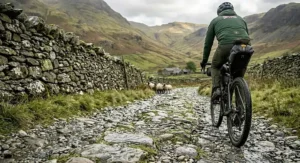
6. Ribble CGR AL e — The British Built
Ribble’s CGR AL e brings British cycling heritage to the e-bike market with a formula familiar to anyone who’s appreciated Ribble’s traditional bikes: quality materials, sensible geometry, build-to-order customisation. The Fazua Ride 60 motor system delivers 55Nm through a beautifully integrated design that barely bulges the downtube, maintaining the aesthetic of a traditional gravel bike.
What this means practically: you’ll ride past other cyclists who don’t immediately clock you’re on an e-bike, which matters if you’re sensitive about electric assistance. The 430Wh battery provides 60-90km range depending on terrain and assist level — adequate for most British day rides but requiring overnight charging on multi-day tours. Build quality reflects Ribble’s road racing pedigree: stiff enough to transfer power efficiently, compliant enough to manage all-day comfort on mixed surfaces.
UK buyer feedback highlights excellent customer service and the ability to spec components precisely to your needs rather than accepting off-the-shelf compromises. The downside? Lead times extend to 4-6 weeks for custom builds, and pricing around £2,800-£3,200 reflects that personalisation premium. Ribble’s allocation through Amazon UK remains limited; most buyers order directly through the Ribble website for full customisation options.
Pros:
✅ Customisation ensures perfect component fit
✅ British company with UK-based support
✅ Fazua motor aesthetics appeal to traditional cyclists
Cons:
❌ Longer lead times than off-the-shelf alternatives
❌ Limited Amazon UK availability
Expert verdict: Around £2,800-£3,200, this targets riders who know exactly what they want and value the ability to specify every component. The thinking person’s gravel ebike under £3000, assuming you’re patient enough to wait for your custom build.
7. Boardman HYB 8.9E — The Value Champion
Chris Boardman’s eponymous brand has always pursued the “good enough but cheaper” formula, and the HYB 8.9E exemplifies that philosophy. Around £1,800-£2,200 secures you a Bosch Active Line motor (50Nm), 400Wh battery, and aluminium frame with all the mounting points needed for panniers compatible gravel ebike adventures.
This won’t thrill enthusiasts who obsess over every gram or demand carbon everything, but here’s what it will do: reliably transport you and reasonable luggage loads across British countryside for years. The Bosch motor lacks the refinement of SX or CX systems but delivers consistent assistance without dramatic surges. That 400Wh battery provides 50-70km in typical conditions — enough for most day rides but requiring careful planning for longer adventures.
British buyers report this handles commuting, shopping, and weekend escapes without complaint. The included mudguards and rack mean you’re tour-ready immediately, unlike pricier bikes where those essentials cost hundreds extra. Component quality sits firmly in the “adequate” category: expect to replace the saddle and possibly upgrade tyres, but the Shimano Deore drivetrain proves durable enough for serious mileage.
Pros:
✅ Price point opens electric touring to budget-conscious riders
✅ Bosch reliability without premium pricing
✅ Practical spec includes touring essentials
Cons:
❌ Weight (~22kg) feels noticeable compared to premium bikes
❌ Component spec requires early upgrades for enthusiast riders
Expert verdict: In the £1,800-£2,200 range, this represents the minimum viable product for serious bikepacking. Perfect for riders new to electric touring who want to test the concept before investing thousands, or experienced cyclists who prioritise function over finesse.
Your First Electric Bikepacking Weekend: A Practical Guide
Right, you’ve selected your bikepacking electric bike and it’s arrived (or you’ve collected it from the dealer). Before you disappear into the Peak District for three days, let’s address the practicalities that distinguish successful tours from soggy disasters.
Battery Management in British Conditions
That manufacturer’s range claim of “up to 120km”? Treat it like estate agent descriptions of “cosy” flats — technically accurate under optimal conditions you’ll never actually encounter. In British reality, expect 60-70% of claimed range when facing autumn headwinds, winter temperatures, and the inevitable 800m of climbing your GPS insisted was “mostly flat.”
Cold batteries perform poorly. Below 5°C, expect roughly 20% range reduction. Store your battery indoors overnight even when camping — slip it into your sleeping bag if necessary. Pre-warm it before morning rides by keeping it inside your jacket for ten minutes. Some tourers carry a spare battery, but at £400-£600 and 2-3kg weight, you might prefer planning routes around charging opportunities.
Speaking of charging: most British cafés and pubs will let you charge whilst nursing a coffee, but ask first and don’t assume. A portable solar panel? Romantic notion, British reality disappoints — our cloud cover means you’ll generate enough power to maybe charge your phone, certainly not an e-bike battery. Better strategy: identify accommodation with reliable electricity and plan daily mileage accordingly.
Luggage Strategy for E-Bikes
Traditional bikepacking wisdom says “carry everything in frame bags to maintain handling.” E-bike reality says “the motor compensates for weight, so use whatever works.” Most riders settle on a hybrid approach: frame bag for tools and valuables, panniers for bulky items like clothing and sleeping bags.
Weight distribution matters more on e-bikes than you’d expect. That heavy motor and battery in the downtube already shift the centre of gravity forward. Load rear panniers first, keeping heavy items low. Front panniers work brilliantly on bikes with luggage mounting options on the fork, but test handling thoroughly before committing to a 100km ride — some e-bikes develop alarming shimmy when front-loaded.
Waterproofing isn’t optional in Britain. Even if forecasts promise sunshine, prepare for rain. Ortlieb panniers remain the gold standard for British conditions, shrugging off torrential downpours that turn cheaper bags into sodden disasters. Dry bags inside panniers provide backup protection for electronics and sleeping bags.
Essential Maintenance for Multi-Day Tours
E-bikes add complexity to traditional bike maintenance. Before departing, master these basics:
Battery removal and replacement — sounds obvious, but practice until you can do it in the dark. You’ll need this skill when charging overnight at campsites.
Motor error codes — screenshot the manual’s error code page. When the display flashes “Error 503” mid-ride, you’ll want to know whether that means “limp home carefully” or “call rescue immediately.”
Tyre pressure matters enormously on loaded e-bikes. Those 40mm gravel tyres? Run them at 45-50 PSI when carrying 15kg of gear, otherwise you’ll pinch-flat on the first cattle grid you cross.
Chain care in wet conditions: British touring means wet chains. Carry a small bottle of wet lube and apply it every evening. A rusty chain on an e-bike motor creates expensive wear you’ll regret when facing a £200 cassette replacement.
Case Study: Three British Riders, Three Different Needs
Alex, 34, Bristol: Software developer planning weekend escapes from urban life. Selected the Cube Nulane Hybrid (£3,400) after test-riding five alternatives. “I needed something that handles Bristol’s hills on Friday evening commutes but transforms into a touring machine for Saturday mornings. The Nulane transitions seamlessly — 25 miles through city traffic to reach the Mendips, then 60 miles of gravel tracks without feeling out of its depth. I run 38mm slicks for road efficiency, swap to 42mm knobbly tyres for proper adventures.”
Sarah, 52, Scottish Highlands: Retired teacher embracing cycle touring after years of car-based camping. Chose the Specialized Vado 4.0 (£3,800) despite the weight. “I’m not racing anyone. I want to arrive at bothies with enough energy to enjoy the evening, carrying proper camping equipment rather than minimalist nonsense. The Vado hauls my 18kg of gear plus a trailer with my Border Collie without complaint. That 710Wh battery means I’m planning routes based on scenery, not charging points. Worth every penny for the freedom it provides.”
James, 27, London: Budget-conscious graduate building touring experience gradually. Started with the Boardman HYB 8.9E (£2,100). “Everyone said spend more, but I needed to know if I’d actually enjoy electric touring before investing thousands. The Boardman does everything I need for South Downs weekends and occasional multi-day tours through Kent and Sussex. Sure, it’s heavier and less refined than my mate’s carbon Cube, but it cost half the price and hasn’t let me down yet. When I’ve logged 5,000km and decided this is truly my thing, I’ll upgrade. For now? No regrets.”
Common Mistakes When Buying Your First Bikepacking Electric Bike
Obsessing over weight whilst ignoring capacity. That carbon wonder weighing 16kg looks brilliant until you’re 40km from home with 10% battery remaining because its 250Wh pack couldn’t sustain your loaded climbing. British touring involves hills. Accept 18-20kg total weight with a proper battery or plan very short days.
Ignoring motor characteristics for spec sheet power. A refined 60Nm Bosch system delivers power more usefully than a crude 80Nm Chinese motor that surges unpredictably. Test ride anything before buying — motors vary enormously in feel, and you’ll spend hundreds of hours experiencing that character.
Buying the wrong frame size for loaded riding. Bike fit changes with panniers. That “medium” frame that felt perfect unloaded might become twitchy and unstable when carrying 15kg of camping gear. Size up if between sizes, particularly if planning heavy touring.
Underestimating British weather impact. Motors and batteries marketed as “water-resistant” often mean “survives light drizzle, not six hours of Lake District deluge.” Check IP ratings: IP54 minimum for British conditions, IP65+ for proper all-weather capability. Bosch, Shimano, and Fazua systems typically excel here; budget alternatives vary wildly.
Neglecting post-Brexit warranty complications. Some EU manufacturers now require UK buyers to handle warranty claims through EU service centres, creating expensive return shipping hassles. Verify UK-based warranty support before purchasing, particularly for expensive components like motors and batteries.
Assuming Amazon UK availability equals genuine UK stock. Some “UK” sellers ship from EU warehouses, potentially adding import duties and extended delivery times. Verify seller location and UK stock before ordering. Prime eligibility doesn’t guarantee next-day delivery on large items like complete bikes.
Bikepacking Electric Bike vs Traditional Touring Bike: The Honest Comparison
Let’s dispense with ideology and examine practical reality. Electric assistance transforms British touring in three meaningful ways:
Distance accessibility: A traditional tourer covering 80km in six hours while carrying 20kg of gear arrives exhausted. The same rider on an e-bike covers 80km in four hours, arrives fresh enough to explore their destination, and probably extends the route to 100km because the riding remains enjoyable. This matters enormously in Britain where distances between interesting locations often exceed casual cyclists’ comfortable range.
Gradient democracy: The Lake District, Yorkshire Dales, Scottish Highlands, Snowdonia — Britain’s most beautiful touring destinations all involve significant climbing. Electric assistance doesn’t eliminate the effort (you’re still pedalling), but it transforms brutal slogs into manageable challenges. This opens premium touring routes to riders who previously avoided them.
Load carrying sanity: Hauling camping gear up a 12% climb on a traditional bike builds character, allegedly. On an e-bike, you simply ride up, arriving unbroken and ready to pitch your tent. If you value arrival over suffering, electric assistance makes practical sense for loaded touring.
The trade-offs? Weight (even the lightest e-bikes exceed most traditional tourers by 5-8kg), cost (expect £2,000+ for competent electric systems versus £800-£1,200 for traditional equivalents), and complexity (motors and batteries eventually fail, whilst traditional drivetrains last decades with basic maintenance).
For British touring specifically, e-bikes shine brightest on challenging terrain with decent infrastructure. Connemara Loop in Ireland? Electric assistance transforms it. Isle of Mull circuit? Similarly enhanced. Remote Scottish Highlands where charging points vanish for 100km stretches? Traditional bikes regain advantage unless you’re carrying spare batteries.
✨ Don’t Miss These Exclusive Deals!
🔍 Take your bikepacking adventures to the next level with these carefully selected products. Click on any highlighted item to check current pricing and availability on Amazon.co.uk. These picks will help you find exactly what you need for your overnight cycling trips!
What to Expect: Real-World Performance in British Conditions
Marketing claims promise perfection. British reality delivers complications. Here’s what actually happens when you ride bikepacking electric bikes through six months of drizzle, wind, and occasional sunshine:
Battery range varies wildly. That 80km claim? Achievable on flat canal towpaths with no wind in summer. Winter riding into a 20mph headwind whilst climbing 600m? Expect 45-50km. Cold temperatures (below 5°C) reduce lithium battery efficiency by 15-20%. Wind resistance increases exponentially with speed — riding at 25km/h into a headwind drains batteries twice as fast as riding at 15km/h. Plan conservatively.
Motors handle wet but hate submersion. British e-bikes encounter rain regularly. Quality motors (Bosch, Shimano, Fazua) shrug this off indefinitely. Cheaper systems develop issues after a few wet rides. The distinction between “splashproof” and “waterproof” matters when crossing ford crossings or riding through flooded sections of the Ridgeway. Never pressure-wash motors or batteries directly — garden hose rinsing only.
Weight becomes noticeable quickly. That 22kg e-bike feels manageable during test rides. After 80km carrying panniers, you’ll notice every extra kilogram when lifting over gates, navigating steps, or wrestling onto trains. British touring involves obstacles — stiles, kissing gates, cattle grids. Plan routes acknowledging this reality.
Charging infrastructure remains patchy. London to Brighton? Charging opportunities every 15km. Cornwall to Devon coast path? Gaps extend to 40-50km between reliable electricity access. Carry your charger everywhere, cultivate café relationships, and always ask permission before plugging in. Most British hospitality businesses accommodate charging requests if approached politely.
UK Regulations: What Makes Your E-Bike Legal
Every bikepacking electric bike sold for UK road use must meet EAPC (Electrically Assisted Pedal Cycle) standards defined by UK Government regulations. Understanding these prevents expensive mistakes:
250W maximum continuous power output. Motor labels must clearly state this. “Peak power” claims (often 500W+) don’t matter legally — continuous rating determines legality. Enforcement has increased in 2026, with trading standards actively testing suspect motors.
15.5 mph (25 km/h) assistance cut-off. Motors must stop providing power beyond this speed. You can pedal faster without assistance, but motor help must cease. “Derestriction kits” sold on Amazon to bypass this limit render your bike illegal for road use and void any insurance or warranty.
Pedal assistance only (with limited throttle exception). You must be pedalling to receive motor assistance, except for “walk assist” mode limited to 6 km/h (3.7 mph). “Twist and go” throttles that propel the bike without pedalling are illegal on post-2016 models unless specifically type-approved.
Age restriction: 14 years minimum. Unlike 16+ for mopeds, electric bikes can be ridden from age 14. No licence, tax, or insurance legally required for EAPC-compliant bikes, though insurance is highly recommended given typical bike values of £2,000-£4,000.
Display requirements. Motors must show manufacturer details and power rating via durable label. UKCA marking (replaced CE post-Brexit) confirms regulatory compliance. Verify these before purchasing, particularly from unfamiliar Amazon sellers.
Consequences of non-compliance: Police can seize illegal e-bikes, fine riders, and prosecute for driving an unregistered motor vehicle. Trading Standards actively investigates non-compliant motors sold through UK marketplaces. Always verify EAPC compliance before purchase.
Long-Term Ownership Costs: The £3,000 Question
That £3,000 gravel ebike under £3000 represents initial investment only. British ownership involves ongoing expenses often overlooked during purchase excitement:
Battery replacement: £400-£800 every 3-5 years depending on usage and care. Bosch batteries typically deliver 500-1,000 full charge cycles before capacity degrades noticeably. If you’re riding 100km weekly, expect replacement around year four. Budget £150 annually for battery depreciation.
Motor servicing: Sealed motors from quality manufacturers (Bosch, Shimano) rarely fail but aren’t user-serviceable. Failures require dealer intervention at £200-£400 typically. Cheaper motors lack UK service networks, potentially requiring complete motor replacement (£600-£1,200) rather than repair.
Drivetrain wear: E-bike motors accelerate chain and cassette wear compared to traditional bikes. Expect chain replacement every 2,000-3,000km (£30-£50) and cassette replacement every 6,000-8,000km (£40-£80). This doubles traditional bike maintenance costs.
Insurance: Comprehensive e-bike insurance costs £150-£300 annually for bikes valued £2,000-£4,000. British weather and urban theft make this practically mandatory rather than optional. Household insurance rarely covers full e-bike value or theft away from home.
Electricity: Negligible but quantifiable — one full charge costs approximately 5-8 pence at 2026 UK electricity rates. Annual charging costs for typical usage: £15-£25.
Maintenance labour: Annual service at competent e-bike dealer: £80-£120. Essential for warranty compliance on many motors and catches developing issues before catastrophic failure.
Total five-year ownership cost for a £3,000 e-bike: approximately £4,500-£5,500 including depreciation, maintenance, insurance, and battery replacement. Traditional £1,200 touring bike five-year cost: £1,800-£2,200. The gap narrows if you’re riding enough to justify electric assistance — value proposition depends entirely on usage patterns.
Features That Actually Matter (And Marketing Hype to Ignore)
Do care about: Motor torque characteristics more than peak power. A refined 60Nm system that delivers power smoothly beats a crude 80Nm motor that surges unpredictably. Test ride to assess this — spec sheets can’t capture motor feel.
Do prioritise: Battery capacity over weight savings on touring bikes. That carbon wonder saving 2kg but carrying 250Wh less battery condemns you to shorter adventures and range anxiety. For bikepacking specifically, 400Wh+ makes sense; 500-700Wh transforms possibilities.
Do verify: UK parts and service availability before purchasing. That exotic Taiwan-designed motor might work brilliantly until it doesn’t, then you’re shipping bikes internationally for warranty work. Stick with Bosch, Shimano, Fazua, or other systems with established UK dealer networks.
Don’t obsess over: Grams when touring. Carbon saves weight but costs significantly. For loaded bikepacking, handling and comfort matter more than whether your bike weighs 17kg or 19kg — you’re already hauling 15kg of gear, so 2kg frame weight becomes proportionally irrelevant.
Ignore entirely: Suspension travel specs on touring bikes. 100mm versus 80mm fork travel makes negligible difference on gravel roads and canal paths. British touring rarely involves trails demanding genuine suspension performance. Lockout function matters more than travel distance.
Marketing nonsense: “Proprietary battery technology providing 30% more range than competitors.” Translation: larger battery. Battery chemistry across quality manufacturers (Samsung, Panasonic, LG cells) remains remarkably similar. Capacity (Wh rating) determines range, not brand magic.
✨ Ready to Start Your Bikepacking Adventure?
🔍 Explore our top-rated panniers compatible gravel ebike options and essential touring accessories on Amazon.co.uk. From waterproof panniers to reliable bike locks, get everything you need for self-supported touring with confidence!
Frequently Asked Questions
❓ Are e-bikes legal on UK cycle paths and bridleways?
❓ How far can I realistically ride on a single charge in British conditions?
❓ Can I take electric bikes on trains for multimodal touring?
❓ What happens when the battery dies mid-ride?
❓ Do I need special insurance for bikepacking trips with expensive e-bikes?
Conclusion: Finding Your Perfect Electric Adventure Partner
The bikepacking electric bike market in 2026 offers genuine quality across surprisingly wide price brackets. Whether you’re investing £2,000 in a Boardman value proposition or £3,700 in a carbon Cube, the fundamental capability exists to transform British touring from endurance suffering into genuine adventure.
Your perfect bike depends less on specifications than on honest self-assessment. Weekend warriors covering 60-80km through the Cotswolds have different needs than hardy souls planning John o’Groats to Land’s End loaded touring. Weight weenies obsessed with every gram make different trade-offs than practical riders who value battery capacity over carbon frames.
What matters most? Test riding in realistic conditions with actual luggage before committing. That bike feeling perfect on the dealer’s car park loop might develop alarming handling quirks when loaded with 15kg of camping gear navigating rutted bridleways. Reputable dealers accommodate extended test rides — insist on this for expensive purchases. As British Cycling advises, proper bike fit becomes even more critical when planning long-distance touring adventures.
The British touring landscape rewards electric assistance brilliantly. Our combination of challenging terrain, changeable weather, and reasonable infrastructure (charging opportunities every 30-50km in most regions) creates ideal conditions for e-bike adventures. Sustrans, the UK walking and cycling charity, maintains the National Cycle Network spanning over 12,000 miles of signed routes perfect for electric touring. Whether you’re exploring Scottish Highlands bothies, following Welsh coastal paths, or connecting Lake District wild camping spots, electric motors democratise access to routes that previously demanded exceptional fitness.
Choose thoughtfully, maintain diligently, and that gravel touring electric bike will expand your adventure radius beyond anything possible on traditional bikes. The future of British bikepacking isn’t purely electric, but it’s increasingly motorised — and that’s rather brilliant for those of us who value arrival over suffering.
Recommended for You
- 7 Best Electric Gravel Bikes UK 2026
- Chain Guard Electric Bike: 7 Best UK Models 2026
- 7 Best Shopping Cargo Ebikes UK 2026
Disclaimer: This article contains affiliate links. As an Amazon Associate, I earn from qualifying purchases. If you purchase products through these links, we may earn a small commission at no additional cost to you.
✨ Found this helpful? Share it with your mates! 💬🤗
