In This Article
Electric gravel bikes represent one of cycling’s most sensible evolutions, particularly for British riders contending with our famously unpredictable weather and varied terrain. Unlike conventional e-bikes designed purely for urban commuting or mountain bikes built for extreme descents, the electric gravel bike bridges the gap between road cycling efficiency and off-road capability with the added benefit of pedal assistance when you need it most.
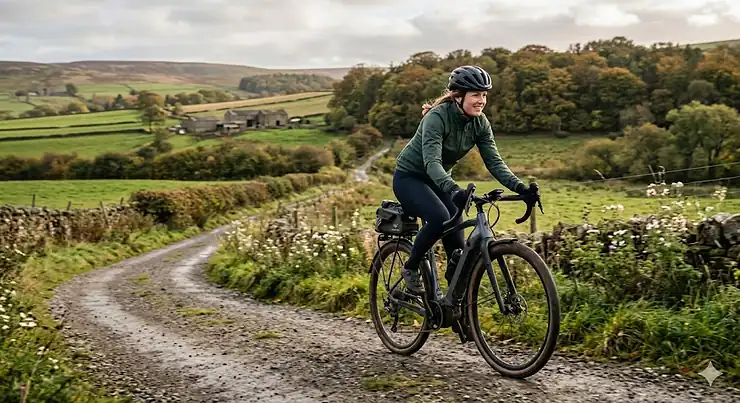
What most UK buyers overlook is how perfectly these bikes suit our riding conditions. Britain’s bridleways, canal towpaths, and rural lanes were practically designed for gravel bikes, and adding electric assistance means those rolling hills in the Cotswolds or Peak District become far less intimidating. The 250W motors compliant with UK EAPC regulations provide just enough assistance to maintain momentum on loose surfaces without overwhelming the bike’s handling characteristics.
The real transformation happens when you factor in Britain’s weather. Riding into a headwind along the Norfolk coast or tackling a muddy Welsh trail after three days of rain becomes genuinely enjoyable rather than an exercise in suffering. According to Cycling UK, off-road cycling participation has increased by 34% since 2023, with electric gravel bikes accounting for much of that growth. These bikes aren’t just for seasoned cyclists either—they’re bringing people back to cycling who thought hills, wind, or distance had put riding beyond their reach.
Quick Comparison: Top Electric Gravel Bikes at a Glance
| Model | Motor Type | Battery | Weight | Price Range | Best For |
|---|---|---|---|---|---|
| Specialized Turbo Creo 2 | Mahle X20 Hub | 320Wh (+160Wh extender) | 12.2kg | £3,900-£11,000 | All-round versatility |
| Orbea Denna H50 | Shimano EP600 Mid | 360Wh (+210Wh extender) | 14.8kg | £3,400-£3,700 | Budget-conscious riders |
| Ribble CGR AL E | Mahle X30 Hub | 250Wh | 13.5kg | £2,600-£3,200 | Minimalist design fans |
| Trek Checkpoint+ | Bosch Performance Mid | 500Wh | 16.2kg | £4,500-£5,000 | Heavy-duty touring |
| Cube Nuroad Hybrid | Bosch Performance Mid | 625Wh | 15.9kg | £3,900-£6,500 | Maximum range needs |
| Boardman ADV-E 8.9 | Mahle X30 Hub | 250Wh | 13.8kg | £2,100-£2,300 | Best value option |
| Mondraker Dusty S | Bosch CX Mid | 625Wh | 16.5kg | £4,200-£4,400 | Aggressive trail riding |
From this comparison, the Boardman ADV-E 8.9 emerges as the standout value proposition under £2,500, whilst the Specialized Turbo Creo 2 justifies its premium with exceptional weight-to-power ratios. What’s particularly telling is how hub motors (Mahle systems) consistently deliver lighter packages, though they sacrifice some torque compared to Bosch’s mid-motor approach—a trade-off that matters more on steep, technical climbs than on rolling British countryside.
💬 Just one click — help others make better buying decisions too! 😊
Top 7 Electric Gravel Bikes: Expert Analysis
1. Specialized Turbo Creo 2 Expert — The All-Rounder’s Choice
The Specialized Turbo Creo 2 remains the benchmark against which other electric gravel bikes are measured, and for good reason. Its Mahle X20 rear hub motor delivers 55Nm of torque—enough to smooth out climbs without the weight penalty of conventional mid-motors. The 320Wh main battery integrates seamlessly into the downtube, and when paired with the optional 160Wh range extender, you’re looking at genuine 160km range in eco mode.
In real-world UK conditions, this translates to comfortably completing a 100km gravel ride through the South Downs even with prolonged headwinds and muddy bridleways eating into your battery reserves. The carbon frame keeps overall weight to just 12.2kg—light enough that when assistance cuts off at 15.5mph (per UK EAPC regulations), the bike doesn’t feel like an anchor. Specialized’s SRAM Force XPLR AXS electronic groupset handles gear changes beautifully, which matters when you’re transitioning between tarmac and loose gravel repeatedly on mixed-surface rides.
UK customers consistently praise the bike’s ability to handle everything from smooth canal towpaths to rough Peak District bridleways. One Derbyshire rider noted that after six months of twice-weekly rides through British winter conditions, the sealed bearings and robust build quality showed no deterioration despite constant exposure to mud and wet weather. The built-in lights are a thoughtful touch for British riders contending with early sunsets from October through March.
Pros:
✅ Exceptionally lightweight for an e-bike (12.2kg)
✅ Impressive 160km range with extender battery
✅ Minimal motor noise and natural pedal feel
Cons:
❌ Premium price puts it beyond many budgets
❌ Mahle system app could be more intuitive
Price: Around £7,400-£7,600 for Expert spec, with alloy models starting in the £3,900-£4,200 range. Represents excellent value retention for premium builds.
2. Orbea Denna H50 2026 — Spanish Engineering Meets British Conditions
The Orbea Denna H50 brings Orbea’s road bike heritage to the gravel world with a hydroformed alloy frame that balances durability with reasonable weight (14.8kg). The Shimano EP600 RS mid-motor provides 60Nm of torque—slightly more grunt than hub motor alternatives, which proves valuable on steeper off-road climbs. The 360Wh battery handles most day rides comfortably, with a 210Wh range extender available for longer adventures.
What sets this bike apart for UK riders is how Orbea calibrated the motor’s pedal-assist curves. Rather than delivering aggressive power that can break traction on loose gravel, the EP600 system ramps up assistance smoothly, maintaining control even on wet roots or muddy descents—terrain you’ll encounter regularly on British bridleways. The Shimano Cues 9-speed groupset might not carry the cache of SRAM’s wireless offerings, but it’s robust, easy to maintain, and replacement parts are readily available at any decent UK bike shop.
Several UK reviewers noted the bike’s ability to accommodate wider tyres (up to 50mm on 700c wheels), which matters when you’re riding in autumn and winter conditions. Fitting 45mm tyres with some tread provides excellent grip without excessive rolling resistance—a sweet spot for mixed British terrain. At around £3,500, this represents the entry point for quality electric gravel bikes from established manufacturers.
Pros:
✅ Mid-motor delivers strong climbing assistance
✅ Excellent tyre clearance for muddy conditions
✅ Range extender option for longer rides
Cons:
❌ Heavier than hub motor competitors
❌ Non-series groupset on base model
Price: In the £3,400-£3,700 range depending on specification. Solid mid-range value with Orbea’s reputation for durability.
3. Ribble CGR AL E — Understated British Design
The Ribble CGR AL E exemplifies the British approach to e-bike design: understated, practical, and customisable. The Mahle X30 rear hub motor is so discreetly integrated that many riders won’t realise you’re on an electric bike. The 250Wh battery might seem modest compared to competitors, but for typical 50-70km rides across British terrain, it’s perfectly adequate—and the reduced battery size contributes to the bike’s impressively low 13.5kg weight.
Ribble’s customisation options deserve special mention. Through their online configurator, you can specify everything from tyre width (32mm to 45mm) to handlebar flare and stem length. This matters for UK riders of varying sizes who might struggle with off-the-peg geometry from larger manufacturers. One Sheffield-based rider mentioned appreciating the ability to specify narrower 32mm tyres for primarily tarmac riding during summer, then swapping to 42mm knobbly tyres when tackling Yorkshire bridleways in wetter months.
The bike’s geometry favours comfort over outright speed, with a slightly higher handlebar position that reduces strain during long rides. This proves beneficial when you’re riding into a persistent North Sea headwind or tackling the gradual climbs characteristic of English countryside. UK customers consistently mention the bike’s ability to feel like a “proper bike” rather than an electric novelty, with assistance that amplifies your effort rather than replacing it.
Pros:
✅ Extensive customisation options
✅ Very lightweight for assisted bike
✅ Subtle e-bike integration
Cons:
❌ Smaller battery limits range on longer rides
❌ Hub motor provides less torque for steep climbs
Price: £2,600-£3,200 depending on specification. Strong value given customisation and build quality.
4. Trek Checkpoint+ SL 5 — American Ruggedness for British Durability
The Trek Checkpoint+ SL 5 takes a different approach with its Bosch Performance Line CX mid-motor delivering 85Nm of torque—the most powerful system in this comparison. Combined with a substantial 500Wh battery, this bike prioritises capability over weight savings (16.2kg total). The trade-off makes sense for riders planning bikepacking trips or consistently tackling hilly terrain with loaded panniers.
Trek equipped this bike with IsoSpeed rear suspension—a compliant seat tube that absorbs vibration without adding the complexity or weight of conventional suspension forks. British gravel riders appreciate this feature when spending hours on rough bridleways or negotiating the wheel-rutted tracks common on farmland paths. The system filters out constant chatter whilst maintaining pedalling efficiency, which matters when you’re covering significant distance.
The bike’s 45mm Bontrager GR1 tyres strike an excellent balance for British conditions—wide enough for stability on loose surfaces, yet narrow enough to avoid excessive mud build-up. One Welsh rider mentioned the tyres’ ability to shed moorland mud effectively, preventing the clogging that can make gravel riding miserable in British winters. The Shimano GRX 600 groupset provides reliable 11-speed shifting with hydraulic disc brakes powerful enough for loaded touring.
Pros:
✅ Most powerful motor for steep climbs
✅ IsoSpeed suspension reduces fatigue
✅ Excellent pannier and rack mounting options
Cons:
❌ Weight penalty affects unassisted riding
❌ Larger battery takes longer to charge
Price: Around £4,500-£5,000. Premium positioning justified by robust build and touring capability.
5. Cube Nuroad Hybrid C:62 Race — German Engineering Excellence
The Cube Nuroad Hybrid C:62 represents German engineering applied to gravel riding, with a carbon frame housing a Bosch Performance Line CX motor and enormous 625Wh battery. This combination prioritises range above all else—Cube claims up to 120km on a single charge, and UK riders regularly report achieving 90-100km in varied terrain with moderate assistance.
The carbon frame construction reduces weight to 15.9kg despite the large battery—respectable given the power and range on offer. Cube specced the bike with Continental’s Terra Trail tyres in 40mm width, which UK testers found excellent for dry conditions but occasionally lacking grip on wet clay or muddy woodland trails. Swapping to slightly wider, more aggressive tyres (the frame clears up to 50mm) transforms the bike’s capability in typical British autumn and winter conditions.
One particularly clever feature is the integrated frame storage for multi-tools and a spare tube—small details that matter when you’re 30km from home on a remote Northumberland bridleway. The Bosch Purion display might look basic compared to colour touchscreens, but it’s visible in bright sunlight (rare in Britain, admittedly) and drains minimal battery. UK customers mention appreciating the straightforward functionality over flashier but battery-hungry alternatives.
Pros:
✅ Exceptional range for long-distance rides
✅ Carbon frame balances weight and durability
✅ Integrated storage solutions
Cons:
❌ Stock tyres could be more aggressive
❌ Basic display lacks smartphone connectivity
Price: £3,900-£6,500 depending on specification. Range-focused buyers will find excellent value here.
6. Boardman ADV-E 8.9 — British Budget Champion
The Boardman ADV-E 8.9 punches dramatically above its £2,200 price point, delivering quality components and thoughtful design that embarrasses bikes costing £1,000 more. The Mahle X30 hub motor provides 40Nm of torque—adequate rather than aggressive, but perfectly suited to rolling British terrain. The 250Wh battery manages 50-60km in mixed conditions, which covers most recreational rides comfortably.
Boardman equipped this bike with a Shimano Cues 9-speed drivetrain—recently updated and significantly improved from earlier iterations. UK mechanics praise its reliability and straightforward adjustment, which matters when you’re maintaining the bike yourself rather than paying shop rates. The mechanical disc brakes provide sufficient stopping power, though they lack the modulation and consistency of pricier hydraulic systems.
What sets this bike apart is how Boardman allocated the budget. Rather than cutting corners on the frame or motor system, they economised on finishing components whilst maintaining quality where it matters—the frame is well-constructed alloy with proper mud clearance, the motor integration is clean, and the geometry suits British riders averaging 5’6″ to 6’2″. One Manchester commuter mentioned using this bike daily through an entire British winter, noting that whilst some components showed wear, nothing failed catastrophically.
Pros:
✅ Exceptional value under £2,500
✅ Well-balanced component selection
✅ Practical British weather considerations
Cons:
❌ Mechanical brakes less powerful than hydraulic
❌ Limited battery range compared to premium options
Price: Around £2,100-£2,300. Unbeatable value for budget-conscious riders.
7. Mondraker Dusty S — Spanish Aggression
The Mondraker Dusty S approaches electric gravel bikes from a mountain bike perspective, featuring a Bosch CX motor producing 85Nm of torque paired with a 625Wh battery. At 16.5kg, it’s the heaviest bike in this comparison, but that weight brings capability. The frame geometry is longer and slacker than traditional gravel bikes, prioritising stability on technical descents over outright speed on tarmac.
This bike excels when British gravel riding ventures into mountain bike territory—steep rocky climbs in the Lake District, rutted Welsh moorland tracks, or Scottish Highland trails. The aggressive geometry and powerful motor make light work of terrain that would have conventional gravel bikes struggling. Mondraker fitted 45mm Maxxis Rambler tyres that provide excellent grip in muddy conditions, though they create noticeable rolling resistance on tarmac sections.
UK riders considering this bike should honestly assess their riding style. If your gravel rides are 70% off-road with significant technical sections, the Dusty S makes sense. If you’re spending equal time on tarmac and gravel, lighter hub motor bikes will feel more versatile. One Scottish Highlands rider praised the bike’s ability to tackle mountain bike trails with drop bars, noting the motor assistance made steep technical climbs achievable that would be impossible on a conventional gravel bike.
Pros:
✅ Most capable for technical terrain
✅ Enormous battery for all-day rides
✅ Mountain bike geometry inspires confidence
Cons:
❌ Weight penalty affects tarmac performance
❌ Aggressive geometry less comfortable for touring
Price: In the £4,200-£4,400 range. Niche positioning for adventurous riders.
Real-World Usage Guide: Making Your Electric Gravel Bike Work in British Conditions
Getting the most from your electric gravel bike in the UK requires understanding how our specific climate and infrastructure affect performance. The spec sheet won’t tell you that British dampness means battery range drops roughly 10-15% between summer and winter, or that those optimistic 120km range claims assume smooth tarmac rather than energy-sapping muddy bridleways.
Battery Management Through British Seasons
Lithium batteries perform optimally between 10-25°C—a range we British folk enjoy for approximately three weeks annually. Winter temperatures regularly dip to 2-5°C, which reduces battery capacity by 10-15%. The solution isn’t complicated: store your bike indoors when possible, and if you must keep it in a shed or garage, remove the battery and bring it inside overnight. Cold batteries also charge more slowly, so allow an extra hour when temperatures drop below 5°C.
Summer heat (on those rare occasions we experience it) poses less concern, though leaving your bike in a car boot during a 28°C heatwave isn’t ideal. More problematic is British wet—whilst all reputable e-bike systems carry IP ratings protecting against water ingress, persistent moisture can affect connections. After riding through heavy rain, wipe down the motor casing and battery contacts, then store the bike somewhere with air circulation to prevent condensation build-up.
Tyre Selection for Mixed British Terrain
The tyres that come fitted to your bike probably represent a compromise—manufacturers fit middle-ground options that suit varied conditions adequately without excelling anywhere. British gravel riding demands more specific choices. From April through September, 35-38mm tyres with a shallow tread pattern roll efficiently on dry tracks and tarmac whilst providing sufficient grip on harder-packed gravel.
October through March requires a different approach. Swap to 42-45mm tyres with more aggressive tread. The extra width provides flotation on muddy surfaces, preventing the bike from cutting through to slippery clay underneath. The aggressive tread helps clear accumulated mud—British soil has a particular talent for clogging narrow tread patterns. One Surrey rider mentioned this seasonal tyre swap transformed winter riding from a muddy struggle into genuinely enjoyable outings.
Maintenance Schedule for British Conditions
British weather accelerates wear on drivetrain components. Expect to clean and lubricate your chain after every muddy ride—sounds excessive, but that accumulated grit acts like grinding paste on expensive components. Use a wet lube from October through March when conditions are consistently damp, switching to dry lube during summer months. The extra torque from electric motors amplifies wear rates; replace your chain roughly 30% more frequently than on conventional bikes.
Brake pad inspection matters more on electric gravel bikes. The additional weight (typically 5-7kg over conventional gravel bikes) plus higher average speeds mean brakes work harder. Check pad thickness monthly, and if you’re riding hilly terrain regularly, expect to replace pads twice annually. Hydraulic systems require bleeding annually in British conditions—moisture inevitably works its way into brake fluid, reducing performance.
Understanding UK EAPC Regulations: What “250W” Actually Means
The UK’s Electrically Assisted Pedal Cycle (EAPC) regulations sound straightforward until you start examining the details. Every electric bike legally ridden on British roads must comply with three core requirements: maximum continuous motor output of 250W, motor assistance cutting off completely at 15.5mph (25km/h), and functional pedals capable of propelling the bike. Violate any of these, and your bike legally becomes a moped requiring registration, insurance, tax, and a driving licence.
Here’s where confusion creeps in. Manufacturers often advertise “500W peak power” or similar figures—this isn’t contradictory. The 250W limit refers to continuous rated output, not momentary peak power when you’re climbing a steep hill. Your bike’s motor can briefly exceed 250W to maintain assistance during high-demand situations, but its sustained maximum must not exceed 250W. Reputable manufacturers clearly mark this continuous rating on the motor casing; if it’s missing, that’s a significant warning sign about compliance.
The 15.5mph assistance limit frustrates some riders, but the logic is sound. This speed threshold keeps electric bikes firmly in the “bicycle” category rather than motor vehicle territory. You can certainly ride faster than 15.5mph—most of these bikes cruise comfortably at 18-20mph on flat tarmac when you’re pedalling hard—but the motor provides zero assistance beyond that cutoff. On gravel surfaces, 15.5mph represents a brisk pace anyway, so the limit rarely feels restrictive during off-road riding.
According to GOV.UK guidance on electric bikes, throttle-only operation (twist-and-go) is permitted up to 3.7mph (6km/h) to assist with starting from a standstill. Beyond that speed, you must be pedalling for motor assistance to engage. This pedal-assist requirement distinguishes electric bikes from electric mopeds in UK law. Retailers occasionally sell non-compliant bikes online; buyers bear responsibility for ensuring any electric bike they ride on public roads meets EAPC standards.
Case Study: Three British Riders, Three Different Needs
Profile 1: Sarah — Manchester Commuter
Sarah rides 12km each way to her Manchester office, mixing canal towpaths (6km), quiet residential streets (4km), and a challenging climb through Heaton Park (2km with 80m elevation gain). She chose the Ribble CGR AL E after test-riding three alternatives. The Mahle hub motor’s quiet operation matters when passing pedestrians on shared towpaths, and the bike’s 13.5kg weight makes carrying it up three flights of stairs to her flat manageable.
The 250Wh battery handles her daily 24km round trip with charge to spare, even accounting for full assistance climbing through the park. Sarah mentions appreciating how the bike doesn’t scream “expensive e-bike”—important given she locks it outside during work hours. After eight months of daily commuting through Manchester’s famously damp weather, the sealed hub motor shows no signs of water ingress, and the hydraulic disc brakes remain consistent despite constant damp conditions.
Profile 2: James — Cotswolds Weekend Explorer
James lives in Cheltenham and rides 60-90km loops through the Cotswolds most weekends. His Specialized Turbo Creo 2 suits these longer adventures perfectly. The combination of 320Wh main battery and 160Wh range extender provides genuine 120-140km capability even with moderate assistance on the Cotswolds’ rolling terrain. The carbon frame and hub motor keep weight reasonable (12.2kg), so when he’s cruising at 18mph on tarmac sections with no assistance, the bike doesn’t feel like a burden.
James particularly values the bike’s versatility—it handles everything from smooth A-roads to muddy bridleways with minimal fuss. The SRAM wireless groupset means no cables to snag on undergrowth during narrow trail sections, and the dropped chainstays provide excellent mud clearance. He mentions that whilst the £7,500 price initially caused hesitation, the bike’s exceptional build quality and multi-surface capability justify the investment.
Profile 3: Linda — Scottish Highlands Bikepacker
Linda tours extensively through Scottish Highlands, typically covering 400-500km over week-long trips with loaded panniers. Her Trek Checkpoint+ SL 5 handles the demands of remote touring brilliantly. The Bosch CX motor’s 85Nm torque makes climbing mountain passes with 15kg of camping gear and supplies manageable, whilst the 500Wh battery provides sufficient range for 80-100km days even in hilly terrain.
The bike’s numerous mounting points accommodate front and rear panniers, frame bags, and a handlebar roll—essential for self-supported touring. Linda appreciates Trek’s decision to include IsoSpeed rear suspension, which significantly reduces fatigue during long days on rough Highland tracks. After two years of touring, the Bosch motor and battery show no degradation, and the Shimano groupset has proven utterly reliable despite minimal maintenance opportunities during remote trips.
How to Choose Your Electric Gravel Bike in 5 Practical Steps
Selecting the right electric gravel bike requires moving beyond manufacturer marketing to understand what actually suits your riding. Here’s a decision framework based on what matters rather than what sounds impressive in advertising copy.
Step 1: Define Your Typical Riding Distance and Terrain
Be honest about 80% of your riding rather than aspirational weekend epics. If most rides are 40-60km on mixed surfaces with moderate hills, a 250-360Wh battery suffices. Regularly tackling 80km+ rides demands 500Wh+, especially in winter when battery performance drops. British gravel riding rarely justifies the weight penalty of 625Wh batteries unless you’re covering serious distance or significant elevation.
Terrain assessment matters equally. If 70%+ of your riding happens on tarmac with occasional gravel sections, hub motor bikes (Mahle systems) deliver better efficiency and lower weight. Predominantly off-road riding with steep technical climbs justifies mid-motor bikes (Bosch, Shimano) despite the weight penalty. The motor torque difference (40Nm hub vs 85Nm mid-motor) is genuinely noticeable on 15%+ gradients with loose surface.
Step 2: Establish a Realistic Budget with Total Cost Visibility
Purchase price represents only one component of ownership costs. Budget an additional £150-250 annually for maintenance—chain replacement, brake pads, tyres, and drivetrain wear all accelerate on electric bikes. Insurance adds £100-200 yearly for bikes over £2,000. If you’re financing through 0% APR schemes (common at UK bike retailers), calculate total monthly outlay including insurance and anticipated maintenance.
Consider depreciation realistically. Premium brands (Specialized, Trek, Orbea) retain value better than budget alternatives. A £7,000 Specialized might lose £2,000 in three years, whilst a £2,000 budget bike could be worth £500. Factor this into affordability calculations, especially if you anticipate upgrading within 3-5 years.
Step 3: Motor Type Selection Based on Riding Profile
Hub motors excel for riders prioritising lightweight bikes and primarily riding on firm surfaces. They’re quieter, require less maintenance, and keep overall weight low (12-14kg). The motor assistance feels smooth and natural, though torque limitations become apparent on very steep technical climbs. Mahle’s X20 and X30 systems dominate the quality hub motor segment.
Mid-motors suit riders tackling consistently steep or technical terrain. The additional torque (60-85Nm) makes loaded touring or mountain-bike-style gravel riding significantly easier. They’re heavier (typically adding 2-3kg), noisier (noticeable motor hum under load), and place more stress on drivetrain components. Bosch and Shimano lead the mid-motor category, with proven reliability across hundreds of thousands of UK installations.
Step 4: Frame Material and Geometry Assessment
Carbon frames deliver lower weight (typically 1.5-2kg saving) and better vibration damping compared to alloy alternatives. For recreational riders, alloy frames represent better value—the weight difference matters less when you have motor assistance, and modern hydroformed alloy approaches carbon’s ride quality. Carbon makes sense for enthusiasts prioritising weight or planning extensive unassisted riding at speeds above the 15.5mph assistance cutoff.
Geometry requires hands-on testing. More aggressive gravel bikes (slacker head angle, longer reach) suit primarily off-road riding but feel twitchy on tarmac. Conservative geometry (steeper head angle, shorter reach) handles better on mixed surfaces and during long road sections. British riders averaging 5’6″ to 6’2″ generally find more conservative geometry more versatile given our typical mixed-surface riding.
Step 5: Essential UK-Specific Considerations
Mudguard and rack mounting points aren’t optional for British riders—they’re essential. Our weather guarantees you’ll eventually need mudguards, and rack mounts provide options for panniers, child seats, or just carrying shopping. Check maximum tyre clearance carefully; 45mm+ clearance gives you options when winter arrives and you need more aggressive rubber.
Verify UK EAPC compliance explicitly. Reputable retailers clearly state this, but budget imports occasionally exceed 250W continuous output or provide assistance beyond 15.5mph. Non-compliant bikes are uninsurable, liable for police confiscation, and put you at legal risk. If compliance isn’t clearly documented, walk away regardless of the price.
Common Mistakes British Buyers Make When Choosing Electric Gravel Bikes
Three mistakes account for most buyer’s remorse in the UK electric gravel bike market. Understanding these pitfalls before purchasing saves both money and frustration.
Mistake 1: Prioritising Maximum Range Over Practical Range
Manufacturers quote range figures under ideal conditions—smooth tarmac, minimal wind, optimal temperature, rider providing significant pedal input. Subtract 30-40% for realistic British conditions. That “120km range” becomes 75-85km when you’re riding mixed terrain with headwind in 8°C temperatures. Rather than chasing maximum range figures, match battery capacity to your typical riding: 250Wh for 40-60km rides, 360-500Wh for 70-100km, 625Wh for 100km+ or heavily loaded touring.
Carrying a range extender adds flexibility without the weight penalty of a massive main battery. Several systems (Specialized, Orbea) offer extender options you can attach for longer rides whilst keeping the bike lighter for daily use. This modular approach suits British riders whose ride length varies significantly between winter evening spins and summer day trips.
Mistake 2: Underestimating the Impact of British Wet on Maintenance
Many buyers assume electric bikes require no more maintenance than conventional bikes. The opposite is true—motors amplify drivetrain wear, heavier weight increases brake pad consumption, and British weather accelerates corrosion on any inadequately sealed components. Budget £200-300 annually for maintenance if you ride regularly through British autumn and winter conditions.
The specific mistake is buying bikes with poor component choices for wet conditions. Mechanical disc brakes work adequately in dry weather but lose consistency when constantly damp. Non-series groupsets (Microshift, Sensah) might shift well initially but deteriorate faster than Shimano or SRAM when exposed to British muck. Sealed bearings throughout the bike (hubs, bottom bracket, headset) matter enormously when riding through six months of dampness.
Mistake 3: Buying for Aspirational Rather Than Actual Riding
This manifests as purchasing aggressive, technically focused bikes when 90% of riding happens on canal towpaths and quiet lanes. A £6,000 Mondraker with 85Nm motor and mountain bike geometry might be thrilling on Lake District trails, but it’s overkill and unnecessarily heavy for Cheshire’s flat bridleways. Conversely, buyers occasionally choose lightweight hub motor bikes then discover inadequate torque for their hilly local terrain.
Honestly assess your actual riding over the past year. Where do you actually ride, not where you’d like to ride? What terrain and distances characterise 80% of your outings? A bike optimised for that 80% will serve you better than one purchased for aspirational 20% usage. You can always hire a different bike for that one Scottish Highlands trip annually rather than owning wrong bike for daily riding.
What to Expect: Real-World Performance in British Conditions
Marketing materials showcase electric gravel bikes crossing pristine American desert landscapes under cloudless skies. British reality involves canal towpaths in November drizzle, muddy Chiltern bridleways, and that persistent headwind along the East Anglian coast that never seems to relent. Understanding what these bikes actually do in our conditions prevents disappointment.
Muddy Trail Performance
British mud differs from the romantic gravel trails featured in manufacturer videos. Our clay-based soil clings tenaciously to everything, building up around tyres until clearance disappears and the wheel stops rotating. Tyre choice matters enormously—look for aggressive tread patterns with substantial spacing between knobs. The motor assistance helps maintain momentum through thick mud, but you still need to periodically stop and clear accumulated muck from around the tyres and frame.
The additional weight of electric systems (typically 5-7kg over conventional bikes) works both for and against you in mud. The extra weight provides traction on loose surfaces, preventing wheel spin that lighter bikes experience. However, when you do lose momentum and need to push the bike through a particularly boggy section, that extra weight becomes very noticeable. Several Scottish riders mentioned appreciating Bosch’s walk-assist feature (motor provides gentle push at walking pace) when manhandling bikes through especially grim sections.
Wind Assistance and British Weather
One of electric gravel bikes’ most underappreciated benefits is wind assistance. British riders routinely contend with persistent headwinds that conventional cyclists either slog through or avoid entirely. Motor assistance doesn’t eliminate wind resistance, but it neutralises the soul-destroying aspect of grinding into a 25mph headwind for 40 minutes. You still pedal, but at a sustainable cadence rather than the death-march pace required on conventional bikes.
The psychological benefit matters as much as the physical. On conventional bikes, discovering you’ll be riding into headwind for the return journey can genuinely ruin a ride. With motor assistance, it becomes a non-issue—you’ll arrive home slightly more tired but without the bitter resentment that accompanies fighting wind for an hour. This transforms circular routes from wind-dependent gambles into reliably enjoyable rides regardless of conditions.
Winter Performance Realities
British winters test electric bikes thoroughly. Temperatures hovering around 3-7°C reduce battery capacity by 10-15%, whilst wet roads and trails drain batteries faster than summer conditions. That 80km range claim becomes 55-65km in January. Battery percentage remaining becomes unreliable—the display might show 40% remaining, then suddenly drop to 15% during a steep climb as cold temperatures temporarily reduce available capacity.
Experienced riders plan accordingly. Carry a range extender or portable charger for longer winter rides. Use higher assistance levels strategically rather than constantly—save power for genuine hills and headwinds rather than using assistance continuously. Keep the bike indoors when possible; even overnight in a heated garage extends battery range compared to outdoor storage.
Features That Actually Matter (And Those That Don’t)
Marketing departments love highlighting features that sound impressive but provide minimal practical benefit. Conversely, genuinely useful features often receive minimal promotional attention. Here’s what actually matters for British gravel riding.
Features Worth Paying For
Sealed Bearings Throughout: This isn’t exciting, but riding through British wet for six months annually destroys exposed bearings rapidly. Quality sealed bearings (bottom bracket, headset, wheel hubs) add perhaps £100-150 to manufacturing costs but save multiples of that in maintenance over the bike’s life. If a bike’s spec sheet doesn’t explicitly mention sealed bearings, assume they’re absent.
Mudguard Mounting Points: Non-negotiable for British riders. Riding without mudguards during September through April means arriving everywhere covered in spray and dealing with constant grit accumulation on the drivetrain. Proper mudguard mounts allow fitting full-length guards that provide genuine protection. Clip-on solutions work marginally but lack the coverage of properly mounted guards.
Frame Tyre Clearance 45mm+: This provides options. Fit narrower tyres (32-35mm) for summer speed, swap to wider rubber (42-45mm) with aggressive tread when autumn arrives. Bikes limited to 38mm maximum clearance force compromises—you can’t fit the muddy-condition tyres that transform winter riding from miserable to manageable.
Features Not Worth Premium Pricing
Colour Touchscreen Displays: These look modern but offer minimal practical benefit over simple LED displays. They’re harder to read in bright sunlight, drain battery faster, and represent an expensive component to replace when eventually damaged. Simple displays showing battery percentage, assistance level, and speed provide everything necessary.
Smartphone App Integration: Manufacturers love promoting app connectivity, but practical utility is limited. You can adjust assistance profiles, but most riders find the default settings perfectly adequate. Route navigation works, but dedicated GPS units or your existing smartphone already handle this. Unless you genuinely need detailed ride analytics, this feature adds complexity without meaningful benefit.
Electronic Shifting: SRAM’s wireless groupsets and Shimano’s Di2 shift beautifully, but mechanical alternatives shift reliably at fraction of the cost. Electronic shifting makes sense for road racing where split-second shifts matter. For gravel riding, the performance difference is imperceptible, whilst cost and complexity increase significantly. Save the £1,000+ premium for other priorities.
Electric Gravel Bikes vs Traditional Gravel Bikes: The Honest Comparison
The electric versus conventional gravel bike decision deserves analysis beyond simple “with or without motor” framing. Both types suit different riders and situations.
| Aspect | Electric Gravel Bike | Traditional Gravel Bike | British Context |
|---|---|---|---|
| Climbing Ability | Assisted steep climbs manageable | Hard work on 10%+ gradients | British hills frequent but rarely extreme |
| Range | 50-120km depending on battery | Limited only by fitness | Plan charging for 100km+ rides |
| Weight | 12-17kg typical | 8-11kg typical | Carrying upstairs/storage consideration |
| Maintenance Cost | £200-300 annually | £100-150 annually | Factor British weather impact |
| Purchase Price | £2,000-£11,000 | £800-£8,000 | Depreciation steeper on electric |
| Wind Resistance | Motor compensates significantly | Requires grinding through | British wind makes electric appealing |
| Speed on Flat | 15.5mph assistance cutoff | Unlimited by motor | Fit riders exceed assistance speed easily |
The honest assessment: electric gravel bikes make sense for riders wanting to extend range, tackle hillier terrain than fitness alone allows, or neutralise British weather’s worst aspects (wind, wet, cold). They’re transformative for older riders, those returning from injury, or anyone simply wanting more predictable ride durations regardless of conditions.
Traditional gravel bikes suit riders whose fitness comfortably handles their typical routes, who prioritise weight savings and simplicity, or who regularly ride at speeds above 15.5mph where assistance cuts off anyway. For many British riders, the deciding factor is whether typical riding involves 500m+ of climbing per 50km—at that point, motor assistance shifts from nice-to-have to genuinely transformative.
FAQ: Your Electric Gravel Bike Questions Answered
❓ Are electric gravel bikes legal on UK bridleways and footpaths?
❓ How far can I actually ride on a single charge in British conditions?
❓ Do I need insurance for an electric gravel bike in the UK?
❓ Can I ride my electric gravel bike in heavy rain without damaging the motor?
❓ What happens when the battery runs out mid-ride?
Conclusion: Making the Right Choice for British Gravel Riding
Electric gravel bikes represent one of cycling’s most sensible evolutions, particularly for British riders. The combination of our varied terrain, challenging weather, and typically mixed-surface riding creates perfect conditions for motor-assisted gravel bikes to demonstrate their versatility. Whether you’re tackling Cotswold byways, Scottish Highlands trails, or Yorkshire Dales bridleways, a well-chosen electric gravel bike extends your range and capability without sacrificing the fundamental joy of cycling.
The decision ultimately hinges on honest self-assessment. If you’re frequently limiting ride length or avoiding routes due to hills, wind, or distance concerns, motor assistance transforms what’s possible. If fitness isn’t limiting your riding and you’re comfortable with current range and terrain, conventional gravel bikes might suit you better. There’s no wrong answer—only the choice that aligns with your actual riding patterns and future intentions.
For most British riders, the sweet spot sits around £3,000-£4,000. This budget delivers quality hub motor systems (Mahle), proven mid-motors (Bosch, Shimano), reliable components (Shimano 105, SRAM Rival), and frames built for British conditions. Spending less risks frustrating compromises in motor performance or component durability. Spending significantly more delivers marginal improvements that only enthusiast riders will appreciate.
The British gravel riding scene has matured considerably since 2020. Electric gravel bikes no longer carry the stigma of “cheating” that electric road bikes occasionally encounter. Riders increasingly recognise that motor assistance simply extends participation rather than replacing effort. Whether you’re 25 and training for events or 65 and wanting to explore countryside inaccessible on conventional bikes, there’s an electric gravel bike suited to your needs.
Start with test rides across varied terrain. Ride the same route on hub motor and mid-motor bikes to understand the differences. Check how bikes handle when assistance cuts off at 15.5mph—some feel sluggish whilst others remain lively. Assess comfort over extended periods, as gravel bikes demand different positioning than road bikes. With proper research and honest needs assessment, you’ll find an electric gravel bike that enhances rather than replaces the simple pleasure of exploring Britain’s magnificent network of trails, bridleways, and quiet lanes.
Recommended for You
- Chain Guard Electric Bike: 7 Best UK Models 2026
- 7 Best Shopping Cargo Ebikes UK 2026
- Best Electric Cargo Bike for School Run UK: 7 Top Picks 2026
Disclaimer: This article contains affiliate links. As an Amazon Associate, I earn from qualifying purchases. If you purchase products through these links, we may earn a small commission at no additional cost to you.
✨ Found this helpful? Share it with your mates! 💬🤗
