In This Article
Picture this: you’re cycling from the Lake District to the Yorkshire Dales, panniers fully loaded, and you’ve just hit that brutal 15% gradient near Kirkstone Pass. Three years ago, you’d be grinding away in your lowest gear, questioning every life choice that led you here. Today, with an electric touring bicycle, you glide up that same climb with a smile, energy reserves intact for the next 80 kilometres. That’s the revolution happening on Britain’s touring routes in 2026.
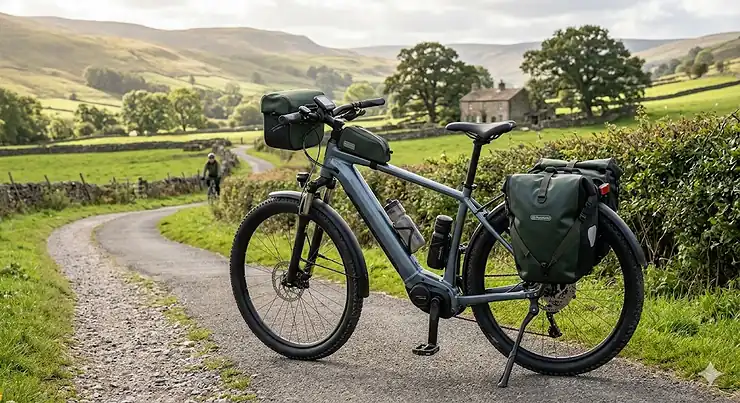
An electric touring bicycle isn’t just an e-bike with racks bolted on. It’s a purpose-built machine designed for multi-day cycling journeys, engineered to handle everything British touring throws at it: week-long trips across Scotland’s North Coast 500, loaded canal path adventures, or extended cycling holidays through the Cotswolds. What separates these from regular e-bikes is their combination of substantial battery capacity (typically 500-750Wh), robust frame construction capable of carrying 25-30 kg of luggage, weatherproof components that survive our persistently damp climate, and geometry designed for all-day comfort rather than speed.
The UK touring market has matured dramatically since the post-pandemic cycling boom. In 2026, we’re seeing more British riders tackling routes like the C2C (Coast to Coast), the Great North Trail, and even venturing onto Continental routes like EuroVelo networks — all on electric touring bicycles. The difference from traditional touring is profound: hills become manageable, daily distances extend from 60 km to 100+ km without destroying your knees, and you arrive at your B&B or campsite with enough energy left to actually enjoy your evening. For riders over 50, those with joint issues, or anyone carrying camera equipment and camping gear, electric touring bicycles have made long-distance cycling accessible in ways that weren’t possible before.
Quick Comparison: Top Electric Touring Bicycles at a Glance
| Model | Battery Capacity | Estimated Range (UK Conditions) | Weight | Typical Price Range (GBP) | Best For |
|---|---|---|---|---|---|
| Eleglide M2 29″ | 540Wh (36V 15Ah) | 70-125 km | ~25 kg | £600-£800 | Budget multi-day touring, mixed terrain |
| HITWAY BK7S 27.5″ | 468Wh (36V 13Ah) | 60-100 km | ~23 kg | £650-£850 | Mid-range touring, UK canal paths |
| Eleglide T1 Trekking | 468Wh (36V 13Ah) | 55-100 km | ~21.7 kg | £500-£700 | Entry-level touring, road-focused routes |
| DUOTTS C29 29″ | 720Wh (48V 15Ah) | 80-140 km | ~26 kg | £900-£1,100 | Serious touring, Scottish Highlands |
| HITWAY BK19 700C | 432Wh (36V 12Ah) | 40-80 km | ~22 kg | £450-£650 | Weekend tours, light luggage |
| Ancheer 27.5″ Trekking | 360Wh (36V 10Ah) | 40-70 km | ~23 kg | £400-£600 | Budget-conscious beginners |
| Eleglide Mopride 1 Plus | 450Wh (36V 12.5Ah) | 55-100 km | ~21.7 kg | £550-£750 | Versatile touring, off-road capability |
The table reveals a clear pattern: battery capacity directly dictates touring viability. Anything below 450Wh requires daily charging on multi-day trips — manageable but limiting your accommodation options. The 500-750Wh sweet spot gives you genuine touring freedom across most British routes. Notice the weight figures too — these aren’t lightweight city bikes. That extra mass comes from reinforced frames, larger batteries, and components built to survive thousands of kilometres with luggage. In wet British conditions, expect the lower end of range estimates; the combination of headwinds off the Irish Sea, persistent drizzle adding resistance, and colder temperatures reducing battery efficiency means manufacturer claims rarely hold up in practice.
💬 Just one click — help others make better buying decisions too! 😊
Top 7 Electric Touring Bicycles for UK Riders — Expert Analysis
1. Eleglide M2 Electric Mountain Bike (29″) — Best All-Round Value for Touring
The Eleglide M2 occupies that rare sweet spot where price meets genuine capability. With its 540Wh battery (36V 15Ah), this isn’t a bike that’ll abandon you halfway up Shap Fell. The 250W rear hub motor delivers consistent power without the maintenance headaches of mid-drive systems, and the 29-inch wheels roll efficiently over mixed surfaces — essential when British touring routes inevitably take you off-road onto gravel paths, bridleways, and the occasional waterlogged field that passes for a cycle path in rural Wales.
What touring-specific features matter here? The hydraulic disc brakes are crucial; mechanical systems simply don’t cope well with sustained descents in rain, and you’ll be doing plenty of both on loaded tours. The Shimano 21-speed drivetrain gives you climbing options when the motor’s in Eco mode to preserve battery. The aluminium frame has mounting points for rear racks (rated to 25 kg) and mudguards — not afterthoughts but integrated design elements. Real-world range on UK touring routes sits around 70-90 km with moderate assist and 15-20 kg of luggage. That’s enough for a Lake District day loop or a Coast to Coast daily stage with charging at your overnight stop.
UK riders praise the M2’s behaviour in wet conditions. The wide 27.5×2.1″ tyres provide reassuring grip on damp tarmac and muddy canal towpaths. The front suspension fork (80mm travel) absorbs the worst of Britain’s potholed B-roads without feeling bouncy or energy-sapping. One frequently mentioned quirk: the battery removal process requires two hands and a fair bit of wiggling — not ideal if you’re trying to bring it into a B&B while juggling panniers.
Pros:
- Excellent value for touring capability (under £800)
- Hydraulic brakes inspire confidence in British weather
- 540Wh battery handles multi-day tours with nightly charging
Cons:
- Battery removal slightly awkward for B&B charging
- Heavy at 25 kg — stairs become a proper workout
Price Verdict: At around £650-£750, the M2 delivers touring capability that bikes costing twice as much offered just two years ago. Budget riders on multi-day trips should start here.
2. HITWAY BK7S 27.5″ Trekking E-Bike — Premium Build Quality for Serious Tourers
The HITWAY BK7S steps up the quality ladder without climbing into boutique pricing. Available with either rear hub or mid-drive motor configurations, the mid-drive option (Shimano or similar) offers better efficiency on loaded climbs — significant if you’re planning routes through the Peak District, Snowdonia, or the Cairngorms. The 468Wh battery (36V 13Ah) sits in that Goldilocks zone for UK touring: enough for 60-100 km daily stages depending on terrain and weather, requiring nightly charges but not mid-day panic stops.
Frame geometry is explicitly designed for touring rather than retrofitted from a mountain bike. The upright position reduces lower back strain during 6-8 hour riding days. The 28-inch wheels (on the larger frame option) roll faster than 26″ or 27.5″ alternatives — measurable difference over 100 km stages. Integration matters here: the battery is semi-concealed in the down tube, the motor cables are internally routed (less rain ingress), and the Shimano 7-speed rear derailleur is a proven workhorse that any bike shop can service.
British touring demands reliability over flash, and the BK7S delivers. Riders report minimal maintenance issues across 2,000+ km seasons. The hydraulic disc brakes (essential, not optional) handle Lake District descents without fade. Mudguard and rack mounts are reinforced — bikes often fail at mounting points when loaded, not in major components. The integrated lighting system runs off the main battery (saving you the AA battery faff), with a beam pattern that actually illuminates British country lanes rather than just making you visible.
Real talk about weight: at 23 kg bare, add 15-20 kg of touring kit and you’re lifting 40+ kg over stiles or up B&B staircases. The removable battery helps, but this isn’t a bike for daily train commutes. It’s a dedicated tourer.
Pros:
- Mid-drive option excels on loaded climbs (Wales, Scotland, Peak District)
- Build quality suggests 5+ year lifespan with proper care
- Integrated lighting and weather-resistant components suit UK conditions
Cons:
- 468Wh battery requires daily charging on multi-day tours
- Higher price point (around £750-£850) than budget alternatives
Price Verdict: The £750-£850 range positions this as a serious investment. For riders planning regular long-distance tours, the BK7S pays back through reduced maintenance and better daily riding experience.
3. Eleglide T1 Electric Trekking Bike — Budget Entry Point for UK Touring
The Eleglide T1 represents the minimum viable electric touring bicycle for British conditions. Its 468Wh battery (36V 13Ah) and 250W motor mirror more expensive bikes, but cost savings appear in components: mechanical disc brakes rather than hydraulic, basic Shimano 7-speed gearing, and simpler front suspension. This doesn’t make it inadequate — it makes it affordable for riders testing whether electric touring suits them before committing £1,000+.
What works well: the 27.5-inch wheels handle British mixed-surface routes competently. The frame geometry promotes comfortable all-day riding. The LCD display is basic but clear in British overcast conditions (unlike some OLED displays that wash out). Mounting points exist for racks and mudguards. The battery removes tool-free for B&B charging. You’re looking at 55-100 km range depending on route profile and assist level — adequate for most UK touring routes with nightly accommodation.
What reveals the budget: mechanical disc brakes require more frequent adjustment and don’t inspire the same confidence on long wet descents. The front suspension fork is basic and adds weight without particularly improving comfort. The motor feels less refined than hub motors on pricier bikes — more on/off than graduated assistance. UK buyers report the bike works reliably but lacks the polish of £800+ alternatives.
Pros:
- Entry price point (around £500-£650) for genuine touring capability
- Adequate battery capacity for daily 60-80 km stages with charging
- Lightweight at 21.7 kg compared to heavier touring models
Cons:
- Mechanical disc brakes less effective in sustained British rain
- Basic components mean more frequent adjustments and servicing
Price Verdict: For under £600, the T1 delivers functional touring capability. Perfect for riders wanting to explore the Coast to Coast or canal networks without major financial commitment.
4. DUOTTS C29 Electric Mountain Bike (29″) — Long-Range Powerhouse for Remote Routes
The DUOTTS C29 enters premium territory with its 720Wh battery (48V 15Ah) — the largest capacity in this roundup. That extra juice translates directly into touring freedom: 80-140 km range even in British conditions means you can tackle routes like the 320 km Edinburgh to London trail or the 199-mile Pennine Cycleway with comfortable daily stages and fewer charging constraints. The 48V system also delivers stronger motor performance on sustained climbs, noticeable when you’re grinding up the 25% gradients around Hardknott Pass with full panniers.
This bike targets serious tourers willing to invest for better capability. The 29-inch wheels excel on UK touring’s typical mix of tarmac, gravel, and hardpack trails. The Shimano 21-speed drivetrain includes legitimately low gears for loaded climbing. The frame is overbuilt compared to lighter models — good news for longevity and load capacity (30 kg rear rack rating), less good news when navigating narrow B&B hallways. Hydraulic disc brakes are specced appropriately for a bike this capable.
UK touring-specific intelligence: the C29’s extra battery capacity means you can use higher assist levels on challenging terrain without range anxiety. Scottish Highlands routes with 1,000+ metres of daily elevation gain become feasible. The bike also handles winter touring better — cold weather battery degradation (roughly 20% capacity loss below 5°C) matters less when you start with 720Wh. The downside is weight: 26 kg bare means 45+ kg when loaded. This is a bike that lives on the road, not one you want to carry up stairs regularly.
Pros:
- 720Wh battery provides genuine multi-day range between charges
- Handles Scottish Highlands terrain and elevation with loaded panniers
- 48V system delivers stronger motor performance than 36V alternatives
Cons:
- Higher price bracket (around £900-£1,100)
- Heavy at 26 kg — lifting over obstacles becomes a two-person job
Price Verdict: The £900-£1,100 investment makes sense for riders planning ambitious routes or preferring fewer charging stops. The battery alone would cost £300-£400 to replace, so you’re getting real capability for the money.
5. HITWAY BK19 700C Electric Trekking Bike — Fast-Rolling Road Tourer
The HITWAY BK19 diverges from mountain bike-derived tourers with its 700C wheels and road-oriented geometry. This makes it ideal for UK touring routes that stick predominantly to tarmac: canal towpaths, National Cycle Network roads, or European touring via ferry. The 700x42C wheels roll faster than 27.5″ or 29″ mountain bike tyres, measurable over 100 km daily stages. The trade-off is reduced comfort and control on genuinely rough terrain — fine for most UK touring, limiting for Scottish Highland tracks or Welsh bridleways.
The 432Wh battery (36V 12Ah) is the smallest in this comparison, positioning the BK19 for weekend tours or daily stages under 70 km. British weather reduces range to 40-60 km in typical touring conditions (moderate assist, 15 kg load, mixed terrain, headwinds). This isn’t a criticism — it’s positioning. Weekend tourers doing Friday-to-Sunday trips along the Suffolk coast or Thames Path will find the range adequate with nightly B&B charging. Week-long Scottish adventures require more battery.
Component choices reflect the road touring focus: narrower tyres (42mm) prioritise speed over grip, the front suspension has less travel (60mm), and gearing is optimised for flatter terrain. UK touring feedback highlights the BK19’s efficiency on canal towpaths and cycle paths — you’ll maintain 22-24 km/h averages that drop to 18-20 km/h on similar routes with mountain bike tourers. The lighter weight (22 kg) also makes it more manageable in B&Bs or on trains.
Pros:
- Fast-rolling 700C wheels excel on tarmac and hard-surface paths
- Lighter weight (22 kg) aids manoeuvrability and portability
- Lower price point (around £450-£600) for road-focused touring
Cons:
- Smaller 432Wh battery limits range to 40-70 km per charge
- Less capable on rough off-road sections common to UK touring routes
Price Verdict: At £450-£600, the BK19 offers excellent value for riders whose tours stick to surfaced paths and roads. It’s less versatile than mountain bike-style tourers but faster where it matters.
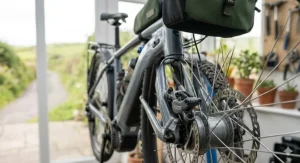
6. Ancheer 27.5″ Electric Trekking Bike — Budget-Friendly Touring Introduction
The Ancheer 27.5″ occupies the entry level alongside the Eleglide T1, competing on price rather than specification. Its 360Wh battery (36V 10Ah) is the smallest here, translating to 40-70 km range in realistic British touring conditions. This positions it for short tours (2-3 days) with guaranteed nightly charging, or day rides extending your usual range. Think weekend loops around the Yorkshire Dales with pub stops, not week-long expeditions across Scotland.
Component quality matches the budget pricing: basic front suspension, mechanical disc brakes, simple 7-speed gearing. The frame is functional rather than refined, with appropriate mounting points but heavier construction than pricier alternatives. British buyers should expect more frequent maintenance — brake adjustments, gear indexing, spoke tensioning — compared to mid-range models. This isn’t poor quality; it’s the reality of budget component groups.
Where the Ancheer succeeds is democratising electric touring. At around £400-£550, it makes multi-day cycling accessible to riders who can’t justify £800+ investment. The motor provides genuine assistance on climbs. The battery is removable for B&B charging. The bike will complete UK touring routes if you plan around its limitations. Those limitations are real: range anxiety on longer stages, less confidence in mechanical brakes during wet descents, heavier weight despite budget construction. But for many riders, touring on a budget beats not touring at all.
Pros:
- Lowest price point (around £400-£550) for electric touring capability
- Adequate for weekend tours and shorter multi-day routes
- Readily available on Amazon.co.uk with Prime delivery
Cons:
- 360Wh battery severely limits daily range (40-60 km typical)
- Budget components require more frequent maintenance
- Mechanical brakes less reliable in British wet conditions
Price Verdict: The £400-£550 price makes this accessible for riders exploring electric touring without major commitment. Set appropriate expectations and it performs its role.
7. Eleglide Mopride 1 Plus — Versatile Hybrid Tourer
The Eleglide Mopride 1 Plus blurs the line between mountain bike and tourer, offering genuine off-road capability alongside touring practicality. Its 450Wh battery (36V 12.5Ah) and 250W motor match mid-range tourers, but the component specification leans towards trail riding: wider tyres, more suspension travel, stronger brakes. This makes it ideal for UK touring routes that venture properly off-road — the South Downs Way, the Trans Cambrian Way, Scottish mountain biking routes — where traditional touring bikes struggle.
The versatility comes at a cost: heavier weight (21.7 kg bare, but feels heavier when loaded due to suspension), slower rolling on tarmac, and components that excel off-road but feel overbuilt on canal towpaths. The 21-speed Shimano gearing provides excellent climbing range, essential for loaded ascents on loose surfaces where traction limits your ability to leverage the motor. Hydraulic disc brakes (or upgraded mechanical discs on some models) handle technical descents with loaded panniers — crucial when you’re dropping 300 vertical metres on loose Welsh forest trails.
British touring reality: most routes include off-road sections whether you plan for them or not. Cycle paths become muddy tracks, shortcuts involve fording streams, and accommodation might require navigating across fields. The Mopride 1 Plus handles these sections confidently where road-focused tourers struggle. The trade-off is efficiency — you’ll cover 55-80 km per charge on typical touring routes versus 70-100 km on more road-focused bikes with similar batteries. For riders prioritising capability over speed, that’s an acceptable trade.
Pros:
- Genuine off-road capability for adventurous UK touring routes
- 21-speed gearing and strong brakes handle technical terrain with luggage
- Versatile platform for both touring and trail riding
Cons:
- Heavier feel due to suspension and mountain bike components
- Lower efficiency on tarmac reduces range versus road-focused alternatives
Price Verdict: Around £550-£700 positions this between budget and mid-range. Riders planning mixed-terrain adventures get better value here than from purely road-focused tourers.
Planning Your First UK Electric Touring Trip: Real-World Preparation Guide
Multi-day electric touring demands different preparation than traditional cycling. The motor and battery introduce new variables: charging logistics, range management, weather impact on battery performance. Here’s what three years of British electric touring has taught me about actually doing this, not just theorising about it.
Route Planning Around Charging
Forget manufacturer range claims. In British touring conditions — headwinds, hills, luggage, cold temperatures, wet roads — expect 60-70% of claimed range. A bike advertised at “100 km range” delivers 60-70 km when you’re loaded with 15 kg of gear, facing a crosswind off the North Sea, and climbing through the Peak District in April drizzle. Plan daily stages accordingly.
Accommodation with charging access matters more for electric touring than traditional cycling. B&Bs and campsites vary wildly in their electrical socket accessibility. Some B&Bs welcome bikes in rooms (and thus batteries charging); others relegate bikes to sheds with no power. Call ahead. Specifically ask: “Can I bring my e-bike battery into my room to charge overnight?” Youth hostels and bunkhouses typically allow this; posh hotels sometimes don’t. Campsites present challenges — not all pitches have electrical hookups, and those that do may charge extra.
Alternative charging strategies: many UK cyclists now carry a second battery (£300-£500 investment) which doubles range and provides backup. Some cafés along popular routes (Coast to Coast, Hadrian’s Cycleway) offer charging facilities — a two-hour lunch stop can add 30-40% battery charge. Libraries, community centres, and train station waiting rooms sometimes permit discreet charging. The reality is you’ll need to top up opportunistically on longer daily stages.
Weather Impact on British E-Bike Touring
Battery capacity drops significantly in cold weather — roughly 20% loss at 5°C, 30% at 0°C. This turns your 500Wh battery into 350Wh effective capacity during early spring or late autumn tours. Scottish Highlands tours in May can experience near-freezing overnight temperatures that affect morning battery performance. The solution is carrying the battery into your accommodation overnight, keeping it at room temperature. It’s awkward but effective.
Rain affects more than just battery longevity (most modern batteries are well-sealed). Wet conditions increase rolling resistance, particularly on unsurfaced paths where water creates a suction effect. Motor assistance compensates, but at the cost of 10-15% additional battery drain. Mudguards aren’t optional for British touring — they’re essential. Full-length mudguards that actually protect your feet and luggage, not those decorative stub things that stop at your ankles.
Wind matters more than hills for electric touring. A 20 km/h headwind on flat Fenland roads will drain your battery faster than climbing 500 vertical metres in calm conditions. British weather means headwinds are almost guaranteed at some point on multi-day tours. Plan routes with prevailing winds in mind: west to east across England generally works with prevailing south-westerlies, though the British climate cheerfully ignores statistical averages.
Luggage Strategy for Electric Touring
Electric touring bikes handle heavier loads than traditional touring bikes, but physics still applies. A fully loaded bike (bike + rider + luggage) weighing 120-140 kg requires significantly more motor assistance than the same bike at 90 kg. This directly impacts range.
Minimalist packing extends range. Every kilogramme removed from your luggage adds roughly 1-2 km to your range. This sounds trivial but accumulates: 5 kg less luggage equals 5-10 km additional range, potentially the difference between reaching accommodation or wild camping in a lay-by. British touring doesn’t require the extreme minimalism of credit-card touring (B&Bs are everywhere), but it rewards thoughtful packing.
Weight distribution affects bike handling more than total weight. Rear panniers should carry the bulk of weight (lower centre of gravity), with lighter items in front panniers or handlebar bags. An improperly loaded electric touring bike handles like a shopping trolley on 15% descents — distinctly unpleasant when you’re descending Kirkstone Pass in rain. The motor doesn’t help with handling; it just makes the problem arrive faster.
How to Choose the Right Electric Touring Bicycle for UK Conditions
Battery Capacity: The Single Most Important Specification
For British touring, battery capacity determines viability more than any other specification. Here’s the realistic breakdown based on three years of UK electric touring across various routes:
360-450Wh batteries: Suitable for weekend tours (2-3 days) with guaranteed nightly charging, or day rides extending beyond traditional cycling range. Daily touring range of 40-70 km depending on terrain and conditions. Adequate for flat routes like canal paths or East Anglian touring; limiting for anywhere with elevation gain. Scotland and Wales tours require careful planning around charging stops.
450-550Wh batteries: The sweet spot for UK electric touring. Daily range of 60-100 km covers most touring route daily stages with comfortable margin for headwinds, cold weather, or additional climbing. Sufficient for Coast to Coast daily stages, Great North Trail sections, or typical EuroVelo UK portions. Nightly charging remains necessary but you’re not performing range calculations every hour.
550-720Wh batteries: Premium touring capacity providing 80-140 km range. Enables longer daily stages, reduces charging frequency to every 1-2 nights on flatter routes, and handles Scottish Highlands elevation with appropriate assist levels. The additional capacity also provides psychological comfort — range anxiety ruins tours.
Motor Type: Hub vs Mid-Drive for British Touring
Hub motors (rear wheel) are simpler, require less maintenance, and handle wet conditions better. They work independently of your gearing, which means you can change gears whilst stationary (useful at British traffic lights) and the motor provides consistent assistance regardless of which gear you’re in. For touring routes that stick predominantly to surfaced paths and moderate gradients, hub motors work brilliantly.
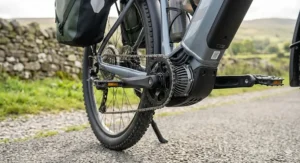
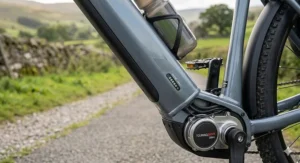
Mid-drive motors (pedal area) are more efficient on climbs and work with your gearing to optimise power delivery. When you’re climbing 12% gradients in the Lake District with 20 kg of panniers, this efficiency matters — you’ll get 10-15% more range from the same battery compared to a hub motor. The trade-off is increased maintenance (chain and sprocket wear), slightly more complex servicing, and higher replacement costs if something fails. For touring routes with serious elevation gain, mid-drive motors justify their complexity.
British touring reality: most routes fall between these extremes. The Coast to Coast includes challenging climbs but doesn’t require mid-drive. The Great North Trail is mostly moderate. Scottish Highlands routes benefit from mid-drive efficiency. Choose based on your specific planned routes rather than theoretical performance.
Frame Geometry and Comfort for Multi-Day Rides
Touring geometry prioritises comfort over speed or agility. An upright riding position reduces lower back strain during 6-8 hour riding days but creates more wind resistance. That’s an acceptable trade-off for touring. Race-geometry bikes optimised for aerodynamics will destroy your back after 100 km with luggage.
Aluminium frames are standard on bikes under £1,500, offering good strength-to-weight ratios and cost-effectiveness. Steel frames (rare on electric touring bikes) provide better ride quality and easier repair if you crack a frame in Outer Hebrides. Carbon frames (premium bikes over £3,000) save weight but offer questionable value for most touring — the motor compensates for weight.
Test ride position before committing. Can you ride with slightly bent arms (not locked straight)? Is the saddle height appropriate without overextending your legs? Can you reach the brake levers without stretching? British touring often requires sudden braking for sheep, tourists, or unexpectedly closed level crossings. Comfort matters more than you think after 500 km in five days.
Common Mistakes When Buying Your First Electric Touring Bicycle
Mistake 1: Choosing Based Solely on Price
The £400 electric bike on Amazon looks tempting compared to the £800 mid-range model. I understand the appeal. But touring amplifies quality issues that barely matter for 10 km commutes. Budget mechanical disc brakes that seem adequate in the city become terrifying on loaded descents in Welsh rain. Basic suspensions that feel acceptable unloaded transform into pogo sticks when carrying 20 kg of camping gear. That £400 saving often costs £200 in upgraded components and repairs within the first year.
The sweet spot for British electric touring sits around £600-£900. Below that, you’re compromising essential capabilities. Above that, you’re paying for marginal gains that matter more to racers than tourers. Resist the temptation to save £150 by choosing the 360Wh battery model over the 500Wh version — that decision will haunt you every time you’re calculating whether you’ll reach the next charging point.
Mistake 2: Ignoring UK-Specific Requirements
American buyers discuss e-bikes with throttles and 750W motors. None of that applies here. UK EAPC (Electrically Assisted Pedal Cycles) regulations require: 250W maximum continuous motor power, assistance cutting off at 15.5 mph (25 km/h), and pedal-activated assistance only (no thumb throttle). Bikes exceeding these limits require registration, insurance, and licensing.
The spec confusion extends to charging. UK operates on 230V / 50Hz with Type G plugs. Some cheaper imported bikes ship with EU plugs or, worse, US voltage chargers. Verify UK compatibility before purchasing. UKCA marking (UK Conformity Assessed) replaced CE marking post-Brexit — look for this on bikes sold in Britain to confirm regulatory compliance.
Mistake 3: Underestimating the Importance of After-Sales Support
Your electric touring bicycle will need servicing. Batteries degrade (20-30% capacity loss over 3-5 years). Motors develop faults. Frame welds crack under load. Amazon.co.uk sellers vary dramatically in after-sales support. Some respond within 24 hours with replacement parts; others vanish after collecting your money.
Research brands with UK-based customer service. Check whether replacement batteries are available and affordable (£300-£500 typically). Verify that local bike shops can service the specific motor system (Shimano, Bafang, and Bosch have wide support; obscure Chinese motors might not). Reading Amazon UK reviews, I specifically search for phrases like “customer service,” “warranty claim,” and “replacement parts” to identify potential issues.
Mistake 4: Buying the Wrong Frame Size
Electric bikes are heavier than traditional bikes (typically 21-26 kg), making frame size more critical. A too-small frame forces you into a cramped position that will cause back and knee pain after 500 km touring. A too-large frame reduces control, particularly crucial when handling a loaded electric bike on descents.
Most manufacturers provide size charts based on inseam measurement or height. These are approximate. If possible, test ride before purchasing. Many UK cycling shops now stock electric bikes for test rides even if they don’t stock the specific model you want. A 20-minute test ride reveals comfort issues that measurements don’t capture.
Mistake 5: Forgetting About Total System Cost
The bike price is only the beginning. Essential accessories for British touring include: full-length mudguards (£30-£60), rear rack (£40-£80, if not included), panniers (£80-£200 for quality waterproof bags), spare battery charger for partner’s bike (£50-£80), bike lock appropriate for £700+ machine (£60-£100), lighting (often included but budget an extra £40-£80 for powerful touring lights), and replacement inner tubes/puncture repair kit (£30-£50).
Factor in maintenance costs: typical annual servicing runs £100-£150, brake pads last 1,500-3,000 km (£20-£40 replacement), chains last 2,000-4,000 km on mid-drive motors (£15-£30 replacement). Battery replacement after 3-5 years costs £300-£500. Suddenly that £600 bike becomes an £1,100 complete system, and the £800 bike becomes £1,300. Plan accordingly.
Electric Touring Bicycle vs Traditional Touring Bike: What UK Riders Need to Know
The fundamental question haunting every prospective electric tourer: am I cheating? Does the motor diminish the achievement? Having completed the Coast to Coast on both traditional and electric touring bikes, I can offer perspective.
Electric touring shifts the challenge from physical endurance to logistical planning. Traditional touring tests your fitness, mental resilience, and ability to suffer through pain. Electric touring tests your route planning, battery management, and willingness to arrive at destinations with energy remaining to enjoy them. Neither is inherently superior.
Practical differences matter more than philosophy. Traditional touring limits daily distances to 60-80 km for most riders, occasionally extending to 100 km on flat routes with tailwinds. Electric touring comfortably extends this to 80-120 km depending on battery capacity and terrain. For British touring, this means completing routes in 5 days rather than 7, or adding rest days without sacrificing mileage.
Hills transform from suffering to scenery appreciation. The Lake District’s Kirkstone Pass or Hardknott Pass are legendary traditional touring challenges that separate capable cyclists from aspirational ones. On electric touring bikes, these same climbs become enjoyable— you experience the landscape without the lung-burning agony. For riders over 50, those with joint problems, or anyone wanting to tour without arriving exhausted each evening, this changes everything.
Cost comparison is straightforward: traditional touring bikes cost £800-£2,000 for quality machines, electric touring bikes cost £600-£1,200 for equivalent capability (or £2,000-£4,000 for premium builds). The electric bike includes £300-£400 of battery and motor technology, but eliminates some traditional components (like extensive gearing). Operating costs are similar — electricity for charging is negligible (under £1 per 100 km), comparable to traditional touring’s food energy costs.
Long-Term Cost of Ownership: What British Riders Actually Spend
Initial Purchase and Essential Accessories
Let’s examine real-world costs for a mid-range electric touring bicycle like the HITWAY BK7S or Eleglide M2 (around £700-£800):
Bike: £750
Full-length mudguards: £45
Rear rack (if not included): £60
Waterproof panniers (pair): £120
Quality bike lock: £75
Puncture repair kit and spares: £40
Helmet: £50
Hi-vis jacket and lights: £45
Total initial investment: £1,185
This is the realistic entry point for British electric touring. Budget an additional £150-£200 if you need camping equipment (tent, sleeping bag, mat), though many UK tourers prefer B&B accommodation.
Annual Running Costs
Servicing (annual): £120 (more frequent if you ride in British winter conditions)
Brake pad replacement (every 2,000 km): £35
Chain replacement (every 3,000 km for mid-drive, 5,000 km for hub motor): £25
Tyre replacement (every 3,000-5,000 km): £60 per pair
Electricity for charging (1,000 km/year): £3-£5
Insurance (optional but recommended): £80-£150
Total annual running cost: £325-£395
This assumes moderate use (1,000-2,000 km annually). Serious tourers covering 5,000+ km annually should double these estimates.
Major Replacement Costs (3-5 Year Horizon)
Battery replacement: £350-£500 (inevitable after 3-5 years or 500-800 charge cycles)
Motor replacement/rebuild: £200-£400 (if needed — many motors outlast batteries)
Complete drivetrain overhaul: £150-£250
Total cost of ownership over 5 years: approximately £3,000-£4,000 for a mid-range electric touring bicycle used regularly for multi-day tours. This includes the bike, accessories, annual maintenance, and major component replacements. For comparison, maintaining a quality traditional touring bicycle costs £1,500-£2,000 over the same period.
Safety and Legal Requirements for UK Electric Touring Bicycles
UK EAPC Regulations: What’s Road Legal in 2026
Understanding EAPC (Electrically Assisted Pedal Cycles) regulations matters because non-compliant bikes require registration, insurance, and licensing — complexity that kills the touring experience. Here’s what keeps your electric touring bicycle road-legal in England, Scotland, and Wales:
Motor power: Maximum 250W continuous rated power. Peak power can exceed this during acceleration or climbing, but the motor’s official specification cannot exceed 250W. Most Amazon.co.uk bikes from reputable sellers meet this requirement. Beware of sellers advertising “500W motors” — these exceed UK regulations unless they’re describing peak power on a 250W continuous motor.
Speed limit: Motor assistance must cut off completely at 15.5 mph (25 km/h). You can pedal faster without assistance, but the motor cannot help beyond this speed. This feels restrictive initially but becomes normal — touring averages 18-22 km/h including stops, so you’re rarely pushing against the limiter.
Pedal activation: Assistance must require pedalling. Thumb throttles or twist-grip throttles that provide power without pedalling make the bike a moped under UK law, requiring registration and insurance. Some bikes include throttles for “walk assist” up to 6 km/h — this is legal.
Age restriction: Riders must be at least 14 years old. No helmet requirement (though strongly recommended), no insurance requirement (though advisable), no registration, no road tax. Electrically assisted bicycles enjoy the same rights and restrictions as traditional bicycles.
Northern Ireland Differences
Northern Ireland maintains distinct regulations post-Brexit. EAPC regulations align with the rest of the UK, but import considerations differ. Bikes purchased from sellers who ship to Northern Ireland may face different VAT handling due to the Northern Ireland Protocol. Verify seller experience with NI delivery before purchasing.
Where You Can Legally Ride in the UK
EAPC-compliant electric touring bicycles access the same routes as traditional bicycles: roads, cycle lanes, bridleways, byways, and most canal towpaths. You cannot ride on footpaths (unless designated as cycle paths) or motorways. National Cycle Network routes, Sustrans paths, and long-distance trails like the Coast to Coast or Great North Trail all permit electric bicycles.
Some private estates and specific trail centres prohibit e-bikes. Check locally before attempting routes through private land. Most UK landowners don’t distinguish between traditional and electric bicycles, but a small minority do.
Insurance and Theft Protection
Electric touring bicycles aren’t legally required to carry insurance, but bikes costing £600-£1,200 represent significant investment. Standard home contents insurance rarely covers bikes outside the home or provides adequate coverage for touring-grade machines. Specialist cycling insurance costs £80-£150 annually and covers theft, damage, and liability.
Theft statistics tell an uncomfortable story: electric bikes are 3-4 times more likely to be stolen than traditional bikes, with average recovery rates under 5%. High-quality D-locks (£60-£100) are essential, as are secure parking arrangements when touring. B&Bs and hotels that permit bikes in rooms dramatically reduce theft risk.
Frequently Asked Questions
❓ Can I legally use an electric touring bicycle on UK canal towpaths and National Cycle Network routes?
❓ How do I charge my electric touring bicycle battery during multi-day trips across rural Scotland or Wales?
❓ What's the realistic range of a 500Wh battery in typical British touring conditions with luggage?
❓ Are electric touring bicycles allowed on UK trains, and what are the size restrictions?
❓ Do I need specialist insurance for an electric touring bicycle, or is home insurance sufficient?
Conclusion: Choosing Your Perfect UK Electric Touring Bicycle
Electric touring bicycles have matured from experimental curiosity to genuine touring tools in 2026. The technology works. The range satisfies. The pricing makes sense. Whether you’re contemplating your first multi-day tour or transitioning from traditional touring, electric assistance opens possibilities that weren’t realistic before.
For British touring conditions, battery capacity matters most. Bikes with 500Wh+ batteries (like the Eleglide M2, HITWAY BK7S, or DUOTTS C29) handle multi-day tours confidently with nightly charging. Budget models with 360-450Wh batteries (Eleglide T1, Ancheer 27.5″) work for weekend trips or shorter daily stages. Match your battery to your ambitions, not your budget constraints.
Real-world British touring demands weatherproofing, reliable brakes, comfortable geometry, and robust construction. The motor and battery attract attention, but traditional touring concerns remain: does the frame fit properly? Will the brakes handle loaded Welsh descents in rain? Can you source replacement parts? These questions matter more at kilometre 500 than specifications.
Start with achievable routes. The Coast to Coast (220 km over 5-7 days) offers perfect electric touring introduction with established infrastructure, abundant accommodation, and varied but manageable terrain. Build experience before tackling Scottish Highlands or multi-week Continental tours. The motor compensates for fitness but not for touring skills — navigation, mechanical competence, weather management — that develop through experience.
Recommended for You: Continue Your UK E-Bike Journey
- 7 Best Bikepacking Electric Bikes UK 2026
- 7 Best Electric Gravel Bikes UK 2026
- Chain Guard Electric Bike: 7 Best UK Models 2026
Disclaimer: This article contains affiliate links. As an Amazon Associate, I earn from qualifying purchases. If you purchase products through these links, we may earn a small commission at no additional cost to you.
✨ Found this helpful? Share it with your mates! 💬🤗
