In This Article
36V ebike brands build electric bikes around a 36-volt battery system, the most common voltage for lightweight commuter and hybrid e-bikes because it strikes a practical balance between motor power, battery weight, and overall bike weight. Compared with heavier 48V or 52V setups typically found on cargo and off-road machines, a 36V system generally means a lighter bike, a smaller battery pack, and — usually — a lower price, at the cost of somewhat less raw hill-climbing torque.
We’ve researched real UK-available 36V ebikes, aggregated review sentiment, and checked what actually determines the cost and lifespan of a 36V battery pack, because that’s the detail most buying guides gloss over. According to gov.uk’s guidance on electric bike rules, a legally road-ready UK e-bike — classed as an Electrically Assisted Pedal Cycle (EAPC) — must have a motor no more powerful than 250W and cut assistance at 15.5mph, requirements every 36V system on this list is built around.
This guide covers seven genuine 36V ebike brands spanning budget, mid-range, and premium tiers, followed by practical guidance on lightweight commuter advantages, battery replacement costs, capacity choices, and what actually makes a battery management system worth paying for.
Quick Comparison Table
| Product | Best For | Battery | Weight | Price Range |
|---|---|---|---|---|
| Tenways CGO600 Pro | Lightest, cleanest commuter | 36V 10Ah / 360Wh | ~15kg | £1,049-£1,099 |
| Estarli e28.X | British-assembled, low-maintenance | 36V 10Ah / 360Wh | ~19kg | £1,895-£1,945 |
| Ampere Deluxe 700C | Strong motor, big-battery value | 36V, multiple Ah options | ~22kg | Around £1,499 |
| Carrera Impel im-3.1 | Best-value with dealer backup | 36V ~13.8Ah / 496Wh | ~20kg | £999-£1,099 |
| ADO Air 20S | Folding, Samsung-cell reliability | 36V 9.6Ah / 346Wh | 16-18kg | £850-£1,050 |
| Decathlon Riverside 500E | Cheapest confirmed torque-sensor pick | 36V, ~60km range | ~20kg | Around £799 |
| BTWIN E-Fold 500 | Cost-effective steel folding option | 36V 15Ah / 540Wh | Not stated | £600-£800 |
Looking down the battery column, the pattern that jumps out is how much variation exists within a single voltage. Every bike here runs a 36V system, yet capacity ranges from under 10Ah on the lightest folding bikes up to 15Ah on the budget BTWIN — a reminder that “36V” tells you the electrical pressure of the system, not how far the bike will actually take you.
💬 Just one click — help others make better buying decisions too! 😊
Top 7 36V Ebike Brands: Expert Analysis
1. Tenways CGO600 Pro — the lightest, cleanest lightweight 36V ebike system
The Tenways CGO600 Pro is built around what might be the purest expression of a lightweight 36V ebike system on this list: a 36V, 10Ah (360Wh) battery tucked invisibly into the downtube, driving a quiet 250W Mivice rear-hub motor through a magnetic torque sensor. At roughly 15kg, it’s genuinely light enough to carry up a flight of stairs, and reviewers consistently note that from a few metres away it barely reads as an e-bike at all.
What most buyers overlook about this bike is that its Gates carbon belt drive is doing as much work for the “lightweight commuter advantage” as the battery spec — no chain, no lubrication, no grease on your trousers, which genuinely changes the day-to-day experience of commuting compared with a chain-driven equivalent. Based on the spec comparison, TechRadar specifically praised the smoothness of the torque sensor and the confidence of its Tektro hydraulic brakes, and UK owner reports consistently put real-world range at 50-70km rather than the claimed 100km, which is still comfortably enough for most daily commutes.
Reviewers are honest that this is a single-speed bike with no throttle — pedal assist only — so anyone wanting to coast off from a standstill without pedalling, or needing lower gearing for very steep hills, should look elsewhere on this list.
Pros:
- ✅ Genuinely one of the lightest 36V ebikes commercially available
- ✅ Carbon belt drive removes chain maintenance entirely
- ✅ Battery and cables fully hidden for a stealth, non-ebike look
Cons:
- ❌ Single-speed only, with no throttle function
- ❌ Real-world range trails the claimed 100km figure noticeably
At around £1,049-£1,099, the CGO600 Pro sits in the middle of this list on price but at the very top on weight, making it the clearest pick for anyone who specifically wants a lightweight commuter that doesn’t look or feel like an e-bike.
2. Estarli e28.X — British-assembled, low-maintenance premium option
Estarli e28.X is designed and assembled in Hertfordshire, and its 36V, 10Ah (360Wh) battery pairs with a Bafang automatic two-speed hub motor that shifts gear ratio based on speed rather than requiring a manual shifter. Reviewers consistently praise this system’s smoothness, describing the transition between gears as a near-silent “soft thud” rather than a jarring mechanical shift, and the belt drive means — as with the Tenways above — no chain maintenance to worry about.
Based on the spec comparison, what most buyers overlook is that Estarli deliberately specced a lighter, 360Wh battery rather than chasing a bigger capacity figure, reasoning that the automatic gearing lets riders climb hills in a lower ratio without leaning as hard on the motor, which in turn allows a lighter overall battery pack. Cycling Electric specifically noted the bike weighs under 19.4kg with the battery fitted, calling it easy to carry up steps without strain, and highlighted Estarli’s local UK design and assembly as a genuine value-add for aftercare and warranty support.
Aggregated reviewer feedback does flag one quirk of the automatic gearbox: it doesn’t shift down well under sustained pedalling pressure on a hill, so riders need to briefly ease off the pedals to trigger a downshift, which takes some getting used to compared with a manual gear system.
Pros:
- ✅ Automatic Bafang two-speed hub removes shifting complexity entirely
- ✅ UK-based design, assembly, and aftercare support
- ✅ Belt drive keeps ongoing maintenance minimal
Cons:
- ❌ Automatic gearbox doesn’t downshift well under load on hills
- ❌ Premium pricing compared with other bikes on this list
Typically priced £1,895-£1,945, this is the premium pick here, justified largely by the local UK backup and the sophistication of its automatic drivetrain rather than by raw battery capacity.
3. Ampere Deluxe 700C — a strong-motor, big-battery UK brand
Ampere is a UK-based brand that has built its reputation on pairing 36V systems with notably strong hub motors — its 700C step-through runs a 65Nm motor, described by several reviewers as unusually powerful for a hub-drive system, alongside a choice of battery capacities to suit different riders. This combination of accessible pricing and genuinely strong torque output makes it a standout example of a cost-effective option 36V buyers specifically look for.
Based on the spec comparison, what most buyers overlook is that Ampere’s step-through frame, Shimano 7-speed drivetrain, and sealed bottom bracket components are genuinely sensible, low-maintenance choices rather than corners cut to hit a price point — this isn’t a bike built down to a budget so much as one built up from proven, unglamorous parts. Reviewers consistently describe it as the number one step-through electric bike under £1,500 in its category, and the wide gearing range (14-34T) specifically supports easier hill climbing for less confident riders.
Aggregated feedback notes that, as with most hub-motor commuters, torque tails off somewhat at very low speeds and on the steepest gradients compared with a mid-drive system, which is worth factoring in if your commute includes serious hills rather than gently rolling terrain.
Pros:
- ✅ Unusually strong 65Nm motor for a hub-drive system
- ✅ Genuinely sensible, durable component choices throughout
- ✅ UK-based brand with accessible, transparent pricing
Cons:
- ❌ Torque tails off on the steepest gradients, as with most hub motors
- ❌ Heavier overall than the belt-drive options on this list
Starting at £1,499, this is a strong mid-range pick for anyone who wants genuine motor power without stepping up to mid-drive pricing.
4. Carrera Impel im-3.1 — the best-value pick with nationwide dealer backup
The Carrera Impel im-3.1, sold through Halfords, pairs a 36V battery rated at 496Wh (working out to roughly 13.8Ah) with a quiet Hyena 250W rear-hub motor delivering 45Nm of torque. It’s consistently rated by independent reviewers as the standout value pick in the sub-£1,100 bracket, and Halfords’ nationwide dealer network gives it a genuine practical edge over online-only rivals for servicing and warranty support.
What most buyers overlook about this bike is that its bigger 496Wh battery, compared with the 350-360Wh packs on the lighter bikes above, trades some weight for meaningfully more real-world range — around 35-40 miles in mixed conditions according to Cycling Electric’s testing, roughly 25% more than the entry-level Impel im-1.1’s smaller pack. Based on the spec comparison, the 10-speed drivetrain and hydraulic disc brakes on this top-spec Impel are genuine upgrades over the cheaper single-speed models in the same range, and the Hyena Rider Assistant app adds Bluetooth ride tracking that several reviewers specifically praised.
Aggregated reviewer sentiment does flag a hunched riding position as a minor comfort compromise, and the bike ships without mudguards, a chainguard, or a stand as standard, adding roughly £70 if you want them fitted.
Pros:
- ✅ Larger 496Wh battery delivers genuinely useful real-world range
- ✅ Nationwide Halfords service network for aftercare
- ✅ Hydraulic disc brakes and 10-speed gearing at this price point
Cons:
- ❌ Riding position is somewhat hunched
- ❌ Mudguards, chainguard, and stand cost extra
Priced £999-£1,099, this is widely regarded as the strongest all-round value pick among mainstream 36V ebike brands sold in the UK, especially for buyers who want easy access to a physical dealer.
5. ADO Air 20S — folding, Samsung-cell reliability for portability
ADO Air 20S pairs a folding aluminium frame with a genuine 36V, 9.6Ah (346Wh) Samsung-cell battery integrated into the seat tube, making the whole unit removable by unclipping the saddle. For anyone who needs to carry their bike onto public transport or up into a flat, ADO’s use of branded Samsung 21700 cells rather than unbranded generic cells is a genuine, verifiable reliability signal worth knowing about.
Based on the spec comparison, what most buyers overlook is that the Air 20S’s carbon belt drive and torque sensor punch well above the bike’s price point — reviewers consistently note that the spec sheet reads like a bike costing considerably more, thanks to hydraulic disc brakes and a waterproof IPS colour display being included as standard rather than reserved for a pricier variant. Aggregated feedback from UK and European owners is consistently positive on portability specifically, with several describing folding and carrying it onto trains or into offices as genuinely effortless at 16-18kg.
A recurring theme in reviewer commentary is that the bike ships with only three assist levels active by default, despite the hardware supporting five — a firmware quirk some owners have specifically flagged as worth checking before purchase, since it’s adjustable via the ADO app but easy to miss.
Pros:
- ✅ Genuine Samsung 21700 cells rather than unbranded generic cells
- ✅ Hydraulic disc brakes and waterproof display included as standard
- ✅ Removable seat-tube battery genuinely simplifies charging and theft deterrence
Cons:
- ❌ Only three of five assist levels active by default out of the box
- ❌ Smaller battery capacity than several rivals on this list
Typically found in the £850-£1,050 range depending on retailer promotions, this is the folding pick for anyone prioritising portability and component-level reliability over maximum range.
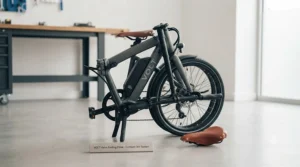
6. Decathlon Riverside 500E — the confirmed-price budget torque-sensor pick
The Decathlon Riverside 500E stands out among budget 36V ebikes specifically because it includes a torque sensor rather than the cheaper cadence sensor commonly found at this price point, which several independent reviewers specifically credit with making the assist feel noticeably more natural than rival budget bikes. Paired with hydraulic disc brakes and a claimed 60km range, it represents genuinely strong specification for its price bracket.
What most buyers overlook is that torque sensors, which measure how hard you’re actually pedalling and scale assistance accordingly, are usually reserved for mid-range and premium bikes — finding one on a sub-£800 machine is a meaningful spec upgrade over typical budget cadence-sensor systems, which simply detect that pedals are turning rather than reading effort. Based on the spec comparison, Decathlon’s nationwide UK store network and well-regarded warranty support add genuine practical value that many similarly-priced online-only brands can’t match.
Aggregated feedback consistently frames this as the sensible entry point for anyone testing whether e-biking suits their commute before committing to a pricier machine, without the corners-cut feel that sometimes comes with budget-tier electric bikes.
Pros:
- ✅ Torque sensor at a price point where cadence sensors are the norm
- ✅ Hydraulic disc brakes rather than cheaper mechanical discs
- ✅ Nationwide Decathlon store network for servicing and returns
Cons:
- ❌ Smaller battery than the pricier bikes on this list
- ❌ Fewer premium touches like a colour display or app connectivity
At around £799, this is the clearest confirmed-price budget recommendation on this list, and a sensible starting point for anyone curious about e-biking without a significant upfront commitment.
7. BTWIN E-Fold 500 — a cost-effective steel folding option
BTWIN, Decathlon’s cycling sub-brand, builds the E-Fold 500 around a stout folding steel frame and a 36V, 15Ah (540Wh) Pod battery — genuinely one of the larger capacity packs on this list despite the bike’s budget positioning. Reviewers consistently describe the fold itself as quick and tidy, latching securely enough to wheel through station platforms or into a lift without parts flapping loose.
Based on the spec comparison, what most buyers overlook is that steel, rather than aluminium, is a deliberate durability choice here — it favours day-to-day toughness over outright lightness, which suits a bike likely to be folded, unfolded, and knocked around during a daily multi-modal commute far more than a showroom aluminium frame would. The simple bar-mounted control — on, off, change mode, ride — is a genuine practical strength for anyone who wants zero learning curve before their first commute, and the front and rear cargo rack, lights, mudguards, and kickstand are included as standard rather than sold as costly add-ons.
Aggregated feedback notes that BTWIN doesn’t publish a partner app for tuning or ride tracking, unlike several pricier rivals here, which is a fair trade-off most reviewers consider reasonable given the accessible pricing and genuinely large 540Wh battery included.
Pros:
- ✅ Genuinely large 540Wh battery for a budget-tier folding bike
- ✅ Rack, lights, mudguards, and kickstand included as standard
- ✅ Durable steel frame suited to daily folding and multi-modal use
Cons:
- ❌ No partner app for tuning or ride tracking
- ❌ Heavier than the aluminium folding bikes on this list
Typically priced £600-£800, this is the most cost-effective option among genuinely well-equipped 36V folding bikes, especially for anyone prioritising included accessories over headline lightness.
Full Spec Comparison: Motor, Torque, and Drive System
| Product | Motor Type | Torque | Sensor Type | Drive System |
|---|---|---|---|---|
| Tenways CGO600 Pro | Mivice rear hub | 40Nm | Magnetic torque sensor | Gates carbon belt |
| Estarli e28.X | Bafang auto 2-speed hub | 45Nm | Torque sensor | Gates belt |
| Ampere Deluxe 700C | Rear hub | 65Nm | Cadence/torque (model dependent) | Shimano 7-speed chain |
| Carrera Impel im-3.1 | Hyena rear hub | 45Nm | Cadence sensor | 10-speed chain |
| ADO Air 20S | Rear hub | 42Nm | Torque sensor | Carbon belt |
| Decathlon Riverside 500E | Rear hub | Not stated | Torque sensor | Chain |
| BTWIN E-Fold 500 | Rear hub | Not stated | Cadence sensor | 7-speed chain |
Reading across the sensor column, the clearest practical divide on this list is torque sensing versus cadence sensing — torque sensors, found on the Tenways, Estarli, ADO, and Decathlon, read how hard you’re actually pushing the pedals and scale assistance proportionally, producing a noticeably more natural ride feel than cadence sensors, which simply detect that the pedals are turning at all.
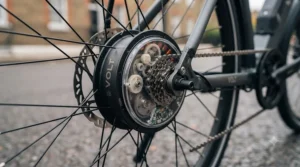
Setting Up and Maintaining Your 36V Ebike: A Practical Guide
Getting a new 36V ebike properly set up takes more than just charging the battery and riding off. Always use the charger supplied with your specific battery, or one explicitly approved by the manufacturer — mismatched chargers are a genuinely recognised fire risk, not just a compatibility inconvenience, and this matters enough that it’s covered later in this guide’s safety section. For belt-drive bikes like the Tenways and Estarli, there’s genuinely very little maintenance beyond an occasional wipe-down; for chain-driven bikes like the Carrera, Ampere, and BTWIN, regular lubrication and periodic cleaning meaningfully extends drivetrain life.
A common mistake in the first month of ownership is running the battery down to empty repeatedly rather than charging more frequently in smaller top-ups — lithium-ion cells generally prefer partial charge cycles to full drain-and-refill cycles, and consistently deep-discharging a pack can measurably shorten its usable lifespan. If your bike folds, as with the ADO Air 20S or BTWIN E-Fold 500, get comfortable with the folding mechanism in a low-pressure setting before your first real commute, since fumbling with an unfamiliar latch on a crowded platform is a genuinely common early frustration.
Register your warranty promptly, and photograph your battery’s serial number and any documentation at purchase — this is genuinely useful if you ever need a warranty claim or a replacement part, and it’s a five-minute task easy to skip in the excitement of a new bike.
Which 36V Ebike Buyer Are You? Real-World Scenarios
The multi-modal commuter combining bike and train. If your journey involves carrying your bike onto public transport or up several flights of stairs, the Tenways CGO600 Pro or ADO Air 20S minimise the physical burden of that portion of your commute in a way heavier bikes simply can’t match.
The first-timer testing whether e-biking suits them. If you’re not yet certain e-biking will become a genuine daily habit, the Decathlon Riverside 500E at a confirmed sub-£800 price point lets you find out without a significant financial commitment, backed by a nationwide store network if you do want to return or exchange.
The hilly-route commuter who wants real torque. If your commute includes sustained climbs rather than gently rolling terrain, the Ampere Deluxe 700C‘s unusually strong 65Nm motor is specifically built to handle that kind of demand better than the lighter hub motors elsewhere on this list.
The buyer who wants a physical shop for backup. If you’d rather have somewhere local to walk into for servicing, warranty claims, or advice, the Carrera Impel im-3.1‘s Halfords network or the Decathlon Riverside 500E‘s Decathlon stores offer that reassurance in a way online-only brands generally can’t.
Choosing a Lightweight 36V Ebike System: A Step-by-Step Guide
Narrowing down a lightweight 36V ebike system for your specific needs comes to five practical questions:
- How much do you need to physically carry it? If stairs, trains, or narrow storage are part of your routine, prioritise total weight — the Tenways and Estarli lead this list on that measure.
- Torque sensor or cadence sensor? Torque sensors generally deliver a more natural ride feel and are worth prioritising if the budget allows.
- What’s your realistic daily distance? Match battery capacity to your actual commute rather than the longest ride you might occasionally take — overbuying capacity adds weight and cost for range you’ll rarely use.
- Belt drive or chain? Belt drives cost more upfront but need essentially no maintenance; chains are cheaper to replace but need regular care.
- Do you value local backup over online-only pricing? Brands with UK dealer networks, like Carrera through Halfords or Decathlon’s own stores, offer servicing convenience that pure online brands generally don’t match.
According to Cycling UK’s guidance on EAPC regulations, a compliant e-bike must provide assistance only while pedalling, up to 25kph (15.5mph), with a motor rated at no more than 250W continuous power — every bike on this list is built to that legal framework.
Cost-Effective Options: What “36V Ebike” Actually Costs Across This List
Price on this list ranges from roughly £600 for the BTWIN E-Fold 500 up to nearly £2,000 for the Estarli e28.X, and understanding what that spread actually buys helps set realistic expectations. Based on the spec comparison, the jump from budget to mid-range mostly buys you a torque sensor, hydraulic rather than mechanical brakes, and a lighter frame — not necessarily a bigger battery, since the BTWIN’s 540Wh pack is actually the largest capacity on this entire list despite being the cheapest bike.
What most buyers overlook is that the premium tier here, represented by the Estarli and Ampere, is largely paying for drivetrain sophistication (automatic gearing, stronger motors) and UK-based support networks rather than dramatically more battery capacity or range. If your priority is genuinely the most cost-effective 36V option that still includes a proper torque sensor and hydraulic brakes, the Decathlon Riverside 500E at roughly £799 represents the strongest value-per-pound on this entire list.
36V Battery Replacement Cost: What to Actually Expect
Understanding 36V battery replacement cost matters because, unlike a car battery, an ebike pack is the single most expensive individual component you’ll likely need to replace during ownership. Based on current UK and international market pricing, a genuine replacement 36V battery in the common 10-13Ah range typically costs somewhere between £250 and £400, depending on cell quality, brand, and whether you’re buying an official OEM pack or a compatible third-party alternative.
What actually drives that price is worth understanding: cell chemistry and brand (Samsung, LG, and Panasonic cells cost more but generally last longer), the sophistication of the battery management system inside the pack, and whether the casing and connector are proprietary to your specific bike, which limits your options to official replacements only. A genuine lithium-ion pack typically lasts 500 to 1,000 full charge cycles, translating to roughly three to five years of normal use before capacity noticeably declines and replacement becomes worth considering.
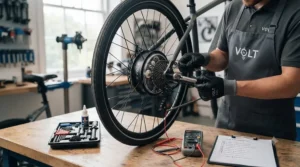
36V Electric Bike Battery Upgrade: Is It Worth It?
A 36V electric bike battery upgrade generally means one of two things: swapping to a higher-capacity pack at the same 36V, or — far more riskily — attempting to move to a higher voltage system entirely. The first option is genuinely sensible and widely done: if your bike’s frame and mount physically accommodate it, moving from, say, a 9.6Ah pack to a 13-14Ah pack in the same voltage can meaningfully extend your range without any other changes to the motor or controller.
The second option — swapping a 36V system for 48V — is where real caution is warranted. Based on the spec comparison and manufacturer guidance, a controller and motor designed for 36V are not generally rated to handle 48V safely; doing so risks damaging the motor, the controller, or both, and isn’t a straightforward “more power for free” upgrade despite how it might look on paper. If genuinely more power is what you’re after, buying a bike originally specced for a higher voltage system is the safer route than modifying an existing 36V bike beyond its designed limits.
36V 10Ah vs 13Ah Capacity: What the Difference Actually Means for You
Comparing 36V 10Ah vs 13Ah capacity in practical terms: a 10Ah pack delivers roughly 360Wh of total energy, while a 13Ah pack delivers around 468Wh — about 30% more capacity, which generally translates to a proportionally longer real-world range, all else being equal. On this list, that’s the difference between the Tenways CGO600 Pro’s 360Wh pack and the Carrera Impel im-3.1’s roughly 496Wh (13.8Ah) pack, which Cycling Electric measured as delivering around 25% more usable range in mixed conditions.
What most buyers overlook is that a bigger Ah figure isn’t free — it comes with genuinely more weight, since more cells are physically packed into the case, and typically a higher price, since you’re buying more raw cell material. Based on the spec comparison, the right choice depends entirely on your actual daily distance: if your commute comfortably fits within a 10Ah pack’s real-world range with margin to spare, the lighter, cheaper option is the sensible pick; if you regularly push toward the edge of that range or want a comfortable buffer for occasional longer rides, the jump to 13Ah genuinely earns its extra weight and cost.
Affordable BMS Systems: What You’re Actually Paying For
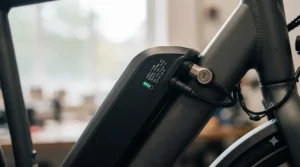
A Battery Management System (BMS) is the circuit board inside every lithium-ion ebike pack responsible for balancing individual cells, preventing overcharging and over-discharging, and — on more sophisticated packs — monitoring temperature and communicating with the bike’s controller. An affordable BMS system isn’t necessarily an unsafe one, but understanding what separates budget and premium BMS implementations helps you judge whether a cheap replacement battery is a genuine bargain or a false economy.
Based on the spec comparison across replacement battery vendors, a smart BMS with cell balancing, thermal protection, and reliable communication protocols typically adds a meaningful chunk to a pack’s manufacturing cost compared with a basic protection-only circuit, but that additional cost buys genuinely improved safety margins and longevity. What most buyers overlook is that an ultra-cheap third-party battery advertising a headline capacity figure may be cutting costs specifically on BMS sophistication rather than on the cells themselves, which is a harder trade-off to spot from a product listing alone — checking for UL2271 or CE certification and a stated warranty period is a reasonable proxy for BMS quality when you can’t inspect the circuit directly.
The Lightweight Commuter Advantage: Why Bike Weight Genuinely Matters
The lightweight commuter advantage isn’t just a marketing phrase — it has genuine, measurable practical consequences for daily riders. A bike in the 15-19kg range, like the Tenways or Estarli on this list, is meaningfully easier to carry up stairs, lift onto a train luggage rack, or manoeuvre through a narrow office corridor than a 22kg-plus alternative, and that difference compounds every single day you commute rather than being a one-off consideration.
Based on the spec comparison, lighter bikes on this list generally achieve their weight savings through smaller battery capacity, belt drives instead of chains, and single or limited-speed drivetrains rather than full derailleur systems — each of those choices trades something (range, gear range, or drivetrain flexibility) for reduced weight. What most buyers overlook is that a lighter bike also handles more nimbly at low speed and in traffic, which several reviewers across this list specifically credited for easier manoeuvring through stopped city traffic, independent of any battery or motor consideration.
Safety: Charging and Storing Your 36V Battery Correctly
This is genuinely important to get right, not just a formality. Per London Fire Brigade’s #ChargeSafe guidance, always use the charger supplied with your battery or one specifically approved by the manufacturer, since mismatched or incompatible chargers are a recognised cause of overheating and fire — this isn’t a minor compatibility footnote, it’s one of the most common actual causes of the e-bike battery fires London Fire Brigade attends. Charge batteries on a hard, flat surface where heat can dissipate, never leave a battery charging unattended or overnight while you sleep, and unplug the charger once charging completes rather than leaving it connected indefinitely.
Watch for warning signs of a failing battery: unusual heat, bulging or swelling, hissing or cracking sounds, an unusual smell, or noticeably longer charging times than normal — any of these warrant stopping use immediately rather than continuing to ride or charge the pack. Never block an escape route with a charging bike, and if you’re storing the bike for an extended period, aim to leave the battery at roughly 40-60% charge rather than fully charged or fully depleted, which puts less stress on the cells over time.
Frequently Asked Questions
❓ Why is 36V the most common voltage for lightweight ebikes?
❓ How much does a 36V ebike battery replacement typically cost in the UK?
❓ Can I upgrade my 36V battery to a higher capacity?
❓ Is a bigger Ah battery always worth the extra weight and cost?
❓ What charger should I use for my 36V ebike battery?
Conclusion
There’s no single best 36V ebike brand, only the one that matches your actual commute, storage situation, and budget. If lightness and a stealthy, low-maintenance ride matter most, the Tenways CGO600 Pro and Estarli e28.X lead this list. If you want genuine motor strength for hilly routes, the Ampere Deluxe 700C delivers unusually strong torque for a hub-drive system. And if budget and confirmed, honest pricing matter most, the Decathlon Riverside 500E and BTWIN E-Fold 500 prove a cost-effective 36V option doesn’t have to mean cutting corners on the sensor technology or battery capacity that actually shape day-to-day riding.
Whichever you choose, match battery capacity to your real commute rather than a worst-case scenario, charge it correctly, and the humble 36V system will likely outlast most other components on the bike.
✨ Don’t Miss These Exclusive Deals!
🔍 Take your daily commute to the next level with these carefully selected 36V ebikes. Click on any highlighted product to check current pricing and availability. The right lightweight ebike can genuinely replace a car journey, a train fare, or a lot of tired mornings!
Recommended for You
- Add Second Battery Electric Bike: 7 Real Options (2026)
- Integrated Battery Ebike Charging: 7 Best Picks 2026
- Integrated Battery Ebike: 7 Sleek 2026 Picks (UK Guide)
Disclaimer: This article contains affiliate links. As an Amazon Associate, I earn from qualifying purchases. If you purchase products through these links, we may earn a small commission at no additional cost to you.
✨ Found this helpful? Share it with your friends! 💬🤗
