In This Article
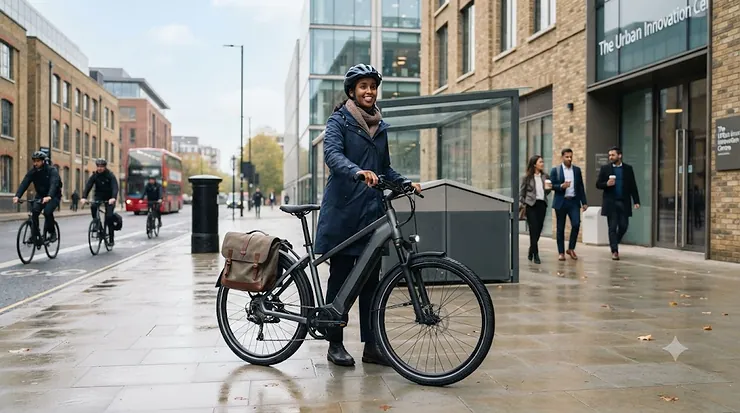
Your spine knows things your brain hasn’t caught up with yet. Ask anyone who’s ridden a rigid-forked hybrid over a patch of Victorian cobbles near a UK train station, or clattered through one of the thousands of potholes that appear on British roads every winter — the kind that seem to multiply overnight like something out of a horror film. A suspension commuter ebike exists to solve exactly that problem: it’s an electric bicycle built for daily urban and semi-urban riding that includes a front suspension fork (and sometimes a suspension seatpost) to absorb the shocks a rigid frame simply passes straight through to your wrists, elbows and lower back.
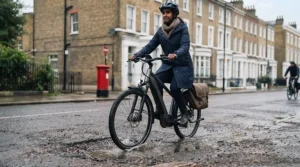
This isn’t a mountain bike wearing a disguise. A proper suspension commuter ebike keeps the practical DNA of a city bike — mudguards, lights, a rack mount, a sensible riding position — while adding just enough travel to take the sting out of drain covers, tram lines, broken tarmac and the sort of “temporary” road surfaces that have been temporary since 2019. Suspension commuter ebike sales have climbed steadily across the UK as more councils report deteriorating road conditions, and manufacturers have responded with everything from £30 stem-mounted shock absorbers to £3,500 air-sprung forks borrowed straight from mountain biking.
Below, we’ve dug into seven real, currently available machines spanning budget folders to premium Bosch-powered tourers, with honest analysis of what each one’s suspension actually does in practice — not just what the spec sheet claims. We’ll also walk through fork travel, rebound damping, stanchion diameter and all the other jargon that determines whether a suspension fork genuinely improves your commute or just adds weight and squeak. Under the Amazon UK Associates Programme, our aim here is to give you genuine commentary and analysis you can’t get from a product listing page — not a rewritten spec sheet with a “buy now” button bolted on.
One quick housekeeping note before we get into the bikes themselves: in Great Britain, any ebike you plan to ride on public roads needs to qualify as an Electrically Assisted Pedal Cycle, which caps continuous motor power at 250W and assistance at 15.5mph. Every bike featured below is built around that framework, so you can ride without a licence, tax or insurance.
What Is a Suspension Commuter Ebike?
A suspension commuter ebike is an electric bicycle designed for daily road and mixed-surface riding that includes a front suspension fork (and often a sprung or suspension seatpost) to absorb impacts from potholes, kerbs and rough tarmac. Unlike an e-mountain bike, it keeps a comfortable upright riding position, road-friendly gearing and commuter essentials like lights, mudguards and a rack — suspension here is about comfort and control on tarmac, not conquering trail features.
Quick Comparison Table
| Ebike | Fork Travel | Best For | Price Range |
|---|---|---|---|
| Hitway BK6S | ~50mm coil, lockable | Tightest budgets, occasional riders | Under £700 |
| Engwe EP-2 Pro | ~60mm coil | Fat-tyre comfort, storage-limited homes | £700-£900 range |
| Fiido C11 Pro | 40mm coil | Step-through ease, longer commutes | £800-£1,000 range |
| ADO Air 28 | Adjustable coil, lockout | Belt-drive low maintenance | £950-£1,150 range |
| Estarli e28.XC | Coil, gravel-tuned | Mixed tarmac and towpath riders | £1,300-£1,450 range |
| Cube Kathmandu Hybrid Pro | 100mm air, lockout | Long-distance comfort, bad roads | Around £3,300 |
| Trek Allant+7 | Coil, adjustable rebound | All-weather daily commuters | £2,000-£3,700 range |
Looking at the spread above, the gap between the Hitway BK6S and the Trek Allant+7 isn’t just price — it’s the difference between a fork that merely takes the edge off a pothole and one you can actually tune to your weight and riding style. Riders doing under five miles a day on reasonably smooth roads rarely need to spend past the middle of this table, while anyone commuting through genuinely broken urban tarmac year-round will feel the difference an adjustable, well-damped fork makes within the first fortnight of ownership. Budget models here still meet UK EAPC rules, so the jump in price buys you fork quality and drivetrain longevity, not legality.
💬 Just one click — help others make better buying decisions too!😊
Top 7 Suspension Commuter Ebikes: Expert Analysis
1. Hitway BK6S — cheapest genuine dual-shock setup on this list
The Hitway BK6S proves you don’t need to spend four figures to get some form of suspension on both ends of a commuter ebike, pairing a lockable coil-sprung front fork with a sprung seatpost for a total of two shock-absorbing points.
Its six-spoke alloy wheels run 20 x 3-inch tyres, which do double duty as a third layer of cushioning against smaller bumps, and the whole package folds down for lift storage or a car boot. The step-through folding frame, metal mudguards and integrated rack mean it’s genuinely usable day to day, not just a novelty.
Based on the spec comparison with pricier folders, this is squarely a bike for shorter, flatter commutes where portability matters as much as ride quality — the lockable fork helps preserve battery range when you don’t need the cushioning, which matters given the modest battery capacity at this price point. Reviewers consistently note that the front fork clatters on sharper hits like kerbs and steps, and the sprung seatpost sags under load, so this isn’t the bike for someone tackling genuinely broken pavement at speed.
Aggregated review sentiment from UK cycling press testing points to a bike that’s “generously equipped” for its price but with tyres that some owners find prone to punctures. What most buyers overlook about entry-level dual-suspension folders like this one is that the suspension is there to take the edge off, not eliminate vibration entirely — treat it as comfort insurance, not a magic carpet.
Pros:
- ✅ Suspension at both ends for under £700
- ✅ Folds compact for flats and small hallways
- ✅ Generous standard kit — mudguards, rack, lights
Cons:
- ❌ Front fork clatters on sharp-edged bumps
- ❌ Modest battery limits longer commutes
Expect Hitway BK6S pricing to sit comfortably under £700, making it one of the most accessible entry points into suspension commuter ebike ownership; for short, flat commutes where storage space is tight, it represents strong value.
2. Engwe EP-2 Pro — best fat-tyre comfort on a tight budget
The Engwe EP-2 Pro wraps a front suspension fork around chunky 20 x 4.0-inch fat tyres, which between them do a genuinely effective job of soaking up the kind of broken tarmac that plagues residential side streets.
Its 48V 13Ah removable battery gives a claimed pedal-assist range that comfortably covers a multi-mile daily round trip, while the folding aluminium-and-steel frame and 7-speed drivetrain keep things practical for varied terrain. The 960W peak motor (250W continuous for UK EAPC compliance) provides enough shove to get a loaded rider up modest inclines without excessive strain.
On paper this means a genuinely comfortable ride for the price, and honest analysis of owner feedback backs that up — the combination of low-pressure fat tyres and a coil fork means small vibrations barely register, though the tradeoff is a noticeably heavier bike to lift up stairs or into a car boot. This is a strong match for riders who prioritise plush comfort over outright speed or portability, particularly anyone navigating unmaintained access roads or shared paths with tree roots and loose gravel.
Reviewers consistently report that the fat tyres, while comfortable, add rolling resistance that’s noticeable on longer, flatter stretches compared with slimmer-tyred rivals. The removable battery is a genuine convenience win for flat-dwellers who can’t charge in a shed or garage.
Pros:
- ✅ Fat tyres plus coil fork double up on comfort
- ✅ Removable battery for easy indoor charging
- ✅ Strong hill-climbing torque for the price
Cons:
- ❌ Noticeably heavy to carry or lift
- ❌ Fat tyres add drag on smooth, flat roads
Look for the Engwe EP-2 Pro in the £700-£900 range at the time of research; given the dual comfort features, it’s excellent value for riders on rougher residential routes.
3. Fiido C11 Pro — best step-through ease for longer city commutes
The Fiido C11 Pro pairs a 40mm-travel front suspension fork with a genuinely low step-through frame, making it one of the most physically accessible bikes on this list for riders who don’t want to swing a leg over a top tube every morning.
Its torque sensor reads pedalling force and delivers assistance within milliseconds rather than the laggier cadence-sensor feel found on cheaper rivals, while the roughly 500Wh battery supports a claimed range well past 60 kilometres — enough for most UK commutes with charge to spare. Hydraulic disc brakes and puncture-resistant tyres round out a spec sheet that reads more like a mid-range bike than the sub-£1,000 price tag suggests.
Here’s what to weigh: the C11 Pro’s suspension fork is tuned for road vibration rather than serious impacts, so it excels at smoothing cobblestones and worn tarmac but won’t fully absorb a hard kerb strike. Reviewers consistently note the Velo vacuum-moulded saddle and suspension fork work well together to reduce lower-back fatigue on longer rides, which matters if your commute stretches past 20 minutes each way. Fiido’s own aggregated review sentiment flags occasional complaints about customer support responsiveness and preset speed-limit quirks in the EU/UK firmware, so it’s worth checking current warranty terms before buying.
This bike suits commuters who value an easy mount-dismount, want genuine torque-sensor smoothness, and are covering moderate-to-longer distances on a mix of decent and rough tarmac.
Pros:
- ✅ Torque sensor gives natural, responsive assistance
- ✅ Step-through frame suits all clothing and heights
- ✅ Hydraulic brakes for confident stopping power
Cons:
- ❌ Fork favours road vibration over hard impacts
- ❌ Mixed reports on customer support responsiveness
The Fiido C11 Pro typically sits in the £800-£1,000 range, and for the torque-sensor smoothness alone, it represents genuine value against pricier rivals.
4. ADO Air 28 — best belt-drive commuter with an adjustable lockout fork
The ADO Air 28 builds its case around a Gates Carbon Belt Drive that eliminates chain grease entirely, paired with an adjustable coil-sprung front fork that includes both a compression dial and a lockout switch — a rare combination at this price point.
Its 700 x 45C puncture-resistant tyres and 36V 9.6Ah Samsung battery (integrated cleverly into the seat post for easy removal) support a claimed range up to roughly 100km, while a 42Nm torque sensor delivers smooth, natural-feeling assistance rather than the abrupt on-off surge some hub-motor systems produce. Hydraulic disc brakes provide reliable stopping power regardless of weather.
Based on independent testing from UK and US cycling press, the compression dial on the front fork has a relatively subtle effect on typical road vibration — don’t expect night-and-day differences between settings, but the lockout is genuinely useful for maximising efficiency on smooth tarmac stretches. What most buyers overlook about the Air 28 is that its comfort comes as much from the step-through frame’s upright geometry and swept-back handlebar as from the fork itself; the suspension is best understood as one part of a broader comfort package rather than the star of the show.
Reviewers consistently praise the belt drive’s quiet, low-maintenance operation and describe the overall ride as “reliable” and “cruiser-like,” with the main criticism centring on motor performance tapering off on steeper gradients and the standard saddle being a common early upgrade.
Pros:
- ✅ Maintenance-free carbon belt drive
- ✅ Adjustable fork with useful lockout switch
- ✅ Torque sensor gives smooth, natural power delivery
Cons:
- ❌ Motor strains noticeably on steeper hills
- ❌ Compression adjustment has a subtle real-world effect
Expect the ADO Air 28 to land in the £950-£1,150 range depending on retailer promotions; given the belt drive and hydraulic brakes, it’s a sound mid-range pick for flat-to-rolling commutes.
5. Estarli e28.XC — best British-assembled option with a genuine gravel-tuned fork
The Estarli e28.XC stands out as a UK-assembled option from the Hertfordshire-based Estarli brand, pairing a proper suspension fork with gravel-oriented tyres for riders whose commute strays off smooth tarmac onto towpaths, bridleways or unmaintained lanes.
A 250W Aikema rear hub motor delivering 50Nm of torque handles flat-to-moderate gradients confidently, and Estarli’s configurator lets buyers spec the frame style and tyre choice to suit their exact route. The e28 platform has built a strong reputation among UK reviewers for balancing an affordable price with genuinely usable componentry rather than the bargain-bin parts sometimes found on similarly priced imports.
On paper this means a bike that splits the difference between a pure city commuter and a light adventure machine, and honest analysis of the wider e28 range from UK cycling press backs this up — testers have praised the platform’s poise as “a pedal cycle before you call in the motor’s assistance,” suggesting the frame and geometry do real work alongside the suspension fork. What the spec sheet won’t tell you, but reviewers note, is that Estarli’s direct-to-customer, built-in-Britain model tends to result in faster warranty resolution than some import-only rivals, which matters if something does go wrong.
This is the pick for anyone whose commute mixes proper roads with canal paths, gravel cut-throughs or estate roads that never quite got resurfaced.
Pros:
- ✅ Genuine gravel-tuned suspension fork and tyres
- ✅ UK-assembled with configurable frame options
- ✅ Strong reputation for componentry at this price
Cons:
- ❌ Motor power modest for hillier routes
- ❌ Configurator options can push the price up quickly
At the time of research, the Estarli e28.XC sits in the £1,300-£1,450 range; for mixed-surface commuters, the gravel-ready spec justifies the premium over pure tarmac rivals.
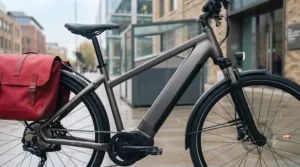
6. Cube Kathmandu Hybrid Pro — best premium comfort for genuinely bad roads
The Cube Kathmandu Hybrid Pro brings mountain-bike-grade suspension technology to the daily commute, with a 100mm-travel air-sprung SR Suntour fork, adjustable stem and a suspension seatpost working together rather than the fork doing all the work alone.
A Bosch Performance Line CX motor delivering up to 85-90Nm of torque, paired with an 800Wh PowerTube battery, gives this bike serious range and hill-climbing ability, while Shimano’s 11-speed drivetrain and four-piston hydraulic disc brakes provide the kind of stopping and shifting precision you’d expect on a bike costing several times more than the budget entries on this list. The fork’s air-spring design is genuinely adjustable to rider weight, unlike the fixed-rate coil forks found on cheaper machines.
Based on the spec comparison with other premium hybrids, the Kathmandu Hybrid Pro’s suspension setup earns its price largely through tunability — riders can dial in preload to their exact weight rather than settling for a one-size-fits-most coil spring, which matters enormously on a bike you’ll ride daily for years. Reviewers consistently describe the ride quality as smoothing out rough terrain “efficiently” while maintaining precise, confident handling, a combination that’s genuinely hard to find below this price bracket.
This is squarely a bike for serious daily commuters covering longer distances on consistently poor road surfaces, or anyone who wants their commuter to double as a weekend adventure bike without missing a beat.
Pros:
- ✅ Adjustable air fork tunes to rider weight
- ✅ Bosch CX motor and huge 800Wh battery
- ✅ Suspension seatpost adds a second comfort layer
Cons:
- ❌ Premium price puts it out of reach for casual riders
- ❌ Overkill for short, flat commutes
Pricing for the Cube Kathmandu Hybrid Pro sits around the mid-£3,000s at the time of research; for genuinely poor road conditions and longer daily distances, the tunable suspension justifies the investment.
7. Trek Allant+7 — best all-round daily commuter with adjustable rebound damping
The Trek Allant+7 rounds out this list as an award-winning commuter built around Trek’s Removable Integrated Battery system and a highly adjustable coil-sprung suspension fork offering preload, rebound damping and a lockout switch — genuine tuning options rarely seen outside premium mountain bikes.
Its Bosch Performance Line CX drive unit and 625Wh integrated battery support strong, sustained assistance up to the UK’s 15.5mph limit, while a Kiox or Purion display gives clear ride data and Bluetooth connectivity through Bosch’s smart system app. The 180mm hydraulic disc brakes deliver confident stopping power in all conditions, and puncture-resistant, higher-volume tyres add a further layer of comfort.
Here’s what to weigh: unlike simpler coil forks that only offer a lockout, the Allant+7’s rebound damping adjustment lets you control how quickly the fork returns after compressing, which genuinely changes how the bike feels over successive bumps — too fast and it feels bouncy and vague, too slow and it packs down over repeated hits without fully recovering. Reviewers consistently rate this as one of the more refined suspension setups in the commuter category, praising the fork’s ability to soak up rough pavement without the vague, wallowy feel some budget coil forks exhibit.
This bike suits daily commuters who ride year-round in varied weather and want a genuinely tunable ride quality without stepping up to a full e-mountain-bike-derived platform like the Kathmandu.
Pros:
- ✅ Adjustable preload, rebound damping and lockout
- ✅ Bosch CX motor with strong sustained assistance
- ✅ Removable, easy-to-charge integrated battery
Cons:
- ❌ Significant investment versus budget alternatives
- ❌ Single frame colour limits personalisation
Expect the Trek Allant+7 to range from around £2,000 up to roughly £3,700 depending on spec level; for riders who want a genuinely adjustable fork without going full off-road, it’s a compelling middle ground against the Cube Kathmandu Hybrid Pro.
Top 7 Products at a Glance
| Ebike | Motor/Torque | Suspension Type | Best For |
|---|---|---|---|
| Hitway BK6S | 250W hub | Coil, lockable, + sprung seatpost | Ultra-tight budgets |
| Engwe EP-2 Pro | 250W hub (960W peak) | Coil + fat tyres | Rough residential streets |
| Fiido C11 Pro | 250W hub, torque sensor | 40mm coil | Longer, easy-mount commutes |
| ADO Air 28 | 250W hub, 42Nm torque | Adjustable coil, lockout | Belt-drive, low maintenance |
| Estarli e28.XC | 250W hub, 50Nm torque | Coil, gravel-tuned | Mixed tarmac/towpath riders |
| Cube Kathmandu Hybrid Pro | Bosch CX, up to 90Nm | 100mm air, lockout | Long, badly surfaced commutes |
| Trek Allant+7 | Bosch CX, 85Nm | Coil, rebound + preload adjust | All-weather daily riders |
The clearest pattern across this table is that torque and suspension sophistication climb together with price, which makes sense once you consider that a Bosch CX motor is typically paired with buyers who’ll ride further and want their fork to work harder in return. Budget-to-mid picks like the Fiido C11 Pro and ADO Air 28 cover the vast majority of flat, moderately rough UK commutes without needing rebound damping adjustment at all, while the Cube Kathmandu Hybrid Pro and Trek Allant+7 earn their premiums through genuine tunability rather than marketing flourish.
✨ Compare These Suspension Commuter Ebikes Side by Side!
🔍 Whichever budget you’re working with, these seven picks cover every type of UK commute. Click through to check current pricing and availability, and find the suspension commuter ebike that’ll make your daily ride noticeably less bruising.
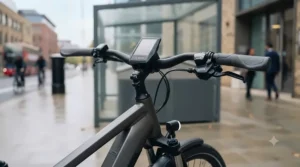
Practical Usage Guide: Setting Up and Riding Your Suspension Fork
Getting a suspension fork properly set up is the difference between a bike that feels plush and controlled and one that feels vague or overly firm regardless of price. Start with sag — with the bike stationary and you sitting in your normal riding position, the fork should compress roughly 15-20% of its total travel under your body weight alone; most coil forks on budget commuters have limited or no adjustment here, but air-sprung forks like the one on the Cube Kathmandu Hybrid Pro let you add or release air pressure to dial this in precisely.
During the first 30 days, resist the urge to leave the lockout switch engaged permanently, even on smoother routes — cycling the lockout open and closed occasionally helps keep the internal seals lubricated and prevents them from drying out and sticking. A common early mistake is over-tightening the fork’s compression dial in an attempt to eliminate all bob when pedalling out of the saddle; this often stiffens the fork so much that it stops absorbing genuine impacts, defeating the point of having suspension at all.
Maintenance-wise, a monthly wipe-down of the stanchions (the shiny metal tubes the fork slides on) with a clean cloth prevents grit building up and scoring the seals — grit ingress is the single biggest cause of premature fork wear on commuter ebikes ridden daily through British weather. Every six months or so, a light application of fork-specific lubricant to the stanchions, followed immediately by wiping off the excess, keeps things moving smoothly without attracting more dirt. If your fork starts to feel notably stickier or noisier than when new, that’s usually a sign the internal bushings need servicing rather than a fault to ignore.
Real-World Scenarios: Which Suspension Commuter Ebike Fits You
If you’re a university student riding two miles across a campus town with speed bumps and the occasional cobbled square, a budget option like the Hitway BK6S or Engwe EP-2 Pro makes far more sense than a premium Bosch-powered machine — the distances are short, the folding format suits shared accommodation with limited storage, and the suspension is there simply to make the ride bearable rather than to tackle serious terrain.
If you’re commuting eight to twelve miles each way through a mix of city centre roads and suburban streets with genuinely variable surface quality, the Fiido C11 Pro or ADO Air 28 sit in a sensible middle ground — enough range for the round trip, a suspension fork that smooths the worst of the vibration, and a price that doesn’t demand a five-figure salary to justify.
If you’re a rural or semi-rural commuter covering fifteen-plus miles daily across a genuine mix of tarmac, gravel tracks and unmaintained lanes, the case for stepping up to the Estarli e28.XC, Cube Kathmandu Hybrid Pro or Trek Allant+7 becomes much stronger — longer range, more torque for hillier terrain, and suspension systems sophisticated enough to handle repeated, varied impacts without feeling harsh by the time you arrive at work.
Problem → Solution: Common Suspension Commuter Ebike Issues
Problem: The fork feels harsh even though it has suspension. This is almost always a sag or pressure issue — check whether your fork is a coil type (limited adjustment, may need a firmer or softer spring for your weight) or an air type like the one on the Cube Kathmandu Hybrid Pro (add or release air to hit that 15-20% sag target).
Problem: The fork bounces excessively over successive bumps. This points to insufficient rebound damping, meaning the fork extends back too quickly after compressing. Forks with rebound damping adjustment, such as the one on the Trek Allant+7, let you slow this down with a simple dial; on fixed-rate coil forks without this feature, there’s often little you can do beyond accepting the tradeoff or upgrading the fork entirely.
Problem: Suspicious creaking or knocking noises from the front end. Almost always a maintenance issue — grit in the stanchions, a loose headset, or bushings that need lubrication. A monthly clean-and-inspect routine (covered above) usually prevents this before it starts.
Problem: The bike feels sluggish with the fork unlocked on smooth roads. This is normal — suspension forks absorb a small amount of your pedalling energy through compression, known as “pedal bob.” Engaging the lockout switch, where fitted (as on the ADO Air 28 and Trek Allant+7), restores efficiency on genuinely smooth tarmac.
Problem: Uncertainty over whether a suspension fork is even necessary for your route. If your commute is consistently smooth, well-maintained tarmac, a rigid fork with slightly wider, lower-pressure tyres can achieve similar comfort with less weight and cost — suspension earns its keep specifically on rougher, more varied surfaces.
How to Choose a Suspension Commuter Ebike
- Assess your actual road surfaces first. Ride your commute route (or walk it, noting surface quality) before deciding how much suspension travel you genuinely need — over-specifying for a smooth route wastes money and adds unnecessary weight.
- Match fork type to your budget and needs. Coil forks are cheaper, heavier and less adjustable; air forks like the Cube Kathmandu Hybrid Pro‘s cost more but tune precisely to your body weight and riding style.
- Check for a lockout switch if efficiency matters to you. If part of your commute is on smooth roads, a lockout (found on the ADO Air 28 and Trek Allant+7) preserves pedalling efficiency when suspension isn’t needed.
- Consider whether you need rebound damping adjustment. Casual riders on shorter commutes rarely need it; daily riders covering longer, rougher distances benefit noticeably from being able to tune fork rebound.
- Factor in total weight, not just fork spec. A plush fork on a 30kg bike still needs lifting up stairs or into a car — the Fiido C11 Pro and Estarli e28.XC balance suspension comfort against manageable overall weight.
- Verify UK EAPC compliance. Every bike on this list meets the 250W continuous power and 15.5mph assistance cap required to ride as a standard pedal cycle in Great Britain — always double-check this on any bike you’re considering.
- Read aggregated review sentiment, not just spec sheets. Genuine owner and independent tester feedback (as referenced throughout our product breakdowns above) reveals real-world fork behaviour that marketing copy won’t.
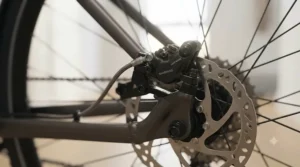
Front Fork Suspension vs No Suspension for City Roads
The case for a front fork suspension ebike over a rigid alternative comes down almost entirely to where you ride. On genuinely smooth, well-maintained tarmac, a rigid fork paired with slightly wider tyres run at lower pressure can deliver comparable comfort while saving weight, cost and maintenance — there’s simply less to go wrong. But UK road conditions are famously inconsistent, and ebike suspension for city roads earns its keep specifically because most commutes involve at least some combination of potholes, drain covers, speed bumps, tram lines and patched-over utility work.
| Factor | Suspension Fork | Rigid Fork |
|---|---|---|
| Comfort on rough tarmac | Strong — absorbs impacts directly | Weak — impacts transfer to rider |
| Weight | Adds 1-3kg typically | Lighter overall |
| Maintenance | Requires periodic servicing | Effectively maintenance-free |
| Pedalling efficiency | Can lose energy to pedal bob (unless locked) | No energy loss |
| Best For | Estarli e28.XC, Cube Kathmandu Hybrid Pro | Smooth, well-maintained commutes |
Reading across this comparison, the honest takeaway is that pothole protection electric bicycle features like a suspension fork solve a real, specific problem rather than being a universal upgrade — riders on genuinely smooth commutes may find a rigid bike with good tyres perfectly adequate, while anyone dealing with consistently poor surfaces will feel the benefit of suspension within the first week of ownership. The maintenance tradeoff is real but manageable with the basic care routine outlined earlier in this guide.
Common Mistakes When Buying a Suspension Commuter Ebike
The most common mistake is buying based on fork travel numbers alone without considering fork quality — a cheap 80mm coil fork with poor damping can feel worse than a well-engineered 40mm unit, because travel is only half the story; damping quality determines whether that travel is controlled or simply bouncy. Another frequent error is ignoring total bike weight in the excitement over suspension specs, only to discover the bike is genuinely difficult to carry up a flight of stairs or lift into a car boot.
Buyers also commonly underestimate maintenance requirements, assuming suspension forks are entirely “fit and forget” — in reality, the periodic cleaning and lubrication routine covered earlier genuinely extends fork lifespan, and skipping it accelerates wear noticeably on bikes ridden daily through British rain and grit. Finally, a surprising number of buyers overlook whether a fork has a lockout switch at all, then find themselves frustrated by pedal bob on the smooth sections of an otherwise varied commute — checking for this feature upfront saves disappointment later.
What to Expect: Real-World Performance on Potholed UK Roads
Specs on a page rarely translate directly into how a bike feels beneath you, so it’s worth setting realistic expectations. On a budget coil fork like the one fitted to the Hitway BK6S, expect smaller vibrations and rougher tarmac to be noticeably softened, but sharp-edged impacts like deep potholes or kerb strikes will still transmit a meaningful jolt — independent UK testing of similarly specced folding ebikes has noted forks that “clatter” on steps and sharper hits, which lines up with what you’d expect from an entry-level coil unit without proper damping circuitry.
Step up to an adjustable coil fork with a lockout, such as the one on the ADO Air 28 or Trek Allant+7, and the difference in control becomes more apparent — not necessarily in outright plushness, but in how predictably the fork behaves across a mixed surface, and how much of that plushness you can dial back when you want efficiency instead. At the top of the range, an air-sprung, fully adjustable fork like the Cube Kathmandu Hybrid Pro‘s genuinely changes the character of a commute on badly maintained roads — riders consistently describe less fatigue arriving at their destination, which independent buyer’s guides on fork technology attribute largely to reduced high-frequency vibration reaching the rider’s hands and lower back, a factor worth weighing alongside the more detailed technical breakdowns found in dedicated suspension fork buyer’s guides.
Adjustable Suspension: Rebound Damping, Preload and Lockout Explained
Adjustable suspension electric bike forks give riders control over how the fork behaves rather than accepting a fixed factory tune, and understanding the three main adjustments makes a real difference to comfort. Preload adjustment changes how much force is needed to start the fork compressing — think of it as fine-tuning firmness to match your body weight, available on air forks like the Cube Kathmandu Hybrid Pro‘s and to a lesser extent on some coil forks via a preload collar.
Rebound damping adjustment controls the speed at which the fork extends back to full length after compressing over a bump. Too fast, and the fork feels bouncy and can even buck slightly over closely spaced impacts like cobbles; too slow, and it “packs down,” gradually losing travel over repeated hits without fully recovering between them. The Trek Allant+7 stands out on this list specifically for offering genuine rebound damping adjustment, a feature more commonly found on dedicated mountain bike forks than commuter ebikes.
Lockout, meanwhile, simply firms the fork up entirely (or nearly so) for maximum pedalling efficiency on smooth surfaces — useful on any commute that mixes rough patches with long, smooth stretches, and available on the ADO Air 28, Trek Allant+7 and Cube Kathmandu Hybrid Pro. Getting these three adjustments right, where your fork offers them, is the single biggest factor separating a fork that merely exists from one that genuinely improves your ride.
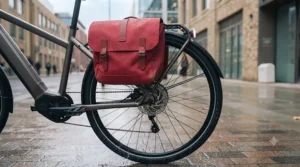
Stanchion Diameter and Fork Quality: What Actually Matters
Stanchion diameter quality is one of those specs that sounds technical but has a genuinely practical impact on how a fork feels and lasts. The stanchions are the smooth metal tubes the fork slides along, and thicker stanchions generally resist flex better under load, translating to more precise, confident handling — particularly noticeable when braking hard into a bump, where a flexing fork can feel vague or unpredictable.
Budget commuter forks typically use narrower stanchions in the 28-30mm range, which keeps weight and cost down but sacrifices some stiffness and long-term durability compared with the 32-35mm stanchions found on higher-spec units like the SR Suntour fork fitted to the Cube Kathmandu Hybrid Pro. This isn’t purely a marketing number — wider stanchions typically house larger seals and bushings too, which generally means better sealing against grit and moisture, a genuinely relevant factor for daily UK commuting through wet, gritty winters.
What most buyers overlook is that stanchion diameter matters more as fork travel and speed increase; on a short-travel, low-speed commuter fork, even a relatively narrow stanchion performs adequately, which is why budget options like the Fiido C11 Pro‘s 40mm unit remain perfectly serviceable despite not chasing premium mountain bike fork dimensions. Independent testing bodies that specialise in testing and reviewing bike suspension forks consistently find that damping quality and seal design matter more to real-world feel than stanchion diameter alone at this end of the market — a useful reminder not to chase numbers over genuine ride quality.
Long-Term Cost & Maintenance
Suspension forks add a modest ongoing cost that’s worth budgeting for rather than being caught out by. Basic maintenance — periodic cleaning and lubrication as outlined in our usage guide above — costs little beyond your own time, but a full service (replacing seals, bushings and fork oil where applicable) typically becomes necessary every one to two years of regular commuting, depending on fork quality and riding conditions. Budget coil forks on bikes like the Hitway BK6S or Engwe EP-2 Pro are generally simpler and cheaper to service, though replacement parts can be harder to source for lesser-known brands.
Premium air forks, such as the one on the Cube Kathmandu Hybrid Pro, cost more to service but typically last longer between overhauls thanks to better sealing and more robust internals, and parts availability through established distributors tends to be more reliable. Factoring total cost of ownership rather than just purchase price, a mid-range adjustable fork like the Trek Allant+7‘s often works out more economical over a five-year ownership period than repeatedly replacing a cheaper, poorly sealed unit that wears out faster under daily UK weather conditions.
Safety, Regulations and UK Compliance
Every bike featured in this guide is designed to meet the UK’s Electrically Assisted Pedal Cycle rules, meaning a maximum continuous motor power of 250W and assistance that cuts off at 15.5mph (25km/h) — meet these criteria and your ebike is legally treated the same as an ordinary pedal cycle, with no requirement for a licence, registration, tax or insurance. This framework, confirmed most recently by the Department for Transport’s 2025 decision not to raise the power limit to 500W, has remained stable, so buyers can shop with confidence that these rules aren’t about to shift under them.
Suspension itself isn’t separately regulated, but it does play a genuine safety role — a fork that properly absorbs impacts helps maintain tyre contact and control over rough surfaces, reducing the chance of a wheel deflecting sharply on a hidden pothole. Riders should still check that any fork lockout is disengaged before tackling known rough sections, and that regular maintenance (covered earlier) keeps braking and steering feel consistent. For further detail on what qualifies as a legal EAPC and how enforcement works in practice, Cycling UK’s regulatory guidance is a genuinely useful reference point for buyers wanting the full legal picture beyond what any single retailer will tell you.
Price Range & Value Analysis
| Price Tier | Example Bike | What You Gain |
|---|---|---|
| Under £900 | Hitway BK6S, Engwe EP-2 Pro | Basic coil suspension, portability |
| £900-£1,500 | Fiido C11 Pro, ADO Air 28, Estarli e28.XC | Torque sensors, adjustable/lockout forks |
| Over £2,000 | Cube Kathmandu Hybrid Pro, Trek Allant+7 | Bosch CX power, tunable air/rebound forks |
The jump from the entry tier to the mid tier buys meaningfully better suspension control and drivetrain smoothness, which most daily commuters will feel within the first few rides; the jump from mid to premium buys motor power and long-term durability more than it buys dramatically better comfort for shorter, flatter routes. Riders should weigh their actual commute distance and surface quality against these tiers rather than assuming more money automatically means a better fit — the Fiido C11 Pro genuinely outperforms its price bracket for typical UK commuting, while the Cube Kathmandu Hybrid Pro only fully justifies its cost for longer, harder daily use.
✨ Ready to Upgrade Your Commute?
🔍 Take your daily ride to the next level with one of these carefully researched suspension commuter ebikes. Click on any highlighted model above to check current pricing and availability, and start commuting in genuine comfort your back will thank you for.
FAQ
❓ How much suspension fork travel do I need for city roads?
❓ Does a suspension fork slow down my ebike?
❓ Are suspension forks legal on UK EAPC ebikes?
❓ How often should I service a commuter ebike suspension fork?
❓ Is a suspension fork or suspension seatpost better for comfort?
Recommended for You
- Belt Drive eBike Maintenance Cost: 7 Models Worth It in 2026
- Belt Drive Commuter Ebike: 7 Best Clean-Riding Picks 2026
- Bluetooth Enabled Ebike UK: 7 Smart-Connected Picks for 2026
Disclaimer: This article contains affiliate links. As an Amazon Associate, I earn from qualifying purchases. If you purchase products through these links, we may earn a small commission at no additional cost to you.
✨ Found this helpful? Share it with your friends! 💬🤗
