In This Article
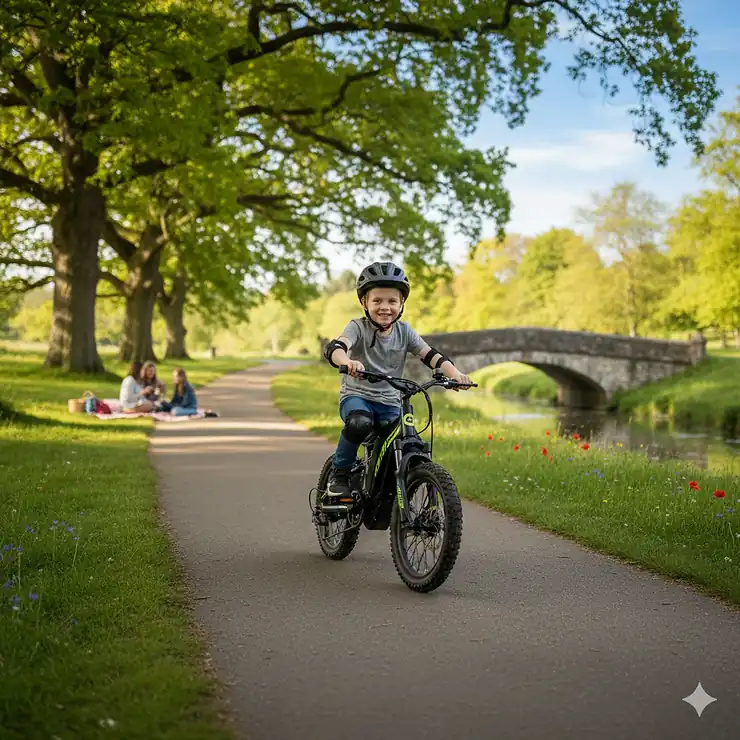
Picture this: your little one zipping around the garden with the biggest grin you’ve ever seen, learning balance, throttle control, and outdoor confidence all at once. That’s the magic of a kids electric bike. These compact, battery-powered marvels are transforming how British children experience outdoor play, bridging the gap between traditional balance bikes and proper motorcycles.
But here’s the thing – choosing the right electric bike for your child isn’t just about picking the coolest-looking model on Amazon. You’ve got to navigate UK regulations requiring riders to be at least 14 years old for public road use, understand battery specifications, assess safety features, and work out which models actually deliver on their promises. Many parents find themselves overwhelmed by conflicting information about power outputs, speed settings, and what’s genuinely appropriate for different age groups.
I’ve spent countless hours researching and analysing the current UK market to bring you this comprehensive guide. Whether you’re looking for a gentle introduction for a three-year-old or something more robust for older children, this article covers everything you need to make an informed decision. From budget-friendly training models to premium electric balance bikes, we’ll explore the top seven options available in 2026, complete with real prices in pounds sterling, genuine customer feedback from UK buyers, and crucial safety considerations.
Let’s dive into the world of junior electric bicycles and discover which children’s e-bike will transform your family’s outdoor adventures whilst keeping safety at the forefront.
Quick Comparison Table: Top Kids Electric Bikes at a Glance
| Product Name | Age Range | Battery Power | Top Speed | Price (£) | Best For |
|---|---|---|---|---|---|
| Storm 12″ Electric Balance Bike | 3-5 years | 100W | 10 mph | £279-299 | Beginners |
| HOMCOM 24V Electric Motorbike | 8-12 years | 24V | 16 km/h | £189-229 | Mid-range performance |
| Razor MX350 Dirt Rocket | 8+ years | 24V (350W) | 22 km/h | £249-299 | Off-road adventures |
| Storm 16″ Electric Balance Bike | 5-8 years | 170W | 12 mph | £389 | Skill progression |
| HOMCOM 12V Training Wheel Bike | 3-5 years | 12V | 4 km/h | £129-159 | Safety-first approach |
| GYMAX 12V Licensed BMW Bike | 3-8 years | 12V | 7 km/h | £149-189 | Styled rides |
| HOMCOM 6V Toddler Motorbike | 18-36 months | 6V | 3 km/h | £79-99 | Youngest riders |
💬 Just one click – help others make better buying decisions too! 😊
Top 7 Kids Electric Bike Models: Expert Analysis
1. Storm Kids 100W 12″ Electric Balance Bike
If you’re searching for the most colourful electric balance bikes on the UK market, Storm’s 12-inch model stands out with vivid colour options and high-specification features. This British-designed electric balance bike has become the gold standard for introducing young children to motorised two-wheelers.
Key Specifications:
- 100W motor with adjustable speed limiter (5mph/10mph settings)
- Suitable for ages 3-5 years
- Lightweight design for easy handling
Price Range: £279-299
Customer Feedback: UK parents consistently praise the Storm 12″ for its build quality and vibrant aesthetics. One satisfied buyer noted that their child mastered throttle control within hours, whilst the adjustable speed settings provided peace of mind during the learning phase.
✅ Pros:
- Authentic motorcycle styling with premium components
- Two-speed settings for gradual skill development
- Virtually silent operation ideal for residential areas
❌ Cons:
- Dry use only – water damage voids warranty
- Higher initial investment than entry-level models
Perfect for: Parents seeking a quality introduction to electric balance bikes with safety features that grow with their child’s confidence.
2. HOMCOM 24V Kids Electric Motorbike
This powerful 24V motorbike offers two adjustable speeds of 8 km/h and 16 km/h, providing young riders aged 8-12 years with up to 30 minutes of continuous fun. The HOMCOM brand has carved out a reputation for accessible, feature-rich electric bikes that don’t break the bank.
Key Specifications:
- 24V battery system with dual-speed control
- 12-inch pneumatic tyres for varied terrain
- Music player and horn features
Price Range: £189-229
Customer Feedback: British buyers appreciate the reasonable price point and entertainment features. Several reviews mention the bike being “quick enough for an 8-year-old” whilst maintaining manageable speed for nervous parents supervising outdoor play.
✅ Pros:
- Excellent value for money with premium features
- Twist-grip throttle mimics real motorcycle controls
- Robust construction handles active play
❌ Cons:
- Battery life concerns mentioned in some reviews
- Assembly requires patience and basic tools
Perfect for: Families wanting a mid-range supervised riding ebike that balances performance, safety, and entertainment value.
3. Razor MX350 Dirt Rocket
The Razor MX350 combines authentic motocross frame geometry with electric performance, reaching speeds up to 22 km/h with approximately 30 minutes of continuous use. This American brand has dominated the youth electric bike market for over two decades, and the MX350 remains their flagship model for UK buyers.
Key Specifications:
- 350W high-torque, chain-driven motor
- Authentic dirt bike geometry with adjustable handlebars
- 12-inch pneumatic knobby tyres
Price Range: £249-299
Customer Feedback: UK purchasers consistently highlight the Razor MX350’s durability and authentic riding experience. The twist-grip throttle and hand-operated rear brake provide intuitive controls that older children quickly master.
✅ Pros:
- Proven design with multi-award recognition
- Genuine off-road capability with knobby tyres
- Trusted brand with established UK presence
❌ Cons:
- Not suitable for younger children
- Requires spacious outdoor area for safe operation
Perfect for: Adventure-seeking children aged 8+ who want an authentic youth electric bike safety experience with proper off-road capability.
4. Storm Kids 170W 16″ Electric Balance Bike
For children ready to graduate from the 12-inch model, Storm’s 16-inch electric balance bike delivers 170W of power at £389, representing the natural progression in their product line-up. This model was specifically designed for the 2025 season to accommodate older children demanding more performance.
Key Specifications:
- 170W motor for enhanced power
- 16-inch wheels for improved stability
- Suitable for ages 5-8 years
Price Range: £389
Customer Feedback: Parents report this model bridges the gap beautifully between beginner and intermediate riding. The increased wheel size provides better ground clearance and confidence on uneven surfaces.
✅ Pros:
- Perfect progression from 12-inch models
- Increased power suits growing riders
- Maintains Storm’s quality standards
❌ Cons:
- Premium pricing may challenge some budgets
- Still limited to dry conditions only
Perfect for: Families committed to the electric balance bike journey who want their child to develop skills on progressively capable machines.
5. HOMCOM 12V Electric Motorbike with Training Wheels
This training wheel electric bike features a 12V battery system, start-up button, and pedal operation designed specifically for ages 3-5 years. HOMCOM recognised that many younger children need extra stability assistance during their early motorised experiences.
Key Specifications:
- 12V battery with simple button start
- Detachable training wheels for gradual independence
- Maximum speed approximately 4 km/h
Price Range: £129-159
Customer Feedback: UK grandparents particularly appreciate this model’s gentle introduction to electric bikes. One review mentioned it being “perfect for a three-year-old who’s bonkers about motorbikes” whilst providing anxious supervisors with manageable speeds.
✅ Pros:
- Training wheels provide exceptional stability
- Gentle speed perfect for nervous beginners
- Affordable entry point to electric bikes
❌ Cons:
- Battery performance varies in customer reviews
- Limited longevity as children outgrow quickly
Perfect for: Risk-averse parents wanting the safest possible introduction to electric bikes for younger children.
6. GYMAX 12V Licensed BMW Electric Motorbike
The GYMAX 12V Licensed BMW features authentic branding, music playback via USB/MP3, headlights, and forward/backward functionality for children aged 3-8 years. Officially licensed products bring that extra touch of authenticity that children genuinely appreciate.
Key Specifications:
- 12V battery system with BMW licensing
- Three-wheel design with training wheels
- USB port and MP3 music functions
Price Range: £149-189
Customer Feedback: British customers note the bike’s impressive build quality and entertainment features. The official BMW licensing adds perceived value, making it an excellent gift option that impresses both children and adults.
✅ Pros:
- Official BMW branding appeals to badge-conscious families
- Music features enhance play experience
- Reasonable pricing for licensed product
❌ Cons:
- Plastic construction throughout including tyres
- May scratch indoor flooring surfaces
Perfect for: Families wanting branded authenticity combined with entertainment features at a reasonable price point.
7. HOMCOM 6V Electric Motorbike for Toddlers
Designed for the youngest riders aged 18-36 months, this 6V toddler motorbike travels at approximately 3 km/h with training wheels for maximum stability. This represents the gentlest possible introduction to electric bikes, prioritising safety above all else.
Key Specifications:
- 6V battery system with minimal power output
- Four-wheel design eliminates tipping risk
- Foot pedal operation suitable for toddlers
Price Range: £79-99
Customer Feedback: Parents of very young children praise the minimal speed and robust safety features. Several reviewers mentioned children as young as one year enjoying supervised rides, with the foot pedal proving intuitive even for inexperienced riders.
✅ Pros:
- Exceptionally affordable entry point
- Perfect for supervised toddler play
- Simple operation requires minimal coordination
❌ Cons:
- Very limited speed may feel slow for adults supervising
- Outgrown quickly as child develops
Perfect for: Parents introducing the very youngest family members to electric bikes with maximum safety considerations.
✨ Don’t Miss These Exclusive Deals!
🔍 Take your outdoor play to the next level with these carefully selected products. Click on any highlighted item to check current pricing and availability on Amazon.co.uk. These bikes will help you create authentic childhood memories your family will treasure!
Understanding UK Electric Bike Laws for Children
UK law stipulates you must be 14 years old or over to ride an electrically assisted pedal cycle (EAPC) on public roads, though children under 14 can use e-bikes off-road with appropriate supervision. This is perhaps the most critical piece of information every parent must understand before purchasing a kids electric bike.
The 14-Year Age Restriction Explained
The government reduced the minimum age from 16 to 14 specifically for EAPCs, recognising their lower power output compared to mopeds. However, this doesn’t mean your eight-year-old’s electric bike is illegal – it simply cannot be ridden on public highways, cycle paths open to the public, or any area where the public has right of access.
Where can children under 14 legally ride?
- Private gardens and driveways (with owner’s permission)
- Closed fields on private property
- Dedicated private riding areas
- Supervised off-road locations
Where are they prohibited?
- Public roads and highways
- Council-maintained cycle paths
- Public parks and shared spaces
- School grounds (unless specifically permitted)
According to guidance from Cycling UK, enforcement focuses primarily on public spaces, but responsible parents should err on the side of caution and ensure younger riders stick to genuinely private land.
EAPC Specifications and Compliance
For an electric bike to qualify as an EAPC, it must have a maximum motor power of 250 watts, with assistance cutting off at 15.5 mph (25 km/h). Most kids electric bikes fall well below these thresholds, but it’s worth checking specifications before purchase.
The implications of exceeding EAPC limits are serious. Non-compliant bikes are classified as motor vehicles, requiring registration, insurance, tax, and a driving licence – clearly impossible for children. Some imported models claiming to be “kids bikes” actually exceed legal limits, so purchasing from reputable UK retailers provides important protection.
Safety Equipment Recommendations
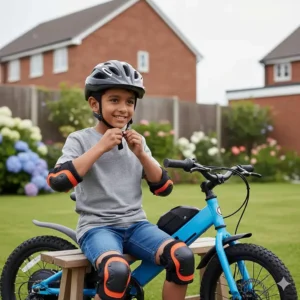
Whilst helmets aren’t legally mandated for EAPCs in the UK, every child riding an electric bike should wear appropriate safety gear. The NHS recommends properly fitted cycle helmets meeting British safety standards (BS EN 1078), along with knee and elbow pads for younger or inexperienced riders.
Consider this essential safety kit:
- Certified cycle helmet (BS EN 1078 standard)
- High-visibility clothing or vest
- Closed-toe shoes with good grip
- Knee and elbow pads (especially for beginners)
- Gloves for better grip and hand protection
Research from British cycling organisations consistently shows that proper safety equipment dramatically reduces injury severity in falls or collisions, making these modest investments absolutely worthwhile.
Choosing the Right Kids Electric Bike: Essential Buying Guide
Selecting the perfect junior electric bicycle involves balancing multiple factors including age appropriateness, safety features, build quality, and realistic budget constraints. Let me guide you through the decision-making process with practical advice drawn from extensive market research.
Age and Size Considerations
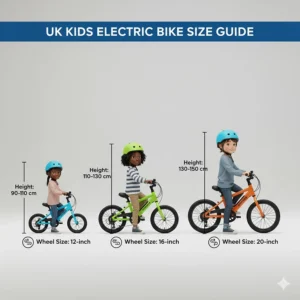
Ages 18 months – 3 years: Focus exclusively on 6V models with four-wheel stability, minimal speeds (2-3 km/h), and simple foot-pedal operation. These aren’t “real” electric bikes but rather motorised ride-on toys that introduce the concept safely.
Ages 3-5 years: Transition to 12V models with training wheels. Look for adjustable speed settings starting around 4-5 km/h maximum. The Storm 12″ and HOMCOM training wheel models exemplify this category perfectly.
Ages 5-8 years: Consider 12V to 24V models without training wheels if your child has mastered balance. The Storm 16″ electric balance bike represents the ideal progression, whilst the Razor MX350 suits adventurous older children in this range.
Ages 8-12 years: Higher-powered 24V models with authentic motorcycle features become appropriate. The HOMCOM 24V and Razor MX350 deliver genuine performance whilst maintaining safety parameters.
Power Output and Battery Specifications
Battery voltage directly correlates with speed and power, but more isn’t necessarily better for younger children. Here’s how different battery configurations perform:
6V Systems: Gentle introduction with 2-3 km/h maximum speed. Runtime approximately 30-45 minutes. Ideal for toddlers and very cautious beginners.
12V Systems: Moderate power delivering 4-8 km/h depending on model. Runtime 20-40 minutes. Perfect sweet spot for ages 3-6 years.
24V Systems: Substantial performance reaching 15-20 km/h. Runtime varies significantly by model (20-60 minutes). Appropriate for experienced riders aged 8+ only.
Charging times typically range from 8-12 hours, so establishing a routine of overnight charging proves most practical. Always use the supplied charger – third-party replacements may damage batteries or create fire hazards.
Safety Features to Prioritise
Beyond obvious elements like speed limiters and emergency brakes, consider these often-overlooked safety aspects:
Speed Governors: Adjustable speed settings allow gradual skill development. Two-stage or three-stage systems (slow/medium/fast) provide excellent flexibility as confidence grows.
Brake Systems: Hand-operated rear brakes suit older children with developed hand strength. Automatic motor cut-off when the throttle releases provides additional safety redundancy.
Stability Features: Training wheels, wide wheel bases, and low centres of gravity all contribute to tip-resistance. Even confident riders benefit from stability-focused design.
Construction Quality: Steel frames outlast plastic alternatives significantly. Check for sharp edges, pinch points, and moving parts that might trap fingers. Shatter-resistant plastic fairings prevent injury from impacts.
Build Quality and Durability
British weather tests outdoor toys mercilessly. Most kids electric bikes specify “dry use only” with water damage voiding warranties – this isn’t manufacturers being difficult, it’s genuine electrical safety concern. Look for bikes with:
- Sealed battery compartments
- Weather-resistant electrical connections
- Rust-resistant metal components
- UV-stable plastics that won’t fade or crack
Reading customer reviews from UK buyers provides invaluable insight into real-world durability. Pay particular attention to comments about battery longevity, as replacement batteries often cost £30-50.
Benefits of Kids Electric Bikes for Development
Electric bikes offer surprising developmental advantages beyond simple entertainment. Understanding these benefits helps justify the investment whilst informing how you integrate them into your child’s activities.
Physical Development and Coordination
Riding even a low-powered electric bike requires continuous balance adjustments, throttle modulation, and spatial awareness. These activities strengthen core muscles, improve proprioception, and develop hand-eye coordination in ways that sedentary screen time simply cannot match.
The progression from training wheels to true balance bikes mirrors natural developmental stages. Children learn cause-and-effect relationships (more throttle equals more speed), develop risk assessment capabilities, and build physical confidence through mastery of increasingly complex skills.
Outdoor Activity and Fresh Air
In an era of excessive screen time, anything encouraging outdoor play deserves celebration. Electric bikes make outdoor activity accessible even for children who find traditional pedal bikes frustrating or exhausting. The motor assistance removes physical barriers whilst maintaining the sensory richness of outdoor experience.
Research from UK universities consistently demonstrates that outdoor play supports mental health, reduces anxiety, and improves sleep quality in children. Electric bikes effectively leverage technology to promote old-fashioned outdoor adventure.
Building Confidence and Independence
Successfully controlling a powered vehicle – however modest – provides tremendous confidence boosts for young children. The sense of independence and capability translates to other areas of life, building self-assurance that benefits social interactions and academic performance.
Starting with heavily supervised, low-speed models and progressively allowing more freedom creates structured confidence-building experiences. Parents report children developing better judgment, increased responsibility, and improved risk assessment through electric bike experience.
Family Bonding Opportunities
Electric bikes create natural opportunities for quality family time. Whether supervising garden rides, organising racing competitions with siblings, or taking bikes to suitable off-road locations, these activities strengthen family bonds through shared experiences and mutual encouragement.
Many families report that electric bike sessions become cherished weekly traditions, with multiple generations participating. Grandparents particularly appreciate that supervising electric bike play doesn’t require the physical exertion of
chasing pedal-bike riders.
Maintenance and Care for Kids Electric Bikes
Proper maintenance extends your electric bike’s lifespan whilst ensuring continued safe operation. Fortunately, these machines require relatively minimal upkeep compared to petrol-powered alternatives.
Battery Care and Charging Best Practices
Battery health determines your electric bike’s long-term viability. Follow these practices to maximise battery life:
Charging Routine: Charge batteries fully after each use, even brief sessions. Partial discharge cycles are preferable to complete depletion. Never leave batteries uncharged for extended periods – monthly top-up charges during winter storage prevent permanent damage.
Storage Conditions: Store batteries in cool, dry locations away from direct sunlight and heat sources. Extreme temperatures (below 0°C or above 30°C) accelerate degradation. Remove batteries from bikes during long-term storage.
Charger Safety: Always use the manufacturer-supplied charger. Third-party alternatives may provide incorrect voltage or current, potentially causing fires or battery damage. Never leave charging batteries unattended overnight or whilst away from home.
Lifespan Expectations: Quality sealed lead-acid batteries typically provide 1-2 years of regular use before noticeable capacity reduction. Lithium batteries (less common in kids bikes) may last 3-4 years but cost significantly more to replace.
Regular Inspection and Cleaning
Weekly visual inspections catch problems before they escalate:
Tyre Condition: Check for adequate inflation (pneumatic tyres) or damage/wear (solid tyres). Properly inflated tyres improve battery range and riding comfort.
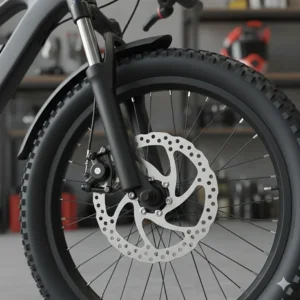
Brake Function: Test brakes before each ride. Ensure proper engagement and release. Adjust or replace worn brake components promptly.
Electrical Connections: Inspect wiring for fraying, loose connections, or exposed conductors. Water ingress around electrical components indicates damage requiring professional attention.
Frame Integrity: Look for cracks, loose bolts, or structural damage. Retighten fasteners periodically – vibration loosens connections over time.
Cleaning Protocol: Wipe down with damp cloths only – never hose down or pressure wash. Avoid getting water near electrical components. Dry thoroughly after any exposure to moisture.
Common Issues and Troubleshooting
Battery Won’t Charge: Verify charger connection and plug socket function. Check battery terminals for corrosion. If recently stored, batteries may require extended initial charging (24 hours) to recover.
Reduced Speed/Power: Typically indicates battery degradation or insufficient charge. Ensure full charge before diagnosing further. Check for mechanical resistance (binding brakes, under-inflated tyres).
Intermittent Operation: Loose electrical connections are the usual culprit. Inspect all wiring harness connections, cleaning terminals if necessary.
Won’t Start: Verify battery charge, power switch position, and any safety interlocks (some models require weight on seat). Check for tripped internal fuses.
Most issues prove straightforward to resolve with basic troubleshooting. However, internal electrical problems should be referred to manufacturers or qualified repair services – tampering voids warranties and creates safety hazards.
Safety Guidelines for Supervised Riding
Establishing clear safety protocols before your child’s first ride creates good habits whilst minimising accident risk. These guidelines reflect best practices from UK safety organisations and experienced parents.
Pre-Ride Safety Checks
Develop a routine safety check performed before every ride:
- Helmet Fitting: Ensure proper fit – two fingers’ width above eyebrows, straps forming “V” under ears, snug but comfortable chin strap.
- Bike Inspection: Quick visual check of tyres, brakes, and obvious damage.
- Battery Confirmation: Verify adequate charge for planned ride duration.
- Riding Area Assessment: Check for obstacles, hazards, and inappropriate surfaces.
- Weather Evaluation: Postpone rides during rain, strong wind, or poor visibility.
Age-Appropriate Supervision Levels
Ages 18 months – 3 years: Constant hands-on supervision within arm’s reach. Rides should occur in enclosed spaces with soft ground surfaces.
Ages 3-5 years: Close visual supervision at all times. Supervisors should be able to reach the child within 2-3 seconds if intervention becomes necessary.
Ages 5-8 years: Active supervision with supervisors remaining in the immediate area. Established, trusted riders may operate with slightly more freedom but should remain within direct line of sight.
Ages 8-12 years: Situational supervision depending on demonstrated maturity and experience. Some children may earn supervised riding privileges in larger areas, though periodic check-ins remain essential.
Never allow children to ride unsupervised regardless of age. Accidents occur rapidly, and immediate adult response often prevents minor incidents escalating.
Teaching Proper Riding Techniques
Effective instruction accelerates skill development whilst instilling safety consciousness:
Starting and Stopping: Teach gradual throttle application and release. Emphasise smooth movements rather than abrupt inputs. Practice emergency stops in controlled conditions.
Turning and Steering: Begin with wide, gentle turns before progressing to tighter manoeuvres. Explain looking in the direction you want to go.
Obstacle Avoidance: Set up simple obstacle courses encouraging planned route selection rather than reactive dodging.
Speed Management: Help children understand appropriate speeds for different conditions. Emphasise slowing before turns, rough surfaces, or confined spaces.
Spatial Awareness: Teach children to constantly scan surroundings for people, pets, and hazards. Explain maintaining safe separation distances.
Establishing Riding Boundaries
Clear boundaries prevent confusion and promote responsible behaviour:
Physical Boundaries: Use cones, markers, or natural features to define approved riding areas. Explain consequences for exceeding boundaries (immediate ride termination, temporary loss of riding privileges).
Time Limits: Establish maximum ride durations accounting for attention span and battery capacity. Younger children benefit from 15-20 minute sessions; older children might manage 30-45 minutes.
Conditions Restrictions: No riding during rain, on wet surfaces, in darkness, or during strong wind. These aren’t arbitrary rules – they reflect genuine safety imperatives.
Behavioural Standards: No reckless riding, deliberate rule-breaking, or riding too close to others. Immediate consequences for dangerous behaviour reinforce seriousness.
Comparing Electric Bikes vs Traditional Alternatives
Understanding how electric bikes stack up against conventional options helps clarify whether they represent the right investment for your family.
| Feature | Kids Electric Bike | Pedal Balance Bike | Traditional Training Wheels | Kick Scooter |
|---|---|---|---|---|
| Age Suitability | 18 months – 12 years (varies by model) | 2-5 years typically | 3-7 years typically | 3+ years |
| Physical Effort | Minimal (motor-assisted) | Moderate (gravity/pushing) | High (pedalling required) | Moderate (kicking) |
| Skill Development | Throttle control, balance (advanced models) | Pure balance focus | Pedalling, balance (partially) | Balance, coordination |
| Outdoor Range | Limited by battery (20-60 mins) | Unlimited by fatigue | Unlimited by fatigue | Unlimited by fatigue |
| Initial Cost | £79-£399 | £40-£150 | £50-£200 | £30-£150 |
| Running Costs | Electricity (negligible) + battery replacement (£30-50 every 1-2 years) | None | None | None |
| Maintenance | Moderate (battery care, electrical systems) | Minimal (tyres, frame) | Moderate (chain, brakes, tyres) | Minimal (wheels, bearings) |
| Storage Requirements | Moderate space, dry conditions essential | Minimal space | Moderate space | Minimal space |
| Cool Factor | Very high with children | Moderate | Low (seen as “baby bikes”) | Moderate-high |
| Progression Path | Natural advancement to motorcycles/scooters | Transitions to pedal bikes | Transitions to two-wheel pedal bikes | Complements other options |
When Electric Bikes Make Most Sense
Electric bikes particularly suit families where:
Physical Limitations Exist: Children with coordination challenges, mild disabilities, or reduced stamina can participate in outdoor activities alongside peers.
Space Availability: Access to gardens, driveways, or private outdoor areas where legal riding occurs easily.
Motorcycle Interest: Children show fascination with motorcycles, making electric bikes more engaging than pedal alternatives.
Multi-Child Families: Older children can supervise younger siblings’ rides, creating shared activities across age ranges.
Value Outdoor Activity: Families prioritising outdoor play over screen time find electric bikes effectively motivate reluctant children.
When Alternative Options Might Be Better
Consider traditional alternatives if:
Budget Constraints: Initial costs and battery replacement expenses strain finances. Quality pedal bikes or scooters provide excellent value.
Limited Suitable Space: Apartment living or urban environments without private outdoor areas make legal riding impractical.
Preference for Physical Activity: Parents specifically wanting vigorous physical exercise should opt for pedal-powered options.
Environmental Concerns: Battery disposal and electricity consumption conflict with environmental values (though impact remains modest).
Simplicity Priority: Families wanting zero-maintenance outdoor toys benefit from traditional options’ reliability.
Environmental Considerations and Sustainability
Electric bikes represent more environmentally friendly options than petrol-powered alternatives, but they’re not impact-free. Understanding the environmental implications helps make informed, values-aligned decisions.
Energy Consumption and Carbon Footprint
Charging a typical 12V kids electric bike battery consumes approximately 0.15-0.2 kWh per full charge. At current UK electricity rates and carbon intensity, this translates to roughly 30-40 grams of CO2 per charge – equivalent to driving a car about 200 metres.
Over a bike’s typical lifespan (2-3 years), total electrical consumption remains under 25 kWh, producing perhaps 5-6 kg of CO2 equivalent. For perspective, this equals one or two tank fills for a family car, or a handful of short drives to traditional outdoor activity venues.
Families with home solar panels can achieve genuinely zero-carbon charging, and the UK’s increasingly renewable electricity grid continuously reduces operational carbon impact.
Battery Disposal and Recycling
Battery disposal represents the most significant environmental consideration. Most kids electric bikes use sealed lead-acid (SLA) batteries, which contain toxic materials requiring responsible disposal.
Proper Disposal Methods:
- Return to retailers offering battery recycling programmes
- Take to local household waste recycling centres
- Use specialist battery collection services
Never dispose of batteries in general household waste. Lead contamination poses serious environmental and health risks. Lithium batteries (less common in kids bikes) also require specialist recycling due to fire risks and resource recovery opportunities.
The UK maintains extensive battery recycling infrastructure. According to government guidance, virtually all battery materials can be recovered and reused, significantly mitigating environmental impact when disposed of correctly.
Comparing to Petrol-Powered Alternatives
Electric kids bikes dramatically outperform petrol mini-bikes environmentally:
Emissions: Zero direct emissions versus significant CO2, NOx, and particulates from combustion.
Noise Pollution: Virtually silent operation versus loud engines disturbing neighbourhoods.
Fuel Efficiency: Electricity costs approximately £0.05-0.10 per “fill” versus several pounds for petrol.
Maintenance Waste: No oil changes, spark plugs, air filters, or fuel system maintenance generating waste.
For families considering whether to opt for electric or petrol-powered kids bikes, environmental advantages decisively favour electric models.
Budget Planning and Value Analysis
Electric bikes span wide price ranges. Understanding what drives costs and how to maximise value helps optimise your investment.
Price Tier Breakdown
Entry Level (£79-£129): Basic 6V models for toddlers. Simple features, plastic construction, minimal performance. Suitable for determining interest before major investment.
Mid-Range (£130-£199): Quality 12V models with decent features. Represents best value for most families – adequate performance without premium pricing.
Premium (£200-£299): High-specification 24V models or quality balance bikes. Superior components, better performance, enhanced durability justify higher costs for committed families.
Specialist (£300-£400): Top-tier balance bikes like Storm models. Premium construction, authentic motorcycle experience, extended lifespan. Investment-grade products for serious enthusiasts.
Cost-Per-Use Analysis
Consider expected usage frequency and lifespan:
Light Use (1-2 times weekly): Entry-level or mid-range models provide adequate value. Annual usage approximately 50-100 sessions, with 1-2 year lifespan.
Regular Use (3-5 times weekly): Mid-range to premium models justified. Annual usage 150-250 sessions, rewarding quality investment.
Intensive Use (daily/multiple children): Premium or specialist models essential. Superior durability offsets higher initial costs through extended service life.
Calculate cost-per-use by dividing total investment (purchase + battery replacements) by expected usage sessions. Mid-range quality bikes typically achieve £1-£3 per session – excellent value compared to commercial entertainment alternatives.
Hidden Costs to Consider
Battery Replacement: Budget £30-50 every 1-2 years depending on usage intensity.
Safety Equipment: Quality helmet (£25-50), pads (£15-30), visibility gear (£10-20) add £50-100 to initial outlay.
Storage Solutions: Weather-protected storage sheds or covers (£30-100) if you lack covered outdoor storage.
Transport: Roof racks, car storage solutions, or protective padding for transporting bikes to suitable riding locations.
Charging Costs: Negligible (perhaps £5-10 annually) but technically present.
Maintenance Supplies: Occasional replacement parts (tyres, brake components) might add £20-40 annually for intensively used bikes.
✨ Ready to Make Your Choice?
💡 Compare prices across multiple retailers to find the best deals. Amazon.co.uk often offers competitive pricing with convenient Prime delivery for families. Remember to factor in total ownership costs, not just sticker price, when making your final decision.
Frequently Asked Questions
❓ Can a child under 14 ride an electric bike legally in the UK?
❓ How long does a kids electric bike battery typically last?
❓ Are kids electric bikes safe for young children?
❓ What's the difference between electric balance bikes and traditional pedal bikes?
❓ How much does it cost to charge a kids electric bike in the UK?
Conclusion: Making Your Kids Electric Bike Decision
Choosing the right kids electric bike requires balancing multiple considerations – your child’s age and ability, available space, budget constraints, and long-term usage expectations. Throughout this comprehensive guide, we’ve explored the UK market’s top seven options, each excelling in different scenarios.
For families with younger children taking their first motorised steps, the HOMCOM 6V Toddler Motorbike (£79-99) or HOMCOM 12V Training Wheel Bike (£129-159) provide gentle, affordable introductions with exceptional safety features. These entry-level options let you gauge interest before committing to premium models.
Mid-range buyers seeking genuine quality without breaking the bank will find excellent value in the HOMCOM 24V Electric Motorbike (£189-229) or Razor MX350 Dirt Rocket (£249-299). Both deliver authentic performance, proven durability, and features that justify their pricing through extended service lives.
Families committed to the electric balance bike journey and willing to invest in premium quality should seriously consider the Storm 12″ Electric Balance Bike (£279-299) or its bigger sibling, the Storm 16″ model (£389). These British-designed machines represent the market’s gold standard for build quality, aesthetics, and progressive skill development.
Remember that legal restrictions limit where children under 14 can ride – private land only – making access to suitable spaces essential before purchasing. Always prioritise safety through proper equipment, close supervision, and age-appropriate model selection.
The supervised riding ebike market continues evolving rapidly. What seemed futuristic just years ago now represents mainstream outdoor entertainment. These machines effectively leverage technology to promote traditional outdoor play, build confidence, and create treasured family memories.
Whatever model you choose, consistent supervision, gradual skill development, and enthusiasm for your child’s progress will determine success far more than any specific product feature. Start conservatively, progress gradually, and enjoy watching your child’s confidence blossom through mastery of their electric bike.
Here’s to countless hours of outdoor adventure, massive grins, and memories you’ll both cherish for years to come.
Recommended for You
- 7 Best Electric Bike for Heavy Person UK 2026 | 180kg+ Capacity
- 7 Best Step Through Electric Bikes UK 2026
- 7 Best Electric Mountain Bike Under £2000 | UK Guide 2026
Disclaimer: This article contains affiliate links. If you purchase products through these links, we may earn a small commission at no additional cost to you. Prices shown are approximate and may vary.
✨ Found this helpful? Share it with your mates! 💬🤗
