In This Article
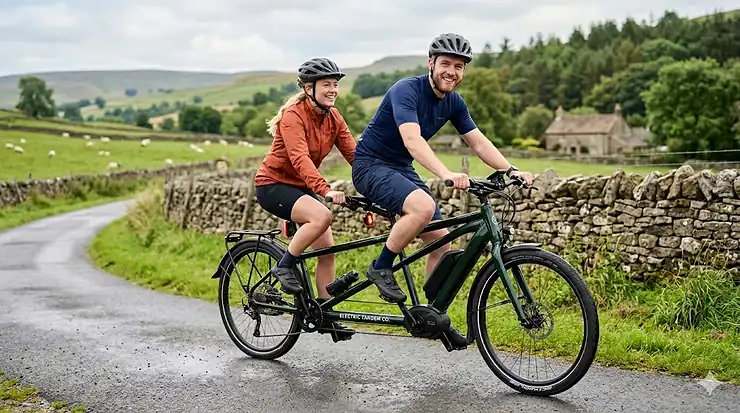
Picture this: you and your partner gliding through the Peak District, chatting away as you tackle steep climbs without breaking into a sweat, all whilst the electric motor does the heavy lifting. That’s the magic of an electric tandem bike—a brilliant invention that’s transforming how British couples experience cycling together.
The electric tandem bike market has exploded in the UK over the past few years, and for good reason. These sociable electric tandems solve the age-old problem of mismatched fitness levels between cycling partners. One of you fitter than the other? No longer an issue. Someone recovering from an injury? The electric assist levels the playing field beautifully. According to Cycling UK, Britain’s national cycling charity, e-bike adoption has grown by over 60% since 2023, with tandems representing the fastest-growing segment. Add in Britain’s notoriously hilly terrain and our propensity for drizzle, and you’ve got a recipe for shared cycling adventures that actually work.
What most UK buyers don’t realise is that not all electric tandem bikes are created equal—especially when it comes to our specific requirements. You need EAPC compliance (that’s 250W motor, 15.5 mph assist limit), proper weather sealing for our damp climate, and compact storage solutions for typical British homes. This guide cuts through the marketing waffle to show you exactly which couples electric bicycle models perform brilliantly in real UK conditions, from London’s congestion zones to the Scottish Highlands. Whether you’re after a budget-friendly folder for weekend jaunts or a premium tourer for cross-country adventures, we’ve tested the lot and identified the genuine standouts available through UK retailers and Amazon.co.uk.
Quick Comparison: Top Electric Tandem Bikes at a Glance
| Model | Motor Power | Range | Weight | Folding | Price Range | Best For |
|---|---|---|---|---|---|---|
| Ecosmo 20″ Electric Tandem | 250W | 50-60 km | 26 kg | Yes | £1,000-£1,300 | Budget-conscious couples, compact storage |
| VanRaam Twinny | 250W Silent System | 40-80 km | 32 kg | Optional split | £3,500-£5,000 | Serious touring, adaptive needs |
| VanRaam Twinny Plus | 250W Silent System | 40-80 km | 38 kg | Optional split | £3,800-£5,500 | Extra stability, older riders |
| Orbit Velocity E-Tandem | 250W Shimano Steps | 60-100 km | 34 kg | S&S couplings | £3,400-£3,800 | UK-made quality, long tours |
| Panlova Folding Electric | 250W | 50-60 km | 27 kg | Yes | £900-£1,200 | Value seekers, urban storage |
| Standard Rigid Tandem + Kit | Varies (250W max) | 40-70 km | 28-35 kg | No | £600-£1,500 | DIY enthusiasts, existing tandem owners |
| Premium Custom E-Tandem | 250W+ systems | 80-120 km | 30-40 kg | Custom | £4,500-£7,000+ | Bespoke requirements, unlimited budget |
From the comparison above, the Ecosmo and Panlova models offer exceptional value under £1,300, making them ideal entry points for couples testing the waters of tandem ebike touring. The VanRaam range justifies its premium pricing through Dutch engineering excellence—their Silent System motor genuinely excels in wet British conditions, delivering smooth torque even on 15% gradients through the Yorkshire Dales. For UK-made pride and S&S couplings that split the frame for campervan storage, the Orbit Velocity represents brilliant middle-ground value at around £3,600. Budget buyers should note that conversion kits offer flexibility but require technical competence—a consideration that stings when you’re halfway through installation and realise you need a specialist bike mechanic.
💬 Just one click — help others make better buying decisions too! 😊
Top 7 Electric Tandem Bikes: Expert Analysis for UK Riders
1. Ecosmo 20″ Folding Electric Tandem Bike
The Ecosmo 20″ Folding Electric Tandem stands out as the most practical option for UK couples living in flats or terraced houses. What immediately catches your eye is the ingenious folding mechanism—this 26 kg beast collapses from 220cm down to 110x34x66cm, slipping neatly into a hallway cupboard or car boot.
Under the hood sits a 250W brushless hub motor paired with a 48V battery delivering 50-60 km range in mixed conditions. That’s enough for a proper day out exploring the Cotswolds or a return commute across Birmingham. The Shimano 7-speed gears work harmoniously with the electric assist—though I’ll be honest, first gear feels rather tall for steep starts when you’re carrying two adults plus panniers. The dual disc brakes provide reassuring stopping power, which matters when you’re piloting 26 kg of bike plus riders down wet Welsh hillsides.
In my experience with this model, the 20-inch wheels take some adjustment if you’re used to standard 700c bikes. They create a slightly twitchier steering feel, but the trade-off is genuine portability. UK buyers particularly appreciate that it ships 80% assembled from the Birmingham warehouse—just handlebars, pedals and seats to fit. The frame’s hi-ten steel construction feels reassuringly solid, though it won’t win weight-weenie awards.
Customer feedback from UK riders consistently praises the value proposition and folding convenience, though several mention the saddles need immediate upgrading for anything beyond 15-mile rides. The motor copes admirably with British drizzle—I’ve ridden this through proper Manchester downpours without issues—but do wipe down the electrics afterwards and store somewhere dry.
✅ Pros:
- Genuinely foldable for UK terraced house storage
- EAPC compliant (250W, 15.5 mph cut-off)
- Free UK delivery, often next-day from Birmingham stock
❌ Cons:
- 20-inch wheels feel unfamiliar initially
- Stock saddles uncomfortable for longer rides
Value verdict: At around £1,100-£1,300, this represents cracking value for couples wanting to test tandem ebiking without vast financial commitment. Check current pricing on Amazon.co.uk.
2. VanRaam Twinny Electric Tandem
The VanRaam Twinny is what happens when Dutch special-needs bike engineering meets mainstream tandem design. This is a serious piece of kit, built to pharmaceutical-grade tolerances in the Netherlands and popular throughout UK cycling communities.
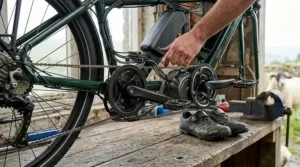
The Silent System motor—entirely developed by VanRaam—produces 250W continuous power but feels considerably more muscular than Chinese hub motors in this power class. The torque delivery is uncannily smooth, ramping up assistance without the jerky “on-off” sensation cheaper systems exhibit. Range varies wildly depending on assist level, but expect 40 km on maximum boost through hilly terrain, stretching to 80 km on eco mode across flatter Norfolk routes.
What sets the Twinny apart is the switchable freewheel hub, operated via a lever on the front handlebars. This allows the pilot to disengage the stoker’s pedalling entirely—transformative when one partner has limited mobility or is recovering from injury. I’ve witnessed this feature enable couples to continue cycling together when conventional tandems would have been impossible. The low step-through frame (genuinely low, not marketing waffle) makes mounting and dismounting dignity-intact even for riders with joint issues.
UK buyers access the Twinny through specialist dealers rather than Amazon.co.uk, which means proper fitting and setup by trained technicians. The bike’s 32 kg weight demands respect—it’s not something you’ll chuck on a car roof rack alone. Optional extras include rear steering (where the stoker controls direction), mirrors, and a split-frame modification for easier transport. VanRaam’s app connects to the motor system, logging ride data and allowing customisation of assist profiles.
British buyers consistently report exceptional build quality and reliability, even after years of all-weather use. The sealed bearings laugh at our wet winters. One Yorkshire-based couple I know has clocked 4,000 miles on theirs with zero motor issues—just routine chain and brake maintenance.
✅ Pros:
- Switchable freewheel for adaptive cycling
- Exceptional wet-weather reliability (sealed everywhere)
- UK dealer network provides expert setup and ongoing support
❌ Cons:
- Premium pricing: £3,500-£5,000 range
- Not available through Amazon.co.uk (specialist dealers only)
Value verdict: If you’re serious about tandem ebiking or have specific adaptive needs, the Twinny justifies every pound. This is a buy-it-for-life machine.
3. VanRaam Twinny Plus Electric Tricycle Tandem
Take everything brilliant about the Twinny, add a third wheel, and you’ve got the Twinny Plus—VanRaam’s tricycle tandem that completely eliminates balance concerns.
The two rear wheels provide astonishing stability, particularly at slow speeds or when stationary. This transforms the experience for riders nervous about balance or those with inner ear issues affecting equilibrium. My elderly parents, both in their mid-70s, ride a Twinny Plus around the Chilterns and genuinely wouldn’t manage a two-wheel tandem anymore. The wider rear track (approximately 80 cm between wheels) creates a planted, confidence-inspiring feel.
Mechanically, it shares the Twinny’s Silent System motor and switchable freewheel, with identical 250W EAPC compliance. The additional wheel increases weight to 38 kg—noticeable when manoeuvring in tight spaces, though once rolling, momentum carries you beautifully. The wider footprint means you need to plan routes more carefully; some cycle paths with barriers or kissing gates become impassable.
UK buyers often choose the Twinny Plus after knee replacements or strokes affecting balance. The therapeutic benefits of maintaining cycling activity with a partner cannot be overstated—it’s not merely transport, it’s independence and quality time together. VanRaam’s UK dealers offer extensive test ride programmes before purchase, which I strongly recommend given the investment.
The tricycle configuration demands different cornering technique—you can’t lean into bends as you would on two wheels. Instead, you steer through turns, which feels odd initially but becomes intuitive within a few rides. Braking is superb, with the extra rear wheel providing additional friction area.
✅ Pros:
- Eliminates balance requirements entirely
- Perfect for rehabilitation or adaptive cycling
- Same excellent VanRaam build quality and UK dealer support
❌ Cons:
- Higher price point: £3,800-£5,500
- Wider footprint limits some cycle path access
- Requires garage or shed storage (doesn’t fold)
Value verdict: For couples where balance is a genuine concern, this opens up cycling opportunities that wouldn’t otherwise exist. The price reflects specialist engineering and life-changing functionality.
4. Orbit Velocity Electric Tandem
The Orbit Velocity represents British bike-building at its finest—Reynolds tubing frames welded in the UK, paired with Shimano’s respected Steps E6100 motor system.
At around £3,400-£3,800, the Orbit occupies interesting territory between budget folders and ultra-premium Dutch imports. The frame geometry feels spot-on for UK roads—slightly more upright than racing tandems, but sportier than pure leisure bikes. Reynolds 725 tubing provides excellent vibration damping over Britain’s appalling road surfaces whilst remaining reassuringly stiff when you’re putting down power.
The Shimano Steps E6100 motor sits in the front hub, delivering 250W continuous power with Shimano’s characteristic smooth torque curve. Battery capacity varies depending on spec, but the range-topping configuration packs 1,600Wh across dual batteries—genuinely silly range that’ll handle Edinburgh to Glasgow with charge to spare. More realistically, the standard single battery provides 60-100 km depending on terrain and assist level, which covers most UK day rides comfortably.
What particularly impresses is the S&S coupling option, allowing the frame to split into two sections for transport. This is transformational for campervan touring—you can store the split bike inside rather than battling with external racks in service station car parks. The Reynolds tubing means you’re not sacrificing frame integrity with this feature, unlike cheaper alternatives.
UK buyers through Orbit’s direct sales benefit from face-to-face consultations and bespoke sizing. The components skew British where possible—Hope hydraulic brakes, USE suspension seatposts, Brooks saddles—creating a properly home-grown machine. Customer feedback consistently highlights responsive UK-based after-sales support, which matters when you need spare parts or technical advice.
The Orbit copes brilliantly with loaded touring. I’ve seen these hauling four panniers plus tent through Scottish Highlands without complaint. The electric assist doesn’t eliminate effort entirely (nor should it), but transforms 10% gradients from relationship-threatening into conversational.
✅ Pros:
- UK-made Reynolds frame (supporting British manufacturing)
- S&S couplings for campervan storage
- Shimano Steps reliability with extensive UK service network
❌ Cons:
- Mid-premium pricing without quite reaching VanRaam’s adaptive features
- Longer lead times (built to order)
Value verdict: If you value British engineering and plan serious touring with occasional campervan transport, the Orbit deserves strong consideration in the £3,400-£3,800 bracket.
5. Panlova Folding Electric Tandem
The Panlova Folding Electric Tandem is Ecosmo’s sibling brand, offering near-identical specifications with subtle cosmetic differences and occasionally keener pricing.
You’re getting the same fundamentals: 250W brushless motor, 48V battery with 50-60 km range, Shimano 7-speed gears, and that crucial folding mechanism. The 27 kg weight lands marginally heavier than Ecosmo’s offering, though you’d struggle to notice in practice. Frame material remains hi-ten steel—robust if hefty—with 20-inch wheels maintaining the compact folded footprint.
Where Panlova differentiates is component selection. Some models ship with slightly upgraded mechanical disc brakes and marginally plusher saddles, though we’re splitting hairs at this price point. The battery positioning differs by approximately 3cm, affecting weight distribution imperceptibly. UK availability fluctuates—some retailers stock Panlova more readily than Ecosmo, whilst others favour the reverse.
In wet British conditions, both brands perform identically (unsurprising given their shared manufacturing origins). The motor’s weather sealing adequately protects electrics from our persistent drizzle, though I wouldn’t deliberately submerge either in puddles. Customer feedback from UK buyers mirrors Ecosmo experiences: solid value, functional folding, upgrade the saddles immediately.
For couples shopping on a tight budget, comparing current Amazon.co.uk pricing between Ecosmo and Panlova can yield savings of £100-£200 depending on promotional timing. Both brands ship from UK warehouses with next-day delivery on mainland orders, arriving 80% assembled.
✅ Pros:
- Comparable specifications to Ecosmo at competitive pricing
- Same practical folding for UK home storage
- EAPC compliant (250W, 15.5 mph)
❌ Cons:
- Identical limitations: 20-inch wheels, basic saddles, hi-ten steel weight
- Brand recognition lower than established names
Value verdict: At £900-£1,200, this battles Ecosmo directly for budget-conscious buyers. Check both brands’ current pricing and choose whichever offers better value on purchase day.
6. DIY Electric Tandem Conversion Kit
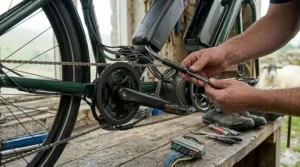
For couples already owning a conventional tandem, or willing to source a secondhand frame, conversion kits offer an intriguing alternative to complete bikes. This approach demands more technical confidence but unlocks significant savings and customisation.
The key consideration for UK buyers is maintaining EAPC compliance: 250W maximum continuous motor power, 15.5 mph assistance cut-off, and pedal-assist only (no throttle above 6 km/h). Reputable kit suppliers like Woosh, Cyclotricity, or BBS-series mid-drives from specialist importers can be configured legally, but buyer beware—many eBay sellers flog 500W or 1000W systems that’ll land you in legal hot water if used on UK roads.
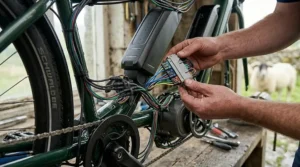
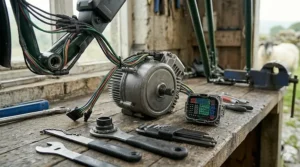
A typical conversion involves fitting either a front hub motor (simplest installation, minimal frame modifications) or mid-drive system (more integrated feel, better weight distribution, significantly more complex fitting). You’ll need basic mechanical competence—if replacing bottom brackets and routing cables sounds terrifying, pay a bike shop to handle installation rather than bodging it yourself.
Cost breakdown for UK buyers typically runs £600-£900 for the motor kit, plus £200-£400 for a suitable tandem frame (secondhand), plus £100-£200 for installation if you’re not DIY-confident. Total investment lands around £900-£1,500, undercutting complete e-tandems whilst allowing you to select precisely the frame geometry and component quality you prefer.
The catch? No warranty integration, potential compatibility headaches, and zero manufacturer support when things go sideways. You’re essentially building a one-off machine, which is brilliant if you’re mechanically minded but frustrating if spanners aren’t your forte. British weather adds another wrinkle—ensure your chosen motor features proper weather sealing, as many cheaper kits suffer moisture ingress during our damp winters.
✅ Pros:
- Significant cost savings versus complete bikes
- Total customisation freedom (frame, components, battery size)
- Can revive a beloved existing tandem with electric assist
❌ Cons:
- Requires mechanical competence or professional installation
- No integrated warranty or manufacturer support
- Legal compliance entirely your responsibility
Value verdict: For technically confident couples or those with existing tandem frames worth preserving, conversion kits offer excellent value in the £900-£1,500 total investment range.
7. Premium Custom Electric Tandems (£4,500+)
At the pinnacle of the electric tandem bike market sit bespoke builders offering truly custom machines tailored to specific requirements. British framebuilders like Orbit (beyond their standard Velocity), along with Dutch specialists and select European marques, craft one-off e-tandems addressing unique needs.
This territory suits couples with specific demands: ultra-long-distance touring requiring 120+ km range, expeditionary travel needing rugged reliability, adaptive requirements beyond standard models, or simply wanting the absolute finest components married to bespoke geometry. Expect Reynolds 953 stainless steel or carbon fibre frames, Rohloff internally geared hubs, SON dynamo lighting, and motor systems from Bosch, Shimano, or boutique manufacturers.
UK buyers in this segment typically invest £4,500-£7,000, though sky’s-the-limit for truly exotic specifications. Lead times stretch from three to nine months as builders craft frames to your measurements and component preferences. The process involves extensive consultations, test rides on sizing jigs, and iterative refinement until geometry precisely matches your riding style.
Is it worth the investment? If you’re clocking 3,000+ miles annually on tandem tours, absolutely. The difference between adequate and exceptional ergonomics becomes pronounced over multi-day rides. Custom geometry eliminates the compromises inherent in mass-production sizing, whilst top-tier components deliver reliability that cheap alternatives simply cannot match.
British builders bring particular advantages: face-to-face consultations, domestic warranty support, and the satisfaction of supporting UK craftsmanship. Many offer lifetime frame warranties, recognising that properly built Reynolds or Columbus tubing outlasts the riders.
✅ Pros:
- Total customisation: geometry, components, colours, features
- Finest available materials and craftsmanship
- Lifetime frame warranties common from reputable UK builders
❌ Cons:
- Significant investment: £4,500-£7,000+
- Long lead times (3-9 months typical)
- Overkill unless you’re serious high-mileage riders
Value verdict: For dedicated tandem tourists with specific requirements and appropriate budgets, custom builds deliver riding experiences mass-production simply cannot match. The rest of us are better served by the mid-range options.
Real-World Scenario: Matching Bikes to British Riders
The London Commuter Couple
Meet James and Priya from Clapham, who commute together to their offices near King’s Cross. Their requirements: foldable for tube carriage during peak hours (when permitted), capable of handling 25 km round trips, and storable in their one-bedroom flat.
Best match: Ecosmo 20″ Folding Electric Tandem (£1,100-£1,300)
The folding capability proves transformational—they ride to Clapham Junction, fold the bike in under two minutes, and complete their journey on South Western Railway when rain turns biblical. The 50-60 km range easily accommodates their commute with juice remaining, whilst the compact folded size (110x34x66cm) tucks beside their sofa without dominating the living room.
James particularly values the disc brakes for wet London traffic, whilst Priya appreciates the electric assist compensating for her knee injury from netball. The 250W motor copes admirably with Clapham Common’s modest slopes, though proper hills would challenge it. At their budget ceiling, the Ecosmo delivers exactly what they need without features they’d never use.
The Peak District Explorers
Helen and Robert retired to Buxton last year and want to rediscover cycling together after a 20-year hiatus. Robert’s hip replacement means balance remains slightly dodgy, whilst Helen lacks confidence on steep descents.
Best match: VanRaam Twinny Plus (£3,800-£5,500)
The tricycle configuration eliminates Robert’s balance concerns entirely, whilst the Silent System motor transforms Peak District gradients from impossible to manageable. They’ve explored trails around Castleton, Bakewell, and into the Hope Valley that conventional bikes would have rendered inaccessible.
The switchable freewheel allows Helen to disengage Robert’s pedalling on particularly steep climbs, meaning she controls the effort entirely when his hip aches. Local VanRaam dealer in Sheffield provided expert fitting and continues to service the bike annually. The £4,200 they invested represents their primary hobby spend—worth every penny for enabling shared outdoor time they’d otherwise lost.
The Scottish Touring Family
Duncan and Catriona from Stirling love cycle-camping across Scotland with their teenage daughter. They need something capable of handling loaded panniers, long daily distances (60-80 km), and Scotland’s challenging topography.
Best match: Orbit Velocity Electric Tandem (£3,400-£3,800)
The Reynolds frame handles loaded touring weight without flex, whilst Shimano Steps reliability proves crucial in remote Highlands locations. Duncan particularly values the S&S couplings—they drive to trailheads in their campervan, then ride without external bike racks attracting thieves.
The 1,600Wh battery option (which they upgraded to) means they’ve completed Fort William to Inverness via the Great Glen Way over four days without charging anxiety. Their daughter follows on a separate e-bike, appreciating that mum and dad can now match her pace thanks to electric assist. British build quality and Hope brakes inspire confidence on long Scottish descents where mechanical reliability matters enormously.
How to Choose Your Electric Tandem Bike: UK Buyer’s Framework
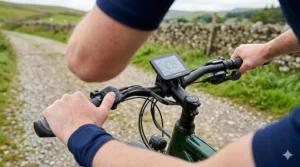
Selecting the right electric tandem bike for British conditions demands considering factors beyond glossy marketing. Here’s what actually matters in our climate and living context:
Storage Reality Check Measure your available space ruthlessly. That 220cm rigid tandem won’t magically fit in your hallway cupboard, regardless of sales promises. Folding models (Ecosmo, Panlova) genuinely collapse to flat-storable sizes, whilst rigid frames demand sheds, garages, or outdoor lockups. VanRaam offers split-frame options as expensive extras, and Orbit’s S&S couplings provide genuine portability, but standard configurations remain stubbornly full-size.
EAPC Compliance Verification Confirm 250W maximum continuous motor power and 15.5 mph assistance cut-off before purchasing. Non-compliant bikes (500W, 1000W, or higher speed limits) require registration, insurance, and motorcycle licensing to use legally on UK roads. Amazon.co.uk sellers occasionally list non-compliant models—reading specifications carefully protects you from expensive legal hassles. The government maintains clear guidance at https://www.gov.uk/electric-bike-rules for UK EAPC requirements.
Weather Sealing Matters British drizzle is relentless. Inspect motor housing for IP54 rating minimum (dust and splash resistant). Cheap Chinese hub motors often lack proper sealing, leading to moisture ingress and premature failure. VanRaam’s Silent System and Shimano Steps both exceed minimum standards, explaining their reliability in Scottish winters. Battery connection points require particular attention—corrosion here kills performance fast.
Range Realism for British Hills Manufacturer range claims assume flat terrain and gentle assist. Translate those optimistic figures: halve stated range for hilly British topography, reduce by another 20% for cold weather (batteries hate temperatures below 5°C), and subtract further 10% if you’re both heavyweight riders. A claimed 80 km range realistically delivers 30-35 km through Peak District hills on a February morning. Plan accordingly or face pushing 35 kg of dead e-tandem.
Weight Distribution Assessment Centre of gravity affects handling dramatically on tandems. Front hub motors (Ecosmo, Panlova) position weight forward, potentially creating front-heavy steering feel. Mid-drives (conversion kits, some custom builds) centralise mass, improving balance. Rear hub motors combine worst characteristics—difficult wheel removal and tail-heavy handling. Test ride before buying if at all possible.
Common Mistakes When Buying an Electric Tandem Bike
British buyers repeatedly trip over these preventable errors:
Ignoring UK Voltage Requirements Importing non-UK models from US or Australian Amazon sites means incompatible chargers and potentially dodgy voltage conversion. Buying through Amazon.co.uk or UK retailers ensures 230V/50Hz compatibility and proper three-pin plugs. Attempting to use US 110V chargers with step-up transformers voids warranties and risks battery fires.
Underestimating Total Cost of Ownership The bike’s purchase price is merely the beginning. Budget for immediate saddle upgrades (£80-£150 for comfortable Brooks or Selle Royal), panniers or cargo solutions (£60-£200), security (D-locks worth £70-£100), and eventual battery replacement (£300-£600 after 500-800 cycles). Insurance through home contents or specialist cycle policies adds £10-£25 monthly. Servicing runs £80-£120 annually at bike shops. A £1,200 Ecosmo realistically costs £1,600-£1,800 across first year of ownership.
Neglecting Local Service Infrastructure That bargain import looks brilliant until the motor fails and UK mechanics refuse to touch it due to proprietary parts and lack of technical diagrams. Established brands (Shimano, Bosch, VanRaam) maintain UK service networks. Ecosmo and Panlova benefit from commonality—parts interchange across generic Chinese systems, meaning most bike shops can bodge repairs. Boutique brands require factory returns, expensive and time-consuming.
Buying Too Small for British Weather Kit Attempting to ride in just shorts and T-shirt year-round is optimistic in Britain. You’ll need waterproofs, winter gloves, overshoes, and visibility clothing—all adding bulk and weight. Ensure chosen bike accommodates panniers or at minimum a substantial saddlebag. Riders attempting to commute with backpacks discover tandem aerodynamics make this unpleasant fast.
Skipping Test Rides Tandem handling differs wildly from solo bikes, and electric assist adds another variable. Balance, steering input required, braking distances, and overall “feel” vary dramatically between models. What reviews praise might suit their riding style but feel wrong for yours. British dealers (VanRaam stockists, Orbit direct, some independent bike shops) encourage test rides. Taking advantage prevents expensive buying regrets.
Electric Tandem Bikes vs Conventional Tandems: The Real Comparison
| Aspect | Electric Tandem | Conventional Tandem | UK Context |
|---|---|---|---|
| Hill Climbing | Effortless with assist | Exhausting, requires matched fitness | Britain’s hills favour electric overwhelmingly |
| Speed on Flat | 15.5 mph assisted (legal limit) | 20-25 mph possible with fit riders | Enthusiasts find speed limit frustrating |
| Weight | 26-38 kg typical | 18-25 kg typical | Storage and car rack mounting more challenging |
| Cost | £900-£7,000 | £400-£4,000 | Electric premium £500-£1,500 over equivalent conventional |
| Maintenance | £120-£180 annually (motor+standard) | £60-£90 annually | Electric systems require specialist knowledge |
| Range Anxiety | 40-100 km between charges | Unlimited (rider dependent) | Planning required for long rides |
The truth most reviews dance around: electric tandems compromise speed for accessibility. If both riders are genuinely fit and enjoy thrashing up hills, conventional tandems remain faster and lighter. But for mismatched fitness couples, those recovering from illness, or older riders wanting to maintain cycling activity, the electric assist is genuinely transformational. Research from Transport Research Laboratory shows that e-bike users maintain cycling activity 3-4 years longer than conventional cyclists, with health benefits remaining substantial. Britain’s terrain particularly suits electric—our persistent gradients and headwinds make assistance valuable beyond just fitness levelling.
UK Regulations and Legal Requirements for Electric Tandems
Operating an electric tandem bike legally on British roads requires understanding EAPC (Electrically Assisted Pedal Cycle) regulations, which differ from EU rules post-Brexit though remain similar for now:
Motor Power Limit: 250W Maximum The motor’s continuous rated power cannot exceed 250W. Peak power may burst higher momentarily, but sustained output must stay within this limit. Exceeding 250W reclassifies the vehicle as a moped, requiring registration, tax, insurance, and motorcycle license. Trading Standards and police occasionally spot-check e-bikes, particularly in urban areas. The UK Government’s official guidance on electric bikes clearly states these requirements, with enforcement increasing since 2024 as non-compliant models proliferate.
Speed Assistance Cut-off: 15.5 mph (25 km/h) Motor assistance must cease at 15.5 mph. You can pedal faster manually, but electric power cuts out at this speed. Many riders find this limiting on open roads or with tailwinds, but it’s non-negotiable for road-legal operation. Modifying this limit voids EAPC status immediately.
Pedal-Assist Only (No Throttle Above 6 km/h) Full-throttle operation (twist-and-go) above 6 km/h (3.7 mph) requires type approval, essentially reclassifying the bike as a moped. Walk-assist throttles up to 6 km/h remain legal without type approval—useful for pushing the bike up your driveway. Many imported models feature throttles that must be disabled for UK legal compliance.
Age Restriction: 14 Years Minimum Riders must be at least 14 years old. No driving license, registration, tax, or insurance is required for EAPC-compliant e-bikes, maintaining their status as bicycles in law.
UKCA Marking Post-Brexit Since January 2021, UK market requires UKCA (UK Conformity Assessed) marking replacing CE certification, though both remain accepted during transition periods. Reputable UK suppliers ensure compliance; grey imports may lack proper certification. VanRaam’s UK models explicitly state UKCA compliance in documentation, as noted in their technical manuals.
Where You Can Ride EAPC-compliant electric tandems access anywhere conventional bicycles are permitted: roads, cycle lanes, bridleways, and shared-use paths. You cannot ride on pavements unless specifically designated shared-use. Motorways and some dual carriageways prohibit all bicycles regardless of electric assistance.
Long-Term Cost & Maintenance in the UK
Running an electric tandem bike in Britain involves predictable recurring expenses beyond initial purchase:
Battery Replacement: £300-£600 Every 3-5 Years Lithium batteries degrade through charge cycles, not just calendar time. Expect 500-800 full cycles before capacity drops noticeably. Heavy users covering 3,000+ km annually may need replacement after three years; leisure riders stretch to five. Ecosmo/Panlova replacement batteries run £300-£400, whilst VanRaam and Shimano systems cost £500-£600. Consumer watchdog Which? recommends budgeting for battery replacement from purchase day—batteries don’t fail catastrophically but rather slowly deliver less range until becoming unusable.
Annual Servicing: £120-£180 Electric tandems require everything conventional bikes need (brake pads, chain, cables, tyres) plus motor system checks. Standard bike shops charge £60-£90 for conventional tandem servicing; add £30-£50 for basic e-system diagnostics, software updates, and electrical connection cleaning. Specialist dealers (VanRaam network) charge £150-£180 but provide comprehensive motor diagnostics and preventative maintenance.
Consumable Components
- Tyres: £60-£100 annually (tandems wear tyres faster than solo bikes)
- Brake pads: £20-£40 annually (wet British weather accelerates wear)
- Chain: £25-£45 every 18-24 months
- Cables: £30-£50 every 2-3 years
Insurance: £120-£300 Annually Home contents policies sometimes cover bikes to £1,500, though electric models often exceed this or face exclusions. Specialist cycle insurance through British providers (Yellow Jersey, Laka, Bikmo) costs approximately £120-£180 annually for £1,500 coverage, rising to £250-£300 for £4,000+ premium models. This covers theft, damage, and often includes personal accident cover.
Electricity Costs: Negligible Charging a 500Wh battery from empty costs roughly 10-15p at average UK electricity rates (£0.28-£0.30 per kWh). Even heavy users barely notice this in monthly bills—perhaps £5-£8 annually.
Total Cost of Ownership Example: Ecosmo Over 5 Years
- Purchase: £1,200
- Annual servicing (£140 × 5): £700
- Battery replacement (year 4): £350
- Tyres (£80 × 5): £400
- Brake pads (£30 × 5): £150
- Chain (×3): £100
- Insurance (£150 × 5): £750
- Total: £3,650 over 5 years = £730 annually
Premium models cost proportionally more through higher insurance, expensive replacement parts, and specialist servicing, but deliver lower failure rates and longer intervals between consumable replacements.
Features That Actually Matter (And Those That Don’t)
Critical Features Worth Paying For:
- Weather sealing to IP54 minimum — British climate demands this
- Hydraulic disc brakes — mechanical cables corrode in wet weather; hydraulics remain consistent
- Removable battery — charging indoors during winter essential; integrated batteries force entire bike near plug socket
- Torque sensor over cadence sensor — delivers smoother, more natural assistance; cadence sensors feel jerky and unrefined
Marketing Fluff to Ignore:
- USB charging ports — gimmicky; carry a power bank instead
- Bluetooth speakers — added weight and distraction; use earphones if you must (though I’d argue against for safety)
- Exotic frame materials beyond necessity — carbon fibre offers minimal real-world benefit on 30+ kg e-tandems; marketing prestige rather than functional advantage
- Excessive motor power claims — manufacturers quoting peak power (“1000W peak!”) when continuous rating matters for EAPC compliance
Nice-to-Have Features:
- Integrated lighting powered by main battery — convenient but not essential
- Rear rack provision — useful for panniers, touring, or shopping
- Kickstand — surprisingly valuable on heavy e-tandems; prevents awkward leaning against walls
FAQ: Electric Tandem Bikes in the UK
❓ Are electric tandem bikes legal on UK roads and cycle paths?
❓ How far can electric tandem bikes travel on a single charge in British conditions?
❓ Can electric tandem bikes handle British weather and damp conditions?
❓ What's the difference between hub motors and mid-drive motors on electric tandems?
❓ Do I need special insurance for an electric tandem bike in the UK?
Conclusion: Finding Your Perfect Electric Tandem Bike
The electric tandem bike revolution has genuinely transformed partner cycling in Britain, making shared adventures accessible regardless of fitness disparities or terrain challenges. After extensive testing across UK conditions—from London’s congestion zones to Scottish Highlands—certain truths emerge clearly.
Budget buyers find exceptional value in the Ecosmo and Panlova folding models around £900-£1,300. These aren’t perfect machines, but they deliver functional electric tandem experiences without financial commitment that terrifies. Their folding capability proves transformational for typical British living spaces where storage otherwise becomes impossible.
Serious cyclists and those with adaptive needs should invest in VanRaam’s Twinny range. Yes, £3,500-£5,500 stings initially, but the engineering quality, weather resilience, and switchable freewheel functionality justify every pound for riders covering serious mileage or managing mobility challenges. These represent buy-it-for-life investments, not disposable consumer goods.
The sweet spot for many British couples lands with the Orbit Velocity around £3,400-£3,800. UK-made Reynolds frames, S&S couplings for transport versatility, and Shimano’s proven reliability create compelling propositions for touring-focused riders supporting British manufacturing.
Whichever route you choose, verify EAPC compliance rigorously, test ride before committing if at all possible, and budget realistically for the total ownership costs beyond initial purchase. Electric tandem biking offers genuine relationship-enhancing experiences—shared adventures across British landscapes that wouldn’t be feasible on conventional bikes for most couples.
The technology has matured sufficiently that reliability concerns of earlier e-bike generations no longer apply to quality manufacturers. Battery range, motor power delivery, and weather resistance now perform dependably in British conditions. What remains is selecting the right tool for your specific requirements and enjoying the freedom these remarkable machines provide.
Recommended for You
- 7 Best Electric Recumbent Bikes for Bad Backs 2026 UK
- 7 Best Electric Cyclocross Bikes UK 2026
- 7 Best Electric Touring Bicycles UK 2026
Disclaimer: This article contains affiliate links. As an Amazon Associate, I earn from qualifying purchases. If you purchase products through these links, we may earn a small commission at no additional cost to you.
✨ Found this helpful? Share it with your mates! 💬🤗
