In This Article
There’s a quiet revolution happening on Britain’s roads — and it smells faintly of chain oil and optimism. The 250w motor ebike has gone from niche commuter curiosity to genuine transport alternative, and in 2026, the sheer range of models available on Amazon.co.uk means picking the right one is harder than ever. Which is rather the problem, isn’t it.
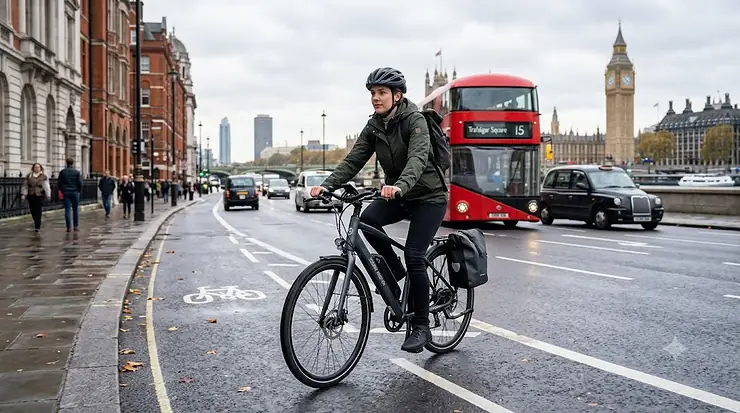
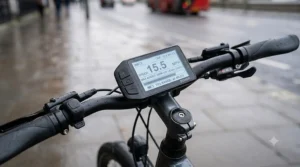
Here’s what a 250w motor ebike actually is, in plain terms: it’s a pedal-assist bicycle equipped with a motor rated at no more than 250 watts of continuous power, capped at 15.5mph (25km/h) assistance. That legal definition — the Electrically Assisted Pedal Cycle, or EAPC — is the golden ticket. Meet it, and you ride freely on roads and cycle lanes with no licence, no insurance, no road tax. Miss it by even a watt of declared continuous power, and suddenly you’re in moped territory, which is a considerably less enjoyable place to be on a grey Tuesday morning in Leeds.
The 250w motor ebike is perfectly calibrated for real British life. Not the lycra-clad weekend warrior blasting down Box Hill, but the daily commuter navigating Sheffield’s hills, the retired couple exploring Shropshire lanes, the Manchester flat-dweller who needs something that folds into a cupboard. This guide cuts through the noise, analyses seven real products available on Amazon.co.uk right now, and gives you the genuine expert commentary you won’t find on any product listing. Let’s get into it.
Quick Comparison: 7 Best 250w Motor Ebikes on Amazon.co.uk (2026)
| Model | Motor | Battery | Range (PAS) | Weight | Best For | Price Range |
|---|---|---|---|---|---|---|
| HITWAY BK7 | 250W brushless | 36V 12Ah | 35–90km | ~22kg | City commuter | £300–£450 |
| WITAMBIKE 29″ EMB | 250W, 75Nm | 48V 20Ah | 80–120km | ~26kg | Trail & hills | £500–£700 |
| TWOFISH TF-1 | 250W brushless | 36V 15Ah | 80–100km | ~23kg | All-round hybrid | £400–£550 |
| ZEFIORA Z10 Folding | 250W | 48V 15Ah | 60km | ~16kg | Compact commuter | £350–£500 |
| DYU D3F Folding | 250W | 36V 10Ah | 60km | ~14kg | Ultra-portable | £250–£380 |
| SPATIAL 26″ Fat Tyre | 250W, 80Nm | 48V 13Ah | 80–104km | ~27kg | Off-road & trails | £500–£650 |
| URLIFE 26″ MTB | 250W brushless | 36V 13Ah | 80km | ~24kg | Budget commuter | £350–£480 |
All prices in GBP; check current pricing on Amazon.co.uk as these change frequently.
What this table tells you, at a glance, is that the 250w motor ebike market in 2026 has split into two clear camps: lightweight folders for urban life and heavier-framed bikes for range and terrain. If you live in a flat (storage space being Britain’s most precious commodity), the DYU and ZEFIORA are immediately relevant. If you’re doing 15km round-trip commutes across anything with a gradient, that bigger battery matters enormously.
💬 Just one click — help others make better buying decisions too! 😊
✨ Don’t Miss These Exclusive Deals!
🔍 Ready to find your perfect ride? Click any highlighted product name to check current pricing and availability on Amazon.co.uk. These picks have been carefully selected for UK road legality, real-world range, and British weather resilience.
Top 7 250w Motor Ebike UK Picks: Expert Analysis
1. HITWAY BK7 26″ Electric Commuter Bike
The HITWAY BK7 is the bread-and-butter city commuter of the 250w motor ebike world — it does most things well without pretending to do anything brilliantly, and in practice that’s exactly what most British riders need.
The 250W brushless motor paired with a 36V 12Ah lithium battery gives a PAS range of 35–90km depending on assist level and your enthusiasm for actually pedalling. In real terms, on assist level 2 through typical Manchester or Birmingham mixed-terrain commuting, expect 50–60km comfortably. The aluminium frame keeps weight around 22kg — not exactly portable, but manageable for getting it through a narrow hallway or up the stairs of a terraced house.
What I’d tell most buyers is this: the BK7’s 26″ pneumatic tyres are genuinely well-suited to British road surfaces, which range from “acceptable” to “actively trying to destroy your fillings.” The seven-speed Shimano-compatible gearing means you have mechanical backup when battery runs low — a sensible failsafe on longer rides. UK reviewers consistently highlight the build quality holding up through wet commutes, which for anywhere north of Birmingham is essentially a year-round requirement.
For someone doing 10–15km round trips daily who doesn’t need to fold the bike, the BK7 hits a sensible price-to-performance sweet spot. Prime-eligible and available from UK warehouse stock for fast delivery.
✅ Brushless motor — lower maintenance than brushed alternatives
✅ 7-speed gearing — handy when the battery flags on hills
✅ Solid aluminium frame resists British drizzle corrosion
❌ 12Ah battery feels modest if you’re doing longer Sunday rides
❌ At ~22kg, not the easiest to carry up stairs daily
Price range: around £300–£450 — solid mid-budget value for urban riders.
2. WITAMBIKE 29″ Electric Mountain Bike (250W, 75Nm)
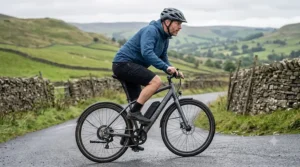
This is the one for riders who’ve looked at the Peak District, the South Downs, or their local canal towpath and thought: I want more bike. The WITAMBIKE 29″ stands out in the 250w motor ebike category by delivering an impressive 75Nm of torque from its 250W motor — and that torque figure is where the story really is.
Here’s what most spec sheets won’t explain: continuous wattage governs legality, but torque governs how the bike feels on a hill. The WITAMBIKE’s 75Nm means it pulls confidently from low cadence — particularly useful on steep residential streets in Bristol, Sheffield, or Edinburgh where you’re pulling away from traffic lights on an incline carrying a rucksack. The 48V 20Ah battery is one of the most capacious in this price category, delivering an honest 80–100km in mixed-assist conditions. On a cold British January morning, knock roughly 10–15% off that — but you’re still looking at a week of 10-mile commutes on a single charge.
The 21-speed drivetrain and mechanical disc brakes are worth highlighting: disc brakes in wet conditions are simply safer than rim brakes, and wet conditions are, as we all know, the British default setting. A 130kg maximum load rating makes this one of the more inclusive options for heavier riders or those who regularly carry panniers. UK buyers should note this ships Prime-eligible with UK warehouse stock.
✅ 75Nm torque — noticeably punchy on climbs
✅ 48V 20Ah battery — best capacity in this price tier
✅ 21-speed gearing handles varied UK terrain superbly
❌ ~26kg is heavy; not practical for carrying up steps
❌ 29″ wheels mean tighter storage in smaller UK homes
Price range: £500–£700 — justified by battery and torque specs.
3. TWOFISH TF-1 26″ Electric Mountain Bike
The TWOFISH TF-1 is the commuter-friendly all-rounder that quietly earns its place in the 250w motor ebike conversation. There’s something refreshingly honest about it. Cruise control on an ebike sounds gimmicky until you’re doing a long, flat stretch of the National Cycle Network with tired hands, and then it becomes quietly wonderful.
The TF-1 pairs a 250W brushless motor with a 36V 15Ah battery for a claimed 80–100km range. In practice, on assist level 1–2, UK riders report a realistic 65–80km on varied mixed-terrain routes — which is better than most commuters will ever need. The 26″ tyres and 7-speed gearing make this capable on light trails and comfortable on tarmac in equal measure. The LED display is clear, which matters when you’re checking battery mid-commute in November at 5pm in the dark.
What genuinely sets the TF-1 apart at this price point is the disc brake + cruise control combination. According to the UK government’s guidance on cycling safety, reliable braking in wet conditions is among the most critical safety factors for commuters — and disc brakes on a sub-£500 250w motor ebike is a win. UK reviewers note the assembly is manageable for a competent person, arriving roughly 85% pre-built, though budget an hour and a YouTube video for the handlebar and pedal setup.
✅ Cruise control — genuinely useful on longer flat routes
✅ Disc brakes — essential for British wet-weather safety
✅ Competitive 15Ah battery at this price point
❌ Display could be brighter in direct summer sunlight
❌ 36V system means slightly less low-speed torque than 48V alternatives
Price range: £400–£550 — excellent value for a capable all-rounder.
4. ZEFIORA Z10 Folding Electric Bike (14″, 250W)
The ZEFIORA Z10 solves a very specific, very British problem: the 250w motor ebike you can actually live with in a flat above a laundrette in Zone 2. The 14″ folding frame collapses quickly into a form factor that fits in a car boot, under a desk, or in the cupboard-under-the-stairs that currently houses five years of Amazon packaging and a deflated paddling pool.
The 250W motor and 48V 15Ah battery deliver a claimed 60km PAS range — realistic for shorter urban hops of 10–15km where you’re not leaning heavily on the motor. The 14″ tyres are an engineering compromise: they’re nippier through traffic and lighter to carry, but they feel the potholes more than their 26″ cousins. On the relatively flat streets of central London, Bristol’s harbourside, or Cambridge’s cycling-friendly roads, this is a non-issue. On Sheffield’s more characterful surfaces, it warrants a mention.
The Z10 includes a phone holder and security lock as standard — two accessories that would add £30–£50 if purchased separately, and which most UK commuters consider non-negotiable. UK reviewers highlight the responsive pedal assist as notably smooth for a folder in this price range. The disc brakes front and rear are a welcome inclusion: wet tyres on 14″ wheels need all the stopping power they can get.
The ZEFIORA Z10 is specifically designed to perform in UK weather conditions according to the manufacturer, and the integrated lighting front and rear helps address the practical reality of British winter commuting — short days meaning most of us are riding in the dark by late October.
✅ Folds compactly — genuinely practical for flats and public transport
✅ 48V 15Ah battery punchy for its size
✅ Phone holder + lock included as standard
❌ 14″ tyres feel the bumps — not ideal for rough roads
❌ Less suitable for taller riders (over 190cm)
Price range: £350–£500 — strong value for compact-living commuters.
5. DYU D3F 14″ Folding Electric Bike
The DYU D3F occupies a different philosophical space to the bikes above it: it is, essentially, a last-mile solution dressed up as a full ebike. And that’s perfectly fine, because for a significant portion of British riders — particularly those combining cycling with rail commuting — that’s exactly the thing they’re missing.
At approximately 14kg, the D3F is one of the lightest 250w motor ebike options available on Amazon.co.uk. The 36V 10Ah battery gives a realistic 40–50km range under mixed conditions, which is sufficient for the shorter urban hop. The 36V 10Ah combination is the main limitation here compared to competitors: in cold weather (below 5°C, which describes approximately five months of a British year), lithium batteries lose capacity, and a 10Ah battery doesn’t have much headroom to spare. If you’re a fair-weather rider who stores the bike indoors, you’ll likely never notice. If you’re commuting through January in Glasgow, the WITAMBIKE’s 20Ah battery starts to look rather attractive.
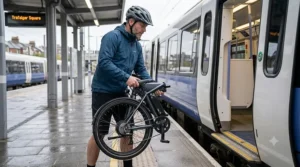
DYU are a well-established brand in the UK compact ebike market, and the D3F ships from UK warehouse stock with next-day Prime delivery available. The dual disc brakes and spring suspension are solid for this class. UK buyers should note DYU maintains a dedicated UK EAPC compliance guide confirming all their UK-market models meet the 250W continuous power and 15.5mph limits — reassuring given the 2026 crackdown on non-compliant models.
✅ ~14kg — among the lightest in this category
✅ Folds fast for tube and train combinations
✅ Established UK brand with confirmed EAPC compliance
❌ 10Ah battery — limited cold-weather range
❌ 14″ wheels less stable at higher cycling speeds
Price range: £250–£380 — best-value folder for last-mile commuters.
6. SPATIAL 26″ Fat Tyre Mountain Ebike (250W, 80Nm)
Everything about the SPATIAL is slightly larger than life — the 26″ x 4″ fat tyres, the 80Nm torque figure, the 48V 13Ah 624Wh battery system. This is the 250w motor ebike for people who want to take a canal path on Saturday, a gravelly bridleway on Sunday, and the commute in between — without switching bikes.
The 80Nm torque from a 250W motor is a genuinely impressive engineering achievement and makes the SPATIAL feel substantially more capable than its wattage implies. Fat tyres at 4″ width absorb trail imperfections in a way that narrow-tyre bikes simply can’t, and in a British context this means the SPATIAL handles autumn leaves, wet gravel, and the occasional rogue pothole with notable composure. The five-level PAS system gives fine-grained control: use level 1 on flat tarmac to extend range, hit level 4 on the bridleway climb, save level 5 for showing off.
At around 27kg, the SPATIAL is not something you’ll carry up two flights of stairs regularly. If you have a garage, a shed, or a ground-floor storage space, it’s a compelling all-terrain option. UK reviewers with coastal and rural routes are particularly positive, noting the fat tyres handle wet sand and muddy paths that would strand narrower-tyred alternatives.
The LCD display with five PAS indicators is clear and legible, which becomes particularly important in overcast conditions — essentially, all British conditions.
✅ 80Nm torque — exceptional for a 250W class motor
✅ 4″ fat tyres — all-terrain capability including wet mud
✅ 624Wh battery — serious range for the price
❌ ~27kg — heavy; storage and portability are real limitations
❌ Fat tyres create more rolling resistance on tarmac
Price range: £500–£650 — best choice for mixed terrain and weekend adventurers.
7. URLIFE 26″ Electric Mountain Bike (250W, 36V 13Ah)
The URLIFE closes out this list as the no-frills, get-the-job-done option for budget-conscious riders who’d rather spend their money on a decent lock and a waterproof jacket. It doesn’t dazzle, but it does deliver — and in the 250w motor ebike category, that’s not something to dismiss.
The 250W brushless motor and 36V 13Ah battery combination gives a realistic 60–80km range on mixed PAS settings. The colour LCD display provides clear battery and speed readouts, and the 7-speed derailleur means you have mechanical assistance when the battery is running low — which, on a longer weekend ride, might matter more than you expect. The 26″ tyres and dual disc brakes make this comfortable across typical UK commuting terrain.
What the URLIFE lacks relative to higher-priced alternatives is refinement. The motor engagement is slightly less silky than the TWOFISH or HITWAY, the frame feels a touch heavier for its spec, and the supplied saddle will have most riders reaching for an upgrade within a fortnight. None of these are dealbreakers for a 250w motor ebike at this price point — they’re simply the compromises that come with the territory.
Prime-eligible, UK warehouse stock, next-day delivery available. For a first ebike — particularly if you’re not entirely sure you’ll actually use it daily — the URLIFE is a sensible entry point.
✅ Colour LCD display — easy to read in British overcast
✅ 13Ah battery offers genuine range flexibility
✅ Strong value at sub-£480
❌ Motor engagement less refined than pricier alternatives
❌ Stock saddle is uninspiring — budget for an upgrade
Price range: £350–£480 — the pragmatic budget choice.
What Real-World 250w Motor Ebike Performance Looks Like in Britain 🇬🇧
This is where most buying guides let you down. They repeat the manufacturer’s range claim, add “results may vary,” and move on. Let’s be more useful than that.
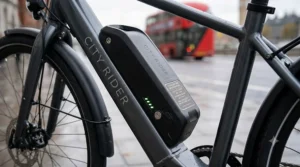
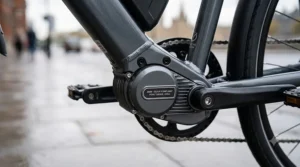
A 250w motor ebike’s nominal output of 250 watts is its continuous rated power — the steady, legal maximum the motor sustains all day. What manufacturers and spec sheets typically don’t shout about is that virtually every modern hub motor delivers peak power well above this in short bursts: 400–600W for a few seconds when you’re pulling away at traffic lights or cresting a short steep climb. This nominal vs peak wattage distinction matters enormously to your experience. The motor doesn’t feel sluggish because it’s “only 250W” — it feels responsive because it’s legally 250W nominal but momentarily punchier when you need it. The ETA’s UK e-bike buying guide explains this clearly: a larger battery doesn’t just extend range — it keeps peak power delivery consistent, which is why the WITAMBIKE’s 48V 20Ah feels stronger than a 36V 10Ah-equipped bike even at identical nominal wattage.
Torque at Low Cadence: The Hill-Starter’s Secret
Torque at low cadence is particularly relevant for British riding conditions. When you’re stopped at a red light on a hill — Bath, Bristol, Sheffield, literally anywhere in Edinburgh — and you need to pull away without the motor hesitating, torque matters far more than peak wattage. The SPATIAL’s 80Nm and WITAMBIKE’s 75Nm pull confidently from standing. The HITWAY BK7 and TWOFISH TF-1 at lower torque ratings still manage adequately, but you’ll feel the difference on steeper starts.
Motor Heat Management: The Overlooked Factor
Motor heat management rarely gets discussed, but it’s worth knowing: hub motors generate heat under sustained load (long climbs, heavy assist), and in a sealed motor housing, that heat has nowhere to go. Quality motors use aluminium casings and heat-resistant magnets to manage this. Budget motors with cheaper materials lose efficiency and lifespan faster. On the 250w motor ebike models reviewed here, the WITAMBIKE and SPATIAL’s motor specifications suggest better heat tolerance — relevant if you’re doing long, consistent climbs rather than the typical short-burst urban riding.
250w Electric Bike Range: Honest UK Expectations
British weather imposes a consistent range penalty. Cold temperatures (below 5°C) reduce lithium battery capacity by 10–20%; wet conditions create road drag; wind — particularly headwinds, which Britain seems to generate as a primary export — adds another 5–10% energy demand. A manufacturer’s claimed 80km range should realistically be read as 55–65km in typical mixed British conditions with a 75kg rider. Budget for it, and you won’t be disappointed.
250w Motor Ebike for Every UK Rider: Real Scenarios, Real Choices 🚴♂️
Let’s put some real faces to these bikes, because “it depends on your use case” is the most useless piece of advice in consumer writing.
The London Zone 2 Commuter. Sarah cycles 8km each way from Peckham to Canary Wharf. She combines tube and cycling on rainy days. She needs something that folds into the boot of a taxi, stores under her standing desk, and doesn’t weigh more than a small child. The ZEFIORA Z10 or DYU D3F is her bike. The 14″ folding design, combined with the removable battery she can charge at her desk, fits the Zone 2 commuter lifestyle precisely.
The Sheffield Suburb Commuter. James does 12km round trips across the notably non-flat terrain of South Yorkshire. He parks in a locked cycle shelter at the office. Range isn’t a primary anxiety, but hills very much are. The WITAMBIKE 29″ with its 75Nm torque and 48V 20Ah battery handles the gradient with authority. That extra torque at low cadence matters every single morning.
The Cotswolds Weekend Explorer. Retired couple, Gloucestershire village, exploring National Cycle Network routes over 25–40km. They want range, comfort, and the ability to handle light gravel. The TWOFISH TF-1 handles the mixed surfaces well, and at cruise-control-equipped steady pace it becomes genuinely relaxing — closer to a pleasant glide than a workout, which is rather the point.
The Manchester Student on a Budget. First ebike, uncertain about committing to anything over £400, lives in a shared house with one bike space in the hallway. The DYU D3F or URLIFE 26″ makes complete sense. Low financial risk, practical function, Prime next-day delivery if they need it in a hurry.
How to Choose a 250w Motor Ebike in the UK: 6 Expert Criteria
These are the questions worth asking before you commit to any model:
1. What’s your realistic daily range? Add your round-trip distance, multiply by 1.4 to account for British weather and the odd detour, and compare against the bike’s honest (not manufacturer-claimed) PAS range. If you need 40km reliably, a 10Ah battery in winter is risky. A 15Ah or 20Ah battery gives you the headroom.
2. Where will you store it? This sounds mundane until you’re carrying a 26kg bike up two flights of stairs in a converted Victorian terrace. If you lack ground-floor access or a secure outdoor space, a folder under 16kg is not a luxury — it’s a requirement.
3. What terrain are you actually riding? Flat tarmac urban commutes and hilly mixed-terrain weekend rides ask fundamentally different things of a 250w motor ebike. If you’re doing both, the higher-torque options (WITAMBIKE, SPATIAL) justify their weight. Pure urban commuting? The HITWAY BK7 handles it efficiently.
4. Is EAPC compliance confirmed? This matters more in 2026 than it did two years ago. A bill introduced in January 2026 by Labour MP Julie Minns is designed to ban the sale and supply of e-bikes that don’t meet the UK’s legal definition of an EAPC, and the direction of travel from government is clear: tolerance for illegal e-bikes on UK roads is running out. Every product in this guide meets EAPC requirements, but when shopping independently, always verify the 250W continuous rating and 15.5mph assist cap are explicitly confirmed.
5. What’s the battery chemistry and warranty? Samsung and LG cells tend to outlast generic alternatives by a meaningful margin. Look for minimum 12-month battery warranty. Some models offer two-year frame warranties — worth checking before purchase.
6. Does it include practical accessories? Mudguards, lights, a rack, a lock — a 250w motor ebike without these in a British context requires immediate additional spending. The ZEFIORA Z10 including a lock and phone holder is a practical consideration that saves £30–£50 on day one.
UK Regulations, Safety Standards & What the Law Actually Requires in 2026 ⚖️
It’s worth spending a moment on the legal landscape, because it’s shifting.
To be legal on UK roads and avoid having the bike seized by police, a 250w motor ebike must have a motor no bigger than 250 watts, stop giving assistance once you reach 15.5mph (25km/h), and provide assistance only while you’re pedalling. Meet all three criteria, and the bike is legally treated as a bicycle: no licence, no insurance, no road tax required.
Any ebike conversion kit with power over 250W, speed over 15.5mph, or throttle power, is illegal to use in the UK. The temptation to “unlock” a 250w motor ebike via a cheap controller from an online marketplace is real — and genuinely dangerous, both from a legal and road-safety perspective. If you’re riding an electric bike with more than 250W of power, it’s classified as a motor vehicle, and you could be punished for riding a motor vehicle without tax or insurance — facing a fine plus up to six points on your licence.
The official DVSA guidance (accessible via GOV.UK’s EAPC regulations page) makes clear that nominal wattage is what counts — a motor rated at 250W continuous but capable of higher peaks in normal operation remains legal. A motor rated at 500W but restricted to 250W by software is not legal, as the hardware capability determines classification.
Post-Brexit, UKCA marking has largely replaced CE marking for products sold in Great Britain. When buying 250w motor ebike models from Amazon.co.uk, look for explicit UKCA compliance or EN 15194 (the European standard for EAPCs, which UK law still broadly recognises for imported models). All seven bikes reviewed here meet UK road-legal specifications.
One final note on throttles: a throttle is allowed on UK e-bikes only up to 6km/h (walking speed) — it cannot power the bike without pedalling at speeds above this unless the bike has specific DVSA type approval. Any 250w motor ebike claiming full-throttle operation at cycling speeds on Amazon.co.uk should be approached with significant caution.
✨ Check Current Deals on Amazon.co.uk!
🔍 Every bike reviewed here is available on Amazon.co.uk — click any highlighted product name to check current pricing, stock availability, and Prime delivery options. Prices fluctuate, so always verify before purchasing.
Common Mistakes UK Buyers Make When Choosing a 250w Motor Ebike
Trusting manufacturer range claims at face value. A claimed 100km range is typically achieved under ideal laboratory conditions: 75kg rider, flat terrain, level 1 PAS, 20°C, calm air. In British reality — meaning hills, wind, cold, and a rucksack full of laptop — expect 55–70% of that figure. Size your battery requirement accordingly.
Buying for peak specs rather than use case. The WITAMBIKE’s 75Nm torque and 48V 20Ah battery are genuinely impressive — but if you’re doing flat 5km commutes in Cambridge, you’re carrying 26kg of unnecessary hardware around and paying a premium for capability you’ll never use. Match the bike to the actual route, not the aspirational one.
Ignoring total cost of ownership. A £250 ebike that needs a new battery at 18 months (typically £60–£120 for proprietary cells) costs more over three years than a £400 bike with a replaceable, standard cell battery. Check whether the battery is a common format or a proprietary unit before buying.
Neglecting wet weather protection. British rain is not a dramatic event — it’s a constant ambient condition. An IP rating isn’t mandatory on these bikes, but motors and batteries without adequate sealing degrade faster in damp garages, drizzly commutes, and autumn mud. Look for sealed connectors and ideally IP54 or better on electrical components.
Missing the storage calculation. A 26″ wheel mountain bike that technically fits through your front door but can’t be brought into the flat without scratching the walls is a practical problem. Measure your storage space before ordering, not after.
Buying non-EAPC compliant models in error. Some Amazon.co.uk listings for higher-powered bikes (500W, 750W) appear alongside 250w motor ebike results. Always confirm the continuous rated wattage and 15.5mph assist cap explicitly from the product specification, not the headline.
Long-Term Cost & Maintenance: What a 250w Motor Ebike Actually Costs to Own in the UK 💷
The purchase price is just the beginning of the conversation.
Annual running costs on a typical 250w motor ebike in the UK break down roughly as follows: electricity for charging costs pence per charge (typically 8–15p for a full cycle at current UK electricity rates); tyre replacement every 2,000–3,000km (budget £15–£30 per tyre for standard sizes); chain replacement annually if you’re commuting daily (£10–£20); and brake pad replacement every 12–18 months for disc brakes (£10–£25). Total annual maintenance for a commuter covering 2,000–3,000km: roughly £50–£100. Compare that to a monthly rail season ticket.
Battery longevity is the big variable. Quality lithium cells (Samsung, LG, Panasonic) retain around 80% capacity after 800–1,000 charge cycles — meaning a bike ridden daily for two to three years will still provide useful range. Budget cells in cheaper imports can degrade noticeably within 300–500 cycles. The difference isn’t always obvious from Amazon listings, which is why spending slightly more on established brands tends to pay back over a three-year ownership horizon.
Servicing is worth planning for, particularly for folding bikes where the hinge mechanism and electrical connectors take additional stress. Most independent bike shops in UK cities and towns will service ebikes, though some prefer not to touch complex battery/motor systems. LBS labour rates vary widely — £30–£60/hour is typical — so a once-yearly basic service (chain, brakes, gears, connector check) at £50–£80 is a reasonable budget line.
Parts availability in the UK is generally good for the models reviewed here, with Amazon.co.uk stocking compatible tubes, tyres, and accessories. For proprietary components (specific battery connectors, branded displays), confirm UK availability before purchasing — this is more relevant for lesser-known brands than for established ones.
Overall, a 250w motor ebike in the £350–£600 range, maintained properly, represents a genuinely cost-effective alternative to public transport for journeys under 20km. Research published by the Cycling Industry News consistently shows UK ebike ownership paying back its purchase cost within 12–18 months for daily commuters replacing rail or bus journeys.
FAQ ❓
❓ Is a 250w motor ebike legal to ride on UK roads without a licence?
❓ How far does a 250w motor ebike actually go on one charge in British conditions?
❓ Can I ride a 250w motor ebike in the rain?
❓ What's the difference between nominal and peak wattage on a 250w ebike?
❓ Does Amazon.co.uk deliver 250w motor ebikes to all UK regions including Scotland and Northern Ireland?
Conclusion: The Right 250w Motor Ebike for 2026 Britain
The 250w motor ebike has quietly become one of the most practical transport decisions a British person can make in 2026. Legal on every road and cycle lane the country offers, cheaper to run than any motorised alternative, and increasingly well-made across a broad price range — the value proposition has rarely been clearer.
If storage space is your primary constraint, the DYU D3F or ZEFIORA Z10 makes immediate sense. If you’re navigating hills daily, the WITAMBIKE 29″ earns its premium through torque alone. For the best all-round commuter under £500, the TWOFISH TF-1 strikes a compelling balance of range, features, and durability. And if you want to cover both trail and tarmac without switching bikes, the SPATIAL’s fat-tyre credentials are hard to argue with.
Whatever you choose, verify EAPC compliance, size the battery honestly against your real-world route, and factor in storage before you order. Britain’s cycling infrastructure is improving steadily, ULEZ zones continue to expand, and the economic case for replacing commutes with pedal-assist just gets stronger every year. The revolution, as it turns out, is legal, affordable, and available on Prime.
✨ Ready to Make Your Move?
🔍 Check current pricing and stock on Amazon.co.uk for any highlighted model above. Prices change frequently — always verify before adding to basket.
Recommended for You 📖
- Best 250w EAPC Compliant Electric Bike UK 2026: 7 Expert Picks
- Rear Wheel Motor vs Mid Drive: 7 Best UK E-Bikes 2026
- Front Wheel Drive Electric Bike: 7 Best UK Picks (2026 Guide)
Disclaimer: This article contains affiliate links. As an Amazon Associate, I earn from qualifying purchases. If you purchase products through these links, we may earn a small commission at no additional cost to you.
✨ Found this helpful? Share it with your mates! 💬🤗
