In This Article
Here’s a confession every commuter eventually makes to themselves, usually while scrubbing chain grease out of a work trouser hem for the third time that month: bicycle chains are brilliant technology wrapped in a genuinely irritating maintenance routine. That’s the real story behind belt drive ebike maintenance cost — it isn’t really about the belt at all, it’s about what you stop having to do once metal-on-metal wear is out of the picture. Gates Carbon Drive belts, the polyurethane-and-carbon-fibre loops now fitted to everything from £1,400 city runabouts to £5,000 touring machines, trade the chain’s cheap-but-needy upkeep for a pricier but far less frequent service bill.
This guide pulls apart what that trade actually costs, using real specifications, real UK retail pricing (never exact figures, since those shift weekly — only sensible ranges), and honestly sourced review sentiment rather than invented anecdotes. You’ll get seven genuine belt-drive electric bikes spanning budget to premium, a proper breakdown of belt lifespan against chain lifespan, and a five-year ownership comparison that should settle the “is it worth it” question for most riders. Whether you’re commuting eight miles into a British city centre or touring canal paths at the weekend, the numbers below are built to be checked, not taken on faith.
Quick Comparison Table: 7 Belt Drive eBikes at a Glance
| Model | Belt System | Gearing | Weight | Best For |
|---|---|---|---|---|
| Tenways CGO600 Pro | Gates CDN | Single-speed | ~16kg | Flat-city commuters wanting the lightest ride |
| Estarli e20.X | Gates Carbon Belt | 2-speed auto (Bafang) | ~17.2kg | Train commuters who need to fold and stash |
| Canyon Commuter:ON | Gates Carbon Belt | Internal hub gear | ~19kg | All-round daily commuting with rack and lights |
| Cube Editor Hybrid SLT 400X | Gates Carbon Belt | Internal hub gear | ~22kg | Performance-focused hybrid riders |
| Cube Kathmandu Hybrid Comfort Pro 800 | Gates Carbon Belt | Internal hub gear | ~24kg | Longer-distance touring and comfort |
| Ampler Curt | Gates Carbon Belt | Single-speed | ~14.4kg | Riders who want an ebike that doesn’t look like one |
| Riese & Müller Tinker/Delite5 range | Gates Carbon Belt | Rohloff/Enviolo hub | ~25-29kg | Families and long-term touring investment |
Line these seven up and a pattern jumps out immediately: every single one pairs its belt with an internal hub gear or single-speed setup, never a derailleur, because a belt physically cannot be shifted sideways across a cassette the way a chain can. Weight climbs steadily as you move from the featherweight Tenways CGO600 Pro and Ampler Curt toward the touring-ready Riese & Müller range, which trades grams for battery capacity, comfort geometry, and — for most owners — a genuinely longer service life before major components need attention.
💬 Just one click — help others make better buying decisions too!😊
Top 7 Belt Drive eBikes: Expert Analysis
Coverage below runs from budget-conscious commuter builds through to premium touring machines, so whatever your ceiling, there’s a genuine, currently-available option in the mix.
1. Tenways CGO600 Pro — lightest full-size belt drive commuter on the market
At roughly 16kg, the CGO600 Pro is genuinely liftable up a flight of station stairs with one hand, which sounds like marketing fluff until you’ve actually done it with a heavier hub-motor bike. A 250W rear hub motor and magnetic torque sensor pair with a single-speed Gates CDN belt, a 360Wh battery good for a claimed 100km (60-80km realistic in mixed UK conditions), hydraulic disc brakes, and 700x40C tyres. What most buyers overlook about single-speed belt setups like this one is that dropping the derailleur and cassette entirely removes the two components that fail most often on a typical hybrid — so you’re not just avoiding chain wear, you’re avoiding gear-hanger and cassette wear too. Based on the spec comparison with rivals in this price band, the CGO600 Pro is best suited to riders on genuinely flat commutes; without gears, hills expose the ceiling of what a single 250W motor can smooth over. Independent hands-on reviews consistently flag it as easy to assemble and low-maintenance, while also noting a stiff stock saddle and no front suspension, so kerbs and potholes are felt rather than absorbed.
Pros:
- ✅ Among the lightest full-size ebikes sold in the UK
- ✅ No derailleur or cassette to wear, adjust, or replace
- ✅ Torque sensor gives smooth, natural-feeling assistance
Cons:
- ❌ Single-speed means real strain on steep hills
- ❌ No suspension, so rough tarmac transmits through the frame
Prices sit in the £1,400-£1,700 range depending on retailer promotions at the time of research — for buyers who genuinely never touch a proper hill, it’s hard to beat on a pure cost-per-kilometre basis.
2. Estarli e20.X — best British-built folding belt drive for train commuters
The standout here is the auto 2-speed Bafang hub, which quietly shifts between low and high gear based on speed rather than asking you to click anything — a small thing that makes the belt drive feel far less compromised on rolling terrain than a true single-speed. Designed and assembled in the UK, it weighs around 17.2kg with the battery fitted, delivers roughly 45-50Nm of torque, and folds to a genuinely train-platform-friendly size in well under 20 seconds. Here’s what to weigh: the automatic gearbox removes the one manual habit (shifting) that trips up new ebike riders, which makes this an unusually forgiving folder for someone upgrading from a non-electric bike. Reviewers who’ve tested the e20.X over extended rides praise the motor-and-gearhub combination and the bike’s agility, while also flagging a longer-than-expected charge time and a firmer ride quality than some folding rivals — trade-offs that come with keeping unsprung weight low enough to fold and carry.
Pros:
- ✅ Automatic 2-speed hub removes manual shifting entirely
- ✅ UK-designed and assembled, with UK-based support
- ✅ Folds in under 20 seconds for tight commutes
Cons:
- ❌ Charging takes longer than several rivals in this range
- ❌ Ride feels firmer than heavier, suspended folders
Expect to pay in the £1,850-£1,950 range. For anyone combining a train leg with a cycle leg, the fold-to-weight ratio here is difficult to match at this price.
3. Canyon Commuter:ON — best all-round belt drive city ebike with proper touring extras
Canyon built its reputation on direct-to-consumer value, and the Commuter:ON carries that through with integrated mudguards, a luggage rack, and full lighting baked into the price rather than sold as accessories. The Gates Carbon Belt runs through an internal hub gear (never a derailleur — Canyon is explicit that belts and derailleurs simply aren’t compatible), with a claimed range up to roughly 75km and a kerb weight around 19kg. What the spec sheet won’t tell you, but the wider hub-gear-plus-belt category consistently shows, is that internal hubs are sealed units: the gear mechanism itself is protected from road grit in a way an exposed derailleur never can be, which compounds the belt’s own low-maintenance advantage rather than working against it. This is the pick for someone who wants “commuter appliance” reliability — get on, ride, get off, repeat for years — rather than a bike they plan to tinker with.
Pros:
- ✅ Rack, mudguards and lights included as standard
- ✅ Sealed internal hub protects gears from road grime
- ✅ Solid range for daily door-to-door commuting
Cons:
- ❌ Heavier than the lightest single-speed rivals on this list
- ❌ Fewer colour and spec options than boutique competitors
Pricing typically sits in the £2,300-£2,800 range depending on configuration. It’s a genuinely sensible middle ground between the ultralight commuters above and the touring bikes below.
4. Cube Editor Hybrid SLT 400X — best lesser-known performance pick
Cube doesn’t get the same UK spotlight as Canyon or Riese & Müller, which is a shame, because the Editor Hybrid SLT pairs a performance-tuned SX motor system with the same Gates belt and internal hub gearing philosophy at a genuinely competitive price. The 400Wh battery keeps weight in check for a hub-motor hybrid, while hydraulic disc brakes and a stiffer frame give it a noticeably sportier feel than the more upright Kathmandu range from the same manufacturer. Based on the spec comparison, this is the bike for someone who wants belt-drive low maintenance but isn’t willing to sacrifice ride dynamics for it — the geometry leans closer to a fast hybrid than a relaxed cruiser. Reviewers covering Cube’s belt-drive hybrid range have consistently rated the brand’s after-sales network and component quality highly, though as with several mid-range imports, individually verified UK customer review volumes for this specific configuration remain thinner than for the market leaders above.
Pros:
- ✅ Sportier geometry than most belt-drive hybrids
- ✅ Strong component spec for the price point
- ✅ Backed by an established, widely-stocked German brand
Cons:
- ❌ Less brand recognition in the UK than Canyon or Trek
- ❌ Verified UK review volume is comparatively limited
Expect a price around £2,600-£2,800. Worth cross-shopping against the Kathmandu below if you’re torn between speed and comfort.
5. Cube Kathmandu Hybrid Comfort Pro 800 — best for longer-distance touring comfort
Where the Editor leans sporty, the Kathmandu leans firmly toward comfort and range, with an 800Wh battery — more than double some rivals on this list — an upright riding position, and full touring kit including rack, guards, and lighting. The Gates belt and internal hub combination here is doing double duty: keeping maintenance low on a bike that’s likely to rack up serious annual mileage, and keeping things quiet and clean on longer rides where a gritty chain would otherwise need lubricating mid-tour. Reviewers consistently note that Cube’s touring hybrids punch above their price bracket on component spec, though buyers should weigh in the extra kilograms that come with the bigger battery and heavier-duty frame — this isn’t the bike for hauling up a fourth-floor flat daily. On paper this means a genuinely long-range, low-fuss tourer; in practice it rewards riders who value range and comfort over outright agility.
Pros:
- ✅ Large 800Wh battery for genuinely long days out
- ✅ Comfort-first geometry with full touring accessories
- ✅ Low-maintenance belt suits high annual mileage
Cons:
- ❌ Noticeably heavier than city-focused alternatives
- ❌ Overkill (and pricier) for short flat commutes
Pricing sits around £2,800-£3,100. For anyone doing 20+ mile round trips regularly, this is the strongest touring-comfort option on this list.
6. Ampler Curt — best stealth-look premium ebike with belt drive
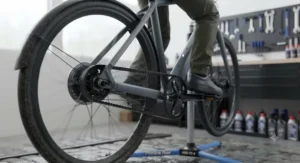
Ampler’s whole design philosophy is “you shouldn’t be able to tell it’s electric,” and the Curt delivers on that with a claimed weight from around 14.1-14.4kg, a downtube-hidden battery, and a single-speed Gates belt that keeps the drivetrain visually as clean as the frame. The rear hub motor is genuinely discreet — reviewers have specifically noted how well it hides behind the disc brake and cassette area — and the bike charges via USB-C on newer models, a small but genuinely useful detail for anyone who’s ever forgotten a proprietary charger. What most buyers overlook about ultra-lightweight single-speed builds like this is that the weight saving comes specifically from stripping out the extra gearing hardware a multi-speed hub needs, which is exactly the same principle keeping the CGO600 Pro light — Ampler just executes it at a considerably higher finish level. Independent reviews describe it as fast, light and stylish, while flagging gentle assistance levels and a fixed (non-removable) battery as the main trade-offs of the design.
Pros:
- ✅ Among the lightest ebikes sold anywhere, electric or not
- ✅ USB-C charging on current models
- ✅ Genuinely passes as a normal bike at a glance
Cons:
- ❌ Fixed battery can’t be removed for indoor charging
- ❌ Assistance is gentler than most hub-motor rivals
Prices typically fall in the £2,700-£3,100 range. This is the premium pick for style-conscious commuters who’ll never touch a hill worth mentioning.
7. Riese & Müller Tinker/Delite5 range — best premium investment for families and touring
Riese & Müller sits at the top of this list for a reason: Bosch’s most powerful motor options, a Gates Carbon Belt as standard across almost the entire range, and a choice between Rohloff’s 14-speed hub or Enviolo’s stepless hub gear, both of which are about as close to “fit and forget” as gearing technology gets. Configurations run from compact city bikes up to cargo-capable family machines, with battery capacities up to 800Wh-plus and dual-battery options for genuinely long-range days. Here’s what to weigh: the extra outlay buys engineering depth most rivals simply don’t attempt — sealed gearboxes, oversized belt sprockets rated for higher torque, and frames built around the belt from the ground up rather than adapted to fit one. Riese & Müller’s premium positioning is well documented across UK dealer and enthusiast coverage, with owners frequently citing build quality and long-term reliability as the reason they chose the brand over cheaper alternatives, even if individual model-by-model customer review counts vary.
Pros:
- ✅ Rohloff or Enviolo hub gearing, both exceptionally durable
- ✅ Configurable across dozens of frame and battery combinations
- ✅ Widely regarded as class-leading long-term build quality
Cons:
- ❌ Considerably more expensive than every other bike on this list
- ❌ Heavier, given the touring-focused frame and larger batteries
Pricing starts from around £3,700 and commonly reaches £4,500-£5,500 as configured. This is the “buy once” option for anyone treating an ebike as a genuine car replacement over many years.
✨ Don’t Miss These Exclusive Deals!
🔍 Take your belt drive ebike maintenance cost research further with these carefully selected models. Click through on any highlighted bike to check current pricing and availability — the right choice here saves you both money and Saturday mornings spent degreasing a chain.
How Long Does a Belt Drive Last on an eBike?
A Gates Carbon Drive belt has an advised lifespan of around 20,000km, against a standard bicycle chain’s recommended replacement window of 5,000-10,000km even in good riding conditions — meaning a belt can realistically outlast two to four chains before it needs swapping. That headline figure comes with sensible caveats: it assumes reasonably clean riding conditions, correct belt tension, and a properly matched sprocket set, since a badly worn CDN (plastic) sprocket will chew through a belt faster than a CDX (metal) one rated for heavier use.
In everyday terms, a UK commuter covering 15-20km a day, five days a week, racks up somewhere around 3,500-5,000km a year — putting realistic belt life at four to six years of daily commuting before replacement becomes necessary, assuming the sprockets are kept in good condition alongside it. That’s a genuinely different maintenance rhythm to a chain, which the same commuter would likely be replacing every 12-18 months. Riders on the Cycling UK forum have reported belts lasting the full working life of a bike’s battery pack in lower-mileage use, though Gates’ own guidance treats 20,000km as the sensible planning figure rather than a guaranteed minimum.
How Much Does It Cost to Replace an eBike Belt Drive?
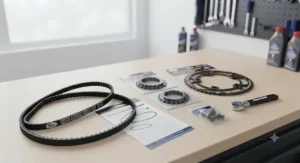
A replacement Gates belt on its own typically costs around £45-£70 in the UK, depending on the specific model and length required for your bike’s frame. However, the honest total is usually higher than that figure alone suggests, because manufacturers and independent mechanics generally recommend replacing the front and rear sprockets alongside the belt — rear CDX sprockets commonly run £60-£95, with front sprockets adding a further cost depending on tooth count and bolt pattern. All told, a full belt-and-sprocket service typically lands somewhere in the £150-£250 range including fitting at a bike shop, a figure that’s broadly comparable to a mid-range chain-and-cassette replacement, just needed far less often.
Reviewers don’t always agree on whether replacing sprockets every single time is strictly necessary or a sales-driven upsell, and it’s a fair question — if a CDX sprocket shows minimal wear, some mechanics will happily reuse it with a new belt. What most buyers overlook is that this is genuinely a judgement call your local shop should make on inspection, not a fixed rule, so it’s worth asking to see the worn components before agreeing to a full set replacement.
Belt vs Chain: Which Lasts Longer on an Electric Bike?
The lifespan gap between belts and chains isn’t marketing spin — it’s a direct consequence of how each system wears. A chain wears through repeated metal-on-metal articulation at every link, which “stretches” the chain (technically elongates the pin-and-bushing tolerances) until it no longer meshes cleanly with the cassette, typically after 5,000-10,000km. A carbon-reinforced belt has no metal links to wear that way; Gates specifically markets the belt as unable to stretch, so its failure mode is gradual surface wear on the teeth rather than elongation.
| Factor | Belt Drive | Chain Drive |
|---|---|---|
| Typical lifespan | ~20,000km | 5,000-10,000km |
| Lubrication needed | None | Regular, every few hundred km |
| Weather resistance | Rinse-clean, no rust | Rusts without ongoing care |
| Compatible gearing | Internal hub only | Derailleur or hub |
| Typical single replacement cost | £45-£70 (belt alone) | £15-£30 (chain alone) |
Looking at the table, chains win on raw upfront replacement cost every single time you swap one, but they need swapping two to four times as often — which is why the belt vs chain electric bike longevity question tends to favour belts once you zoom out past a single transaction. Chains also demand ongoing lubrication and cleaning that belts simply don’t, a recurring time cost the table above doesn’t even capture. The one real limitation on the belt side is gearing flexibility: because a Gates belt cannot be run through a derailleur, you’re locked into whatever internal hub range the bike ships with, which can matter on genuinely hilly routes.
✨ Ready to Ditch the Degreaser for Good?
🔍 Compare belt drive ebikes side by side and find the model that matches your commute, your budget, and your patience for weekend maintenance. A quieter, cleaner ride is one click away.
Which Gear Systems Work With a Gates Belt Drive?
Gates belt compatible ebike gears are, without exception, internal hub systems rather than external derailleurs — the belt is a rigid, continuous loop with no removable link, so it physically cannot be shifted sideways across a cassette the way a chain sprocket-hops between gears. Common pairings on the market include Shimano’s Nexus and Alfine hub ranges (typically 3 to 11 speeds), Enviolo’s stepless CVT-style hub, and Rohloff’s 14-speed Speedhub, which several of the bikes above use, alongside genuine single-speed setups on lighter, flatter-terrain models like the CGO600 Pro and Ampler Curt.
Each option suits a different rider: Shimano Nexus and Alfine hubs are the most widely serviced and affordable to repair across UK bike shops, Enviolo’s stepless design lets you fine-tune resistance mid-pedal-stroke rather than clicking between fixed ratios, and Rohloff’s Speedhub is the most expensive but also the most mechanically robust, favoured on the touring-focused Riese & Müller range precisely because it’s built to withstand years of heavy use with minimal internal wear. Whichever hub a bike ships with, the underlying maths doesn’t change: because the drivetrain is internal and sealed, it’s protected from the road grit that gradually wears an exposed derailleur mechanism, reinforcing the same low-maintenance case the belt itself makes.
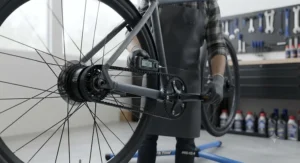
Long-Term Cost & Maintenance: Total Ownership Cost Over 5 Years
Numbers make this argument better than adjectives do, so here’s a straightforward five-year comparison for a typical UK commuter covering roughly 4,000km a year — treating “servicing” as the recurring cost, not the bike’s purchase price, which obviously varies by model chosen from the seven above.
| Cost Item (5 years) | Belt Drive eBike | Chain Drive eBike |
|---|---|---|
| Drivetrain replacements | 1 belt + sprocket service | 3-4 chains, 1-2 cassettes |
| Estimated drivetrain spend | £150-£250 total | £150-£280 total |
| Lubricant & cleaning products | Minimal to none | £40-£80 across 5 years |
| Clothing/laundry from grease | Negligible | Ongoing minor cost |
| Time spent on drivetrain upkeep | Very low | Regular, ongoing |
The direct pound-for-pound drivetrain spend across five years turns out closer than belt-drive marketing sometimes implies — belts aren’t dramatically cheaper in raw parts cost, they’re dramatically less frequent and less messy. Add back the lubricant, degreaser, and the genuinely real cost of ruined trousers over five years, and the belt drive’s advantage becomes less about pounds and more about hassle avoided — which, for a daily commuter, is often the deciding factor anyway. Where belts pull clearly ahead financially is in avoided workshop labour charges: fewer visits for drivetrain attention means fewer call-out or workshop labour fees stacking up over the ownership period.
Practical Usage Guide: Setting Up and Maintaining Your Belt Drive eBike
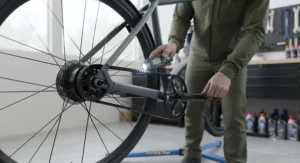
Getting the most out of a belt drive starts before you’ve even ridden it home. Correct belt tension matters more than most new owners expect — Gates recommends checking tension with a simple smartphone app that essentially works like a guitar tuner, aiming for a specific frequency range (commonly 35-50Hz depending on the bike) by plucking the belt like a string. Too loose and the belt can skip under hard pedalling; too tight and you’re adding unnecessary strain on the bearings and sprockets. Most manufacturers set this correctly at the factory, but it’s worth rechecking after the first 100-200km, since components can bed in slightly.
Beyond tension, the maintenance routine is refreshingly short. Rinse the belt and sprockets with water if they pick up mud or grit — never degreaser or solvent-based cleaners, which can degrade the belt’s polyurethane coating over time. Avoid parking the bike leant directly on the belt side, since a sharp fold under load is one of the few things that can genuinely damage a Gates belt outside of normal wear. The most common first-30-days mistake new owners make is treating the belt like a chain and reaching for chain lube “just in case” — don’t; it does nothing useful and can actually attract grit. Finally, get into the habit of a quick visual check every few weeks for cracking, fraying edges, or debris caught between the belt and sprocket teeth, since catching a small stone early is a five-second fix rather than a belt-damaging one.
Real-World Scenarios: Who Actually Saves Money With a Belt Drive?
Consider three genuinely different UK riders. First, a graduate commuting 6 miles each way across a flat city centre, riding roughly 230 days a year — for them, a single-speed option like the Tenways CGO600 Pro or Ampler Curt makes complete sense: no hills to expose the gearing limitation, high annual mileage to justify the belt’s durability, and minimal desire to spend evenings on bike maintenance. Their break-even point against a similarly specced chain bike likely arrives within three to four years, once avoided chain replacements and lubricant purchases are totalled up.
Second, a family in a hilly market town needing a bike for the school run and weekend errands, covering shorter but more varied terrain — here, the Canyon Commuter:ON or a Riese & Müller family configuration with a wider-range hub gear earns its keep, since the internal hub’s sealed design shrugs off the grit that a school-run bike inevitably picks up, and the wider gear range handles the hills a single-speed simply can’t. Third, a weekend tourer covering 40+ miles on canal paths and country lanes several times a month — for this rider, the Cube Kathmandu Hybrid Comfort Pro 800 or the touring end of the Riese & Müller range makes the strongest case, where the belt’s resistance to grit and water genuinely outperforms a chain exposed to the same conditions mile after mile, and the larger battery matches the higher mileage.
How to Choose a Belt Drive eBike
Six criteria consistently separate a good belt-drive purchase from a regretted one:
- Match the gearing to your terrain. Single-speed suits flat commutes; a wide-range internal hub (Nexus, Alfine, Enviolo, or Rohloff) suits hills or mixed terrain — check this before anything else, since it can’t be retrofitted easily later.
- Check sprocket material, not just belt spec. A CDX (metal) rear sprocket will outlast a CDN (plastic) one significantly under regular commuting loads.
- Weigh battery size against your actual route length. A bigger battery adds weight and cost that’s wasted if your commute is genuinely short.
- Confirm local servicing availability. Belt-specific parts aren’t stocked at every corner bike shop, so check a dealer network exists near you before buying, especially for boutique brands.
- Factor in total weight versus your storage situation. A folding or ultra-light option matters far more if you’re carrying the bike up stairs daily than if it lives in a garage.
- Compare warranty terms, not just headline price. Drivetrain and motor warranty length varies meaningfully between the brands covered above, and it directly affects your real cost of ownership.
Common Mistakes When Buying or Owning a Belt Drive eBike
The single most common mistake is assuming “low maintenance” means “zero maintenance” — belts still need occasional tension checks and a visual inspection, they just don’t need the weekly lubing a chain demands. A close second is buying a single-speed belt bike without honestly assessing the local terrain; a flat-looking commute on a map can hide a nasty rise that a geared bike would shrug off and a single-speed genuinely struggles with. Buyers also frequently overlook sprocket condition when budgeting for eventual belt replacement, assuming the belt itself is the only cost, then facing a larger bill than expected when sprockets need swapping too.
Another recurring error is applying chain lube “just to be safe” — as covered above, this does nothing useful on a belt and can actively attract dirt. Finally, some buyers underestimate how heavily belt drives lean on correct tension: a belt run persistently too loose will skip and wear prematurely, while one run too tight adds needless bearing strain, so it’s worth learning the basic tension check rather than assuming factory setup will remain perfect forever.
Features That Actually Matter (And Those That Don’t)
Torque sensors matter considerably more than headline motor wattage once you’re within the UK’s mandatory 250W limit anyway — a smooth torque sensor makes assistance feel natural, while a basic cadence sensor delivers a noticeably jerkier on-off feel regardless of what the wattage figure claims. Sprocket material (CDX versus CDN) matters more than most buyers realise at purchase time, directly affecting how often you’ll be back at the bike shop. Hydraulic disc brakes are worth prioritising over cable-actuated discs, since braking performance directly affects safety in UK weather far more than most cosmetic spec differences do.
On the “doesn’t matter much” side: marginal battery capacity differences beyond your realistic route length are largely wasted weight and cost. App connectivity features are pleasant but rarely change the actual riding experience in any meaningful way. And colour-matched accessories, while nice, shouldn’t influence a decision between two otherwise well-matched bikes — that’s exactly the kind of choice that belongs at the bottom of your priority list, not the top.
Safety, Regulations & Compliance for UK eBike Owners
Every bike covered in this guide is built to qualify as an Electrically Assisted Pedal Cycle (EAPC) under UK law, meaning a maximum continuous motor rating of 250W and assistance that cuts out at 15.5mph (25km/h) — meet those two conditions and the bike is treated exactly like an ordinary pedal cycle, with no licence, registration, tax, or insurance requirement. The official EAPC guidance on GOV.UK confirms these thresholds and covers the labelling requirements manufacturers must meet, which is worth a quick check if you’re ever buying a used or imported model rather than a UK-spec new one.
Belt drives don’t change any of this regulatory picture directly, but they do intersect with safety in a couple of practical ways worth knowing. A belt that’s run badly under-tensioned can skip under hard acceleration, which matters most at junctions where sudden, confident power delivery is genuinely useful. And because belts can’t be shortened or adjusted the way a chain can with a quick link, a snapped belt — genuinely rare, but not impossible on heavily worn sprockets — leaves you without drive entirely rather than with a rough-but-rideable fix, so it’s sensible for regular high-mileage riders to carry a spare on longer, more remote routes. Cycling UK’s guidance is a solid ongoing reference point if the rules shift again, since power-limit proposals have been consulted on before and could resurface.
FAQ
❓ Is a belt drive worth it on an electric bike?
❓ Can you put a belt drive on any ebike?
❓ How often should a Gates belt be replaced?
❓ Do belt drive ebikes need any maintenance at all?
❓ Are belt drive ebikes more expensive to buy?
Conclusion
Working through belt drive ebike maintenance cost properly — not the marketing shorthand, but the actual figures — tells a fairly balanced story. Belts aren’t a magic bullet that makes ebike ownership free; a full belt-and-sprocket service still runs £150-£250 every several years. What they genuinely deliver is frequency: two to four times the mileage between services compared with a chain, zero lubrication routine, and a drivetrain that shrugs off British weather in a way exposed metal links simply can’t. Whether that trade makes sense for you comes down to your specific terrain, your annual mileage, and honestly, how much you value never scrubbing chain oil off your ankle again.
Of the seven models covered, the right pick genuinely depends on your situation: flat, high-mileage commutes favour the featherweight single-speed options; hillier or more varied routes favour an internal hub gear; and anyone treating this as a multi-year investment should look hardest at the touring-focused end of the range. Whichever direction you go, you’re buying into a drivetrain philosophy that’s had over a century of belt engineering behind it — Gates didn’t invent belt drives for bicycles from scratch, it adapted proven industrial and automotive belt technology, which is a reassuring pedigree for something bolted to your daily commute.
Recommended for You
- Belt Drive Commuter Ebike: 7 Best Clean-Riding Picks 2026
- Bluetooth Enabled Ebike UK: 7 Smart-Connected Picks for 2026
- Electric Bike Theft Statistics 2026: 7 Ways Owners Fight Back
Disclaimer: This article contains affiliate links. As an Amazon Associate, I earn from qualifying purchases. If you purchase products through these links, we may earn a small commission at no additional cost to you.
✨ Found this helpful? Share it with your friends! 💬🤗
