In This Article
Buying a fully insured electric bike sounds simple until you actually try to do it — and then you discover that “insurance” can mean thirty days of free cover, a lifetime discount code, or a genuine bundled policy sitting alongside the bike on the shop floor. None of those things are quite the same, and mixing them up is how riders end up uninsured the moment it actually matters. This guide cuts through the marketing language and looks at what a fully insured electric bike really involves in the UK today, from the legal backdrop right through to seven real models worth shortlisting.
Here’s the twist most buyers miss: in the UK, insurance for a compliant electrically assisted pedal cycle (EAPC) is optional, not compulsory. That freedom is exactly why so many riders end up under-protected — nobody forces the conversation, so it simply doesn’t happen. A £2,000 battery-and-motor system left locked to a railing overnight is a very different risk to a £200 pub bike, yet both get treated the same by a lot of buyers. Whether you’re weighing an electric bike with insurance included against a bike-plus-separate-policy combo, or trying to work out what an insured e-bike package actually protects, this article walks through the real products, the real providers, and the real trade-offs so you can make a properly informed call.
Quick Comparison Table
| Product | Best For | Motor / Battery | Price Range | Insurance Angle |
|---|---|---|---|---|
| VOLT Explore | Bundled cover from day one | 250W, up to 500Wh | £1,600-£1,800 range | 30 days free Laka cover on purchase |
| Decathlon Riverside 520 E | Budget all-rounder | 250W, 500Wh | £1,100-£1,400 range | Home contents or standalone policy |
| ADO Air 28 | Lightest budget commuter | 250W, ~10Ah battery | £900-£1,100 range | Standalone e-bike policy recommended |
| Bird Bike (Halfords) | Smart security & tracking | 250W Bafang, GPS app | £1,600-£1,900 range | Halfords/Cycleplan discount route |
| Cube Ella Ride Hybrid 500 | Retro step-through, mid-range | Bosch 250W, 500Wh | £2,300-£2,800 range | Bikmo 25% e-bike discount eligible |
| Cube Kathmandu Hybrid EXC | Long-range touring | Bosch CX, 800Wh | £3,300-£4,500 range | High agreed value cover essential |
| Brompton Electric P Line | Premium folding | 250W, removable battery | £3,700-£3,900 range | Bikmo/Cycleplan multi-bike discount |
Look at the spread here and a pattern jumps out immediately: price and insurance need rise together. A sub-£1,200 bike like the Decathlon Riverside 520 E is annoying to lose but rarely bank-breaking, so a decent home contents add-on can genuinely suffice. Once you’re into Bosch- or Brompton-territory, though, a dedicated policy with proper agreed value cover stops being a nice-to-have and starts being the only sensible option, because a total loss claim on a standard contents policy will usually hit a single-item cap long before it reaches the bike’s real worth.
💬 Just one click — help others make better buying decisions too! 😊
Top 7 Fully Insured Electric Bike Picks: Expert Analysis
1. VOLT Explore — insurance and servicing bundled in from day one
The standout here isn’t a spec sheet number, it’s the ecosystem: buy a VOLT Explore and you’re automatically offered 30 days of free cycle insurance through specialist insurer Laka, alongside servicing perks, making it about as close as the UK market gets to a genuine electric bike with insurance included at the point of sale. The bike itself runs a 250W rear-hub motor paired with battery options up to 500Wh depending on trim, giving realistic mixed-terrain range in the 40-60 mile bracket — plenty for most commutes with margin to spare on a bad headwind day. VOLT is a British-designed brand built specifically around commuting reliability rather than off-road thrills, which shows in the sensible mudguards, rack mounts and step-through frame options aimed at riders who just want to get to work dry and on time. Reviewers on cycling forums and retailer review sections consistently flag the low weight for the category and the responsive customer service as strong points, while a recurring theme in feedback is that the entry-level battery feels modest if your commute regularly exceeds 20 miles each way. On balance, this is a smart pick for anyone who wants a genuinely insured e-bike package without chasing down a third-party policy themselves in week one.
Pros:
- ✅ Free introductory insurance removes day-one admin
- ✅ Lightweight frame for the category, easy to carry
- ✅ Strong UK-based customer support reputation
Cons:
- ❌ Entry battery limits range on longer commutes
- ❌ Premium trims push toward mid-range pricing fast
Sitting in the £1,600-£1,800 range for the base trim, with higher-specification versions climbing well beyond that, the VOLT Explore earns its keep by bundling peace of mind into the purchase rather than leaving you to sort it out afterwards.
2. Decathlon Riverside 520 E — best budget all-rounder
What most buyers overlook about the Decathlon Riverside 520 E is how much torque sensor technology has trickled down into genuinely affordable e-bikes — this one uses a proper torque sensor rather than a cheaper cadence sensor, which means the assistance actually matches how hard you’re pedalling instead of kicking in with a jarring delay. The 250W motor delivers up to 42Nm of torque from a 500Wh battery, giving a claimed assistance range of around 100km (62 miles), and the Suntour suspension fork with Tektro hydraulic disc brakes is respectable kit at this price point. Based on the spec comparison with rivals nearby, this is the bike for someone who wants a genuinely capable commuter without stretching into four figures territory beyond what’s necessary — it’s aimed squarely at value-conscious riders rather than gram-counting enthusiasts. Aggregated owner feedback on retailer sites tends to praise the ride comfort and the backlit LCD display’s clarity, while a common complaint in user reviews is that the standard lock mount and lack of integrated GPS tracking make it a target for opportunist theft unless you invest in your own Sold Secure-rated lock. Because Decathlon doesn’t bundle a dedicated policy, this is very much a “buy the bike, then sort the insured e-bike package yourself” situation.
Pros:
- ✅ Torque sensor gives natural, responsive assistance
- ✅ Hydraulic disc brakes at a budget price point
- ✅ Around 100km assistance range on a full charge
Cons:
- ❌ No bundled insurance or theft tracking as standard
- ❌ Suspension fork feels basic on rougher surfaces
At roughly £1,100-£1,400 depending on colourway and promotions, this remains one of the strongest value propositions in the category, provided you budget separately for cover.
3. ADO Air 28 — lightest budget commuter
The standout feature on the ADO Air 28 is straightforward: it’s built to feel like a normal bike first and an e-bike second, with a slim aluminium frame that keeps total weight well below most rivals in its price bracket. A 250W rear-hub motor and a removable battery pack deliver EAPC-compliant assistance up to 15.5mph, and the low weight genuinely changes the ownership experience — carrying it up a flight of stairs or lifting it onto a train rack doesn’t feel like a workout in itself. What the spec sheet won’t tell you, but reviewers note, is that lighter e-bikes like this tend to feel more like “a bike with help” than “an electric vehicle,” which suits urban riders who want understated transport rather than a statement piece. This makes it a practical choice for flat-to-gently-rolling city commutes, though hillier routes will ask more of the smaller battery than they would of a bigger-capacity rival. Aggregated review sentiment across retailer platforms commonly highlights the easy assembly and manageable size for storage in small flats, while a repeated concern is that the compact battery limits range compared with heavier, bigger-battery competitors — a trade-off, not a flaw, but one worth knowing before you buy.
Pros:
- ✅ Genuinely lightweight for easy carrying and storage
- ✅ Removable battery simplifies charging indoors
- ✅ Understated look suits everyday urban commuting
Cons:
- ❌ Smaller battery capacity limits longer-range riding
- ❌ No manufacturer-bundled insurance package
Typically priced in the £900-£1,100 range, the ADO Air 28 is a sound entry point into electric bike with insurance included territory once you pair it with a standalone specialist policy.
4. Bird Bike (Halfords) — best for smart security and tracking
The Bird Bike‘s standout trick is baked-in connectivity: a Bluetooth link to the Bird app gives you a security alarm and battery controls straight from your phone, which matters enormously when insurers increasingly ask about tracking and alarm provisions before quoting. Built around a 250W Bafang rear-hub motor with up to 25km/h assist and a claimed range approaching 100km, the bike also runs a 7-speed Shimano drivetrain that handles UK inclines with more composure than a single-speed setup would manage. Here’s what to weigh: because it’s sold exclusively through Halfords, buyers can pair it directly with Halfords’ Premium E-Bike CycleCare plan, which currently includes a meaningful discount on Cycleplan e-bike insurance — effectively a fast-track route to a properly insured e-bike package without shopping around separately. Aggregated customer sentiment around the Bird Bike and similar Halfords-exclusive models tends to highlight the reassurance of nationwide service centres for maintenance, while some reviewers note that app-dependent security features are only as good as your phone’s battery and signal, so they shouldn’t be treated as a total substitute for a solid physical lock.
Pros:
- ✅ App-based alarm and tracking support insurance applications
- ✅ Nationwide Halfords servicing network backs it up
- ✅ 7-speed drivetrain copes well with UK hills
Cons:
- ❌ Security features rely on phone connectivity
- ❌ Exclusive retailer availability limits price shopping
Sitting in the £1,600-£1,900 range at the time of research, this is a strong mid-range pick for anyone who rates smart security as highly as raw performance.
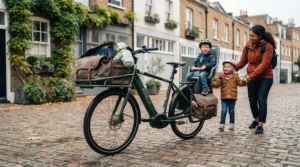
5. Cube Ella Ride Hybrid 500 — best retro step-through, mid-range
What stands out about the Cube Ella Ride Hybrid 500 is the way it disguises serious engineering inside a genuinely handsome, vintage-styled step-through frame — this isn’t a case of style over substance. A Bosch Active Line Plus motor delivering 50Nm of torque draws from a 500Wh Bosch PowerTube battery, assisting up to 25km/h, while a Suntour suspension fork and Shimano Deore hydraulic disc brakes round out a spec sheet that punches well above typical retro-styled competitors. Based on the spec comparison with less established mid-range rivals, the appeal here is Bosch’s ecosystem reliability — parts availability, diagnostic support and battery longevity all benefit from being backed by one of the industry’s most established e-bike drivetrain manufacturers. Because it qualifies for Bikmo’s 25% e-bike premium discount when insured as part of a household policy, it slots neatly into an insured e-bike package strategy for buyers already covering other bikes. Owner feedback commonly aggregated across European and UK retailers praises the smoothness of the Bosch motor’s power delivery, while a recurring theme is that the step-through frame, while stylish, adds a small weight penalty compared with diamond-frame equivalents.
Pros:
- ✅ Bosch motor and battery offer strong long-term reliability
- ✅ Distinctive retro styling without sacrificing performance
- ✅ Qualifies for multi-bike and e-bike insurer discounts
Cons:
- ❌ Step-through frame adds some extra weight
- ❌ Suspension fork is basic rather than premium spec
Retailer pricing in the UK has ranged from around £2,300 up to the £2,800 RRP bracket depending on promotions, positioning it firmly as a mid-to-upper mid-range choice.
6. Cube Kathmandu Hybrid EXC — best for long-range touring
The Cube Kathmandu Hybrid EXC‘s standout feature is sheer range confidence: an 800Wh battery paired with Bosch’s Performance Line CX motor and 85Nm of torque means long weekend tours or hilly, loaded commutes stop being a battery-anxiety exercise. The 11-speed Shimano Cues drivetrain and SR Suntour suspension fork with 100mm of travel give it genuine off-tarmac composure, and a payload allowance well north of 150kg (rider plus luggage) reflects its trekking-bike DNA rather than pure city-commuter intentions. Here’s what most buyers overlook: at this price and this replacement value, a fully insured electric bike stops being optional advice and becomes essential financial sense — a bike carrying an £800+ battery alone represents a loss that most standard contents policies simply won’t absorb without a hefty single-item cap kicking in first. Reviewers and cycling publications consistently note the smoothness and torque of the Bosch CX unit as a genuine step up from entry-level motors, while a fair criticism raised repeatedly is the bike’s substantial weight (around 27kg), which makes it a poor choice for anyone needing to carry it up stairs regularly.
Pros:
- ✅ Class-leading 800Wh range for long tours
- ✅ Bosch Performance Line CX motor delivers strong torque
- ✅ High payload capacity for luggage and touring gear
Cons:
- ❌ Heavy at around 27kg, awkward to carry
- ❌ Premium price demands equally serious cover
Expect to pay somewhere in the £3,300-£4,500 range depending on specification and retailer promotions, making agreed value cover a near-essential companion purchase.
7. Brompton Electric P Line — best premium folding pick
The Brompton Electric P Line‘s standout feature needs no introduction to Londoners: it folds down small enough to slide under a desk or into a train luggage rack, while still packing a proper 250W motor and a genuinely removable battery pack for indoor charging in a flat with no shed or garage. Built in the UK with Brompton’s signature hinge engineering, the bike trades outright speed for portability and multi-modal commuting flexibility — bike, then train, then bike again, without ever leaving it locked outside overnight. Based on the spec comparison with bulkier commuter e-bikes, the case for the P Line isn’t raw performance, it’s risk reduction: a bike that folds and travels with you is a bike that’s rarely left exposed to theft in the first place, which is precisely the kind of behavioural detail insurers reward with better terms. Aggregated review sentiment across owner communities and cycling press repeatedly praises the fold quality and portability, while a consistent gripe is the premium price relative to unfolded, similarly specced rivals — you’re paying handsomely for the engineering, not just the badge.
Pros:
- ✅ Folds small enough for train travel and desk storage
- ✅ Reduces theft exposure by travelling with the rider
- ✅ UK-built hinge engineering with a strong resale reputation
Cons:
- ❌ Premium price versus non-folding equivalents
- ❌ Lower top-end power than dedicated commuter e-bikes
At around £3,700-£3,900 RRP, it sits at the top of this list on price, but multi-bike insurer discounts through providers like Bikmo can soften the ongoing cost of keeping it properly covered.
Practical Usage Guide: Getting Your Insured E-Bike Package Set Up Right
Buying the bike is the easy part; setting up a genuinely insured e-bike package properly is where most riders drop the ball. Start by photographing your frame number, serial number and receipt on day one — insurers ask for this at claim time, and “I’ll do it later” almost always becomes “I never did it.” Within the first week, register the bike on a database like BikeRegister, since several insurers offer premium discounts simply for having done so, and it materially speeds up recovery if the bike is ever found by police. If your model came with a free introductory policy, like the Laka cover attached to the VOLT Explore, calendar the expiry date immediately — these free windows lapse quietly, and gaps in cover are exactly when claims get complicated. During the first 30 days, avoid locking the bike in the same spot at the same time every day; opportunist theft patterns thrive on predictability, and insurers’ claims data consistently shows commuting routines as a major theft risk factor. Finally, check whether your policy requires a specific lock rating (commonly Sold Secure Gold or Diamond) — riding with the wrong lock is one of the most common reasons a theft claim gets reduced or rejected outright.
Real-World Scenarios: Matching Riders to the Right Insured Electric Bike
Consider three genuinely different UK riders. First, a 24-year-old graduate commuting six miles across a city centre on a tight budget: the Decathlon Riverside 520 E paired with a low-cost standalone theft-only policy makes sense here, because the bike’s replacement value doesn’t yet justify a premium comprehensive package, but city-centre theft risk still makes some cover worthwhile. Second, a family in a market town using an e-bike for the weekly supermarket run and occasional 25-mile weekend rides: the Cube Ella Ride Hybrid 500, insured under a household multi-bike policy with a 25% e-bike discount applied, balances comfort, reliability and manageable premiums well. Third, a self-employed courier or long-distance tourer covering 40+ miles most days on varied terrain: here the Cube Kathmandu Hybrid EXC matched with a full agreed value cover policy including business-use riders and worldwide travel extensions is close to non-negotiable, given the replacement cost and daily exposure to risk. None of these riders need the same policy — the mistake is assuming a one-size-fits-all electric bike with insurance included solution exists at all.
Problem → Solution: Fixing the Most Common Insured E-Bike Headaches
Problem one: your bike’s value has grown since you bought it (better wheels, a new battery), but your policy still lists the original purchase price. Solution: most specialist insurers, including Bikmo, let you update your insured value instantly through an online account with no admin fee — do this whenever you add meaningful parts. Problem two: you assumed home contents insurance covered your bike away from the house, only to find an “away from home” exclusion buried in the policy wording. Solution: read the definitions section specifically, not just the headline cover summary, and consider a specialist policy if your bike regularly leaves your property. Problem three: a claim gets reduced because the bike wasn’t locked to an immovable object with a rated lock. Solution: check your policy’s locking requirements before you buy a lock, not after a claim is rejected. Problem four: you’re unsure whether accidental damage from a pothole is covered. Solution: confirm accidental damage is explicitly listed, since some cheaper theft-only policies exclude it entirely. Problem five: you’ve bought a second e-bike and assumed the same premium applies. Solution: multi-bike discounts of up to 50% are common across specialist insurers, so always add additional bikes to an existing policy rather than starting a fresh one.
What Is a Fully Insured Electric Bike?
A fully insured electric bike is an EAPC-compliant e-bike covered by a policy — either bundled at purchase or arranged separately — that protects against theft, accidental damage, and typically includes third-party liability if the rider causes injury or damage to someone else. It isn’t a legal requirement in the UK for compliant EAPCs, but given typical replacement values of £1,000-£4,500+, it’s widely considered sound financial protection.
How to Choose a Fully Insured Electric Bike
- Check EAPC compliance first — confirm the motor is capped at 250W and assistance cuts off at 15.5mph, since non-compliant bikes fall outside standard e-bike insurance entirely.
- Match the insured value to real replacement cost, including the battery, which is often the single most expensive component to replace.
- Compare policy excess structures — a lower headline premium sometimes hides a higher excess that bites hard at claim time.
- Confirm third-party liability is included, not an optional add-on, especially if you ride in busy urban traffic or shared paths.
- Check locking and security requirements before buying a lock, so your existing kit actually satisfies the policy.
- Look for multi-bike or e-bike-specific discounts if you already insure another cycle in the household.
- Read the “away from home” and abandonment clauses carefully, particularly if you commute and lock up for a full working day.
Fully Insured Electric Bike vs Standard Manufacturer Warranty
| Coverage Area | Manufacturer Warranty | Fully Insured Electric Bike |
|---|---|---|
| Manufacturing defects | Usually covered | Not the focus, though some overlap exists |
| Theft | Not covered | Covered under most specialist policies |
| Accidental damage | Rarely covered | Covered under comprehensive policies |
| Third-party liability | Not covered | Commonly included, often up to £2m |
| Best For | New bikes with faulty parts | Everyday riders facing theft or accident risk |
A manufacturer warranty and a fully insured electric bike solve entirely different problems, and treating one as a substitute for the other is a genuinely common and costly mistake. Warranties protect you against the manufacturer’s own errors, while insurance protects you against the outside world — theft, accidents and your own liability to others. Riders who assume “it’s under warranty” covers a stolen bike are, unfortunately, discovering the gap the hard way.
✨ Don’t Miss These Exclusive Deals!
🔍 Ready to Ride Fully Protected?Compare current listings on the models above and check today’s availability before prices shift. A properly insured e-bike package is one decision that pays for itself the moment you need it most — don’t leave it until after the fact.
Policy Excess, Agreed Value Cover and Third-Party Liability Explained
These three terms cause more confusion than almost anything else in cycle insurance, so it’s worth untangling them properly. Policy excess is the amount you personally contribute toward a claim before the insurer pays the rest — specialist providers commonly set this around £40 or 10% of the claim value, whichever is greater, though some offer £0 excess when you replace through an approved retail partner rather than taking a cash settlement. This matters hugely for expensive bikes: a 10% excess on a £4,000 Cube Kathmandu Hybrid EXC claim is £400, a meaningful sum worth factoring into your budget before you need to claim, not after.
Agreed value cover means the insurer pays out the value you’ve declared and insured the bike for, without deducting depreciation — a proper agreed value policy on a Brompton Electric P Line should pay close to its true replacement cost, not a discounted “market value” figure reflecting wear and age. This differs sharply from how many home contents policies treat bikes, where depreciation can quietly erode a payout.
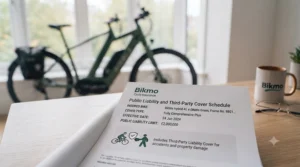
Third-party liability, meanwhile, protects you financially if you cause injury to another person or damage to their property while riding — specialist e-bike policies often provide cover up to £2 million for exactly this scenario. Given that e-bikes are heavier and typically faster off the mark than standard bicycles, and busy shared paths and urban traffic raise the odds of a collision, third-party liability arguably deserves as much attention from buyers as theft cover does, even though theft understandably grabs more headlines.
Common Mistakes When Buying an Insured E-Bike Package
The single most common mistake is under-declaring the bike’s value to shave a few pounds off the premium, which then caps any payout well below the true replacement cost. A close second is assuming that a “free” introductory policy, like the 30-day windows offered by several brands and retailers, will simply roll into ongoing cover — it usually won’t unless you actively convert it before expiry. Riders also frequently overlook battery cover specifically; some cheaper policies exclude batteries from accidental damage cover or cap the payout for battery replacement separately from the frame. Another recurring error is locking the bike with whatever lock was already in the shed, rather than checking the policy’s minimum lock rating requirement first — a claim can be reduced or rejected if the lock doesn’t meet the stated Sold Secure standard. Finally, plenty of buyers never update their insured value after adding accessories, a better battery, or a full-suspension upgrade, leaving a meaningful protection gap that only becomes obvious after something goes wrong.
Safety, Regulations and EAPC Compliance Guide
UK law treats a compliant electrically assisted pedal cycle exactly like an ordinary bicycle: no licence, no registration, no compulsory insurance, provided the motor’s continuous rated power doesn’t exceed 250 watts and assistance cuts off at 15.5mph. The official government guidance on electric bike rules also highlights a separate but important safety issue: battery fires linked to poor-quality or modified lithium-ion batteries, particularly on non-compliant or aftermarket-converted bikes. This is one more reason buying a complete e-bike from an established brand — several of which appear in this guide — makes more sense than fitting a conversion kit to an ordinary bicycle, both for safety and for insurability, since many insurers will decline cover on non-standard conversions altogether. Anything exceeding the EAPC limits legally becomes a moped or motorcycle in the eyes of the law, requiring registration, a licence, DVLA paperwork and compulsory third-party insurance — a completely different, and considerably more expensive, category of ownership.
Long-Term Cost and Maintenance: Is the Insurance Worth It?
| Ownership Factor | Budget E-Bike (~£1,000-£1,400) | Premium E-Bike (~£3,300-£4,500) |
|---|---|---|
| Typical annual insurance premium | Lower, often £80-£150 | Higher, often £200-£350+ |
| Battery replacement cost | Meaningful relative to bike value | Smaller proportion of total value |
| Theft attractiveness | Moderate | High |
| Best For | Occasional or short-distance riders | Daily commuters and tourers |
According to Office for National Statistics bicycle theft data, bike theft remains a persistent risk across the UK, and higher-value e-bikes are disproportionately attractive targets given their resale value on secondhand marketplaces. Looking at the numbers above, the premium tier’s higher insurance cost is proportionally smaller relative to the bike’s total value than it first appears, since a total loss claim on a £4,000 bike without cover is a far bigger financial hit than an extra £150 a year in premiums. Budget-conscious buyers on cheaper models shouldn’t skip cover entirely either, since even a modest £1,000 bike represents a real loss for most household budgets if stolen uninsured.
FAQ
❓ Do I legally need insurance for an electric bike in the UK?
❓ What does an electric bike with insurance included actually cover?
❓ How much is policy excess on e-bike insurance?
❓ Does agreed value cover mean I get the full purchase price back?
❓ Is third-party liability included automatically in e-bike insurance?
Conclusion
A genuinely fully insured electric bike isn’t about chasing the cheapest premium or the flashiest “insurance included” sticker — it’s about matching real cover to real risk. A budget commuter like the Decathlon Riverside 520 E or ADO Air 28 might only need modest theft protection, while a premium tourer like the Cube Kathmandu Hybrid EXC or a folding Brompton Electric P Line genuinely justifies proper agreed value cover and robust third-party liability. Understanding policy excess, agreed value cover, and what an insured e-bike package actually includes puts you in a far stronger position than simply trusting a marketing headline. Whichever of the seven bikes above suits your budget and riding style, treat the insurance conversation as part of the purchase decision, not an afterthought tacked on weeks later.
Recommended for You
- Ebike Light Legal Requirements: 7 Essential UK Picks for 2026
- Lit Electric Commuter Bike: 7 Brilliantly Lit Picks for 2026
- IP65 Rated Electric Bike: 7 Best Waterproof E-Bikes 2026
Disclaimer: This article contains affiliate links. As an Amazon Associate, I earn from qualifying purchases. If you purchase products through these links, we may earn a small commission at no additional cost to you.
✨ Found this helpful? Share it with your friends! 💬🤗
