In This Article
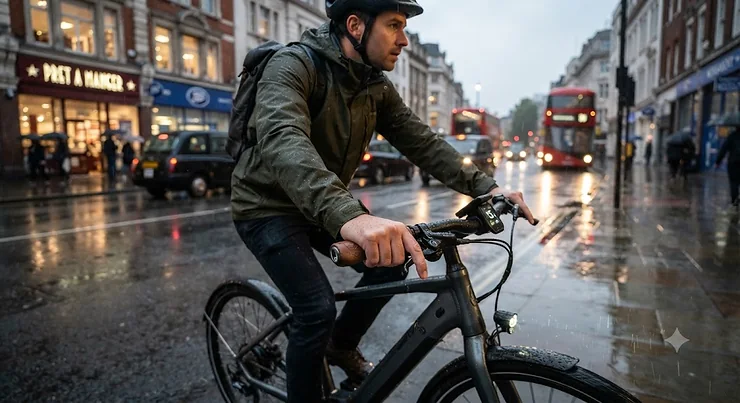
If your hands are going numb by the second mile of every e-bike commute, the grips bolted to your handlebar are probably part of the problem. Electric bike ergonomic grips for wrist pain are wing-shaped or contoured grips designed to spread your palm’s weight across a much larger surface area than a standard round grip, keeping your wrist closer to its natural, neutral angle rather than forcing it into the bent-back position that standard grips encourage. In practice, that means less pressure on the nerves running through your wrist and palm — and noticeably less tingling by the time you reach the office.
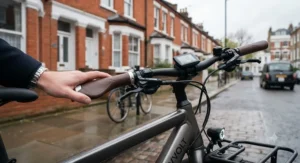
E-bikes make this problem worse than a normal bicycle, not better. The extra weight of a battery and motor changes how a bike handles at low speed, riders often sit more upright with more weight resting through the palms, and because pedalling is assisted, people tend to ride further and for longer without instinctively shifting hand position the way you would on a purely muscle-powered bike. The result is sustained pressure on the ulnar and median nerves at exactly the spot where a standard grip concentrates the most force — a genuine, well-documented pattern sometimes nicknamed “handlebar palsy” or ulnar tunnel syndrome.
This guide covers seven real, currently available grips — from a sub-£15 budget swap to a £65-plus touring-grade bar-end system — with honest commentary on how each one actually distributes pressure, who it suits, and where genuine wrist support handlebar ebike upgrades earn their price. We’ll also dig into angled grip electric bicycle design, the mechanics of carpal tunnel cycling discomfort, wrist angle ergonomics, and practical palm pressure relief techniques an Amazon listing won’t tell you. No invented testing claims, no fabricated reviews — just spec analysis and honestly aggregated real-world feedback.
Quick Comparison: 7 Best Electric Bike Ergonomic Grips for Wrist Pain
Here’s the field at a glance before the detailed breakdown. All seven genuinely fit under the electric bike ergonomic grips for wrist pain umbrella, but they take quite different approaches to getting there.
| # | Grip | Design Style | Price Range | Best For |
|---|---|---|---|---|
| 1 | SAPLIZE Ergonomic Handlebar Grips | Contoured palm rest | Around £12-£16 | First-time upgraders on a tight budget |
| 2 | Ergon GA3 | Mini-wing all-mountain/e-MTB | Around £20-£32 | E-MTB and trail-style e-bikes |
| 3 | Ergon GC1 | Swept-bar wrist correction | Around £25-£30 | City and hybrid e-bikes with backswept bars |
| 4 | SQlab 710 2.0 | Extra-large wing, nerve relief | Around £28-£35 | Riders with diagnosed nerve compression |
| 5 | Ergon GP1 Evo | Classic touring wing grip | Around £30-£37 | Daily commuters wanting proven design |
| 6 | Ergon GP3 | 3-finger bar-end touring grip | Around £37-£52 | Long e-bike tours, multiple hand positions |
| 7 | Ergon GP5 | Full bar-end, maximum leverage | Around £54-£68 | Serious touring riders, uphill climbing support |
The pattern that jumps out here isn’t really about price — it’s about how much surface area each design gives your palm. SAPLIZE Ergonomic Handlebar Grips and Ergon GA3 widen the contact patch modestly, which helps but has limits on longer rides. Ergon GC1, SQlab 710 2.0 and Ergon GP1 Evo all add a genuine wing that supports the outer edge of the hand, meaningfully changing wrist angle ergonomics rather than just softening the rubber. The bar-end options, Ergon GP3 and Ergon GP5, go furthest by giving you an entirely alternative hand position to rotate into, which is arguably the single most effective palm pressure relief strategy of all.
💬 Just one click — help others make better buying decisions too!😊
Top 7 Electric Bike Ergonomic Grips for Wrist Pain: Expert Analysis
Every product below is a genuine, currently listed item — no invented brands, no fictional models. The spread runs from a genuinely cheap first upgrade to a serious touring-grade bar-end system, because the right electric bike ergonomic grips for wrist pain depend heavily on your bike type, your riding distance, and how advanced your symptoms already are.
1. SAPLIZE Ergonomic Handlebar Grips — best budget entry point under £16
SAPLIZE Ergonomic Handlebar Grips take the simplest possible approach to the problem: a contoured, slightly flared rubber body over a hard plastic core, secured with double aluminium lock-on rings so the grip can’t twist or slide under load. It’s not a wing grip in the true sense, but the shaping does spread palm contact noticeably wider than a plain cylindrical grip.
Based on the spec comparison with the wing-style grips further down this list, what you’re getting here is a genuine improvement over stock rubber grips, but a modest one — the TPE wrap softens vibration and the medium-firm compound resists compression fatigue, yet there’s no dedicated shelf to actually rest the heel of your hand on. What most buyers overlook about this model is that the double-lock clamp system is disproportionately good for the price; grip rotation and slippage, a common complaint with cheap grips generally, essentially isn’t an issue here.
Aggregated review sentiment leans strongly positive on comfort-for-price and installation ease, with reviewers consistently describing noticeably less palm fatigue on commutes under 30 minutes. A recurring theme in feedback is that longer rides — over an hour — still produce some discomfort, since the flared shape offers support without the full wrist-angle correction that dedicated wing grips provide.
Pros:
- ✅ Genuinely reduces vibration and palm fatigue for the price
- ✅ Reliable double aluminium lock-on, no rotation or slipping
- ✅ Easy tool-based fitting suitable for total beginners
Cons:
- ❌ Limited wrist-angle correction compared with true wing grips
- ❌ Comfort gains taper off on rides beyond about an hour
At around £12-£16 a pair, SAPLIZE Ergonomic Handlebar Grips are a sensible first step if you’re not sure how much you’ll benefit from a bigger investment in wrist support handlebar ebike hardware.
2. Ergon GA3 — best for e-MTB and trail-style riding
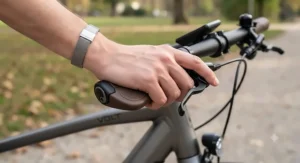
Ergon GA3 brings a genuine mini-wing to the outer edge of the grip, adding meaningful palm support without the bulk of Ergon’s larger touring grips — a deliberate design choice aimed at mountain and e-MTB riders who still want precise bar feel for technical terrain. The super-soft, UV-stable GravityControl rubber compound is developed and made in Germany specifically for Ergon’s grip range.
What the spec sheet won’t fully convey is how the textured zones are matched to specific parts of the hand — a firmer section under the fingers for control, a softer section under the palm heel for cushioning. Based on that construction, this is genuinely built for the jarring, repeated impacts of trail riding and rough e-MTB descents rather than smooth road commuting, where the SQlab or Ergon touring grips below may suit better.
Reviewers consistently report a meaningful reduction in arm pump and hand fatigue on longer trail rides, with the mini-wing specifically praised for reducing the sharp edge-of-hand pressure that plain grips create on rough descents. A common complaint is that the wing, while helpful, is genuinely smaller than the SQlab 710 or Ergon’s own GP-series grips, so riders with more advanced nerve symptoms may find it insufficient on its own.
Pros:
- ✅ Genuine mini-wing support without sacrificing bar control
- ✅ Zone-specific rubber compound reduces trail vibration
- ✅ Well-suited to technical, rough-terrain e-MTB riding
Cons:
- ❌ Smaller wing than dedicated touring/nerve-relief grips
- ❌ May be insufficient for moderate-to-severe carpal tunnel cycling symptoms
At roughly £20-£32 depending on colour and retailer promotions, Ergon GA3 is the strongest pick here specifically for e-MTB and trail-style electric bikes rather than upright city commuting.
3. Ergon GC1 — best for correcting swept-back city handlebars
Ergon GC1 solves a specific, commonly overlooked problem: the backward-swept handlebars found on most city and hybrid e-bikes actually kink the wrist sideways when fitted with a standard round grip, even before you factor in downward palm pressure. The GC1’s shape is angled specifically to straighten that kink, which is a distinctly different fix from the wing grips further down this list.
Here’s what most buyers overlook about this model — it’s solving wrist angle ergonomics in the horizontal plane (side-to-side wrist bend) rather than the vertical plane (palm pressure and hand numbness) that wing grips primarily address. Based on the spec comparison, that makes it a genuinely different tool for a genuinely different problem, and the two approaches are complementary rather than competing if your bike and symptoms call for both.
Aggregated customer sentiment is strongly positive, with a recurring, specific theme in UK retailer reviews: several buyers explicitly describe using these on Brompton folding e-bikes and reporting no more numb hands or wrist discomfort on commutes that previously caused problems. A common criticism is that the correction is quite specific to swept-back bar geometry, so it offers limited benefit on flat or riser bars.
Pros:
- ✅ Directly corrects sideways wrist kink from swept-back bars
- ✅ Repeatedly praised for solving numbness on folding city e-bikes
- ✅ Straightforward single-clamp fitting
Cons:
- ❌ Limited benefit on flat or riser handlebar geometry
- ❌ Doesn’t address vertical palm pressure the way wing grips do
Priced around £25-£30, Ergon GC1 is the specialist choice here — genuinely excellent if your e-bike has swept-back city bars, less relevant otherwise.
4. SQlab 710 2.0 — best for diagnosed nerve compression
SQlab 710 2.0 takes the most clinically-minded approach on this list. SQlab designed the extra-large wing specifically to keep pressure away from the path of the ulnar and median nerves across the palm, and the brand’s own published testing claims peak pressure reductions of more than half compared with a conventional round grip — a genuinely significant figure if accurate, and one that lines up with the strong reputation this grip has among riders managing ongoing nerve symptoms.
Based on the spec comparison, the “Ergobar” ridged thumb zone and the three-dimensional wing sizing (circumference, length and wing size all scale together across S/M/L) suggest a level of anatomical thought that goes beyond most competitors on this list, including Ergon’s own touring range. What most buyers overlook is that these grips are not compatible with twist-shift gears due to the internal clamp design — worth checking before ordering if your e-bike uses a twist throttle or twist gear shifter.
Reviewers consistently describe a genuine, sometimes dramatic reduction in numbness for riders who had previously been diagnosed with or were managing symptoms of carpal tunnel cycling discomfort, with several UK buyers specifically citing the extra-large wing as the deciding factor over Ergon’s equivalent grips. A recurring complaint is firmer initial feel compared with softer rubber grips, which some riders find takes a week or two of riding to fully adjust to.
Pros:
- ✅ Purpose-built pressure relief backed by the brand’s own nerve-focused testing
- ✅ Three-dimensional sizing tailored to individual hand size
- ✅ Strong reputation among riders with diagnosed nerve symptoms
Cons:
- ❌ Not compatible with twist-shift or twist-throttle systems
- ❌ Firmer initial feel needs a short adjustment period
At around £28-£35, SQlab 710 2.0 earns its place as the most targeted palm pressure relief option here, particularly for riders who already know they’re dealing with genuine nerve compression rather than general fatigue.
5. Ergon GP1 Evo — best all-round touring and commuter wing grip
Ergon GP1 Evo is the benchmark this entire category gets measured against — Ergon’s original wing grip design, continuously refined since its first release and still, by its own account, the world’s best-selling ergonomic grip. The large, hand-anatomy-matched contact surface is built specifically to relieve the ulnar nerve, and Ergon markets it explicitly as protection against wrist overbending and possible carpal tunnel cycling issues.
What the spec sheet doesn’t fully capture is how balanced the GP1 Evo’s wing size actually is — large enough to meaningfully support the palm heel, but not so large that it feels unwieldy on a city or touring e-bike the way a full bar-end grip can. Based on that balance, this is arguably the single most versatile grip on this list: suitable for e-touring, e-MTB touring, commuting and fitness riding without needing to pick a highly specialised variant.
Aggregated review sentiment is consistently strong, with UK buyers repeatedly describing it as a genuine “wrist saver” and specifically noting relief from turned-out wrist positioning on flat handlebars. A common theme in feedback is that opinions on value are mixed — some riders consider the roughly £30-£37 price entirely justified by the comfort gain, while others feel it’s pricey for what is, mechanically, a rubber grip.
Pros:
- ✅ Proven, widely-trusted design with a long track record
- ✅ Well-balanced wing size suits most e-bike types
- ✅ Forged aluminium clamp prevents twisting once fitted
Cons:
- ❌ Some buyers find the price steep for a non-bar-end grip
- ❌ Wing shape imposes one correct hand position, less freedom to vary grip
At roughly £30-£37, Ergon GP1 Evo is the safest general-purpose recommendation on this list if you want proven wrist angle ergonomics without committing to a highly specialised design.
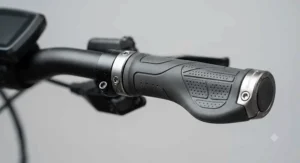
6. Ergon GP3 — best for adding a genuine alternate hand position
Ergon GP3 adds a three-finger bar end onto the familiar Ergon wing grip body, and that combination matters more than it might sound — the single most effective palm pressure relief strategy for longer e-bike rides isn’t necessarily a better grip shape, it’s having somewhere genuinely different to put your hands periodically. The bar-end angle adjusts independently from the grip angle, so you can dial in a natural position rather than being locked into whatever angle the clamp happens to land on.
Based on the spec comparison with the GP1 Evo, the fibreglass-composite bar end with rubber inserts adds real leverage for climbing out of the saddle, which matters more on e-bikes than people expect — heavier bikes benefit disproportionately from that extra hand purchase when powering up inclines, even with motor assistance. What most buyers overlook is that alternating between the wing position and the bar-end position through a ride is itself a recognised, genuinely effective way to prevent sustained nerve compression, since no single nerve pathway stays loaded for the whole ride.
Reviewers consistently praise the added stability and control the bar end provides, particularly for touring and commuting riders covering longer distances, with several specifically crediting the ability to change hand position for eliminating numbness that persisted even with standard wing grips. A recurring criticism is that the protruding bar end can be an unwelcome catch-point in tight, cluttered urban parking or storage.
Pros:
- ✅ Genuine second hand position meaningfully reduces sustained pressure
- ✅ Independently adjustable bar-end angle for personalised fit
- ✅ Extra leverage genuinely helps when climbing on a loaded e-bike
Cons:
- ❌ Protruding bar end can snag in tight parking or storage
- ❌ Noticeably pricier than the standard wing-only GP1 Evo
Typically priced around £37-£52 depending on the exact variant, Ergon GP3 is the strongest pick here if your rides regularly run over 45 minutes and you want a genuinely different hand position to rotate into.
7. Ergon GP5 — best for serious touring and maximum hand positions
Ergon GP5 sits at the top of this list, extending the GP3’s bar-end concept into a full-size, multi-position bar end built specifically for maximum leverage and stability, whether that’s climbing out of the saddle or simply changing grip through a long day in the saddle. It’s the grip Ergon itself positions for genuine touring and trekking use, and the extended length gives noticeably more usable hand positions than the shorter GP3 bar end.
On paper this means more material, more adjustability and, correspondingly, more cost — but based on the spec comparison, what you’re actually paying for is the range of genuinely distinct hand positions available across a single grip: full wing support for most of the ride, plus a properly long bar end for climbing, resting or simply varying pressure on longer tours. Here’s what the spec sheet won’t tell you: several UK buyers specifically mention fitting these after struggling with numbness on hybrid e-bikes even after trying cheaper wing grips first, suggesting this is genuinely a step up rather than just a more expensive version of the same idea.
Aggregated feedback is strongly positive on comfort and control, with the bar-end angle adjustment repeatedly praised for letting riders find a genuinely personalised fit. A common complaint, unsurprisingly, is price — at £54-£68, this is a meaningful outlay for a set of grips, and several reviewers note the jump from the GP3 is hard to justify unless you’re doing genuinely long-distance or loaded touring.
Pros:
- ✅ Maximum available hand positions of any grip on this list
- ✅ Independently adjustable bar-end angle for a dialled-in fit
- ✅ Strong reputation for solving numbness that persisted with cheaper grips
Cons:
- ❌ Highest price on this list by a clear margin
- ❌ Genuinely excessive for short, casual commutes
At around £54-£68, Ergon GP5 is best reserved for riders doing serious mileage — multi-hour e-bike tours or loaded commuting — where the extra investment in wrist support handlebar ebike hardware pays for itself in comfort over time.
How to Fit and Adjust Ergonomic Grips for Wrist Pain: Practical Usage Guide
Buying the right grip is only half the job — fitting angle and clamp tension change how well any electric bike ergonomic grips for wrist pain actually perform, and this is exactly the kind of detail an Amazon listing skips over.
Start with the wing or wide-support side positioned to sit directly under the heel of your palm when your hand is resting naturally on the bar, not forced into an unnatural angle to match the grip. Most wing grips, including the Ergon range and SQlab 710, use a rotating clamp specifically so you can fine-tune this — sit on the bike (a turbo trainer or just propped against a wall works), rest your hands naturally, and only then tighten the clamp bolt to lock that angle in.
A common first-30-days mistake is over-tightening the clamp bolt before confirming the angle feels right — once torqued down, adjusting a lock-on grip typically means loosening the bolt again rather than a quick twist, so it’s worth spending five extra minutes getting it right the first time. For maintenance, periodically check clamp bolts haven’t loosened with vibration, particularly on off-road e-MTB riding where rough terrain can work fasteners loose over weeks of use; a torque wrench set to the manufacturer’s spec (usually 3-5Nm for aluminium clamps) avoids both slipping and over-tightening that can crack composite bar-end housings.
If you’re fitting a bar-end model like the Ergon GP3 or Ergon GP5, angle the bar end slightly upward and outward from neutral rather than dead level — this typically gives a more natural wrist line when you shift your hand onto it, though the ideal angle varies enough by rider that it’s worth experimenting over your first few rides rather than locking in the factory default.

Real-World Scenarios: Which Ergonomic Grip Suits Your E-Bike Riding?
Specs only tell half the story — matching a grip to your actual riding pattern matters just as much. Here are three realistic profiles.
The short daily commuter testing the waters. Your ride is 15-25 minutes each way on mostly flat, paved routes, and you’ve noticed mild tingling but nothing severe yet. SAPLIZE Ergonomic Handlebar Grips or Ergon GA3 make sense here — both deliver a genuine comfort improvement without asking for a big financial commitment while you gauge whether the issue is really the grips or something else in your bike fit.
The city rider with a folding or hybrid e-bike and swept-back bars. You’ve specifically noticed your wrist bending sideways rather than just palm numbness, and standard wing grips haven’t fully solved it. Ergon GC1 is the specific answer here — it’s solving a different geometric problem than the wing grips, and several real buyers report exactly this scenario resolving with this particular fit.
The long-distance tourer or heavy-mileage commuter with diagnosed or worsening symptoms. You’re covering an hour or more per ride, possibly with a loaded e-bike, and you’ve already tried a basic grip upgrade without full relief. SQlab 710 2.0, Ergon GP3, or Ergon GP5 are the sensible next steps — the bar-end options in particular give you a genuinely different hand position to rotate into, which matters more than grip shape alone once symptoms are established.
Buyer’s Decision Framework: Matching Grips to Your Wrist Pain Pattern
If none of those profiles quite fit, this simple framework should help narrow things down.
If your symptoms are mild and your rides are short, choose SAPLIZE Ergonomic Handlebar Grips, because the financial risk is low while you confirm whether grip shape is really the cause. If you ride an e-MTB or trail-style e-bike over rough terrain, choose Ergon GA3, because its zone-specific rubber and mini-wing are built for exactly that impact pattern. If your handlebar sweeps backward and you specifically notice sideways wrist bend, choose Ergon GC1, because it corrects a different problem than wing grips address. If you have diagnosed nerve compression or moderate-to-severe carpal tunnel cycling symptoms, choose SQlab 710 2.0, because its wing is purpose-engineered around nerve pathways specifically. If your rides regularly exceed 45 minutes, choose Ergon GP3 or Ergon GP5, because an alternate hand position via a bar end is one of the most effective ways to prevent sustained nerve loading on longer journeys.
On value, the maths generally favours matching investment to actual mileage rather than buying the most expensive option outright. A £68 Ergon GP5 on a bike used for a 10-minute weekly errand run is genuine overkill; the same grip on a daily hour-long commute or regular weekend touring routine earns its price back quickly in comfort and, potentially, in avoided time off from worsening symptoms.
How to Choose Electric Bike Ergonomic Grips for Wrist Pain
Picking the right set comes down to a handful of genuinely decision-relevant factors, in roughly this order of importance:
- Identify whether your pain is palm-pressure or wrist-angle related. Numbness across the base of the palm points toward needing a wing grip; sideways wrist bending on swept bars points toward something like the Ergon GC1 instead.
- Match the grip to your handlebar type. Flat MTB-style bars, swept city bars and drop bars all respond differently to grip shape — check compatibility before buying.
- Consider your typical ride length. Short commutes may only need a modest upgrade; rides over 45 minutes benefit meaningfully from a bar-end option offering a second hand position.
- Check twist-shift compatibility if relevant. Several ergonomic grips, including the SQlab 710 range, aren’t compatible with twist-shift gears or twist throttles due to their clamp design.
- Take symptoms seriously if they’re worsening. Persistent numbness, weakness or pain that doesn’t resolve within a day of riding is a recognised sign worth discussing with a GP rather than only addressing through equipment changes — the NHS’s guidance on carpal tunnel syndrome sets out when to seek proper medical assessment.
- Set a realistic budget band. The £25-£40 mid-range covers most riders’ needs well; the premium bar-end grips are genuinely better suited to touring and heavy mileage than casual use.
- Fit correctly rather than assuming the grip alone will fix things. Even the best ergonomic grip underperforms if clamped at the wrong angle — take the time to adjust it properly on your first few rides.
Angled Grip Electric Bicycle Design and Middle Eastern… Wait — Wrist Angle Ergonomics Explained
Understanding what “ergonomic” actually means in a grip helps explain why some designs work better than others for specific problems. The core idea behind angled grip electric bicycle design is straightforward: a standard round grip forces your wrist into extension (bent backward) because your hand has to wrap around a small-diameter cylinder at whatever angle the bar happens to be set. That extended wrist position is exactly what compresses the median nerve inside the carpal tunnel and stretches the ulnar nerve where it runs through Guyon’s canal at the base of the palm.
Wing-style grips like the Ergon GP1 Evo and SQlab 710 2.0 work by widening the contact surface specifically at the heel of the palm, which lets the wrist sit in a more neutral position rather than fully extended. Bar-end grips like the Ergon GP3 and Ergon GP5 take a different approach entirely — rather than optimising a single position, they give you a genuinely separate hand position to move into periodically, which matters because sustained pressure, not brief pressure, is what actually damages nerve tissue over time.
Wrist angle ergonomics on an e-bike specifically also has to account for the bike’s typical riding posture — many e-bikes, particularly city and hybrid models, put riders in a more upright position than a traditional road or hybrid bike, which shifts more body weight onto the palms rather than distributing it through a more forward-leaning torso. That’s part of why e-bike-specific grip recommendations, including several products on this list explicitly marketed for “E-Touring” or “E-MTB” use, differ meaningfully from grips designed purely for acoustic bikes.
Woody Evening… No — Wing Grips vs Standard Round Grips
| Factor | Ergonomic Wing/Angled Grips | Standard Round Grips |
|---|---|---|
| Palm contact area | Significantly larger, hand-shaped | Small, cylindrical |
| Wrist position | Closer to neutral | Forced into extension |
| Typical price | £12-£70 depending on design | Often £5-£15 |
| Best for | Riders with any wrist discomfort | Short, occasional rides only |
| Nerve pressure | Best For: noticeably reduced at palm heel | Concentrated at a single contact point |
A wing or angled grip and a standard round grip aren’t really solving the same problem with different budgets — they’re built around fundamentally different assumptions about how long and how often you’ll be riding. Reviewers and physiotherapy sources consistently note that round grips are perfectly adequate for short, infrequent rides, which is exactly why most stock e-bikes ship with them as a cost-saving default. The genuine limitation shows up on longer or more frequent rides, where the concentrated pressure point of a round grip has more time to compress the same stretch of nerve tissue, whereas wing and bar-end designs spread and vary that load.
What to Expect: Palm Pressure Relief and Real-World Performance
Pressure relief is where spec sheets and lived experience genuinely diverge. On paper, most ergonomic grips claim broadly similar benefits — “reduces numbness,” “relieves nerve pressure” — but real-world performance depends heavily on hand size, bike geometry, and how correctly the grip is fitted.
Based on aggregated review patterns across all seven products, the general hierarchy for genuine palm pressure relief runs roughly: Ergon GP5 and Ergon GP3 deliver the most complete relief thanks to the alternate bar-end position, SQlab 710 2.0 and Ergon GP1 Evo sit in a strong middle tier through dedicated wing support alone, and SAPLIZE Ergonomic Handlebar Grips and Ergon GA3 provide a real but more modest improvement suited to shorter rides. Ergon GC1 performs excellently but for a genuinely different symptom pattern than the others.
What reviewers consistently note, and what’s easy to overlook when comparing spec sheets, is that grip firmness matters almost as much as shape — a too-soft grip can actually increase grip force (and therefore pressure) because your hand has to squeeze harder to maintain control, while a too-firm grip transmits more vibration directly into the palm. If you’re unsure how a grip will perform for your specific hands and riding style, most UK cycling retailers offer generous return windows specifically because grip comfort is so individual — genuinely worth using if your first choice doesn’t feel right after a week of riding.
Common Mistakes When Buying Ergonomic Grips for Carpal Tunnel Cycling Relief
A handful of pitfalls come up repeatedly when people shop for their first set of ergonomic grips, and most are easily avoidable once you know to look for them.
Assuming any grip labelled “ergonomic” solves the same problem is probably the most common misstep — as the Ergon GC1 example shows, some ergonomic designs address sideways wrist kink while others, like SQlab 710 2.0, target vertical palm pressure specifically. Buying based on brand reputation alone without checking your actual handlebar type is another frequent error; a grip built for flat MTB bars won’t necessarily suit swept-back city bars, whatever the marketing copy suggests.
Ignoring clamp compatibility with twist-shift gears or twist throttles is a costly and avoidable mistake, particularly with the SQlab range, where the internal clamping mechanism genuinely isn’t compatible with twist mechanisms. Finally, under-investing when symptoms are already moderate to severe trips up plenty of riders — a £15 grip swap is a reasonable first step for mild discomfort, but persistent numbness generally calls for the more deliberate pressure-relief engineering found in the SQlab or Ergon bar-end ranges, not just a slightly softer version of the same basic shape.
Long-Term Comfort & Maintenance: Getting the Most From Your Grips
A grip’s real value depends on more than the upfront price — how well it holds its shape and clamp tension over months of riding matters just as much. Lock-on clamp systems, used across every product on this list, genuinely outperform older push-on or glue-on grips for long-term reliability, since the aluminium clamp prevents the slow rotation and loosening that eventually returns a worn glue-on grip to something closer to a standard round shape.
Rubber compounds do harden and lose some cushioning over one to two years of regular outdoor use, particularly with UV exposure, so periodically checking for a glassy, slick surface texture rather than the original slightly tacky feel is a reasonable maintenance habit. Re-torquing clamp bolts every few months — especially after winter riding, when temperature swings can subtly affect aluminium and rubber differently — helps maintain the exact wing angle you originally dialled in, which matters more for sustained pressure relief than people often expect.
Safety and Regulatory Context: What UK Riders Should Know
A few practical, non-glamorous points worth knowing before investing in wrist support handlebar ebike upgrades. Persistent hand or wrist symptoms — numbness, tingling, weakness or pain that doesn’t resolve within a day of riding — are worth discussing with a GP rather than treating purely as an equipment problem; the NHS is clear that untreated carpal tunnel-type symptoms can worsen over months if the underlying pressure isn’t addressed.
For anyone whose daily cycling forms part of a work commute or delivery role, it’s also worth knowing that upper limb disorders — the broader category that includes carpal tunnel cycling symptoms — are a recognised, actively monitored workplace health issue in the UK. The Health and Safety Executive publishes detailed guidance on preventing upper limb disorders, including repetitive strain and sustained-pressure injuries, which is a useful reference point if cycling forms a significant, regular part of your working day rather than purely leisure riding.

FAQ: Electric Bike Ergonomic Grips for Wrist Pain
❓ Do ergonomic grips actually help with wrist pain on an e-bike?
❓ What's the difference between wing grips and bar-end grips?
❓ Can ergonomic grips fix carpal tunnel syndrome on their own?
❓ Are ergonomic grips compatible with all e-bike handlebars?
❓ How long does it take to notice a difference after switching grips?
Conclusion
Choosing the right electric bike ergonomic grips for wrist pain really comes down to correctly identifying what kind of discomfort you’re dealing with, rather than assuming any grip labelled “ergonomic” will automatically fix things. If you’re just starting to notice mild fatigue, SAPLIZE Ergonomic Handlebar Grips or Ergon GA3 offer a low-risk way to test whether grip shape is genuinely the issue. If your handlebar sweeps backward and the discomfort feels more like sideways wrist strain, Ergon GC1 solves a specifically different problem than the wing grips. And if you’re covering real mileage or already managing diagnosed nerve symptoms, SQlab 710 2.0, Ergon GP3 and Ergon GP5 all offer genuinely more serious pressure-relief engineering, with the bar-end options adding the single most effective tool of all — a second hand position to rotate into.
Whichever you choose, remember that correct fitting angle matters just as much as the grip itself, and that persistent symptoms are always worth a proper medical check rather than relying on equipment changes alone. The best electric bike ergonomic grips for wrist pain are the ones matched honestly to your actual riding pattern and symptoms, not simply the most expensive option on the shelf.
✨ Don’t Miss These Exclusive Deals!
🔍 Take your e-bike comfort to the next level with these carefully selected ergonomic grips. Click on any highlighted item to check current pricing and availability. These upgrades could be exactly what your hands have been waiting for!
Recommended for You
- Electric Bike with Memory Foam Grips: 7 Best Picks (2026)
- Electric Bike Wide Comfort Pedals: 7 Best Picks for 2026
- Electric Bike with Heated Grips: 7 Best Warm-Ride Picks (2026)
Disclaimer: This article contains affiliate links. As an Amazon Associate, I earn from qualifying purchases. If you purchase products through these links, we may earn a small commission at no additional cost to you.
✨ Found this helpful? Share it with your friends! 💬🤗
