In This Article
Let’s be honest: most of us don’t need a £3,000 carbon-fibre rocket. What we need is something that gets us to work without arriving soaked in sweat, tackles that grim hill on the school run, and doesn’t cost more than a decent second-hand car. That’s exactly where a budget hub motor ebike earns its place.
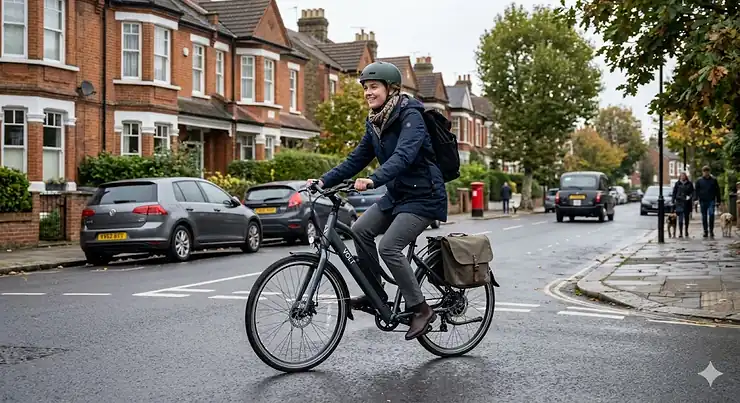
In 2026, the UK e-bike market has never been more exciting — or more confusing. Prices have dropped, quality has risen, and the sheer number of models jostling for shelf space on Amazon.co.uk can make your head swim. But strip away the marketing noise and the picture becomes surprisingly clear: for most British riders, a well-chosen budget hub motor ebike is all they’ll ever need.
So what exactly is one? A hub motor ebike places the electric motor directly inside the wheel hub — either the front or rear — rather than at the cranks. It’s the simpler, more affordable architecture, and it dominates the under-£700 market for very good reason: reliable, low-maintenance, and genuinely capable on everyday British roads. According to Cycling UK, e-bikes now account for a significant and growing share of new bike sales in Britain, with commuters leading the charge.
This guide cuts through the clutter. You’ll find seven real products available right now on Amazon.co.uk, honest commentary on who each one suits, and enough practical insight to make a decision you won’t regret — even on a grey Tuesday morning in November, when the pavement is wet and the wind is doing its worst.
Quick Comparison Table: Best Budget Hub Motor Ebikes UK 2026
| Model | Motor | Battery | Approx. Range | Price Range | Best For |
|---|---|---|---|---|---|
| Eleglide M1 Plus | 250W rear hub | 36V 12.5Ah | Up to 100km | £500–£600 | Trail riding & commuting |
| ENGWE EP-2 Pro | 250W rear hub | 48V 13Ah | 60–120km | £450–£550 | Urban potholes & comfort |
| Fafrees F20 PRO | 250W rear hub | 36V 18Ah | 70–130km | £580–£700 | Folding city commuters |
| HITWAY BK5 | 250W rear hub | 36V 10.4Ah | Up to 60km | £450–£550 | Budget-first beginners |
| SAMEBIKE XWLX09 | 250W hub | 36V 10Ah | 40–80km | £400–£520 | Fat-tyre urban adventures |
| ENGWE M20 | 250W (UK) hub | 48V 13Ah | 40–80km | £700–£900 | Premium folding experience |
| Voilamart Rear Hub Kit | 250W–1000W | Battery sold separately | Varies | £120–£200 | DIY conversion enthusiasts |
All prices checked at time of research on Amazon.co.uk. Prices vary — always check the current listing.
From the table above, the value sweet spot clearly sits in the £450–£600 range — enough budget to get a decent motor, a removable battery, and hydraulic brakes without remortgaging the house. The Fafrees F20 PRO’s 18Ah battery is the standout specification at this price tier; that’s an unusually generous capacity that’ll shrug off multiple days of British commuting before needing a plug. If you’re mostly pottering around town and price is the deciding factor, the SAMEBIKE and HITWAY BK5 represent solid first steps into electric cycling.
💬 Just one click — help others make better buying decisions too! 😊
✨ Don’t Miss These Exclusive Deals!
🔍 Take your budget hub motor ebike search to the next level with these carefully selected products. Click on any highlighted item below to check current pricing and availability on Amazon.co.uk. These picks will help you find exactly what you need!
Top 7 Budget Hub Motor Ebikes: Expert Analysis 🚴♂️⚡
1. Eleglide M1 Plus Electric Mountain Bike
The Eleglide M1 Plus has become something of a cult favourite among UK riders who want genuine versatility without spending a fortune. Its 250W rear hub motor is paired with 29-inch wheels — an unusually large diameter for this price point — which means it rolls over roots, kerbs, and the sort of potholed cycle paths that make other bikes rattle your fillings loose. The 36V 12.5Ah battery offers a claimed range of up to 100km, though in real British conditions (hilly terrain, cold mornings, generous assist settings), expect somewhere in the 60–75km range — still perfectly adequate for most UK commutes.
What makes the M1 Plus particularly compelling for British riders is the combination of 7-speed Shimano gearing and front suspension fork. You’re getting a proper mountain bike geometry with electric assistance bolted on, rather than a flimsy city bike pretending to tackle off-road terrain. It’s equally at home on canal towpaths in the Peak District and the Monday-morning slog into a city centre.
UK customer feedback is consistently positive — one rider in Wales reported using it for a 15-mile forest commute, noting that the 29-inch wheels handled roots and uneven surfaces with ease. It’s Prime-eligible on Amazon.co.uk for fast delivery.
✅ Excellent wheel size for mixed terrain
✅ Removable battery for easy charging in a flat
✅ Genuine Shimano gearing feels quality
❌ Heavier than some folding alternatives (~23kg)
❌ No throttle (pedal-assist only)
Around £500–£600 — outstanding value for a true all-rounder.
2. ENGWE EP-2 Pro Fat Tyre Folding Ebike
If you live on a street where the road surface looks like it survived a minor bombing campaign, the ENGWE EP-2 Pro deserves your attention. The fat 4.0-inch tyres are the headline act here — genuinely chunky, providing shock absorption over British roads’ infamous potholes in a way that narrow tyres simply cannot replicate. Combined with a front suspension fork and padded seat post, it’s almost aggressively comfortable.
The 250W brushless rear hub motor (ensure you buy the EU/UK-legal version, which restricts assistance to 15.5mph) delivers smooth, progressive power. The 48V 13Ah battery offers a realistic 60–80km in eco mode, which drops to around 40km in full-power mode. Worth noting: on cold January mornings, lithium batteries lose roughly 10–15% of their capacity, so factor that into your range expectations. The folding frame collapses small enough to stand in a terraced hallway — a genuine practical win for city living.
Glasgow and Edinburgh riders particularly rate the EP-2 Pro for cobbled streets and cycle paths with inconsistent surfaces, and it’s consistently one of the most-reviewed budget e-bikes on Amazon.co.uk. Buy the UK-legal version explicitly — some sellers offer de-restricted versions which are not compliant with EAPC regulations.
✅ Fat tyres absorb British road carnage brilliantly
✅ Dual suspension adds significant comfort
✅ Folds for storage in compact homes
❌ Heavier than average (~27kg) — tricky to carry upstairs
❌ Must verify you’re buying the UK-legal restricted version
Under £550 in the range — exceptional comfort per pound spent.
3. Fafrees F20 PRO Folding Electric Bike
The Fafrees F20 PRO punches well above its weight class, chiefly because of one specification that stands out like a lighthouse in the fog: its 36V 18Ah battery. At this price point, most competitors are squeaking by with 10–12Ah. The F20 PRO’s larger battery translates into a credible 70–130km range depending on assist level — making it the smart choice for riders with longer commutes or those who simply refuse to charge more than once a week.
The 250W brushless rear motor delivers 40Nm of torque, which is respectable for a hub motor. It won’t haul you up a 20% gradient in silence the way a mid-drive Bosch system would, but for the rolling hills of most UK suburban routes, it’s more than adequate. The 20-inch wheels and folding frame make this ideal for multi-modal London commuting — fold it, board the Overground, unfold and ride. Thousands of London commuters use exactly this pattern daily.
UK buyers regularly mention the build quality exceeding expectations at the price. One Birmingham-based rider noted the fat tyres handled potholed streets particularly well. It’s Prime-eligible on Amazon.co.uk.
✅ Outstanding 18Ah battery — best in class at this price
✅ Folds quickly for public transport and flat storage
✅ Fat tyre comfort on urban surfaces
❌ 20-inch wheels less capable off-road than 27.5–29-inch alternatives
❌ Heavier than basic rigid-frame models
£580–£700 range — the extra battery capacity justifies every penny.
4. HITWAY BK5 Electric Mountain Bike
The HITWAY BK5 is the understated choice in this roundup — it doesn’t have the headline-grabbing fat tyres of the ENGWE or the big battery of the Fafrees, but what it does offer is a thoroughly sensible package at a thoroughly sensible price. The 250W rear hub motor is paired with a 36V 10.4Ah battery — modest, but sufficient for typical UK commutes of up to 30km return. The 26-inch wheels and front suspension fork provide a comfortable ride across mixed surfaces.
Where the BK5 earns its place is accessibility. The geometry is forgiving for new riders, the LCD display is straightforward, and the overall weight (~25kg) is manageable enough to carry up a flight of stairs in terraced housing. It’s the sensible choice for someone who wants to test the electric bike waters without committing serious money — and who might not yet know whether they’ll ride daily or weekly.
Amazon.co.uk UK reviews consistently highlight reliability and ease of use as the BK5’s strongest qualities. It’s not the flashiest option, but it does the job with quiet competence — which is, frankly, a very British virtue.
✅ Genuinely accessible price point
✅ Straightforward, beginner-friendly operation
✅ Sturdy build quality for everyday use
❌ Smaller battery limits longer rides
❌ No folding option for flat/office storage
£450–£550 range — the honest, no-nonsense choice for first-time riders.
5. SAMEBIKE XWLX09 Fat Tyre Electric Bike
The SAMEBIKE XWLX09 occupies a interesting niche: fat-tyre capability at the lowest price point in this roundup. The 4.0-inch fat tyres provide the same pothole-gobbling comfort as the ENGWE EP-2 Pro, but at a noticeably lower price. The 250W hub motor and 36V 10Ah battery are conservative specifications — this isn’t the bike for 50km daily rides — but for urban commutes of up to 30–40km and weekend leisure rides, it performs admirably.
The step-through frame variant is worth noting for riders who find swinging a leg over a top tube awkward, particularly in work clothes or if you have joint issues. It’s one of the more practical considerations that budget e-bikes often overlook entirely.
UK buyers at this price point should be realistic: build quality and component finishes are noticeably below the Eleglide or Fafrees. But if your budget is genuinely stretched and you want the fat-tyre experience, the SAMEBIKE delivers the core experience without the refined packaging.
✅ Fat-tyre comfort at entry-level pricing
✅ Step-through frame option available
✅ Available Prime-eligible on Amazon.co.uk
❌ Smaller battery — less suited to longer routes
❌ Component quality reflects the price point
£400–£520 range — the budget pick for fat-tyre enthusiasts.
6. ENGWE M20 Folding Electric Bike (UK Version)
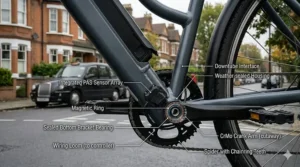
The ENGWE M20 is the premium end of this roundup, and it shows. The international version runs a 750W motor, but the UK variant is appropriately restricted to 250W continuous power — fully EAPC-compliant. What you’re paying for isn’t raw motor wattage but build quality: the dual suspension system, the 20-inch fat tyres, and a general solidity that feels noticeably more assured than cheaper alternatives.
One Edinburgh rider described the M20 as feeling like bikes twice its price — and the cobbled streets of Scotland’s capital are a punishing test of suspension quality. The folding design collapses to flat hallway dimensions, and the overall aesthetic leans towards something you’d actually be proud to pull out in public, rather than hiding it behind the wheelie bins.
The battery range of 40–80km is adequate rather than generous, and at £700–£900 it’s pushing the upper boundary of “budget.” But if you want the best execution in the sub-£900 folding category, the M20 is difficult to argue with.
✅ Dual suspension — genuinely premium ride comfort
✅ Excellent build quality relative to price
✅ Folds compact for flat storage
❌ Higher price stretches the “budget” label
❌ Range more modest than some cheaper competitors
£700–£900 range — the premium choice for those who won’t compromise on ride quality.
7. Voilamart 250W Rear Hub Motor Conversion Kit
Not everyone wants a complete new bike. If you already own a decent bicycle gathering dust in the shed — a quality steel-framed tourer, a reliable hybrid, something with good bones — the Voilamart rear hub motor kit is worth serious consideration. The kit replaces your rear wheel with a motorised equivalent (250W, UK-legal configuration), and includes the controller, LCD display, brake levers with motor cut-off switches, throttle, and pedal assist sensor. Battery not included — you’ll need to source a compatible 36V pack separately, which adds to the total cost but also gives you flexibility over battery capacity.
Installation takes a confident home mechanic around one to three hours. The pedal sensor uses a basic cadence trigger rather than torque measurement, so the assist surges on when you start pedalling rather than graduating with your effort — something to be aware of before the first ride, as the initial pull can surprise you. Cycling Weekly noted in their conversion kit review that the Voilamart’s connectors lack waterproofing, so investing in heat-shrink protection is strongly recommended for British conditions. Ride in any season here and that’s not optional advice — it’s survival strategy.
For DIY-minded riders on tight budgets, this represents the most cost-effective route to electric cycling.
✅ Transforms any bike into an ebike — cost-effective
✅ Simple rear-wheel swap installation
✅ 250W version fully UK-road-legal
❌ Battery not included — total cost higher than it appears
❌ Cadence sensor feel is abrupt vs. torque-sensor alternatives
£120–£200 for the kit (plus battery) — the smart choice for the mechanically confident.
Geared Hub vs Direct Drive: What Actually Matters for UK Riders 🔋
This is the technical distinction that most product listings either ignore or mangle beyond recognition, so let’s sort it out plainly.
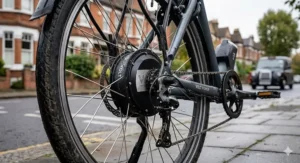
Geared hub motors use an internal planetary gear system that lets the motor spin at high RPM while the wheel turns more slowly — a bit like the gearing on a car, applied in miniature. The practical result is better low-speed torque (helpful on hills), a freewheel mechanism that disengages the motor when you’re coasting (meaning the bike feels like a normal bicycle when you stop pedalling), and a lighter, more compact unit. Nearly every budget hub motor ebike in this guide uses a geared hub motor for exactly these reasons.
Direct drive hub motors (also called gearless motors) are simpler: the wheel hub is the motor, with no intermediate gears. They’re quieter in operation, mechanically more durable over long lifespans, and capable of regenerative braking — though it’s worth being honest that on a bicycle, regenerative braking typically recovers only around 5–15% of energy, a figure that sounds more impressive than it feels in practice. The downside is significant: direct drive motors are heavier, create drag when the motor is off (you’ll feel it if the battery dies mid-ride), and are less efficient at the low speeds typical of UK urban cycling.
For the vast majority of British commuters and leisure riders, the geared hub motor wins comprehensively. Better hill performance, lighter weight, and that all-important freewheeling feel make it the natural fit for stop-start city riding, suburban routes, and the kind of mixed terrain most of us actually encounter. The Electric Bike Report has consistently noted that geared hub motors have been getting smaller and lighter in recent years — the technology is mature, reliable, and well-suited to everyday use.
One secondary consideration worth flagging for UK buyers: direct drive motors, being heavier and larger, can make puncture repairs genuinely difficult. Removing a direct drive rear hub wheel requires disconnecting motor cables and handling a substantially heavier unit — not something you want to attempt in the rain at the side of the A38.
Real-World UK User Scenarios: Which Bike Is Actually Right for You? 🇬🇧
The London multi-modal commuter — you cycle to the station, board the Tube, cycle to the office. Folding is non-negotiable. Weight matters because you’ll carry it up stairs. Battery range needs to cover around 8–12km daily. → Fafrees F20 PRO or ENGWE M20. The 18Ah battery on the Fafrees means you’ll charge it once or twice a week, not every evening.
The Bristol or Sheffield hill-dweller — you live somewhere with proper gradients. You’ve been told “it’s not that hilly” by people who clearly don’t live at the top of it. You need actual torque, not just wattage on the spec sheet. → Eleglide M1 Plus. The 29-inch wheels and geared hub motor combination handles hilly commutes with genuine authority.
The rural weekend rider — based somewhere in the Cotswolds, the Peak District, or the Yorkshire Dales. You use the bike for leisure riding on towpaths, bridleways, and the occasional gravel track. Range and terrain capability matter more than folding dimensions. → Eleglide M1 Plus again, or the ENGWE EP-2 Pro if you prefer the fat-tyre comfort ride over rolling efficiency.
The budget-first first-timer — you’ve never owned an e-bike and you’re not sure you’ll use it enough to justify real money. You want something functional and reliable without gambling more than £500. → HITWAY BK5 or SAMEBIKE XWLX09. Simple to use, honest specification, and if you decide e-biking isn’t for you, you haven’t lost a painful sum.
The existing-bike enthusiast — your steel-framed Ridgeback or Specialized hybrid is a genuinely good bicycle and you don’t want to replace it; you just want electric assistance. → Voilamart rear hub kit. Install it, keep your beloved bike, and decide later whether you want to invest in something purpose-built.
Practical Ownership Guide: Hub Motor Ebikes in British Conditions ⛈️🔧
British weather is, shall we say, characterful. Six months of drizzle, the occasional sideways downpour, and road surfaces that seem designed by someone who actively dislikes bicycles. Here’s what actual ownership looks like:
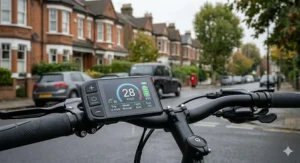
Water and corrosion. Most budget hub motor ebikes carry an IP54 or IPX4 water resistance rating — adequate for rain riding, but not submersion. The motor unit itself is generally well-sealed, but the controller box and cable connectors deserve attention. Apply dielectric grease to connectors annually. Dry the bike after wet rides before storing it, particularly if it lives in a damp garage or shed. A brief spray of ACF-50 (a corrosion inhibitor popular with motorcyclists) on metal components once or twice a year works rather well.
Compact storage. Most UK homes are not large. A 25kg e-bike that won’t fold creates real challenges in a terraced house with a narrow hallway. If you’re buying a non-folding model, measure your available space honestly before ordering. Many Amazon.co.uk listings now include folded dimensions — use them.
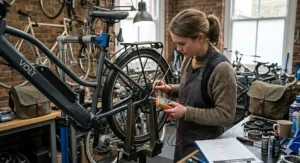
Puncture repair. Rear hub motor punctures are the one genuine maintenance headache. Removing the rear wheel requires disconnecting the motor cable connector (straightforward once you’ve done it once) and handling more weight than a standard wheel. It’s not difficult, but it’s not quick either. Fitting puncture-resistant tyres from the outset — Schwalbe Marathon Plus remains the gold standard — is genuinely worthwhile and much easier than a roadside repair in the rain. For hub motor conversion kit users, this consideration applies even more directly.
Battery care. Lithium batteries dislike two things: being stored at 0% charge and being left at 100% indefinitely. For storage longer than a week, charge to 50–80% and store somewhere above 5°C. A cold British winter shed will reduce your battery’s long-term health if you leave a fully charged or fully depleted battery in it all season.
UK legal compliance. All bikes in this guide are described in their Amazon.co.uk listings as EAPC-compliant. To summarise UK law: under EAPC regulations, a legal e-bike must have a maximum motor output of 250W continuous, assistance must cut off at 15.5mph (25km/h), and the bike must have functional pedals. Ride within these parameters and you need no licence, no insurance, and no registration. Exceed them and the bike is classified as a motor vehicle — an expensive surprise nobody needs. You must be aged 14 or over to ride an EAPC on public roads.
✨ Don’t Miss These Exclusive Deals!
🔍 Ready to choose your budget hub motor ebike? Click on any highlighted product in this guide to check current pricing and availability on Amazon.co.uk. These carefully selected picks represent the best value available right now!
How to Choose a Budget Hub Motor Ebike in the UK: 6 Criteria That Actually Matter
Ignore the marketing. Here’s the framework that actually helps.
1. Establish your real daily range requirement. Take your typical riding distance, add 30% for hills, cold weather, and the occasional assist-heavy day, and that’s your minimum battery requirement. A 36V 10Ah battery stores roughly 360Wh; most riders consume 10–20Wh per kilometre depending on terrain and assist level.
2. Decide whether folding is essential. If you use public transport or store the bike in a flat, it is. If you have a dedicated shed or garage and never take it on trains, a full-size frame will give you better ride quality per pound spent.
3. Confirm EAPC compliance explicitly. Check that the UK listing specifies 250W continuous rated power and 15.5mph assist cut-off. Some Amazon.co.uk sellers list products that are de-restricted or configured for non-UK markets. If the listing doesn’t explicitly state UK-legal compliance, ask before buying — the Consumer Rights Act 2015 protects you if a product is mis-described, but getting a refund on a heavy e-bike is considerably less fun than buying the right one first time.
4. Check the motor type. For UK urban and suburban riding, geared hub motor is almost certainly the correct choice. Direct drive makes sense primarily for flat, high-speed, long-distance riding — a minority use case in Britain.
5. Budget honestly for accessories. A quality D-lock (Sold Secure Gold rating), a decent helmet, front and rear lights, and mudguards can easily add £100–£150 to the total cost. Front and rear mudguards are not optional if you intend to arrive at work looking presentable — they’re survival equipment in this climate.
6. Consider the Cycle to Work scheme. If your employer participates, you can save between 32% and 42% on the cost of a new e-bike through salary sacrifice — the government’s Cycle to Work guidance explains the scheme in detail. A £600 bike can cost a basic-rate taxpayer around £408 after savings. That’s not to be ignored.
Common Mistakes When Buying a Budget Hub Motor Ebike in the UK ❌
Buying an unverified import. The grey-market e-bike problem is real. Some products arrive from overseas warehouses configured for EU markets (where laws differ), without proper EAPC compliance for British roads. Stick to Amazon.co.uk fulfilled listings or reputable UK-based sellers with clear EAPC compliance statements.
Underestimating weight. Twenty-five kilograms feels fine when you’re riding it. It feels considerably less fine when you’re carrying it up three flights of stairs to your flat. If you live above the ground floor without lift access, folding models with lower weights deserve priority.
Ignoring the motor type. Seeing “250W hub motor” on a budget listing and assuming it means a geared hub motor — the lighter, more efficient type — is a common error. Direct drive motors at 250W exist, and they’re heavier and less suited to hilly, stop-start British riding. Check the specs.
Fixating on peak wattage. “Peak 750W” sounds impressive. What it actually means is the motor draws that wattage for a few seconds under maximum load before settling back to its continuous rating. For UK-legal riding, continuous rated power is the relevant number — and it’s 250W for all compliant EAPCs, full stop.
Neglecting insurance. You’re not legally required to insure an EAPC, but given the risk of theft (e-bikes are a target, particularly in cities) and the cost of replacement, specialist e-bike insurance from providers like Bikmo or Yellow Jersey is worth considering. Policies covering theft, accidental damage, and public liability typically cost £8–£15 per month — modest against the cost of replacing a £600 bike.
Long-Term Cost & Maintenance: What Hub Motor Ebikes Really Cost in the UK 💷
The purchase price is just the beginning. Here’s the honest total cost of ownership picture.
A budget hub motor ebike in the £500–£700 range will cost roughly £0.01–0.02 per kilometre in electricity — negligible. Brake pads: hydraulic disc pads run about £10–£20 per set, lasting 3,000–6,000km depending on conditions. Tyres: budget to replace every 3,000–5,000km at £25–£40 per tyre. Chain: replace every 2,000–3,000km at around £10–£20. The hub motor itself, being a sealed unit, requires no maintenance beyond keeping the axle nuts tight and the cables clean.
Battery lifespan is the big variable. Most budget ebike batteries are rated for 500–800 full charge cycles before capacity drops to around 80%. Charge daily over 300 days per year, and you’re looking at 1.5–2.5 years before range begins to noticeably reduce. Replacement battery packs for popular models cost £120–£250, significantly less than replacing the whole bike. Check battery availability on Amazon.co.uk before you buy — some lesser-known brands sell well initially and then disappear, leaving riders unable to source replacements.
Compared to running a car in a UK city — RAC Foundation data suggests typical annual running costs of £3,500–£5,000 — even a generous e-bike maintenance budget of £200 per year looks vanishingly small. The economic case for a budget hub motor ebike as a commuting replacement is, frankly, compelling.
FAQ ❓
❓ Are hub motor ebikes road-legal in the UK?
❓ What is the difference between a geared hub motor and a direct drive ebike?
❓ Can I repair a puncture on a hub motor ebike?
❓ How long does the battery last on a budget hub motor ebike?
❓ Are budget hub motor ebikes available with next-day delivery on Amazon.co.uk?
Conclusion: Your Budget Hub Motor Ebike, Your Call 🚴♂️🇬🇧
The honest truth is this: for most British riders, a budget hub motor ebike is not a compromise. It’s a smart, practical decision made by someone who knows exactly what they need. You don’t need a mid-drive Bosch system to commute 12km to work. You don’t need 90Nm of torque for a Sunday morning canal towpath ride. What you need is a reliable, UK-legal, well-built machine that starts every morning without argument and gets you where you’re going without the gym-membership side effects.
The Eleglide M1 Plus remains the standout all-rounder — genuine versatility, quality Shimano gearing, and a price that leaves money for accessories. The Fafrees F20 PRO wins on battery capacity for city commuters. The ENGWE M20 is the one to buy if your budget stretches and you want the most refined experience under £900. And if you’ve got a good bike already gathering dust, the Voilamart kit deserves serious consideration.
Whatever you choose, check EAPC compliance before purchase, budget honestly for locks and lights, and consider the Cycle to Work scheme if your employer offers it. The UK cycling infrastructure is improving — Transport for London’s cycling pages show steady expansion of protected routes — and there has never been a better time to be riding.
✨ Don’t Miss These Exclusive Deals!
🔍 Found your match? Click any highlighted product in this guide to check current pricing and availability on Amazon.co.uk. Your next ride is closer than you think!
Recommended for You 📖
- Hub Motor Ebike UK: 7 Best Picks for 2026 Riders
- 7 Best Mid Drive Electric Bike for Hills Picks UK 2026
- Mid Drive vs Direct Drive Ebike: 7 Best UK Picks for 2026
Disclaimer: This article contains affiliate links. As an Amazon Associate, I earn from qualifying purchases. If you purchase products through these links, we may earn a small commission at no additional cost to you.
✨ Found this helpful? Share it with your mates! 💬🤗
