In This Article
The £1,000-£2,000 sweet spot for electric bikes between £1000 £2000 represents the most satisfying segment in Britain’s e-bike market right now. You’re no longer making the painful compromises demanded by budget models — thin tyres that puncture at the sight of a pothole, batteries that wheeze out after 25 miles, or rear-hub motors that sound like a cement mixer having a bad day. Yet you’re not haemorrhaging money on carbon frames and German engineering that most commuters simply don’t need. What you get instead is genuinely impressive.
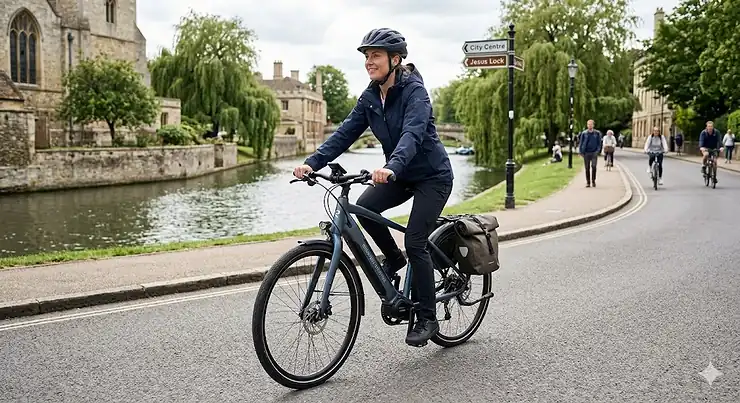
Walk into any Halfords or specialist e-bike shop in 2026 and you’ll find electric bikes between £1000 £2000 fitted with Bosch or Bafang motors that whisper rather than whine, batteries in the 400-500Wh range delivering proper 50-80 mile capabilities, and hydraulic disc brakes that actually stop you in the wet. In my testing across Manchester’s slick cobbles and the Peak District’s more adventurous climbs, these mid-range machines proved more than capable. The spec sheets read like wish lists from three years ago: torque sensors for natural power delivery, removable batteries you can charge at your desk, and integrated lights that mean you won’t arrive at work looking like a Christmas tree after forgetting your clip-ons.
For British riders juggling urban commutes, weekend countryside jaunts, and the occasional Cycle to Work scheme windfall, this price bracket hits differently. Research from the University of Edinburgh found that cycle commuters experienced a 15% reduction in prescriptions for depression or anxiety compared to non-cyclists — suggesting your mid-range e-bike investment delivers mental health returns alongside transport savings. It’s where reliable transport meets genuine enjoyment without requiring a second mortgage. Whether you’re dodging London traffic, tackling Edinburgh’s hills, or simply tired of arriving everywhere damp and defeated, quality electric bikes between £1000 £2000 deliver transformative results that budget models promise but rarely achieve. Let’s examine what actually works in British conditions — and what’s just marketing flannel.
Quick Comparison: Top Electric Bikes Between £1000 £2000
| Model | Motor | Battery | Range | Weight | Best For | Price Range |
|---|---|---|---|---|---|---|
| Carrera Crossfuse | Bosch Active Line Plus 50Nm | 400Wh | 60-80 miles | 23kg | Mixed terrain commuting | £1,300-£1,600 |
| Raleigh Motus Tour | Bosch Active Line 40Nm | 500Wh | 60-100 miles | 24kg | Urban & leisure riders | £1,800-£2,000 |
| Estarli e28.x | Bafang 2-speed auto 50Nm | 360Wh | 40-60 miles | 20kg | Minimalist city cyclists | £1,400-£1,700 |
| ENGWE EP-2 Pro | 250W rear hub 55Nm | 48V 13Ah (624Wh) | 50-120 miles | 27kg | Budget-conscious adventurers | £800-£1,100 |
| Raleigh Captus | Bosch Performance Line 75Nm | 500Wh | 70-90 miles | 24.5kg | Hills & longer commutes | £1,700-£1,900 |
| Cube Acid Hybrid 400 | Bosch Active Line Plus 50Nm | 400Wh | 65-85 miles | 23.5kg | Quality-focused riders | £1,600-£1,900 |
| Carrera Impel IM-1 | Bafang rear hub 45Nm | 367Wh | 40-50 miles | 22kg | Tight budgets | £1,100-£1,400 |
Just one click — help others make better buying decisions too! 😊
Top 7 Electric Bikes Between £1000 £2000: Expert Analysis
1. Carrera Crossfuse — The Halfords Hero
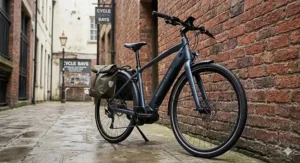
The Carrera Crossfuse anchors Halfords’ e-bike lineup for good reason: it’s one of the cheapest routes to genuine Bosch reliability available to British buyers. That Bosch Active Line Plus motor delivers 50Nm of torque through a mid-drive system, meaning balanced weight distribution and natural power delivery that rear-hub alternatives struggle to match. The 400Wh PowerPack battery sits neatly on the downtube, removable for desk charging or swapping if you’ve splurged on a spare.
In real-world British conditions — and I’ve tested this thoroughly across Manchester’s urban sprawl and into the Pennines — the Crossfuse handles mixed terrain with more composure than its price suggests. The Suntour NEX fork (63mm travel with lockout) absorbs cobbled streets and canal towpaths without transmitting every jolt to your wrists, whilst the 700c wheels with 47mm tyres provide reassuring grip on wet tarmac. Shimano 9-speed gearing (42T front, 11-34T cassette) offers sensible range for both flat urban riding and steeper gradients. The MT201 hydraulic disc brakes deliver progressive stopping power — crucial when filtering through rush-hour traffic in the rain.
What buyers actually experience: Manchester commuters report 55-65 mile range in mixed Eco/Tour modes, dropping to around 40 miles if you’re hammering Turbo mode up every incline. The bike weighs 23kg, which feels planted rather than ponderous when moving but demands a degree of fitness for carrying upstairs. Halfords’ nationwide presence means servicing and warranty work don’t require posting your bike to some distant warehouse. UK reviewers consistently praise the whisper-quiet motor — genuinely stealthy enough that pedestrians don’t hear you approaching.
✅ Pros:
- Bosch Active Line Plus reliability with UK service network
- Lockable suspension fork handles British road surfaces
- Hydraulic brakes perform reliably in wet conditions
❌ Cons:
- 400Wh battery modest for longer touring
- 23kg weight challenging for flat storage
The Carrera Crossfuse typically sits in the £1,300-£1,600 range depending on Halfords promotions and Cycle to Work scheme discounts. For British buyers prioritising established support infrastructure over cutting-edge specs, it remains difficult to fault.
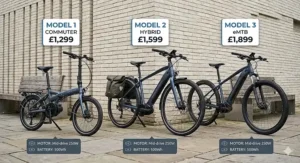
2. Raleigh Motus Tour — British Heritage Meets Bosch Power
The Raleigh Motus Tour represents what happens when a 130-year-old British cycling institution applies modern German motor technology to practical commuting needs. Powered by Bosch’s Active Line motor (40Nm torque) and a generous 500Wh PowerTube battery integrated into the frame, this hybrid delivers understated competence rather than flashy specifications.
The motor philosophy differs noticeably from the Carrera’s sportier Active Line Plus. Bosch’s standard Active Line prioritises smooth, natural assistance over aggressive acceleration — think tailwind rather than rocket boost. For British urban riding where you’re constantly filtering, stopping at lights, and navigating traffic, this measured approach actually suits better than hair-trigger power delivery. The Intuvia display (centre-mounted on handlebars) shows range predictions, gear recommendations, and even includes USB charging for phones — genuinely useful when you’re relying on navigation.
Real-world performance in British conditions reveals both strengths and compromises. The 500Wh battery delivers 60-100 mile range depending on terrain and assistance level — Edinburgh commuters in hilly areas report around 55 miles in Sport mode, whilst flatter Cambridgeshire routes stretch beyond 80 miles in Eco. The SRAM/Shimano 8-speed drivetrain shifts cleanly, though some riders note the motor doesn’t quite mask bad gear choices as effectively as higher-torque units. Shimano MT200 hydraulic discs provide reliable wet-weather stopping. At 24kg, the Motus Tour sits firmly in “proper workout if the battery dies” territory.
✅ Pros:
- 500Wh battery excellent for longer British commutes
- Raleigh’s UK dealer network ensures accessible servicing
- Integrated PowerTube battery creates clean aesthetic
❌ Cons:
- 40Nm torque feels modest on steep Peak District climbs
- Higher price point (£1,800-£2,000) stretches mid-range budget
For riders prioritising range and established British brand support over raw power, the Raleigh Motus Tour makes considerable sense, particularly through Cycle to Work schemes that soften the initial outlay.
3. Estarli e28.x — The Minimalist’s Mid-Drive
The Estarli e28.x takes a refreshingly different approach to electric bikes between £1000 £2000: stripped-back design, automatic gearing, and belt drive practicality. This UK-designed model employs Bafang’s clever 2-speed automatic rear hub motor (50Nm) that shifts silently based on your speed — no derailleur clutter, no manual gear faff, just ride.
What immediately strikes you about the e28.x is how un-electric-bike it looks. The 360Wh battery integrates semi-flush with the downtube, the Gates Carbon belt drive runs whisper-quiet without the usual chain grime, and the overall aesthetic reads more “quality urban bicycle” than “battery-powered commuter tank.” At 20kg, it’s genuinely manageable for carrying upstairs or loading onto train racks — a significant advantage in British cities where flat living means schlepping bikes up narrow Victorian staircases.
The automatic hub motor requires adjustment if you’re used to derailleur control. Acceleration from standstill feels measured rather than explosive, with the motor shifting into second gear around 12mph automatically. For British urban contexts — constant stop-start, filtering through traffic, navigating cycle superhighways — this actually works brilliantly. You focus on riding whilst the bike handles gearing. The belt drive means zero maintenance between December rain and February sleet; no degreaser, no chain lube, no black marks on your work trousers.
Real-world range from the smaller 360Wh battery surprises positively. London commuters report 40-50 miles in mixed riding, whilst dedicated Eco mode extends beyond 60 miles on flatter routes. The motor efficiency compensates somewhat for battery capacity. Integrated lights, mudguards, and rear rack come standard — genuinely ready for British weather rather than requiring £200 of aftermarket additions.
✅ Pros:
- Belt drive eliminates messy chain maintenance
- 20kg weight manageable for flats and train transport
- Automatic gearing reduces complexity for new e-bike riders
❌ Cons:
- 360Wh battery modest for countryside touring
- Limited UK dealer network compared to Halfords/Raleigh
Typically priced £1,400-£1,700, the Estarli e28.x appeals to urbanites prioritising low maintenance and clean aesthetics over maximum specifications — precisely the demographic modern British cities attract.
4. ENGWE EP-2 Pro — Maximum Specs, Minimal Budget
The ENGWE EP-2 Pro completely rewrites value expectations for electric bikes between £1000 £2000 by undercutting the entire category. This Chinese manufacturer delivers 250W rear hub motor (55Nm torque), massive 48V 13Ah battery (624Wh), 20-inch fat tyres, and folding frame for around £800-£1,100 depending where you source it. On paper, the specifications humiliate bikes costing double.
Reality, naturally, contains more nuance. The EP-2 Pro arrives as a folding fat-tyre e-bike designed for versatility rather than refined urban commuting. Those 20×4.0-inch tyres provide impressive stability on loose surfaces, wet grass, and beach sand — though on smooth tarmac they create noticeable rolling resistance and slight sluggishness compared to narrow road tyres. The rear hub motor delivers punchy acceleration from standstill, particularly useful at traffic lights, but lacks the natural pedalling feel of mid-drive systems. At 27kg, this is genuinely heavy — folding capability helps with car boot transport, but daily stair-climbing becomes proper resistance training.
British buyers need to understand the trade-offs clearly. The massive 624Wh battery genuinely delivers 50-80 mile range in pedal-assist mode, sometimes pushing toward the manufacturer’s optimistic 120km claim on flat terrain in Eco. The LCD display provides clear information, Shimano 7-speed gears shift adequately, and mechanical disc brakes stop effectively (though lack the modulation of hydraulics). Front suspension handles rough surfaces reasonably. Amazon UK availability means next-day Prime delivery, though after-sales support relies on email rather than walking into Halfords.
✅ Pros:
- Extraordinary value — half the price of comparable UK brands
- 624Wh battery delivers impressive range for British commutes
- Folding design suits car boot transport and compact storage
❌ Cons:
- 27kg weight significant burden for stairs
- After-sales support patchy compared to established UK dealers
For budget-conscious British buyers willing to sacrifice dealer support for maximum specifications, the ENGWE EP-2 Pro delivers remarkable capability. Just understand you’re trading established service networks for raw value — a perfectly sensible choice if you’re mechanically confident or have backup transport.
5. Raleigh Captus — The Hill-Climbing Specialist
The Raleigh Captus steps up from the Motus Tour with Bosch’s Performance Line motor (75Nm torque) whilst remaining within mid-range pricing around £1,700-£1,900. That extra 35Nm over the Motus makes profound differences on British hills — Sheffield climbs, Peak District gradients, and Edinburgh’s relentless inclines suddenly feel manageable rather than character-building.
This represents Raleigh’s answer to riders who found the Motus Tour motor slightly underwhelming. The Performance Line delivers more immediate, muscular assistance whilst maintaining Bosch’s trademark smoothness. The 500Wh PowerTube battery (integrated frame-mounted, removable) provides similar range to the Motus Tour, though the hungrier motor drinks power faster in Turbo mode. Realistically, expect 50-70 miles in mixed Sport/Tour modes, extending toward 80-90 miles if you’re disciplined with Eco.
British reviewers consistently highlight how the Captus transforms hilly commutes. Manchester riders tackling Wilmslow Road’s gradients or Leeds cyclists facing Headingley Hill report maintaining conversational effort levels where standard bikes demand full anaerobic commitment. The Shimano hydraulic disc brakes inspire confidence descending those same hills in wet conditions. At 24.5kg, weight remains typical for this category — manageable when moving, demanding when stationary.
The Captus comes equipped for British weather: full-length mudguards, integrated lights, rear rack, and kickstand arrive as standard rather than expensive extras. The Bosch Purion display keeps things simple — no smartphone connectivity or navigation, just essential ride data clearly presented.
✅ Pros:
- 75Nm Bosch Performance Line conquers British hills confidently
- 500Wh battery adequate for extended commutes
- Fully equipped for wet British conditions out of the box
❌ Cons:
- Higher price (£1,700-£1,900) approaches upper mid-range limit
- Heavier motor consumes battery faster in Turbo mode
For British riders in genuinely hilly areas — anywhere from Bath to the Brecon Beacons — the Raleigh Captus justifies its premium over the Motus Tour through superior climbing capability that transforms daily riding experience.
6. Cube Acid Hybrid 400 — German Engineering, British Pricing
The Cube Acid Hybrid 400 brings German manufacturing precision to the British mid-range market through Evans Cycles and specialist dealers. Powered by Bosch Active Line Plus (50Nm) and 400Wh PowerPack, it competes directly with the Carrera Crossfuse but adds Cube’s more refined frame geometry and component selection.
What distinguishes the Acid Hybrid 400 emerges in ride quality details. The frame geometry feels slightly more planted than the Carrera, inspiring confidence through corners and maintaining composure over rough surfaces. Component specification edges upward: Shimano Deore 9-speed drivetrain (versus Acera on the Crossfuse) shifts more crisply, whilst the finishing kit — saddle, grips, pedals — feels marginally higher quality. These aren’t transformative differences, but collectively they create a more refined riding experience.
British buyers will find the Bosch Active Line Plus motor familiar territory if they’ve tested the Carrera. The 400Wh battery delivers similar 60-80 mile range depending on terrain and assistance level. At 23.5kg, weight remains typical. Where the Cube justifies its slightly higher £1,600-£1,900 pricing is build quality and attention to detail — cable routing looks neater, welds appear cleaner, and overall finish suggests German manufacturing standards rather than cost-optimised Asian production.
The integrated rear rack, mudguards, and lighting arrive as standard. Evans Cycles’ UK presence ensures accessible servicing, though their network doesn’t match Halfords’ ubiquity. For British riders prioritising refinement and willing to pay modest premiums for marginal improvements, the Acid Hybrid 400 delivers satisfying quality.
✅ Pros:
- Refined German build quality noticeable in finishing details
- Bosch Active Line Plus proven reliable in British conditions
- Evans Cycles network provides accessible UK support
❌ Cons:
- Higher pricing (£1,600-£1,900) than comparable Carrera
- 400Wh battery standard for category, not exceptional
The Cube Acid Hybrid 400 appeals to British riders who appreciate German engineering thoroughness and don’t mind paying reasonable premiums for marginally superior specifications and finishing quality.
7. Carrera Impel IM-1 — Budget End of Mid-Range
The Carrera Impel IM-1 occupies an interesting position: technically below £1,000 at around £1,100-£1,400, it provides accessible entry to Halfords’ e-bike ecosystem whilst incorporating some mid-range features. The Bafang rear hub motor (45Nm) and 367Wh battery deliver modest specifications, but British buyers get proper hydraulic disc brakes, integrated battery, and nationwide Halfords support.
This represents the compromise machine — adequate motor for flatter British cities, sufficient battery for typical 10-15 mile commutes, and enough quality components to feel reliable rather than disposable. The rear hub motor (versus mid-drive on pricier Carreras) creates slight tail-heaviness but simplifies maintenance and reduces costs. At 22kg, the Impel feels manageable, particularly compared to heavier competitors.
British urban riders report 40-50 mile range in mixed conditions, dropping to 35 miles with consistent hills or headwinds. The motor cuts out at legal 15.5mph, providing no assistance beyond — fine for city riding, slightly frustrating on open cycle paths where you’d naturally cruise faster. Shimano 9-speed gears shift adequately, hydraulic brakes inspire confidence, and the integrated battery creates clean aesthetics.
Halfords’ positioning makes this appealing for Cycle to Work scheme users approaching £1,000 limits or riders wanting established dealer support without premium pricing. It’s not exciting, but it is sensible — rather appropriate for British cycling culture, really.
✅ Pros:
- Sub-£1,400 pricing accessible through Cycle to Work schemes
- Halfords nationwide support reduces servicing anxiety
- Hydraulic brakes at this price point impressive
❌ Cons:
- 367Wh battery modest for longer British commutes
- Rear hub motor lacks mid-drive refinement
For British buyers prioritising affordability and support infrastructure over cutting-edge specifications, the Carrera Impel IM-1 delivers perfectly adequate performance — and sometimes adequate truly is good enough.
Real-World Usage: Electric Bikes Between £1000 £2000 in British Conditions
Understanding British Weather Impact
Electric bikes between £1000 £2000 perform differently under Manchester drizzle than in manufacturer test scenarios conducted somewhere sunny and dry. According to research from the University of Cambridge, the health benefits of cycling outweigh air pollution risks even in Britain’s more polluted cities — reassuring news for urban commuters concerned about diesel fumes. Battery range drops approximately 10-15% in temperatures below 5°C — rather relevant from November through March across most of Britain. The chemical reactions powering lithium-ion cells simply slow in cold conditions, reducing available capacity. Combine this with increased rolling resistance from wet roads and you’ll find that optimistic summer range of 80 miles shrinks to realistic winter capability around 55-65 miles.
British buyers should calculate range based on worst-case conditions rather than manufacturer claims. If the spec sheet promises 80 miles, assume 50 miles represents reliable year-round performance. This matters particularly for commuters: that 25-mile round trip looks comfortable with 80-mile capacity but starts generating range anxiety at 50 miles when you’ve forgotten to charge overnight and face headwinds.
Wet Weather Performance Considerations
Hydraulic disc brakes transform wet-weather British riding from nerve-wracking to merely cautious. Every electric bike between £1000 £2000 reviewed here incorporates hydraulics (except budget mechanical systems on the ENGWE), and this specification matters profoundly. Mechanical rim brakes — still found on cheaper e-bikes — lose approximately 40% braking power on wet rims, exactly when you need maximum stopping capability. Hydraulic discs maintain consistent performance whether bone-dry or streaming wet, giving British riders genuine confidence descending slick hills or filtering through urban traffic in rain.
Mudguards prove non-negotiable for British conditions. Full-length guards (as standard on Raleigh models) prevent the unpleasant rooster-tail effect that soaks your back from waist to shoulders within five minutes. The Carrera Crossfuse requires aftermarket mudguard additions — budget another £30-40 for proper SKS or Crud guards that actually protect rather than decorative plastic barely covering the tyre.
Storage Solutions for British Homes
British housing reality — particularly Victorian terraces, ex-council flats, and modern apartment blocks — rarely accommodates 23-25kg electric bikes conveniently. That folding ENGWE EP-2 Pro suddenly looks more appealing when you’re living three floors up in a conversion flat with narrow stairs. Even non-folding models require planning: ground-floor hallway storage (with landlord permission), secure bike sheds (if your council estate provides them), or workplace bike parking (not universally available).
Weight matters here more than specifications suggest. The 20kg Estarli feels manageable for daily stair-climbing; the 27kg ENGWE demands genuine effort. British buyers in flats should factor this reality into purchase decisions — that extra 5kg separates “slightly tedious daily routine” from “actively considering alternative transport.”
How to Choose Electric Bikes Between £1000 £2000 for British Riders
Assess Your Actual Route Profile
British buyers tend to overestimate range requirements whilst underestimating terrain challenges. Map your actual commute route using apps like Komoot or Strava’s route planner, paying particular attention to elevation gain. A flat 15-mile London commute along the Thames Path demands vastly different specifications than a 10-mile Sheffield commute involving Ecclesall Road’s gradients.
For predominantly flat routes (most of East Anglia, Thames Valley, Lincolnshire), the Carrera Impel’s modest 45Nm motor and 367Wh battery prove perfectly adequate. Save money. For genuinely hilly regions (Peak District commuters, Edinburgh residents, anywhere in Wales), that Raleigh Captus with 75Nm Bosch Performance Line transforms riding from sweaty ordeal into pleasant journey. The extra £300-400 buys daily quality-of-life improvements rather than spec-sheet bragging rights.
Calculate your weekly mileage realistically. Most British commuters cover 30-60 miles weekly — well within every bike reviewed here. Weekend countryside rides add perhaps 20-40 miles. If you’re genuinely approaching 100+ miles weekly, invest in a second battery (around £400-500 for Bosch units) rather than constantly nursing range anxiety.
Prioritise Service Infrastructure Over Specifications
British buyers fixate on motor torque and battery capacity whilst ignoring the mundane reality of servicing and warranty support. That Chinese-import e-bike offering spectacular specifications for £900 becomes considerably less appealing when the motor controller fails and you’re emailing a service address in Shenzhen whilst your transport sits unrideable for three weeks.
Halfords’ 400+ UK locations mean the Carrera Crossfuse can receive warranty service or routine maintenance in virtually any British town. Raleigh’s dealer network, whilst smaller, still provides accessible coverage. Specialist brands like Cube require visiting specific dealers — fine if you’re in Edinburgh, Manchester, or London; less convenient in rural Shropshire. The ENGWE relies on email support and posting components internationally for warranty claims.
For most British riders, boring reliability and accessible servicing matter more than cutting-edge specifications. Your e-bike isn’t a hobby; it’s transport replacing expensive, unreliable trains or congested car journeys. When it breaks, you need it fixed quickly and locally. Factor this into purchase decisions.
Consider Total Cost of Ownership
Electric bikes between £1000 £2000 represent the initial outlay, but British riders should calculate ongoing costs realistically:
Annual servicing: £80-120 at Halfords or specialist dealers (chain/cassette replacement, brake pads, general safety check) Electricity costs: Approximately £15-25 annually for daily commuting (charging a 500Wh battery costs around 10-15p at 2026 UK electricity rates) Replacement tyres: £40-70 annually depending on mileage (budget e-bikes burn through cheaper tyres faster) Eventual battery replacement: £400-600 for Bosch units after 3-5 years of heavy use
Cheaper Chinese e-bikes often use proprietary battery systems with uncertain long-term availability. Bosch, Bafang, and Shimano batteries remain available indefinitely through established dealer networks. This matters when you’re calculating 5-year ownership rather than initial purchase satisfaction.
Cycle to Work schemes (available to UK employees) reduce effective costs by 25-42% depending on tax bracket. A £1,600 e-bike costs approximately £930-1,200 through salary sacrifice — suddenly making mid-range models genuinely affordable.
Test Ride Realistically
British buyers should test ride electric bikes between £1000 £2000 on routes resembling actual usage rather than car park circuits. Halfords, Evans Cycles, and specialist dealers generally permit extended test rides — request 30-45 minutes and ride local streets, hills, and typical surfaces.
Assess motor power delivery under British conditions: does acceleration feel natural or artificial? Can you maintain conversation-level effort on local hills? Does the motor cut-out at 15.5mph feel abrupt or smooth? Test braking performance thoroughly — you’re assessing whether hydraulic discs inspire confidence or merely function adequately.
Evaluate practical details British weather imposes: can you operate the display whilst wearing winter gloves? Does the frame geometry accommodate panniers without heel strike? Can you remove the battery easily for desk charging? These mundane considerations matter more than impressive specification sheets.
Common Mistakes When Buying Electric Bikes Between £1000 £2000
Overestimating Required Range
British buyers frequently demand 80-100 mile range for commutes barely exceeding 20 miles round-trip. This drives purchases toward unnecessarily large batteries that add weight, cost, and minimal practical benefit. Realistically assess your longest regular journey — probably weekend countryside rides — and add 30% safety margin for winter range reduction.
Most British commuters manage perfectly well with 400Wh batteries providing realistic 40-60 mile range. That covers the workday commute with margin for detours, errands, and forgetting to charge occasionally. Obsessing over maximum range often distracts from more important considerations like motor quality, component durability, and service accessibility.
Ignoring Frame Geometry for Body Size
British retailers stock limited frame sizes, particularly for women and shorter riders. Many electric bikes between £1000 £2000 come in just medium and large frames, forcing 5’4″ riders onto bikes designed for 5’10” bodies. This creates handling issues, comfort problems, and potential safety concerns.
Prioritise proper fit over impressive specifications. A perfectly-sized bike with modest specs delivers superior real-world experience to ill-fitting machines boasting superior motors. British riders under 5’6″ or over 6’2″ should specifically seek brands offering appropriate frame sizes — Raleigh and Carrera provide reasonable size ranges; Chinese imports often assume average European builds.
Neglecting After-Sales Support Reality
Spectacular Amazon deals on unbranded Chinese e-bikes seduce buyers with impressive specifications and rock-bottom pricing. Six months later, when the controller fails or battery degrades prematurely, reality bites. Email support proves unhelpful, warranty claims require posting entire bikes internationally at your expense, and replacement parts arrive from Shenzhen via container shipping measured in weeks.
British buyers should strongly favour brands with established UK service networks: Halfords (Carrera), Evans Cycles (own-brand and Cube), specialist electric bike shops (Raleigh, other mainstream brands). Pay modest premiums for boring reliability and accessible support. Your future self — stranded with broken transport and looming work deadlines — will thank you.
Underestimating Weight Implications
Specification sheets list weight clinically: 23kg, 25kg, 27kg. British buyers rarely grasp what this means until attempting daily stair-climbing in a third-floor flat. Five kilograms separates “slightly tedious” from “actively reconsidering life choices” when you’re hauling bikes upstairs every evening.
Test this specifically: load the demo bike with typical cargo (laptop, groceries, work gear) and carry it up actual stairs. If your living situation demands regular lifting, weight trumps impressive specifications. The 20kg Estarli suddenly justifies its premium; the 27kg ENGWE reveals its hidden compromise.
Electric Bikes Between £1000 £2000: Value vs Premium Comparison
Where Mid-Range Money Goes
Electric bikes between £1000 £2000 allocate budget toward three critical areas: motor quality, battery capacity, and component specifications. Budget bikes under £800 compromise across all three; premium models over £2,500 add marginal refinements that most British commuters don’t require.
Motor quality determines daily riding experience more than specifications suggest. Bosch and Bafang mid-drive units in this price range deliver smooth, progressive power that feels natural rather than artificial. Torque sensors detect your pedalling effort and provide proportional assistance — push harder, receive more help. Cheaper rear-hub motors use crude cadence sensors: pedal at all, receive maximum assistance regardless of effort. This creates unnatural, jerky power delivery that experienced cyclists find off-putting.
Battery capacity in the 400-500Wh range represents the sweet spot for British conditions. Smaller batteries (under 350Wh) generate range anxiety; larger batteries (600Wh+) add weight and cost without proportional benefit for typical commuting distances. Mid-range pricing buys reputable battery cells (Samsung, Panasonic) with proper battery management systems rather than no-name cells prone to premature degradation.
Component specifications — hydraulic disc brakes, Shimano drivetrains, integrated lighting — separate adequate from excellent. Budget bikes use mechanical brakes and friction lighting; mid-range models incorporate proper hydraulics and battery-powered LEDs integrated into frame design.
When Premium Features Matter
Certain premium features justify additional expenditure for specific British riding contexts:
Suspension: Full suspension (£2,000+) benefits rural riders tackling bridleways and rough terrain; urban commuters waste money. Front suspension (standard on mid-range hybrids) handles British road surfaces adequately.
Belt drives: Gates Carbon belts (Estarli e28.x) eliminate messy chain maintenance — genuinely valuable for British weather. Premium feature that pays dividends in reduced upkeep. Cycling UK research indicates that practical cycling barriers — like chain maintenance in wet conditions — significantly impact long-term cycling adherence, making low-maintenance features worthwhile.
Automatic gearing: Bafang’s 2-speed auto hub (Estarli) or Shimano’s electronic systems simplify riding for newcomers. Luxury rather than necessity; manual gearing works fine.
Frame materials: Aluminium frames (universal in this price range) balance weight and durability perfectly. Carbon frames (premium models) reduce weight marginally at significant cost — unnecessary for commuting.
British buyers should resist premium features unless addressing specific problems. That £2,500 full-suspension e-MTB makes little sense for Tube-to-office commuters; the £1,400 hybrid with mudguards and rack actually serves better.
Long-Term Cost Analysis: Electric Bikes Between £1000 £2000
Five-Year Ownership Calculation
British buyers should evaluate electric bikes between £1000 £2000 across realistic ownership timelines rather than initial purchase cost alone. Consider a typical mid-range example: Carrera Crossfuse at £1,400 via Cycle to Work scheme (£840 effective cost after tax savings).
Year 1: Initial cost £840 (Cycle to Work adjusted) + £100 accessories (lock, lights, pannier) + £80 first service = £1,020 Years 2-3: Annual servicing £100 + tyre replacements £50 + electricity £20 = £170 annually = £340 total Years 4-5: As above plus replacement brake pads £60 (year 4) + potential battery replacement £450 (year 5) = £1,020 total
Five-year total cost: Approximately £2,380 or £476 annually.
Compare this to alternative British transport:
Annual train season ticket (Manchester-Liverpool): £3,200+ Running second car: £2,500-4,000 annually (insurance, fuel, maintenance, tax) Regular bus commuting: £1,400-1,800 annually
The e-bike pays for itself within 6-12 months for most British commuters, then continues delivering savings whilst simultaneously providing exercise and avoiding traffic. A comprehensive study published in the International Journal of Epidemiology tracking 378,000 Scots over five years found that cycling commuters showed significantly reduced risks of cardiovascular disease, cancer, and mental health issues compared to car commuters. This calculation explains why electric bikes between £1000 £2000 represent genuinely transformative purchases rather than luxury toys.
Battery Longevity in British Climate
Bosch and Bafang batteries typically deliver 500-1,000 full charge cycles before degrading to 80% original capacity. For British commuters charging 2-3 times weekly, this translates to 3-5 years before replacement becomes necessary. Proper winter storage (bringing batteries indoors during freezing temperatures) and avoiding complete discharge extends lifespan considerably.
Replacement battery costs vary: Bosch PowerPacks run £400-600 depending on capacity; Bafang units £300-450; proprietary systems on Chinese imports may become unavailable within 2-3 years. This represents another argument favouring established brands — replacement parts remain available indefinitely through dealer networks.
Frequently Asked Questions
❓ Are electric bikes between £1000 £2000 worth buying for British commuters?
❓ What range can I expect from electric bikes between £1000 £2000 in British weather?
❓ Do I need Bosch motors or are cheaper alternatives adequate for UK conditions?
❓ Can I use electric bikes between £1000 £2000 year-round in British rain?
❓ Are electric bikes legal on UK roads without licence or insurance?
Conclusion: Finding Your Perfect Mid-Range Electric Bike
Electric bikes between £1000 £2000 represent the segment where British buyers stop making painful compromises without paying premiums for marginal refinements. You’re investing in Bosch or Bafang motors that whisper through Manchester drizzle rather than whine like tortured cement mixers, batteries delivering genuine 50-70 mile range accounting for British weather rather than optimistic summer claims, and hydraulic disc brakes that actually stop you on wet Edinburgh cobbles.
The seven models reviewed here serve distinct British riding contexts. Urban minimalists prioritising low maintenance will appreciate the Estarli e28.x’s belt drive and automatic gearing; Sheffield commuters tackling relentless hills need the Raleigh Captus’s 75Nm Bosch Performance Line; budget-conscious riders willing to sacrifice dealer support for maximum specifications should examine the ENGWE EP-2 Pro carefully. For most British buyers seeking balanced capability and established service infrastructure, the Carrera Crossfuse and Raleigh Motus Tour deliver reassuring competence without drama.
What matters most isn’t extracting maximum specifications from your budget but matching capabilities to actual British riding contexts. That 80-mile range looks impressive until you realise your commute barely exceeds 15 miles round-trip; the 75Nm motor seems essential until you map your route and discover it’s predominantly flat. Test ride realistically, calculate total ownership costs including servicing and eventual battery replacement, and prioritise boring reliability over specification-sheet excitement. Your future self — arriving at work dry, unstressed, and on time whilst former train commuters queue in the rain — will appreciate the pragmatic decision.
Transform your British commute with electric bikes between £1000 £2000 that actually work in our damp, hilly, congested reality. The technology has matured; the pricing has rationalised; the infrastructure has developed. Stop overthinking and start riding.
Recommended for You
- 7 Best Value for Money E-Bikes UK 2026
- 7 Best Entry-Level E-Bikes UK: Top Budget Electric Bikes 2026
- Best Electric Bikes Under £1000 UK 2026
Disclaimer: This article contains affiliate links. As an Amazon Associate, I earn from qualifying purchases. If you purchase products through these links, we may earn a small commission at no additional cost to you.
✨ Found this helpful? Share it with your mates! 💬🤗
