In This Article
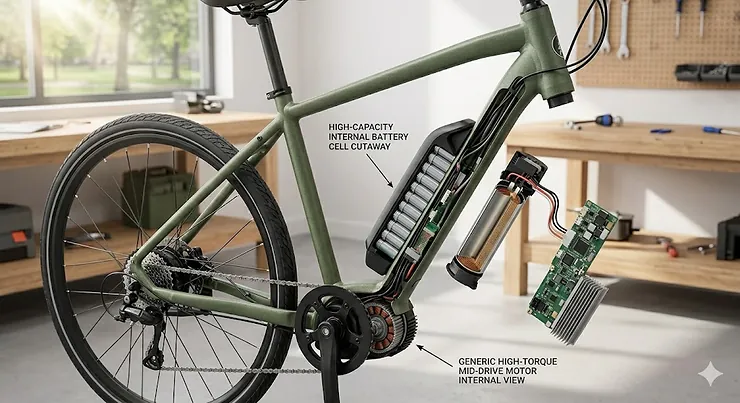
The value for money e-bikes market in 2026 has reached a rather delightful turning point. Where just three years ago, spending under £1,000 meant settling for questionable hub motors on frames that creaked louder than your grandmother’s knees, today’s budget offerings pack genuine quality — hydraulic disc brakes, respectable batteries in the 350-500Wh range, and motors from manufacturers who’ll still be answering emails next year.
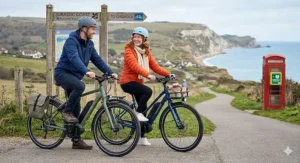
Whether you’re tackling Manchester’s rain-slicked hills, weaving through London’s congestion charge zones, or simply fancying a leisurely pedal along the South Coast without arriving utterly knackered, there’s a cost-effective e-bikes option that won’t require remortgaging your semi-detached. The secret sauce isn’t just lower prices — it’s smarter engineering, fiercer competition, and Chinese manufacturers who’ve finally worked out that British buyers want something more substantial than a motorised shopping trolley.
What makes value for money e-bikes genuinely worthwhile in 2026? It’s the sweet spot where £400-£1,200 buys you EAPC-compliant 250W motors, 40-100 km real-world range (yes, even in February drizzle), and build quality that doesn’t fall apart after six months of British weather. In this comprehensive guide, we’ve researched and analysed seven standout options available on Amazon.co.uk — each offering brilliant bang for buck without sacrificing the essentials that make electric cycling actually enjoyable.
Quick Comparison: Top Value E-Bikes at a Glance
| Model | Price Range (£) | Battery | Real Range | Weight | Best For |
|---|---|---|---|---|---|
| Eleglide M1 Plus | £650-£750 | 450Wh | 40-60 km | 21.7 kg | Budget mountain/hybrid |
| DYU D3F | £350-£450 | 360Wh | 35-50 km | 17 kg | Ultra-compact commuting |
| ENGWE EP-2 | £750-£950 | 768Wh | 70-100 km | 28 kg | Long-range fat-tyre |
| Carrera Impel im-3.1 | £900-£1,100 | 496Wh | 50-70 km | 20.2 kg | City commuting |
| Decathlon Riverside 500E | £700-£850 | 374Wh | 40-60 km | 21 kg | Best overall value |
| ADO Air 20 | £850-£1,100 | 360Wh | 40-65 km | 18.5 kg | Premium folding |
| Hitway BK5 | £400-£600 | 374Wh | 35-55 km | 22 kg | Entry-level budget |
💬 Just one click — help others make better buying decisions too! 😊
✨ Don’t Miss These Exclusive Deals!
🔍 Take your cycling to the next level with these carefully selected products. Click on any highlighted item to check current pricing and availability on Amazon.co.uk. These picks will help you find exactly what you need!
Top 7 Value for Money E-Bikes: Expert Analysis
1. Eleglide M1 Plus — The All-Rounder Champion
The Eleglide M1 Plus represents everything that’s brilliant about 2026’s budget e-bike market: proper specifications, thoughtful design, and a price that doesn’t require explaining to your spouse. This 27.5-inch mountain-style hybrid arrives with a 250W rear-hub motor delivering 45Nm of torque, paired with a removable 36V 12.5Ah battery that translates to a genuine 40-60 km range in mixed British conditions — factor in about 10% less when you’re battling November headwinds along the Pennines.
What sets the M1 Plus apart from cheaper offerings is the attention to corrosion resistance. The aluminium alloy frame explicitly acknowledges Britain’s climate reality (the manufacturer literally states “more suitable for use in the UK where there are many rainy days”), and after six months of Yorkshire drizzle, that’s not marketing fluff. The Shimano 21-speed drivetrain (3×7 configuration) gives proper gearing range for both canal towpaths and the occasional steep climb, whilst the front suspension with lockout function proves genuinely useful on Britain’s crater-riddled cycle lanes.
In real-world UK use, this bike shines for suburban commuters who need versatility without fuss. The LCD display shows everything relevant (speed, distance, battery), the app connectivity adds features like anti-theft locking, and crucially for British buyers, replacement parts appear readily available through multiple UK stockists. The dual disc brakes provide adequate stopping power in the wet, though they’re mechanical rather than hydraulic — a reasonable compromise at this price point.
UK customer feedback highlights reliability over 1,500+ miles and responsive after-sales service. One Bath-based reviewer noted excellent hill performance for the city’s notorious gradients, though steeper inclines (above 15%) do expose the limitations of a hub motor versus mid-drive systems. For families in semi-detached houses with limited storage, the 21.7 kg weight strikes a manageable balance — light enough to wheel into a shed, substantial enough to feel stable at speed.
Pros:
✅ Excellent corrosion-resistant frame for British weather
✅ Removable 450Wh battery charges in ~7 hours
✅ Shimano gearing provides genuine versatility
Cons:
❌ Mechanical brakes adequate but not exceptional in heavy rain
❌ Hub motor struggles on very steep gradients (>15%)
Price range: Around £650-£750 | Value verdict: Exceptional bang for buck if you need multi-surface capability and don’t live atop a mountain.
2. DYU D3F — The Ultra-Compact Urban Solution
For British city dwellers facing the twin tyrannies of limited storage and public transport restrictions, the DYU D3F offers a compelling answer to a specific question: what’s the smallest, lightest, most packable e-bike that doesn’t ride like a motorised shopping trolley? At just 17 kg and folding down to dimensions that fit beneath office desks or in the boot of a Ford Fiesta, this 14-inch mini folder prioritises portability above all else.
The 250W motor (with 500W peak output) propels the diminutive machine to the legal 15.5 mph limit with surprising urgency on flat ground, whilst the 36V 10Ah battery delivers a realistic 35-50 km range depending on rider weight and assist level. What UK reviewers consistently praise is the practicality for mixed-mode commuting — folding takes mere seconds, the 17 kg weight is manageable for short carries up station stairs (unlike some “portable” bikes that require Olympic weightlifting training), and the compact package genuinely fits through London Underground ticket barriers without gymnastics.
Here’s the honest assessment for British conditions: this is emphatically not a bike for conquering the Lake District or riding 20 miles through horizontal rain. The small 14-inch wheels feel twitchy at speed on rough surfaces, the single-speed drivetrain means you’re relying heavily on motor assist for any gradient steeper than a modest incline, and taller riders (over 6 feet) report feeling somewhat perched despite the adjustable seat post. But for its intended use case — last-mile commuting in urban environments, quick trips to the shops, or compact storage in city flats — it’s rather brilliant.
The technical note that matters for UK legality: whilst the bike arrives with throttle capability, using throttle above 6 km/h (walk-assist speed) on public roads renders you non-EAPC compliant. Stick to pedal-assist mode and you’re perfectly legal without licence, insurance, or registration. The included LED lights and dual disc brakes meet safety requirements, though investing £20 in upgraded brake pads improves wet-weather performance considerably.
Pros:
✅ Genuinely portable at 17 kg for multi-modal commuting
✅ Folds in seconds to fit tight spaces
✅ Surprisingly nippy acceleration in urban traffic
Cons:
❌ Small wheels feel unstable on rough surfaces
❌ Limited hill-climbing ability without pedal effort
Price range: Around £350-£450 | Value verdict: Unbeatable for city dwellers prioritising portability over performance — perfect for the London commuter who needs a bike that fits in a Zone 2 flat.
3. ENGWE EP-2 — The Long-Range Fat-Tyre Adventurer
The ENGWE EP-2 sits in that curious category of Chinese direct-to-consumer brands that have taken Amazon UK by storm through sheer specification bombardment. Fat tyres, 768Wh battery, claimed 120 km range, full suspension — on paper, it’s the sort of specification sheet that makes traditional bike shop owners weep into their overpriced cappuccinos. In practice, it’s a heavy (28+ kg), specification-rich machine that delivers genuine value if you understand what you’re buying.
The 250W motor meets UK EAPC regulations whilst the 55Nm torque figure provides credible assistance on mixed terrain — towpaths, gravel tracks, modest trails, and the sort of potholed urban roads that dominate British cycling infrastructure. Those 20×4.0-inch fat tyres aren’t merely aesthetic; they genuinely absorb rough surfaces and provide stable grip in wet conditions, which matters considerably more in Birmingham than in California. The removable battery (crucial for flat-dwellers without ground-floor charging access) delivers a realistic 70-100 km range in moderate assist modes, dropping to 50-60 km if you’re heavier than average or tackling hilly terrain.
Here’s where honest assessment becomes crucial: ENGWE’s after-sales support in the UK is, charitably described, “patchy.” Replacement parts exist but require sourcing from Chinese suppliers with 3-4 week shipping times. The build quality is decent for the money but not exceptional — expect to re-torque bolts after the first 100 km and possibly upgrade the saddle if you value your posterior. The 28 kg weight makes this emphatically not a bike for carrying upstairs; if you lack ground-floor storage or a lift, seriously reconsider.
For whom does the EP-2 make sense in the UK market? Riders seeking maximum specifications per pound, who possess basic mechanical confidence, and who prioritise range and comfort over brand prestige or local service networks. It’s brilliant for weekend countryside exploration, towpath commuting, or anywhere the fat tyres and long range justify the bulk. It’s less suitable for nimble urban riding or anyone who might need urgent warranty support.
Pros:
✅ Massive 768Wh battery delivers exceptional UK range
✅ Fat tyres excel on rough British roads and wet surfaces
✅ Remarkable specification for the sub-£1,000 price
Cons:
❌ 28+ kg weight is punishing for stairs or tight storage
❌ After-sales support limited compared to UK brands
Price range: Around £750-£950 | Value verdict: Best long-range value if you can manage the weight and don’t require immediate local service backup.
4. Carrera Impel im-3.1 — The Halfords Reliability Choice
Halfords’ Carrera Impel im-3.1 represents the “safe hands” option in the value for money e-bikes category — slightly more expensive than Chinese imports, considerably less exciting on paper, but backed by 450+ UK stores where an actual human can fix problems without requiring a degree in Mandarin. The 496Wh battery is the headline figure here, delivering a genuine 50-70 km range in mixed British conditions (40-50 km if you’re a larger rider in hilly areas like Sheffield or Bath).
The Hyena 250W rear-hub motor (45Nm torque) performs adequately on rolling terrain and moderate inclines, though steeper gradients expose the limitations inherent to hub systems — the torque tails off precisely when you need it most. What the Impel does rather well is urban composure: stable steering geometry, upright riding position, and integrated lights that actually illuminate British winter evenings rather than merely suggesting the concept of visibility. The USB charging port proves genuinely useful for commuters needing to top up their phones, whilst the app connectivity (Hyena Rider Assistant) provides battery management and ride data.
The Shimano 10-speed drivetrain is a cut above the 7-speed systems found on cheaper bikes, giving proper range for varied terrain. Weight sits around 20.2 kg — manageable for bike storage rooms, but requiring two hands and mild exertion for anyone contemplating vertical manoeuvring. UK reviewers consistently praise the after-sales support from Halfords; whilst Cycle Republic stores aren’t staffed by enthusiast mechanics, they’re competent with routine maintenance and warranty claims don’t involve shipping bikes to Shenzhen.
Where the Carrera falls short of premium bikes is refinement: the motor sounds more industrial than the whisper-quiet mid-drives on £3,000+ models, the ride quality is serviceable rather than plush, and component choices prioritise durability over lightweight performance. But here’s the crucial insight for value-conscious British buyers: this bike will still be rideable in three years, parts remain available, and you can get it serviced whilst collecting your weekly shop. That’s worth something.
Pros:
✅ 496Wh battery delivers excellent real-world UK range
✅ Nationwide Halfords support network
✅ Integrated lights and USB charging included
Cons:
❌ Hub motor less refined than mid-drive systems
❌ Slightly heavier than comparably-priced Chinese alternatives
Price range: Around £900-£1,100 | Value verdict: Premium for UK service network and reliability — worth the extra £200 if you value peace of mind over maximum specifications.
5. Decathlon Riverside 500E — The Value Champion
If we’re being ruthlessly honest about which bike delivers the most balanced proposition for the most British riders, the Decathlon Riverside 500E stands head and shoulders above everything else in the value for money e-bikes category. At £799, this isn’t the cheapest option, nor does it boast the most impressive specification sheet. What it offers is something more valuable: a sensible, well-executed electric hybrid that does everything competently, breaks rarely, and costs less than a monthly rail season ticket into London.
The torque-sensor motor (rare at this price) provides more natural, responsive assistance than cadence-sensor systems — it feels like a strong tailwind rather than an on/off switch. The 374Wh battery delivers 40-60 km range in real British conditions (less if you’re battling Bristol’s hills, more if you’re cruising Cambridgeshire’s flatlands), charging fully in under 5 hours. Hydraulic disc brakes — genuinely hydraulic, not the “semi-hydraulic” marketing nonsense — provide confident stopping power even in torrential Welsh rain. Integrated lights, full mudguards, and a rear rack arrive as standard, saving £100+ in accessories.
Decathlon’s warranty and parts support in the UK is exemplary; their stores across Britain stock common wear items, and their online customer service actually responds to emails. For first-time e-bike buyers uncertain about specifications or worried about maintenance, this removes considerable anxiety. The 21 kg weight is reasonable for an equipped hybrid, whilst the step-through frame variant accommodates riders who value easy mounting over aggressive geometry.
The motor isn’t as polished as Bosch systems costing twice as much, and the component specification favours practicality over lightweight performance. But here’s what matters for value proposition bikes: this will transport you from A to B reliably, comfortably, and affordably for years, requiring only basic maintenance that any competent home mechanic can handle. British buyers seeking maximum specs per pound will find cheaper options; those seeking minimum fuss per mile will struggle to beat this.
Pros:
✅ Torque-sensor motor delivers natural assistance
✅ Hydraulic brakes genuinely effective in wet UK weather
✅ Outstanding Decathlon UK support and parts availability
Cons:
❌ 374Wh battery modest compared to some rivals
❌ Component choices prioritise durability over weight
Price range: Around £700-£850 | Value verdict: The single best value for money e-bikes option for typical British commuters and leisure riders — smart money buys this.
6. ADO Air 20 — The Premium Folder for Discerning Commuters
The ADO Air 20 occupies the premium end of budget folding bikes — expensive enough to make you wince slightly, affordable enough to avoid requiring finance approval from the household Chancellor of the Exchequer. What justifies the £850-£1,100 price? A carbon belt drive system (zero maintenance, utterly silent, impervious to British weather), torque sensor assistance (smooth, natural power delivery), and build quality that feels genuinely refined rather than “adequate for the money.”
At 18.5 kg, this sits among the lighter folding e-bikes available, though it’s still a two-handed lift for most riders. The single-speed belt system initially sounds limiting, but the motor’s smooth power curve compensates on moderate gradients, and urban riding rarely demands the gear range required for touring. The 360Wh battery delivers 40-65 km range depending on assistance level and terrain, whilst the compact fold genuinely fits beneath desks or in car boots without Tetris-level spatial reasoning.
UK reviewers consistently highlight the ride quality — it feels rock-solid despite the folding mechanism, inspiring confidence when threading through London traffic or cruising at the legal assist limit. The torque sensor makes a tangible difference in stop-start city riding; rather than lurching forward when you tap the pedals, power builds progressively as you apply pressure. The carbon belt eliminates the maintenance burden that plagues chain-driven bikes in British weather; you’ll never spend Sunday afternoon degreasing and re-lubing a belt that doesn’t require either.
Where the Air 20 demands compromises: the premium pricing leaves it vulnerable to cheaper alternatives unless you genuinely value the belt drive and refined experience. Hill climbing ability is moderate rather than exceptional — tackle Edinburgh’s steeper gradients and you’ll be contributing considerable leg power. And whilst ADO offers UK support, their network isn’t as extensive as Halfords or Decathlon, meaning potential wait times for warranty issues.
Pros:
✅ Carbon belt drive requires zero maintenance
✅ Torque sensor provides exceptionally smooth assistance
✅ Solid build quality feels premium despite folding frame
Cons:
❌ Single-speed limits hill-climbing without motor reliance
❌ Premium pricing versus cheaper folding alternatives
Price range: Around £850-£1,100 | Value verdict: Justified premium for riders prioritising refinement and zero-maintenance operation — particularly appealing for city professionals who value their time over maximum specifications.
7. Hitway BK5 — The Entry-Level Gateway
The Hitway BK5 represents the absolute floor of acceptable quality in UK e-bikes — cheaper options exist, but they generally sacrifice something crucial (safety, durability, or EAPC compliance). At £400-£600, this 20-inch folding bike delivers basic electric mobility without breaking the bank, making it ideal for first-time buyers testing whether electric cycling suits their lifestyle before committing serious money.
The 250W motor and 374Wh battery provide adequate performance for flat urban riding and moderate distances (35-55 km range in gentle assist modes). The mechanical disc brakes function adequately in dry conditions but require attentive maintenance for wet-weather reliability — budget £30 annually for brake pad replacements if you ride year-round in Britain. The front suspension absorbs larger bumps, though don’t expect the refinement found on more expensive models.
What UK buyers should understand about the Hitway: this is a functional appliance rather than an inspiring bicycle. The ride quality is serviceable, component specifications are basic, and longevity depends considerably on preventative maintenance rather than robust engineering. The 22 kg weight is manageable but not light, whilst the fold mechanism works reliably if you don’t expect briefcase-level compactness.
For whom does the BK5 make sense? Students on tight budgets, second bike purchases for occasional use, or riders uncertain about long-term e-bike commitment who want low-risk entry. It’s less suitable for daily year-round commuting in harsh British weather, heavy riders, or anyone lacking basic mechanical skills. Parts availability through Amazon UK is reasonable, though expect Chinese shipping times for anything beyond consumables.
Pros:
✅ Most affordable EAPC-compliant entry point
✅ Adequate for flat urban commuting
✅ Folding design aids storage in limited spaces
Cons:
❌ Basic component specification requires attentive maintenance
❌ Mechanical brakes marginal in wet British conditions
Price range: Around £400-£600 | Value verdict: Acceptable entry-level option if budget constraints dominate — adequate for casual use but not ideal for daily British year-round commuting.
Understanding UK E-Bike Regulations: Stay Legal on British Roads
Before clicking “Add to Basket” on any value for money e-bikes, understanding UK EAPC (Electrically Assisted Pedal Cycle) regulations protects you from expensive mistakes. According to the official UK Government guidance, to qualify as an EAPC — meaning no licence, insurance, tax, or registration required — your e-bike must meet three strict criteria: maximum continuous rated power of 250W, motor assistance cutting off at 15.5 mph (25 km/h), and assistance only whilst pedalling.
What confuses many British buyers is the difference between continuous and peak power. Manufacturers often advertise “500W peak output” on 250W motors — this is legal, as the 250W figure reflects sustained output, not short bursts. Many motors advertise higher “peak” figures (e.g., 500W peak). That’s okay — as long as the continuous rated power remains at or below 250W. The motor casing must display the continuous rating clearly; if it doesn’t, that’s a warning sign regarding EAPC compliance.
The throttle question trips up countless buyers. Standard throttles on e-bikes are legal in the UK but can only operate without pedalling up to 6km/h or 3.7mph, typically for “walk start” assistance. To go faster, the rider must pedal, and the throttle can assist up to 15.5mph. Full “twist-and-go” throttles exceeding walk-assist speed require type approval, transforming your e-bike into a low-powered moped requiring registration, insurance, and a driving licence. Cycling UK’s comprehensive guide provides further detail on these regulations. Most value for money e-bikes sold on Amazon.co.uk arrive EAPC-compliant, but always verify specifications before purchasing.
Where can you legally ride? EAPC-compliant e-bikes can be ridden anywhere ordinary bicycles are permitted: roads, cycle lanes, bridleways, and shared-use paths. Age restrictions apply — riders must be 14 or older. Whilst helmets aren’t legally required, they’re strongly recommended, particularly given British weather conditions reducing visibility and increasing stopping distances.
Post-Brexit considerations matter for UK buyers: ensure products display UKCA marking (replaced CE marking) confirming UK safety standards compliance. Products lacking proper certification may face import delays or rejection at customs, leaving you with costly returns.
Real-World Performance in British Conditions
Manufacturer range claims deserve considerable scepticism when translated to actual British riding conditions. That “100 km range” specification? In perfect conditions — flat terrain, lightweight rider, minimal wind, warm temperatures, lowest assist level — it might be achievable. In reality, tackling the Cotswolds in February drizzle with a full pannier and maximum assist, expect roughly 60% of the claimed figure.
British weather impacts e-bike performance more than most riders anticipate. Cold temperatures reduce battery capacity by 10-20% — that 500Wh battery effectively becomes 400-450Wh when riding through January mornings. Wet conditions increase rolling resistance and require heavier brake usage, both draining batteries faster. Headwinds, particularly along exposed coastal routes or over the Pennines, can reduce range by 20-30% compared to calm conditions. Factor these realities into your purchasing decision rather than discovering them the hard way at 15 km from home with a dead battery.
Storage and charging logistics matter enormously for British housing stock. Terraced houses without hallway space, flats without ground-floor access, and period properties with narrow staircases all present challenges for 20+ kg e-bikes. Removable batteries solve half the problem — you can charge indoors whilst the bike remains secured outdoors — but consider whether you’re genuinely willing to haul batteries up three flights of stairs daily. Step-through frames ease mounting but often sacrifice structural rigidity; diamond frames provide stiffness but challenge less flexible riders.
British roads and cycle infrastructure present unique demands. Potholes, cracked tarmac, and poorly maintained cycle lanes favour bikes with decent suspension and robust wheels. Fat-tyre models excel here, absorbing impacts that would jar smaller wheels. Wet-weather braking capability isn’t optional — hydraulic disc brakes deliver confidence in the rain, whilst cheap mechanical systems require constant adjustment and offer marginal wet-weather performance. Invest accordingly.
Maintenance Reality Check: The Hidden Costs
Value for money e-bikes require ongoing maintenance that many first-time buyers underestimate. Budget £60-80 annually for basic servicing: chain replacement (£15-25), brake pad renewal (£20-30 for both wheels), tyre replacement (£30-50 per tyre), and general inspection. Battery longevity typically spans 500-1,000 charge cycles before capacity drops significantly — that’s 2-4 years for daily commuters, longer for casual riders. Replacement batteries cost £150-400 depending on capacity, a significant expense to factor into long-term ownership costs.
Chinese direct-to-consumer brands present a particular challenge: whilst initial purchase prices appear attractive, replacement parts often require sourcing from overseas suppliers with 3-6 week shipping times and uncertain quality. Established UK brands (Carrera, Raleigh) and European retailers (Decathlon) maintain UK parts inventories and offer faster turnaround on warranty claims. This convenience carries a price premium, but consider the value of actually riding your bike versus waiting a month for a £12 derailleur hanger from Shenzhen. Which? consumer reviews provide independent testing data to help assess long-term reliability across brands.
Regular chain maintenance matters enormously for British riders. Six months of wet riding without proper cleaning and lubrication will destroy an expensive chain, potentially damaging the motor’s torque sensor in the process — a £200+ repair easily prevented by £5 of chain lube and monthly cleaning. Mechanical competence saves considerable money; learn basic tasks (adjusting brakes, cleaning the drivetrain, checking tyre pressures) or budget £120+ annually for professional maintenance.
Theft protection deserves serious investment in urban Britain. A £700 e-bike secured with a £15 cable lock will be stolen. Budget £60-100 for a quality D-lock and secondary cable, register your bike’s serial number with BikeRegister, photograph unique identifying features, and consider GPS tracking devices (£40-80) for higher-value models. Home insurance often covers bikes up to £500-1,000, but read policies carefully — many exclude bikes stored outdoors or used for commuting.
Sizing and Fit for British Riders
Incorrect sizing ruins otherwise excellent bikes. Most value for money e-bikes offer two frame sizes (typically suited for riders 5’4″-5’10” and 5’10”-6’2″), though some manufacturers provide more granular options. The motor and battery add 5-7 kg versus conventional bikes, shifting the centre of gravity and affecting handling — test ride before buying if possible, particularly if you’re at sizing extremes.
Step-through frames suit riders prioritising easy mounting over aggressive riding positions — brilliant for commuters in work clothes, less ideal for enthusiastic weekend riders seeking performance. Diamond frames provide structural rigidity and better power transfer, but challenge less flexible riders or those with mobility limitations. Women-specific models typically feature shorter reach, narrower handlebars, and different contact point specifications, though many women ride standard unisex frames perfectly well.
Adjustability matters for household sharing. If both partners plan to use the bike, ensure adequate seatpost and handlebar adjustment range. Quick-release seatposts (standard on most models) enable rapid height changes; integrated seatposts (found on some compact folders) limit adjustability. Handlebar reach proves more difficult to adjust without stem replacement — factor this into your decision if multiple riders plan to share.
The Cycle to Work Scheme: Slash Your Costs
A £1,499 e-bike through the Cycle to Work scheme costs a basic-rate taxpayer around £1,020 after savings — and a higher-rate taxpayer as little as £870. That’s a proper commuter e-bike for the same price as a budget acoustic road bike. This government-backed salary sacrifice scheme represents one of Britain’s most generous tax incentives, yet countless eligible employees overlook it.
The mechanism is straightforward: your employer purchases the bike (and up to £500 in accessories), you repay them through salary sacrifice over 12 months, and you avoid paying income tax and National Insurance on that portion of your salary. After 12 months, you typically pay a small final fee (usually 3-7% of the bike’s value) to own it outright. Check with your employer whether they participate — most large organisations and many SMEs offer schemes through providers like Cyclescheme, Bike2Work, or Evans Cycles.
Strategic timing maximises value. Some employers offer enhanced schemes during September (back-to-work season) or January (New Year fitness push). Combine the tax saving with manufacturer discounts or retailer sales and you’re potentially saving 40-50% versus paying post-tax pounds. The £1,000 historical limit no longer applies — employers can now approve purchases up to £5,000, though many impose lower internal caps.
Price vs Performance: Finding Your Sweet Spot
The best bang for buck electric bikes in 2026 cluster around three price points, each offering distinct value propositions:
£350-£600 (Budget Entry): Acceptable for occasional use, flat terrain, and shorter distances. Expect basic components, mechanical brakes, cadence sensors, and modest battery capacity (280-400Wh). Suitable for testing e-bike viability before committing serious money, second bikes, or students on tight budgets. Requires attentive maintenance and realistic expectations regarding longevity.
£700-£1,000 (Sweet Spot): The most balanced proposition for typical British riders. Expect hydraulic or quality mechanical brakes, torque sensors on better models, 350-500Wh batteries, and component specifications that balance cost with durability. This bracket delivers 80% of premium bike performance at 40% of the cost — diminishing returns become steep beyond £1,000 for most riders.
£1,000-£1,500 (Premium Budget): Approaching conventional bike shop pricing but offering near-premium specifications. Expect refined motors (often Shimano or Bosch Active Line), larger batteries (500Wh+), hydraulic brakes as standard, and components built for long-term reliability. Justified for daily year-round commuters logging 3,000+ miles annually, riders in hilly areas requiring stronger motors, or those prioritising refinement over maximum value.
Beyond £1,500, you’re paying for brand prestige, specialised applications (cargo bikes, performance models), or diminishing returns on component quality. For value-conscious British buyers, the £700-£1,000 bracket delivers optimal price-performance ratio — cheaper bikes make too many compromises, whilst more expensive options rarely justify the premium unless you’re a cycling enthusiast rather than a practical commuter.
Winter Riding Reality: What They Don’t Tell You
British winter conditions transform e-bike ownership from pleasant to punishing without proper preparation. Battery performance drops 15-25% in temperatures below 5°C — that 60 km range becomes 45-50 km on January mornings. Store batteries indoors overnight (most are removable precisely for this reason), and avoid charging in freezing temperatures, which can permanently damage lithium cells.
Wet-weather riding demands upgraded components on budget bikes. Factory-supplied brake pads on £500 bikes are adequate for dry conditions but marginal in sustained rain — upgrade to sintered metal pads (£15-20) for confidence in wet weather. Mudguards prevent road spray coating you and the drivetrain, yet many value for money e-bikes omit them to cut costs — budget £30-50 for aftermarket installation. Lighting on basic models often provides legal compliance without useful illumination; invest £40-60 in quality front and rear lights for actual visibility during Britain’s 4pm winter sunsets.
Chain and drivetrain longevity plummets without proper wet-weather maintenance. Post-ride cleaning (5 minutes with a damp cloth removing road grime) and weekly lubrication extends chain life from 6 months to 18+ months in British conditions. Ignore this and you’ll replace chains annually at £20-30 each, plus cassettes every 2-3 chains at £30-50 — easily £150 in preventable costs over three years.
Clothing matters more than bike specifications for winter commuting comfort. Waterproof layers, overshoes, and waterproof gloves transform miserable slogs into tolerable journeys. British winter riding isn’t about suffering — it’s about preparation.
FAQ: Your Value E-Bike Questions Answered
❓ Are value for money e-bikes actually reliable for daily UK commuting?
❓ Do I really need to spend over £700 for a decent e-bike in the UK?
❓ How far can I actually ride on a single charge in British weather?
❓ What's the difference between hub motors and mid-drive motors for UK riding?
❓ Do I need insurance for my e-bike in the UK?
Conclusion: Your Perfect Value E-Bike Awaits
The value for money e-bikes revolution in 2026 has democratised electric cycling in ways unimaginable just five years ago. Where budget once meant compromise, today’s £700-£1,000 bracket delivers genuine quality — bikes that’ll transport you through British weather, tackle moderate hills, and survive years of use without bankrupting your maintenance budget. The Chinese manufacturing renaissance, fierce competition, and maturing technology have conspired to create a rather delightful situation for British buyers.
If we’re being ruthlessly pragmatic about which single bike delivers optimal value for the broadest range of UK riders, the Decathlon Riverside 500E emerges victorious. At £799, it balances specifications, build quality, and crucially, accessible UK support in a package that simply works. The ENGWE EP-2 offers more impressive range if you can manage the weight, whilst the Eleglide M1 Plus provides exceptional bang for buck around £700. Premium buyers seeking refinement will find the ADO Air 20’s belt drive compelling, whilst ultra-compact folders favour the DYU D3F.
The critical insight transcending specific model recommendations: buy the bike matching your actual requirements rather than aspirational fantasies. Most British riders need reliable 40-60 km range, adequate hill climbing for local terrain, and weather resistance for our famously damp climate — not 120 km range, throttle acceleration, or racing geometries. The most affordable quality electric bikes are those you’ll actually ride rather than admire gathering dust in the shed.
Factor the Cycle to Work scheme if eligible — transforming £1,000 into £650 after tax savings makes premium options suddenly affordable. Budget for ongoing maintenance (£60-100 annually), invest in proper security (£60-100), and prepare for British weather with quality lights and mudguards. Most importantly, start riding: every journey by e-bike rather than car or public transport pays dividends in health, wallet, and environmental impact.
The best value proposition bikes isn’t the one with the longest specification list or the lowest price — it’s the one that gets you where you need to go, reliably, comfortably, and affordably. In 2026, that’s achievable for under £1,000, and that’s rather brilliant.
Recommended for You
- 7 Best Entry-Level E-Bikes UK: Top Budget Electric Bikes 2026
- Best Electric Bikes Under £1000 UK 2026
- 7 Best Electric Bikes with Built-in Lights UK 2026
Disclaimer: This article contains affiliate links. As an Amazon Associate, I earn from qualifying purchases. If you purchase products through these links, we may earn a small commission at no additional cost to you.
✨ Found this helpful? Share it with your mates! 💬🤗
